A variety of snakes live throughout the great state of Texas, and many of these are water snakes. These aquatic reptiles inhabit rivers, lakes, and swamps, playing a critical role in balancing the ecosystem. The majority of these snakes are harmless, yet many people are scared of witnessing a water snake swimming among them. Learning about these fascinating snakes can help us appreciate their place in nature, significantly lowering our anxiety.
The water dwelling snakes that call Texas home are a diverse group, ranging from harmless species to the highly venomous western cottonmouth. Among the assortment of species, we find diverse physical features, habitat preferences, and behavior. A few are strictly localized to a specific area, like the Brazos water snakes. Meanwhile, the diamondback water snake is widespread throughout the state, usually found along banks. Understanding their differences will enable nature lovers to accurately identify snakes and know which species can pose a danger.
This slideshow covers 10 water snakes you may spot in Texas. Most of these species prefer isolated environments, generally striving to avoid humans. Learn how to respect their space, discern one species from the next, and their most notable behaviors. These slides will help nature enthusiasts understand and better appreciate the aquatic snakes of the Lone Star State.
Water Snakes in Texas
©Philip Yabut/Shutterstock.com
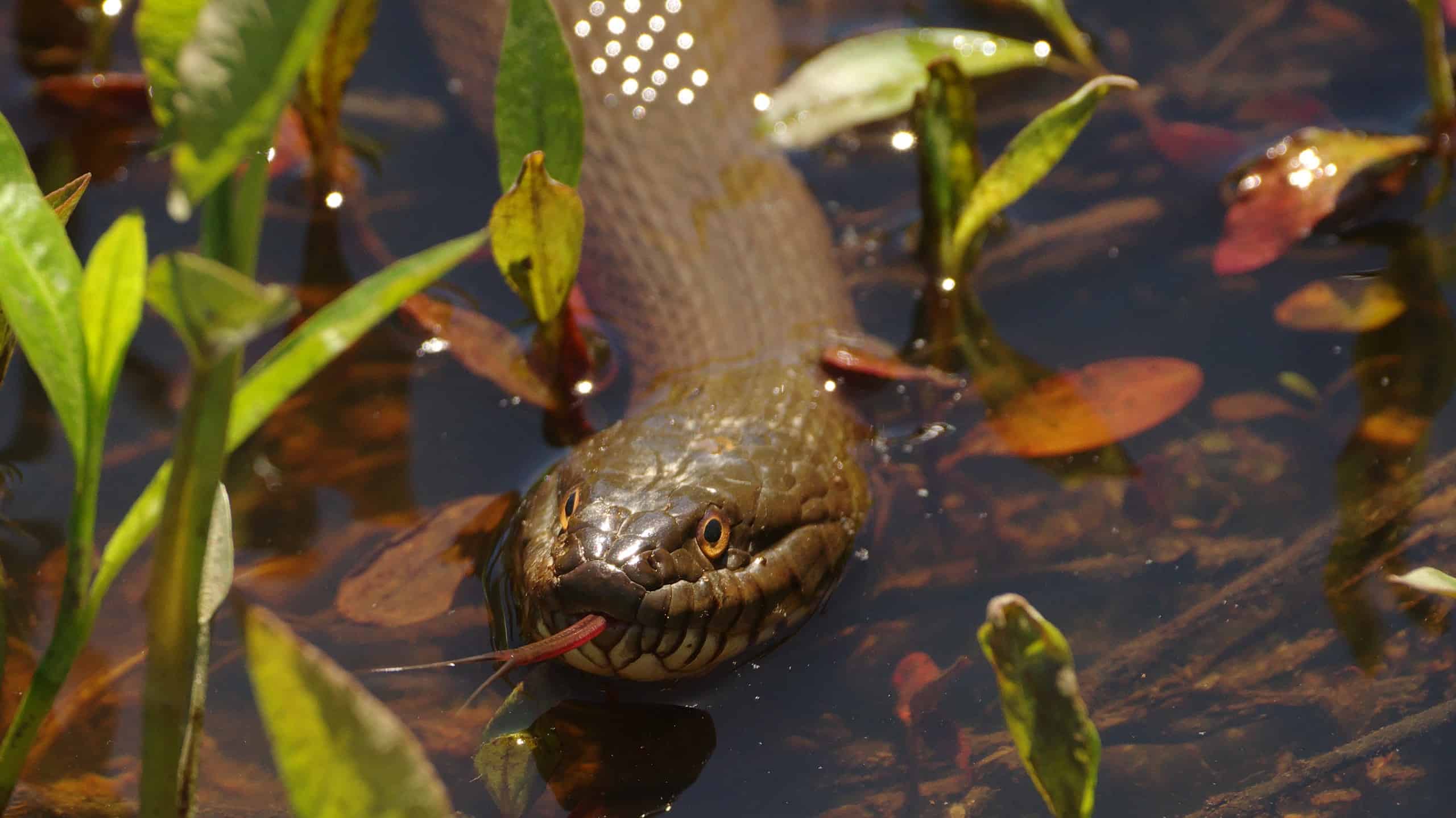
- Texas is home to many water snakes that thrive in lakes, rivers, and wetlands.
- These snakes play an important role in ecosystems by controlling prey populations.
- Many are fearful of snakes, but learning about them helps separate myth from fact.
Habitats
©Bonnie Taylor Barry/Shutterstock.com
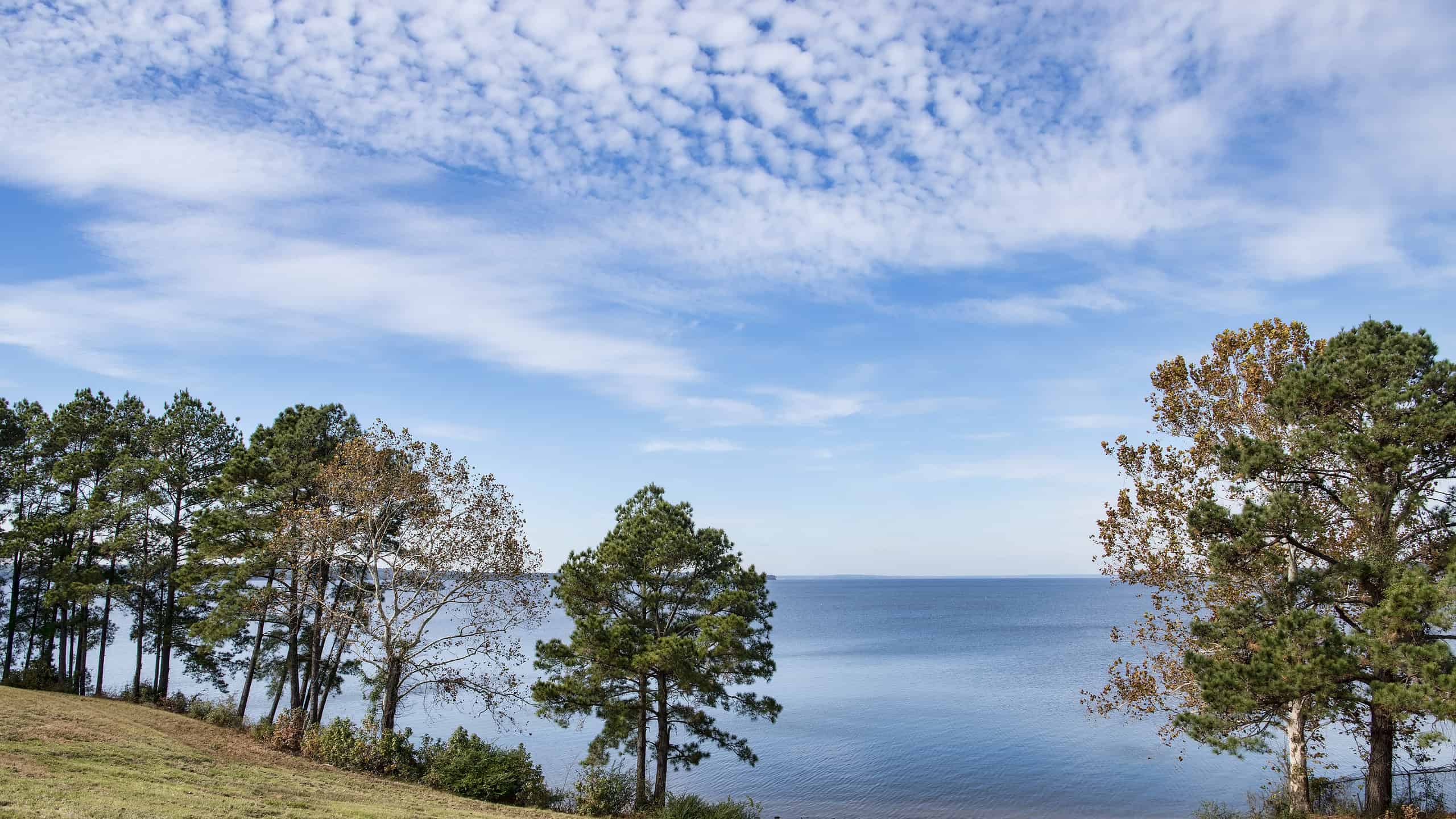
- Water snakes in Texas are found in marshes, swamps, rivers, lakes, and reservoirs.
- Popular areas include Toledo Bend, Lake Texoma, Caddo Lake, and Sam Rayburn Reservoir.
- They are often seen basking on banks or swimming in freshwater habitats.
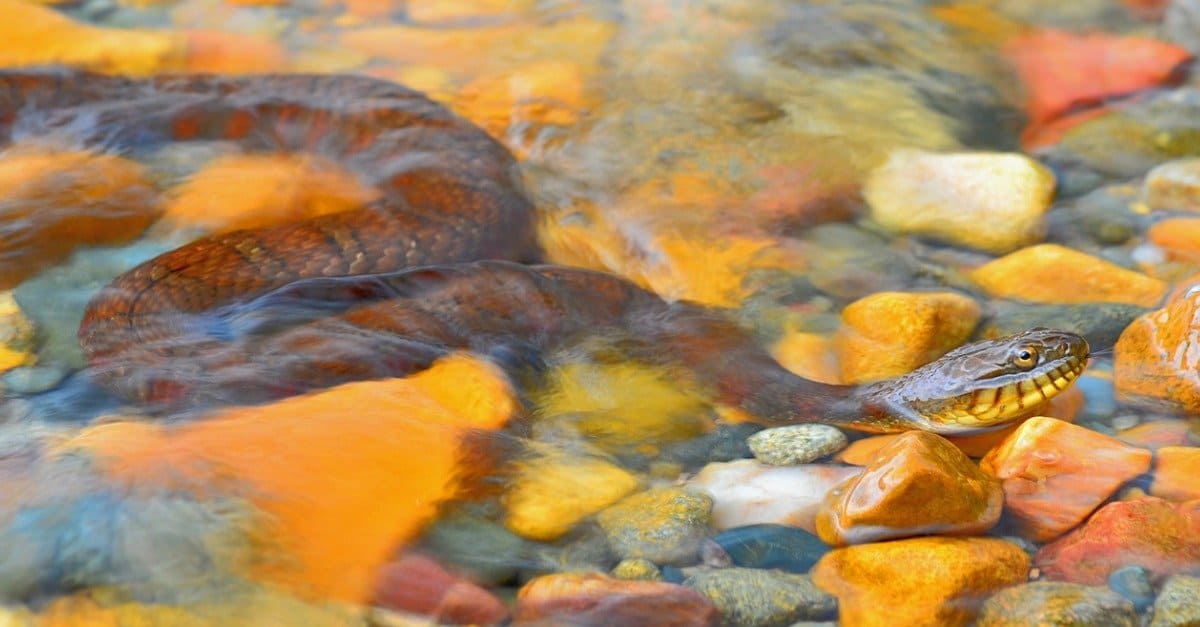
Staying Safe Around Water Snakes
©iStock.com/Doug Gordon
- Most water snakes avoid humans and only bite if threatened.
- The western cottonmouth is venomous and should be avoided.
- Respecting their space allows safe coexistence with these reptiles.
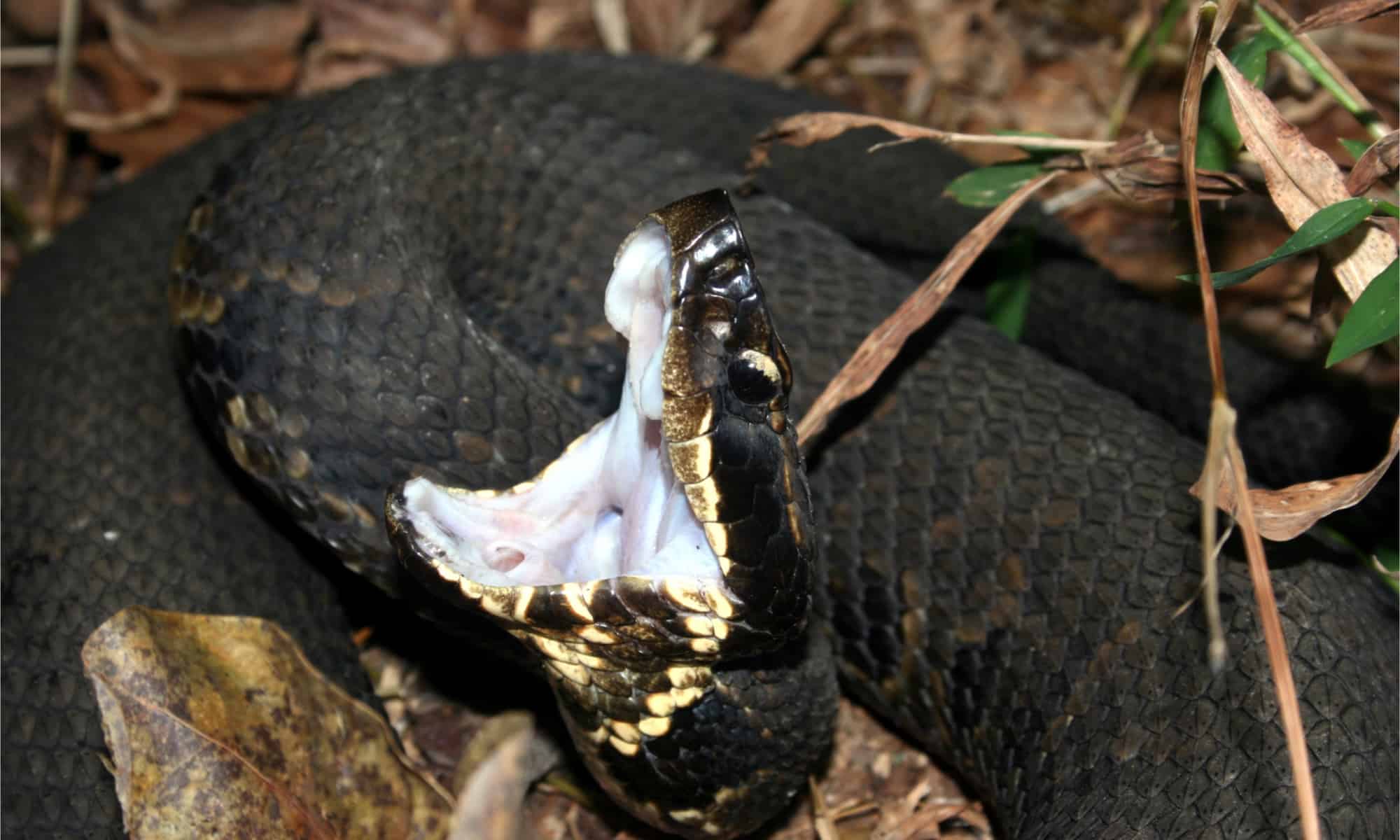
Western Cottonmouth
©Psychotic Nature/Shutterstock.com
- The western cottonmouth is the only venomous water snake in Texas.
- It is generally olive brown or nearly black and grows up to 42 inches long.
- Its venomous bite can cause severe symptoms, though bites are rare unless provoked.
Southern Water Snake

©Gilbert S. Grant/Shutterstock.com
- Southern water snakes are non-venomous reptiles found in eastern and western Texas.
- They can grow up to 62 inches and often bask in the sun.
- Though harmless, they may bite defensively if provoked.
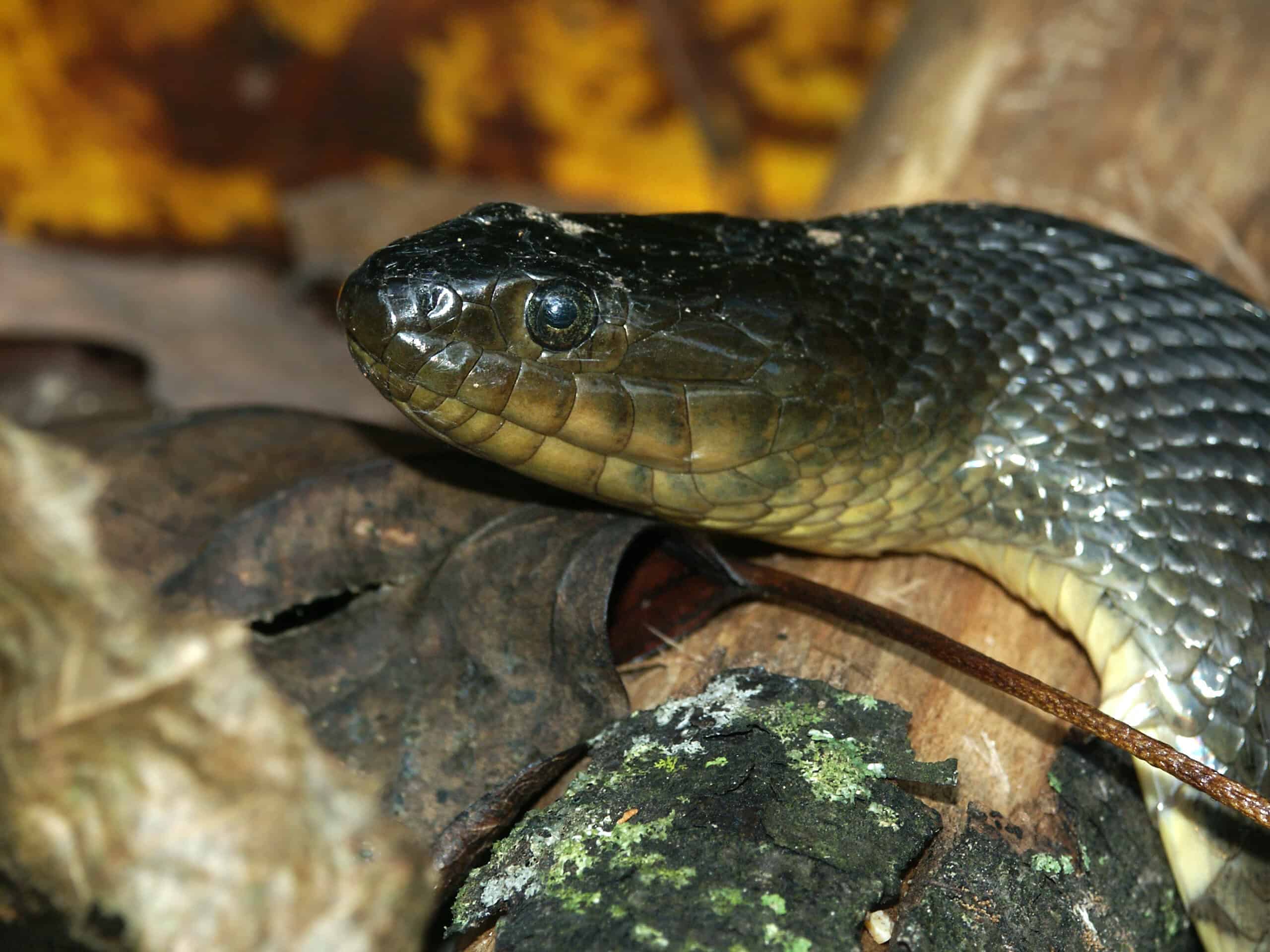
Green Water Snake
©Jason Patrick Ross/Shutterstock.com
- The green water snake inhabits lakes, marshes, and swamps across Texas.
- It can grow between 30 and 55 inches and has a stout green or brown body.
- Though non-venomous, it defends itself by biting and releasing musk.
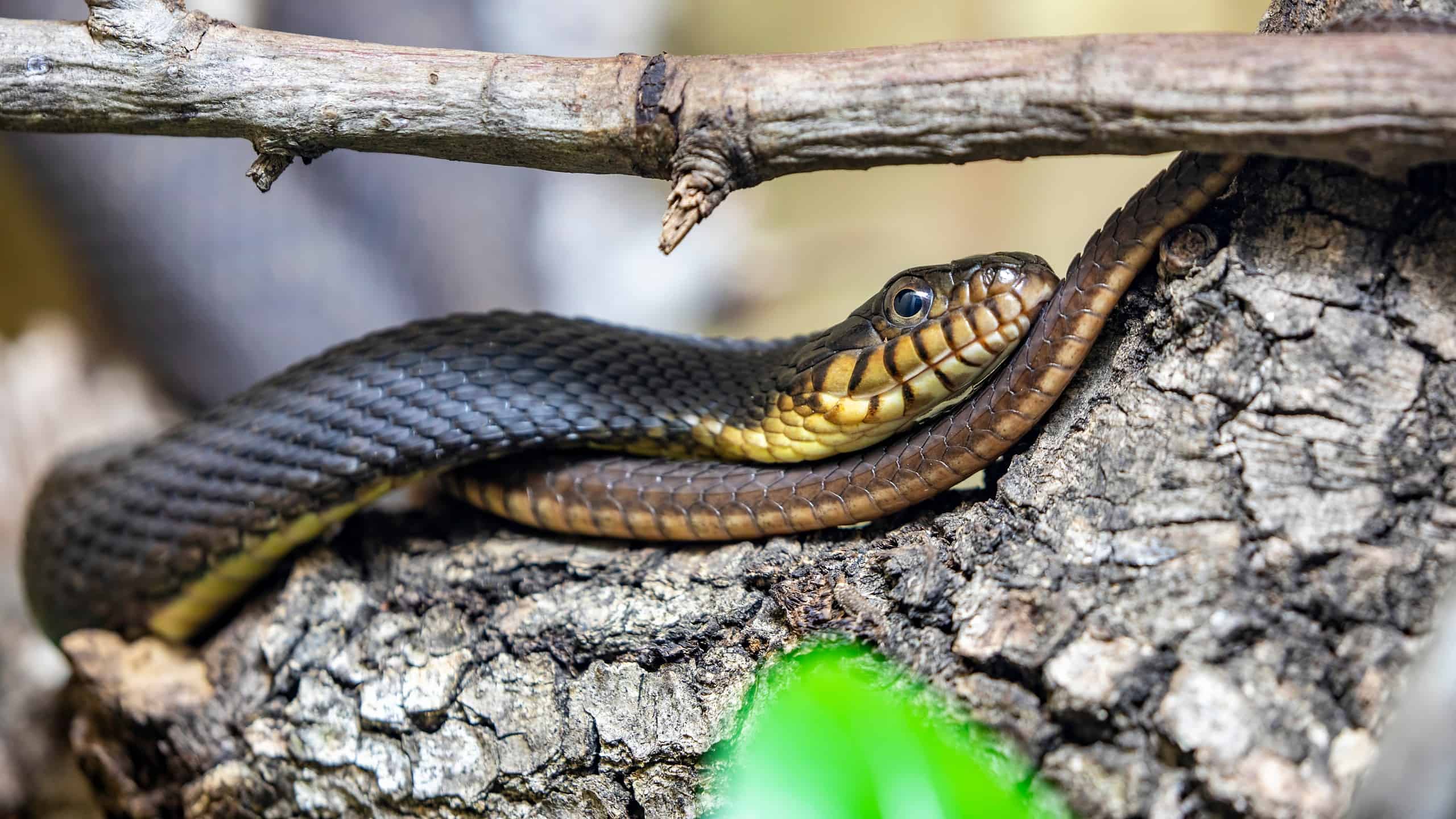
Plain-Bellied Water Snake
©Danny Ye/Shutterstock.com
- The plain-bellied water snake is widespread across Texas waterways.
- It is 30 to 48 inches long and shows a plain greenish or reddish coloration.
- Unlike others, it sometimes travels away from water in hot weather.
Brazos Water Snake
©Hundley Photography/Shutterstock.com
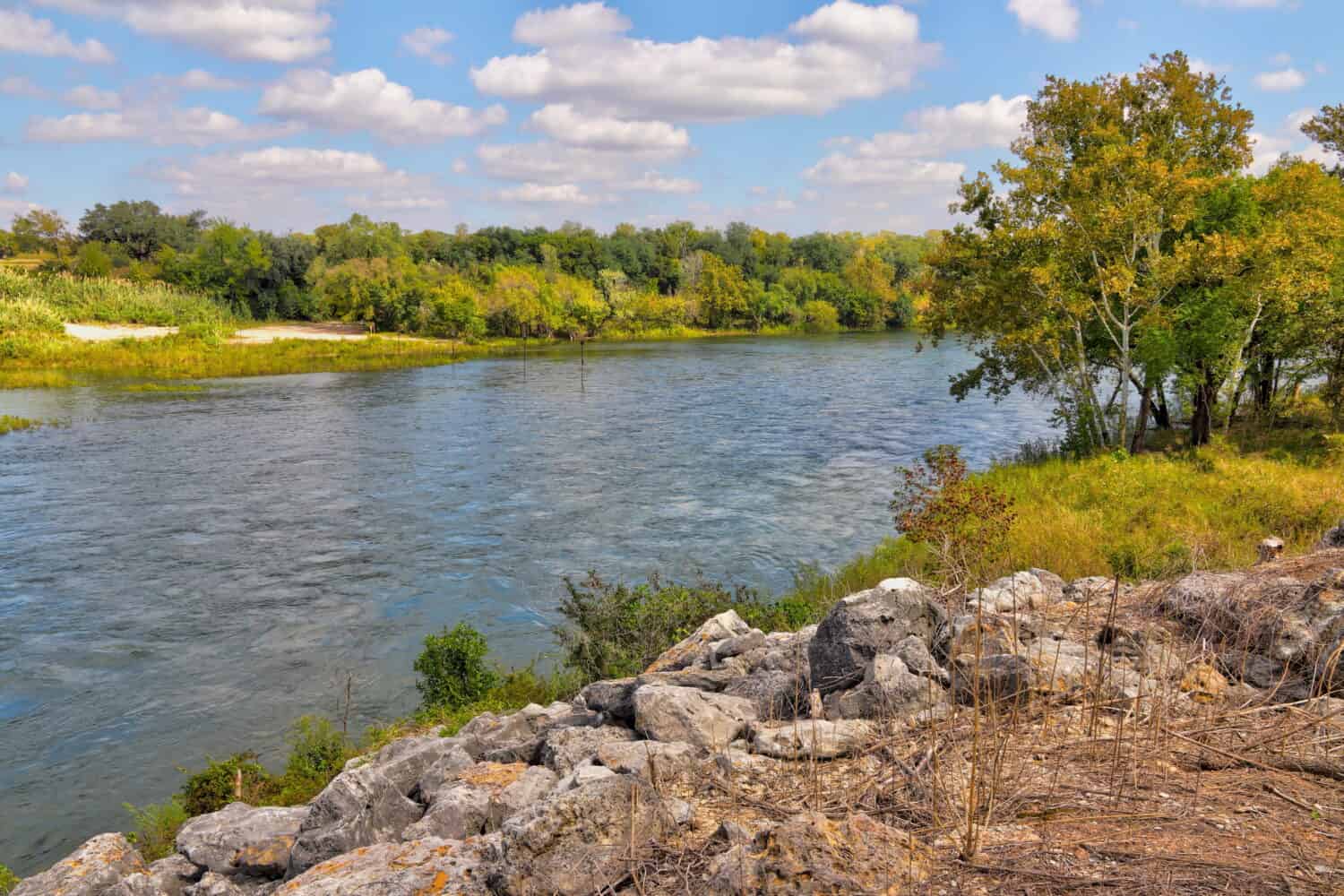
- The Brazos water snake is a rare, localized species found only in the Brazos River system.
- This non-venomous snake has a checkerboard body pattern with an orange underside.
- Considered at risk due to its limited habitat.
Diamondback Water Snake

©Tucker Heptinstall/Shutterstock.com
- Diamondback water snakes are non-venomous and common across Texas.
- They have dark diamond-shaped patterns and can be mistaken for cottonmouths.
- Their bites can be painful, but they pose no venomous threat.
Texas Indigo Snake

©Joe Farah/Shutterstock.com
- The Texas indigo snake is a large, non-venomous species reaching up to 72 inches.
- It is glossy black with a pink underside and preys on rattlesnakes.
- It is considered threatened due to habitat loss in Texas.
Texas Garter Snake
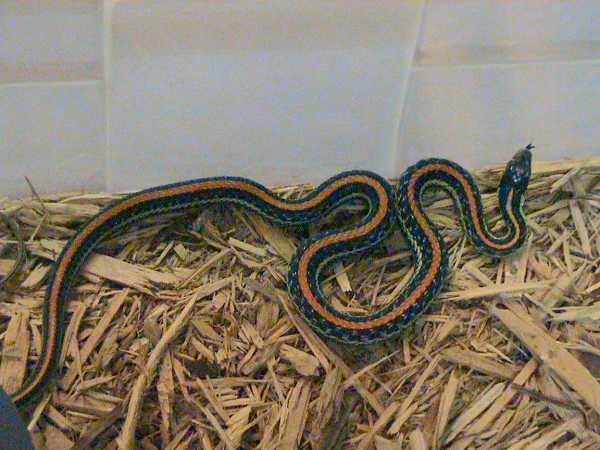
- The Texas garter snake is identified by its orange or red stripe on a dark body.
- It grows up to 28 inches and feeds on frogs, fish, and small rodents.
- Though passive, it may release musk when threatened.
Common Water Snake
©iStock.com/NajaShots
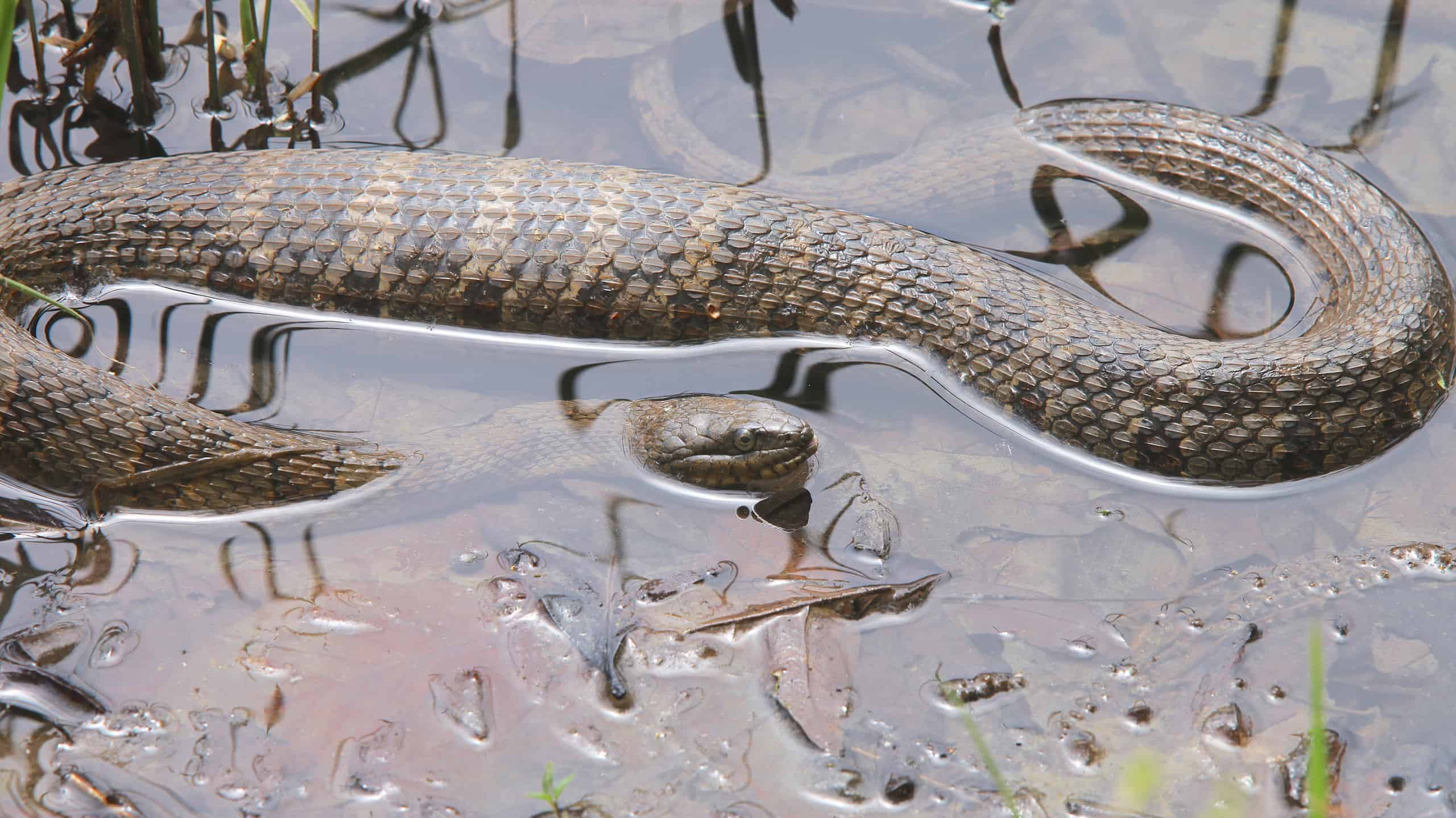
- The common water snake is widespread across Texas rivers and wetlands.
- It grows 24 to 55 inches long with alternating blotches or bands.
- While non-venomous, its bite can be painful if handled roughly.
Concho Water Snake

©iStock.com/Raul Garcia Villalon
- The Concho water snake is found only in the Concho River system of Texas.
- It has a checkerboard body pattern and feeds mainly on fish.
- Due to its limited range, it is considered at risk of endangerment.