
Quick Take
- Water moccasins have a bizarre defensive display that doubles as a warning system, and the reason it actually works has nothing to do with their venom. See the defensive display →
- Their swimming ability comes down to three specific physical traits, and at least one of them is not what most people would guess. Explore their swimming traits →
- Water moccasins rarely kill humans, but the reason why may have less to do with the snake than you think. Check the human fatality data →
- Most water moccasin bites trace back to a single avoidable human mistake, and it is one people make more often than they realize. Find the common bite mistake →
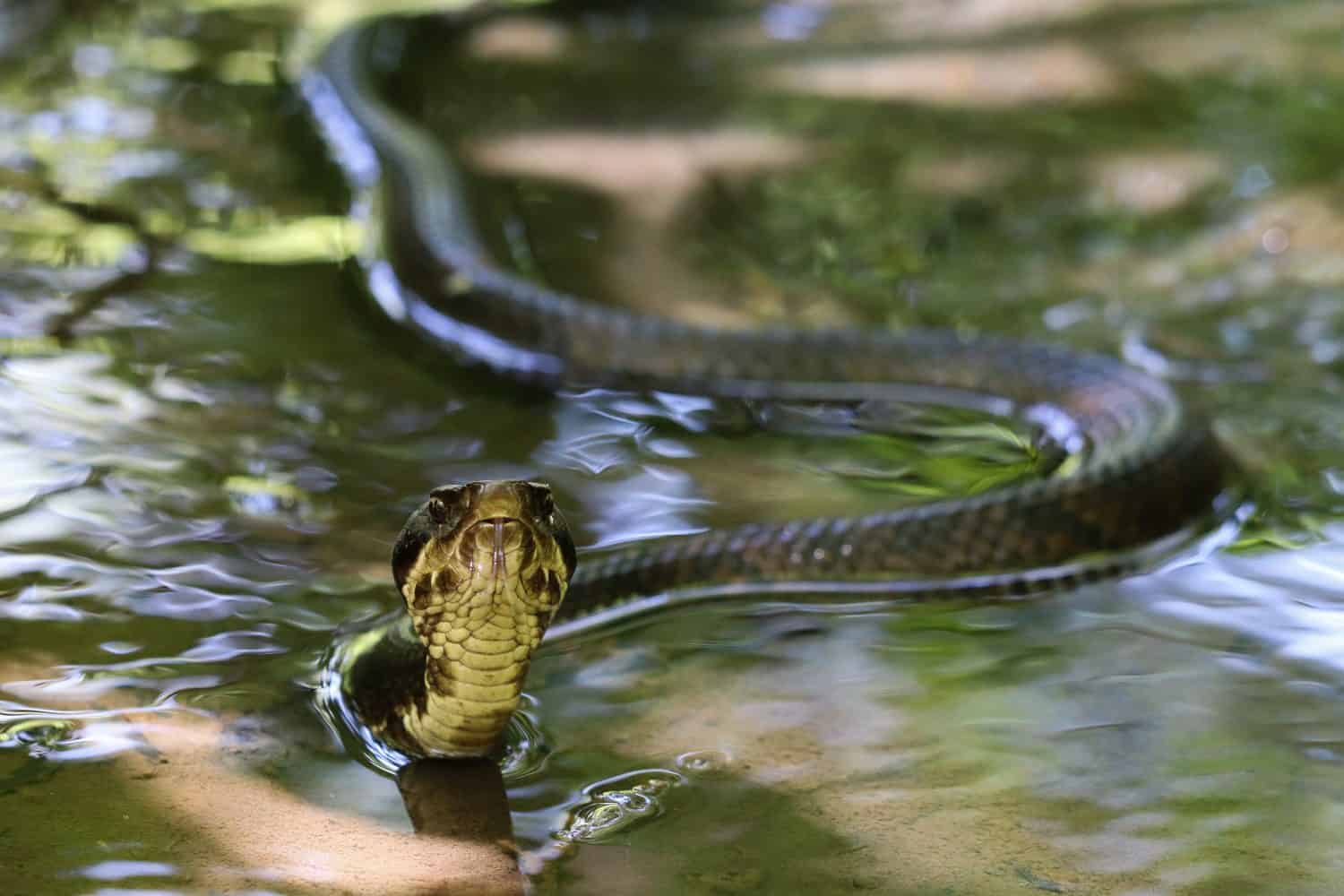
If you’ve ever spent time at a river or lake, you’ve most likely been warned about a water moccasin or cottonmouth. These snakes are among the few aquatic snakes in North America, and their venomous bites can be quite painful. Thankfully, for the most part, they like to stay away from humans. However, this water moccasin in a YouTube Short by @Thomas_Howell seems to enjoy racing against the boat. Read here to learn more about these aquatic snakes.
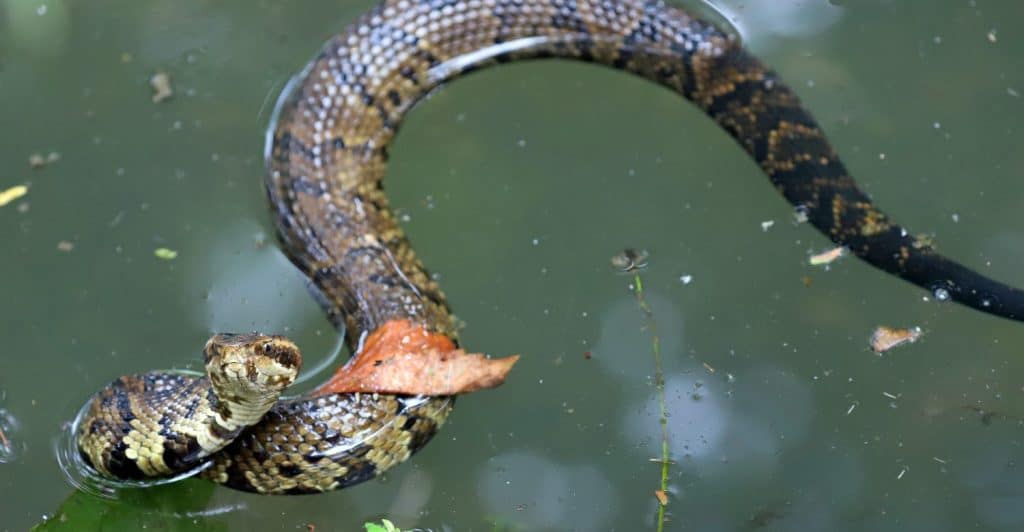
Water moccasins can swim thanks to buoyancy, lung size, and by curving their bodies back and forth to move forward.
©KF2017/Shutterstock.com
About Water Moccasins
Water moccasins, also known as cottonmouths, are semi-aquatic venomous snakes in North America. They are a notorious species, given that they are excellent swimmers in all types of bodies of water. Specifically inhabiting much of the southeast United States, they live in swamps, rivers, ponds, and lakes. Their aquatic habitats are ideal, as their bodies are well-adapted for swimming. Due to a mix of buoyancy, lung size, and swimming style, they curve back and forth in the water to push themselves forward in a smooth and mesmerizing fashion. They get the name ‘cottonmouth’ from their physical appearance. When threatened, these snakes open their mouths wide, revealing a bright white interior that resembles cotton. This is a sign to potential predators to back off.
Water moccasins are venomous snakes. Fortunately, they generally avoid humans, but may attack if provoked or threatened. Most attacks result from human error, such as attempting to handle or corner the snake. Occasionally, bites occur accidentally when someone unknowingly steps too close. Thankfully, fatalities and major injuries are rare due to the availability of effective antivenom treatment. A bite causes pain, swelling, nausea, and tissue damage. Cottonmouths use their venom to hunt a wide variety of animals, including fish, frogs, turtles, birds, lizards, and even other snakes. Their quick bursts of speed and immobilizing venom are extremely effective, making them formidable hunters. Fortunately, the men in the video were safe in a boat; otherwise, the encounter could have had a much worse outcome.