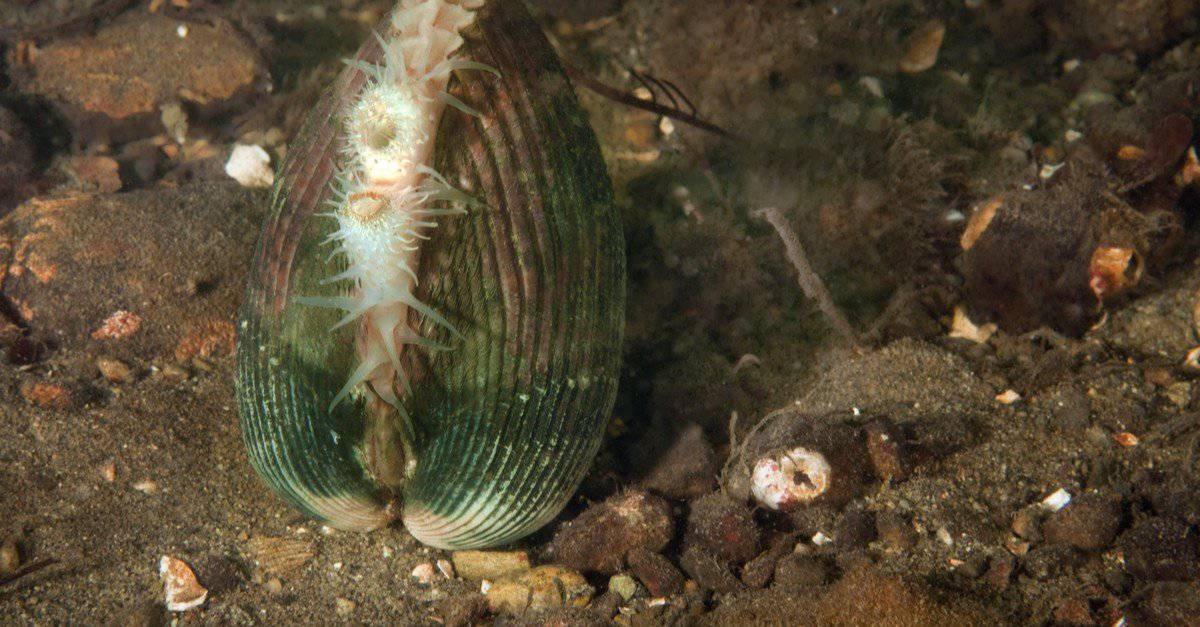

Quick Take
- There are thousands of clam species, with the most diversity found in North America.
- Clams range in size from under one inch to over four feet.
- Clams are filter feeders that clean the water in their environments.
There are thousands of recognized species of clams worldwide, varying dramatically in size, shape, and habitat. Clams belong to the Mollusca phylum, and are known for their two-part hinged shells and for burying themselves in the substrate of their marine and freshwater environments. Most clams are considered omnivores because they are filter feeders that consume a mix of microscopic plant matter and animal matter. Continue reading to discover everything you need to know about what clams eat.
What Foods Do Clams Eat?
Clams are omnivores that eat algae, zooplankton, phytoplankton, and other organic matter that passes through their filtration system. As sedentary, passive filter feeders, they burrow in sediment and use siphons to draw in water, straining out food particles.
Foods that clams filter from the water include:
- Algae
- Organic matter flowing in their aquatic habitats
- Phytoplankton
- Zooplankton
- Byproducts from symbiotic algae (Giant Clams)
While most clams are filter feeders, giant species in the Tridacna and Hippopus genera have evolved to rely on a strict, obligate symbiotic relationship with Symbiodiniaceae algae. These clams expose their colorful mantles to sunlight, allowing the algae to photosynthesize and produce food that benefits both the algae and the clam.
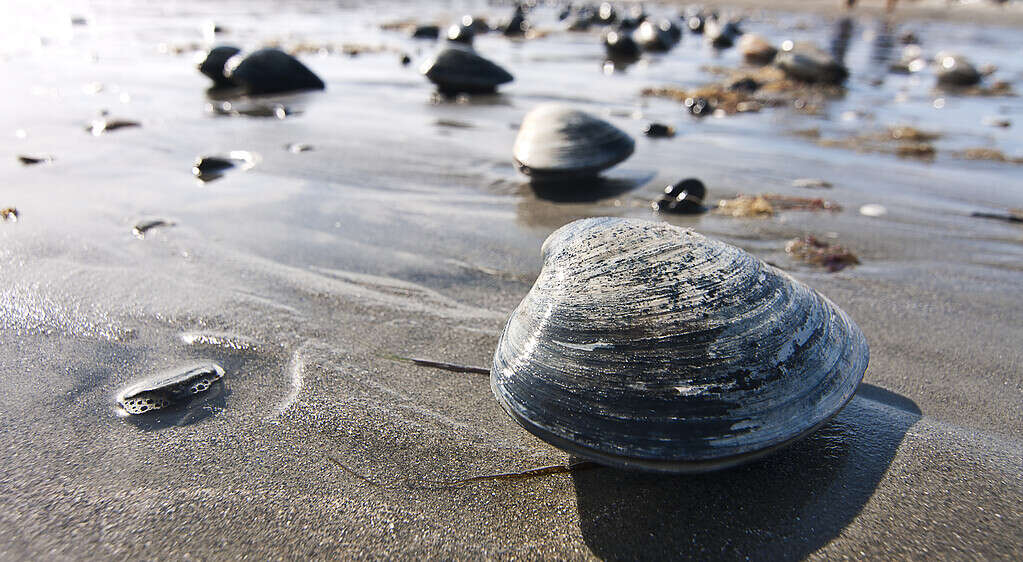
Clams have no brain, relying instead on nerve clusters called ganglia.
©southlandp/iStock via Getty Images
How Do Clams Eat Their Food?
Clams are filter feeders that use siphons to draw water over their gills, trapping phytoplankton, detritus, and bacteria for food while also cleaning the surrounding water. Their feeding rate depends heavily on their size, species, and water temperature.
Giant clams can filter up to 264 gallons of water per day, while large adult clams can filter about 24 gallons per day, and smaller clams filter around 4.5 gallons daily.
This filtration process removes algae and pollutants from the water, helping to reduce harmful nutrient pollution.
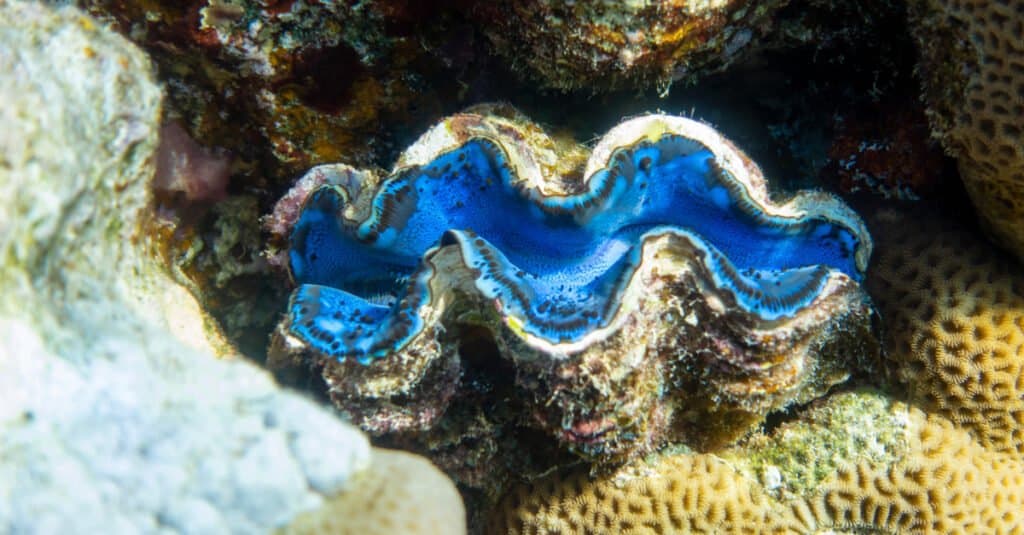
Clams are found worldwide, inhabiting both marine and freshwater environments, with the greatest diversity found in North America.
©maya_parf/Shutterstock.com
Clams have a complete digestive system that includes a mouth, esophagus, stomach, digestive gland (liver), intestine, and anus. Their stomach processes filtered food particles using a specialized rod called the crystalline style.
What Do Clams Eat in Winter?
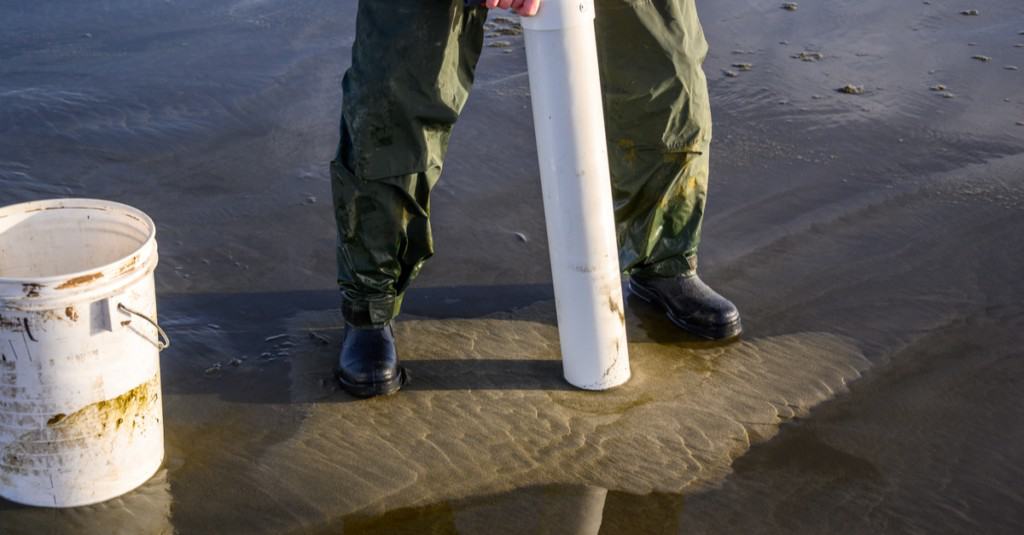
Clams bury themselves and go dormant in winter, but they can be harvested during this time.
©knelson20/Shutterstock.com
During winter, especially in colder environments, clams enter a hibernation-like state or become dormant. They slow their metabolism, stop feeding, and rely on stored energy to survive, often burying themselves deeper in the substrate to avoid freezing.
How Does The Clam Diet Affect Their Environment?
Clams’ filter-feeding methods significantly impact the bodies of water they inhabit. Specifically, they can help prevent eutrophication, a process in which excess nutrients in water lead to suffocating algae blooms, increased phytoplankton levels, and low oxygen levels.
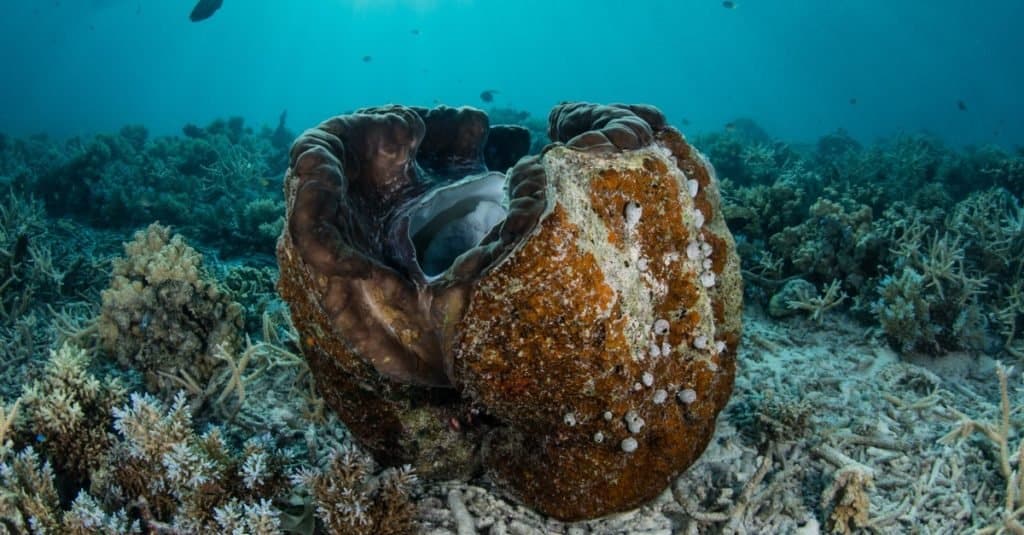
Large clams help remove excess nutrients from waterways, improving the environment.
©Ethan Daniels/Shutterstock.com
Eutrophication can cause mass fish deaths and create cascading damage to the ecosystem. Fortunately, clams and other mollusks, such as oysters, help remove much of the excess nutrients through their filter-feeding.
What Predators Eat Clams?
Clams are invertebrates with soft bodies protected by a hard shell. However, their shell and their ability to bury themselves in sand and mud are their only means of defense. As a result, clams are easy prey and have numerous predators.
The most common clam predators include:
- Humans
- Oyster drills
- Black Oystercatcher
- Crabs
- Eels
- Angelfish
- Octopi
- Squid
- Pufferfish
- Black Skimmer
Each of these predators can pry open the shell or otherwise access the clam’s soft body.
Unlike most natural predators that tend to target juveniles, humans disproportionately harvest adult, reproductive clams, which can drive population declines.