


















Quick Take
- This breed looks small and manageable, yet its actual care demands catch most new owners completely off guard. See the care demands →
- Grooming a Wire Fox Terrier the obvious way can permanently alter how it looks, and the change is not for the better. Learn about hand-stripping →
- Training this eager, intelligent breed with a firm hand tends to backfire, and understanding why is worth doing before you start. Explore training approaches →
- Charles Darwin, a British king, and a Hollywood film star from the 1930s all had one thing in common. That thing in common is this breed. Meet the famous owners →
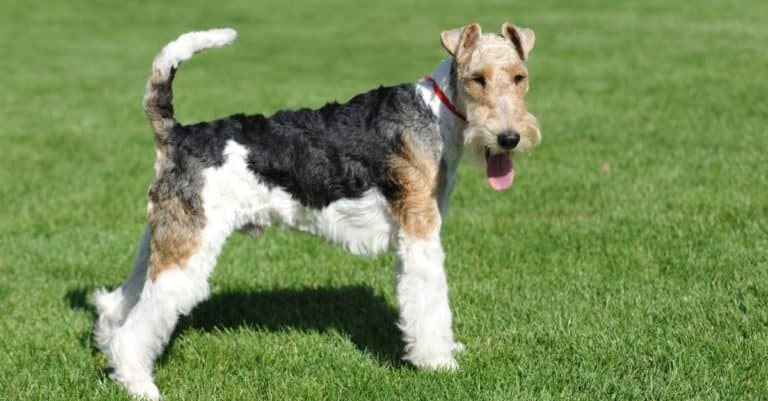
The Wire Fox Terrier was once a quintessential part of the British fox hunting scene. Developed during the 17th and 18th centuries to locate foxes and drive them from the den, it is believed to have descended from the Rough Coated Black and Tan Terrier, which is now extinct. Today, this breed is mostly used as a pet, an athlete, or a show dog. A lean physique, floppy ears, and an upturned tail characterize the Wire Fox Terrier. The wiry, broken coat for which it’s named has a white base and brown markings around the face, with additional black and brown markings all over the body. The long hair around the face gives it the appearance of having a mustache and beard.
Up until the early 20th century, the Fox Terrier had both a wire and smooth coat variant. But after people stopped breeding them together, the Smooth Fox Terrier was developed into its own separate, though very similar, breed. There are also toy and miniature Fox terriers, but they are considered to be separate breeds as well.

3 Pros And Cons Of Owning A Wire Fox Terrier
| Pros! | Cons! |
|---|---|
| Charming and Friendly The Wire Fox Terrier has a big personality and forms close bonds with members of the family. | Independent and Stubborn The Wire Fox Terrier might be a little difficult to train unless you really know how to handle it. |
| Fierce Determination Once this breed is given a task, it will stick with it until completion. | Tendency to Chase This breed has a strong prey drive. |
| Energetic and Athletic This breed is an excellent exercise companion. It can also be taught to perform lots of tricks. | Escape Artist This breed has a tendency to jump over or dig under fences. |
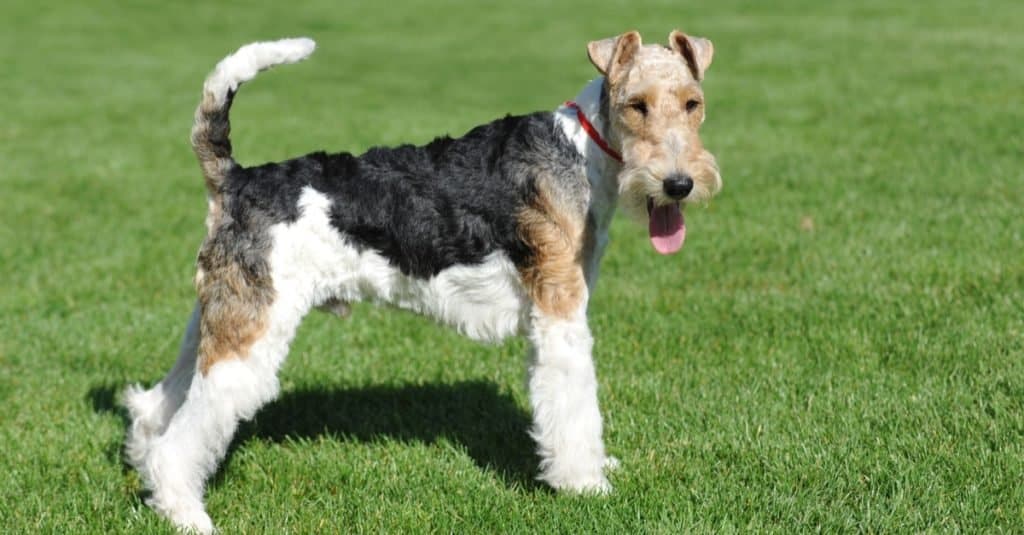
The wire fox terrier may be difficult to train unless you know how to handle the breed.
©Waldemar Dabrowski/Shutterstock.com
Size And Weight
The Wire Fox Terrier is a small dog with a rather lean frame. Males are ever so slightly larger than females.
| Height (Male) | 15.5 inches |
| Height (Female) | 13 inches |
| Weight (Male) | 17 to 19 pounds |
| Weight (Female) | 15 to 17 pounds |
Common Health Issues
The Wire Fox Terrier is a very healthy dog with a life expectancy of 12 to 15 years. Nevertheless, no breed is completely free of health complications. This breed is prone to deafness, cataracts, epilepsy, heart disease, cancer (the leading cause of death in older dogs), hip dysplasia (a loose hip joint), Legg-Perthes disease (a deformed hip joint resulting from poor blood flow), lens luxation (a deformed ligament that holds the lens in place), and some degenerative neurological diseases. Good breeders should ideally try to minimize the chances that some of these problems (particularly serious genetic disorders) ever arise in the first place, but there is always a chance some will slip through.
Temperament
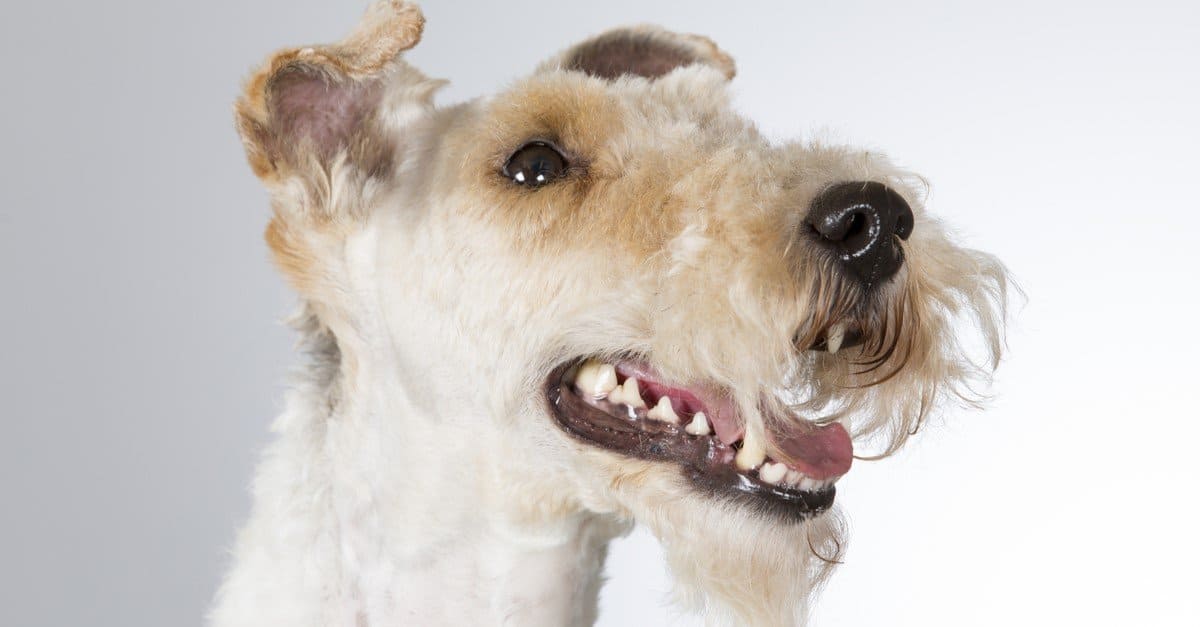
Wire fox terriers are very feisty and energetic with an adventurous personality.
©Jne Valokuvaus/Shutterstock.com
The Wire Fox Terrier is a very feisty, energetic, confident, and alert dog that should win over the heart of its owner with its fun-loving, charming, and adventurous personality. If you don’t mind a strong, independent thinker who might have their own ideas about things, then this dog will fit right into your home as a loving and affectionate member of the family. You should be aware that this breed needs a lot of mental and physical stimulation to keep it entertained. Otherwise, if left alone or ignored for too long, it might resort to unwanted or destructive behavior. While this breed can adapt well to apartment living, it will require some outdoor space in which to run and play.
How To Take Care Of The Wire Fox Terrier
The small size of the Wire Fox Terrier may fool people into thinking this is a low-maintenance dog, but it is actually a real handful to care for. Full of energy and life, and sporting an unusual wiry coat, this breed requires the frequent attention of its owner. You should absolutely prepare to devote time and resources to its care. Fortunately, this guide will help arm you with some knowledge you will need.
If you are just now preparing to purchase a dog, the first step is to find a trusted breeder in your area from whom you can purchase. Try to gather as much information as you can about how they breed, raise, and screen their dogs for health problems. Another option is to purchase a juvenile or adult dog from a rescue group or adoption agency. There may be some rescue groups in your area that specialize in Fox Terriers. Upon bringing your new dog home, it should have a complete physical examination at the vet and then regular checkups after that.
The Best Dog Food For Wire Fox Terriers

This is a breed that can develop heart disease, and vet guidance is important.
©TSViPhoto/Shutterstock.com
An adult Wire Fox Terrier should be fed around 1.5 cups of high-quality dog food every single day, preferably divided into two meals. This is just an average; however, the exact amount will vary based on the dog’s age, size, and activity level. Owners should not leave food out for the dog to munch on. This may lead to unwanted weight gain.
Maintenance And Grooming
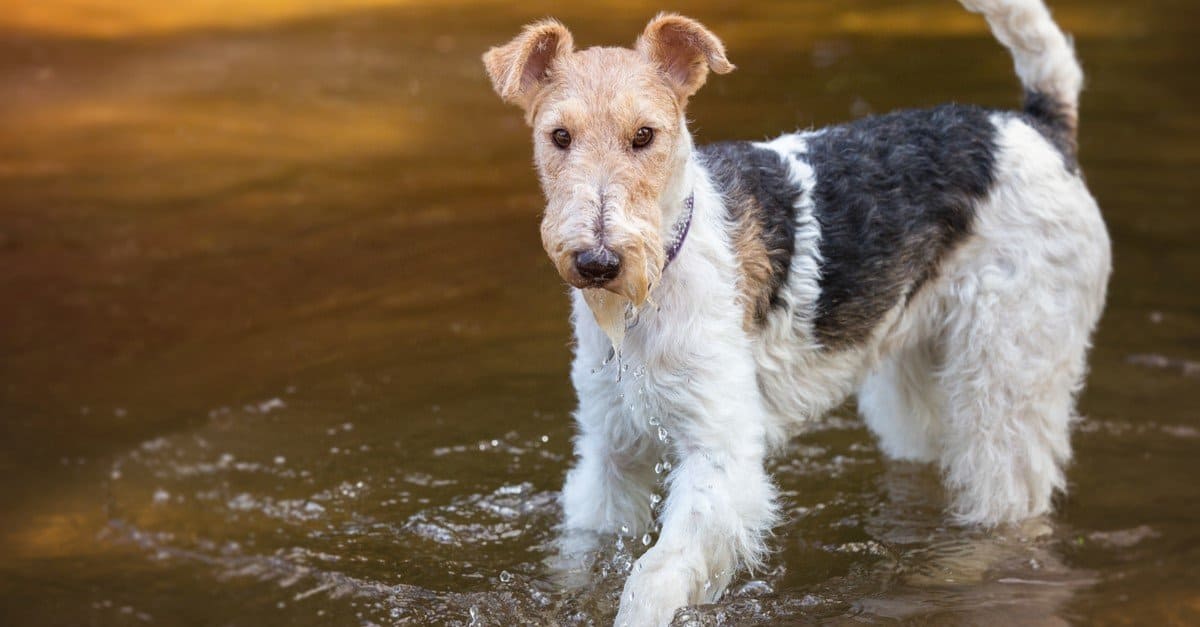
This breed needs to be brushed at least once a week to prevent matting and tangling.
©alan payne/Shutterstock.com
The Wire Fox Terrier needs brushing about once a week, preferably with a firm bristle brush, to prevent matting and tangling. The American Kennel Club recommends that show dogs be hand stripped by the owner or a professional groomer. Hand stripping is a method of removing the top layer of the coat from the roots by hand. This will help to maintain the wiry consistency of the entire coat. By trimming or cutting it with clippers, the softer part of the coat will tend to dominate, which can also make the dog look paler.
If your wire fox terrier isn’t a show dog, then you can groom it and style it however you want. Owners should also check their ears once a week and trim their nails every month. Dental care is another important aspect of the dog’s care. Brush the dog’s teeth regularly (ideally once a day) with canine toothpaste to prevent disease and bad breath.
Training
The independent and strong-minded Wire Fox Terrier is a very eager and intelligent dog that also has the tendency to become easily bored. In order to prevent this, it’s best to break up training sessions into smaller segments with frequent breaks in between. Owners should also strive to keep it interesting by changing their routines from time to time. The Wire Fox Terrier requires a firm but positive training method. It may shut down or become unresponsive if you are aggressive toward it. Fortunately, this breed thrives at all types of training, from basic commands to more complex agility challenges.
Exercise
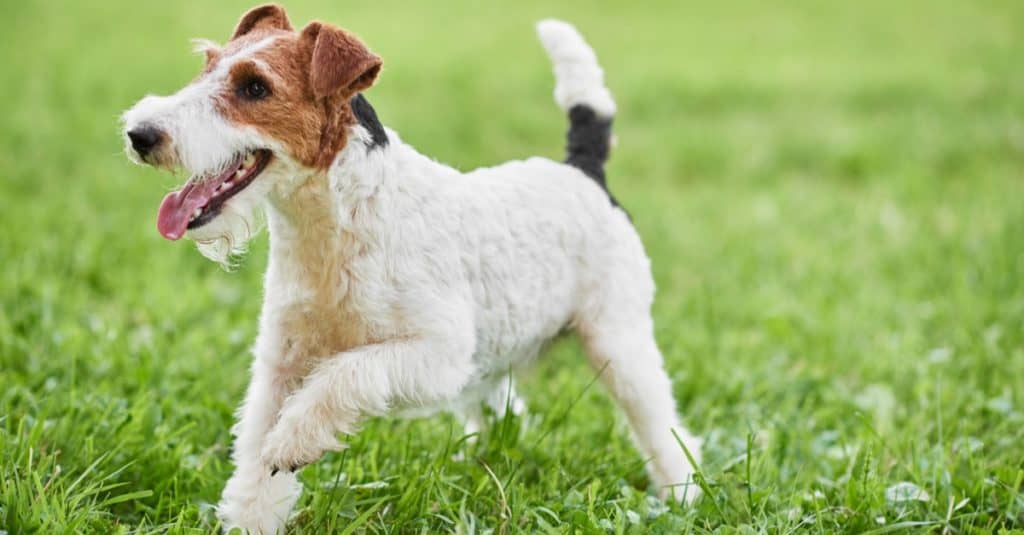
Daily exercise is needed for your wire fox terrier.
©iStock.com/SerhiiBobyk
The Wire Fox Terrier will need about 30 to 60 minutes of exercise every single day. This breed enjoys long walks, runs, fetching, and playtime. Because of the dog’s tendency to chase prey, it is ideal that you have a fenced yard that it cannot dig under and jump over. When you take it out for a long walk or run, do not let it off the leash.
Puppies
The Wire Fox Terrier can be rather energetic and undisciplined as a puppy, so it should benefit greatly from proper obedience training and early socialization with other people and pets. Crate training is an important part of the house training routine for all Wire Fox puppies.

Puppies would benefit greatly from obedience training.
©Liliya Kulianionak/Shutterstock.com
Wire Fox Terriers And Children
The Wire Fox Terrier has a playful nature and friendly temperament that should be well-suited for kids of all ages. Its smaller size shouldn’t be intimidating, but it has such an immense reservoir of energy that it might not be able to stay calm and still in the presence of younger children.
Dogs Similar To Wire Fox Terriers
If you are a fan of the Wire Fox Terrier, then you might want to check out these other terrier breeds:
- Smooth Fox Terrier: This breed is very similar to its close wire-haired relative in most respects. The main differences are the more V-shaped head and the short and smooth hair.
- Russell Terrier: The Russell Terrier (and its close relatives, the Jack Russell Terrier, and the Parson Russell Terrier) is a small but athletic fox hunter that’s now mostly kept as a lovable and friendly companion. The Russell Terrier comes in three different types of coats: short and smooth, long and rough, and broken (a mixture between the two).
- Rat Terrier: Originally bred as a farm dog and hunting companion, the Rat Terrier is a small, compact breed with a smooth coat, a playful personality, and fun-loving behavior. It comes in both standard and miniature sizes.
Famous Wire Fox Terriers
The Wire Fox Terrier has been a fixture of upper-class British society for centuries, both as a hunter and as a companion. It has also made quite an impression on many Americans. Here is a small sample of well-known members of this breed:
- Caesar – This was the personal favorite dog of Edward VII, Britain’s monarch between 1901 and 1910. It was also thought that his mother, Queen Victoria, owned the same breed.
- Skippy – This canine actor appeared in many popular 1930s films, including “The Thin Man” and “Bringing Up Baby.”
- Polly – Owned by biologist Charles Darwin in the 19th century.
- Vicki – The personal dog of writer and poet Rudyard Kipling.
Wire Fox Terrier Pictures
View all of our Wire Fox Terrier pictures in the gallery.

Serhii Bobyk/Shutterstock.com
Sources
- American Kennel Club / Accessed March 30, 2021
- Harlingen Veterinary Clinic / Accessed March 30, 2021