


Quick Take
- Despite its fearsome name and snake-like body, the Wolf Eel isn't actually an eel. That distinction reveals something surprising about how we classify ocean creatures. True eel distinction →
- Wolf Eels are born one color and die another, with their gender quietly determining which shade they end up. Color changes by gender →
- Some Native American tribal healers were the only ones permitted to eat Wolf Eel, and the reason why speaks to how powerful this fish was believed to be. Cultural significance →
- Wolf Eels guard their eggs in a way that is rare among fish, with both parents playing roles most people would never expect from a sea creature. Parental egg protection →
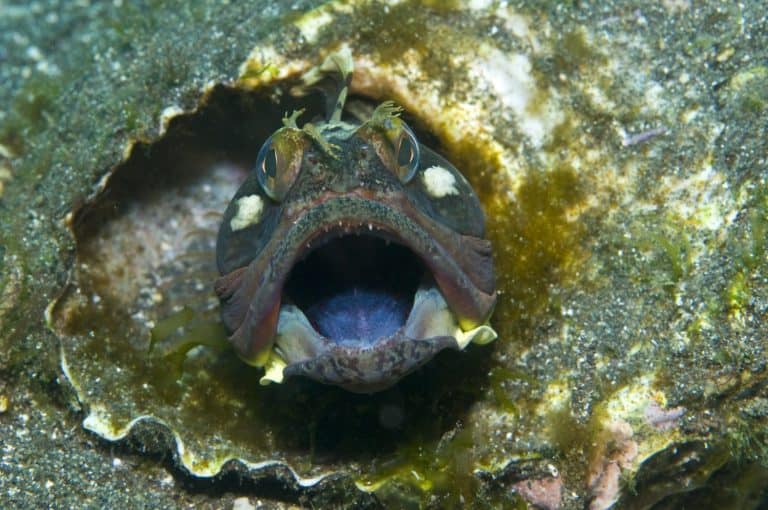
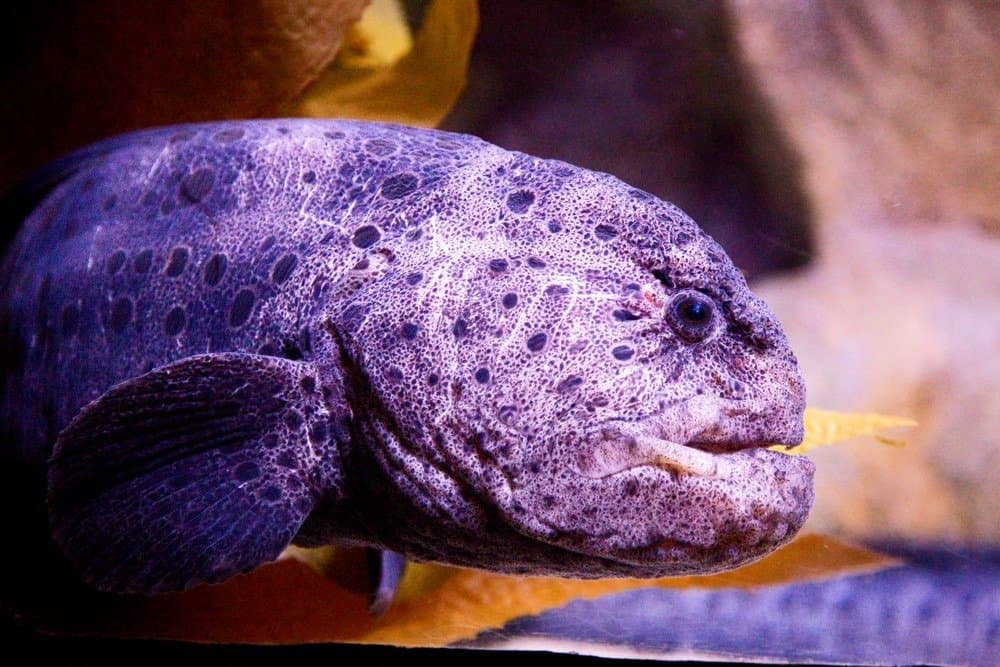
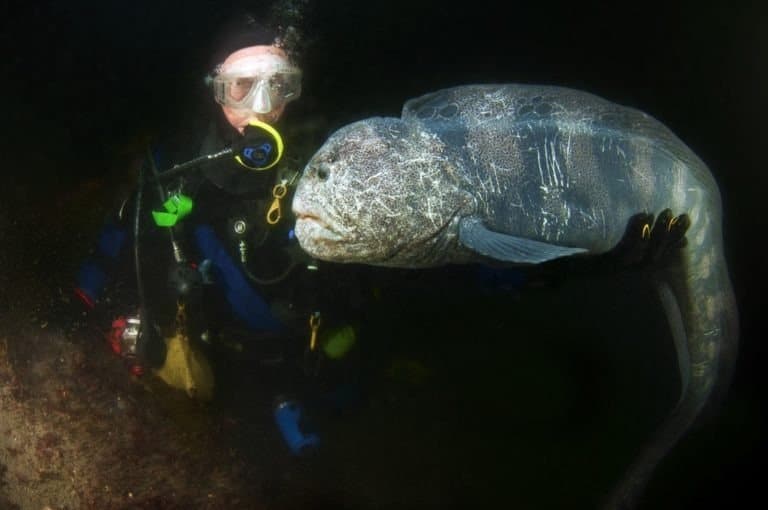
Despite its name, the Wolf Eel is actually a fish. It was given this name because of its powerful jaws and sharp teeth that it uses to crush hard-shelled creatures, such as crabs and abalone. Wolf Eels are very large fish; they can be up to eight feet long and weigh around 40 pounds.

4 Incredible Wolf Eel Facts
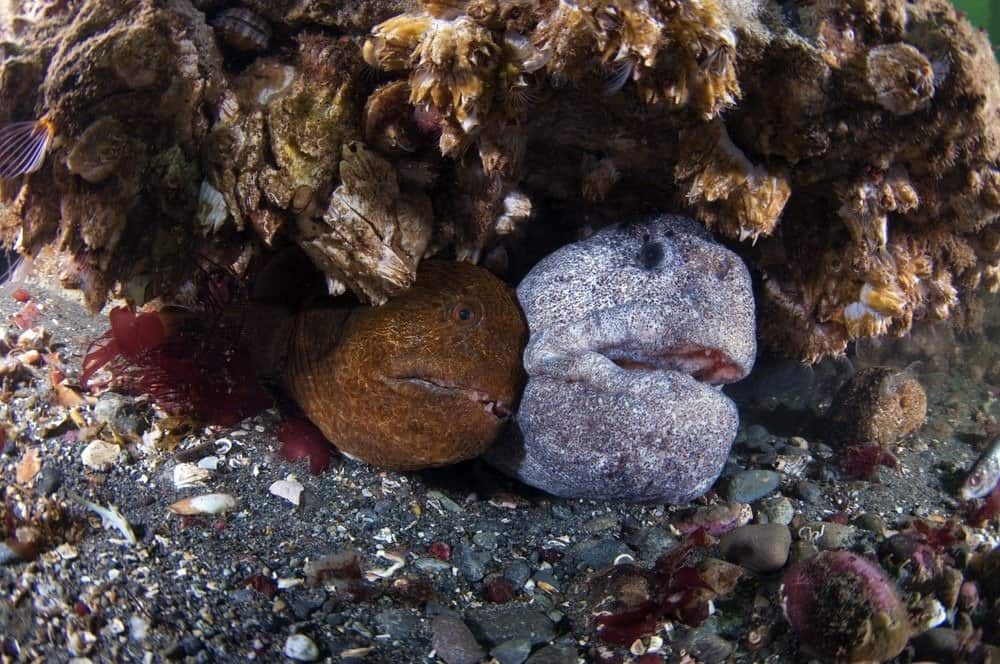
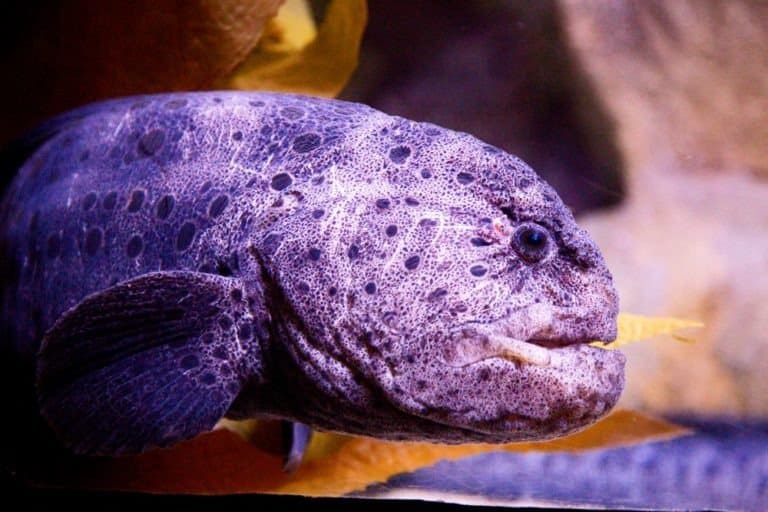
The Wolf Eel has a cartilaginous skeleton, which enables it to be more flexible and maneuver its body to fit through narrower openings.
©Greg Amptman/Shutterstock.com
- The skeleton of a Wolf Eel is cartilaginous. This means that they can flex their body, making it possible for them to get into tighter spaces.
- Wolf Eels are fish that often mate for life. Both parents contribute to keeping the eggs safe for the 13 to 16 weeks when they are developing.
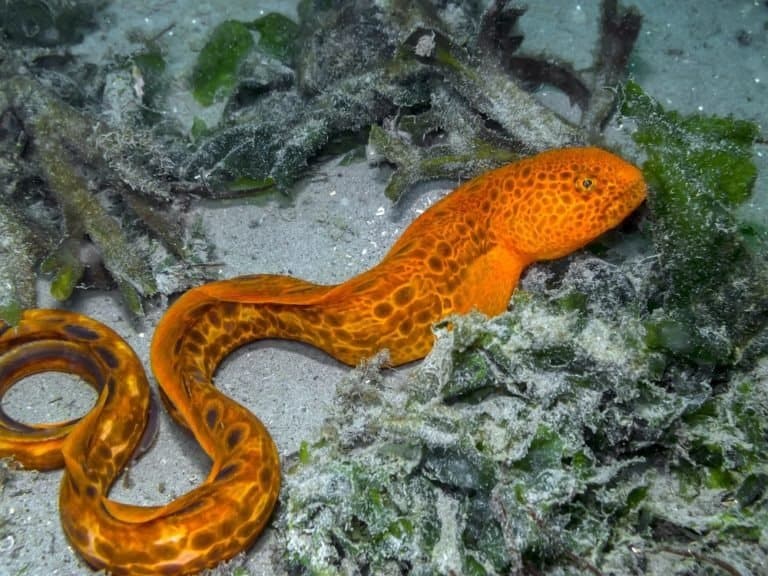
- When they are first born, Wolf Eels have bright orange coloring. Over time, this color will fade to brown, gray, or green.
- A layer of slim covers the skin of a Wolf Eel. The slime acts as a protective coating and functions similarly to a human’s immune system.
Classification and Scientific Name
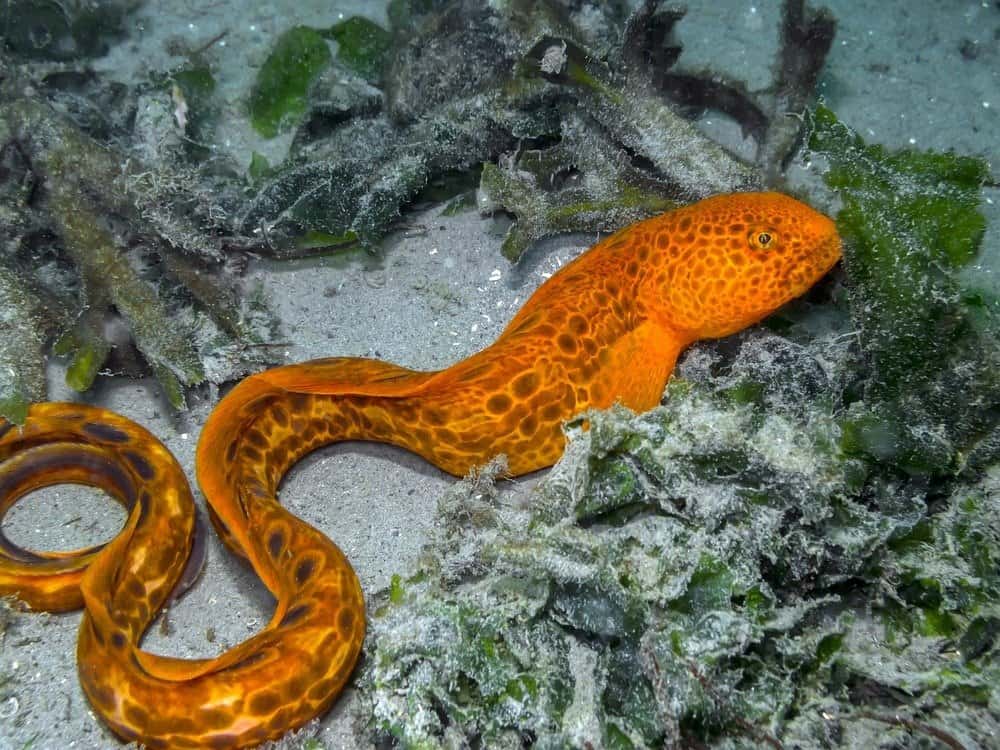
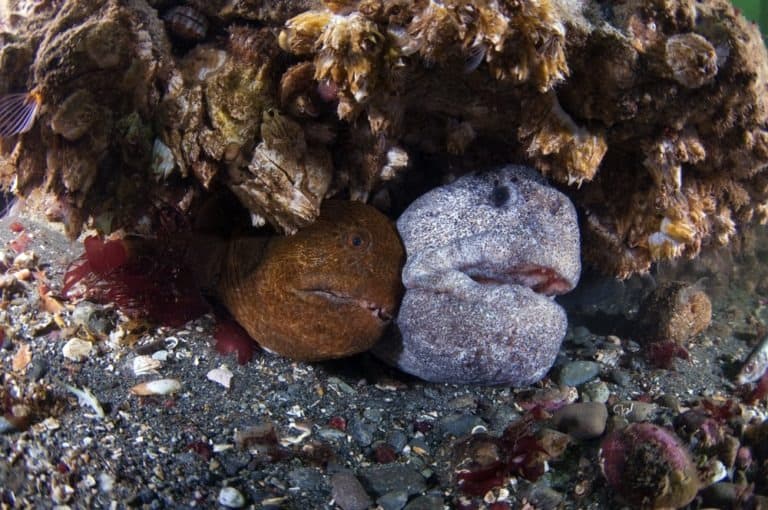
Juvenile Wolf Eel (Anarrhichthys ocellatus).
©NatureDiver/Shutterstock.com
The scientific name of the Wolf Eel is Anarrhichthys ocellatus. Anarrhichthys is a Greek word that means fish. Ocellatus is a Latin term that refers to the spot on the Wolf Eel that looks like eyes.
The Wolf Eel is part of the order Perciformes. This is the largest order of vertebrates, and over 40% of all bony fish are included in this order. The Wolf Eel belongs to the Actinopterygii class and the family Anarhichadidae. Including the Wolf Eel, there are five different species of fish included in this family, also known as the Wolffish family.
Evolution and Origins
In 1855, William Orville Ayres, an American physician and ichthyologist, provided the first formal description of the Wolf Eel, with the San Francisco Bay in California being its type locality. Ayres also described the genus Anarrichthys in the same year, which includes only one species, the Wolf Eel.
The Wolf Eel differs from true eels as it possesses pectoral fins located behind its head, a typical characteristic of fish that is absent in the eel family, where most true eels lack pectoral fins.
At present, the population of Wolf Eels appears to be steady. Although not the primary target of fishermen, they are commonly captured in fish and crab traps.
As with several other species found along the coast, ensuring the maintenance of their rocky reef habitat is crucial to the preservation of the Wolf Eel population.
Appearance
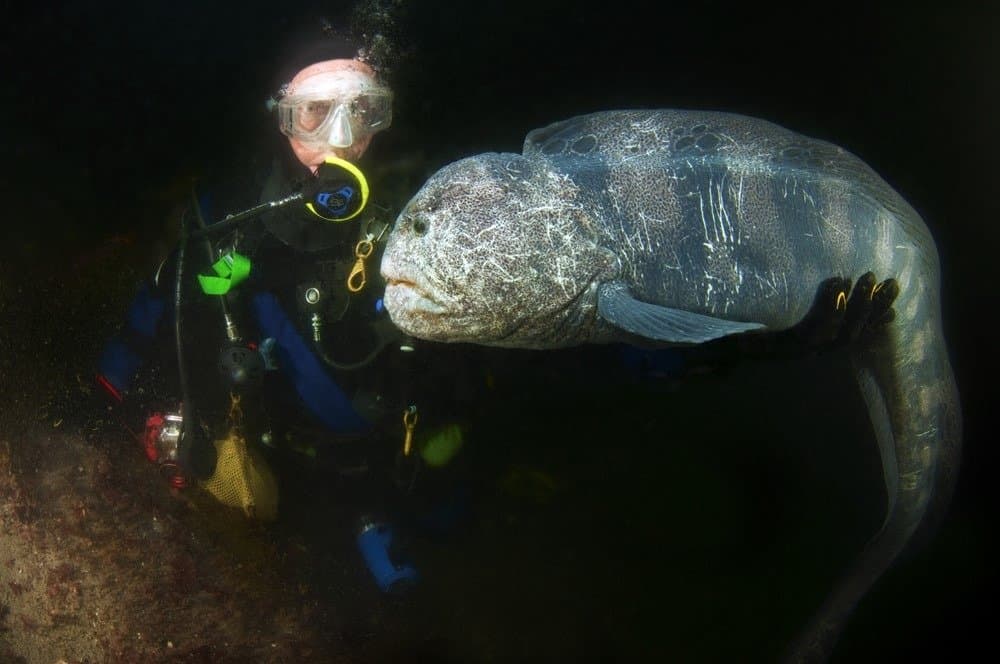
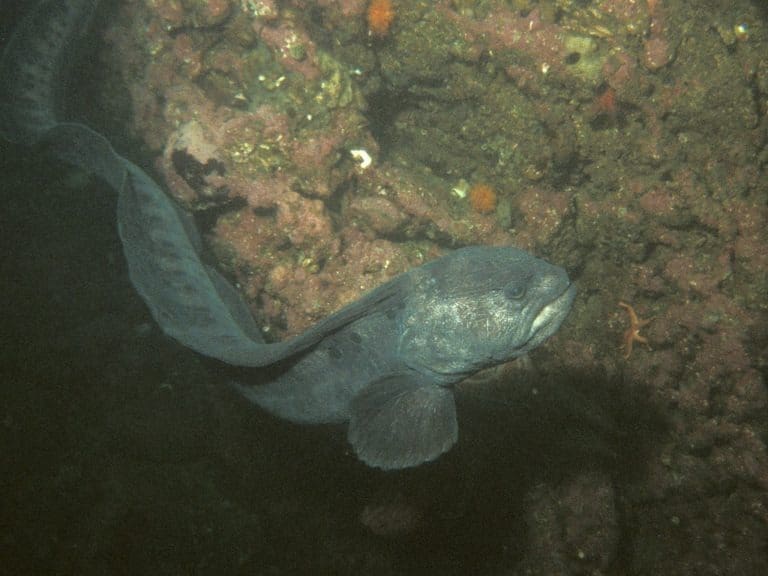
Despite its name, the Wolf Eel is not an eel, but a fish. It possesses typical fish characteristics such as pectoral fins and pairs of gill slits.
©Greg Amptman/Shutterstock.com
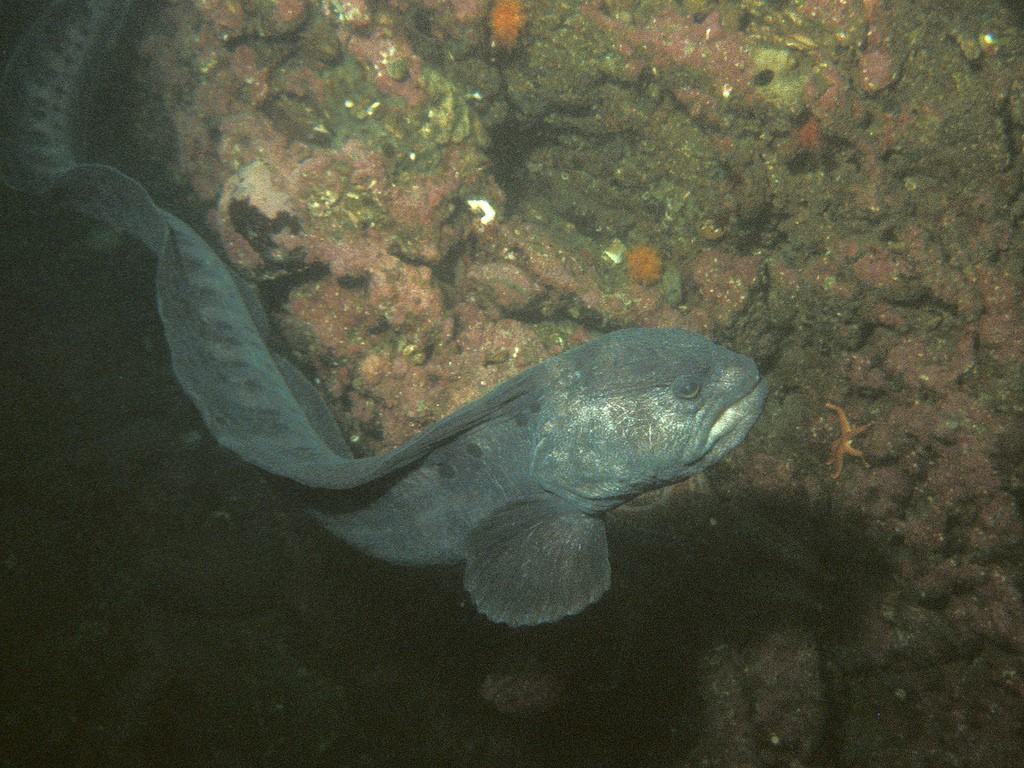
The Wolf Eel’s name may be a bit deceiving. This animal is actually a fish, not an eel. Like other fish, they have pectoral fins and pairs of gill slits. The Wolf Eel is a fish with one dorsal fin that goes nearly the whole length of its body. Their skeleton is made up of between 228 and 250 fishbones that are flexible. They have a small caudal fin and no pelvic fins.
Older Wolf Eels are gray, green, or brownish-gray in color. The gender of a Wolf Eel will determine its coloring, with males being grayer and females being browner. When they are first born, these fish have a bright orange coloring, but their color will fade to green, gray, or brown as they age. They also have dark spots along the backside of their body. The specific pattern of these spots is also determined by gender.
The Wolf Eel is a very large fish. An adult may be up to eight feet long and can weigh up to 41 pounds. They have a cartilaginous skeleton, which makes their bodies very flexible. This makes it easier for them to work their way into tighter crevices and spaces.
These fish have extremely powerful jaws. They use these jaws to bite and crush their prey. They also have a thick layer of slime that covers their body. The slime functions like an immune system and works to protect Wolf Eels. Because their scales are smaller and embedded in their skin, they almost look like they are covered in leather.
Distribution, Population, and Habitat
The Wolf Eel is distributed along the Pacific coast of North America, from Baja California up to Kodiak Island, Alaska.
©USEPA Environmental-Protection-Agency / public domain – Original / License
These fish can be found along the Pacific coast of North America. They range from Baja California to Kodiak Island, Alaska. They can be found as far west as Russia, down to the Sea of Japan in the south.
These fish may swim in shallower waters or deeper waters. They can be found as deep as 741 feet below the surface. They are found in saltwater.
Adults choose to spend most of their time in tighter, more enclosed spaces. They can often be found in caves or small crevices along rocks or pilings. They turn these areas into a den, where they spend much of their time hiding out and looking for prey.
However, while they are still young, juveniles choose to swim around in more open water. Once they are old enough to mate, they will find a den with their partner and live there for the rest of their life.
While it is unclear what the total population is, their numbers seem to be stable.
Predators and Prey
What Threats Do Wolf Eels Face?
These fish have a few natural predators. These include Harbor Seals, Sharks, and other big fish. Juveniles may face additional predators since they are not as large as adults. Eggs are also targeted by other fish, such as Rockfish and Kelp Greenling.
These fish also face threats caused by humans. They are sometimes fished for, but because they are larger and generally stay well below the surface, they are not very easy to catch. However, they do sometimes accidentally get caught in fishing nets or other fishing gear, which can kill them. They are also negatively impacted by pollution.
What do Wolf Eels Eat?
The powerful jaws of these fish allow them to eat animals with hard shells, such as crabs, sea urchins, sand dollars, abalone, mussels, and clams. They also eat softer foods such as other fish or squid. Their jaws clamp down and crush their food.
Reproduction and Lifespan
Most times, these fish will mate for life. When they find their mate, they will also find a den and live there together. They reach sexual maturity around the age of seven years old. Reproduction occurs between October and the end of winter.
A male places his head on the female’s abdomen and wraps himself around her body. The female then releases the eggs, which the male will fertilize. Females may lay up to 10,000 eggs at one time.
Once the eggs have been laid and fertilized, both the male and the female contribute to protecting them. The female wraps her body around the eggs to form them into a large sphere. The male will also coil around the female to provide additional protection.
It typically takes between 91 and 112 days for the eggs to hatch. While the eggs are developing, the female will rotate or massage them to provide them with enough oxygen and make sure the water is able to circulate properly.
Juveniles are bright orange with some purple. They also have white spots along their backside. Almost immediately after they hatch from their eggs, the young fish are ready to hunt. However, a juvenile’s jaws are not as strong as an adult’s, so juveniles eat fish rather than hard-shelled animals.
The lifespan of a Wolf Eel is about 25 years.
Fishing and Cooking
Some people do catch these fish recreationally. Some also cook and eat this fish. The tribal healers of some Native American tribes that lived in the coastal northwestern region were the only ones in the tribe allowed to eat them. They believed it could improve their healing abilities.
These fish have white flesh. It has a mildly sweet taste. The taste is similar to that of wild trout.
Wolf Eel Pictures
View all of our Wolf Eel pictures in the gallery.

Michaelpuche/Shutterstock.com
Sources
- Total Fisherman Guide Service / Accessed November 21, 2020
- Wikipedia / Accessed November 21, 2020
- Wikipedia / Accessed November 21, 2020
- Eschmeyer's Catalogue of Fishes / Accessed November 21, 2020
- Alaska Sealife Center / Accessed November 21, 2020
- Seattle Aquarium / Accessed November 21, 2020
- Monterey Bay Aquarium / Accessed November 21, 2020
- The Marine Detective / Accessed November 21, 2020