
Quick Take
- Cheetahs reach speeds up to 70 mph, making them the fastest land animal.
- The flexible spine acts like a spring to extend each stride and improve turns.
- Long-range vision up to 3 miles helps them spot prey and avoid danger.
Cheetahs are one of the most incredible creatures to walk the earth. Unfortunately, as a result of climate change, habitat destruction, and hunting, these big cats are on the brink of extinction.
To help spread the word of the cheetahs’ plight for survival, International Cheetah Day was created. First celebrated on December 4, 2010, International Cheetah Day was designated by Dr. Laurie Marker, a zoologist and conservation biologist. The day celebrates a cheetah named Khayam that Dr. Marker raised from a baby.
Dr. Marker was interested in whether captive cheetahs could be trained to hunt in the wild. To conduct her research, she and Khayam traveled to Namibia. What was supposed to be a research project turned into something much larger on that trip, as Dr. Marker discovered that local farmers were killing large numbers of cheetahs to protect their cattle. In total, over 7,000 were killed in the 1980s alone. This changed the entire trajectory of Dr. Marker’s career. She eventually moved to Namibia in 1990 to start a cheetah research center, which became the Cheetah Conservation Fund.
The Cheetah Conservation Fund’s goal has always been to conserve cheetahs in the wild and save their habitats. Since its inception, CCF has worked to find ways for people and cheetahs to coexist peacefully, all of which began after Dr. Marker dedicated her life to being Khayam’s companion and learning from the cheetah, including what adaptations cheetahs have that help them survive in the wild.
Built-In Sunglasses
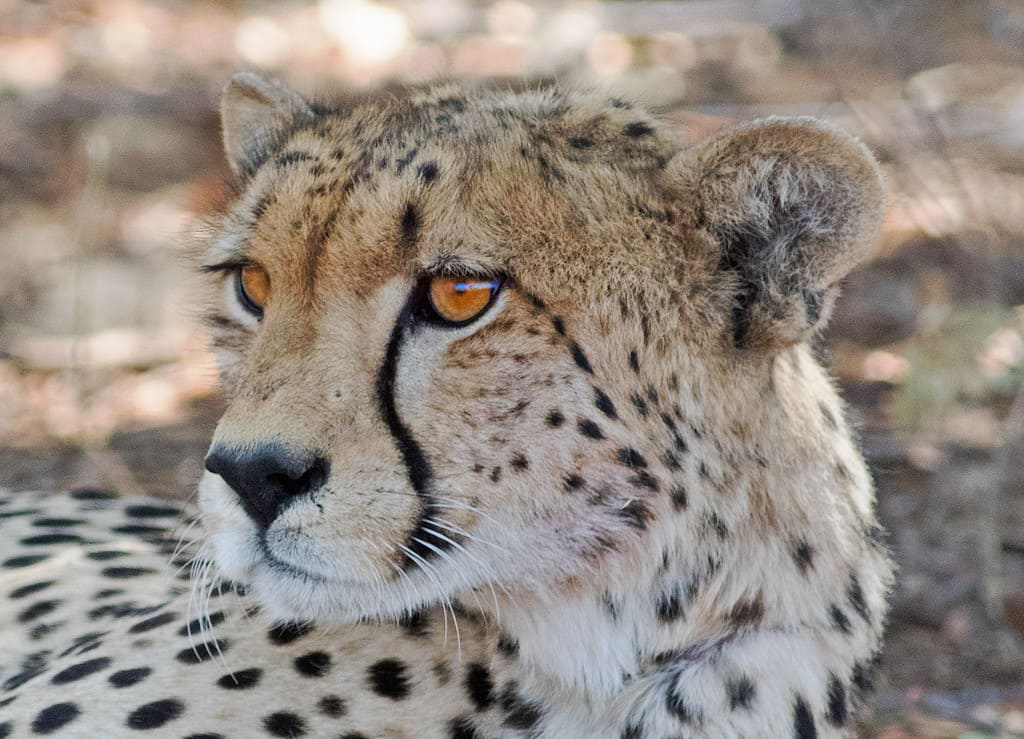
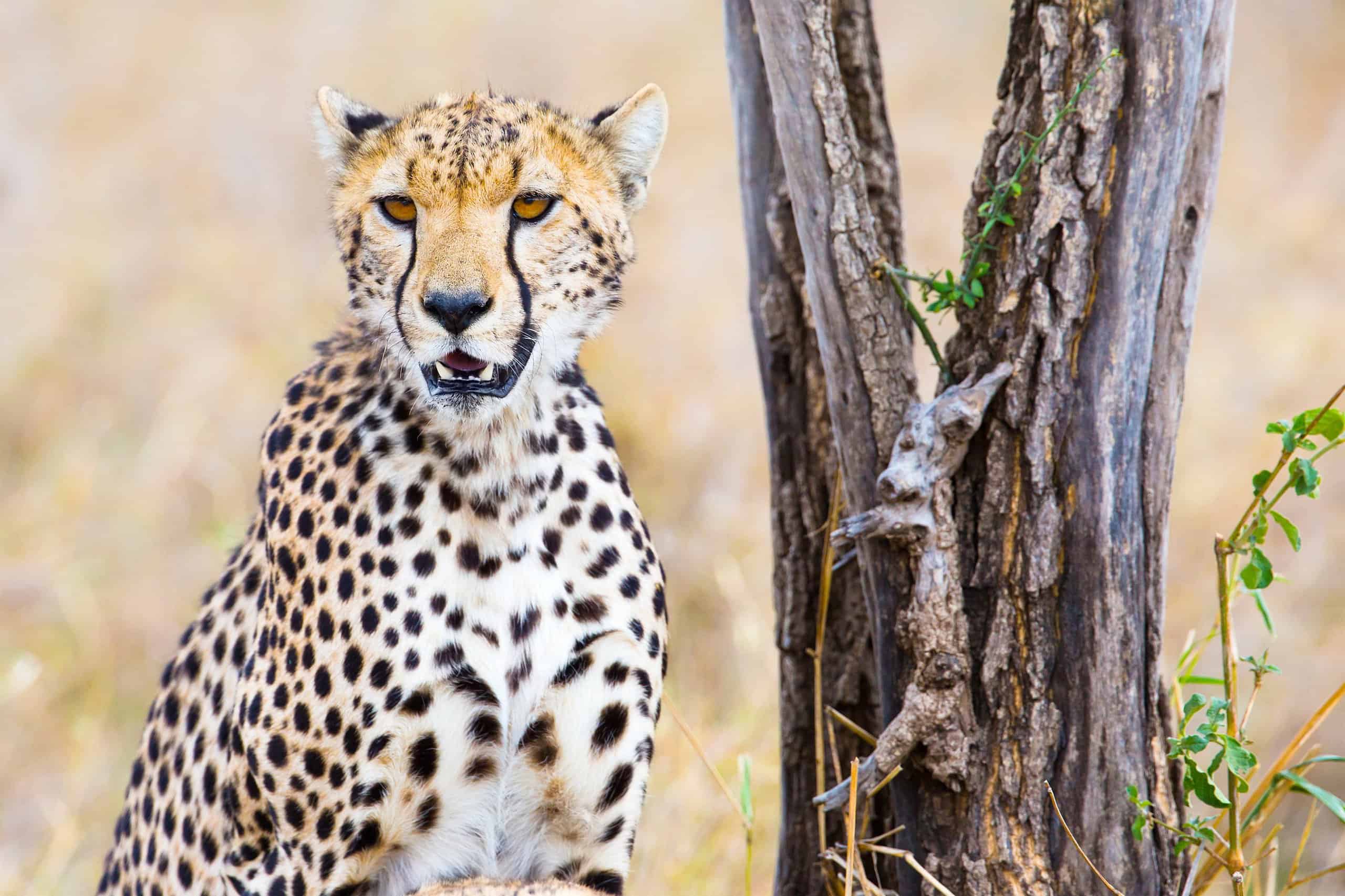
The “tear marks” on cheetahs’ faces help to reflect the sunlight out of their eyes.
©paulafrench/iStock via Getty Images
While cheetahs once lived in a variety of locales, today they primarily live in Eastern and Southern Africa, as well as in pockets of Iran. The habitats they live in tend to be very sunny, which can cause glare while hunting or impede long-distance vision.
Cheetahs drastically reduce the glare their eyes endure by having built-in eye protection. The black “tear marks” that run down the cheetah’s face are not only distinctive markings of a cheetah, but they also absorb sunlight. Consequently, cheetahs are skilled daytime hunters that thrive in their sun-filled habitats.
Daytime Hunting Skills
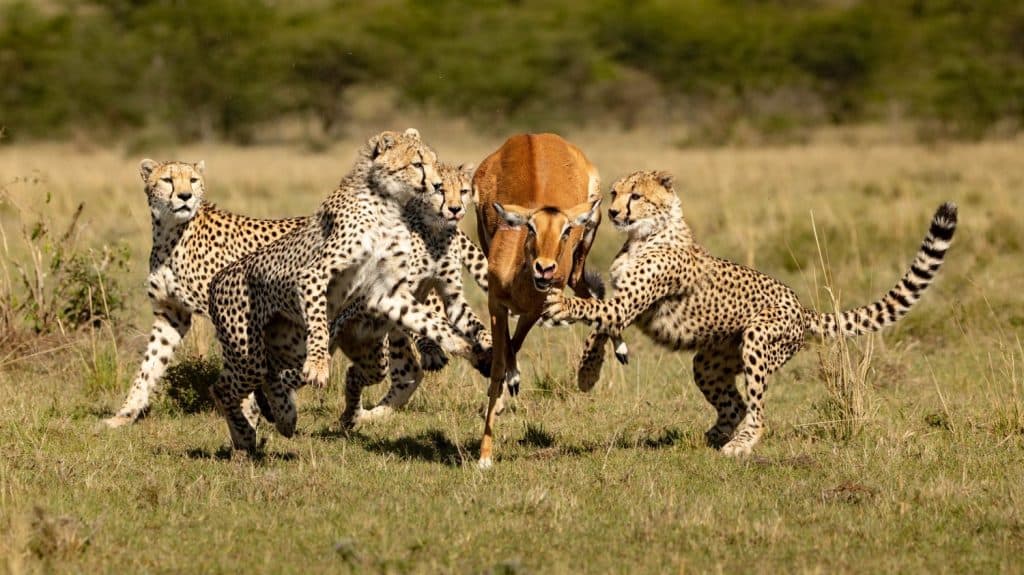
To not compete with other predators, cheetahs will hunt during daylight hours.
©Shlomi Hazan/Shutterstock.com
Unlike other large cats in Africa that hunt at night, cheetahs are diurnal hunters. This means they do the bulk of their hunting at dawn or dusk. However, if prey is available during the peak of the day, cheetahs will hunt then as well.
Cheetahs have adapted to hunt during the day rather than at night so that they do not have to compete with other large cats for prey. This helps with the cheetah’s survival, as not only do they not get into fights with larger cats, but they also do not lose their hard-fought prey to a larger cat, which could swoop in and take it from a cheetah with their larger body size and greater strength.
Incredible Speed
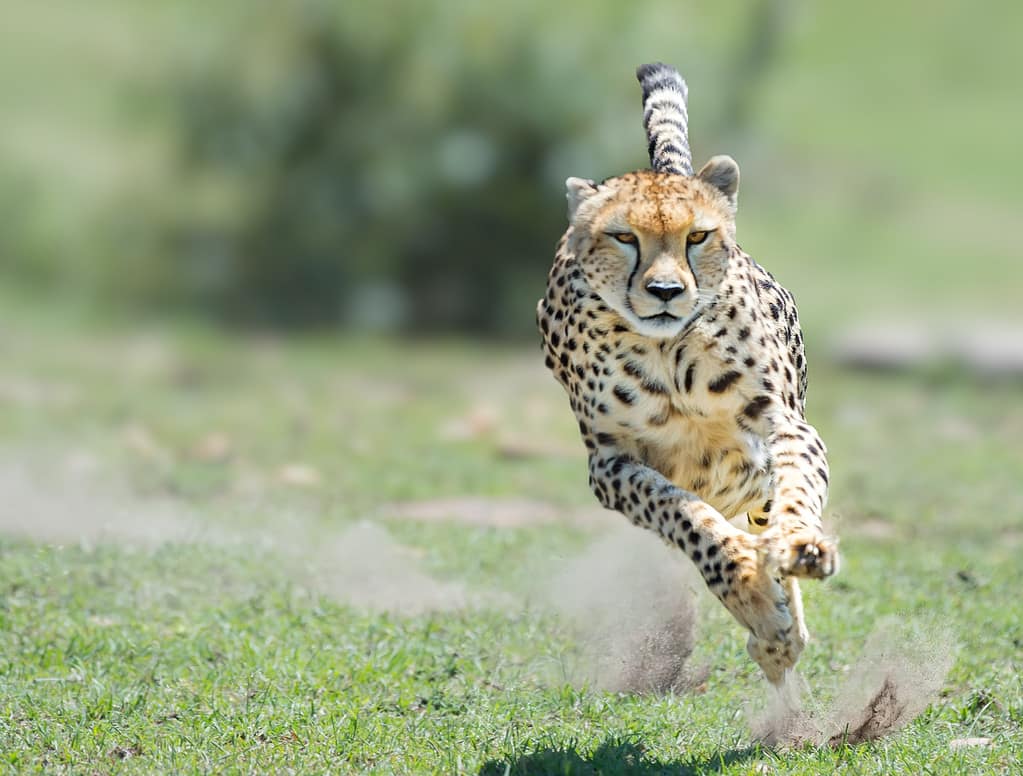
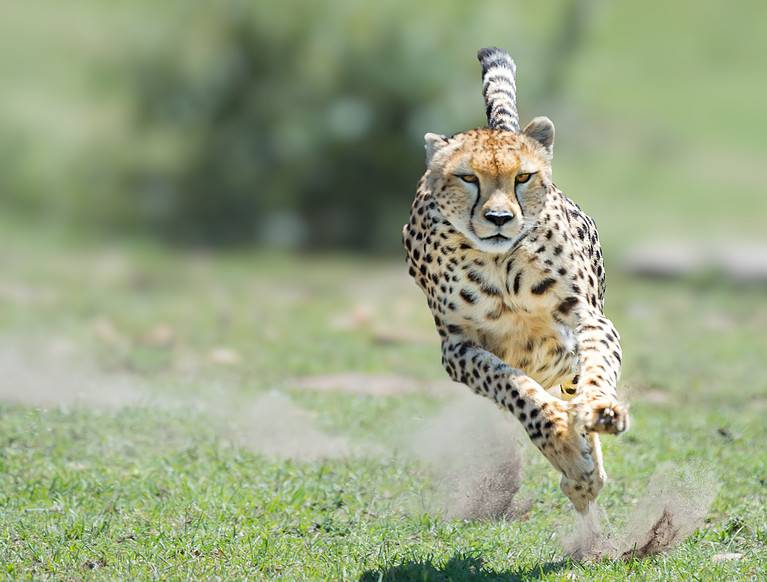
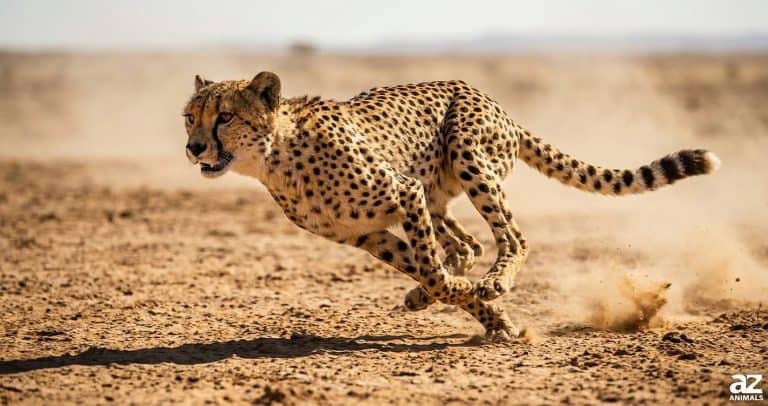
Cheetahs are skilled runners that can reach up to 70 miles per hour.
©Kandfoto/iStock via Getty Images
While cheetahs may lack the strength that other big cats have, they are the fastest land animal. With speeds that can reach up to 70 miles per hour, there is no other land animal that comes close to just how fast cheetahs can run.
This incredible speed is vital to survival as it helps cheetahs chase down their prey. While cheetahs cannot overpower large prey when it is rested, if a cheetah can tire it out, it has a better chance of a successful hunt. Additionally, for prey that tends to be more agile, the cheetah’s speed helps it chase down its target, no matter how quickly it changes direction.
Flexible Spine
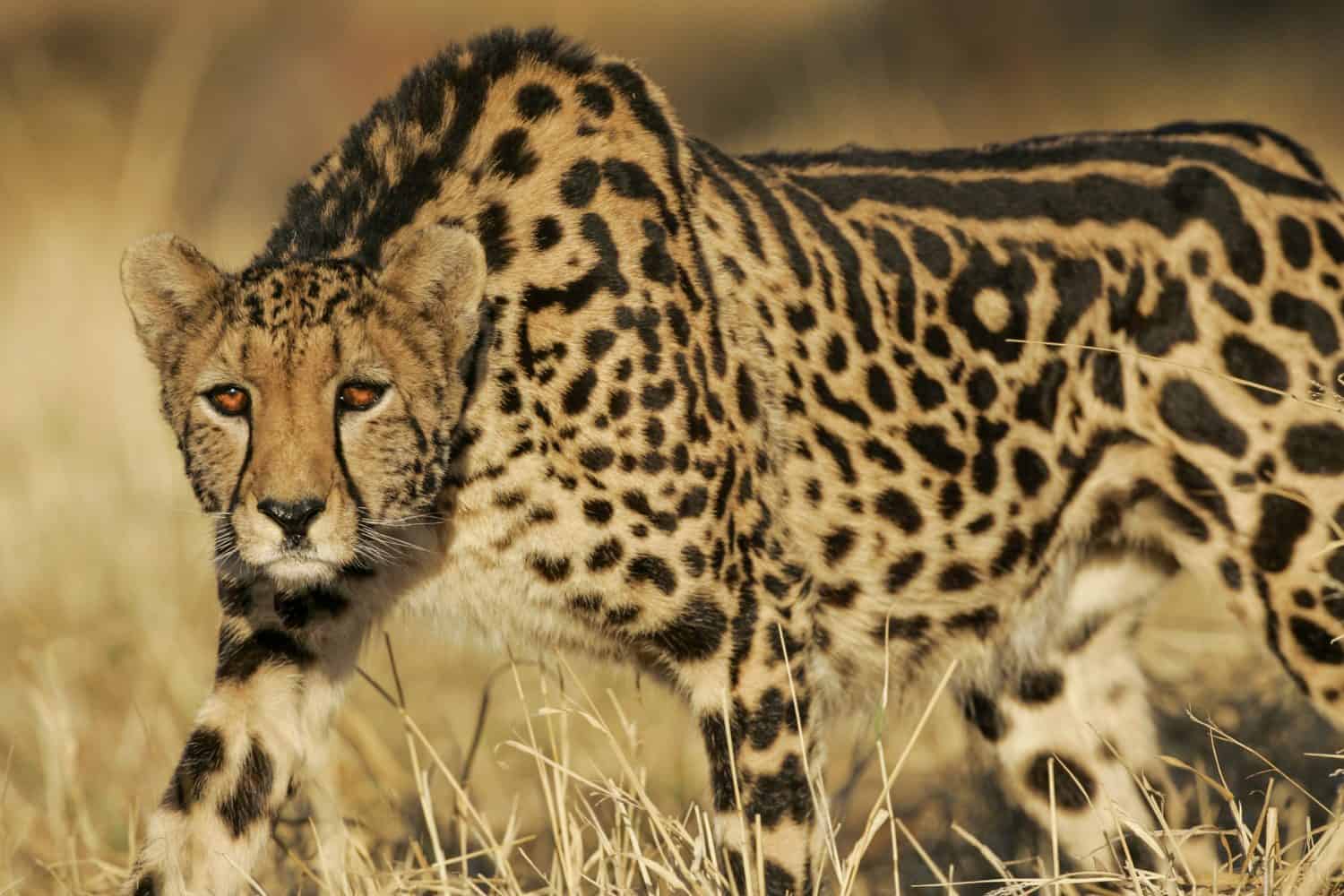
The cheetah’s flexible spine not only helps it reach high speeds when running but also helps it maintain them.
©Stu Porter/Shutterstock.com
To be as fast as cheetahs are, their bodies have adapted over time. One of the biggest adaptations is having a flexible spine. Without this, cheetahs would not only not be as fast as they are, but they would not be able to gain speed quickly.
The flexible spine works by acting like a spring. With each stride the cheetah takes, the spine reacts by either expanding or contracting. This, in conjunction with flexible hips, allows cheetahs to cover a lot of ground in a short period and to change direction at a moment’s notice. This is important when running from predators or pursuing prey.
Large Heart and Lungs
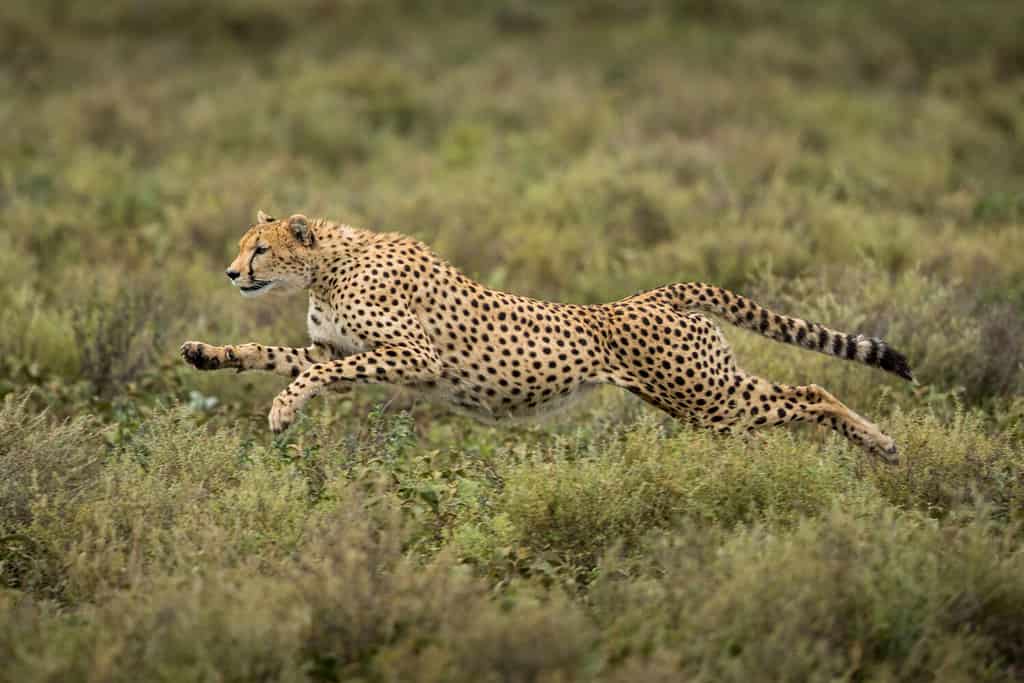
Thanks to their large hearts and lungs, cheetahs can run at high speeds and maintain them while hunting.
©Danita Delimont/Shutterstock.com
While the speed and flexibility of the spine are important for the cheetah’s survival, without a large heart and lungs, reaching those high speeds would be impossible.
For cheetahs to have large bursts of speed, they need more oxygenated blood to flow through their muscles. This is achieved through a larger heart and a higher lung capacity than in other animals. When cheetahs are running at high rates of speed, it is not uncommon for them to go from 60 breaths per minute to 150 breaths per minute. It is this rapid oxygenation that enables cheetahs to go from stalking to actively chasing down prey at a moment’s notice.
Steering Wheel Tail
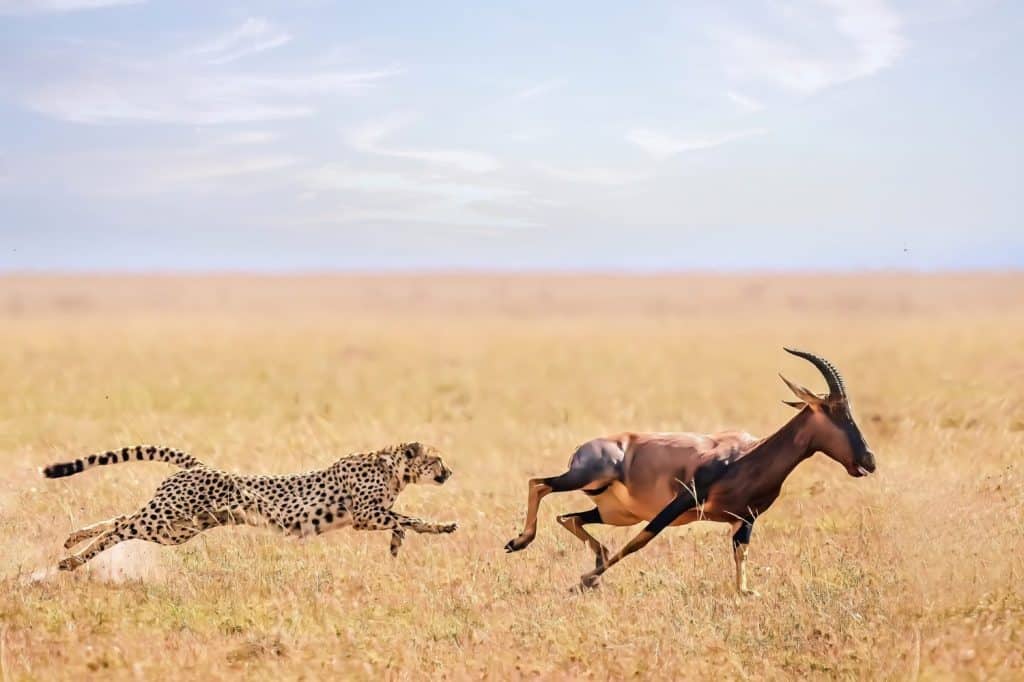
Cheetahs’ tails help them to stay on course when chasing after prey.
©Mou Mukherjee/Shutterstock.com
As cheetahs are running at high rates of speed, they need a way to not only stay balanced but to adjust their course when necessary. Thanks to their steering wheel tail, this is achieved.
A 2016 study published in Biology Open found that the tail helps with turns, stability, and even braking. Likened to a rudder on boats, the tail acts as a way for the cheetah to steer and control the direction it goes. Therefore, if the tail were shorter or even non-existent, cheetahs might still be able to run fast, but they would not be able to control their direction as easily as they do today.
Semi-Retractable Claws
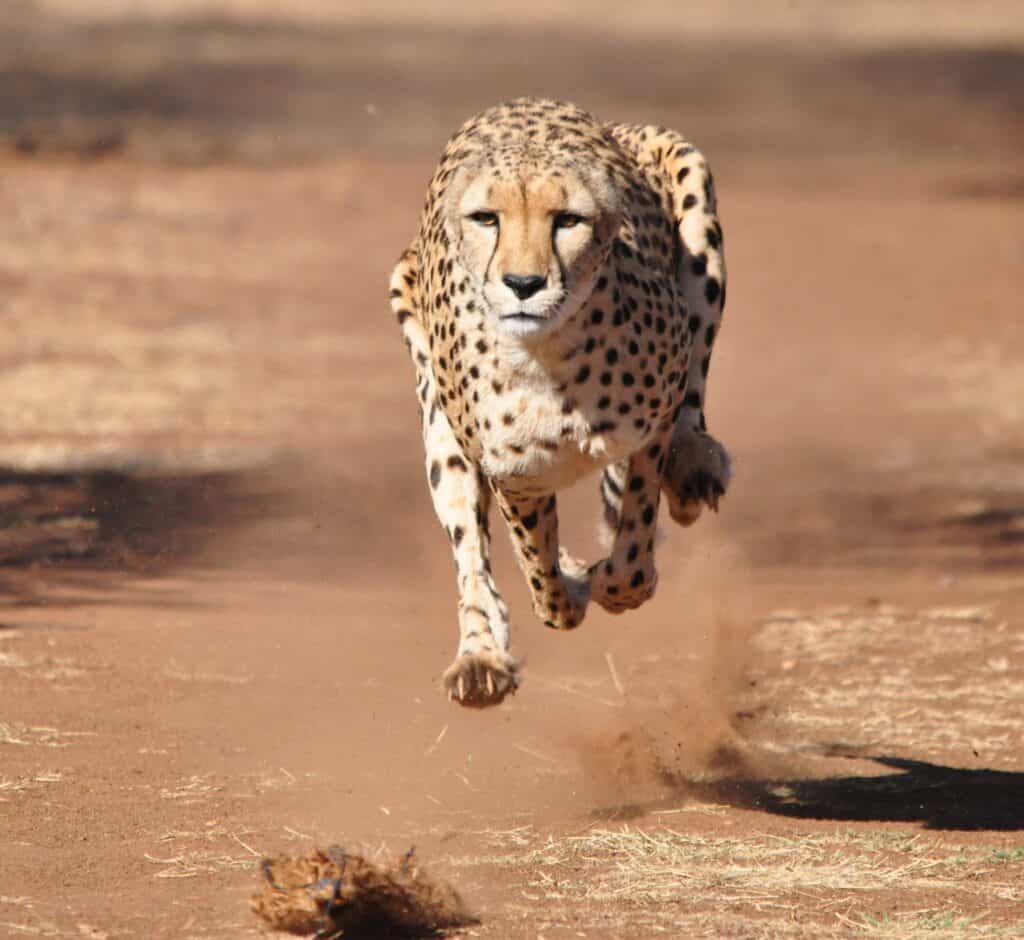
Cheetahs have semi-retractable claws that help them gain traction when running at high speeds.
©Marcel Brekelmans/Shutterstock.com
Cats, both large and small, are known for their ability to retract their claws. Cheetahs, however, only have semi-retractable claws. This may seem like a disadvantage, but for the cheetah, semi-retractable claws are an advantage in their survival.
The reason that cheetahs have semi-retractable claws has to do with their running speed. To run up to 70 miles per hour and make sharp turns, the cheetah needs to be able to dig into the ground. Were their claws retracted, cheetahs would have a greater likelihood of slipping when in pursuit of prey. Therefore, by having claws that do not retract completely, they are better equipped to both run and turn on a dime.
Incredible Camouflage
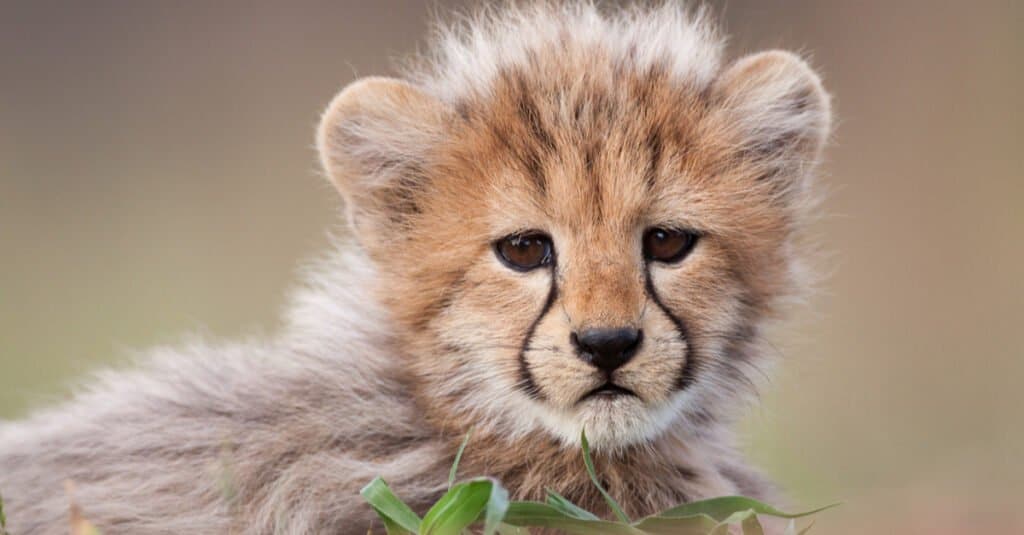
Between their spotted coats as adults and their fuzzy coats as cubs, cheetahs have incredible camouflaging skills in the African savannah.
©Stu Porter/Shutterstock.com
Cheetahs are striking cats for their spotted coats. However, those spots adorn cheetahs for more than just looks alone. They help the big cats with camouflage as well.
In the savannah habitat, animals that are not earth tones tend to stand out. For a predator, this would spell disaster when stalking prey. Thanks to the spotting of the cheetah’s coat, they easily blend in with the long grasses of the savannah, making them efficient and effective hunters.
It is not only the spots that help with camouflage. When cubs are born, they have long coats. These coats help them avoid detection by predators, thanks to their puffy hair that looks very similar to the tall grasses where they hide when their mothers are off hunting. As cheetahs age, their hair eventually grows shorter, revealing the spots that are necessary for camouflage when hunting as adults.
Long-Range Vision
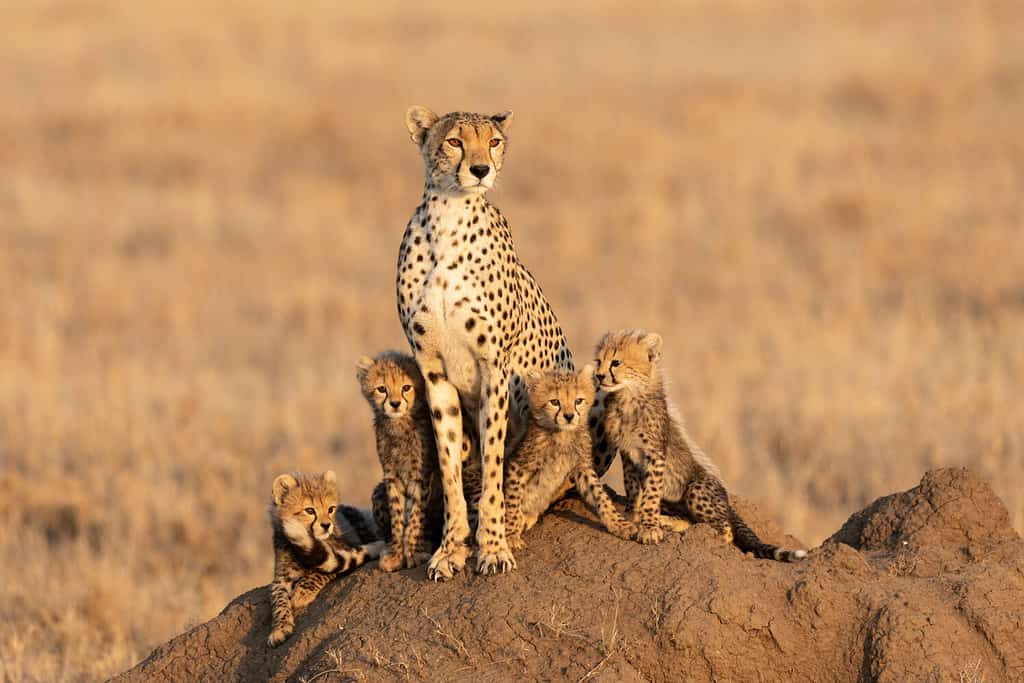
Cheetahs can see up to three miles in the distance, allowing them to stay away from danger and hunt prey simultaneously.
©Stu Porter/Shutterstock.com
Cheetahs are equipped with heightened senses that help them stay safe while living on the African savannah. One of the most impressive is their long-range vision that can help them see miles in the distance.
Cheetahs can see up to three miles away. This is helpful for survival, as it not only helps them spot prey but also allows them to avoid predators. By seeing off in the distance, cheetahs keep both themselves and their cubs safe, which is a necessity for the species if they are to be spared from extinction.
Water Conservation
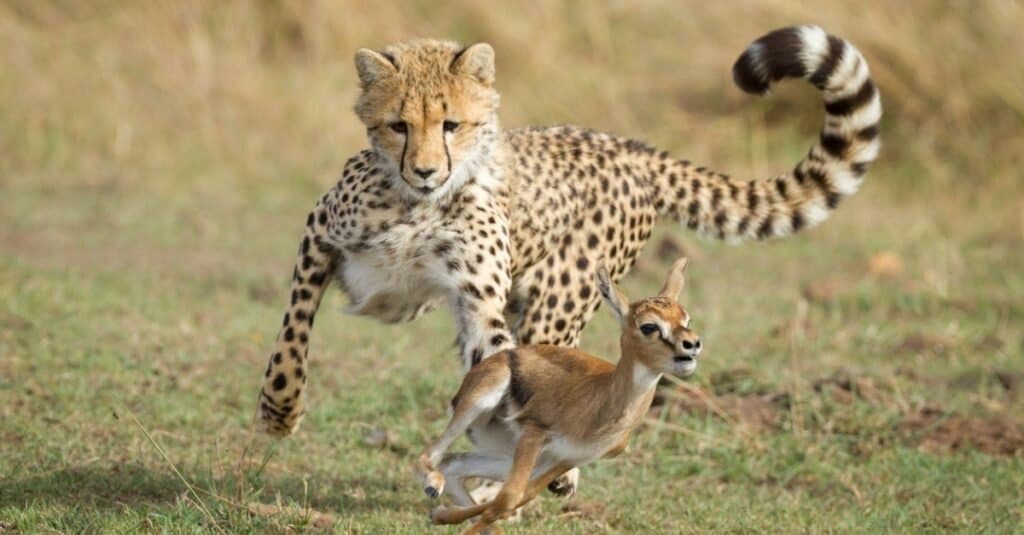
Cheetahs can go for days at a time without drinking water, relying on their prey to hydrate them instead.
©iStock.com/StuPorts
Given the habitat in which cheetahs live, there are times when water is scarce. While this could mean the demise of some animals, cheetahs have adapted to not needing to drink water daily. Instead, they rely on their prey to hydrate them effectively.
Cheetahs typically go for a few days without water, as long as they have been successfully hunting. Those who do quite well with hunting can go up to 10 days without drinking water. Cheetahs are opportunistic drinkers and will hydrate at water holes when available. But given that some months in the savannah can be incredibly dry, the adaptation of using prey to hydrate has allowed cheetahs to survive for as long as they have on the African continent.