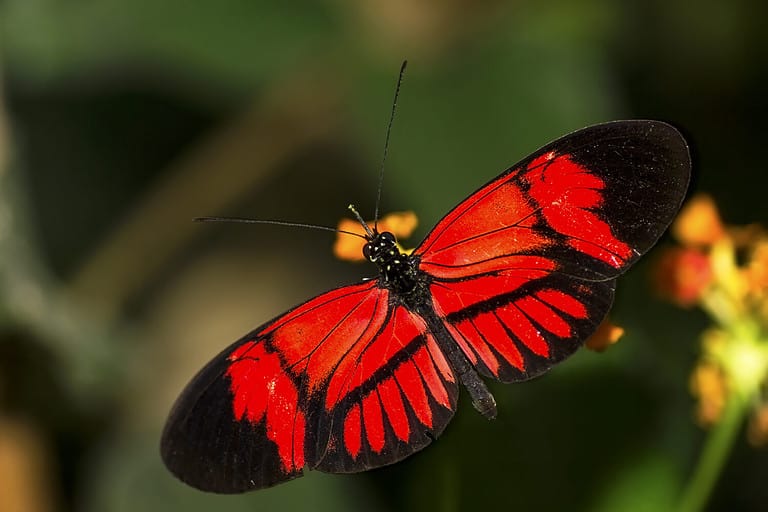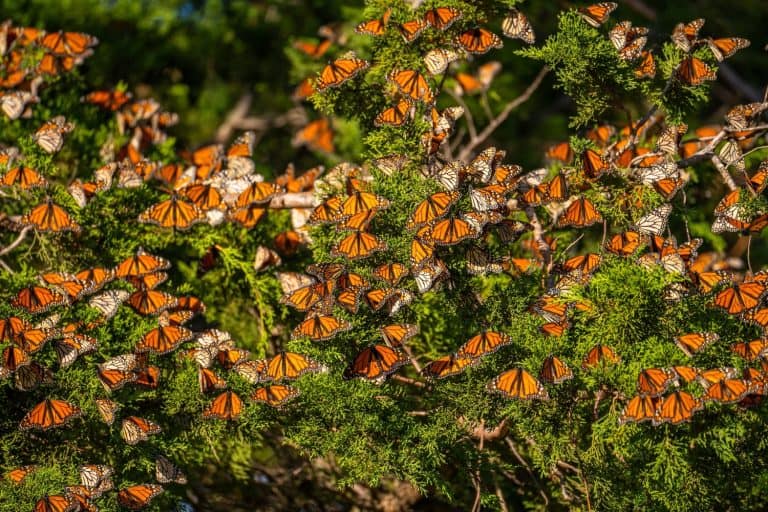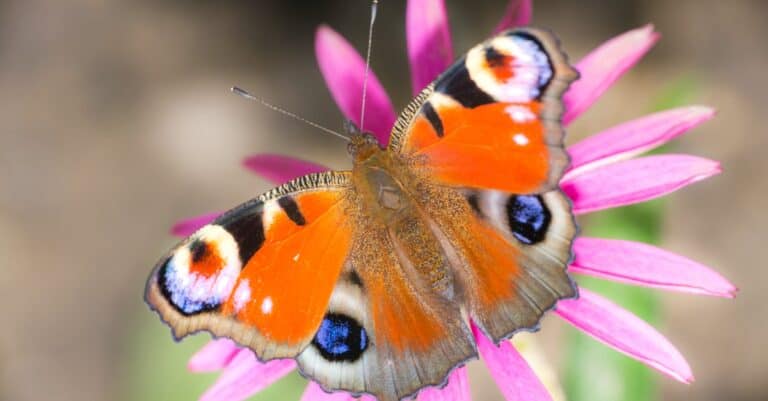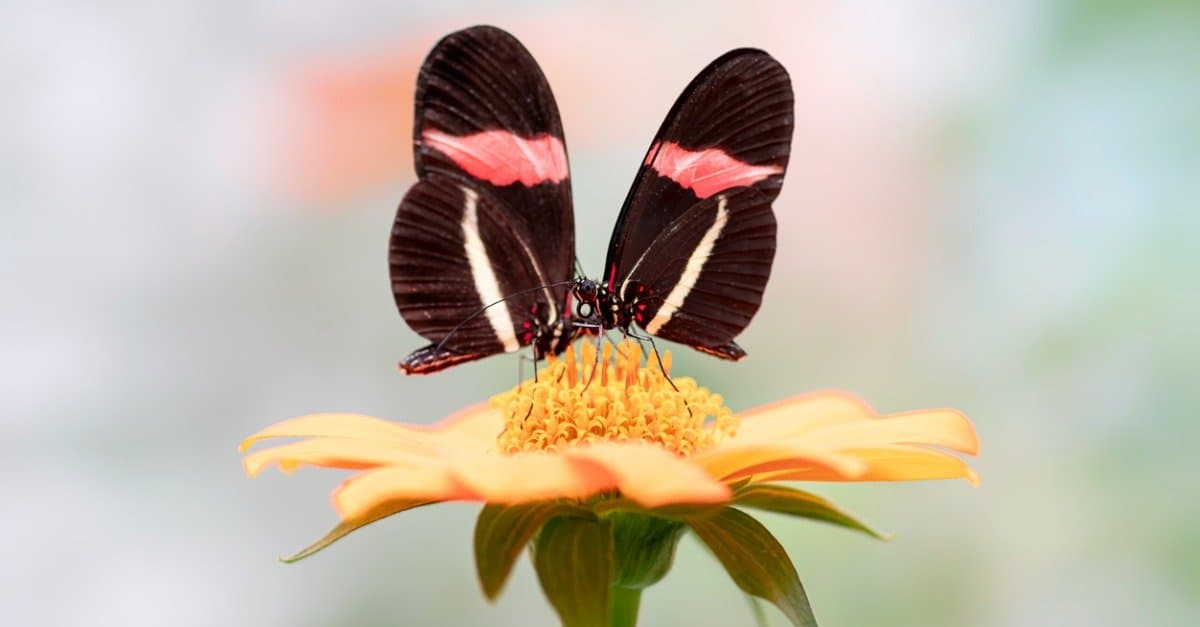

Butterflies are fragile and vulnerable to predation by all kinds of critters, from birds and reptiles to spiders and other insects. As a result, butterflies have evolved to protect themselves. Some butterflies have eyespots on their wings, while others have camouflage that lets them mimic leaves or bark. Others are brilliantly colored — a phenomenon called aposematism — signaling to predators that they are dangerous. Some butterflies are also poisonous. In their larval stage, caterpillars feed on poisonous plants, such as milkweed, storing away the toxins, which will eventually be used to make the butterfly distasteful to would-be predators. Continue reading to discover 10 poisonous butterflies.
10. Monarch
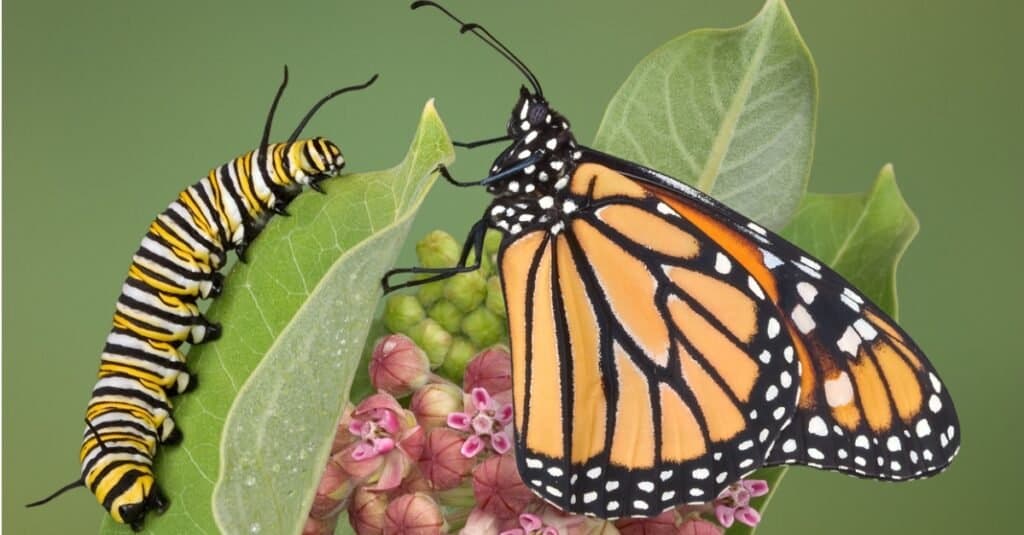
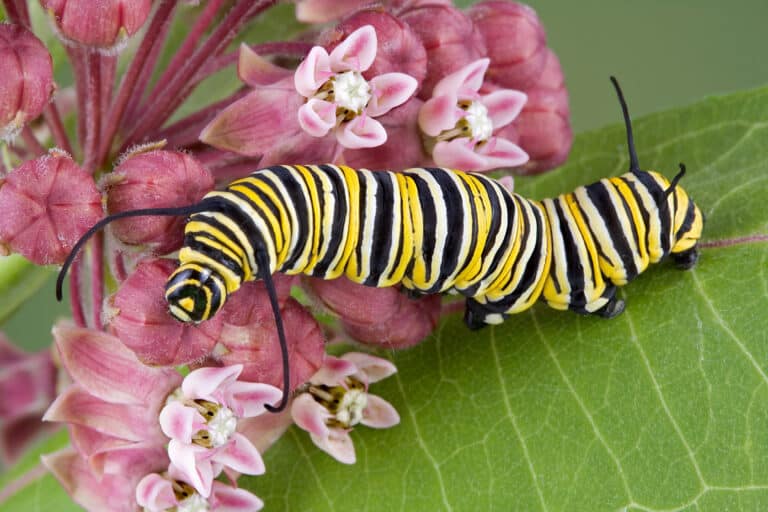
Though a welcome sight in springtime, the monarch butterfly is toxic.
©Cathy Keifer/Shutterstock.com
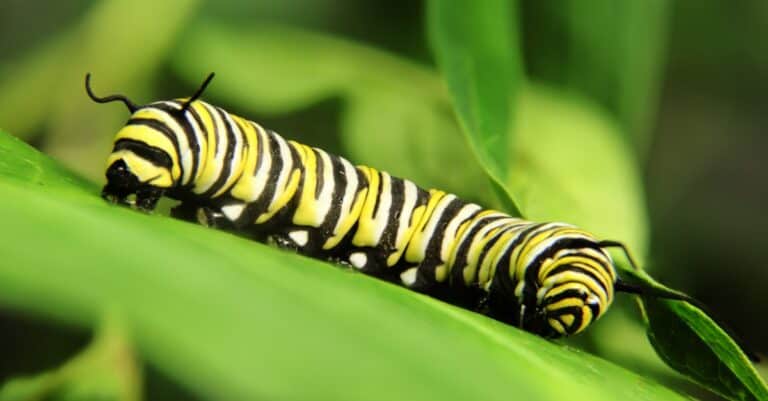
The monarch butterfly (Danaus plexippus) is known for the beauty of its orange, white, and black wings, its long migration, and its toxicity. This butterfly lays its eggs exclusively on milkweed plants, which are poisonous. In its larval stage, the caterpillar eats the leaves of the plant, and it collects toxins called cardiac glycosides, which remain in the wings and the abdomen of the adult.
9. Red Lacewing
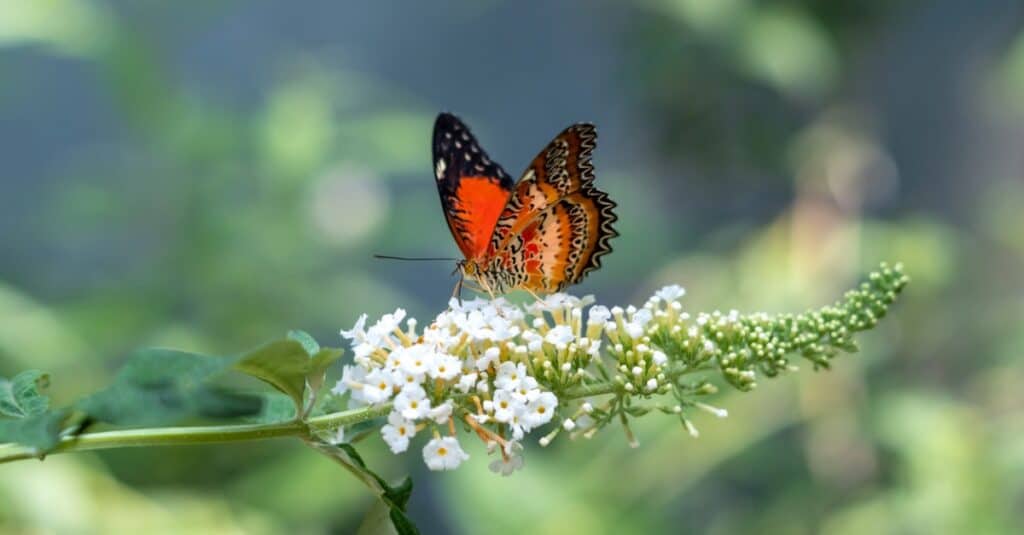
The colors of the red lacewing ward off predators.
©Natalya Mamaeva/Shutterstock.com
The red lacewing (Cethosia biblis) is a beautiful butterfly from Asia with wings that are colored orange, black, and white. These colors of the red lacewing warn predators that this insect is toxic. As a caterpillar, it feeds on passionflowers and is equipped with spines that can cause skin irritation.
8. Zebra Longwing
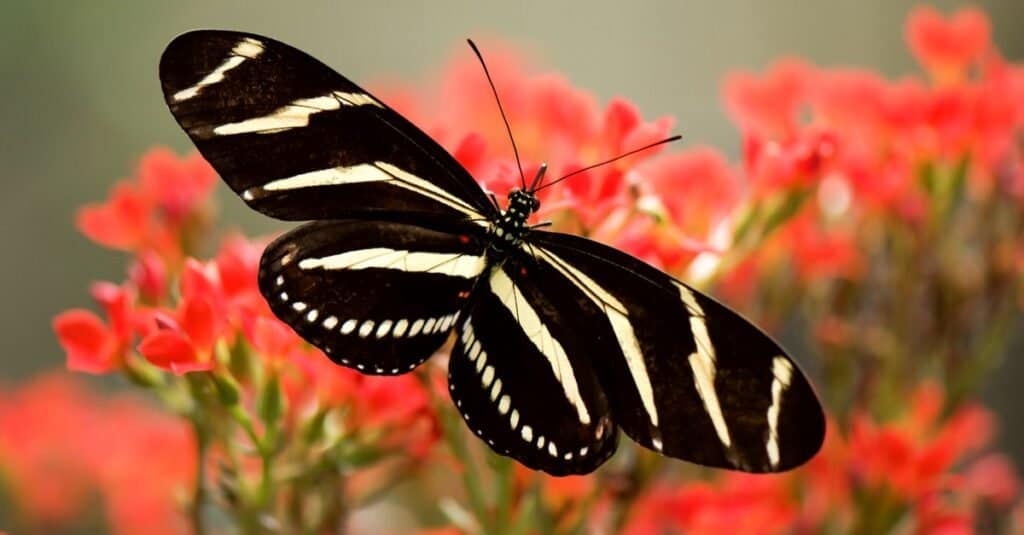
The zebra longwing gets its poison from the pollen it consumes.
©Julee75/Shutterstock.com
The zebra longwing (Heliconius charithonia) is a long-lived, long-winged butterfly that derives both its long life and its toxins from the pollen it consumes and the poison it stores as a caterpillar while feeding on passionflowers. Pollen is converted in its body to toxins called cyanogenic glycosides. This not only protects the butterfly but also safeguards the caterpillar, as the female butterfly can redirect these toxins to her eggs when pollen levels are low.
7. Pipevine Swallowtail
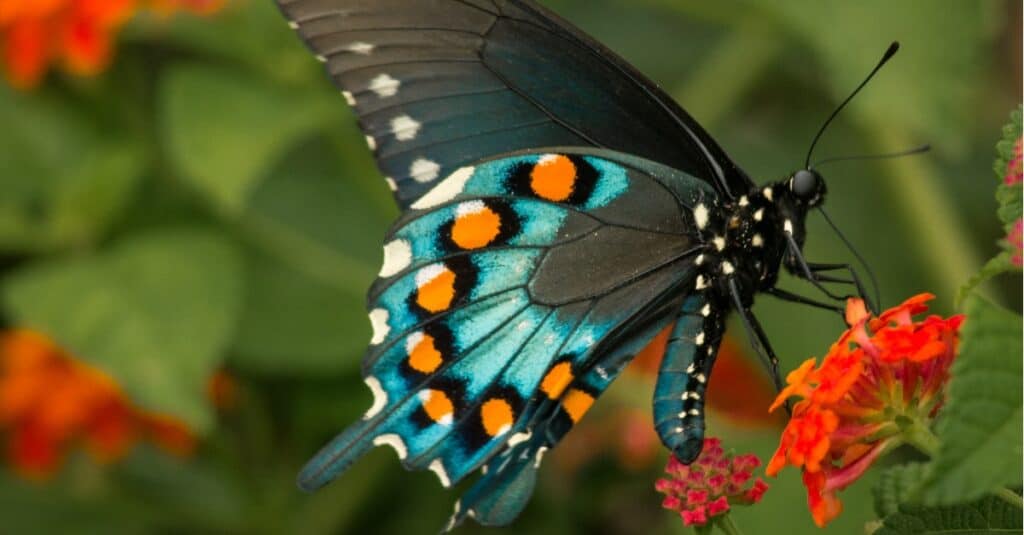
The pipevine swallowtail is one of the most poisonous butterflies in existence, due to its consumption of the toxic pipevine.
©iStock.com/SW_Olson
The striking pipevine swallowtail (Battus philenor) is one of the most toxic butterflies. This butterfly acquires toxins during its larval stage as it feeds on the toxic pipevine. This plant is full of aristolochic acid, which makes both the butterfly and the caterpillar unpalatable to predators. Because of this defense mechanism, several butterflies mimic the pipevine swallowtail, including the spicebush swallowtail. Interestingly, some species of pipevine are dangerous even to the caterpillars, so the female pipevine swallowtail must be careful where she lays her eggs.
6. The Postman
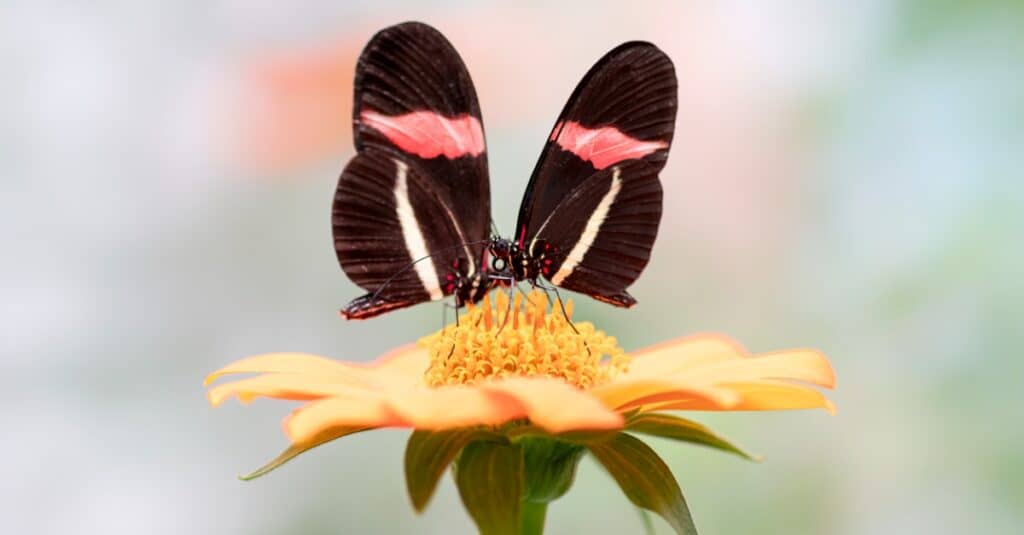
Known to be toxic and to emit a foul odor, the postman butterfly is nonetheless beautiful.
©iStock.com/AGD Beukhof
Native to Central and South America, the postman butterfly’s (Heliconius melpomene) caterpillars eat the poisonous passionflower. Many butterflies mimic the postman and fly with it to give them protection from predators. The postman is not only bad tasting but also has a strong odor that even humans can smell.
5. Queen Butterfly
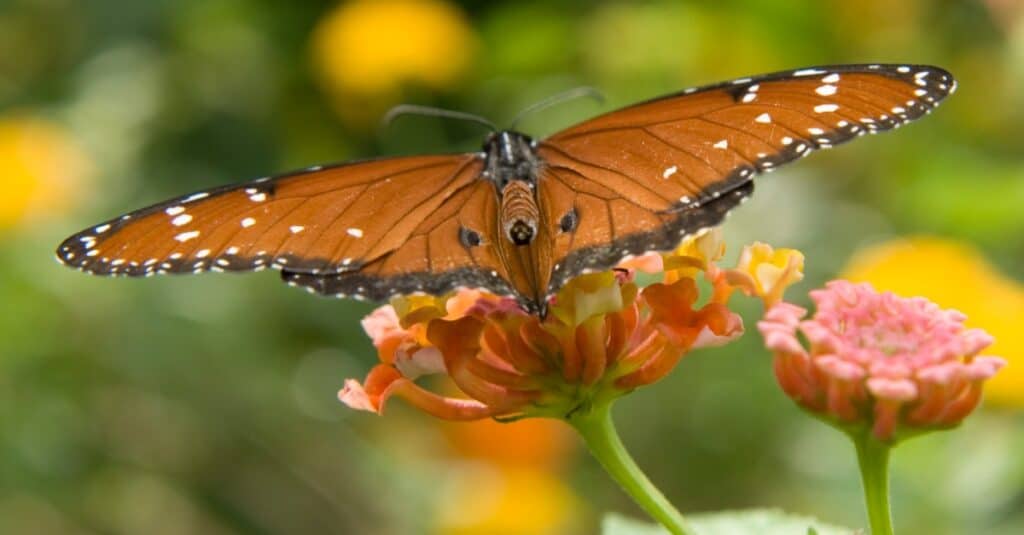
Among other plants, the queen butterfly feeds on poisonous milkweed.
©iStock.com/rodsnyder
The queen butterfly (Danaus gilippus) is another milkweed butterfly, though the levels of alkaloids and cardenolides that its caterpillar stores into adulthood vary. Their larvae do not feed exclusively on the poisonous milkweed. They can also thrive on plants such as dogbane. The queen is large with orange-brown wings bordered and veined with black. The white spots on its forewings and its black wing borders appear to glow. Found in North and South America, queen butterfly habitats include marshes, forest edges, fields, and even deserts.
4. Atala Butterfly
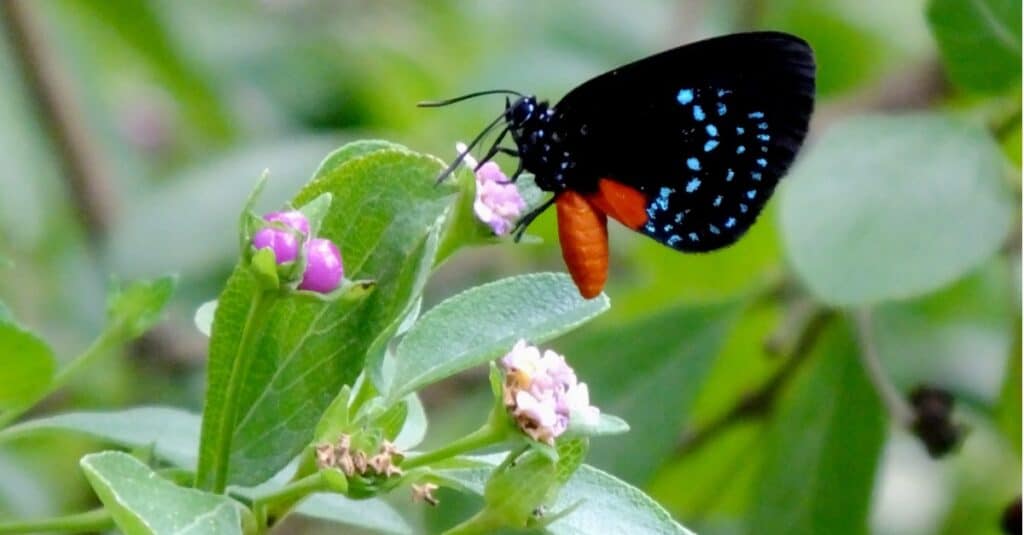
The atala butterfly can metabolize the toxic cycad plant, though its predators cannot.
©iStock.com/passion4nature
The tiny atala butterfly (Eumaeus atala) is unusual because the male’s abdomen is brilliant red, and its wings are metallic blue with light metallic blue dots edging the hindwings. Its coloration and the bright red and yellow colors of its caterpillar warn predators of its toxicity. It is a member of the Eumaeus genus, which is famous because several of its members are poisonous. It is found in Southern Florida and south to the Greater Antilles. It gets its toxins from cycads, ancient plants that have been around since before the dinosaurs.
3. Common Indian Crow
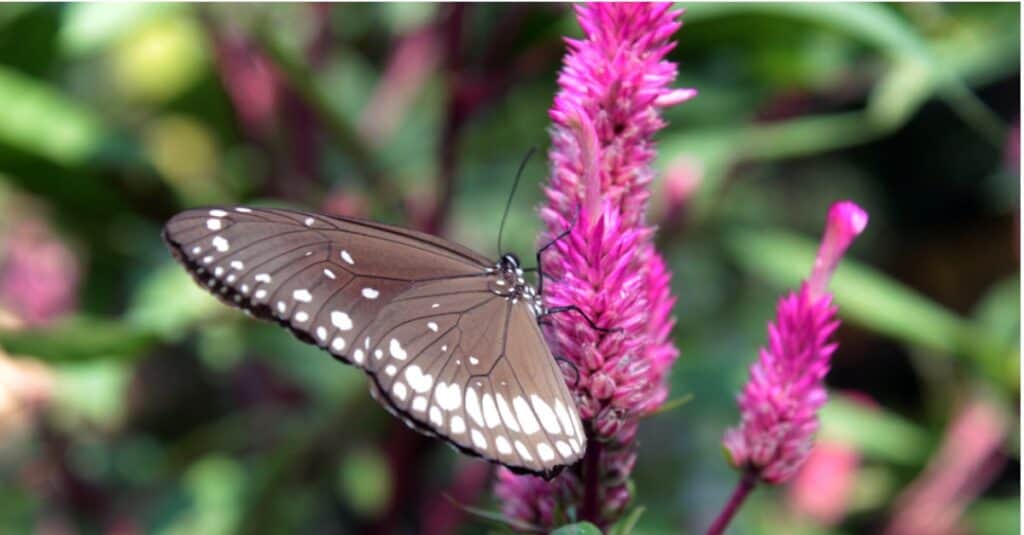
The common Indian crow butterfly expels a toxic liquid that causes its predators to vomit.
©iStock.com/MANORANJAN MISHRA
The common Indian crow (Euploea core) resembles the queen butterfly and belongs to the same family, Nymphalidae. The Indian crow’s wings are black, trimmed with white, and it is native to Asia and Australia. This butterfly makes its poison from oleander and milkweed. Like other toxic butterflies, it is mimicked by perfectly edible ones, including the Malabar raven, the great eggfly, and the common mime. The common Indian crow plays dead when it’s attacked by predators, releasing a nasty, toxic liquid that makes predators let go and vomit.
2. Birdwing Butterflies
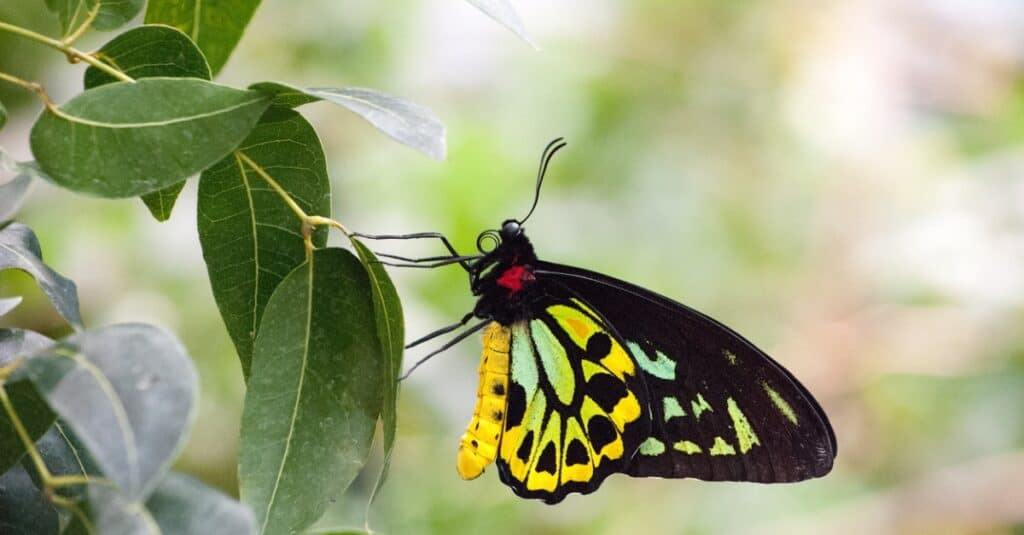
One of the largest butterflies in the world, the birdwing butterfly can also be poisonous.
©iStock.com/Cathie Moog
Birdwing butterflies, belonging to the genera Trogonoptera, Troides, and Ornithoptera, are some of the largest butterflies on earth, and most of them are poisonous. They are astonishingly beautiful, which has made them the target of collectors. Subsequently, many have become endangered. Birdwings are native to the rainforests of Asia and Australia. Like the pipevine swallowtail, the caterpillars of birdwings eat pipevine and birthwort, which they metabolize into aristolochic acid that persists even when the caterpillars become adults. The caterpillars store the poison in the fleshy, spine-like projections that run down their backs.
1. African Swallowtail
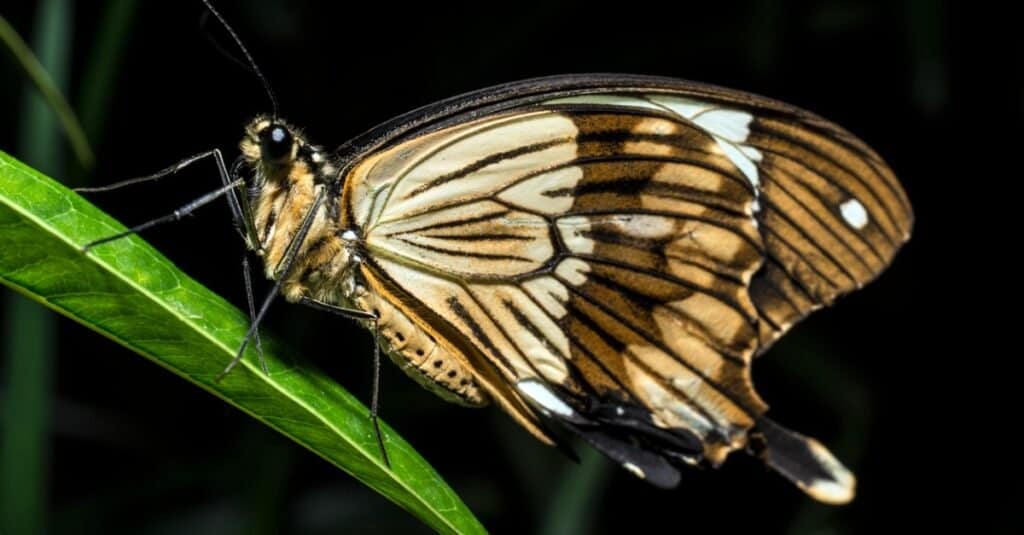
Famous for its mimicry of toxic butterflies, the African Swallowtail is not itself highly poisonous.
©iStock.com/johnandersonphoto
The African swallowtail (Papilio dardanus), also known as the mocker swallowtail, is famous for its mimicry of toxic butterflies but is not itself highly poisonous. Bearing ornate wings of orange and black, this butterfly is found in the Central African rainforest and has no natural predators. This is because the caterpillar is believed to eat a plant called Strophanthus gratus, a vine that sports flowers as beautiful as it is deadly. It secretes a poison called ouabain, which hunters spread on the tips of arrows. When the arrow pierces an animal even as large as a hippopotamus, the animal drops dead of a heart attack. The toxin not only protects the butterfly but also gives it its glorious colors.
Not Toxic to Humans
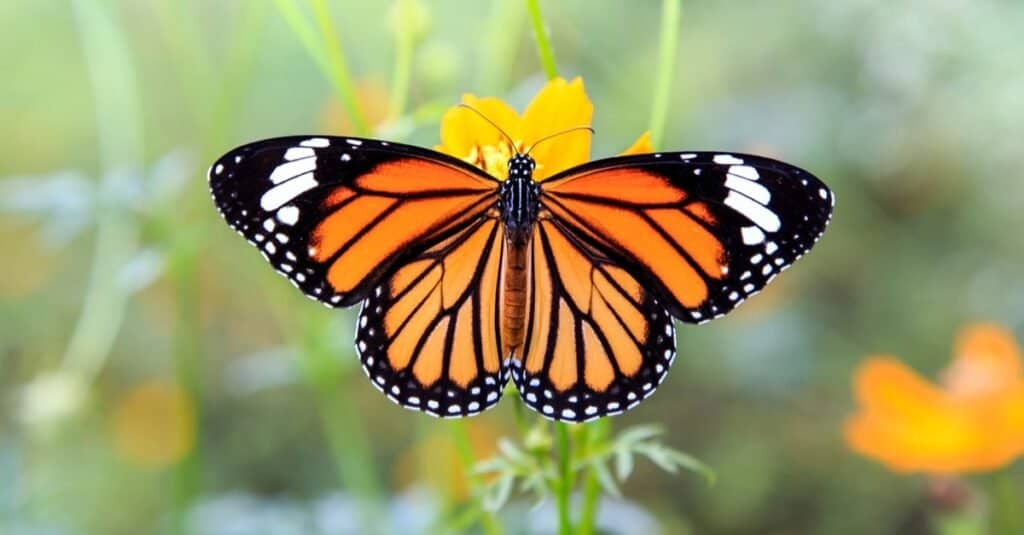
Though they may be toxic, it is completely safe for humans to handle Monarch butterflies and caterpillars.
©CHAINFOTO24/Shutterstock.com
Thankfully, the poison present in butterflies is not strong enough to cause serious harm to humans. This also goes for most species of mammals, including cats and dogs. If your pet were to ingest a poisonous butterfly, it would immediately recognize the error by the putrid taste, preventing it from consuming enough to cause more than an upset stomach. So don’t let the fact that these gorgeous insects are toxic prevent you from enjoying their presence in your backyard.