
Quick Take
- The toxic plant this caterpillar devours is not a threat at all but rather a survival tool. See how toxins help →
- Why do female black swallowtails choose exactly where to lay their eggs? The answer is more strategic than you'd expect. Explore egg-laying strategy →
- The adult butterfly has defenses against predators that go beyond what its wings suggest, and one of them involves your nose. Discover butterfly defenses →
- A caterpillar's entire first month comes down to one high-stakes biological deadline it cannot miss. Follow the transformation timeline →
We all know the story of the hungry caterpillar. In preparation to become a butterfly, caterpillars eat as much as they can. This includes the black swallowtail caterpillar, which chows down on dill as part of its daily diet. This Instagram post by @mrsmandivaughn shows one of these insects eating dill close up, and it’s an amazing sight.
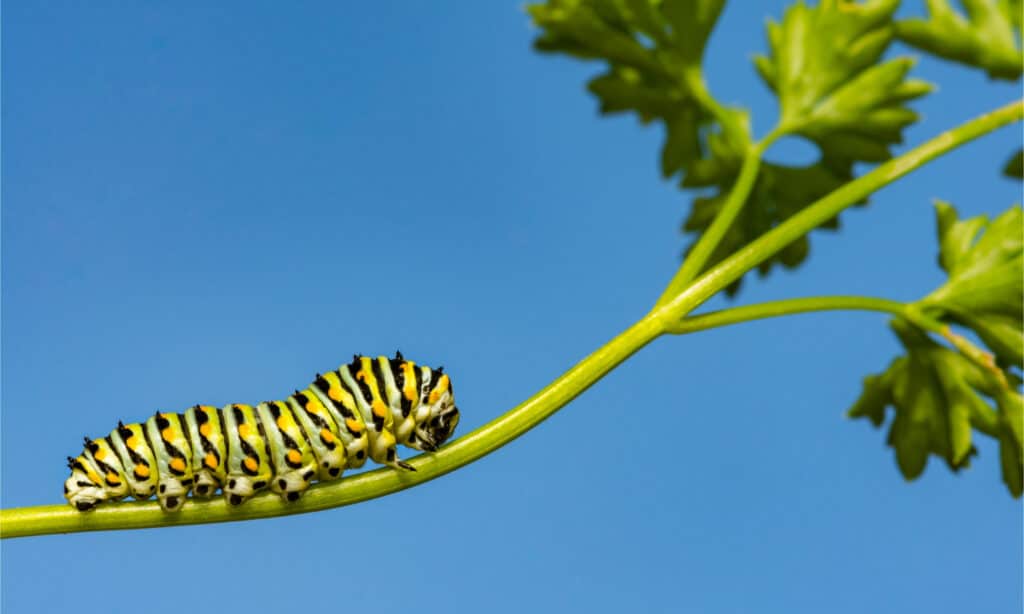
The black swallowtail caterpillar becomes the black swallowtail butterfly after about two weeks in its chrysalis.
©Jay Ondreicka/Shutterstock.com
Chowing Down
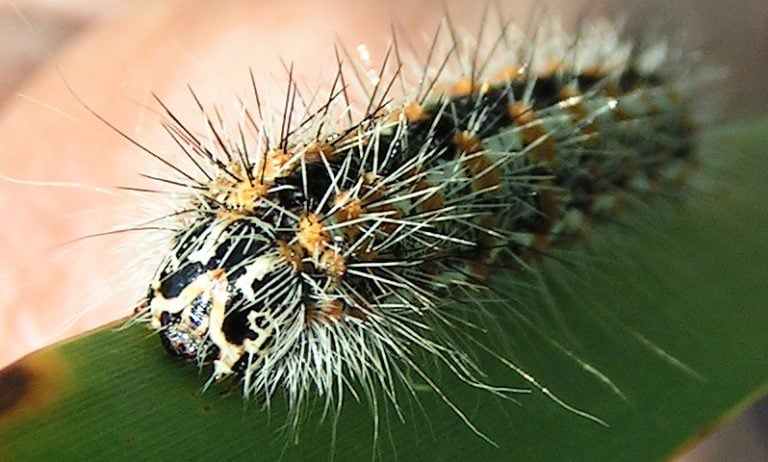
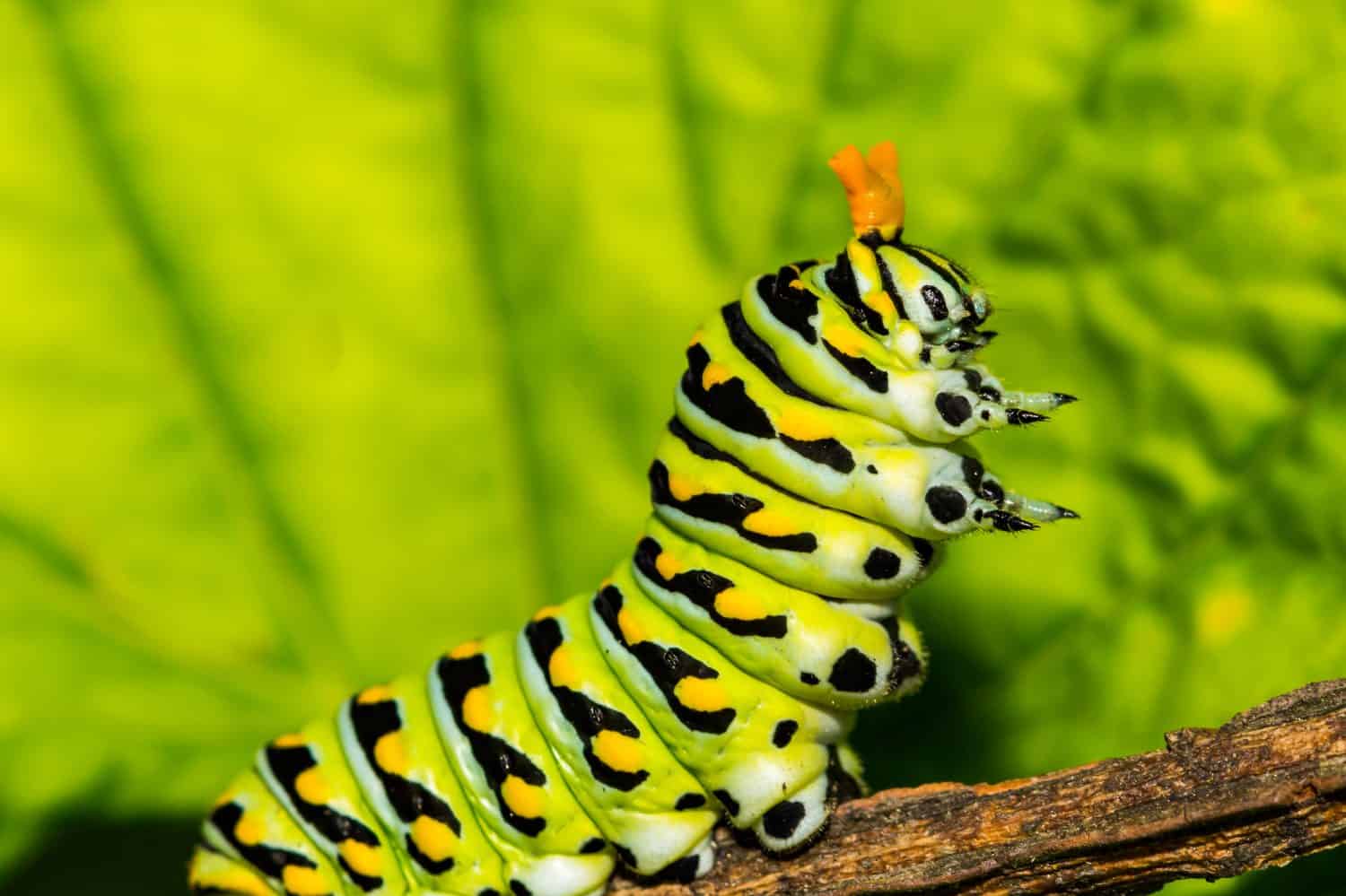
The black swallowtail caterpillar is just one species of many that needs to devour as much as it can before it becomes a butterfly. In the video above, the caterpillar is chowing down on dill, one of many plants that it eats. Other plants it eats include parsley, fennel, carrot tops, and celery. These caterpillars specialize in eating plants in the carrot family, and female butterflies choose to lay their eggs on these plants for quick access after hatching. Black swallowtail caterpillars eat a surprising amount during their three to four weeks in this stage. While there isn’t an exact amount that they eat, they spend practically all of their time actively eating, and the rest of their time sleeping or molting. Over time, they transform from a black, white, and brown insect to bright green, as seen in the video above.
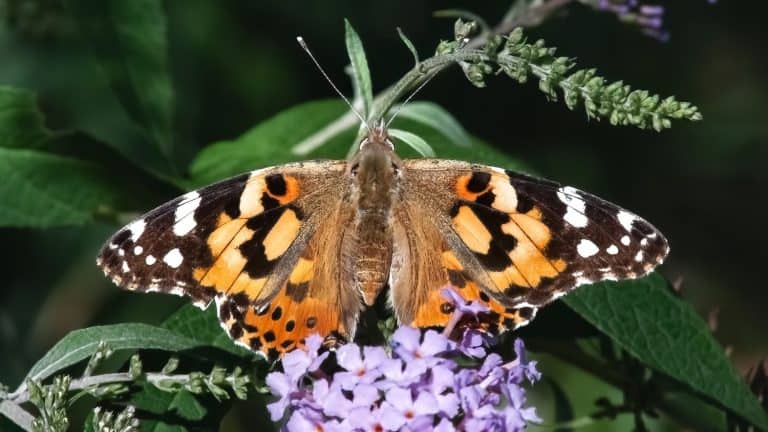
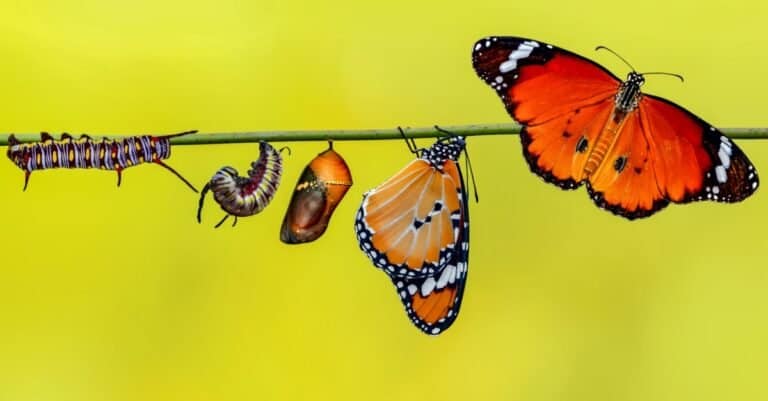
After eating as much as they can in the first month of life, they form a chrysalis for their metamorphosis. Inside the chrysalis, they grow into an adult black swallowtail butterfly. This process takes about two weeks, and the butterfly that emerges is beautiful. They have black wings with yellow spots and small blue iridescent patches. Its orange eye spots on the rear of its tails help to distract predators. This isn’t its only defense mechanism. Black swallowtail caterpillars also release a strong and unpleasant smell through an organ called the osmeterium. This secretion can be smeared on attacking predators like ants or spiders. It’s harmless to humans, but may not be pleasant to smell. These amazing butterflies emerge as a result of the diligent eating during their caterpillar stage.