
Quick Take
- The butterflies most people spot in July are carrying the entire species on their backs, and they have less than two months to pull it off. See the third generation's role →
- Monarchs don't just follow the sun to migrate. They have a backup system that kicks in when the sky goes dark, and it's built into their biology. Discover the backup compass →
- Milkweed does something to monarch larvae that no predator can undo, and this effect serves as the third generation's most important survival trick. See how milkweed protects monarchs →
Monarchs are exceptionally skilled butterflies; nevertheless, they are listed as Endangered by the IUCN, and the species is currently being considered for protection under the U.S. Endangered Species Act. And despite their need for protection and even with dwindling populations, monarch butterflies continue their annual migration—an undertaking so big, it requires multiple generations of monarchs to complete it. By July, most people have had the privilege of watching the incredible third-generation butterflies in action. They have one goal in mind and are tirelessly devoted as they move farther north, stopping at nothing to achieve it.
The Multi-Generation Migration
A total of four generations participate in the monarch’s migration, each playing a crucial role in advancing the migration northward and then back to Mexico. The first begins its ascent in Mexico, where monarchs overwinter. As they push northward, their short lives end somewhere in the southern United States. From there, the second generation emerges and picks up the baton. They lay eggs that will soon become the third generation.
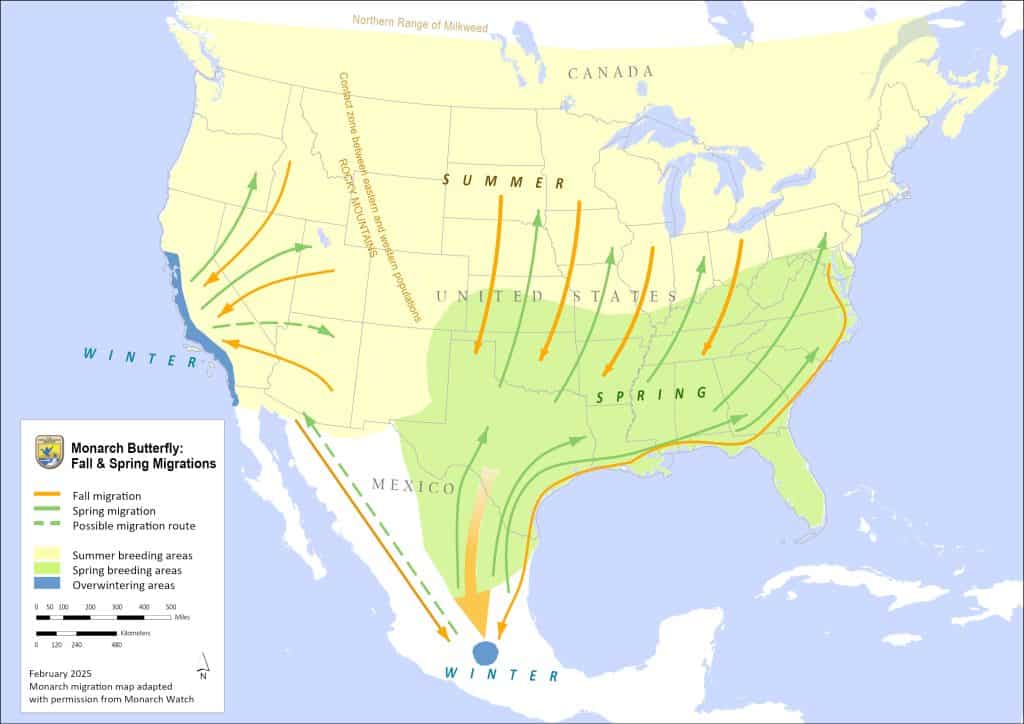
There are two monarch butterfly populations in North America: eastern (east of the Rocky Mountains) and western (west of the Rocky Mountains). The eastern population breeds throughout the United States and southern Canada.
©Monarch butterfly migration map, USFWS, Public Domain, https://www.fws.gov/media/monarch-butterfly-migration-map – Original / License
The third generation completes the trek northward, ending in the Northeast. (Sometimes a fourth generation is needed to complete the northern migration.) They emerge in mid-July, carrying the rest of the species for the final leg of the trip. This is the time when most people in the migration path see monarchs in their yards. They’re especially abundant in pollinator gardens and on milkweed, both of which attract these colorful butterflies. Milkweed is also necessary for reproduction and maturity, both of which the third generation requires as they fly north.
All in all, monarchs fly 1,200 to 1,800 miles during their migration. The third generation shoulders a significant portion of this mileage as they complete the journey to the Northeast.
Monarch Magic: The Third Generation’s Sun Compass
For decades, scientists have questioned how monarchs navigate each year despite starting over with a new generation. It turns out that this generational navigation is actually epigenetically imprinted on the species. This makes them one of the most unique species in the world, with a built-in navigation system passed down through generations.
Additionally, monarchs follow their internal clock when it comes time to migrate. This allows them to take off and land depending on seasonality and sunlight. When they fly, monarchs also head toward the sun. As its azimuth, or direction, changes, so too does the angle at which the monarchs fly. They also use northern winds to make flying easier. On the way back to Mexico, monarchs often take advantage of southeastern winds to guide their flight.
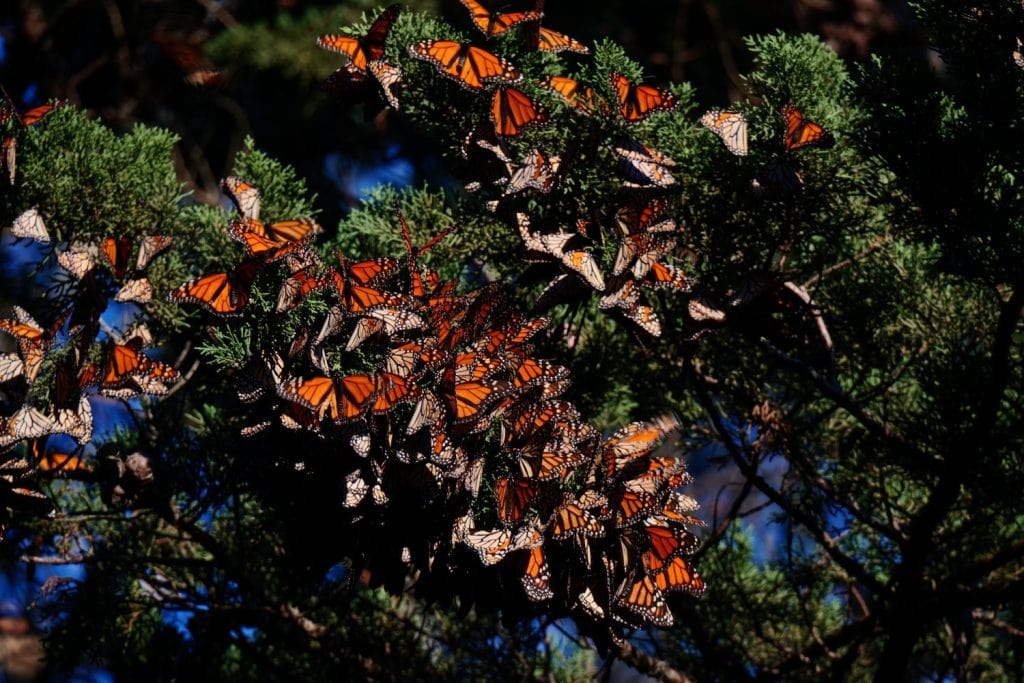
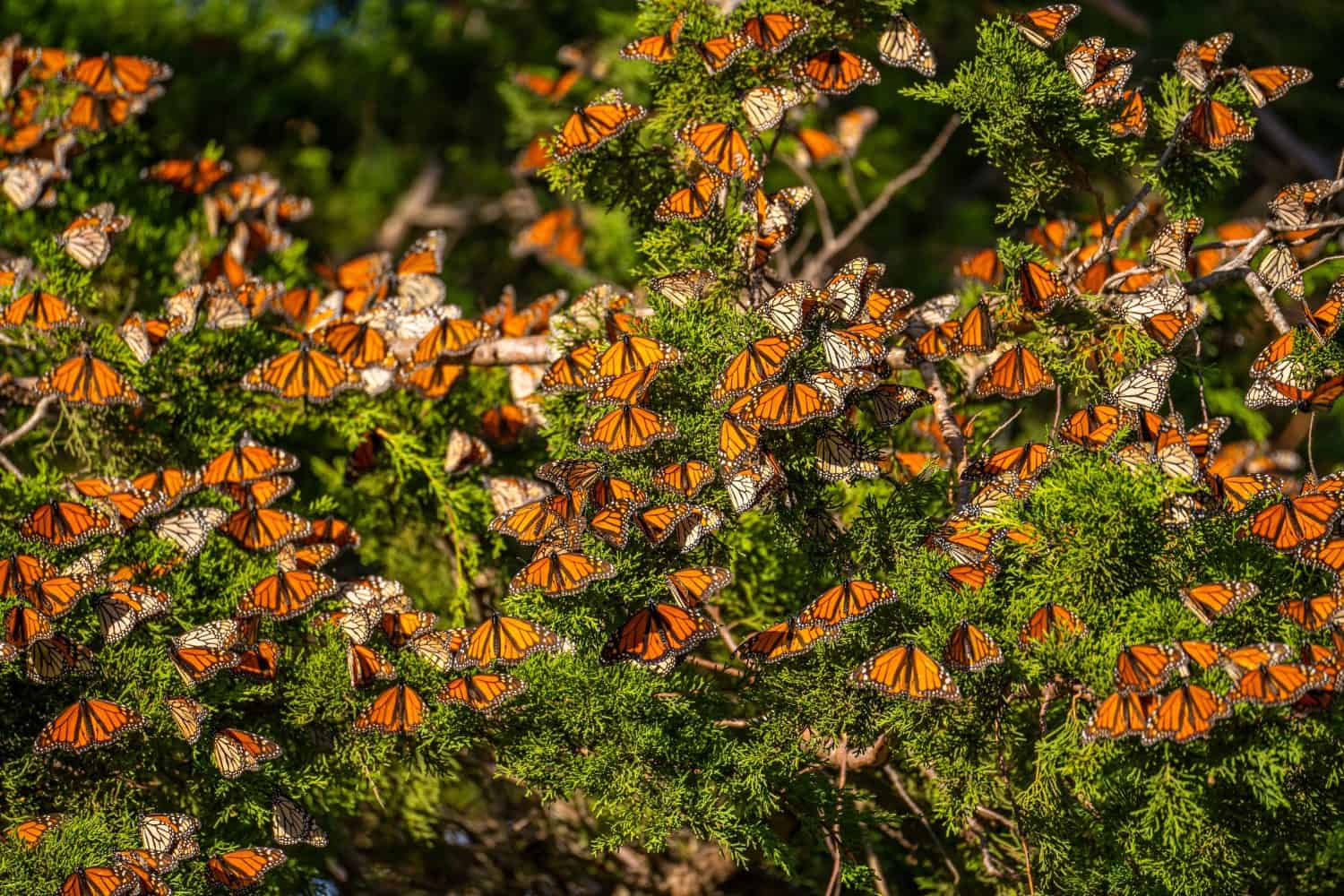
Most monarchs only live for five to seven weeks, making sightings rare but special.
©Michael Barajas/Shutterstock.com
Monarchs are also sensitive to the Earth’s magnetic fields, which they use as guidelines when migrating up and down the East Coast. This prevents them from being thrown off course during inclement weather. It also helps them stay on course during cloudy days when they can’t follow the sun directly.
The Crucial Role of the Third-Generation Monarch
Third-generation monarchs live only five to seven weeks, but during that time, they play an essential role in the species’ survival. They are responsible for pushing the remaining butterflies north, where the fourth generation will begin the southward migration back to Mexico. Without the third generation, the species could not continue.
As these monarchs land throughout the Northeast in the middle of summer, they seek out nutrients and nesting sites. Milkweed is essential to the species’ survival. The outside of the plant is coated in a waxy film, which deters most other insects. But for the third-generation monarch, it is the perfect place to safely lay their eggs.

Monarchs lay their eggs on milkweed, which is actually a beneficial wildflower rather than a weed.
©Nancy J. Ondra/Shutterstock.com
When their caterpillar larvae hatch, monarchs feed on the leaves of the milkweed plant. This sustains them as they grow into the fourth generation, leading the species back to Mexico. It also causes toxins to build up in the monarchs’ bodies, making them poisonous to predators such as birds. When the fourth generation has matured, it enters reproductive diapause, which suspends the urge to mate for roughly nine months. This allows them to complete their journey back home to Mexico, giving them the longest lifespan of any generation.