
Quick Take
- Milkweed is toxic to most animals, yet eating it actually makes monarch caterpillars safer. How can that be? See how toxins protect monarchs →
- These caterpillars start life smaller than a sesame seed, yet their eating schedule is almost impossible to keep up with. Discover their rapid growth rate →
- The very first thing a monarch caterpillar eats isn't a leaf, and the reason behind this turns out to be calculated. Find out what they eat first →
- Monarch caterpillars outgrow their own skin multiple times, and the clock driving that process begins ticking from the moment they hatch. Explore the molting cycle →
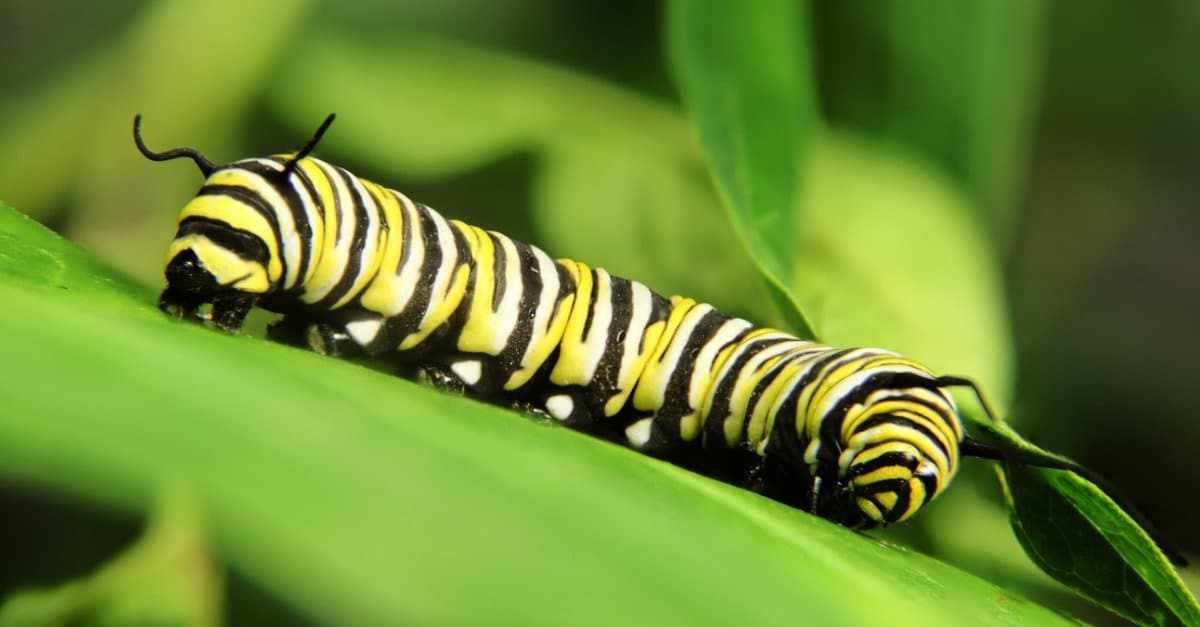
Nature is full of interesting relationships between animals and plants. Insects rely heavily on different plants for food and shelter, including the monarch caterpillar, which feeds primarily on the milkweed plant. Since this is the only food they eat, they chow down on these leaves extremely quickly. This YouTube video by Wayne Breslyn (Dr. B.) shows two caterpillars eating milkweed, and you can even hear them crunching while they snack! Read here to learn more about these insects’ special diet.
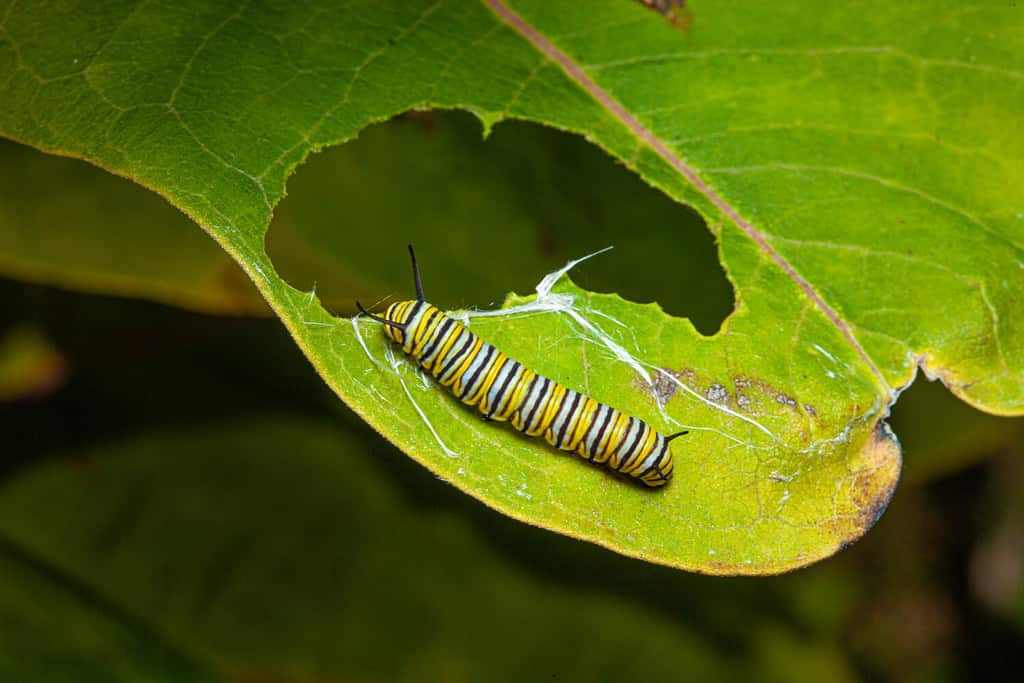
©K Hanley CHDPhoto/Shutterstock.com
Why Monarch Caterpillars Only Eat Milkweed
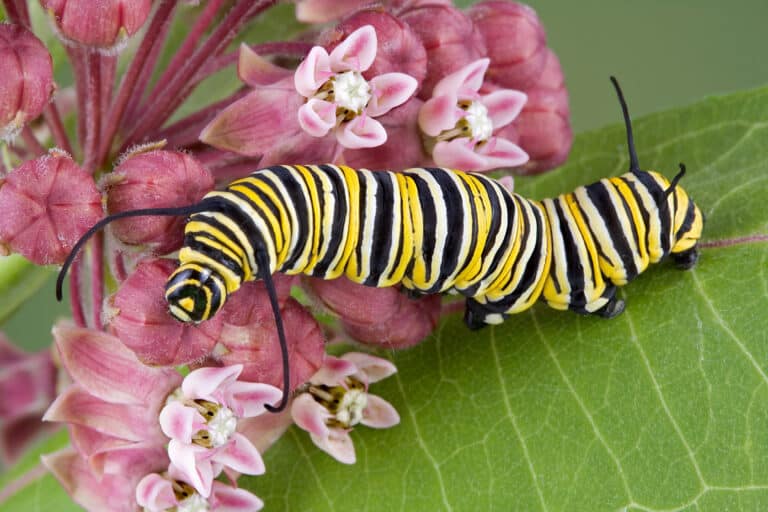
Milkweed isn’t just a food source for monarch caterpillars; it’s where their lives start. Adult monarch butterflies lay their eggs on the leaves of these plants, typically one egg per leaf. Once the egg hatches, the caterpillar immediately starts chowing down. After eating its own eggshell for the extra nutrients, it consumes the leaf it was born on. These incredible insects use their mandibles, or jaw-like mouthparts, to chew through the leaves practically all day. The caterpillars eat nonstop for about two weeks, and for good reason. Monarch caterpillars hatch at about one-sixteenth of an inch long and eventually grow to more than 1,000 times their original mass. As they develop, they outgrow their exoskeleton four times, forcing them to molt each time. This process results in five stages called instars.
Once the monarch caterpillar is fully grown, it stops eating and crawls to a safe place, such as the plant’s stem or branches. It will then form a chrysalis, inside which metamorphosis will occur. After about two weeks, a monarch butterfly will emerge and lay eggs of its own.
But why do they feed solely on milkweed? This plant contains the chemical cardenolide, which is toxic to animals. Monarch caterpillars are tolerant of these toxins and store them inside their bodies while eating. The toxins make both the caterpillar and, later, the butterfly, taste bad to predators. In this way, milkweed acts as both an abundant food source and a form of self-defense. Their dependency on the plant is not just for sustenance, but for survival. It’s an amazing example of a unique plant-animal relationship in nature.