
If you think all moths are dull, brown, and boring, think again. Moths come in all kinds of bizarre shapes and eerie patterns, with many looking like they have flown straight out of a vivid dream — or a nightmare. From wings that resemble snakes and owls to feathery plumes that seem almost otherworldly, these insects prove that “weird” can also be wonderful. Prepare yourself for the weirdest-looking moths on Earth — insects so strange, you’ll have to see them to believe them.
Venezuelan Poodle Moth
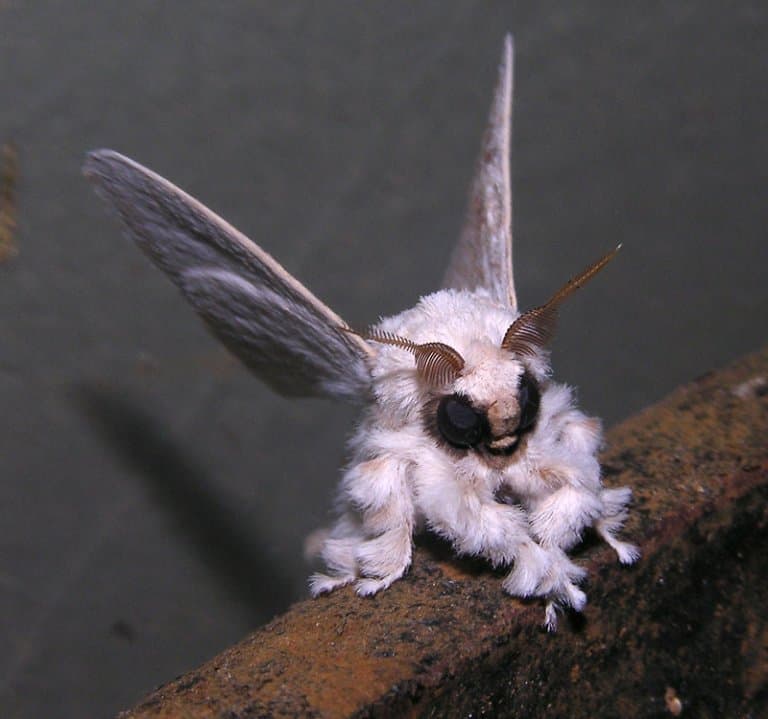
The Venezuelan poodle moth’s enormous eyes and large antennae add to its alien appearance.
©https://factanimal.com/venezuelan-poodle-moth/ / Public domain / Wikimedia Commons – Original / License
Despite its fantasy-like appearance, the Venezuelan poodle moth is bizarrely real. First photographed in 2009 by zoologist Arthur Anker, this adorable insect was found in the remote Gran Sabana region of Venezuela. We still do not know a lot about it, however, and experts have yet to give it an official scientific name.
The Venezuelan poodle moth gets its unique name from its dense, fluffy white coat — which looks like soft, fuzzy fur — and its unusually curly wings. In many ways, this tiny poodle moth really does look like a flying poodle! However, that soft “fur” is actually made of thousands of tiny, fine scales, which gives it that woolly texture.
Hornet Moth
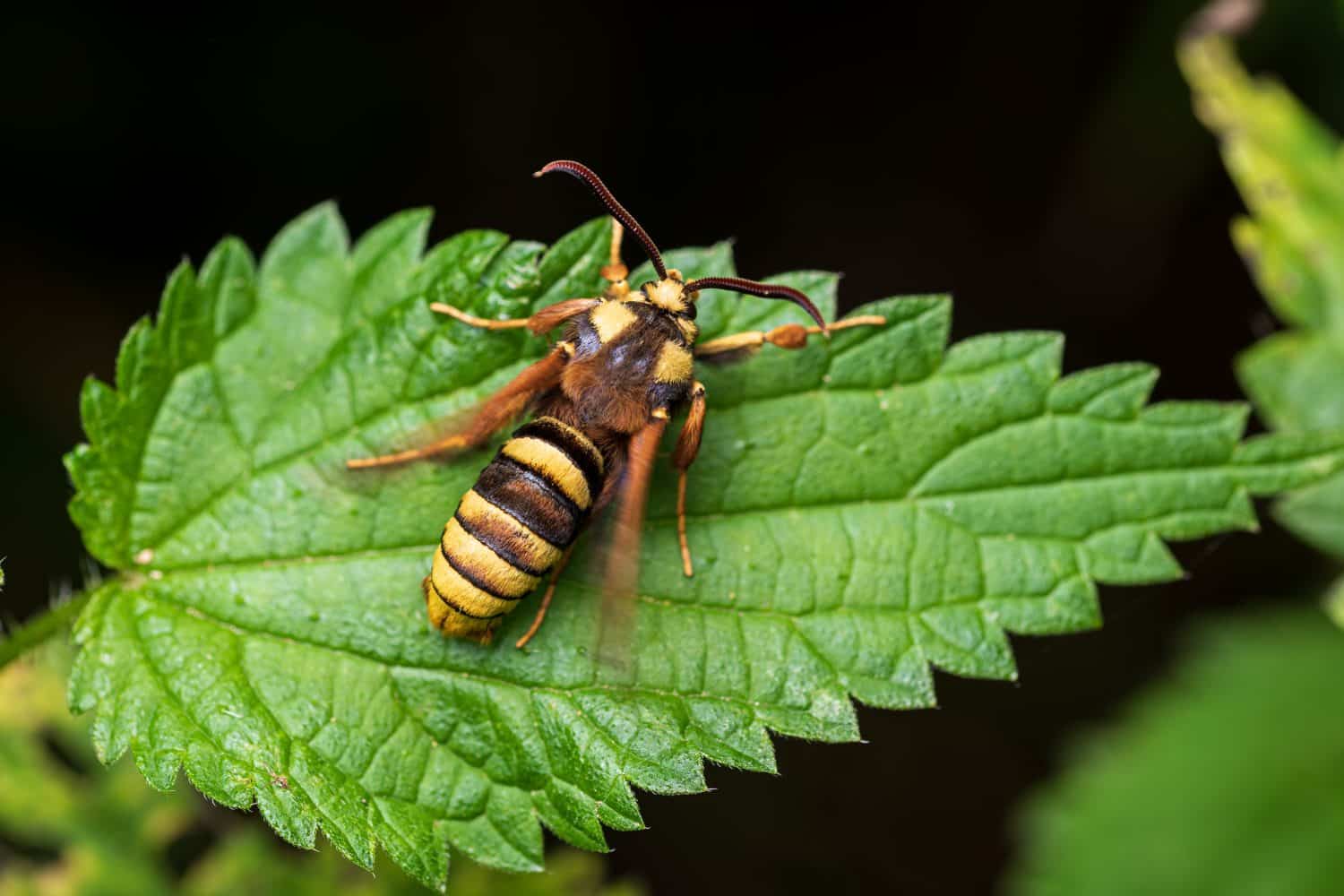
The hornet moth is also called the hornet clearwing.
©Pedro Luna/Shutterstock.com
You would never guess that the hornet moth (Sesia apiformis) is a moth at all — with its striking yellow and black stripes and clear wings, it looks exactly like a dangerous wasp or hornet. This brilliant disguise is a survival tactic called Batesian mimicry, where a harmless animal imitates a harmful one. The hornet moth does not have a stinger and poses no threat, but predators like birds see it and immediately decide to look for dinner elsewhere.
These tricky insects are relatively small, with a wingspan ranging from about 1.3 to 2 inches. Hornet moths are native to Europe and parts of western Asia. You can often spot them in tree-filled areas, such as parks, pond edges, or golf courses, where they tend to rest on the trunks of poplar trees.
African Death’s Head Hawkmoth
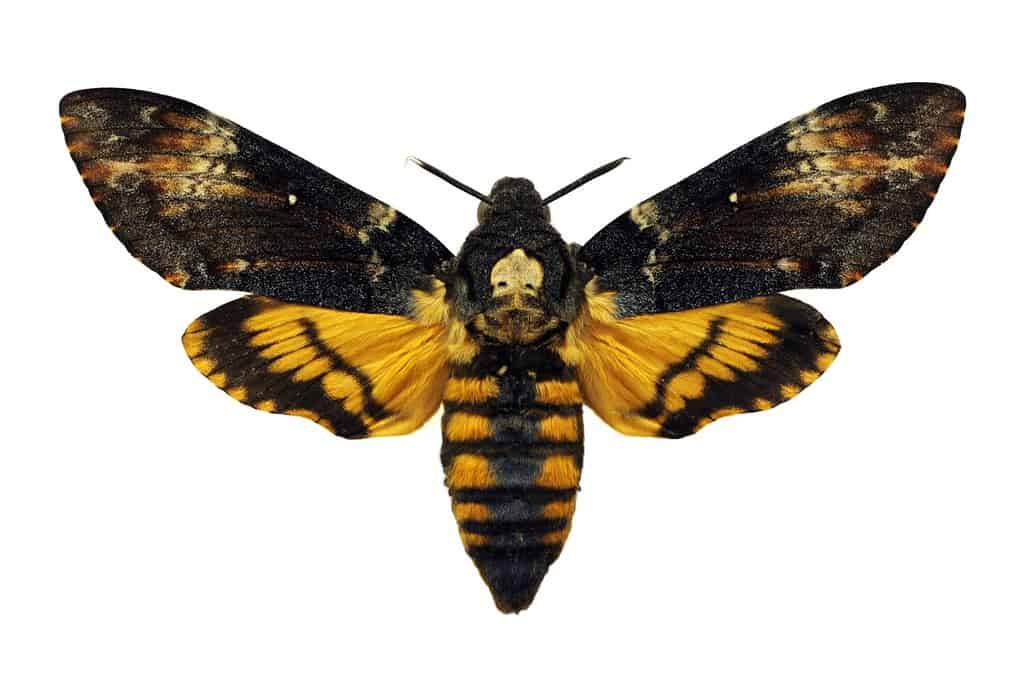
African death’s-head hawkmoths can make unusual squeaking sounds by forcing air through their tongue-like proboscis.
©Jiri Hodecek/Shutterstock.com
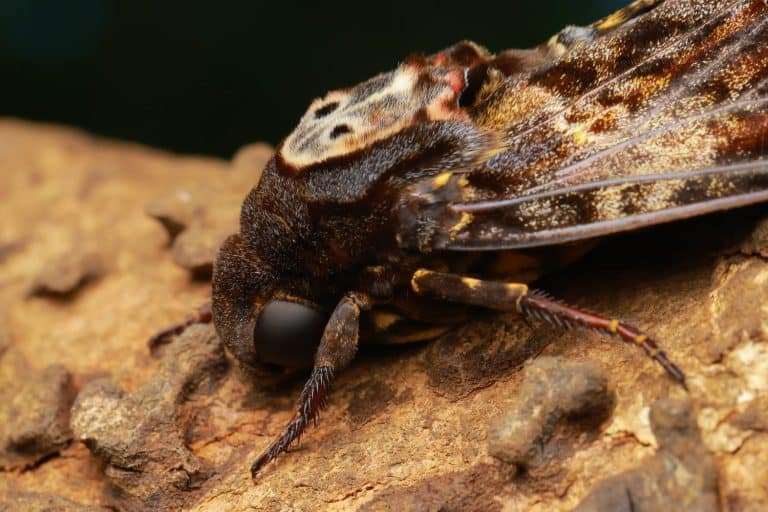
The African death’s-head hawkmoth (Acherontia atropos) earned its name from its striking, macabre pattern: a prominent skull shape clearly marks its thorax. This spooky appearance extends to its scientific name, Acherontia atropos, which refers to figures in Greek mythology associated with death and the Underworld.
Beyond its strange appearance, this moth is an impressive insect, typically with a 5-inch wingspan. Fittingly, the moth’s caterpillars eat plants from the highly toxic nightshade family, including deadly nightshade. While the death’s-head hawkmoth mainly lives in Africa, the Middle East, and the Mediterranean, it is a powerful flyer and can migrate long distances, sometimes even showing up in England or Sweden.
Hummingbird Hawk-Moth
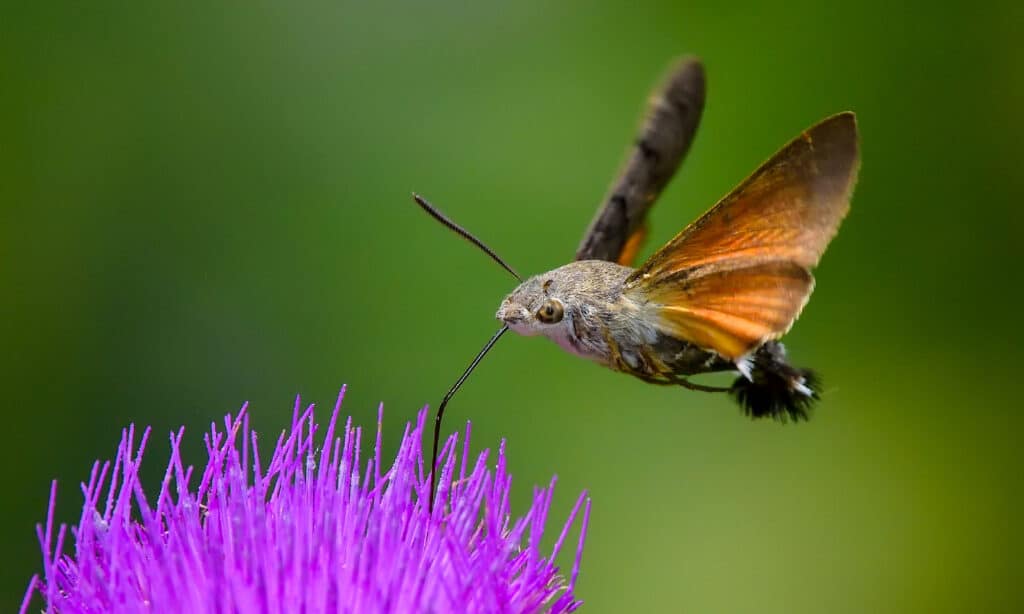
Hummingbird hawk-moths beat their wings so fast that they make a “humming” sound.
©aabeele/Shutterstock.com
The hummingbird hawk-moth (Macroglossum stellatarum) is routinely mistaken for an actual hummingbird due to its appearance and uncanny, bird-like behaviors. The moth beats its wings so incredibly fast that they disappear into a blur, allowing it to hover in mid-air while feeding on flower nectar, just like a hummingbird. Hummingbird hawk-moths have a 2- to 2.5-inch wingspan, with small black-and-white checkered bodies, grayish-brown forewings, and warm, orange-brown hindwings.
Gangis Moth
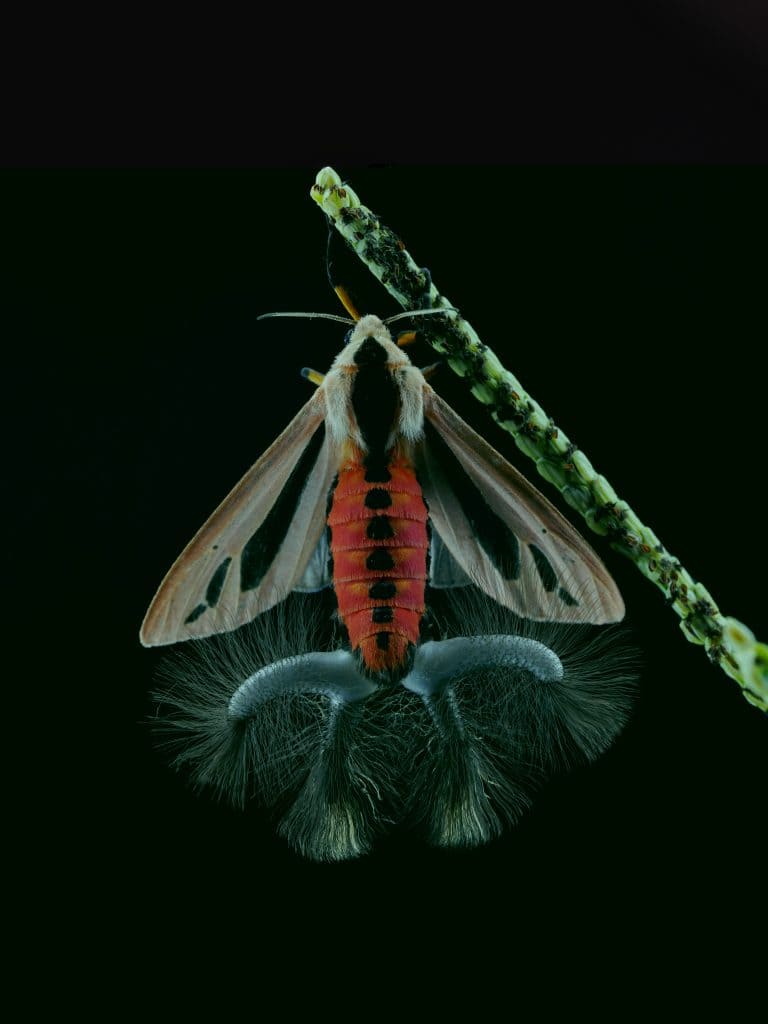
The male’s coremata can be longer than its entire abdomen.
©Abdulkomeng / CC BY-SA 4.0 / Wikimedia Commons – Original / License
Found across Southeast Asia and Australia, the Gangis moth (Creatonotos gangis) is renowned for its bizarre appearance. Adult moths have a relatively standard look, with brown forewings marked by dark streaks, white hindwings, and a flash of red or yellow color on their abdomens.
However, the male moths have four inflatable, tube-like structures called coremata. Located at the end of their abdomen, males inflate these unusual organs when trying to attract a mate. When fully deployed, the coremata balloon out dramatically, giving the moths a look straight out of science fiction. The inflated tubes release special pheromones — powerful chemical signals —designed to impress and lure a female.
Rosy Maple Moth
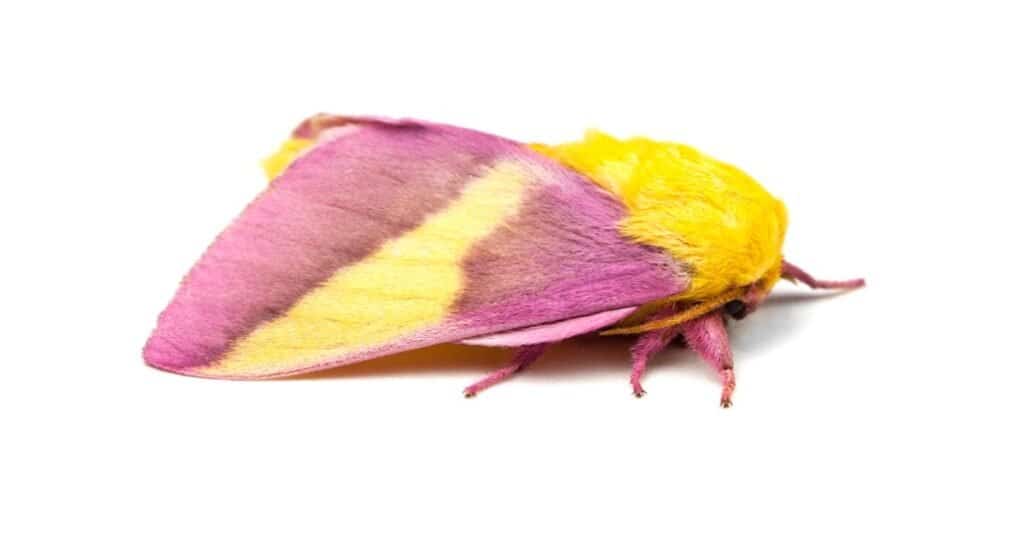
Rosy maple moths live in North America and are most active at night.
©Melinda Fawver/Shutterstock.com
The rosy maple moth (Dryocampa rubicunda) is truly one of a kind. With its fuzzy body and brightly colored wings, it looks less like an insect and more like a cartoon creature. These cute moths spend most of their time on and around maple trees, such as the sugar, red, and silver maple varieties.
Despite their vibrant pink and yellow coloring, rosy maple moths are surprisingly well-adapted to their environment. When dappled with sunlight and shade, their candy-like colors make the moth look like maple seeds or dried leaves, providing excellent camouflage in unexpected places.
Pale Prominent Moth
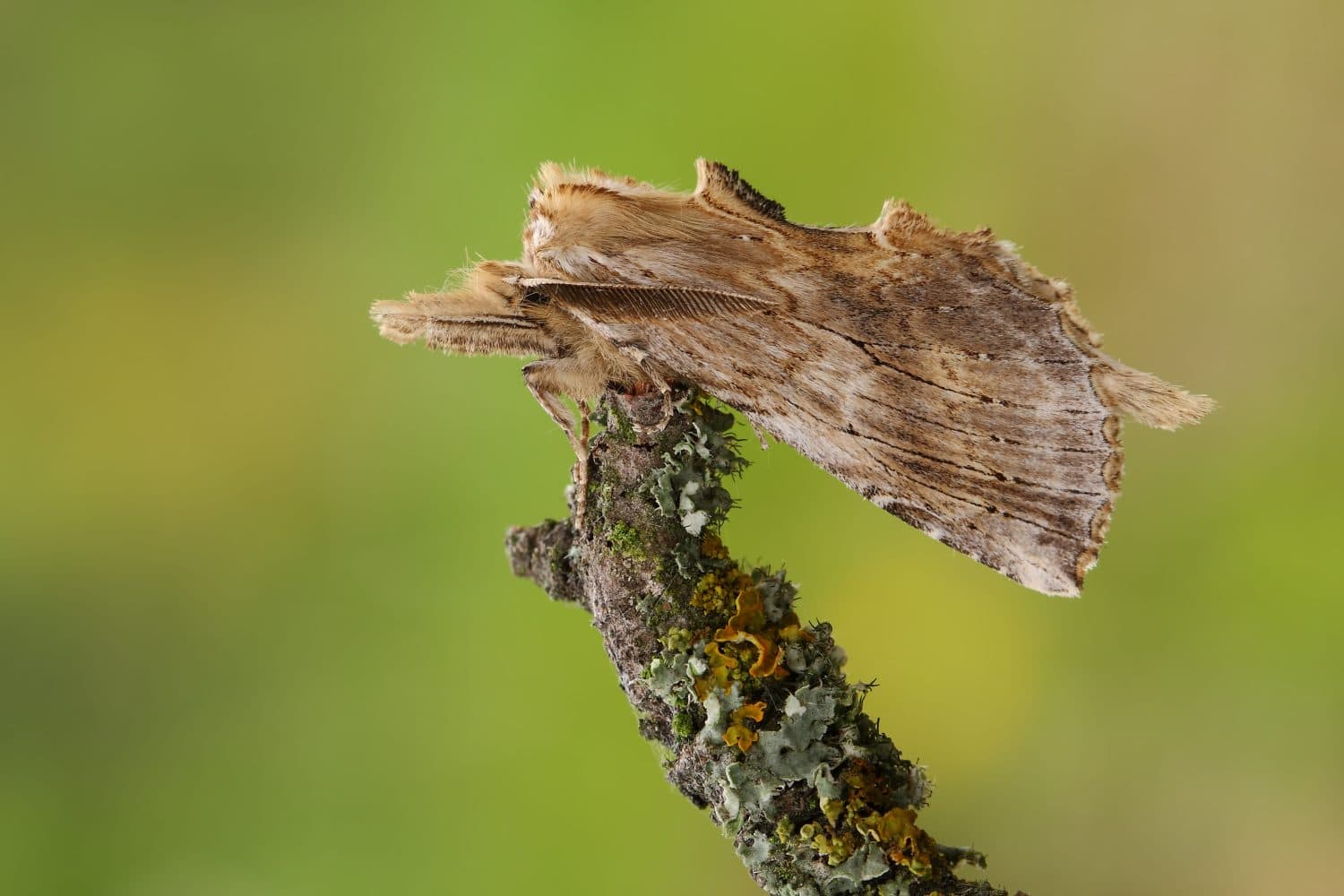
Pale prominent moths are active from April to September.
©Chekaramit/Shutterstock.com
With a modest wingspan of 1.4 to 2.2 inches, the pale prominent moth (Pterostoma palpina) is designed to disappear. When resting, its grayish-brown wings and unique shape make it look exactly like a splinter or chip of dead wood. The moth’s long, hair-like scales near the lower edge of its body and extended mouthparts help complete this clever illusion, perfectly mimicking rough wood and helping the moth avoid predators.
The pale prominent moth is common across parts of Asia and Europe and can be seen from April to September. It usually settles on the bark of poplar and willow trees.
White Plume Moth
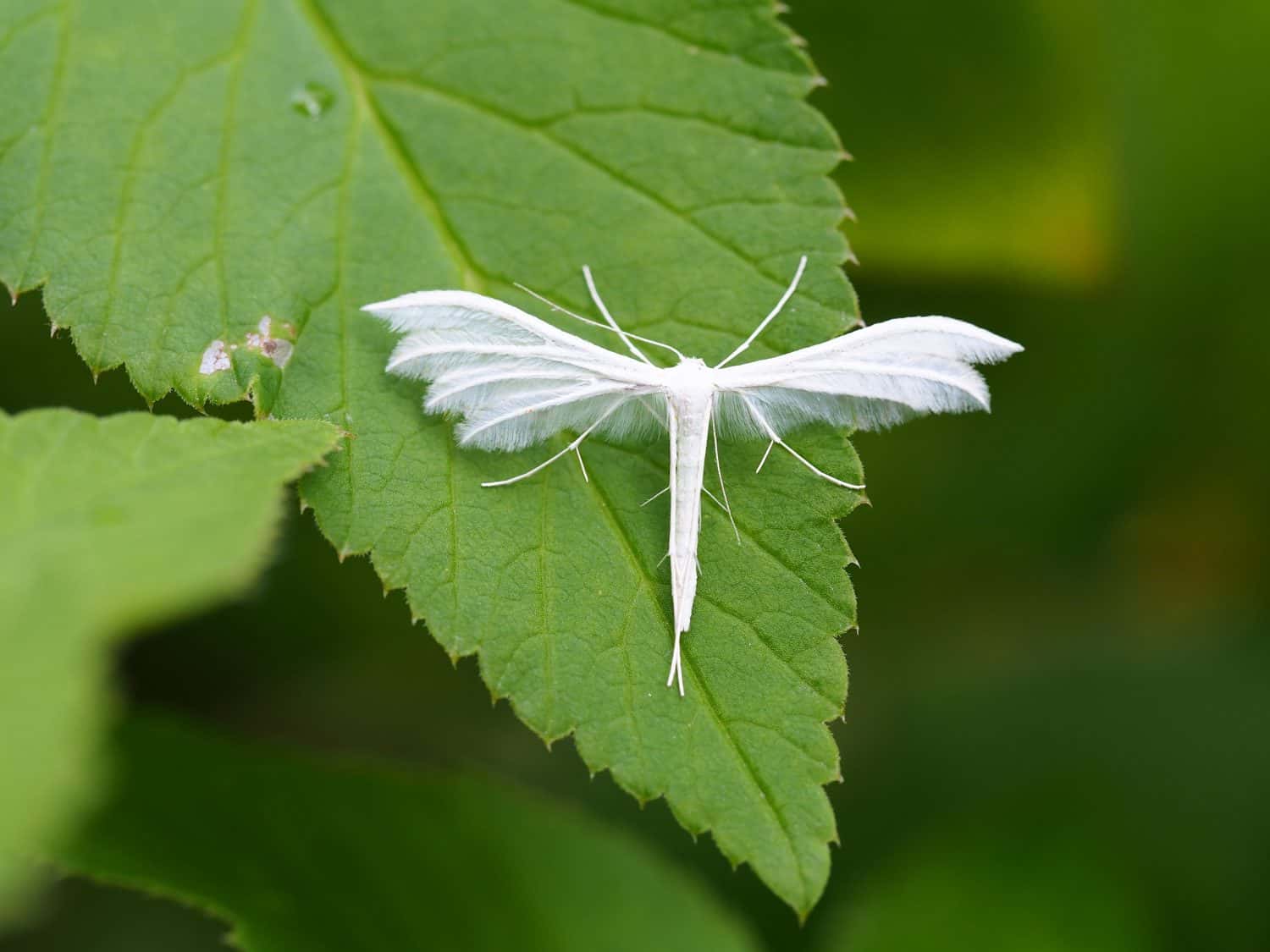
The white plume moth has a wingspan of 1 to 1.3 inches across.
©Lars Kastilan/Shutterstock.com
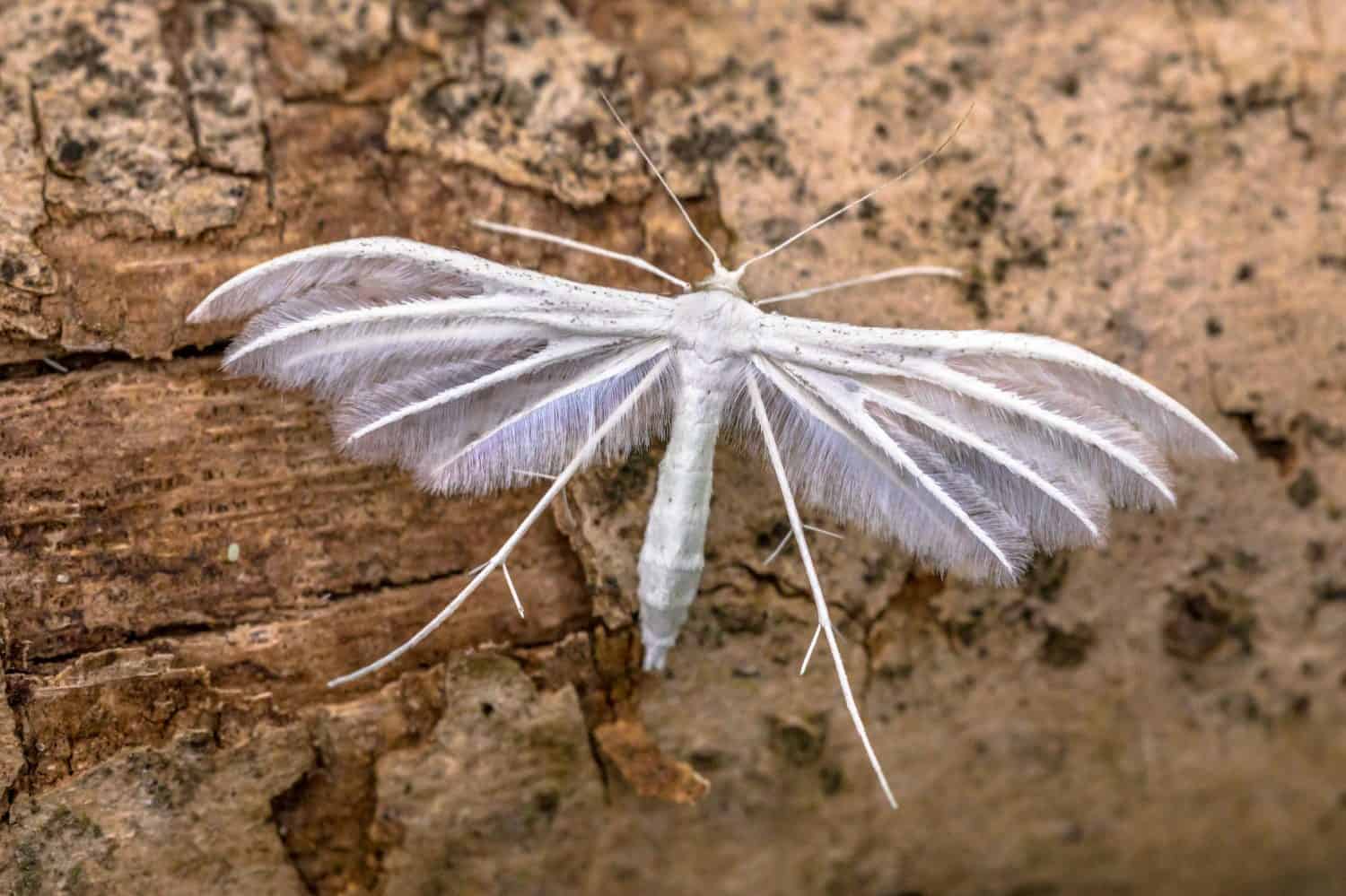
The white plume moth (Pterophorus pentadactyla) is a stunning insect, easily mistaken for a tiny snowflake or a magical creature from a fairytale due to its delicate appearance and feathery white form. The moth’s most distinctive feature is its wings, which are split into thin, wispy sections called plumes. Each front wing divides into two plumes, and each back wing splits into three, giving the moth an almost skeletal grace.
When the white plume moth rests, it holds its plume wings straight out to the sides in a perfect T-shape, which makes it immediately recognizable. Though most active after dark, you may occasionally spot this ethereal insect during the day, feeding on plants like valerian.
Madagascan Sunset Moth
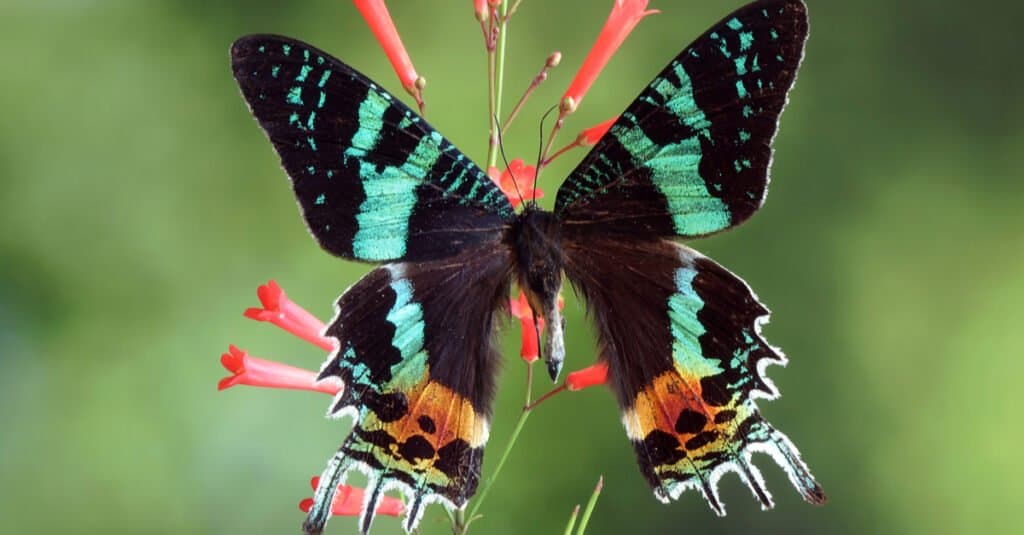
The bright colors of the Madagascan sunset moth serve as a warning to predators.
©Mark Brandon/Shutterstock.com
The Madagascan sunset moth (Chrysiridia rhipheus) looks more like a butterfly than a moth. Found only in Madagascar, these striking creatures have brilliantly colored wings, shimmering with patterns of yellow, red, orange, blue, and green. The moth’s microscopic wing scales reflect light in unique ways, creating a spectacular, rainbow-like shimmer that changes as the moth moves. Adding to its strange appearance are the moth’s long, flowing tails, which resemble those of a swallowtail butterfly.
Brenthia Moth
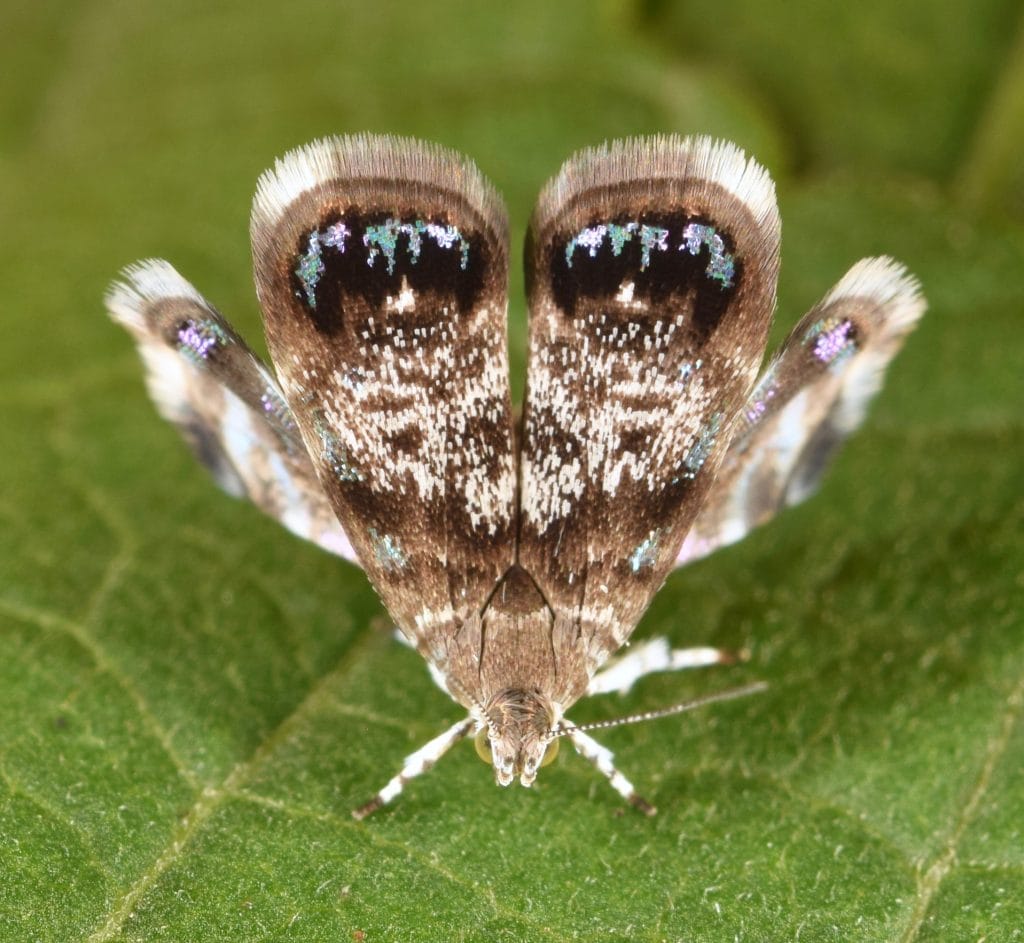
There are over 80 species of Brenthia moths.
©Christina Butler from Georgia, United States / CC BY 2.0 / Wikimedia Commons – Original / License
Moths in the genus Brenthia, commonly known as peacock moths, are truly unique in both their appearance and their behavior. Despite their tiny size (a wingspan of only 0.25 to 0.55 inches), these minuscule masters of disguise perfectly mimic their primary predator: the jumping spider. Their dark wings are covered in metallic, shimmering scales that flash with violet, blue, or green colors. Bold black spots further mimic a spider’s large, numerous eyes.
The peacock moth’s mimicry is especially ingenious. When the moth lands, it fans out its hindwings and raises its forewings, creating a shape eerily similar to a resting jumping spider. To complete the effect, it even moves with the same quick, jerky motions employed by a hunting jumping spider.
Beautiful Wood-Nymph Moth
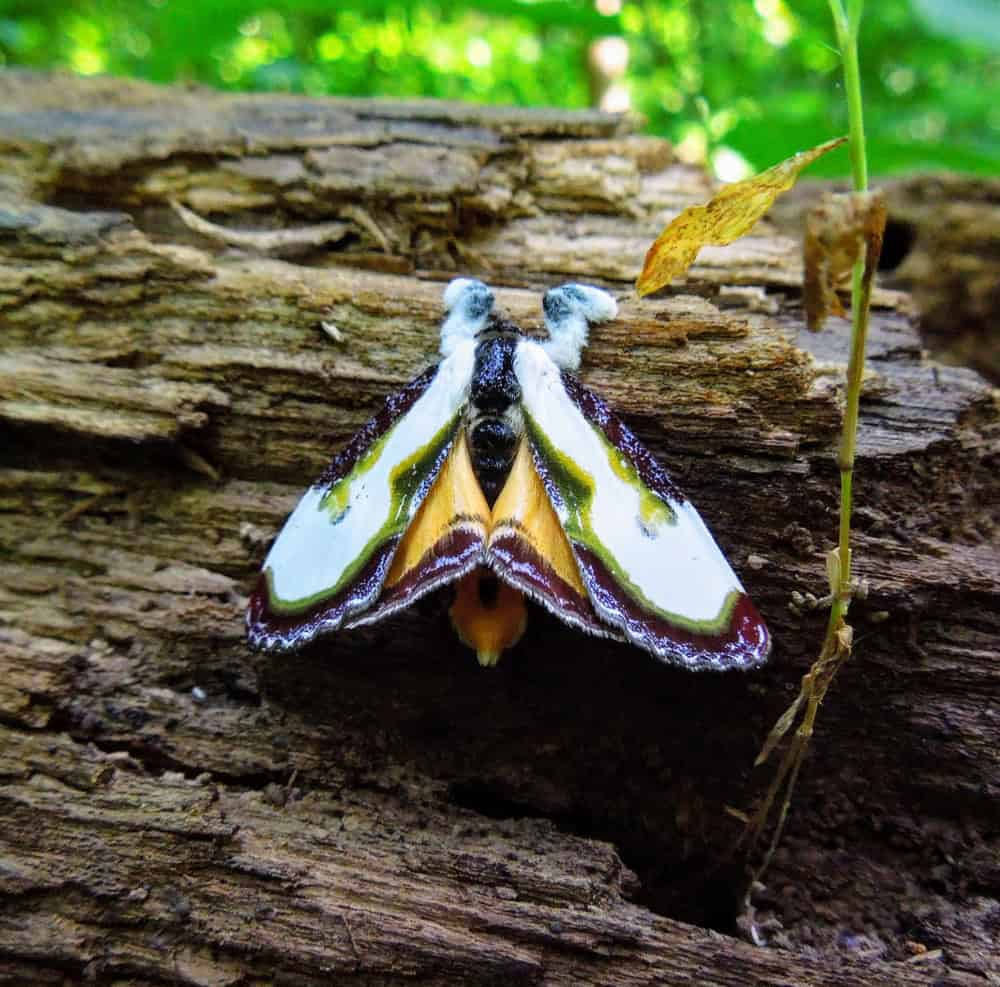
Beautiful wood-nymph moths have a wingspan of 1.4 to 1.8 inches.
©daniellepricephotography/Shutterstock.com
The beautiful wood-nymph (Eudryas grata) has an ironic name for its absurd appearance. With its white or cream-colored wings, oddly textured edges, and colored patches, this moth uses a bizarre strategy to avoid predators: when its wings are folded, it looks remarkably like a blob of bird poop!
While this moth’s disguise is definitely a strange one, it is incredibly effective. No predator wants to swoop in and eat bird droppings, which means the moth gets to rest in safety. You can find these clever insects throughout the eastern and central United States, and up into parts of Canada. Adults are typically active from May to September.
Dead-Leaf Moth
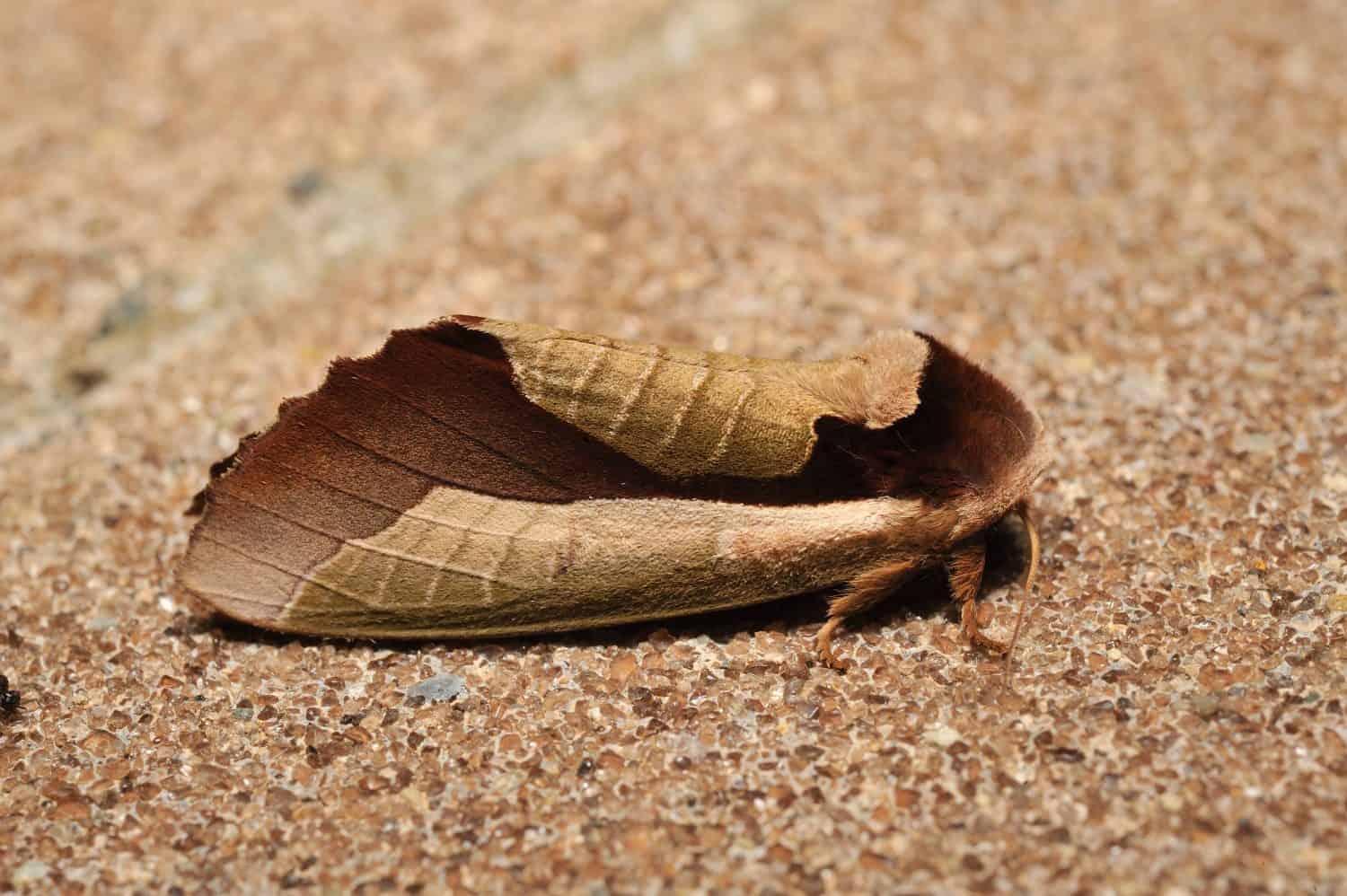
Dead-leaf moth caterpillars can become pests, chewing up a plant’s tissues and weakening its growth.
©yamaoyaji/Shutterstock.com
The dead-leaf moth (Uropyia meticulodina) looks exactly like its name suggests: a curled-up, dead leaf. This disguise is remarkably convincing, featuring ragged wing edges, realistic vein patterns, and even markings that resemble holes or decay. The most surprising part of this camouflage is that the “curls” of its wings are actually flat! The appearance of a three-dimensional, curled leaf is an illusion created by specialized, tiny scales on the wings that cleverly simulate light and shadow.
The dead-leaf moth’s unique disguise is a family trait. Found in Eastern Asia, including Japan, China, and Taiwan, its caterpillars also employ mimicry. Their textured green and brown bodies mimic the dead or dying parts of a leaf, helping them stay hidden while they develop. As adults, dead-leaf moths have a 1.8- to 2.2-inch wingspan.
Angel Moth
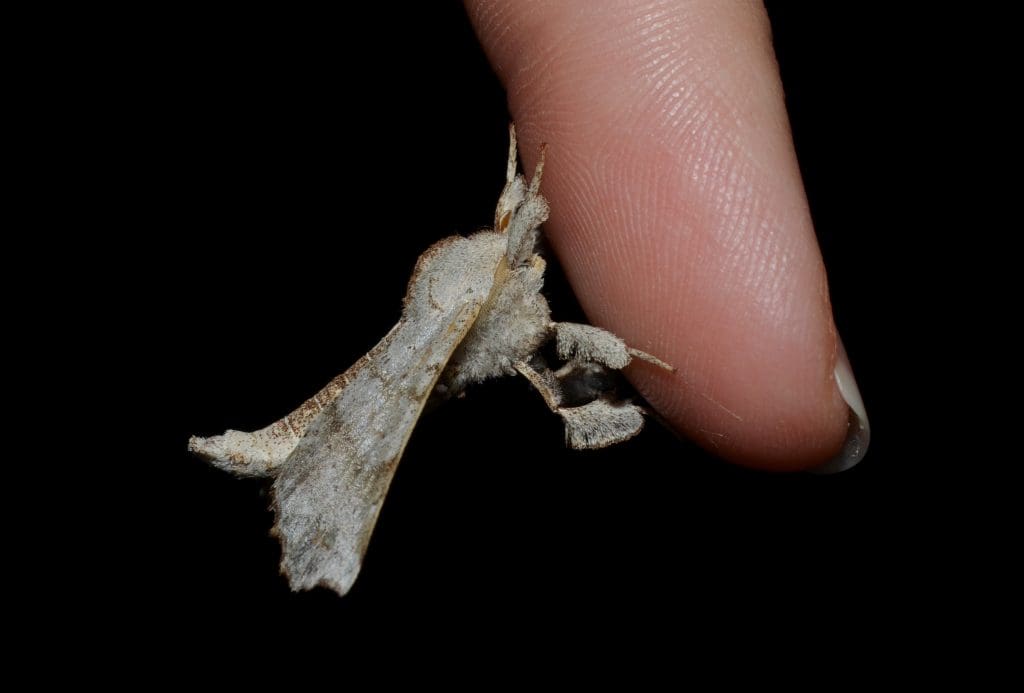
Angel moth caterpillars feed on plants like lilac and ash.
©Andy Reago & Chrissy McClarren / CC BY 2.0 / Wikimedia Commons – Original / License
Found across much of eastern North America, this weird-looking moth is active in woodlands and deciduous forests from May to September. Its small wingspan is only 1.3 to 1.7 inches, with a pale, delicate quality that gives it a ghostly appearance. The angel moth’s (Olceclostera angelica) silver or pale gray wings feature fine, darker lines and scalloped edges. Hyaline spots — one or two tiny, clear “windows” on each forewing — catch the light as the moth moves.
Adding to its unusual look are its furry, puffball legs, which appear as if they are wearing elegant, soft muffs from the Victorian age. This beautiful, if slightly strange, moth flies mostly at night.
Buff-Tip Moth
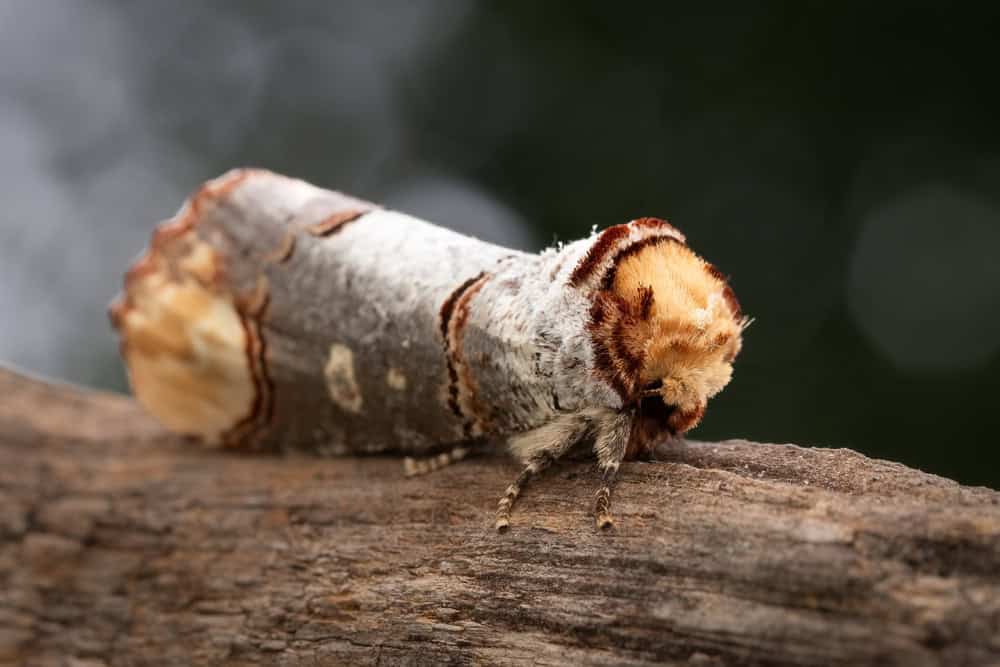
The buff-tip moth is commonly found across Asia and Europe.
©Noppe Herlinde/Shutterstock.com
The buff-tip moth (Phalera bucephala) is a master of camouflage that has perfected blending in with trees and branches. Despite having a wingspan of 1.7 to 2.7 inches, it nearly disappears when resting.
The moth’s front wings and body are covered in patchy, mottled gray colors, but it has distinct, buff-colored tips. When the moth rests, it holds its wings tightly against its body, making those pale tips line up perfectly, creating a seamless illusion of a snapped-off stick. Birds fly right past the moth, mistaking it for a piece of dead wood.
Atlas Moth
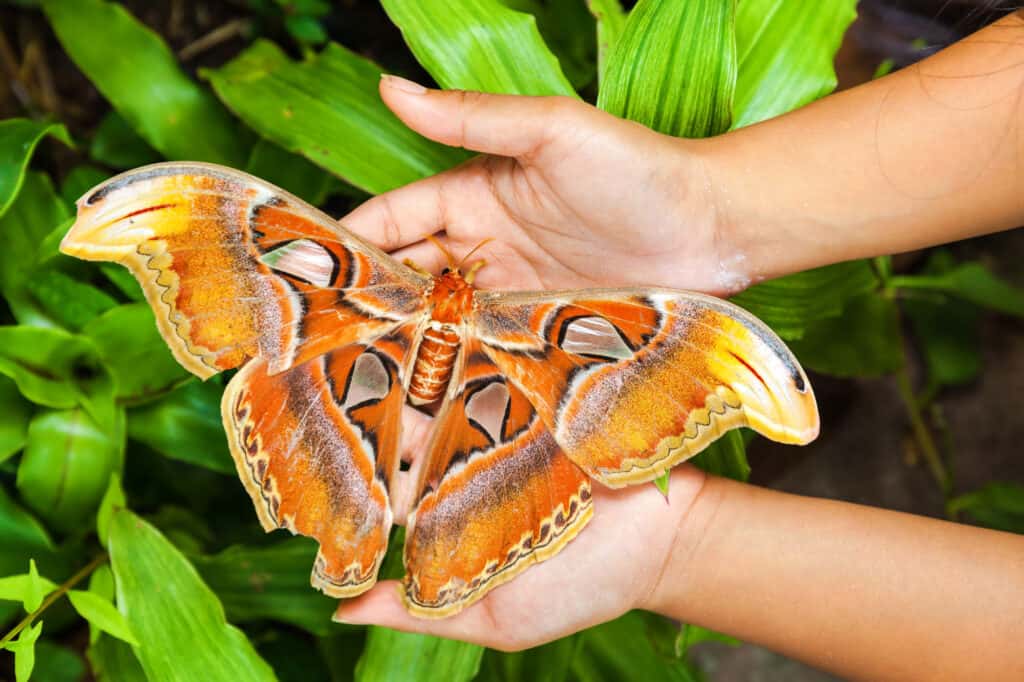
The Atlas moth has translucent areas on its wings, which may help to distract predators.
©Cocos.Bounty/Shutterstock.com
The Atlas moth (Attacus atlas) is one of the largest moths in the world, with an enormous wingspan reaching over 9 inches across. Its reddish-brown wings are painted with stunning patterns of black, pink, white, and purple, featuring clear, triangular spots that look like small windows. The moth’s most bizarre — and brilliant — feature is the tips of its front wings, which have curved extensions shaped like the heads of cobras. When the moth moves, this clever illusion helps to deter predators who might otherwise see the large insect as an easy meal.
Atlas moths live in the warm, tropical forests of Asia and are generally active at night. However, their adult life is short and dramatic: they do not eat or drink, and they survive for only a few days.
Macrocilix maia
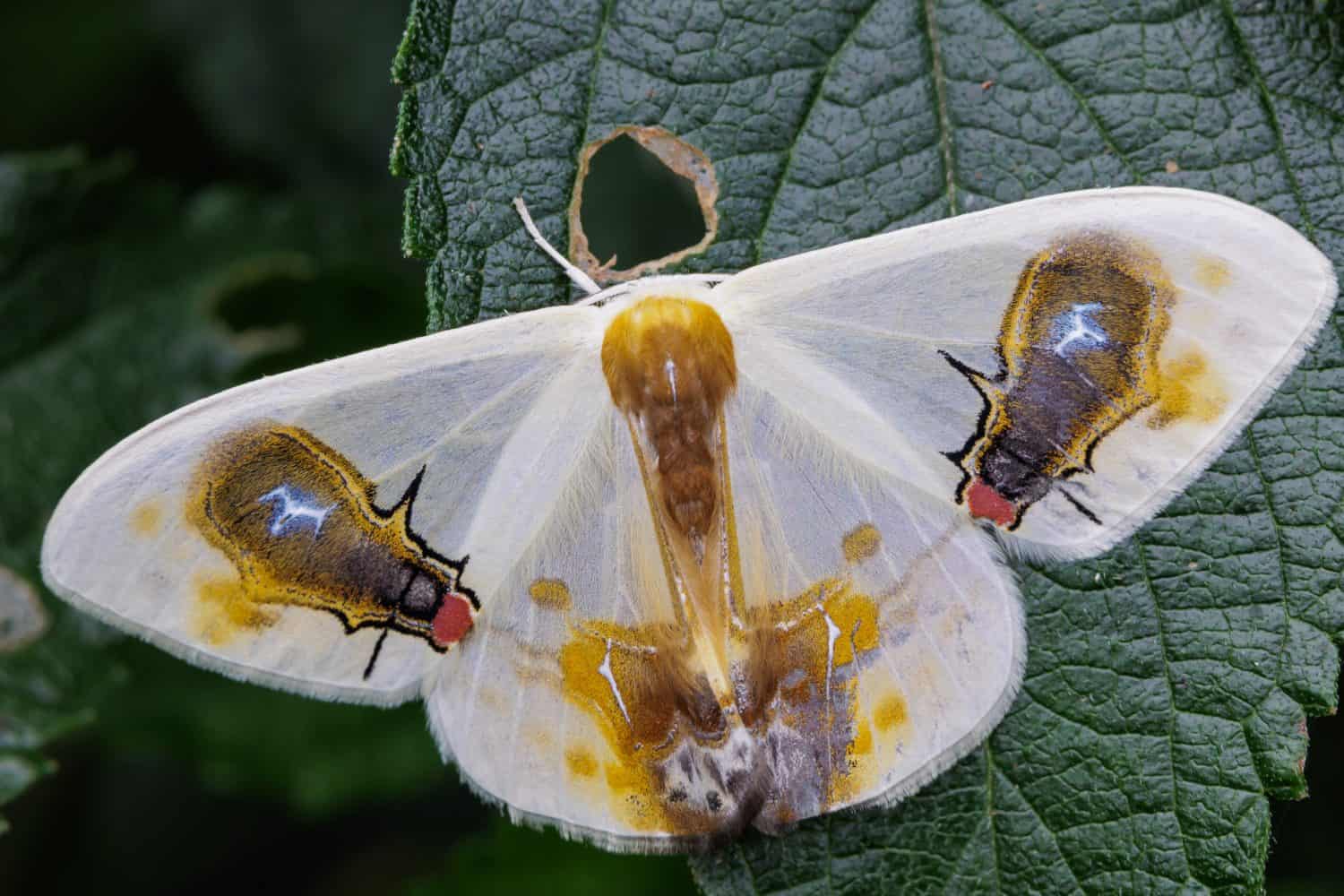
Macrocilix maia moths have wingspans of 1.5 to 1.8 inches across.
©Stephane Bidouze/Shutterstock.com
The Macrocilix maia is a deceptively weird-looking moth — its wing pattern perfectly mimics fresh bird droppings, and it is unbelievably realistic. The symmetrical patterns on its wings even include two shockingly precise spots that resemble flies feeding on the droppings! To top it off, this clever moth can also release an unpleasant odor that smells very much like bird waste, making its mimicry even more convincing — and unappetizing — to any hungry predator.
The Macrocilix maia is found across much of South and East Asia, including Japan, India, Borneo, Sumatra, China, and Taiwan. It is most active at night and often rests near oak trees in woodlands and forests during the day.
Grape Root Borer
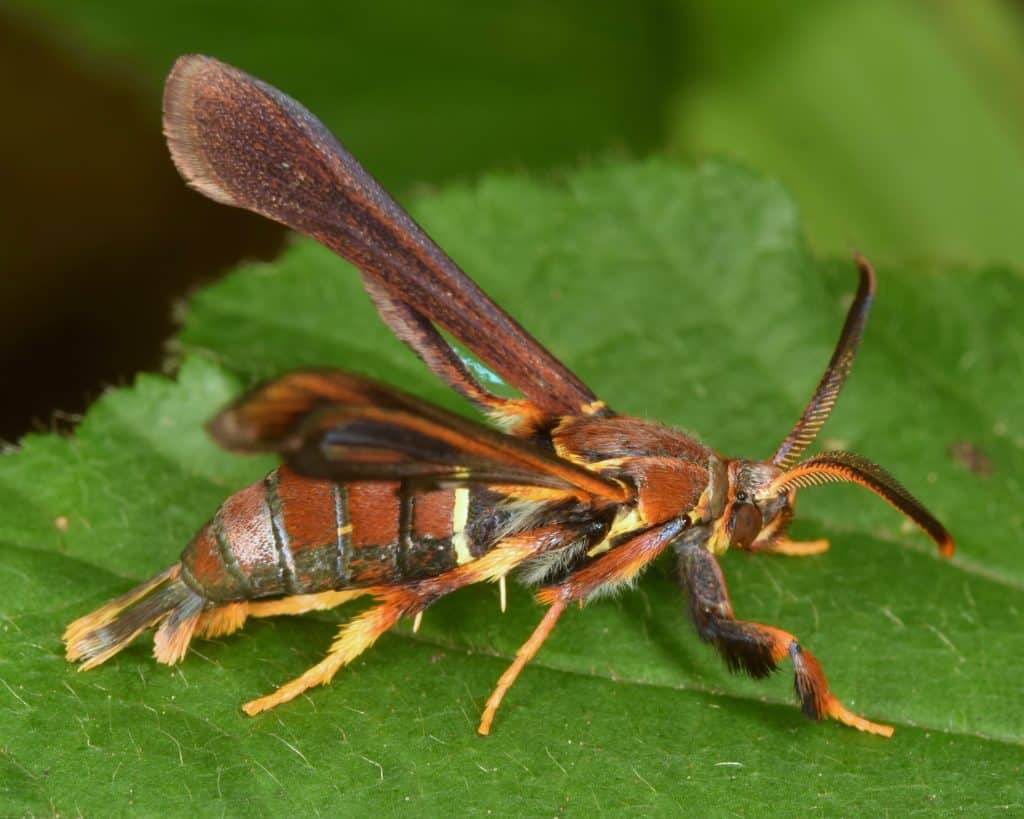
Infestations of grape root borer caterpillars can go unseen for years, causing irreparable damage to vineyards.
©Christina Butler from Georgia, United States / CC BY 2.0 / Wikimedia Commons – Original / License
Although completely harmless, the grape root borer moth (Vitacea polistiformis) looks like a paper wasp. With its slender body and bold yellow and black stripes, the moth uses this Batesian mimicry to scare away predators.
However, the moth’s early life stages actually do pose a real threat to its environment. The grape root borer’s caterpillars are detrimental to grapevines across the eastern United States. They feed and tunnel inside the roots for years, slowly weakening and damaging the structures from within.
Owl Moth
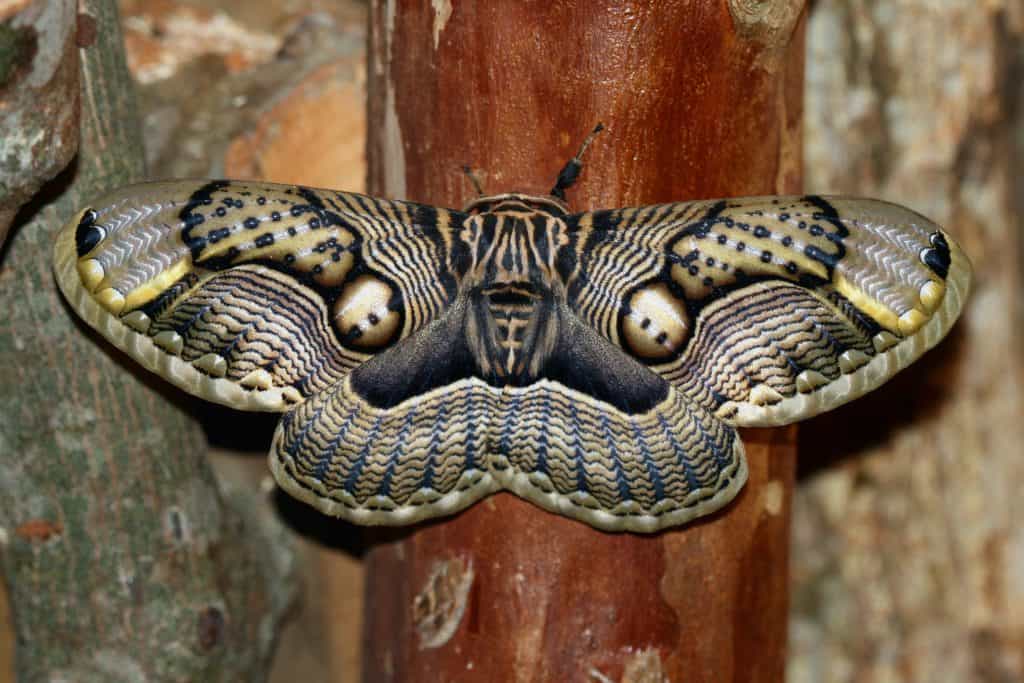
Owl moths are most active at night.
©Arthur Chapman / CC BY 2.0 / Wikimedia Commons – Original / License
The owl moth (Brahmaea wallichii) is a large, weird-looking moth found across many parts of Asia. With a wingspan of 3.5 to 6.25 inches, its rich brown and black wings look like an owl’s feathers and feature large, distinctive eyespots. Rather than flying away immediately when disturbed, the owl moth shakes its body and wings, flashing these eyespots to make itself look like the face of a much larger, more dangerous creature. This causes a brief moment of surprise in predators, giving the moth time to escape.
Owl moths live in temperate and subtropical forests. Interestingly, their caterpillars are just as strange-looking, with long, whip-like appendages that give them a bizarre appearance — almost like something from a Tim Burton movie.