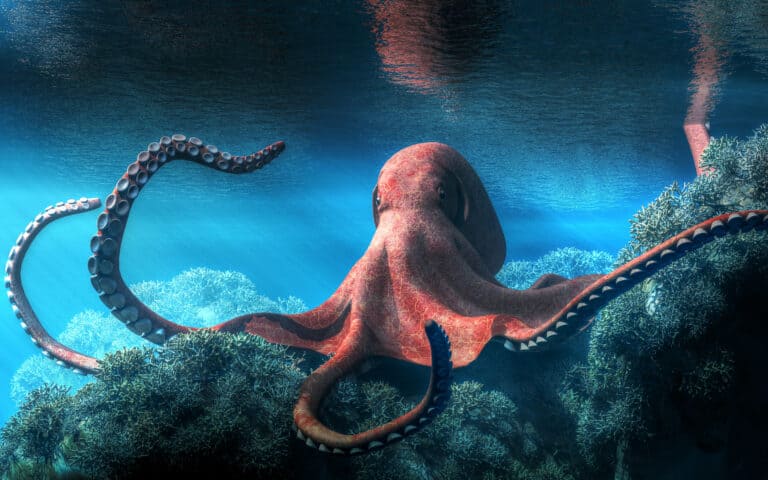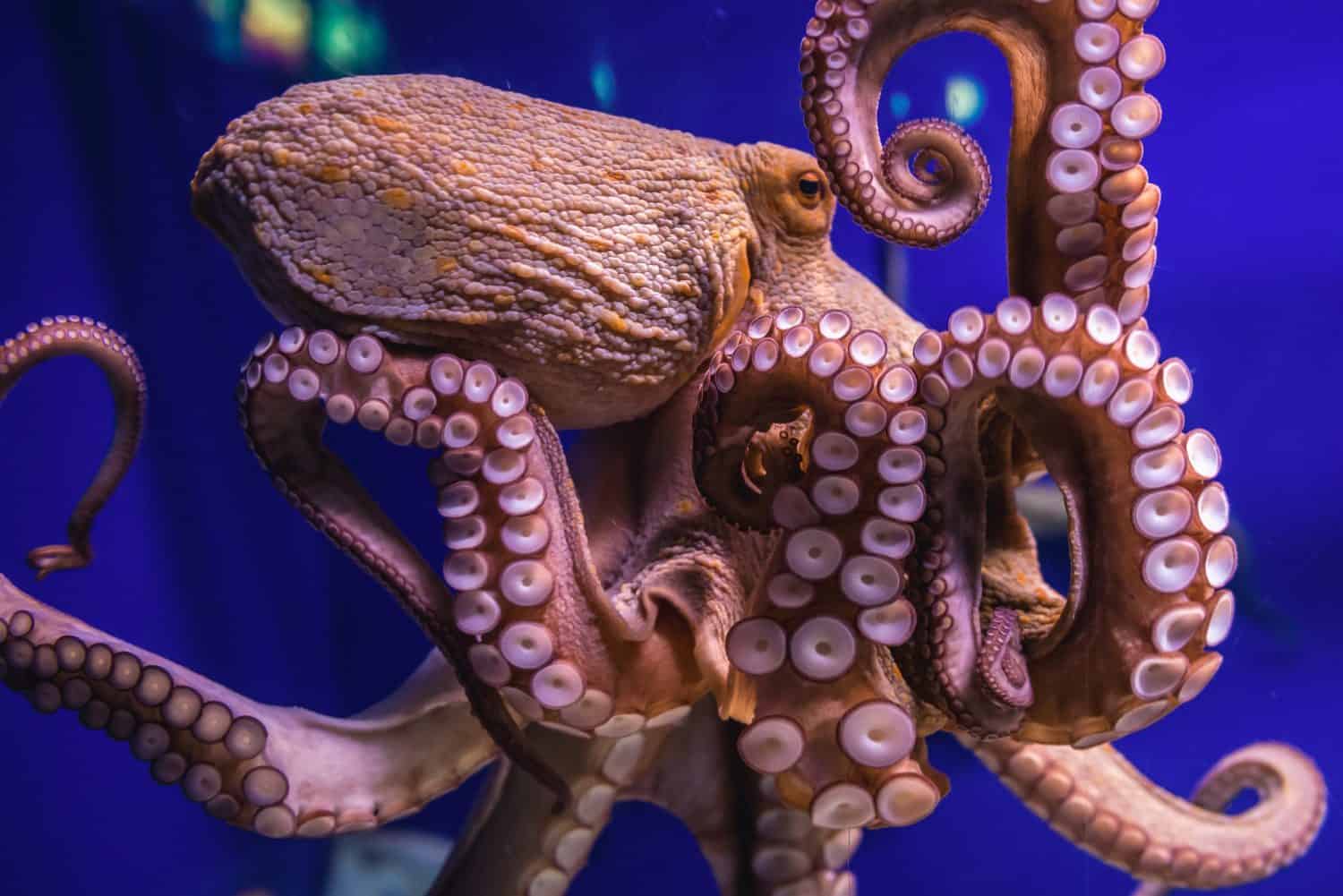

Octopuses look like they belong in another world. They are soft-bodied, eight-limbed mollusks that live in oceans worldwide, inhabiting a variety of depths and environments. There are around 300 different species, but all share an elongated body and a head that contains the mouth and beak. Their nervous system is more expansive and complex than that of other invertebrates, featuring a doughnut-shaped brain. These creatures are also super smart. Let’s check out five incredible octopus facts that show just how clever they are.
5. Masters of Disguise
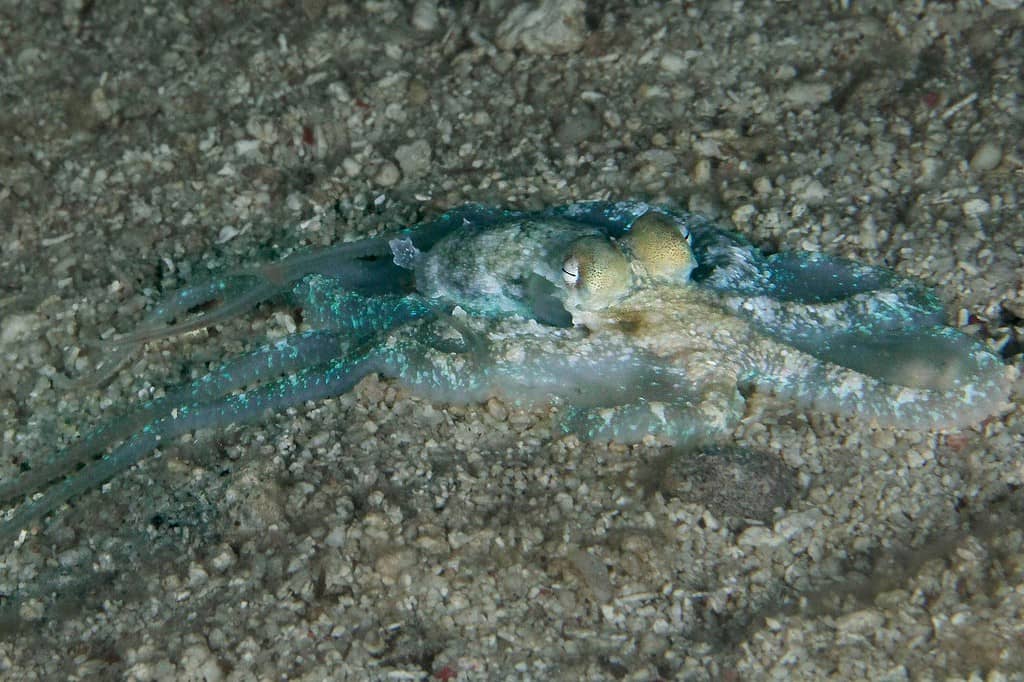
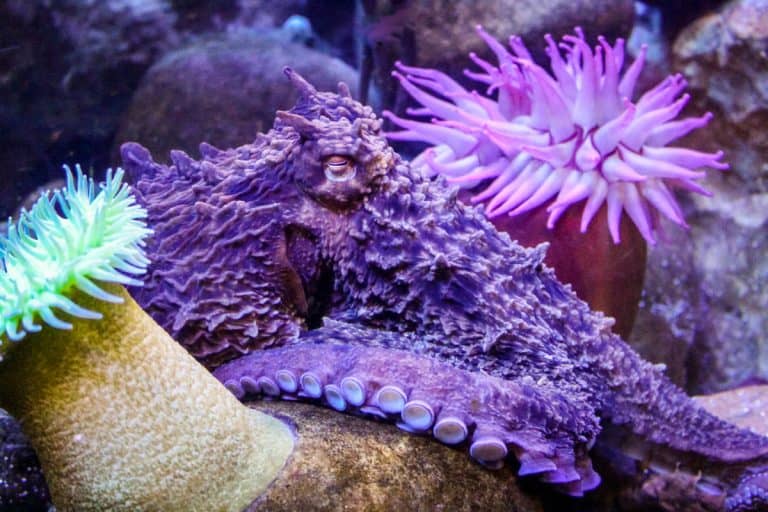
Octopuses blend into their surroundings.
©Oksana Maksymova/Shutterstock.com
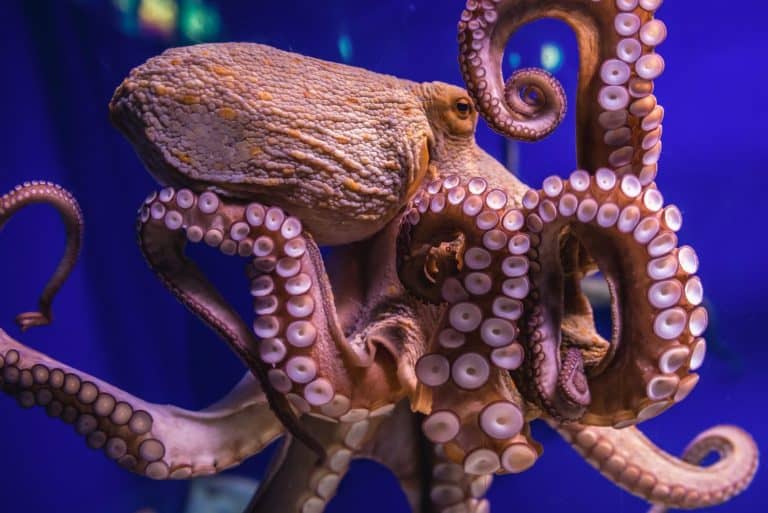
Octopuses (along with squids and cuttlefish) can change both the color and texture of their skin in an instant. They can do this to blend in perfectly with their surroundings or do the opposite and stand out!
This ability is due to thousands of color-changing cells called chromatophores. These are located just below their skin’s surface. At the center of each chromatophore is a balloon-like structure containing black, brown, red, yellow, or orange pigment. Using a complex system of nerves and muscles, the octopus can stretch this structure, making the color of the pigment more or less visible. Some octopuses also have iridophores, which are stacks of reflecting plates that create additional colors, such as silver and gold. Others have cells called leucophores, which reflect the colors of the surrounding environment, making the octopus even harder to spot. They change their skin texture by controlling the size of small projections on their skin, called papillae.
Not all octopuses try to blend in with their environment. Some impersonate other sea creatures, such as sea snakes, to deter potential predators. Using another strategy, the blue-ringed octopus displays its bright blue rings when provoked. This is essentially a message to would-be attackers to back off because it is extremely venomous!
4. Boneless Body

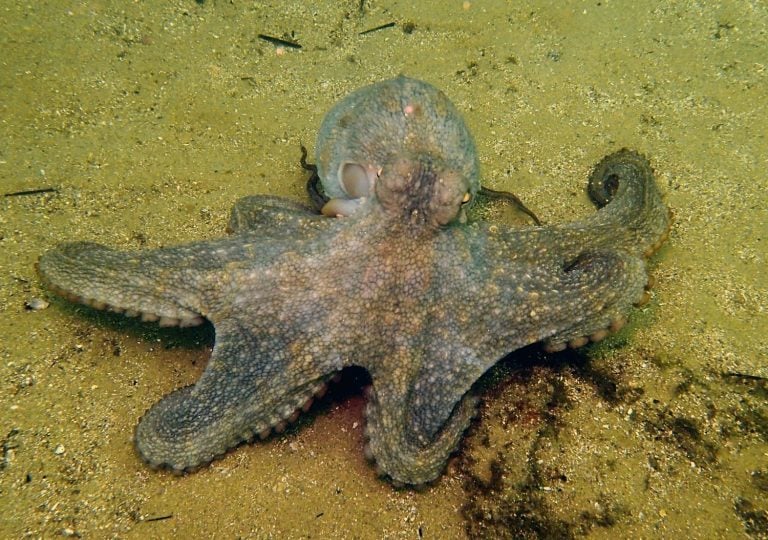
Squeezing into small spaces is an octopus’s specialty.
©Niki Hubbard / CC BY 4.0 / Wikimedia Commons – Original / License
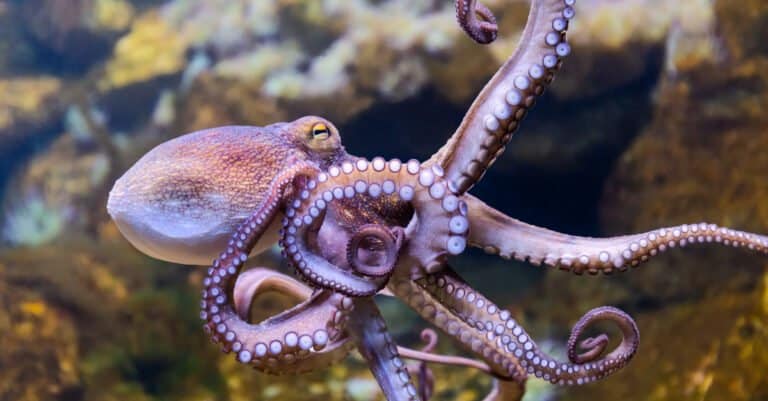
Most of an octopus’s body is made of soft tissue; in fact, they are 90 percent muscle. The only hard part is the beak. What’s more, their arms are muscular hydrostats, which means that they can bend, shorten, and elongate in a graded fashion at any point along their lengths. They are incredibly good at squeezing through gaps and into tight crevices. Essentially, if their beak can fit through a gap, the rest of their body can follow. To do this, they use a combination of folding, bending, and tucking. This requires a high level of body coordination and planning, which is made possible by their remarkable intelligence.
This ability gives the octopus an advantage over its competitors and predators. Many octopuses feed on the sorts of creatures that hide out in crevices, so being able to get in there after them is a great ability to have. Also, many octopus species spend a lot of time hiding out in small crevices themselves, where they are safer. There are numerous videos online showing octopuses escaping from fishing boats and aquariums by using this remarkable ability.
3. Underwater Jet Packs
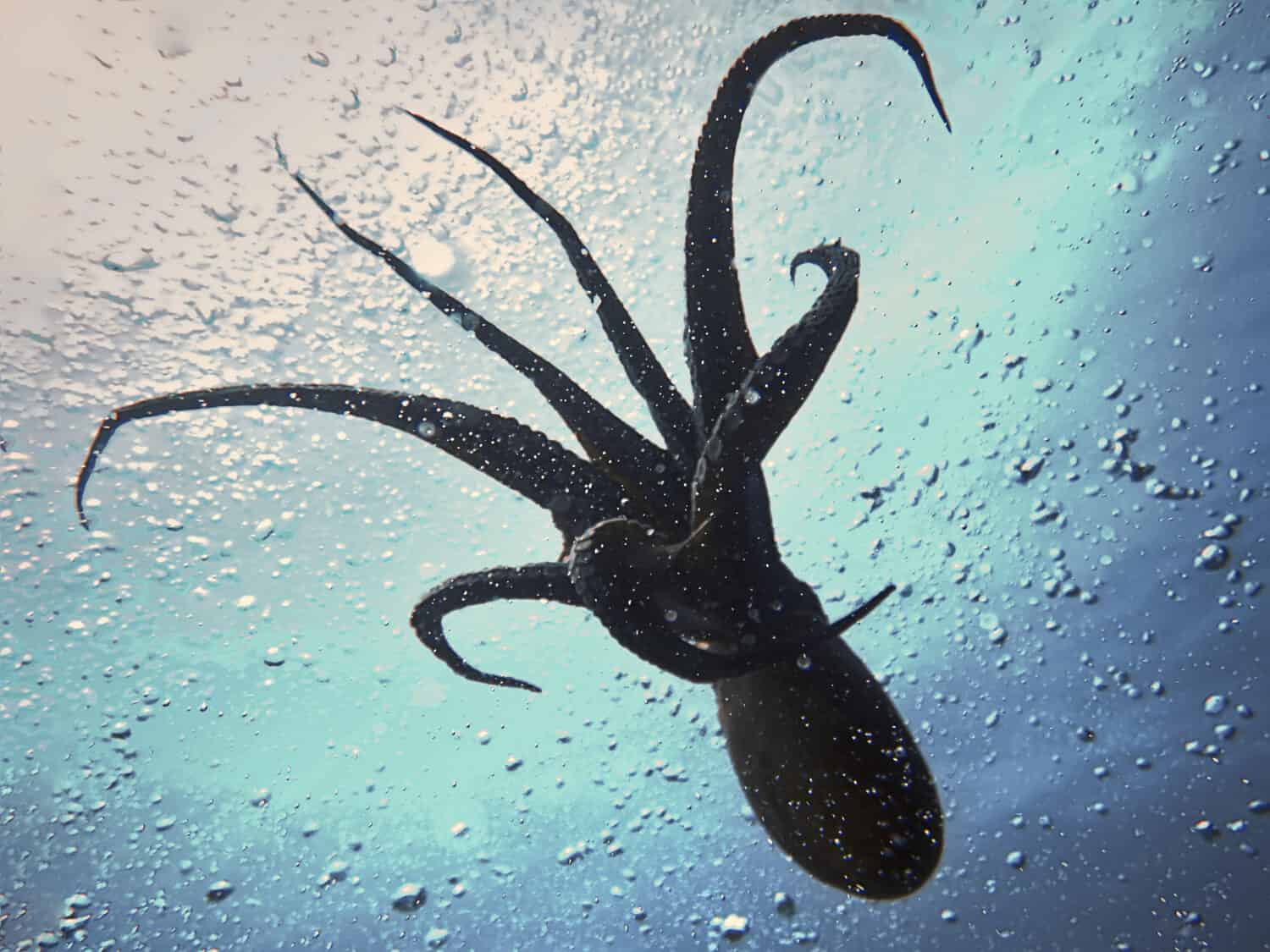
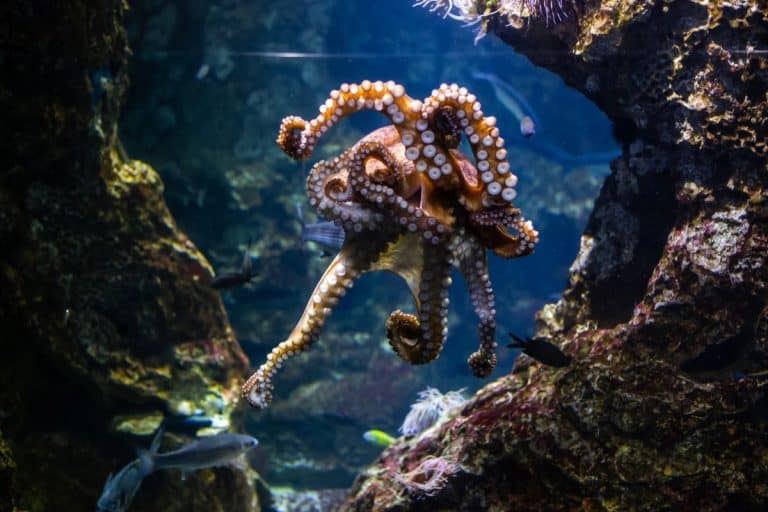
Jet-propelled octopuses can travel at 25 mph over short distances.
©Allexxandar/Shutterstock.com
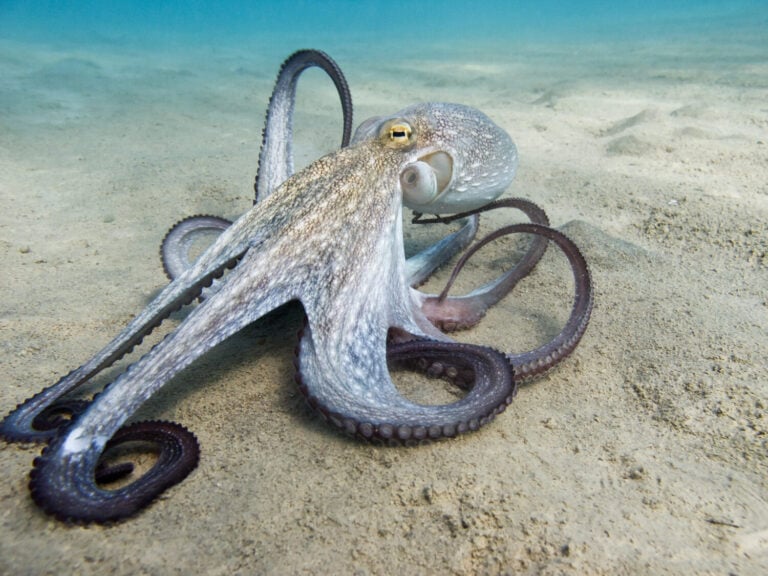
Sometimes you see octopuses ‘walking’ across the sea floor using their arms. However, they can also ‘swim’ in water by using a system of jet propulsion. They start by drawing water into their mantle cavity, a muscular structure that houses the animal’s gills, hearts, and digestive and reproductive organs. Then, by contracting their muscles, they expel it quickly through a tubular opening called a siphon.
When jetting is used as a means of escaping a predator, it is often accompanied by inking. This occurs when an octopus ejects ink from its ink sac, located near its digestive system, simultaneously with the jet of water. Ink can be ejected in blobs (which serve as a decoy) or as a big mass, which provides cover for them to escape. Octopus ink is mainly black and contains melanin, but it can also contain tyrosine, which may impair a predator’s sense of taste and smell.
2. True Tool Users
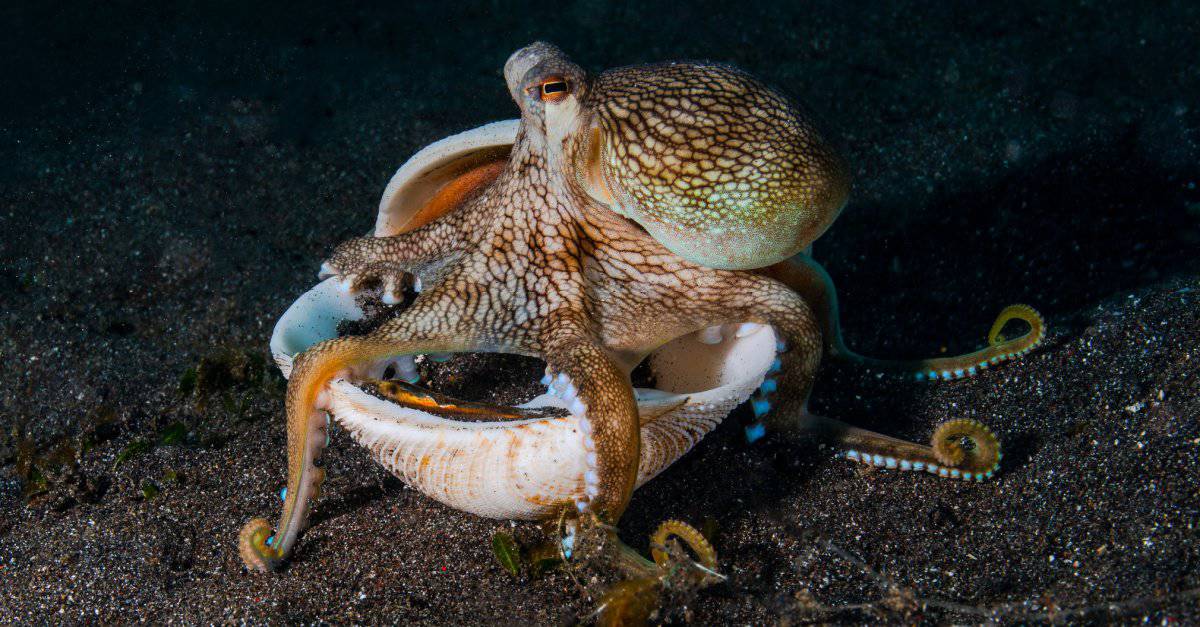
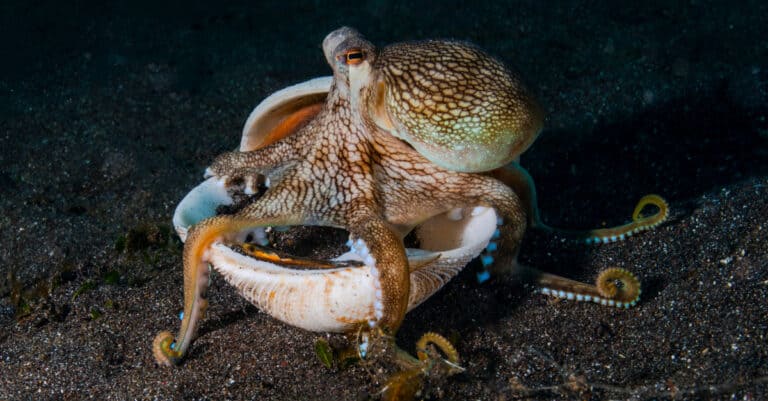
The veined octopus uses coconut shells to protect itself from sediment while resting.
©iStock.com/atese
Tool use is typically associated with humans, other primates, and birds, but there is evidence that octopuses can use tools as well. For example, the veined octopus has been observed spreading itself over stacked, upright coconut shells to use them as stilts. Later, it used the same shells as a shelter. Other octopuses have been filmed using shells and stones to protect themselves when threatened by predators. Some have even been captured firing a stone out of their siphon like a pea shooter!
This type of behavior is very revealing about the octopus’s intelligence. It may indicate higher levels of cognition and learning. There is still much debate around whether animals copy this behavior from others or if they figure it out for themselves.
1. Brilliant Problem Solvers

Octopus nervous systems are very different from ours.
©Amirkhans world/Shutterstock.com
Laboratory studies have shown that octopuses are superb problem solvers. This is an evolutionary trait that would have helped them survive in challenging and changing environments. We know that they can untie knots, open jars, and get into toddler-proof cases as well as find their way around mazes. They have large brains and adapt quickly when more challenging scenarios are presented to them.
However, their intelligence is very different from ours. Their nervous system is not centralized like that of a human. Instead, it is distributed among components that function with considerable autonomy from each other. Perhaps these remarkable creatures possess a form of consciousness, albeit one that is very different from what we are currently familiar with.