
Quick Take
- Not all octopuses bury themselves, but several sand-dwelling species use burrowing as a survival strategy. See which species burrow →
- A burrowing octopus uses its arms and siphon to loosen sediment and create a temporary underground chamber. See how they vanish →
- Some octopuses can remain hidden beneath the sand while continuing to breathe through small openings in the seabed. Discover the buried solution →
- Burrowing helps octopuses avoid predators in open habitats that lack rocks, reefs, or other shelter. Explore both survival reasons →
Recent footage captured by a diver in Port Phillip Bay, Victoria, shows an octopus apparently vanishing into the sea floor. This is one of the most remarkable sights in the ocean, as the octopus doesn’t just simply swim away or hide underneath a rock. Instead, it buries itself in the sand, leaving little sign that it was ever there. Keep reading to learn just how and why octopuses do this.
Do All Octopuses Bury Themselves?
Not all octopuses bury themselves in the seabed. Many species of octopus live around coral reefs and rocky areas, where they can shelter in crevices or under rocks. However, species that don’t live in these areas are more likely to bury themselves in the sand, as the open seabed offers very little natural shelter.
The octopus in the video is described as a double-spot octopus, a name often associated with the California two-spot octopus (Octopus bimaculoides), which is found off the west coast of the United States. However, we are unable to verify if this is the species shown in the footage. Other species that are known for their burrowing behavior include the southern sand octopus (Octopus kaurna) and the coconut octopus (Amphioctopus marginatus). These species have adapted to life in oceans with sandy seabeds and use their burrowing ability to their advantage.
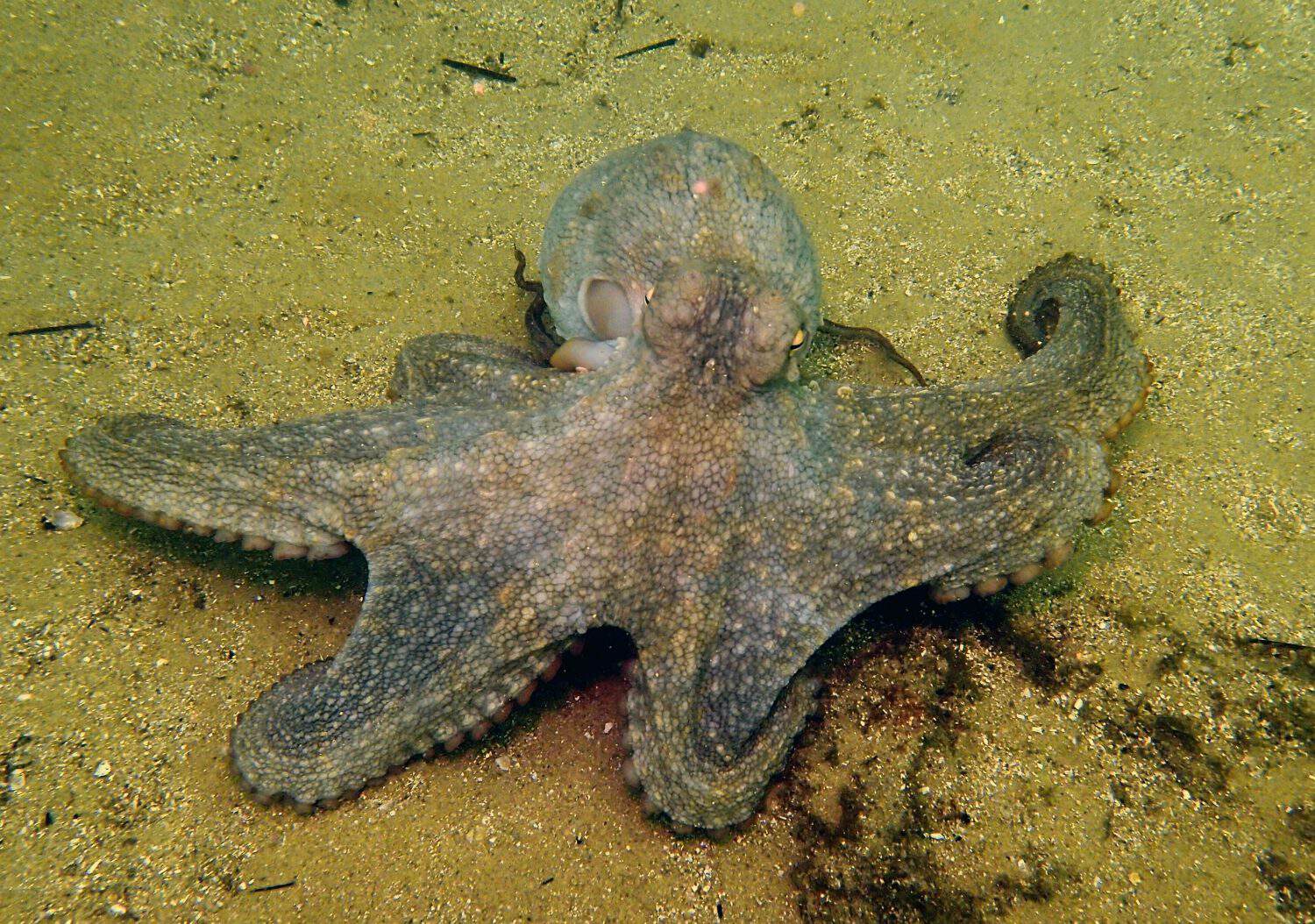
The southern sand octopus is one of several species that burrow into the sea floor.
©katherineobrien/Shutterstock.com
How Do They Disappear Into the Sand?
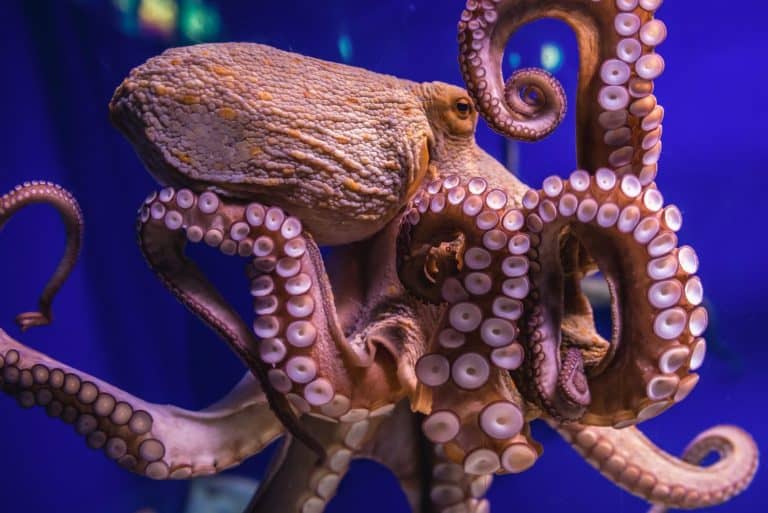
At first glance, it might look like the octopus is simply digging a hole in the loose sand to hide in. However, they are actually creating a temporary burrow and covering themselves with the sand at the same time. To do this, they use their arms to rake the sand and sediment around their body. At the same time, they use their siphon to direct water into the seabed. Their siphon is also called a funnel and functions like a flexible tube.
Octopuses pull water into their mantle and then force it out through the siphon, directing the jet of water into the seabed around and beneath their bodies. This loosens the sediment and sand, creating a pocket they can retreat into. As they settle into the chamber, they continue to cover themselves using their arms.
Octopuses are highly flexible and can squeeze into surprisingly small spaces, so it usually takes them only a few seconds to create a hole and disappear into the sand. In some cases, octopuses leave tiny openings, allowing the water to circulate in the chamber they have created. This means they can continue drawing oxygen-rich water while they remain hidden.
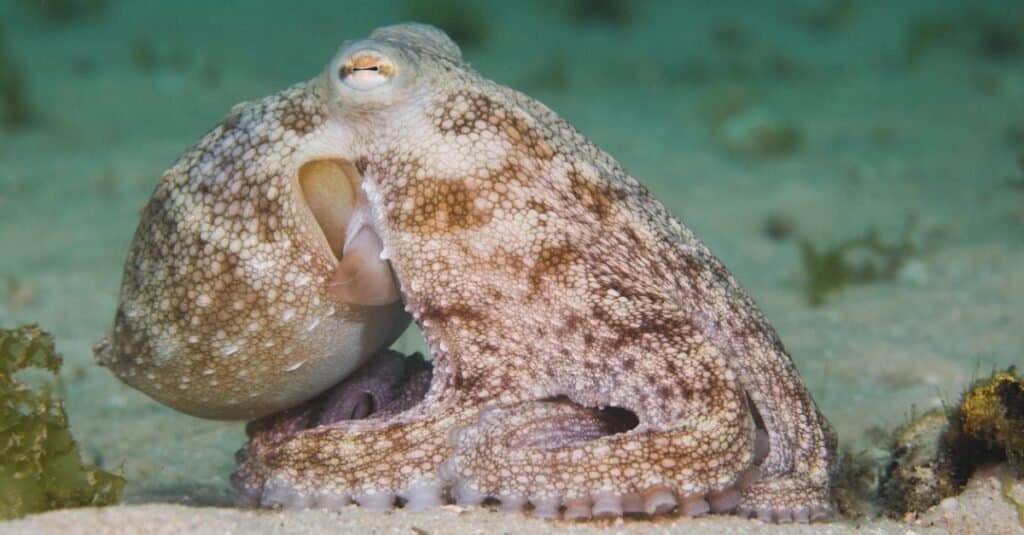
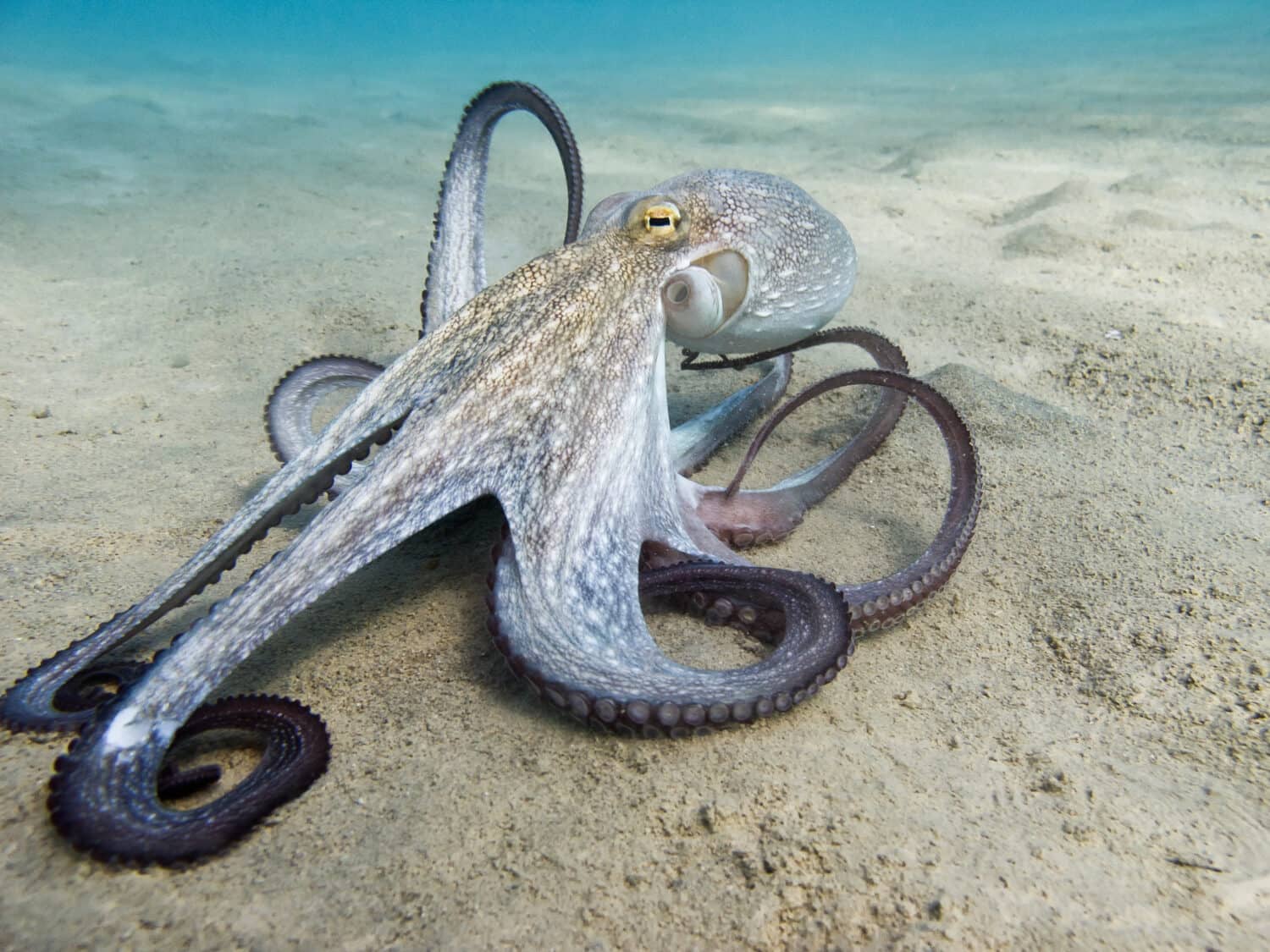
Octopuses create a chamber in the sand to burrow into.
©iStock.com/Madelein_Wolf
Why Hide Beneath the Sand?
The main reason that octopuses bury themselves in the seabed is to hide from predators. Octopuses are soft-bodied animals. This makes them vulnerable to a wide range of predators, including fish, sharks, rays, and marine mammals. Instead of trying to outrun the threat, burrowing offers a safer solution, especially in open areas that lack any other shelter, such as rocks or corals. Burrowing is particularly effective when it is combined with their ability to camouflage themselves, as any part that remains uncovered can be blended into their surroundings.
However, hiding from predators isn’t the only reason that octopuses hide in the sand. Octopuses are ambush predators, so they can hide in the sand while waiting for unsuspecting prey. Although this behavior may seem surprising, burrowing is actually a vital part of octopus survival.