
Quick Take
- Chickadees replace 30 percent of their old neurons to make room for new memories in their hippocampus.
- The expansion of the hippocampus is one of the most impressive aspects of any bird.
- Seasonal neurogenesis helps long-term survival for black-capped chickadees, which must remember thousands of hiding spots.
- The caching phase begins just before winter and purges old information, much as humans forget old memories.
Birds don’t get enough credit for the magnificent creatures they are. Many people have heard a black-capped chickadee trilling or chirping in their backyard but fail to realize evolution has transformed this tiny songbird into one of the most impressive avian species. As autumn birders watch these cute little birds through their binoculars, they are blind to all the changes happening within the black-capped chickadee. And when the weather shifts for the season, these birds hide big (brained) secrets.
Black-Capped Chickadee: A Master of Hide and Seek
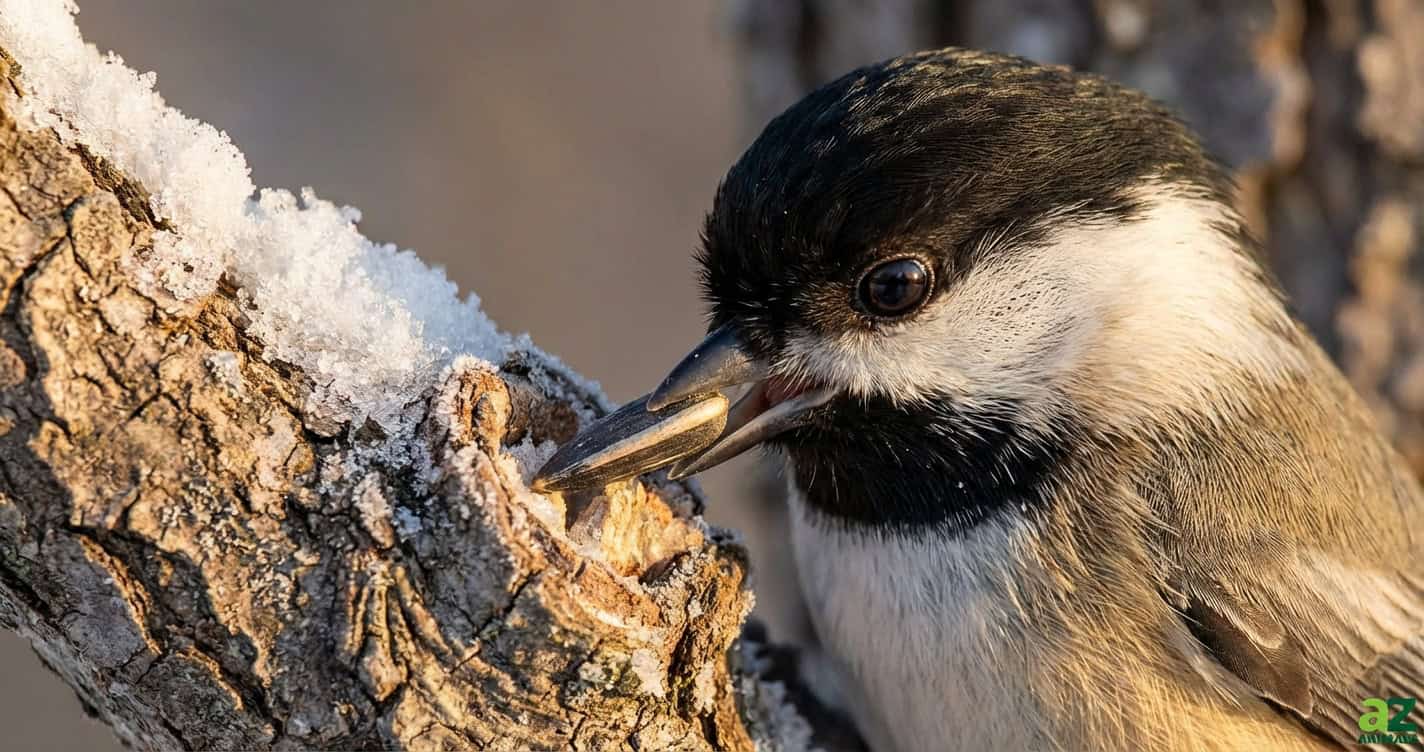
Black-capped chickadees are experts at scavenger hunts. Just before winter, they do something called scatter hoarding, preparing for the long, cold months ahead and ensuring they have enough food to last. When doing this, black-capped chickadees store seeds and nuts in locations across their territory. They can have a surprisingly long range, with many nuts and seeds hidden near landmarks they find memorable. Other times, they may bury food in forests, gardens, or underbrush, resulting in hundreds, if not thousands, of cashes they’re forced to remember.
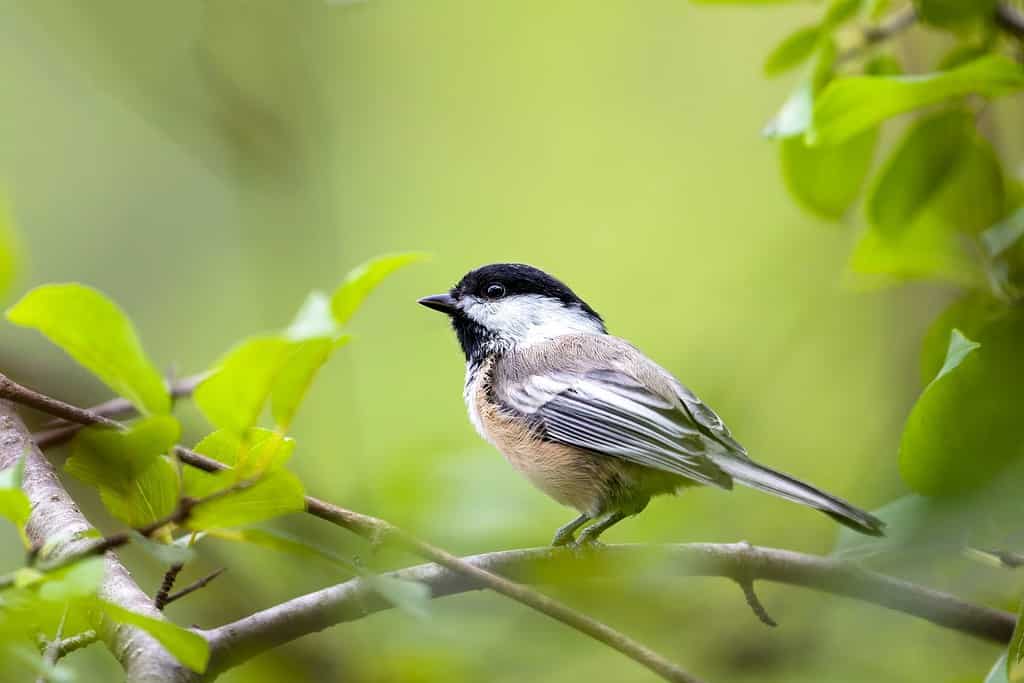
While their brains don’t physically grow, black-capped chickadees do expand their memory banks.
©Manu M Nair/Shutterstock.com
The stakes are high for the black-capped chickadee. If they forget their hiding places, they have no backup food source. These circumstances are made more challenging by impending winter weather. Unlike other animals, they can’t use scent to locate food, and as herbivores, they can’t actively hunt. Therefore, their strongest tool is their memory. But how do they remember multiple locations for months at a time?
The Extraordinary Expanding Brain of the Black-Capped Chickadee
What happens after hiding all of these caches is truly remarkable. To adequately remember the locations of newly hidden food, black-capped chickadees expand the volume of their hippocampus, the brain region responsible for memory, by about 30%. This incredible evolutionary power allows them to remember thousands of sites where food is stored. By the end of the summer, the neurons in the chickadee’s hippocampus begin growing anew. This part of the brain is responsible for memory in all mammals.
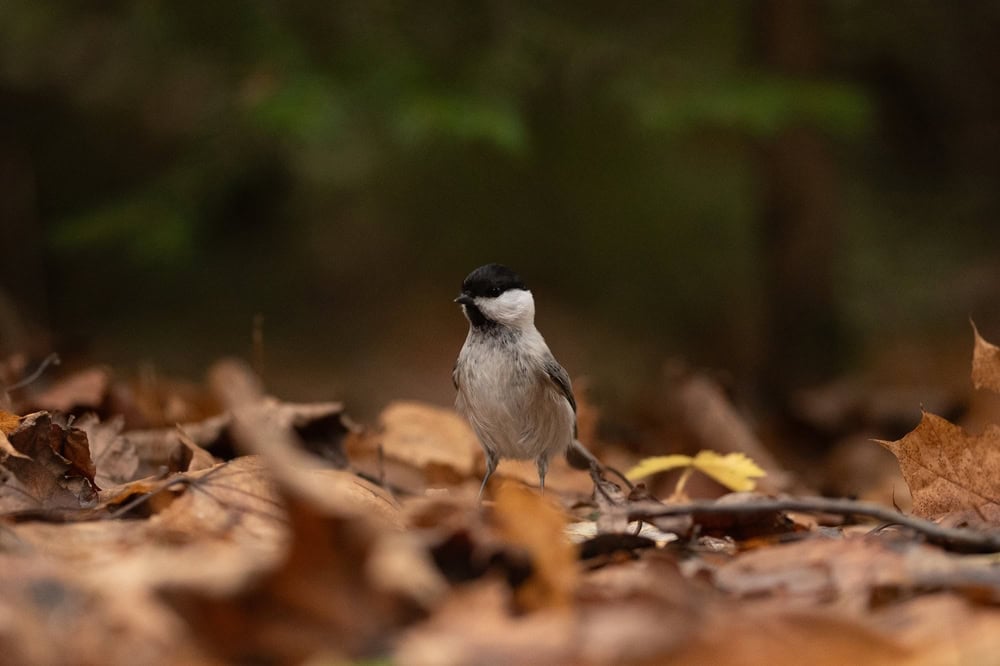
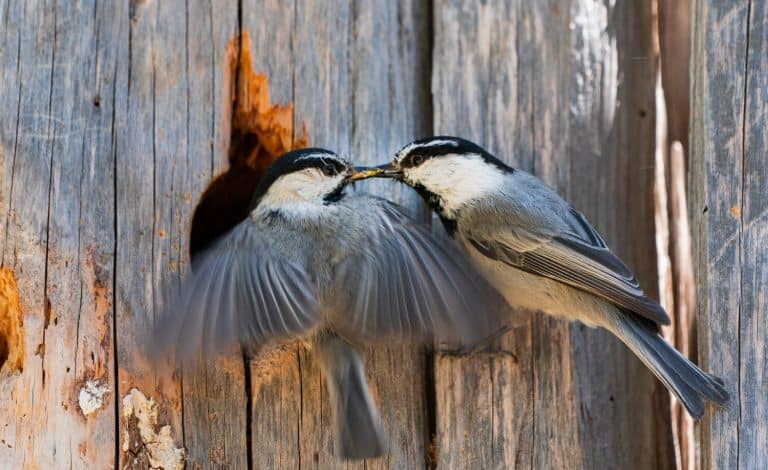
Black-capped chickadees have impressive location recall for their food caches.
©Liudmila Bohush/Shutterstock.com
To make room for these new neurons, the chickadee must get rid of old ones first. As neurons are replaced in the hippocampus, the chickadee stores information from its current caches. Their growing brain allows them to remember most, if not all, of their new hiding spots. While their brains don’t physically grow, these birds essentially double their hard drive memory.
How Does This Work in the Field?
A study by Columbia University revealed that how a chickadee’s memory works is even more impressive than its changing brain. Research shows that black-capped chickadees remember their hiding spots in a way similar to how a barcode scanner reads a barcode. When a chickadee is actively searching for a cache spot, the corresponding location in its hippocampus lights up. This information feedback is advanced for birds and shows how a black-capped chickadee can remember so many locations.
While these memories are coded visually for birds, scientists are now exploring how this can be helpful for humans. We remember things based on our five senses, which often make memories stronger. And now, researchers at Columbia are working to determine if this barcode-like scanning memory can help human brains.
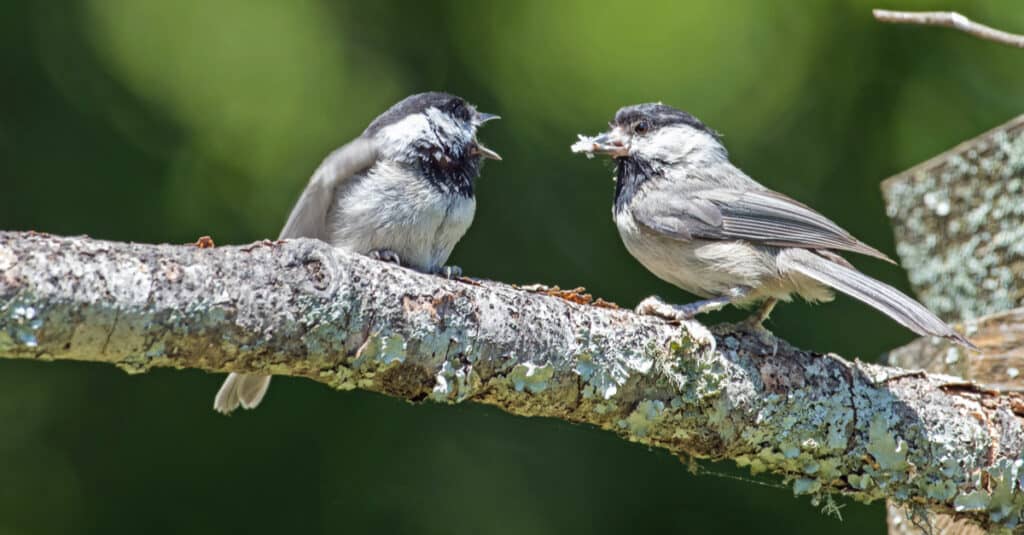
When it comes to survival, a black-capped chickadee’s memory is everything.
©Tom Franks/Shutterstock.com
The first course of action is to determine if chickadees are predetermining which caches to find. The blips of activity in their hippocampus are so brief that they are difficult to track, making the study of their memory recall even more challenging. However, if researchers can crack the code, they may be able to apply it to modern-day science for memory and recall issues in humans. What they have determined is that the black-capped chickadees, which are known for their exceptional spatial memory among songbirds, change rapidly. Their neurons fire at an almost unfathomable rate, making them one of the most impressive birds you can see in your own backyard.