
Quick Take
- This mantis's camouflage isn't designed to hide it. It's built to do something far more predatory. See aggressive camouflage →
- Its flower-like appearance lures in the very creatures you'd least expect it to hunt. How it attracts prey →
- Those eyespots on its wings exist for one specific high-stakes moment, and that moment has nothing to do with blending in. Discover the wing display →
- Looking harmless is actually this insect's most dangerous weapon. Overview of its strategy →
Insects are often described as creepy or gross, and almost never as beautiful. But there’s one species just as beautiful as a flower, an aspect they take full advantage of. The spiny flower mantis is a master of camouflage, blending in with elegant flowers. This Instagram post by @mikswildlife shows a video of these mantises and their gorgeous features.
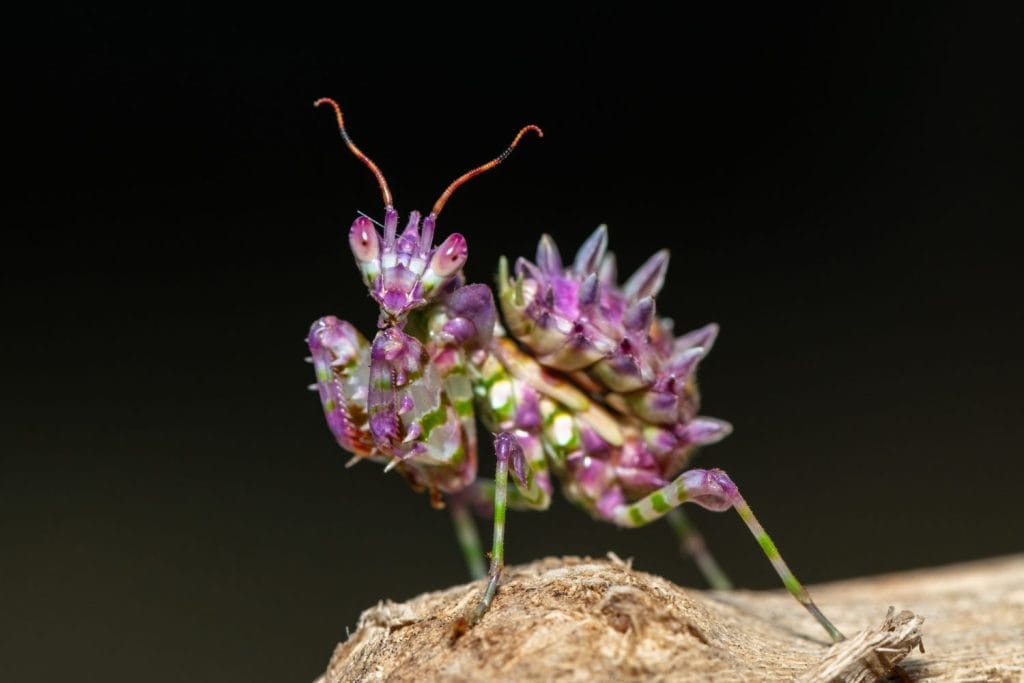
Despite their beautiful appearance, spiny flower mantis are masters of ambush predators that wait patiently to strike their prey.
©Craig Cordier/Shutterstock.com
About the Spiny Flower Mantis
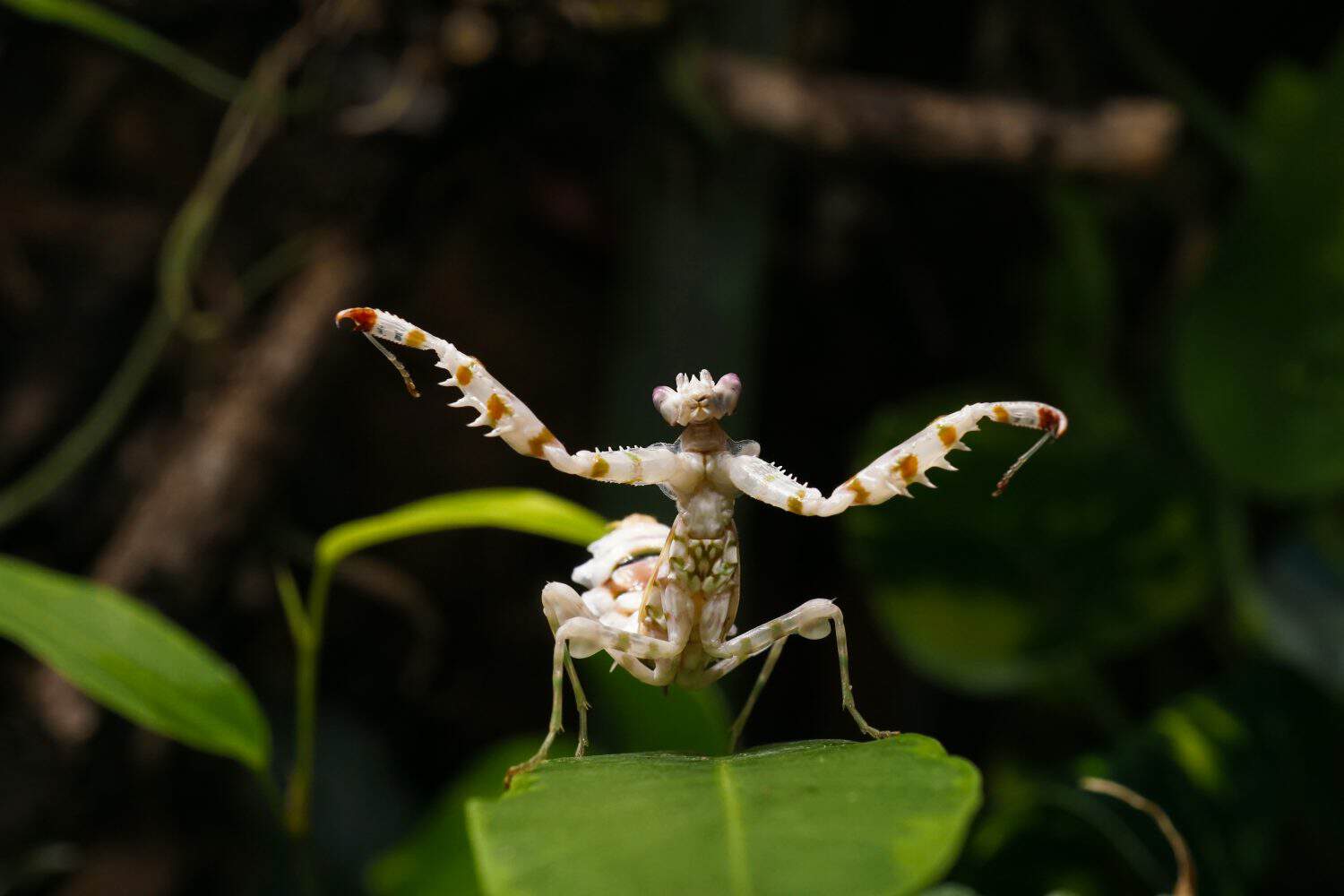
The spiny flower mantis is a beautiful species of praying mantis native to sub-Saharan Africa. They live in flower-rich grasslands, gardens, and forests. An adult is relatively small for a mantis, only growing to around two inches long. Their most identifiable feature that also makes them difficult to spot is their beautiful appearance. Like other species in the flower mantis group, both their coloring and body shapes resemble flower blossoms. This allows them to perch on other flowers and vegetation, blending in seamlessly. This specific form of camouflage is known as aggressive mimicry. Unlike other forms of camouflage that simply allow animals to hide within their surroundings, aggressive mimicry helps predators attract prey. The spiny flower mantis’s white, pink, and yellow coloring, leaf-like lobes, and spines work together to create the illusion of a flower bloom. This false appearance attracts bees, butterflies, and other pollinators directly to them, offering a low-effort meal.
Spiny flower mantises are not harmful to humans. They don’t have venom and do not sting, meaning that it is safe to observe them up close. Due to their lack of defensive strategies, their camouflage is extremely important. However, they do have one defensive measure used to ward off predators. On the sides of their wings are bold, spiral eyespots. If a predator gets too close, they quickly spread their wings to reveal them. This is known as a deimatic display. It is essentially a bluff meant to scare predators by making the mantises seem larger than they actually are. While it doesn’t guarantee their survival, it usually allows them a chance to escape. These remarkable insects truly make the most of their unique appearances.