
Quick Take
- When winter arrives, shrews pull off a biological trick that almost no other mammal on earth can match, and this remarkable feat involves their own brain. See Dehnel's phenomenon →
- A shrew's heart rate can outrun a hummingbird's, and remarkably that is not even the most extreme thing about its daily survival requirements. Explore shrew heart rates →
- Venom is vanishingly rare among mammals, yet some shrews wield it, and the way they use it is stranger than you'd expect. Discover shrew venom →
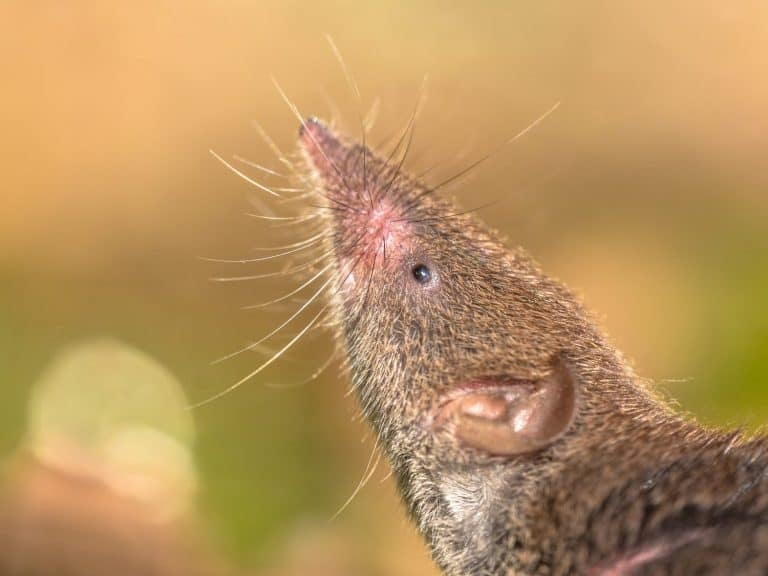
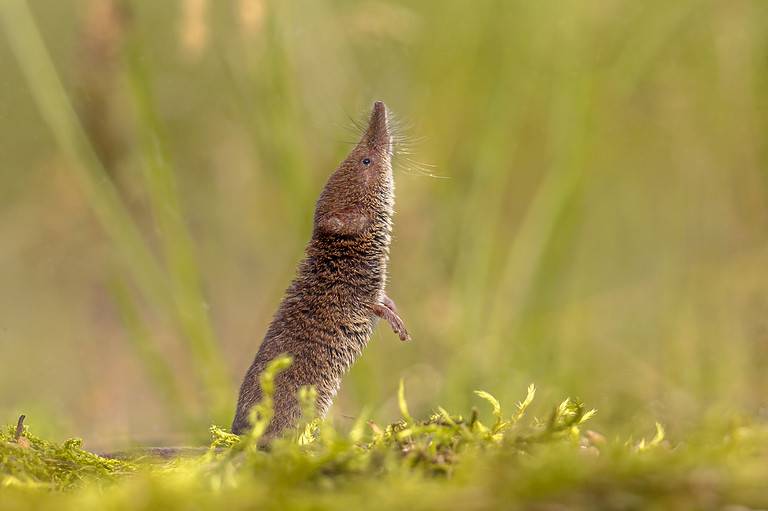
There is a small mammal living in a field near you that you may have caught sight of a few times but paid little attention to. We are talking about shrews, those mouse-like, velvety creatures with tiny eyes and a pointed snout. We delved a little deeper into the biology of shrews and discovered just how remarkable they are.
Where Are Shrews Found?
Shrews are members of the Soricidae family of mammals, within which there are three subfamilies. They are close relatives of moles and hedgehogs and are a large family comprising over 400 species. Shrews can be found throughout Eurasia, Africa, and North America. They are also adept at colonizing new areas because they can hide in goods transported by humans around the globe. This ability has enabled them to extend their range to several islands and to colonize South America, although they are currently limited to the Andes region.
Many shrews can be found pushing through leaf litter, while others are able to climb, and some can even swim. The water shrew, Nectogale elegans, of southern Asia has webbed digits and hair fringes on its hands and feet to help with propulsion through water.
Lifespans, Heartbeats, and Metabolism
Even if shrews manage to avoid getting eaten by raptors, birds, snakes, or the family cat, they do not live long. They have a maximum lifespan of around a year and a half, and many live for just a year. For the time that they are alive, however, they lead a frantic existence. Their hearts beat at 800 to 1000 times per minute, but the Etruscan shrew, the smallest terrestrial mammal on earth, has a heart rate that can reach 1500 beats per minute. That’s even more than a hummingbird!
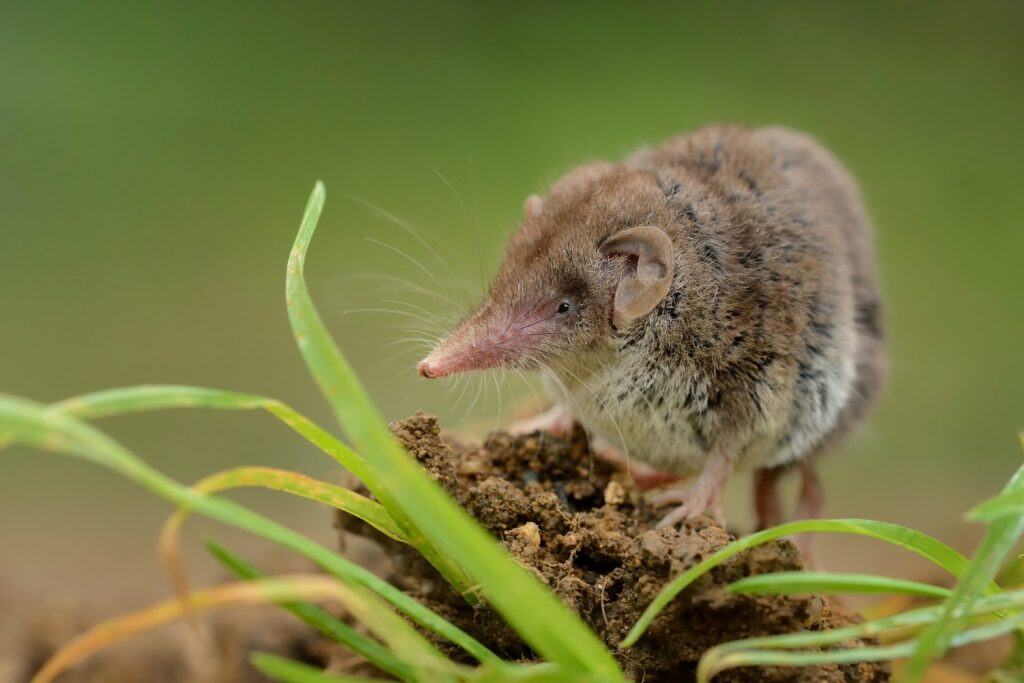
Shrews have very fast metabolisms.
©Martin Pelanek/Shutterstock.com
They also make 12 body movements a second and have a super-fast metabolism. This high level of activity requires a lot of fuel. Many shrews will eat their own body weight of food each day. The common shrew (Sorex araneus), for example, must eat every two or three hours or it will starve to death.
Shrew Echolocation and Shrinking Bodies
All shrews are always hungry, and most of them are insectivores. However, some shrews will tackle larger prey such as earthworms, which can be longer than their bodies. Others will even kill small birds such as finches.
Several shrew species in the genera Sorex and Blarina may detect their prey through echolocation. They emit a series of ultrasonic squeaks (high-pitched laryngeal twitters) that bounce off nearby objects and are detected by the shrew. The frequency of their calls is about 50 kHz. Mostly, the shrew uses echolocation for simple and close-range spatial orientation. They use it to detect protective cover so they can hide from predators.
Common shrews do not store food for the winter or hibernate. Instead, they grow rapidly after being born in the summer but shrink in the fall! As the days shorten, they can lose between 10 percent and 20 percent of their body weight. They lose fat and muscle, and even their organs—including their brain—shrink. This is a rare phenomenon in the animal kingdom and is called Dehnel’s phenomenon. Furthermore, their high metabolic rate produces enough heat to get them through the cold winter.
Do Shrews Sleep?
Scientists have tracked the wake-sleep cycles of these frantic little creatures. The research found that in the three Sorex species studied, shrews alternate between short periods of activity and rest throughout the day and night. They had a 55-minute foraging phase followed by 64 minutes of sleep. However, the foraging phase can be interrupted by short rest periods of around 7 minutes. Going to bed on an empty stomach is not an option for these guys, as they need food so frequently. Therefore, they enter a short rest period when their digestive tract is relatively full. The fuller their stomach, the longer the rest period.
Are Shrews Venomous?
Venom production is rare in mammals, but some shrews are among the few that can do it. When you have such a high need to constantly find prey, it helps if you can tackle a larger meal and immobilize it for long-term storage. Venom is injected into prey during biting, which allows some shrews to catch animals larger than themselves, including frogs, lizards, and fish.
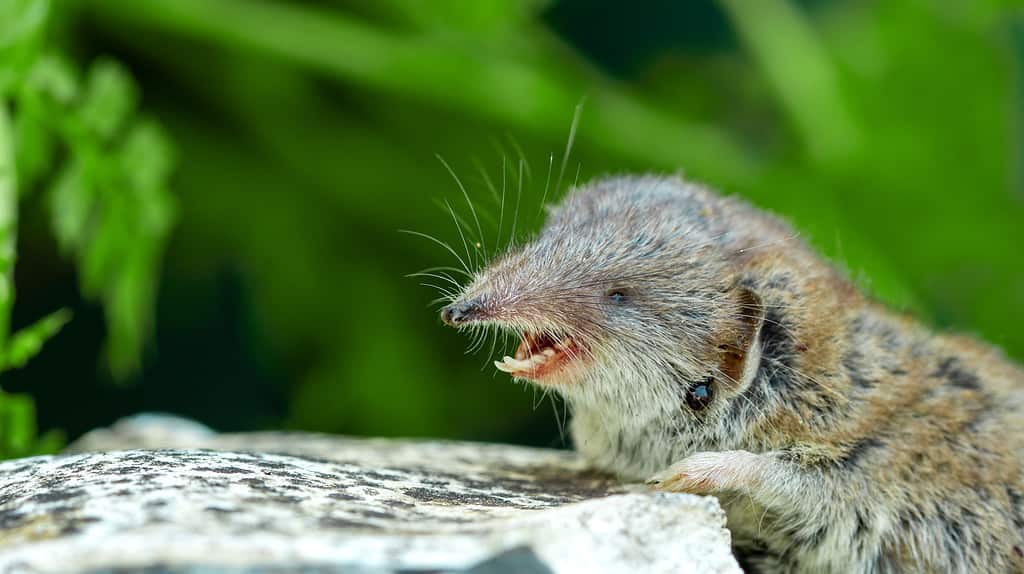
Some shrews tackle prey larger than they are.
©iStock.com/Imagesines
The prey is essentially stored in a comatose state until required. Studies of venom produced by the Eurasian water shrew (Neomys fodiens) have shown that it produces a potent paralytic effect. It has strong neurotoxic and cardioinhibitory activity and exhibits a hemolytic action (destroys blood cells).
The northern short-tailed shrew (Blarina brevicauda) works a little differently. It has proteolytic activity (breaks down proteins) and hypotensive activity (lowers blood pressure). More recently, scientists have shown that the common shrew, Sorex Araneus, is also venomous and that their venom has a hemolytic effect.
There is clearly a lot more to shrews than meets the eye!