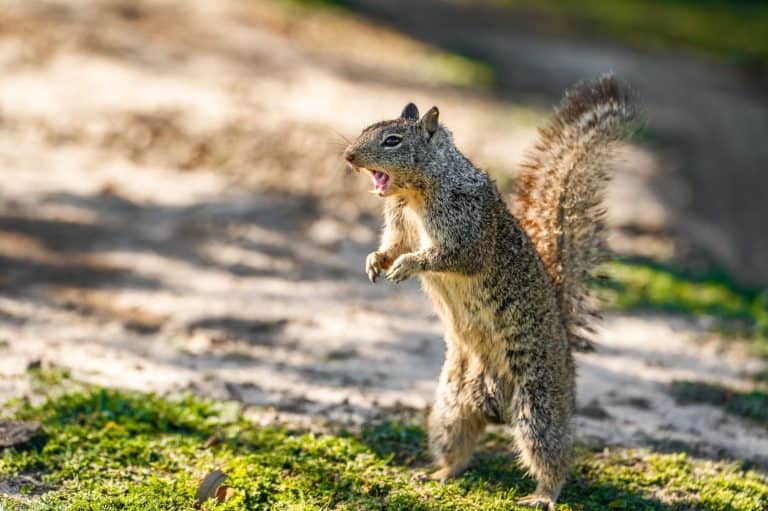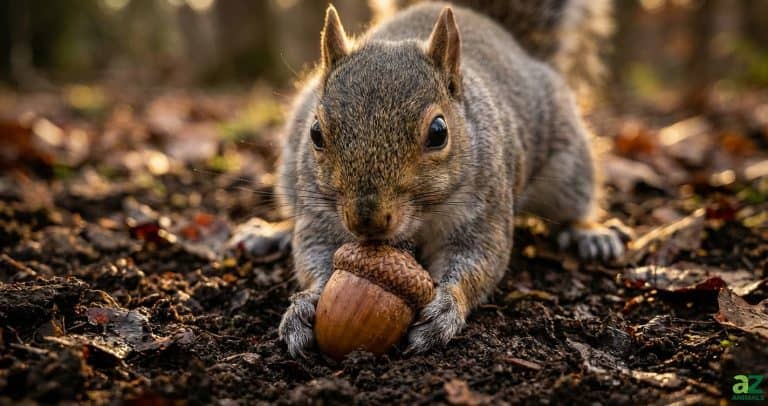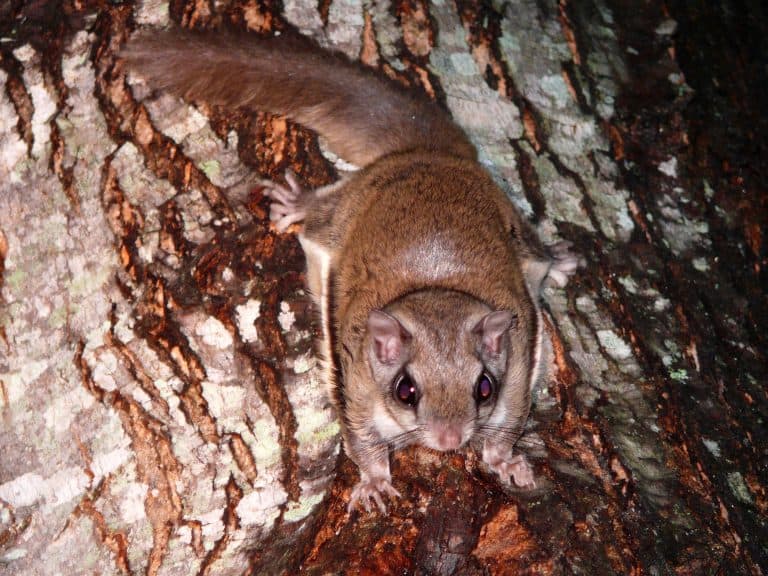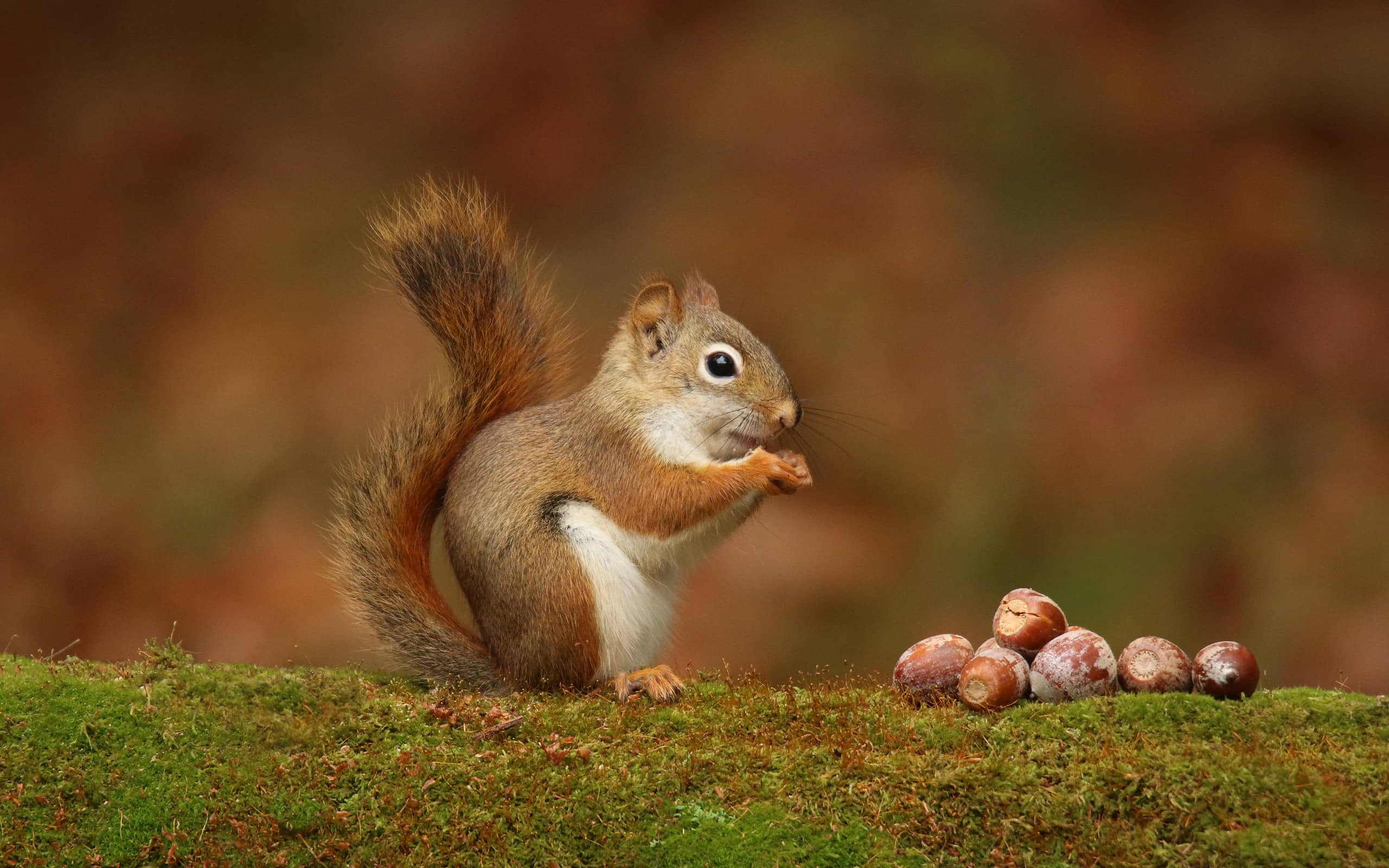

When the seasons change and the weather gets cooler, squirrels seem to act more odd than usual — much like the ones in this video. These squirrels seem frantic as they return to the pile of nuts, carefully select another and race off toward the trees. The squirrels are “caching,” which means they are storing food away in hidden spaces, or caches, for later.
This post was updated on October 28, 2025 to clarify habitats which do not have squirrel populations, the Nature Neuroscience study on hippocampal plasticity, and caching as mostly a seasonal practice.
What Is Squirrel Caching?
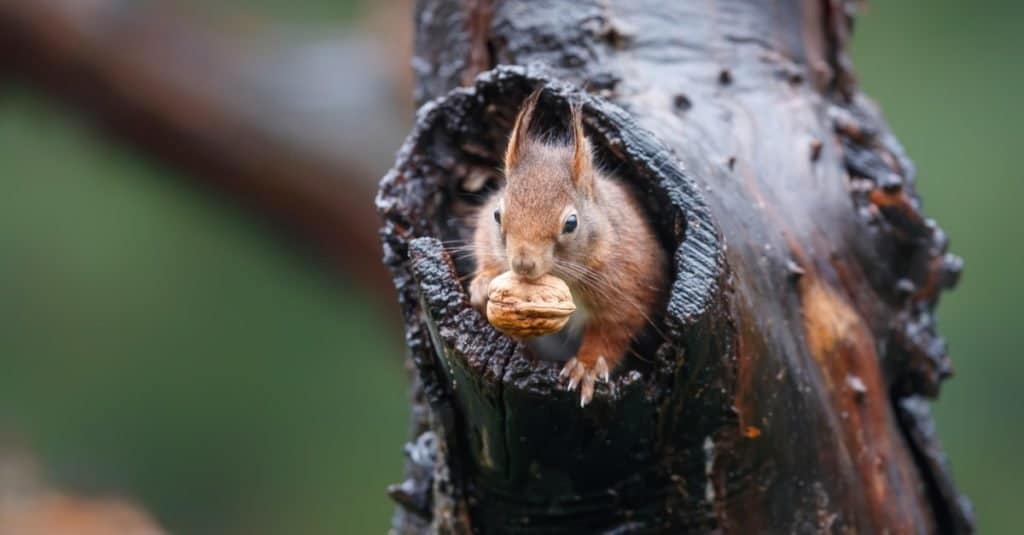
Squirrels live in almost every habitat on the planet (except polar regions, extreme deserts, and Australia).
©Henk Bogaard/Shutterstock.com
Squirrels are natural hoarders, and these caches are like hidden pantries filled with all the food they collect, providing them with plenty of nutritious snacks for later. Exactly how much a squirrel stores in its cache — as well as when it decides to add to or take away from it — depends on many different factors.
Essentially, a cache for a squirrel is like an emergency food storage. When it’s too cold or stormy to go out and forage for food, a squirrel can stop in at their cache and grab a quick bite to eat.
Why They Cache
Squirrels are foragers, which means that they collect food — things like nuts and berries. A squirrel may build up a cache of extra food for when they don’t have time to go out and find a meal. This collection really comes in handy during snowy winters or when food is scarce. Squirrels may also utilize their food supply when they are busy raising their babies or if they feel unsafe to forage (though caching is primarily seasonal and linked to food availability, not directly to parenting or fear behavior).
Two Caching Methods
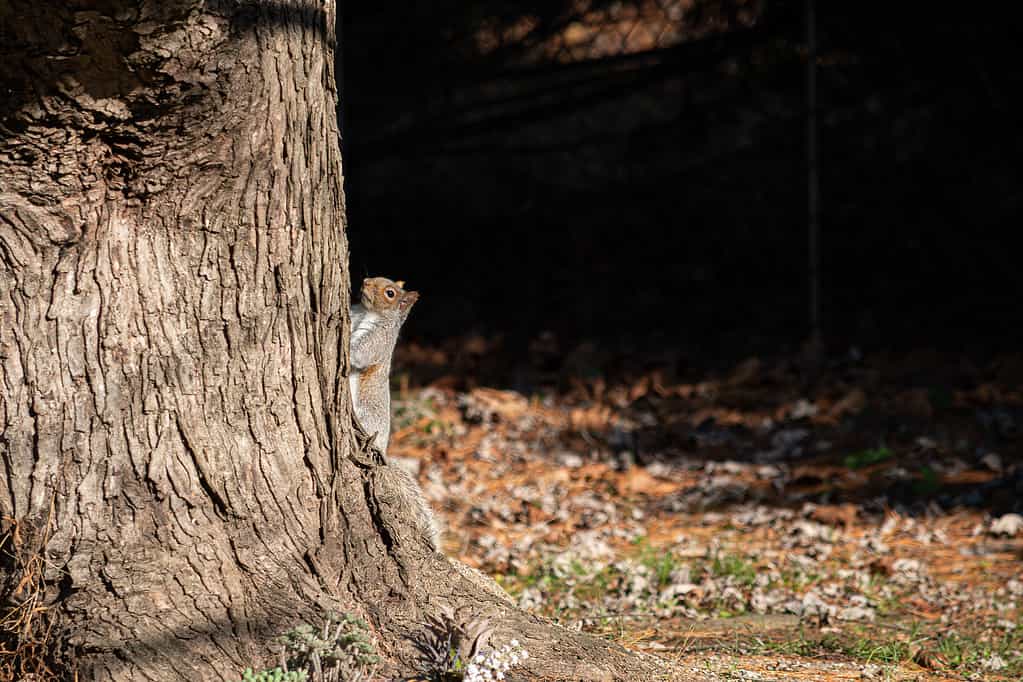
Squirrels are natural foragers, which means they search for food.
©andykazie/iStock via Getty Images
There are two types of caching strategies squirrels use: larder hoarding and scatter hoarding. When larder hoarding, the squirrel chooses one or two strategically located spots to store their extra food. These larger caches are usually well-hidden and packed with delicious provisions. While a single, larger cache like this can be a tempting target for other hungry animals, it is also easier to conceal and defend if necessary.
Scatter hoarding involves storing food in several smaller caches across a wider area. While this method makes it more likely for one of the caches to be discovered by other animals, they contain less food in one place, so the squirrel won’t lose as much if another animal finds it. Squirrels that scatter hoard are still careful, often prioritizing their favorite foods in particularly well-hidden spots. They tend to spend less time hiding the less tasty foods, increasing the likelihood that other squirrels will find these instead of their favorite treats.
Where’s the Cache?
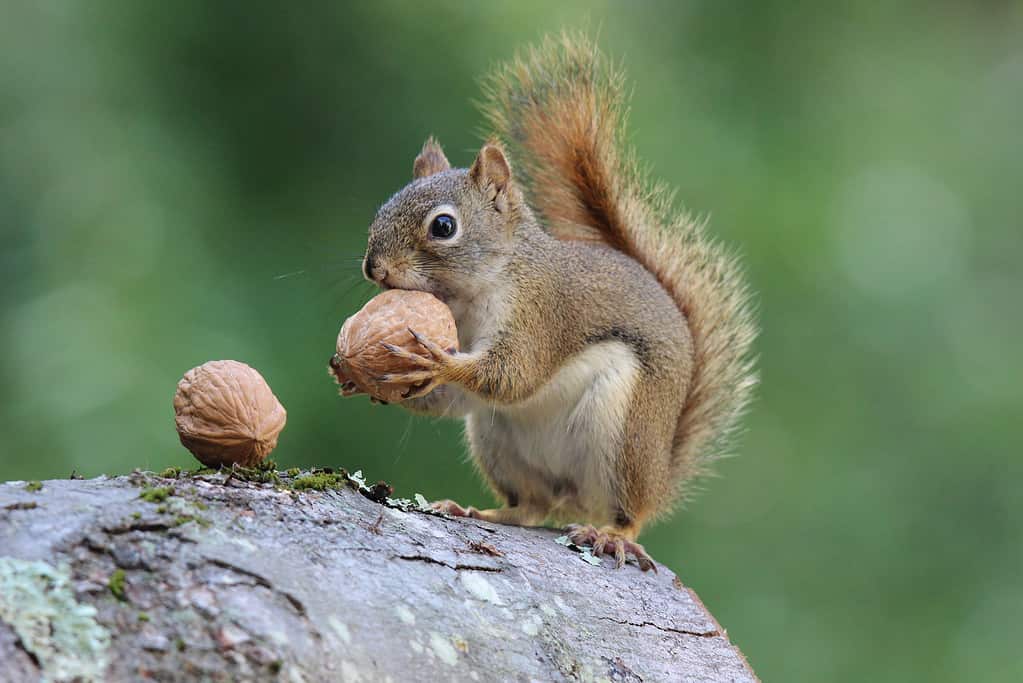
Squirrels may return to their hidden caches multiple times to check or rebury food.
©suefeldberg/iStock / Getty Images Plus via Getty Images
Squirrels can cache as many as 3,000 nuts each season but remembering where all the nuts are stored seems impossible. Unlike some small mammals (like shrews) who exhibit seasonal brain-size reduction, squirrel brains do not undergo this shrinkage. In fact, according to a Nature Neuroscience study on hippocampal plasticity, gray squirrels’ hippocampus (memory region) increases in volume during the autumn caching season due to spatial memory use.
Multiple studies have also shown that squirrels have amazing spatial memories and can recall the exact location of each hidden stash. They rely on visual and spatial cues to remember and locate their caches. In addition, squirrels utilize a strategy called “chunking”, where they group and store the same type of nut in a specific location. Squirrels can even remember the color of a container and the type of nut hidden inside. Research also suggests that they have a mental map of their territory and where their caches are hidden, allowing them to locate their stashes months later.
Extra Sneaky Squirrel Caching
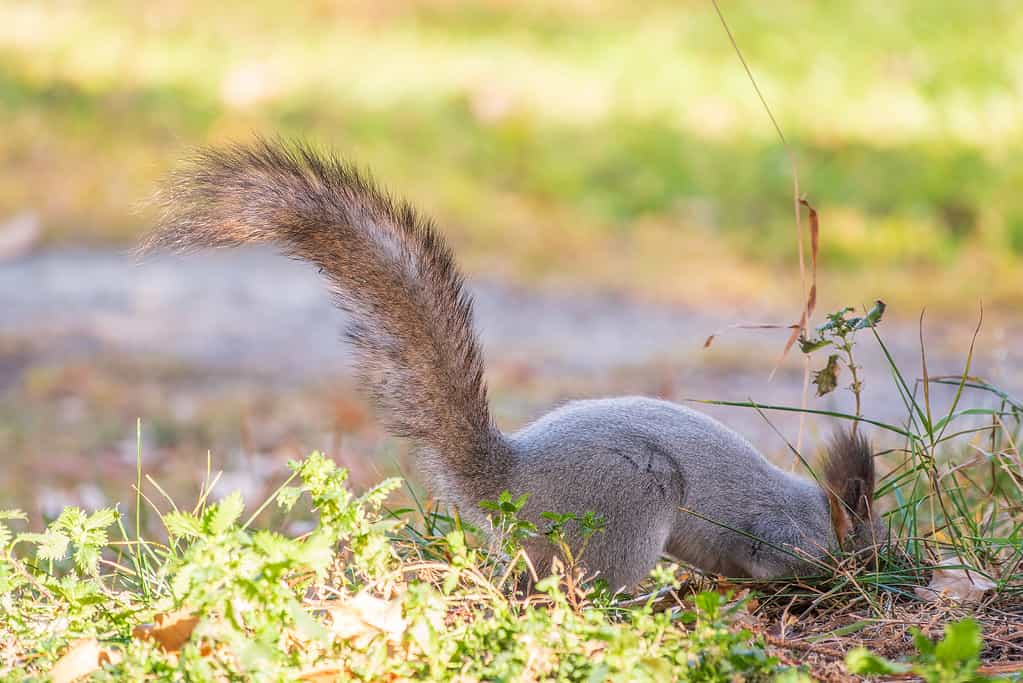
Squirrels eat a variety of nuts, berries, fruit, conifer tree cones, greens, and fungi.
©Dmitry Potashkin/iStock via Getty Images
Squirrels are masters at storage and also deception. It’s common for squirrels to pretend to dig into a fake cache, particularly if there are other squirrels in the area. If there is competition nearby, squirrels are also more alert and take more time to camouflage their caches. They may even return to their hidden stashes without retrieving any food just to make sure everything is secure and safe.