
Quick Take
- This snail's strike acceleration rivals that of a fired bullet, and the microscopic engineering behind it seems like it shouldn't be possible in something so small. Explore the bullet-like strike →
- Not all cone snail venom is equally dangerous. The deadliest belongs to a specific group. See which venoms are deadliest →
- A cone snail's mouth is nothing like you'd imagine, and that surprising difference is exactly what makes it one of the ocean's most underrated killers. Discover the modified radula →
As snails go, the cone snail is pretty feisty! This group of marine gastropods has a venomous harpoon that they fling into prey with extraordinary acceleration. Some cone snails have enough venom to kill dozens, if not hundreds, of people!
What Do We Know About Cone Snails?
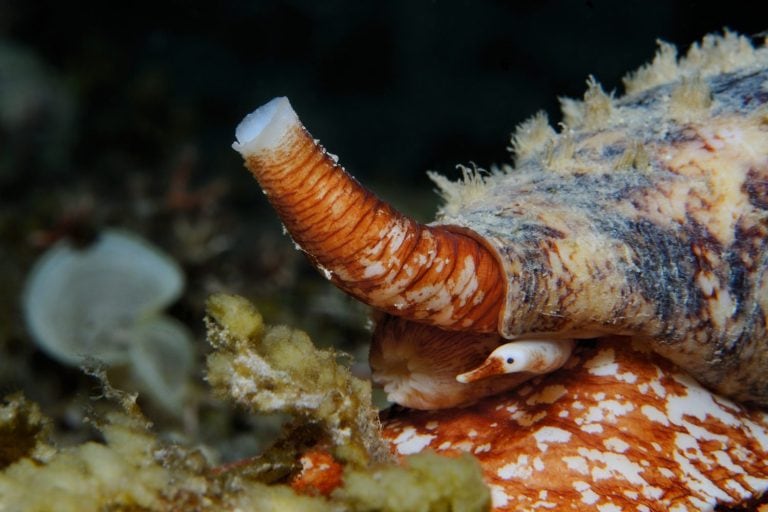
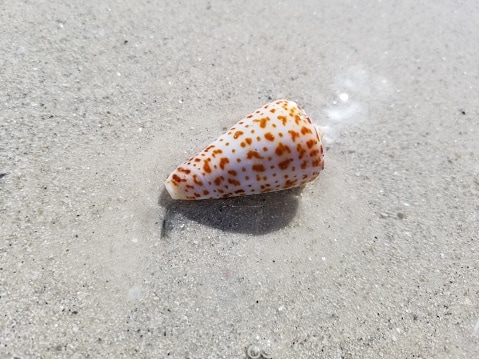
Cone snails are members of the Conidae family and are a group of predatory gastropod mollusks found in tropical oceans. Here, they live in shallow water habitats near coral reefs or under coral shelves. They have elongated, conical shells with colorful patterns on a white background. Their size can range from about half an inch to eight inches in length.
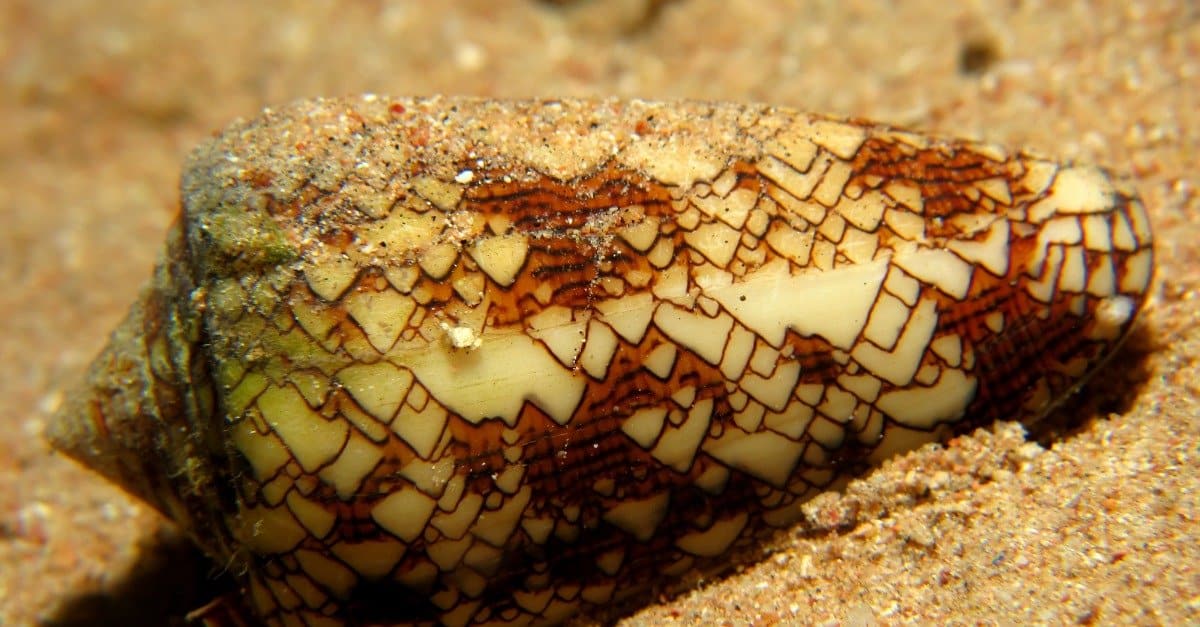
Cone snails live around coral reefs.
©iStock.com/lilithlita
Using their strong muscular feet, they move around searching for prey. In terms of diet, they can be divided into three groups. The piscivores eat fish, the vermivores eat worms, and the molluscivores eat molluscs such as other snails.
As is true for most molluscs, they have a radula, which is a tough, mouth-like structure that they use for feeding. In most gastropods, the radula is covered with tiny teeth. In cone snails, however, the radula is modified so that the teeth have become hollow harpoons, which are stored in the radula sac.
The Science Behind the Ferocious Cone Snail’s Hunting Skills
Most cone snails hunt at night, but some hunt at dusk and dawn. They detect prey using chemoreceptive (scent) cells on their proboscis. At first, their proboscis gently touches the target, but then their radula uses a hydraulic system to fire a harpoon that injects the prey with toxic venom.
When preparing for the strike, the cone snail pressurizes the hollow tube in the center of the proboscis. The pressure is kept in by a circular muscle called a muscular sphincter. Once a suitable spot is found on the prey, the muscular sphincter relaxes, and venom is propelled toward the bulbous base of the harpoon.
At the same time, the harpoon is held back by a cellular latch made up of tiny filaments. When the harpoon is fired, these filaments are overcome, and the harpoon is propelled into the prey. This happens unbelievably quickly! Studies have shown that the radular harpoon is rapidly accelerated into prey with an average peak acceleration exceeding 280,000 m/s2 and a maximal acceleration exceeding 400,000 m/s2. This is similar to the acceleration reached when a bullet is fired from a gun.
How Toxic Is Cone Snail Venom?
Within seconds, the prey is paralyzed and has no chance of escaping. This allows the cone snail to engulf the prey with its proboscis and move it into its digestive system. The piscivore cone snails, such as the Geographer’s cone snail, have the most toxic venom, and the vermivores, such as the Imperial Cone, have the least toxic venom.
Cone snail venom is a complex mixture of compounds that paralyze prey through several different neuromuscular blocking steps. Studies have estimated that each cone snail species produces a unique venom containing hundreds to a few thousand different bioactive compounds, with the total diversity across all cone snail species numbering in the tens of thousands. It is also dangerous to humans, and fatality rates of between 15 percent and 75 percent have been recorded. This makes them one of the most dangerous venomous animals on Earth, and a species you should avoid when in the ocean!