
Quick Take
- San Antonio Uncovered a $100 million gorilla habitat funded entirely without state or federal assistance.
- Engineers Navigated the construction of a 74-foot climbing tower, currently the tallest gorilla structure globally.
- Officials Confronted a 30-year silence fueled by master plan mandates rather than construction delays.
- Curators Orchestrated rigorous genetic scouting across four zoos to solve a complex leadership challenge.
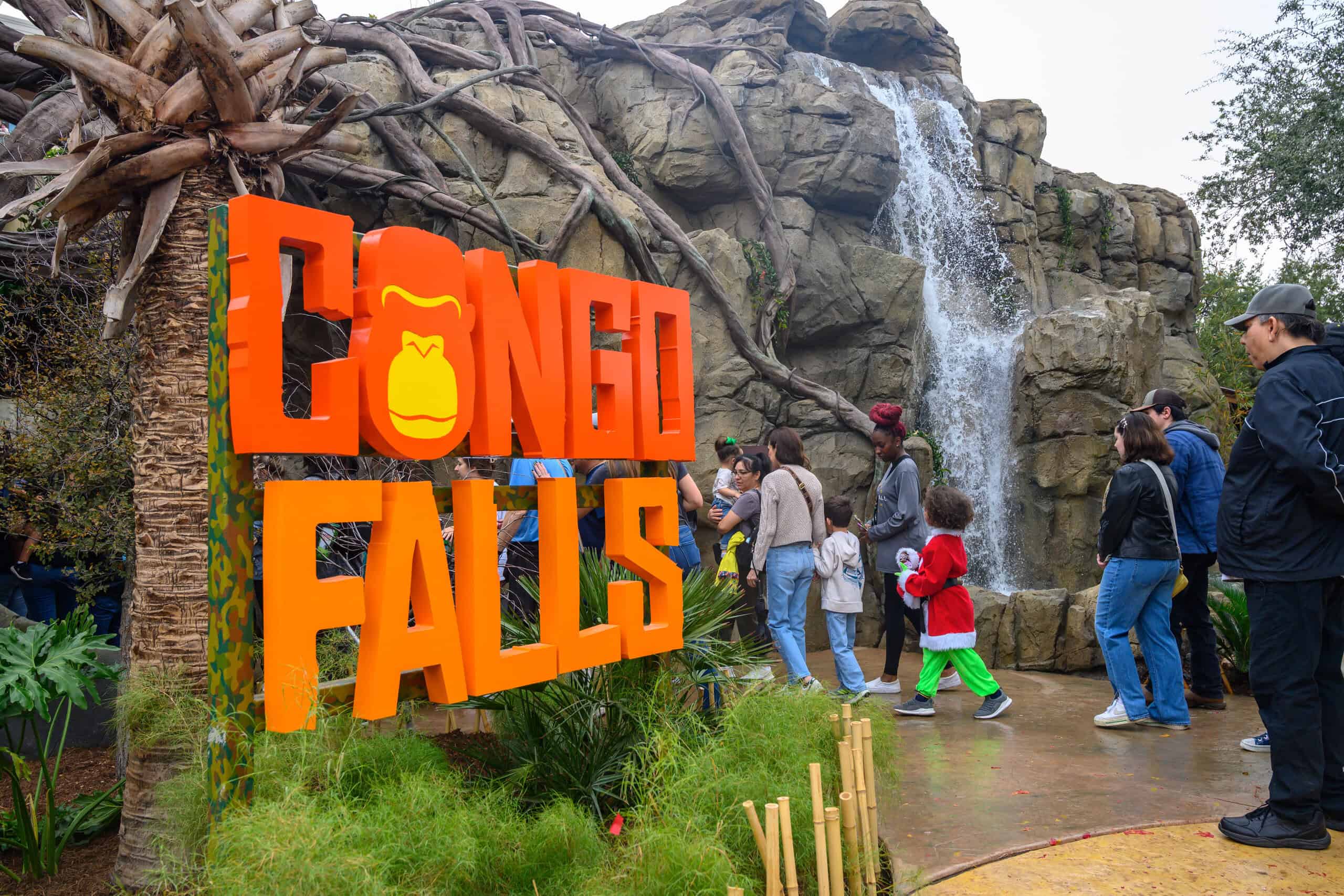
For thirty years, the gorilla enclosure at the San Antonio Zoo sat quiet—a lingering question mark for visitors since the last resident, Mopie, was transferred in 1990. That silence finally ended on December 13, 2025, with the grand opening of Congo Falls. But the path back wasn’t just a simple construction project; it was a $100 million logistical marathon involving zero federal funding, complex genetic scouting, and a complete reimagining of what a modern habitat should look like. We spoke with the experts behind the scenes to find out why it took three decades to bring gorillas home—and how the wait resulted in a new global standard for conservation.
“Building a world-class gorilla environment was a significant endeavor. While the old gorilla enclosure was adequate, we wanted a much more enriching environment for future gorillas at the Zoo,” she says. “It was also part of the Zoo’s larger master plan, that addressed many improvements beyond a new gorilla habitat. We couldn’t begin work until the entire plan was finalized, which took several years,” she notes.

There was also funding to consider. According to Roth, the San Antonio Zoo does not receive any state or federal funding. It is 100 percent reliant on admission proceeds and philanthropic efforts to fund all improvements and cover operating costs. “Fundraising for the new exhibit was a process that added significant time to the overall process,” she says.
Zoo President and CEO Timothy Morrow recently commented on the new gorilla exhibit: “I am so excited that the public and the guests and the members are going to come in and see the habitat,” he said. “It’s another level of habitat that this zoo and San Antonio have never seen before.”
The arrival of the seven new western lowland gorillas puts the species—and its world-class habitat—front and center for visitors. The new group of gorillas includes three females and four males, all of whom are adults. The three female gorillas — Anaka, Andy, and Merrie — arrived from Zoo Atlanta. One male gorilla, Ajari, came from the Houston Zoo, while the remaining three males—Shana, B’wenzi, and Juba—came from the Dallas Zoo. All the gorilla transfers were completed as part of a collaboration among the four zoos under the Species Survival Plan® (SSP) program, an initiative designed to protect endangered species such as the critically endangered western lowland gorilla.
According to Roth, Anaka, Andy, Merrie, and Ajari will live together as a family group in one part of the Congo Falls enclosure. The goal is for Ajari to father the next generation of western lowland gorillas, helping to boost the global population of these threatened great apes.
Building a world-class gorilla environment was a significant endeavor. While the old gorilla enclosure was adequate, we wanted a much more enriching environment for future gorillas at the Zoo.
Hope Roth, public relations director at the San Antonio Zoo
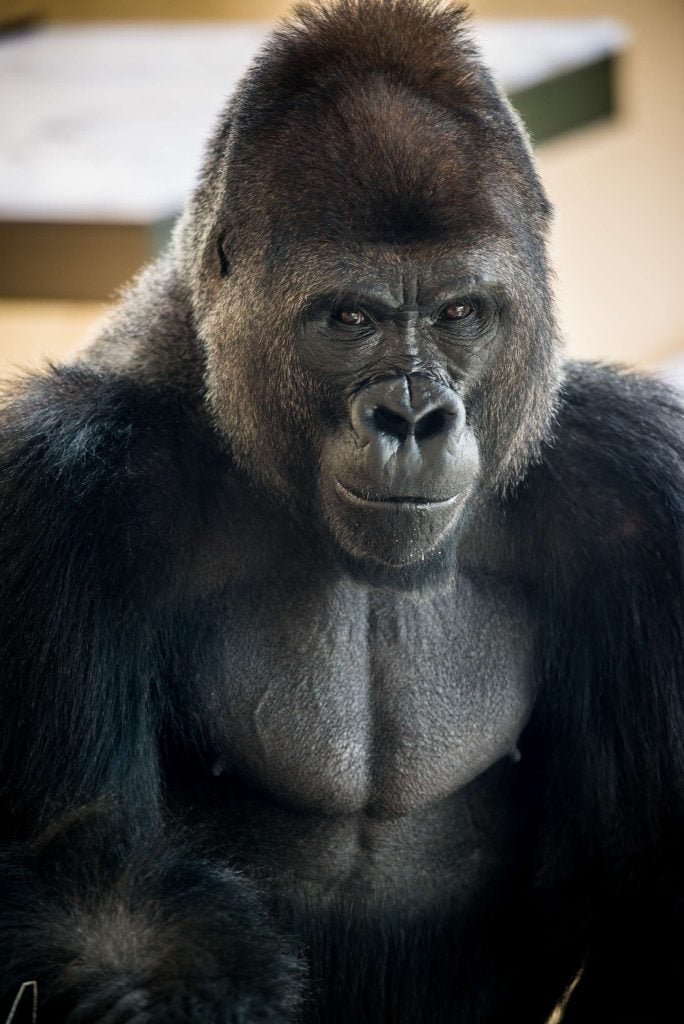
Roth notes that gorillas like Ajari, selected to reside with female gorillas and potentially breed, are chosen based on a combination of genetics and disposition. Zoo keepers identified Ajari as having an exceptional genetic profile, making him an ideal candidate to father future generations of gorillas. He also has a calm, steady disposition, which female gorillas recognize as a sign of leadership. “Zoo keepers at the Houston Zoo, where Ajari came from, recognized his relaxed demeanor as an ideal character trait for future fatherhood,” she says.
The three other male gorillas, affectionately referred to as “the boys,” reside in a separate section of Congo Falls, segregated from Ajari and the females. According to Roth, “These types of ‘bachelor groups’ are very common in the wild. Not every male gorilla wants to be a father. Those that don’t tend to form small groups together with other males and spend their entire lives together.”
Despite the two gorilla groups’ physical separation, Congo Falls is designed to give visitors views of all of them. The gorillas’ new home is a two-acre habitat designed to replicate the African jungle that wild lowland gorillas inhabit. The entire habitat was created to provide the most natural environment possible for its residents, while also maximizing opportunities for visitors to see the gorillas up close.
Its acreage is filled with multiple levels to explore and lush foliage to enjoy. It features large open spaces for roaming, gardens dense with vegetation for browsing, water features for play, and climbing structures for exploration. Congo Falls is divided into three distinct habitats: Lowland Basin, Indoor Rainforest, and Gorilla Gorge. Each area offers a unique set of experiences for the gorillas.
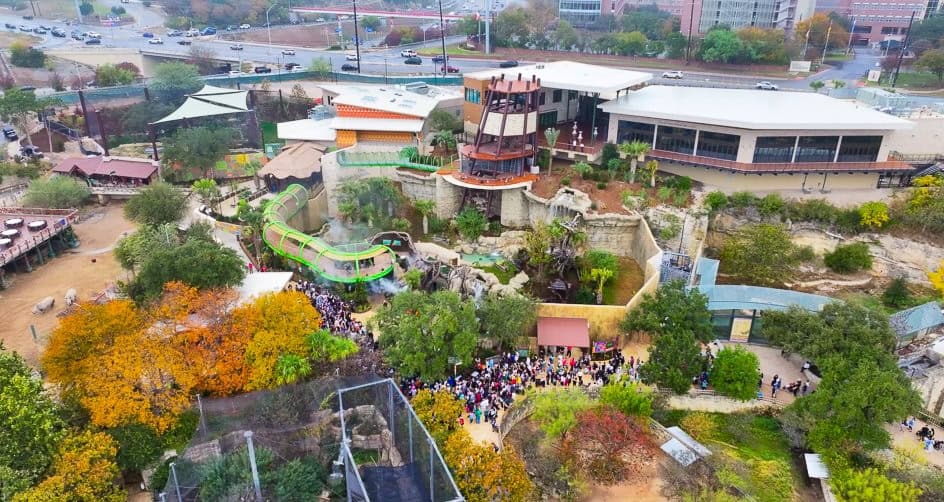
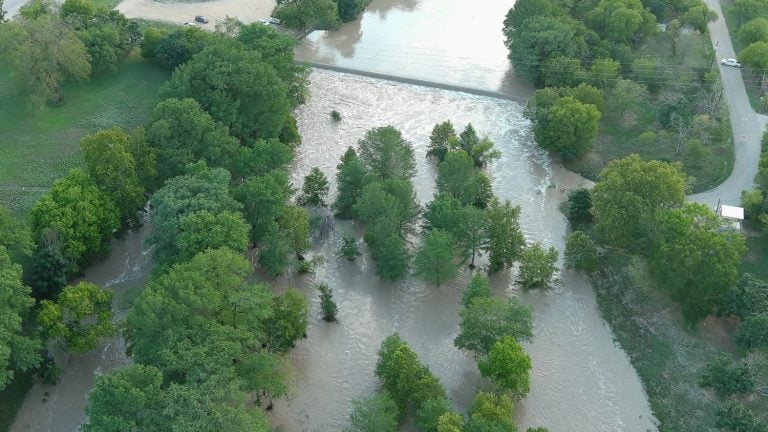
An aerial view of the San Antonio Zoo’s new Congo Falls gorilla habitat.
According to Roth, Congo Falls is the result of direct collaboration with third parties. “The Zoo worked closely with gorilla experts and other zoos to brainstorm, design, and construct an environment that focuses on optimizing the mental and physical well-being of the gorillas that live in it,” she says.
The focal point of the exhibit is the Mays Family Silverback Peak, a 74-foot-tall climbing tower. From the top, the gorillas have a panoramic view of San Antonio’s skyline and the zoo grounds. The structure is described as the tallest gorilla tower in the world and the first of its kind.
Elsewhere within the habitat, there’s a 30-foot waterfall that incorporates a water play area. As Roth notes, “Gorillas love splashing in water, so it was important that we include ample opportunities for that in Congo Falls.”
As Zoo President Morrow noted, “Congo Falls is more than an attraction, it’s a testament of our commitment to secure a future for wildlife. The world-class habitat will allow guests to connect with gorillas like never before, providing an experience that inspires awe, curiosity, and a deeper appreciation for these remarkable species.”
Congo Falls and the efforts to bring back gorillas are part of the Zoo’s commitment to global gorilla conservation. The Zoo worked closely with other member zoos through the Association of Zoos and Aquariums’ (AZA) Species Survival Plan® (SSP) and SAFE: Saving Animals from Extinction® programs. Both programs are global initiatives focused on protecting wildlife and preserving biodiversity.
The Zoo also collaborates with organizations like the Gorilla Rehabilitation and Conservation Education Center (GRACE) in the Democratic Republic of the Congo, the Dian Fossey Gorilla Fund, and the AZA Gorilla SAFE program.
To highlight its conservation efforts, the Zoo also debuted a new podcast on December 13, 2025. “Edge of the Earth: Tales of Conservation” is hosted by Dr. Danté Fenolio, Vice President of the Center for Conservation and Research at the Zoo. The podcast is available on Apple Podcasts, Spotify, Audible, and YouTube.
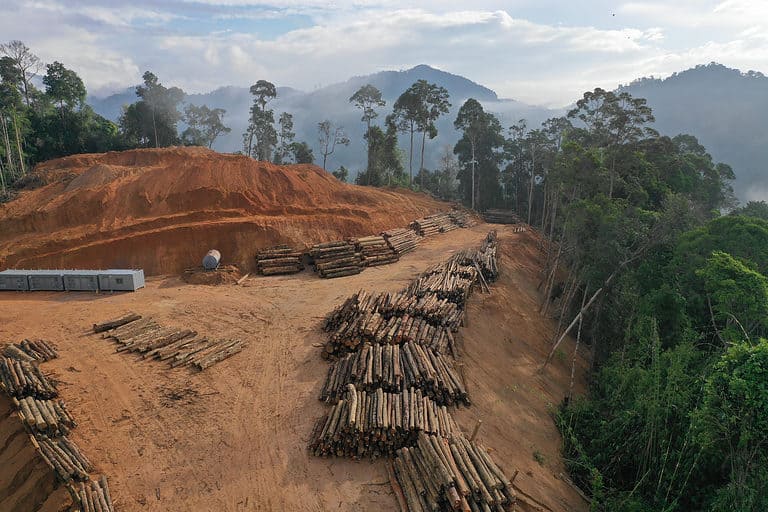
Western lowland gorillas are classified as critically endangered by the IUCN, placing them on the organization’s Red List. Habitat loss, poaching, and disease all threaten gorilla populations. Clear-cutting of forests for agriculture, mining, and human settlement has a significant negative impact. When habitats are depleted, gorilla social groups become fragmented, and the animals lose their natural foraging areas. Both of these factors directly affect gorilla reproduction and health.
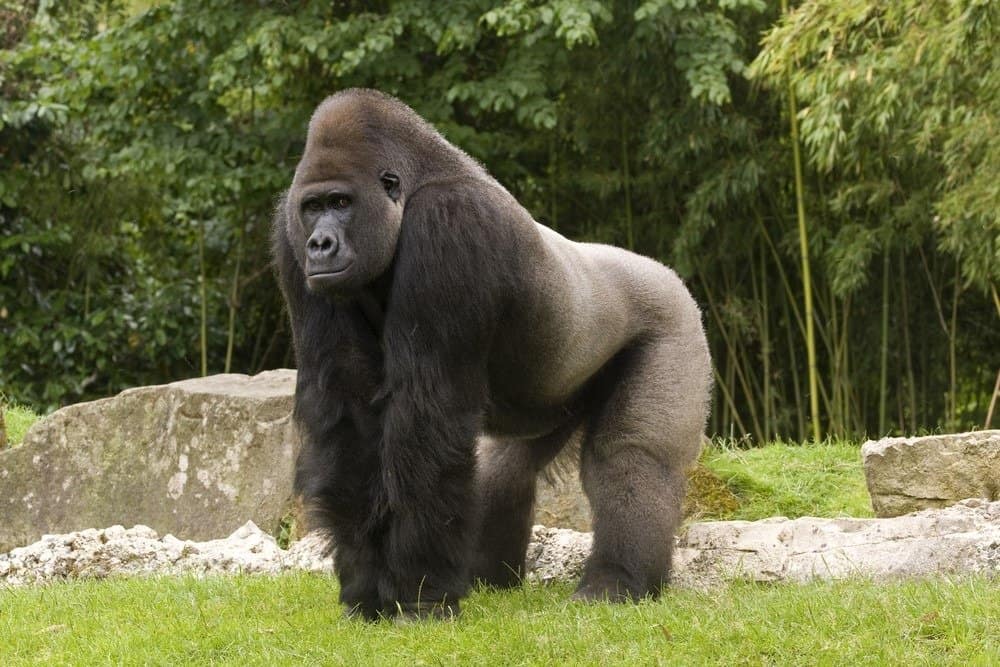
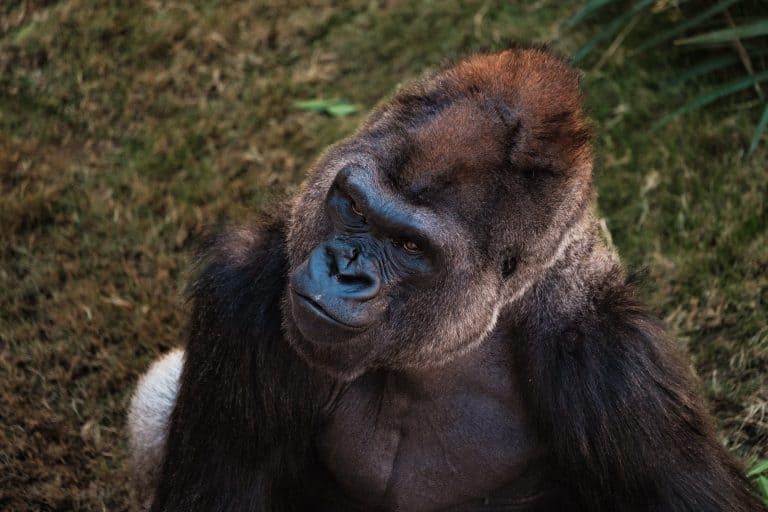
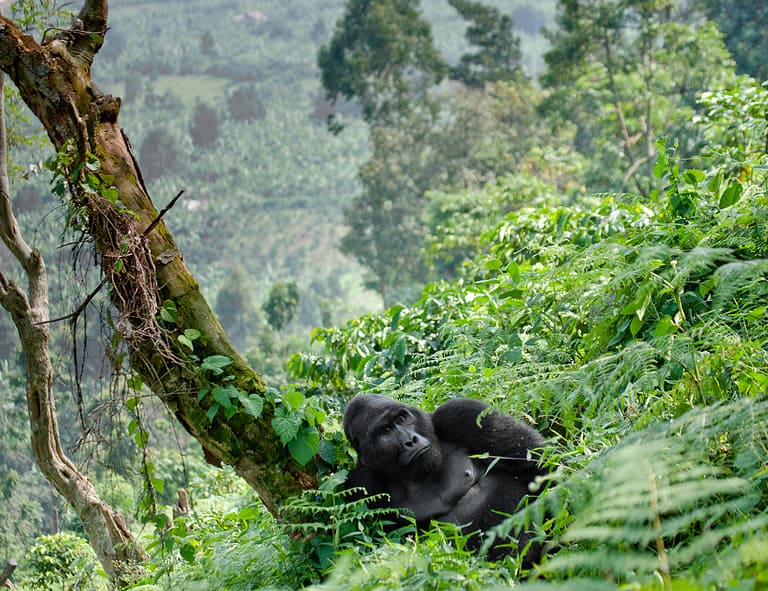
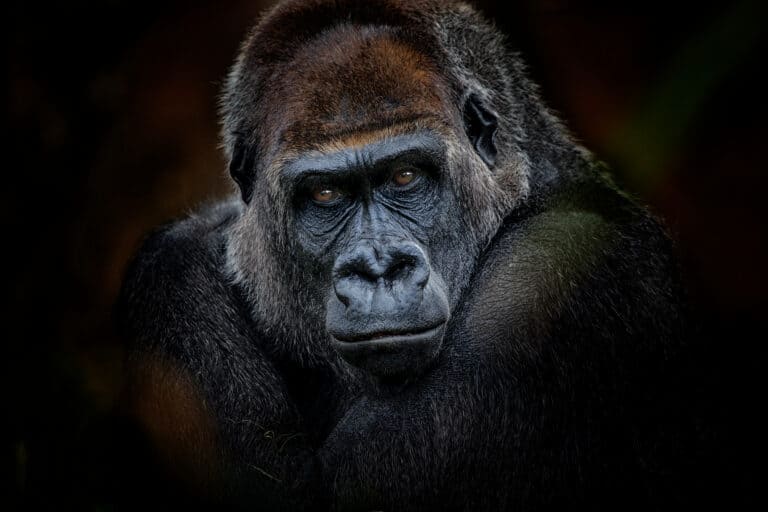
Western lowland gorillas face many threats in the wild.
©Andreas Rose/Shutterstock.com
Poaching is another major risk. The illegal wildlife trade remains active in regions where gorillas live. Gorillas are often killed for their meat, and those that escape this fate may be captured and sold into the pet or entertainment industries.
Disease is yet another threat. Deadly illnesses can be transmitted to gorillas through contact with humans. An Ebola outbreak in 1994-1995 in northeastern Gabon caused significant gorilla mortality, and subsequent outbreaks in the early 2000s led to the deaths of thousands of gorillas in the region. Ebola outbreaks have also killed gorillas that were observed by tourists at Lossi Sanctuary and Odzala National Park in the northern Republic of Congo.