
Quick Take
- Beaufort, South Carolina, banned outdoor balloon releases within city limits on December 9, 2025, with fines up to $500 and up to 30 days in jail.
- Latex balloons decompose in 4 months to 4 years. Mylar balloons persist and harm wildlife.
- 9% of litter found in Beaufort County is balloon debris, harming sea turtles, birds, and other wildlife.
In the past, we did not always know that releasing helium balloons was harmful to the environment. Large-scale balloon releases were once common at celebrations, memorials, and charity events. Although watching colorful balloons float into the sky was enjoyable, balloons are not biodegradable, and what goes up must eventually come down.
When balloons fall from the sky, far from their original release, animals may mistake the pieces of latex or Mylar for food and choke on them. Animals can get caught in the string from the balloon. Additionally, balloon remnants can fall into the sea, creating more plastic waste in our oceans. To help prevent this, many states have already enacted some form of ban on mass balloon releases. In South Carolina, Beaufort just became the first city to ban balloon releases.

Beaufort, South Carolina, has banned outdoor balloon releases.
©Nate Rosso/Shutterstock.com
On December 9, 2025, the City Council members of Beaufort unanimously passed an ordinance to ban the release of balloons within city limits. A similar bill was proposed statewide, but it is currently stalled in the legislature, prompting Beaufort to enact its own ban. Beaufort already had a law that prohibited anyone from releasing balloons on city-owned property. Now, the law extends to anywhere within the city limits.
Scott Marshall, Beaufort City Manager, said in a weekly report regarding the ban, “Pollution of this type is especially harmful to marshes and oceans. Seventy-five percent of all ocean life originates in marshes, and Beaufort County contains roughly half of all the marshland in South Carolina. With South Carolina having the most salt marsh area of any East Coast state, the City believed it was appropriate to do our part to protect such a precious natural resource.”
The penalty for releasing balloons is up to a $500 fine and up to 30 days in jail. Officials did clarify that they would not impose penalties for an accidental balloon release. Marshall told WSAV that the law is “intended to avert the release of a lot of balloons at once in celebration events and those types of things, because that’s where the harm is coming from.” The law also does not cover indoor balloon releases.
Jenn Clementoni, Executive Director of the Carolina Bight Birding Center, was a strong proponent for the ban. Clementoni told the Island Packet that her next steps are to advocate for similar bans in the area. “It’s a real problem,” Clementoni told Island Packet. “Balloons litter our beaches throughout the year.”
Beaufort is located along the South Carolina coast in an area known as the Lowcountry, which is home to a unique wildlife habitat bordered by the Atlantic Ocean on one side and the Savannah River on the other. The area is famous for its pristine sandy beaches and saltwater marshes. Wildlife in this region includes loggerhead sea turtles, Atlantic bottlenose dolphins, blue crab, great blue herons, American alligators, and plenty more. Additionally, many migrating shorebirds stop along the beaches.
When people release helium balloons into the air in Beaufort, the balloons often end up drifting to the shore. According to a report, 9% of litter found in Beaufort County is balloon debris. This poses a serious threat to wildlife. For example, sea turtles may mistake balloons for jellyfish and attempt to eat them. Birds, dolphins, sharks, and other marine animals may also ingest pieces of latex from balloons. Balloon remnants can become lodged in an animal’s digestive tract, causing blockages that may result in severe injury or a painful death. Additionally, birds can become entangled in balloon strings, which can impede their movement or flight, and in some cases, cause strangulation.
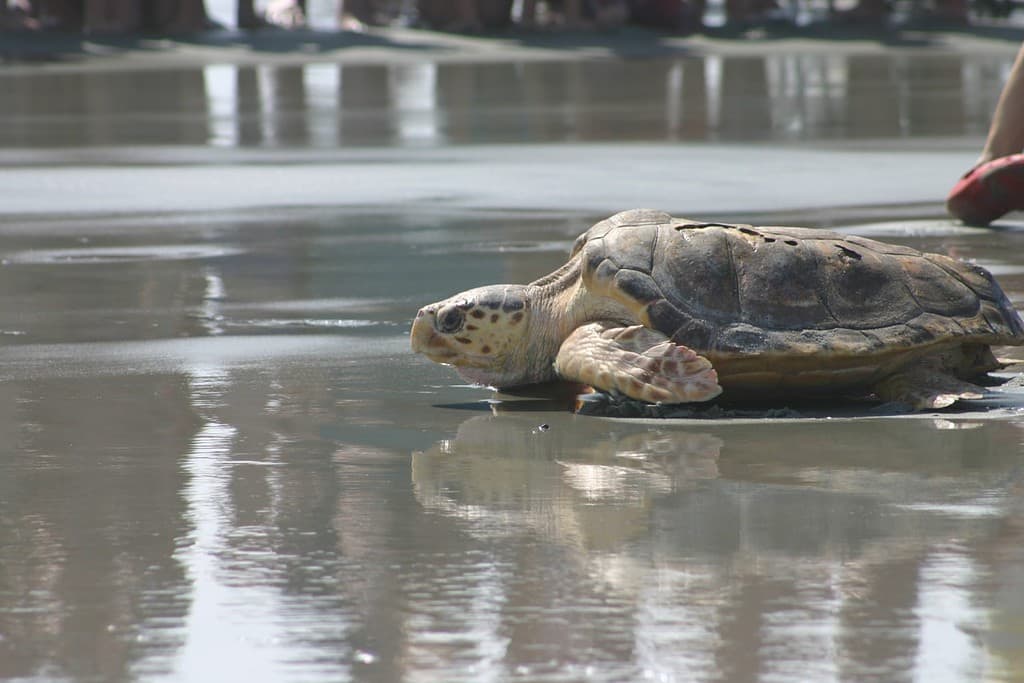
Loggerhead sea turtles may mistake pieces of balloons for food and try to ingest them.
©Grace Thoma/Shutterstock.com
Other states have enacted balloon release laws as well. According to Balloon Mission, 11 states have passed no balloon release bans, while another 17 introduced bills in 2025. Balloon Mission states on their website, “Contrary to clever marketing initiatives that say balloons are safe for the environment, latex and foil balloons are not biodegradable, and they’re NOT safe. Burst pieces of plastic result in micro and nano plastics that end up in the food we eat, the water we drink, and the air we breathe.”
Latex balloons are sometimes labeled as biodegradable, leading people to believe they are “safe” for the environment. Although latex will eventually decompose, it can take anywhere from four months to four years to break down. Mylar balloons are even more destructive to the environment. They have a metallic coating that conducts electricity. When Mylar balloons become tangled in power lines, they can cause power outages. If they drift into the ocean, they do not break down and will remain in the environment indefinitely.