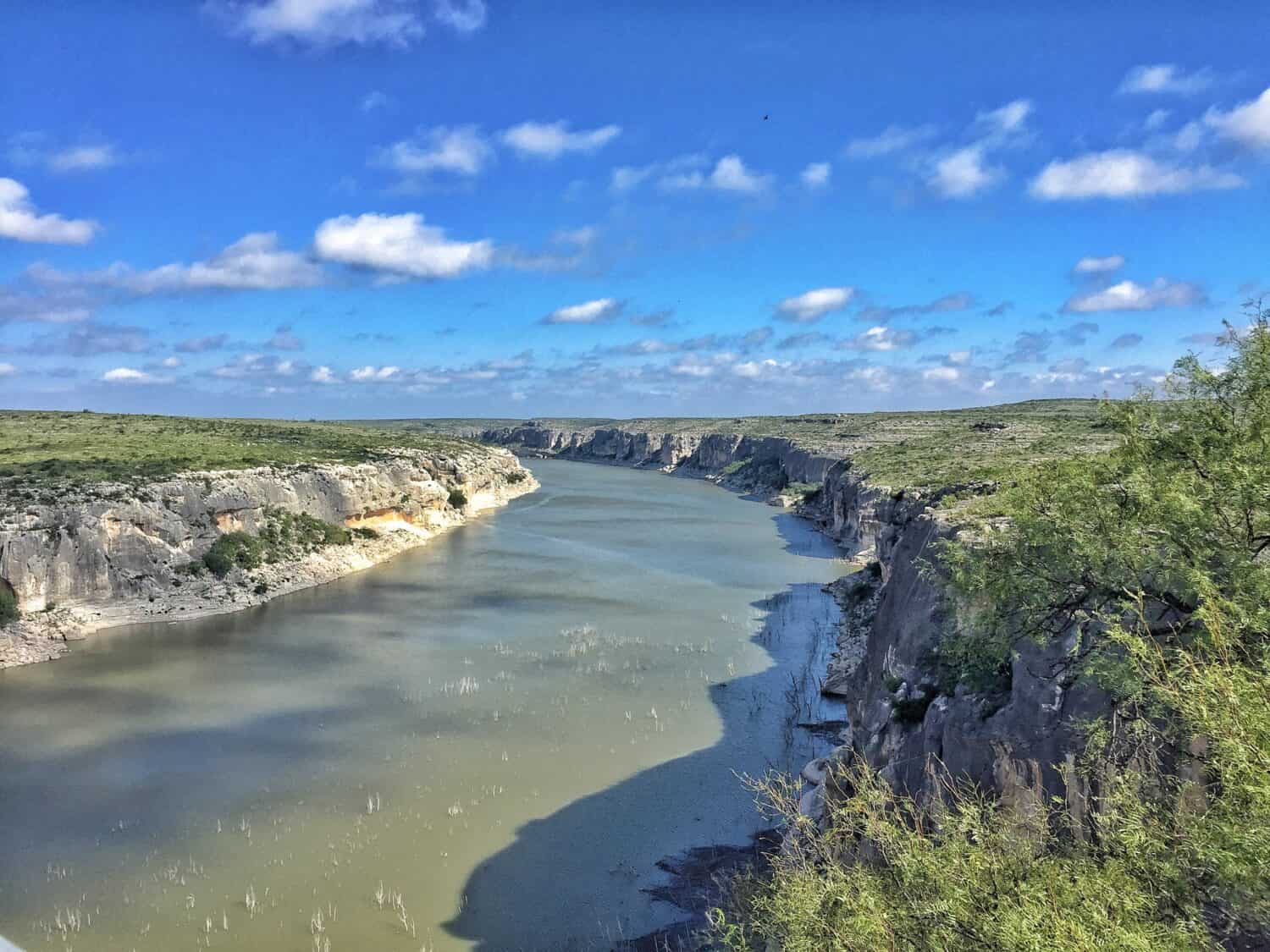

The Rio Grande gets all the accolades for Southwest rivers, but the Pecos River gives it a run for its money in terms of spread, size, length, and biodiversity. Its headwaters begin on the eastern slope of the Sangre de Cristo mountain range in Mora County, just north of its namesake, Pecos, New Mexico. It starts at 12,000 feet in altitude before making its way down the mountainside into the valleys below. The Rio Grande may be longer, but the Pecos River is sizable. It runs 926 miles through New Mexico and West Texas before reaching the Rio Grande near Del Rio, Texas. The Pecos drainage basin alone covers around 44,300 square miles. That’s over ten times the size of the city of Los Angeles. This lengthy, varied river gets its name from the Keresan Native American language. Historically, it was also called the Río Natagés by the Mescalero people.
The Rio Grande may overshadow the other Southwestern rivers, but the Pecos River has played a considerable role in the history of North America. It was once the eastern territory of the Apache Indians, the Mescalero Apache tribe, in particular. Once European settlers arrived, the Spanish used the river’s winding waterways to help them explore large parts of West Texas. In the Wild West era, the Pecos River was a physical symbol of the far, desolate reaches of the area. Its varied ecosystems, ranging from cool, mountainous currents to warm, murky waters in the valleys below, make for surprising biodiversity. Indeed, the Pecos River features a host of unique fish and supports mammals, amphibians, and reptiles that live in its basin. Let’s learn more about the fish and freshwater animals that call this Southwestern river home.
Texas Spiny Softshell Turtle
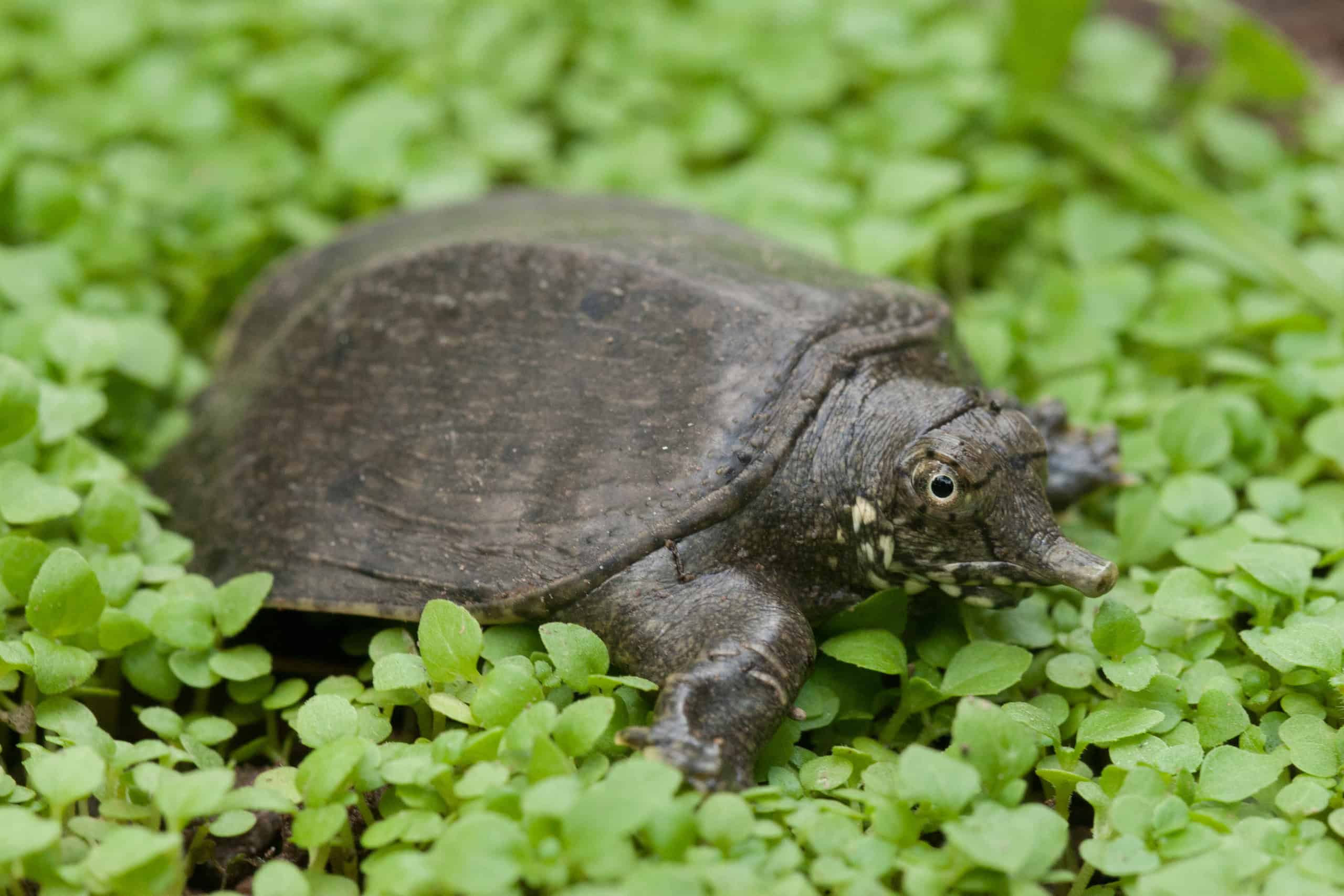
Softshell turtles spend most of their time on the bottom of the Picos River, where they feed opportunistically on insects, mollusks, and even small fish.
©dwi putra stock/Shutterstock.com
One of the more unique creatures that calls the Pecos River basin home is the spiny softshell turtle. These flat, almost pancake-shaped freshwater turtles live in the sandy parts of the riverbed where the currents are not too extreme. People think of turtles as having tough, hard shells. Texas spiny softshell turtles, however, have more flexible and leatherlike shells with an olive or light brown color. These softshells may seem delicate, but they can be a scourge on smaller animals in the Pecos River. That’s because Texas spiny softshell turtles are opportunistic carnivores.
They will feed on insects, crustaceans, mollusks, and even small fish. Softshell turtles spend most of their time on the bottom of the Pecos River, where they feed opportunistically on insects, mollusks, and even small fish. They like to bury their bodies in the sediment as a form of camouflage. As you’ll see going forward in the list, the presence of certain creatures in the Pecos River is a sign of healthy water. The Texas spiny softshell turtle is one of them.
Common Carp
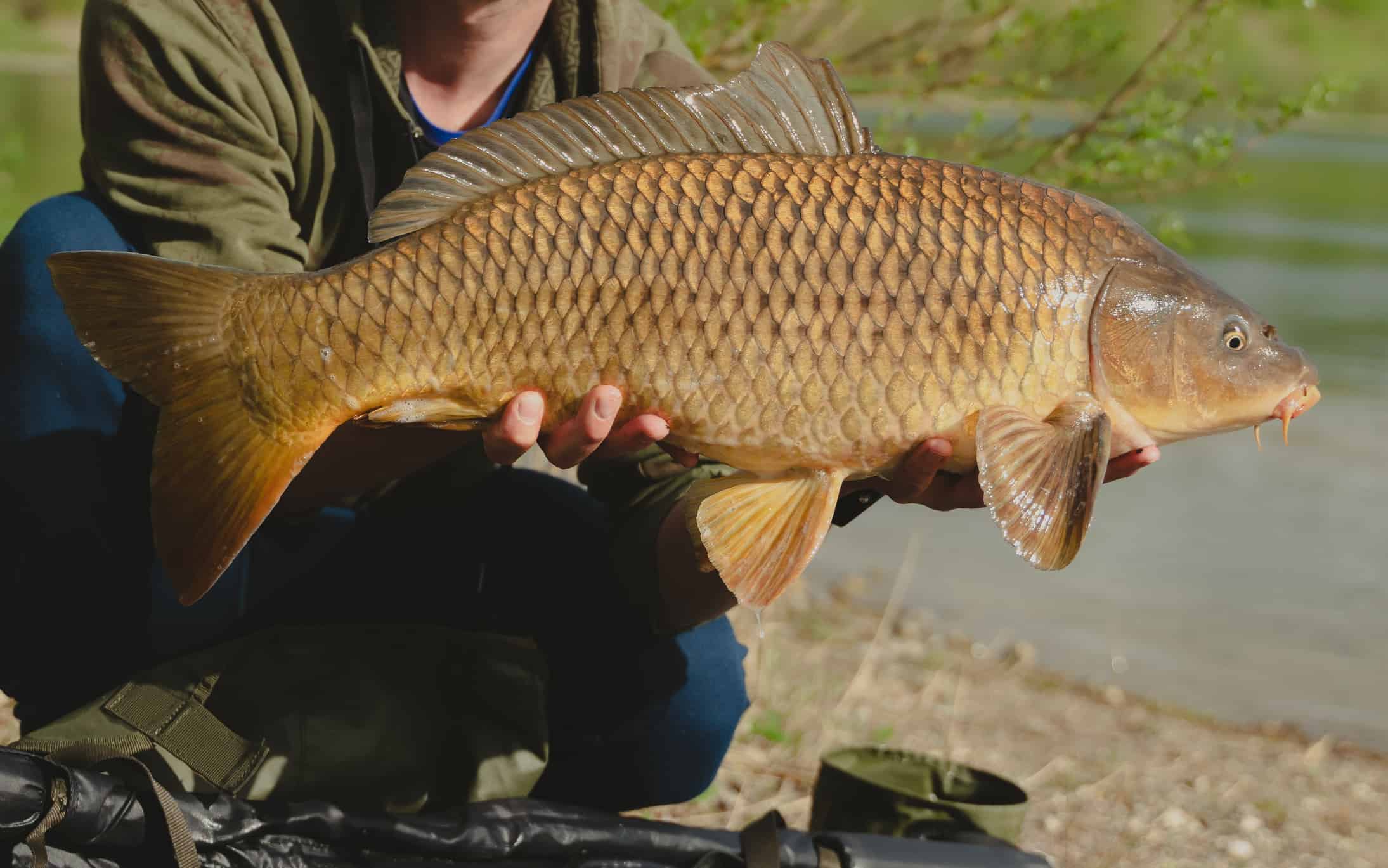
Despite being an invasive species, common carp help the Pecos River because they function as both nutrient recyclers and a regular food source for larger predators.
©iStock.com/HenrikNorway
As you will soon see from this list, the Pecos River has just as many native fish as invasive fish that were introduced artificially. The common carp belongs to the latter category. Once native to Europe, common carp have spread across North America in waterways like the Pecos River. They can be spotted thanks to their brown bodies, barbels above the corners of their mouths, and broad scales. They are highly adaptable fish, capable of thriving in bad water with shifting temperatures and oxygen levels. This has allowed them to spread with relative success in the slower areas of the Pecos River. Unlike other invasive species, which destroy local habitats, common carp can be helpful, too. In the Pecos River, for example, these hardy fish play an important role in nutrient recycling, as well as serving as a regular food source for larger fish and birds.
Brown Trout
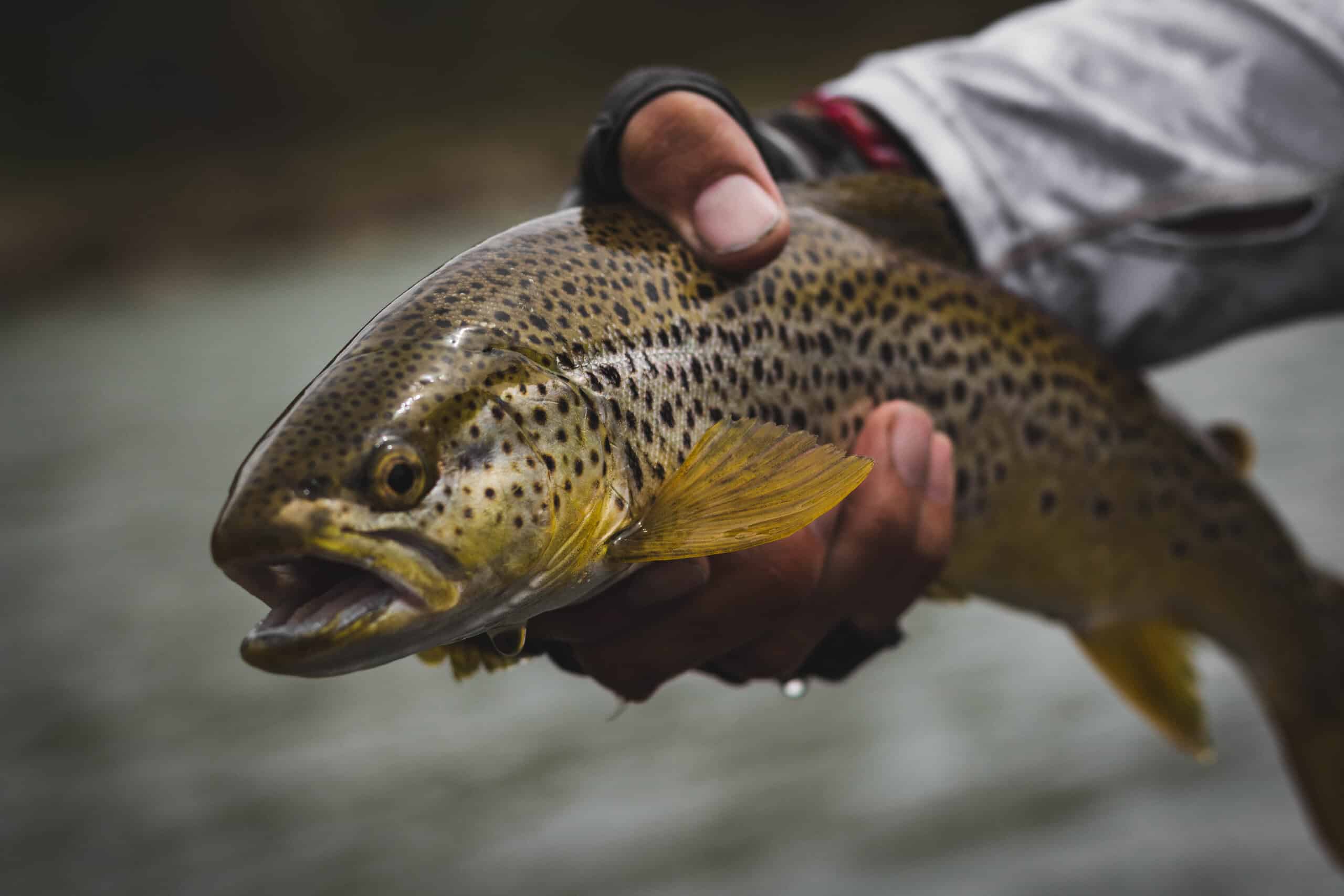
Though they aren’t native to the Pecos, brown trout can be commonly found in the New Mexico parts of the river.
©Trey Lidbury/Shutterstock.com
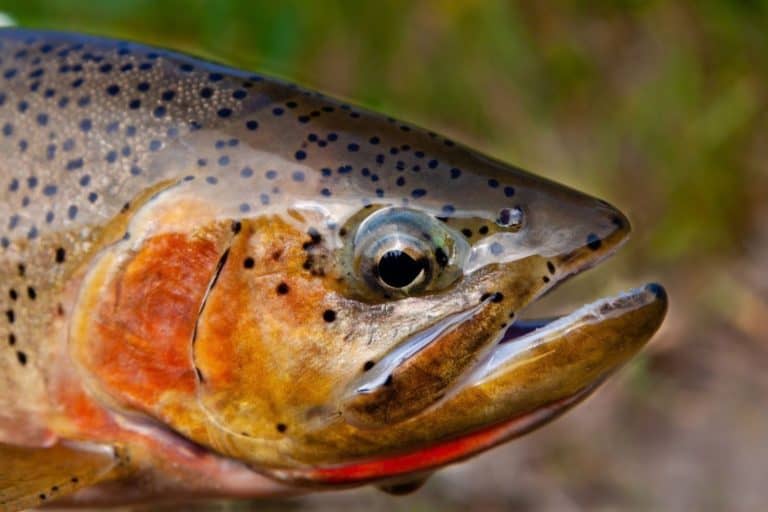
The Brown Trout may not be native to the Pecos River, but it is easily one of the most commonly found fish in the sizable waterway. Native to Europe, brown trout were introduced to North America in the late 19th century and thrived. Now, they can be found all over the continent. In terms of the Pecos River, however, brown trout are often found in the upper parts of the river. They have the largest numbers near Pecos Canyon and the Santa Fe National Forest in New Mexico.
Characterized by long, thin bodies that taper at both ends, brown trout have brown to yellowish-brown bodies with spots. They like cold, rushing streams in the mountains, so it makes sense that they are found in the more northerly parts of the Pecos. Despite being an invasive species, they coexist relatively peacefully with native trout species like the Rio Grande cutthroat trout. Fishermen prize brown trout due to their shrewd sensibilities and powerful scrimmaging skills.
White Sucker
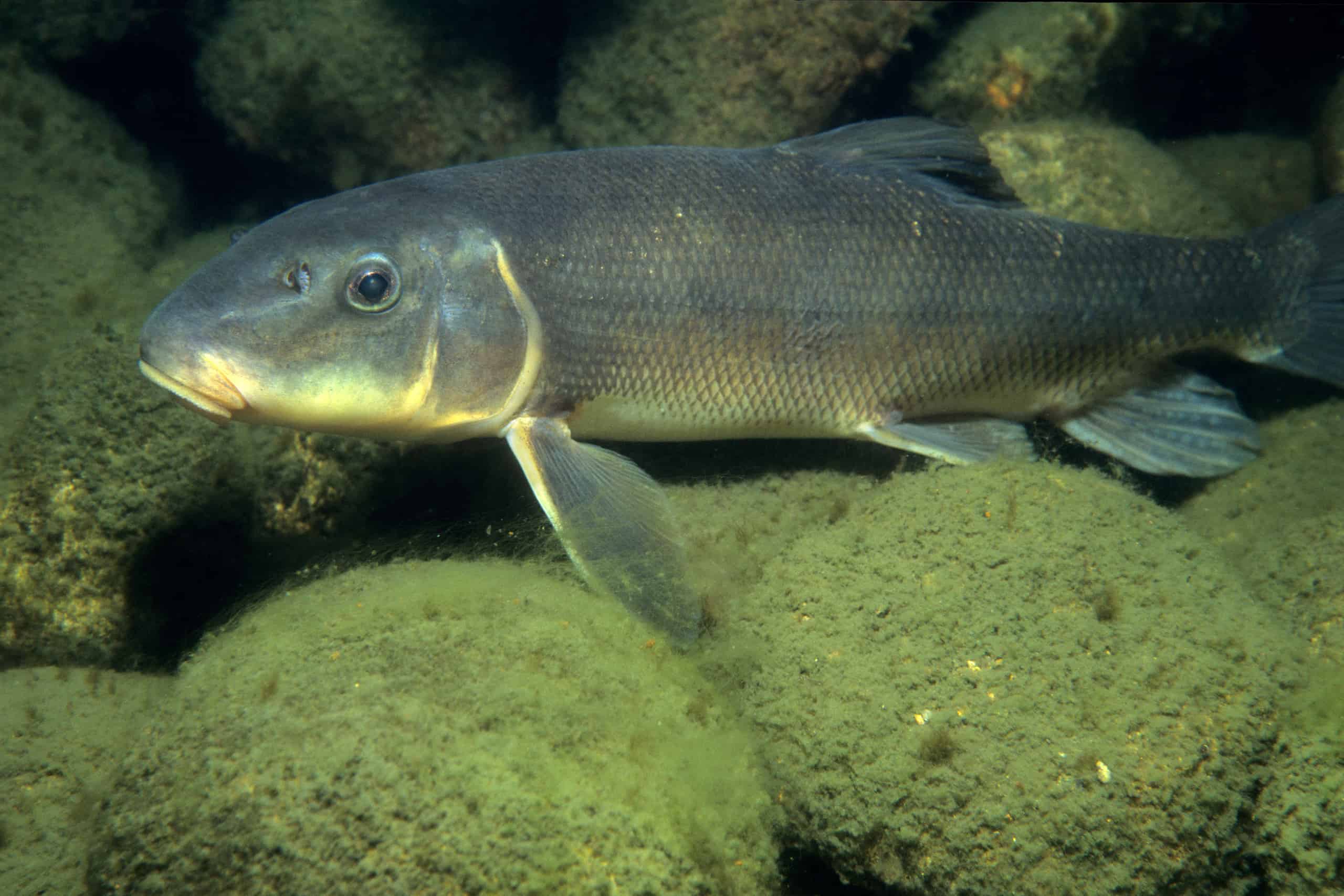
White suckers are important nutrient recyclers and ecosystem rejuvenators in the Pecos River.
©RLS Photo/Shutterstock.com
Much like brown trout, white suckers are typically found in the upper parts of the Pecos River. They are characterized by long, cylindrical bodies and downturned mouths. Their mouths, positioned in a frowning position, have sizable lips for sucking up algae, insect larvae, plant detritus, and whatever else collects on the riverbeds. They may not be well-loved by anglers, but white suckers play an integral role in the Pecos River ecosystem. White suckers are bottom-feeders, which means they act as the river’s proverbial street sweepers. They suck up all the junk on the bottom of the river.
This recycles nutrients and refreshes the water quality. Even when water temperature shifts or currents increase in turbulence, the white suckers can weather the storms. They can also survive considerable fluctuations in the water level. In terms of the food chain, white suckers serve as a food source for larger fish that live in the Pecos. These predators include brown trout, catfish, and various native minnow species.
Pecos Bluntnose Shiner
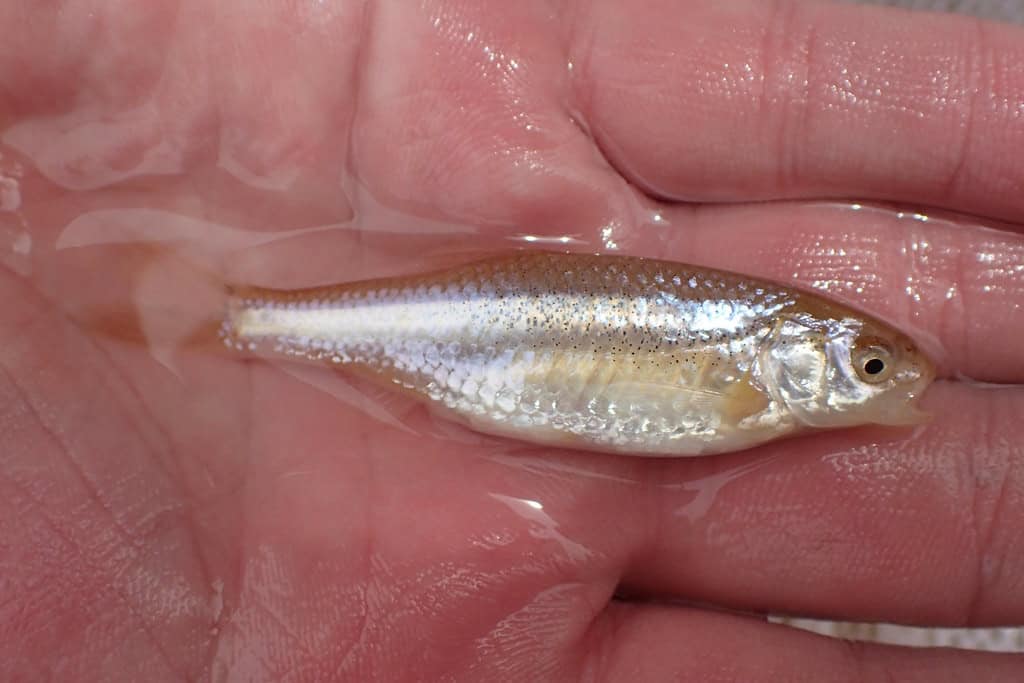
These little members of the minnow family are endemic to the Pecos River but federally threatened due to a reduction in stream flows, habitat alteration, and dam construction.
©"Pecos Bluntnose Shiner" by USFWS Fish and Aquatic Conservation is licensed under PDM 1.0. - Original / License
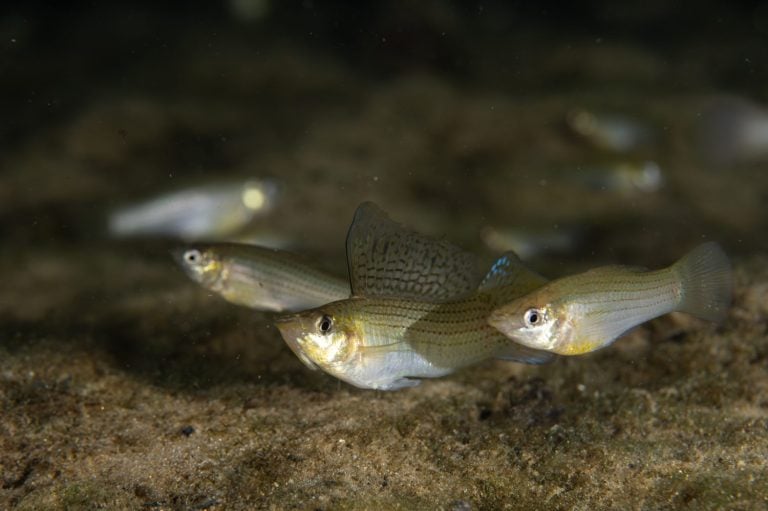
Another fish that can be found in the Pecos River is the Pecos spotfin shiner. It’s a small, slender fish in the minnow grouping of fish. Pecos spotfin shiners are characterized by a deep body (relative to their size) that is compressed on each side, but only grows between two and five inches. They are usually silver-blue in color with a darker band on their sides that can be seen in the posterior half of their body. There is also a black spot on the hind part of their dorsal fin. Pecos bluntnose shiners are native to the area and endemic to the Pecos River; however, they are a severely threatened species.
Despite dwindling numbers, they can still be found in the slower-moving parts of the Pecos River. There, they inhabit the sediment-rich riverbeds, feeding on plankton and other organic particles stirred up from the bottom. They may be small and unassuming, but Pecos bluntnose shiners are one of the Southwest’s most threatened fish species. Their numbers have taken quite a hit due to a reduction in stream flows, irrigation diversions, and dam construction. Due to these habitat-destroying and ecological-altering factors, Pecos bluntnose shiners are listed as federally threatened.
Rainbow Trout
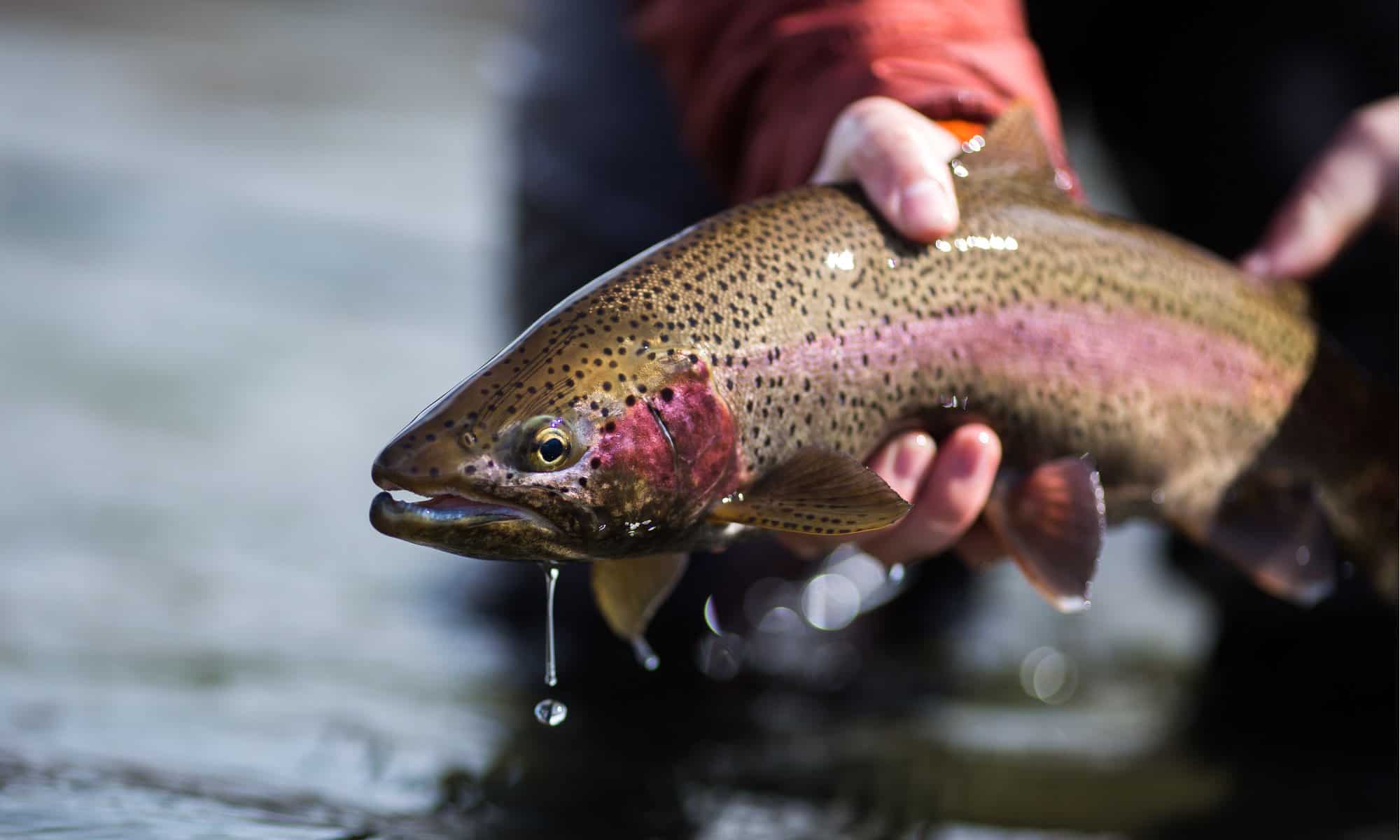
Rainbow trout are a common but invasive species in the Pecos River.
©Cannon Colegrove/Shutterstock.com
The rainbow trout may not be native to the Pecos River, but they sure have made themselves at home there. Since the late 19th century, this fish has been artificially propagated in fish hatcheries before being introduced to both native streams and non-native waters. While rainbow trout are similar to steelhead trout, along with several other subspecies, rainbow trout feature some key distinctions. Bodywise, rainbow trout are a fairly primitive fish similar in shape and size to salmon.
Rainbow trout can feel at home in cobble streams, boulder streams, as well as large bodies of water if they are cold and pristine. There, juvenile rainbow trout feed on invertebrates, worms, mollusks, and crustaceans. Adult rainbow trout usually feed on smaller foraging fish. Unlike other fish, rainbow trout have a long spawning season. It lasts from late fall into early spring. It seems that no matter where you go in North America, you will find rainbow trout. That’s because they are one of the most commercially farmed and artificially propagated fish in the world.
In 2007, global farmed rainbow trout production was estimated at several hundred thousand tonnes, with major producers including the EU and Chile. This spread of rainbow trout has both benefits and consequences. The way that American hatcheries produce rainbow trout is considered ecologically responsible compared to other countries. However, it’s not without its negative effects. While they can make for a useful predator fish in areas with ecosystem imbalance, they can also wreak havoc on habitats. Rainbow trout are listed as one of the top 100 most globally invasive species for good reason. They are often found near the village of Pecos and in the Santa Fe National Forest.
Longnose Dace
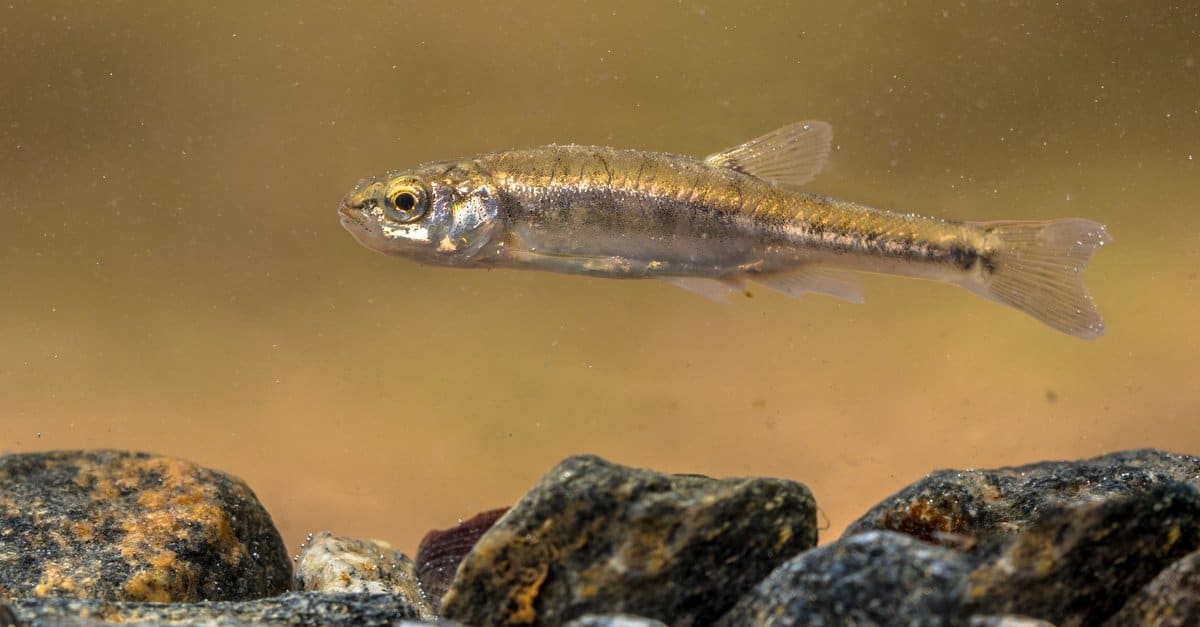
Longnose daces use their snouts to forage for algae and tiny invertebrates on the surface of rocks.
©Rudmer Zwerver/Shutterstock.com
Another freshwater fish found in the Pecos River is the longnose dace. Much like Pecos bluntnose shiners, these fish are a type of minnow. While they are native to much of North America, longnose dace are commonly found in the upper parts of the Pecos River and its tributaries. The standout feature of these fish is their unique snouts, which they use to forage for algae and tiny invertebrates that live on the rocks of cool streams. They are often confused for white suckers due to their relatively downturned mouths, which are adapted for their vacuuming of plant and animal matter.
Longnose dace bodies are small but streamlined, providing them with the powerful swimming abilities needed to navigate turbulent waters. They are not a prized fish for anglers due to their paltry size. That said, longnose dace play an important role in the Pecos River ecosystem. Not only are longnose dace a food source for trout and other large predator fish, but they are also a barometer of water health. They are attracted to clean, oxygen-rich mountain water. If you see them in a part of the river, it means there is an intact ecosystem with a healthy current.
Pecos Pupfish
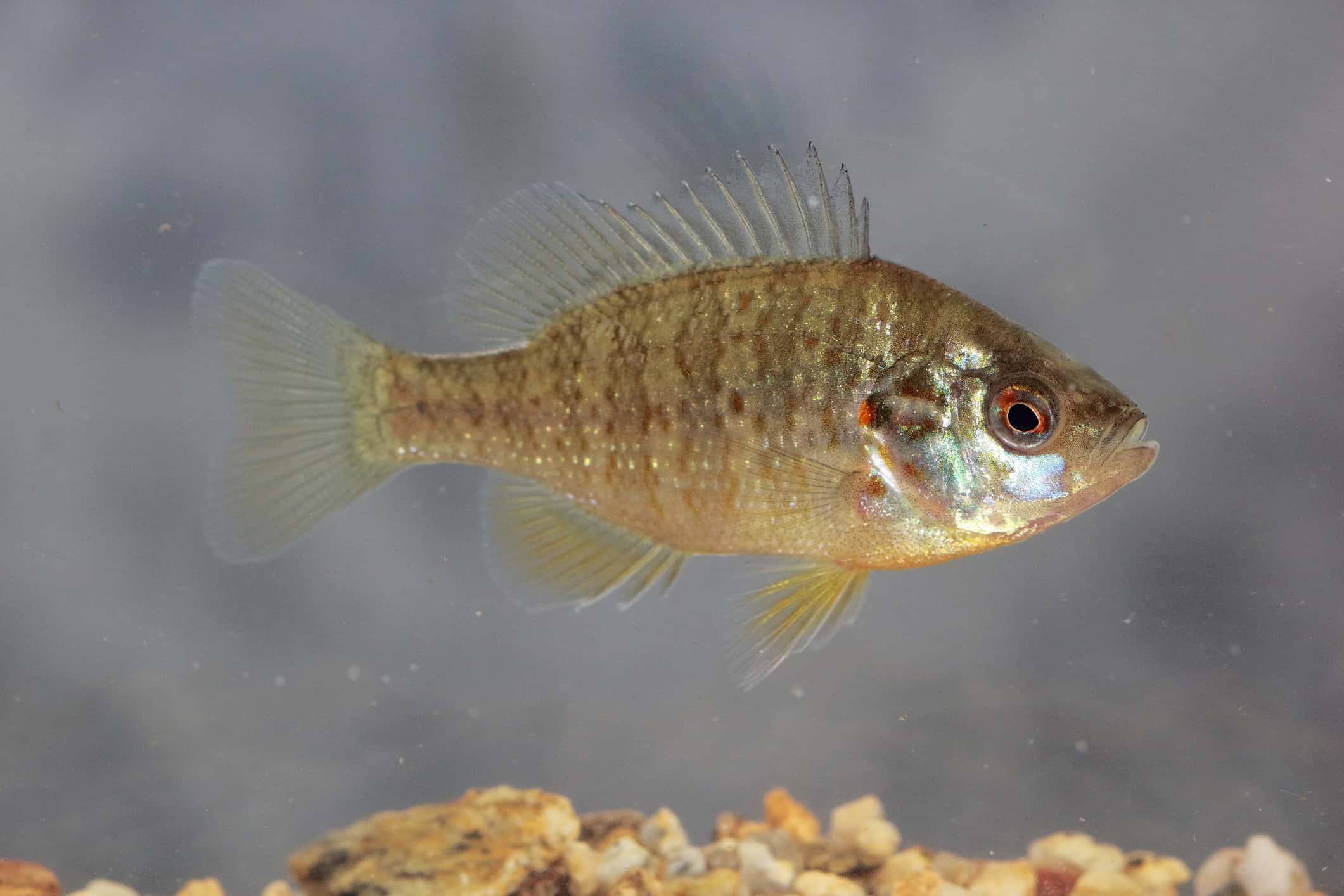
Pecos Pupfish are native to the area but have been threatened by the invasion of a hybrid pupfish species.
©iStock.com/Zdenek Macat
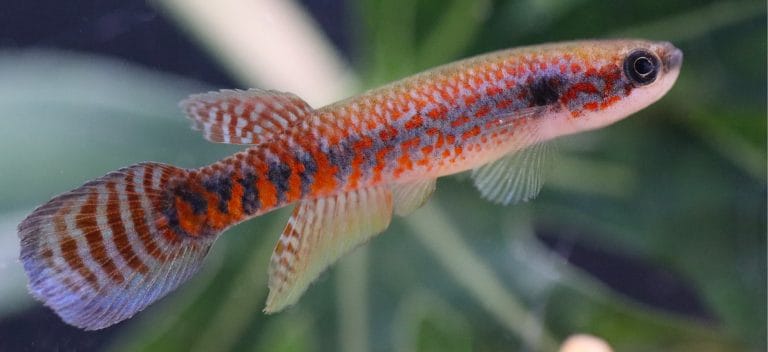
Another one of the few fish native to the Pecos River basin, in particular, is the Pecos pupfish. Like other pupfish, the Pecos pupfish is part of a small group of ray-finned fish. These fish are notable because they are often found in environments not made for fish or aquatic life at all. The Pecos pupfish is characterized by a small body that is only a few inches long and a vibrant iridescent blue-green coloring. Even in extreme conditions, pupfish are tough. They can survive in salty, warm, and oxygen-deprived waters. They can also live pretty easily in small water sources like isolated ponds, sinkholes, and streams. Despite being native to parts of the Pecos River basin in New Mexico and Texas, Pecos pupfishes have become threatened.
Another type of ray-finned fish, called the sheepshead minnow or the sheepshead pupfish, was introduced to the area in the late 1980s. No one is quite sure how it was introduced to the Pecos River. Many believe they saw inclusion into the basin via bait-bucket dumping. Within a few years of being introduced to the area, sheepshead minnows effectively dominated the areas once controlled by Pecos pupfish. As near as scientists can tell, sheepshead minnows, being hybrids, featured increased growth rates and vigor compared to Pecos pupfish. This caused Pecos pupfish females to actively choose to mate with the hybrids instead of male Pecos pupfish. Due to this invasion and threat to the native pupfish species, conservation efforts have been implemented. These aim to prevent the hybrid pupfish from invading the more isolated populations of native Pecos pupfish.
Channel Catfish
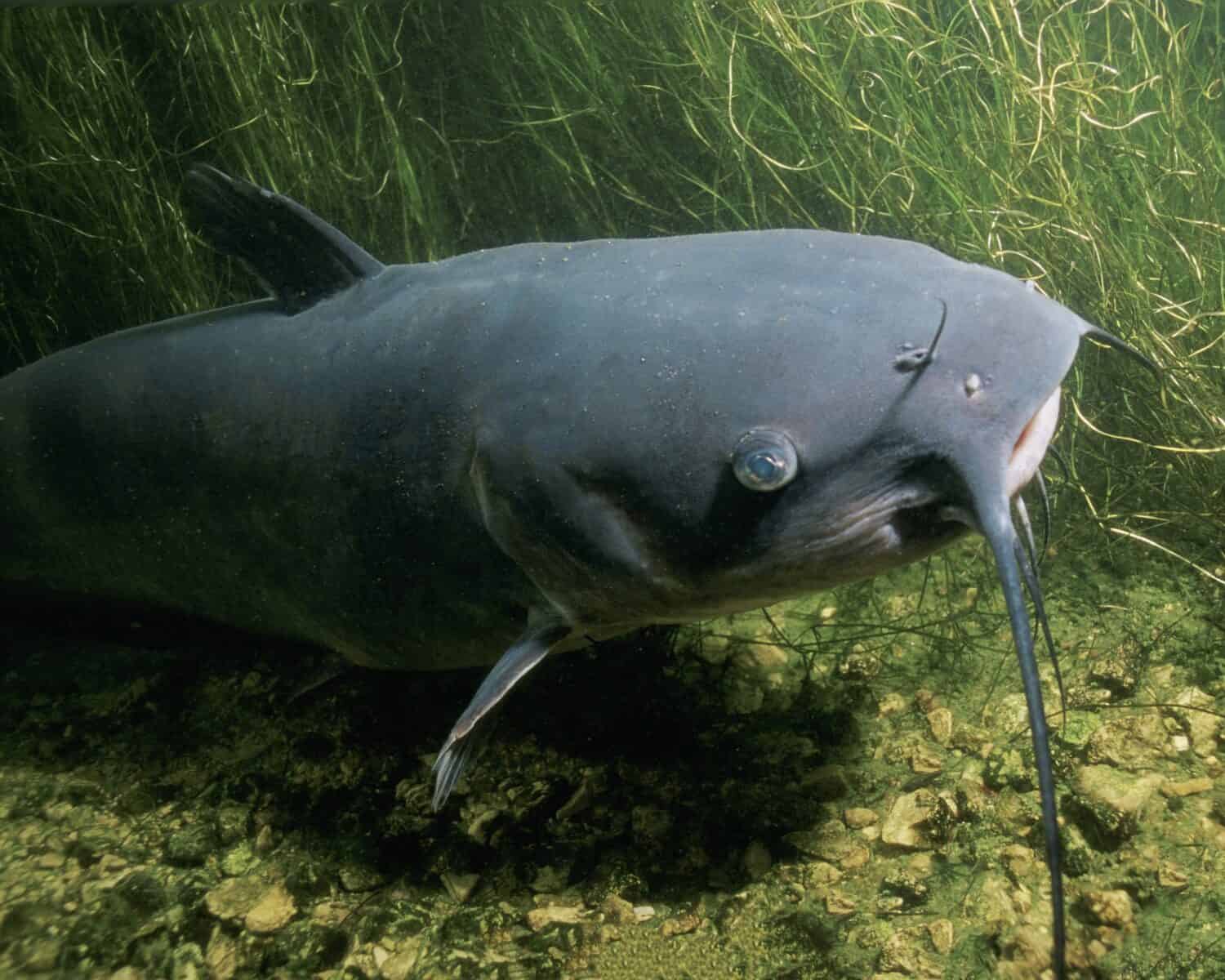
Channel catfish are one of the most widely distributed fish in North America.
©Alauddin Abbasi/Shutterstock.com
It is hard to deny that the channel catfish is one of the most widely distributed catfish in the United States. It calls many habitats home, and the Pecos River is no exception. Channel catfish are typically found in the warm, lower regions of the river basin. They are characterized by cat-like whiskers on their heads called barbels, forked tails, and blotchy, grey-colored bodies. Wherever they live, channel catfish feed on crustaceans, small fish, insects, and organic debris. Their adaptability is their greatest strength. This has enabled them to thrive in the Pecos River basin despite fluctuating water levels, shifting temperatures, and changing salinity levels. Despite not being native to the area, channel catfish fit right in. They play a crucial role in the river’s ecosystem and are highly prized by fishermen.
Golden Eagle
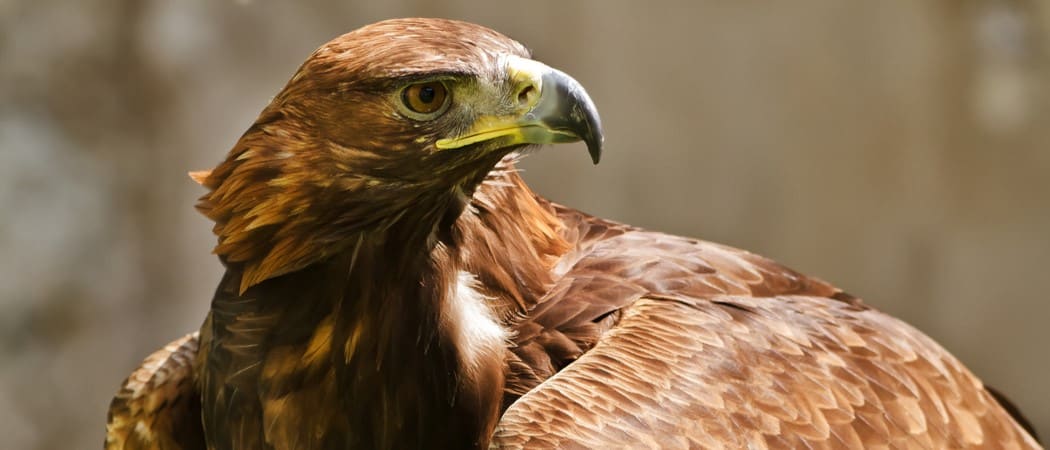
The presence of Golden Eagles indicates a healthy, robust ecosystem.
©Michal Ninger/Shutterstock.com
One of the most iconic birds found in the Pecos River basin is the Golden Eagle. They can usually be seen soaring high above the middle stretches of the river valley in New Mexico and West Texas. You’ll know it when you see one, thanks to its massive, seven-foot wingspan blocking out the sun as they fly around looking for rabbits and other small mammals on the ground.
Texas Horned Lizard
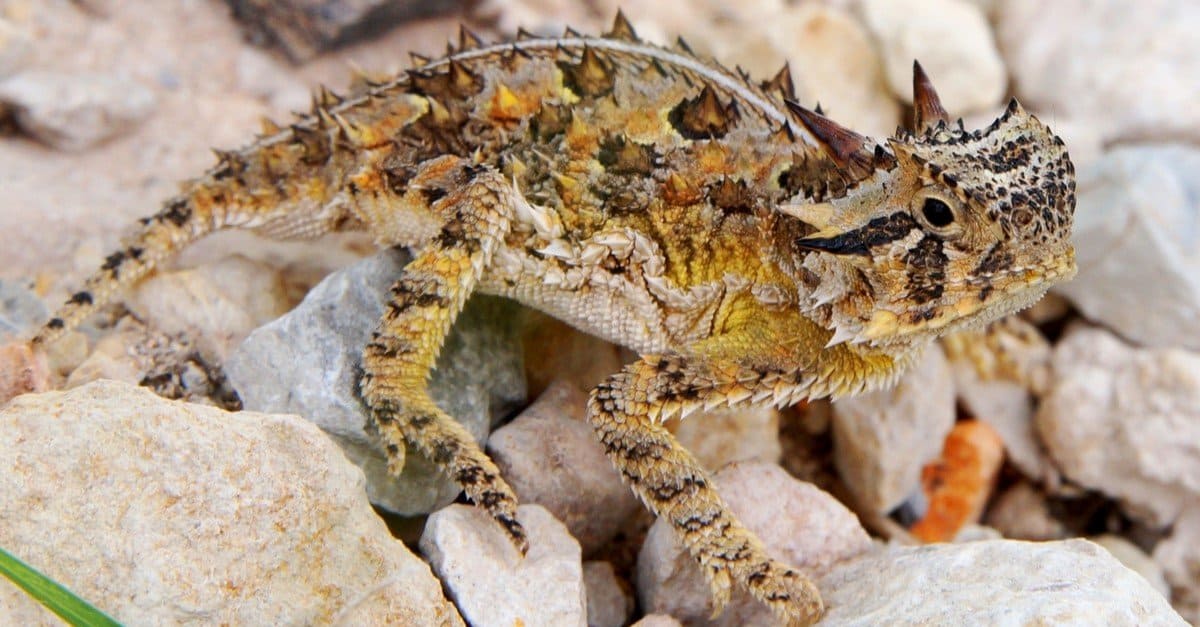
These symbols of the southwest can shoot blood out of their eyes to ward off threats.
©Matt Jeppson/Shutterstock.com
The Texas horned lizard is one of the most iconic symbols of the Pecos River basin and the Chihuahuan Desert. They have armored, flat bodies with spike strips running the length of them and crown-like horns on their bulbous heads. While they don’t live in the river or have much use for its water, Texas horned lizards can be found all along its banks. They move slowly but hunt effectively, grabbing insects like harvester ants with their sticky tongues. Masters of the desert, Texas horned lizards can store water in their bodies for long periods of time. They are also masters of the shock factor. When threatened, Texas horned lizards can squirt blood from their eyes as a form of visual deterrence. In recent years, their numbers have dwindled due to habitat loss, the presence of invasive fire ants, and increased pesticide use.
Rio Grande Sunfish
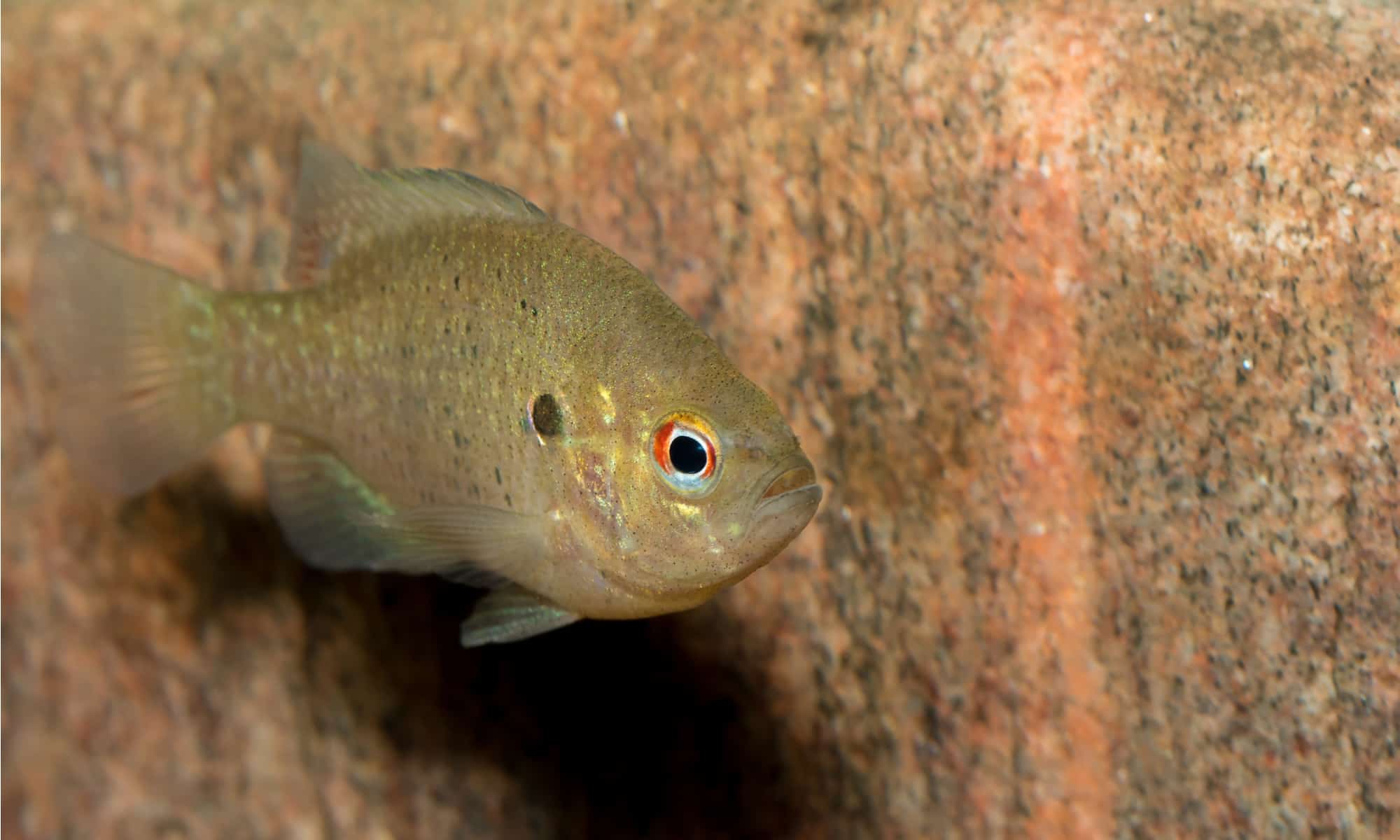
The Rio Grande Sunfish prefers the warm and murky waters of the lower Pecos River drainage area.
©Clint H/Shutterstock.com
Another fish that is endemic to the area is the Rio Grande Sunfish. They are characterized by small but vibrant bodies that feature cream and turquoise colored spots. Adults are also easily identified by slight humps on the tops of their heads. Since it prefers slow-moving pools and backwaters, the Rio Grande sunfish is most commonly found in the lower Pecos River drainage area. Due to its adaptations for warm and murky waters, it thrives in the area and serves as a staple food for large fish and birds like blue herons.
Rio Grande Leopard Frog
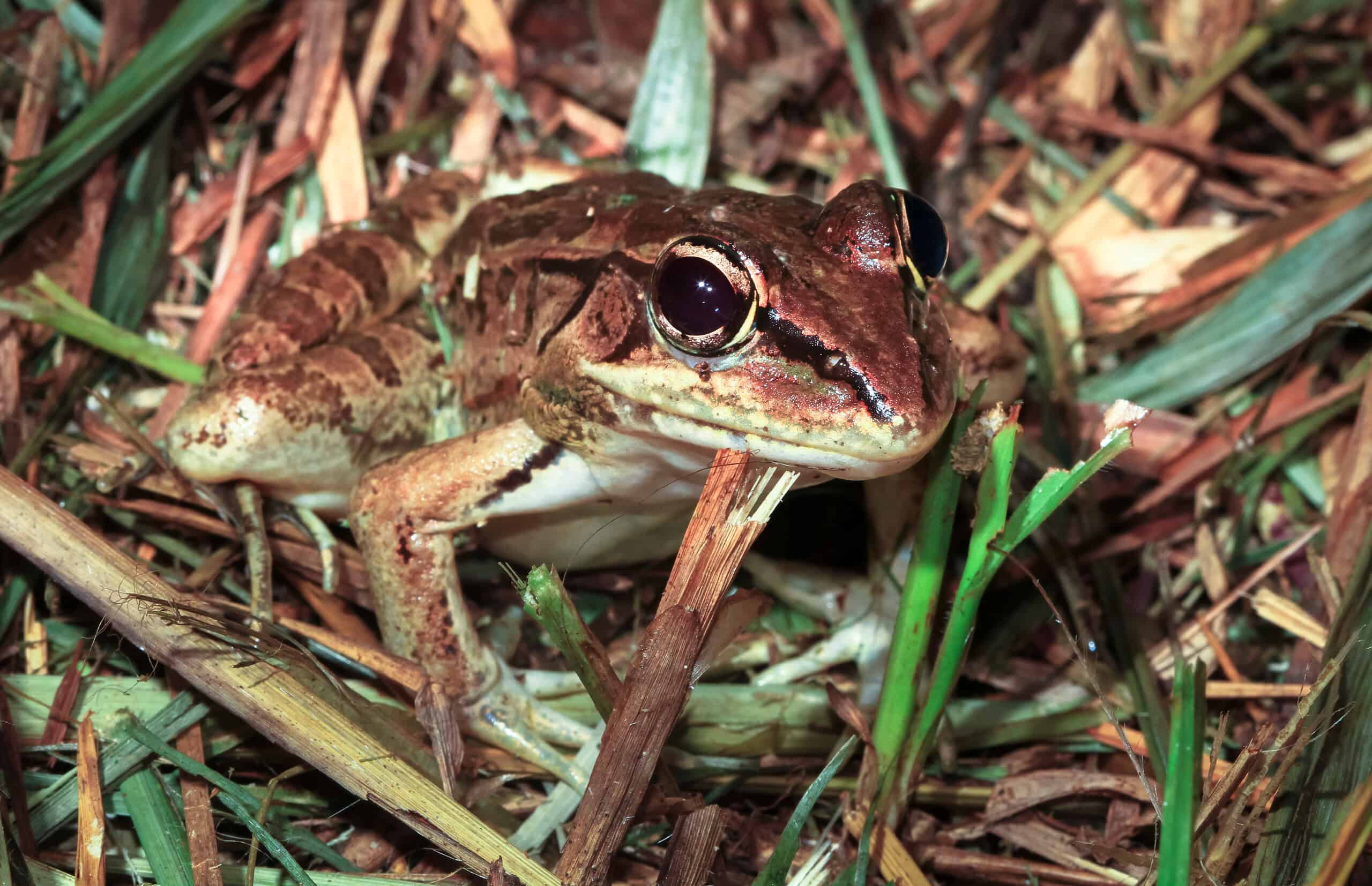
These leopard frogs are native to the area surrounding the Pecos River basin.
©Kevin Wells Photography/Shutterstock.com
One of the most interesting amphibians found in the Picos River basin is the Rio Grande leopard frog. It is native to the area and lives along its many slow streams and ponds. While hard to spot, they can be easily heard thanks to their loud barks that sound out through the river basin during mating season. While Rio Grande leopard frogs feed on insects and spiders, larger predators like snakes and birds feed on them.
Muskrat
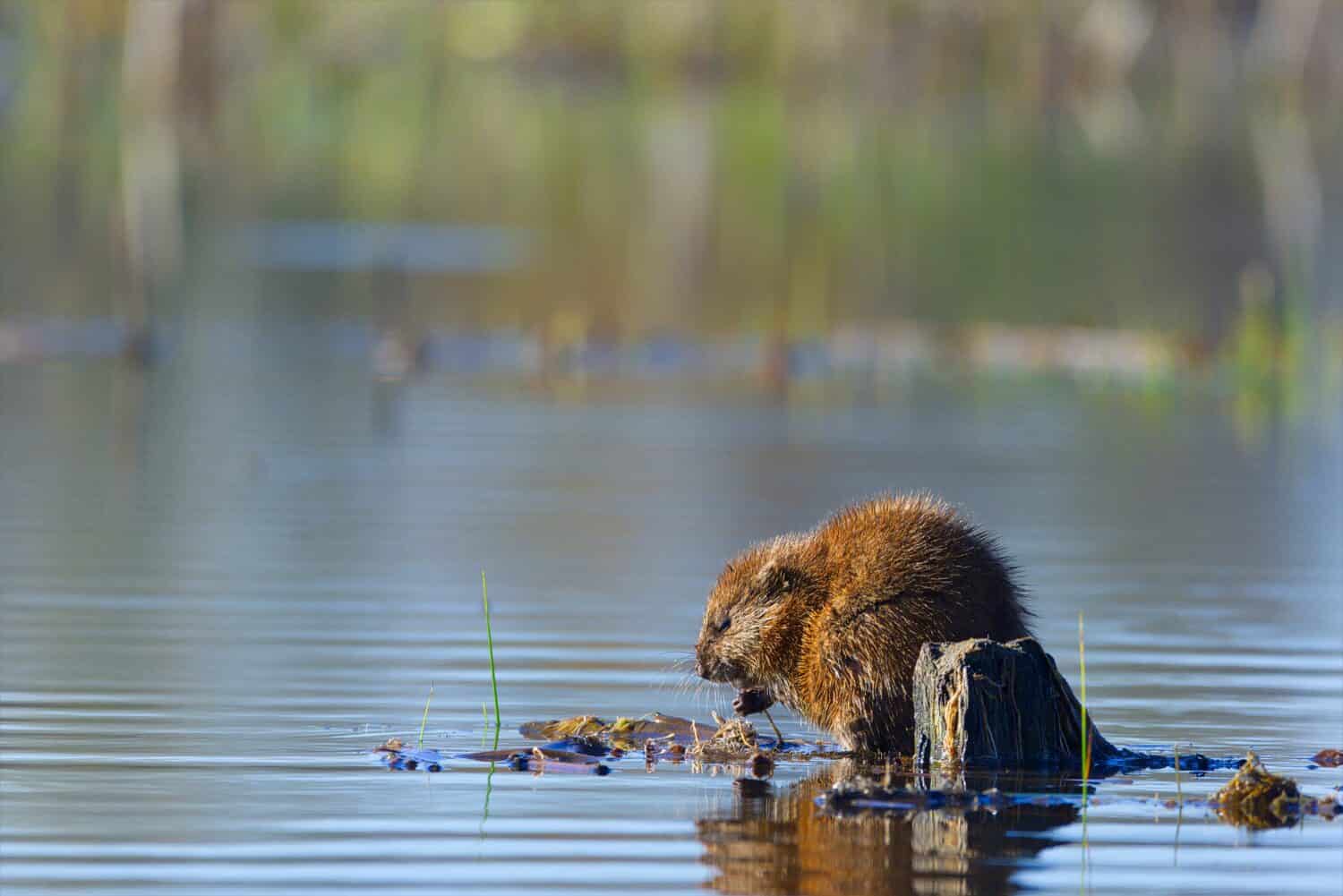
Despite their uncanny resemblance to beavers, muskrats are smaller and feature thinner, rat-like tails.
©Doug Gordon/Shutterstock.com
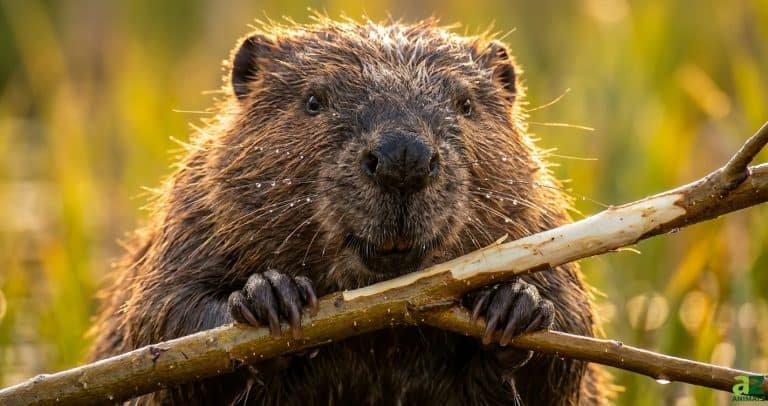
Not to be confused with beavers, muskrats are another type of large rodent that lives in freshwater streams, rivers, and ponds. While beavers are large with wide, flat tails, muskrats are smaller in stature and have tails that look more like rat tails. Both types of rodents, however, prefer the water. Muskrats build dome-shaped lodges or burrows and feed on plants, roots, and even small invertebrates. They are also a food source for large predators such as minks and raccoons. If you see a muskrat in the Pecos River, that’s a good sign. That means that the habitat is healthy.
Javelina
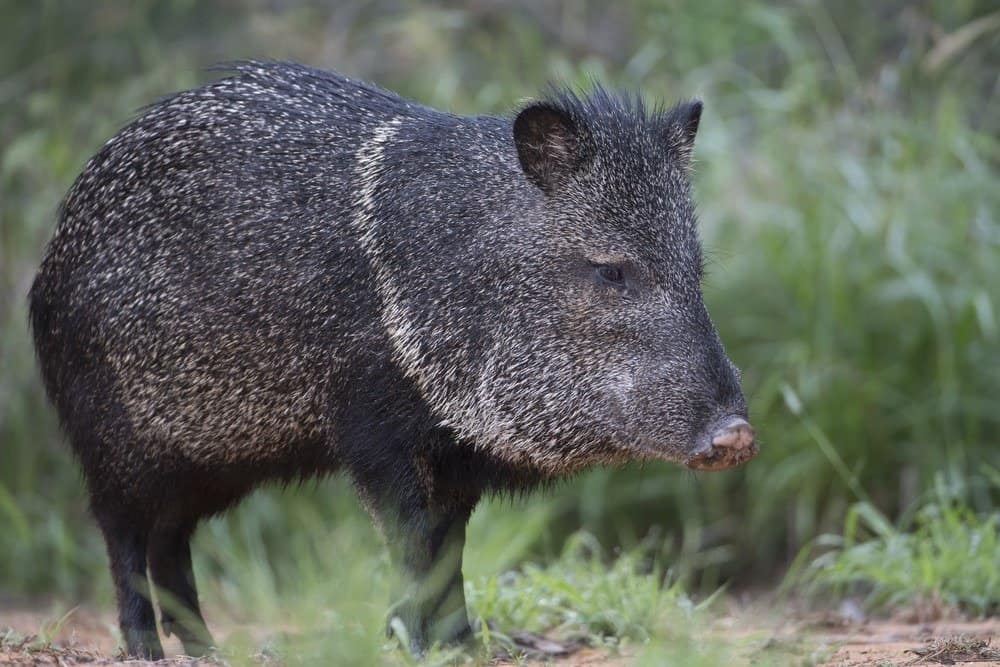
They may look like pigs, but javelinas are members of the peccary family of hoofed mammals originally from South America.
©Dennis W Donohue/Shutterstock.com
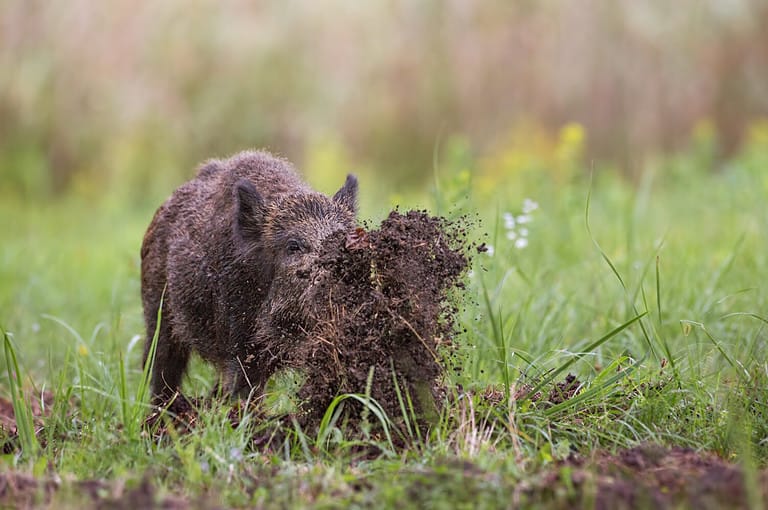
Javelinas are a common sight in the Pecos River basin. These medium-sized mammals look like pigs but are actually members of the peccary family, which is a group of hoofed mammals from South America. These social creatures often move in herds. They feature dark, rough fur and heads shaped like a cross between a feral hog and a capybara. They comb the Pecos River area foraging for roots, cacti, and fruits. This makes them important plant dispersal agents. Their foraging and roaming help spread seeds and promote desert vegetation.