Quick Take
- Honey possums have the smallest mammal babies, born up to 0.005 g and underdeveloped for 8-10 weeks.
- Pygmy marmosets are the smallest monkeys, and newborns are no larger than a human thumb.
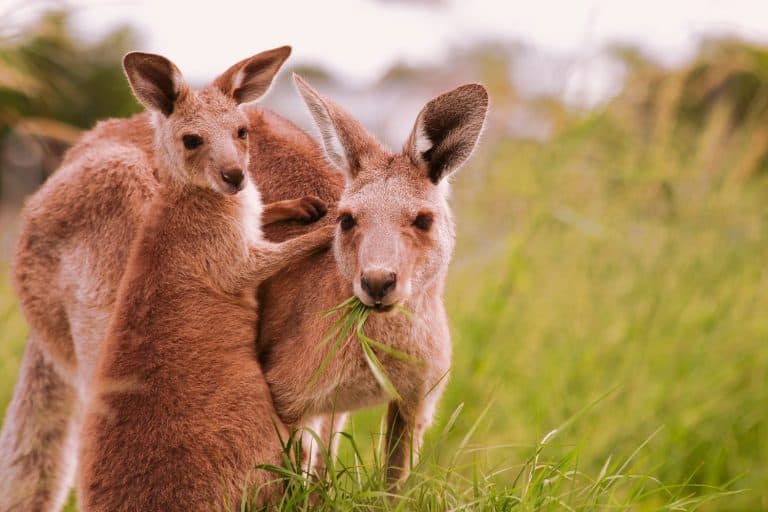
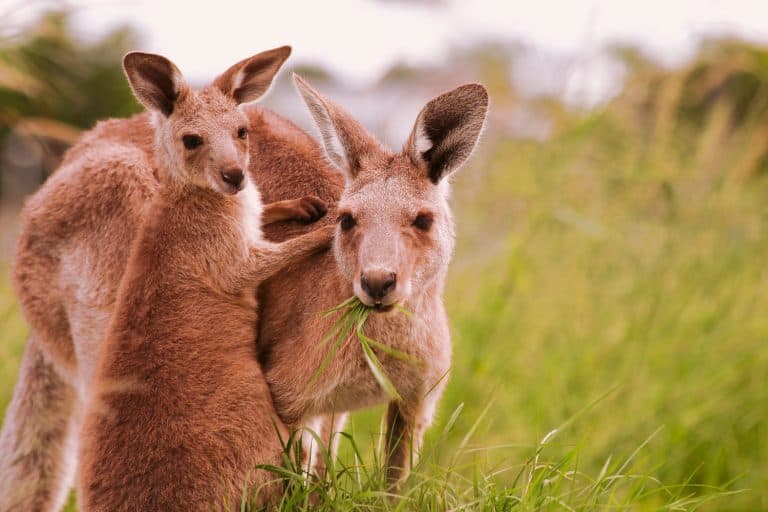
- Kangaroos give birth to a grape-sized joey, which remains in its mother’s pouch to continue growing.
Have you ever thought about the smallest animals on earth? How about the fact that if they’re so small, then surely their babies are much smaller? While this is true throughout the animal kingdom, some large animals even have miniature babies. What you might not know is that having underdeveloped offspring isn’t just about making space in a mother’s womb; it’s also an impressive survival tactic used by many species during reproduction.
Honey Possum
The honey possum is impossibly small, weighing up to 0.005 grams at birth. This makes it the smallest mammal baby in the world. For the first two and a half months of its life, this tiny possum can’t survive on its own. It remains underdeveloped in its mother’s pouch for 8 to 10 weeks while it feeds, grows, and adapts to life on the outside.
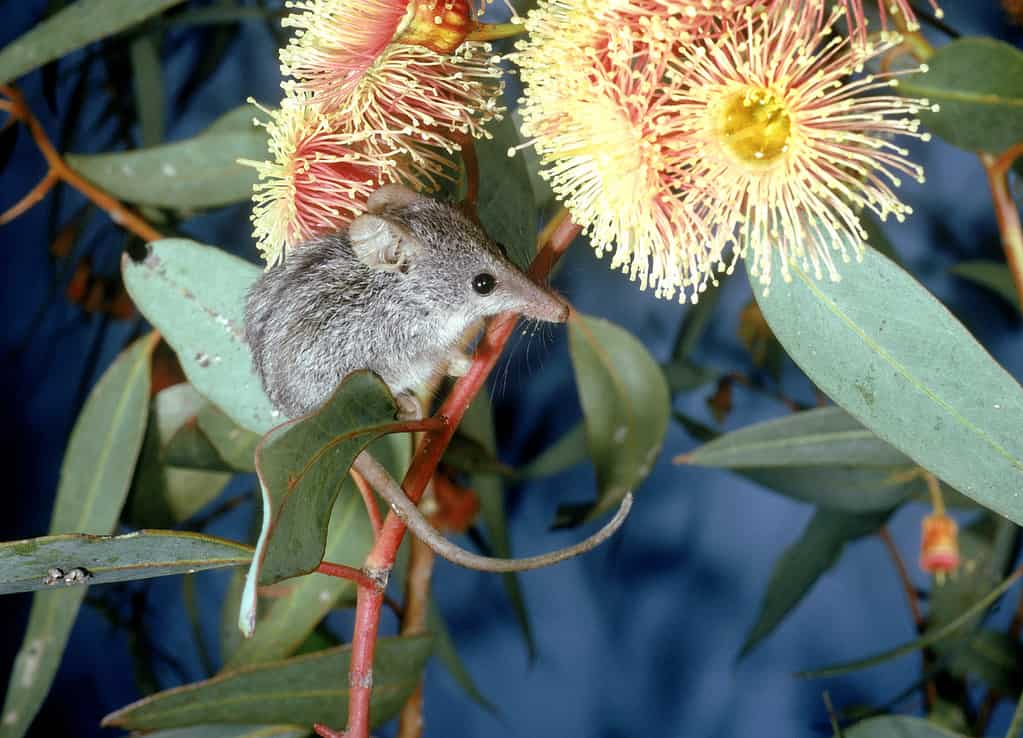
Honey possums have the smallest mammal babies in the world.
©© Oxford Scientific/The Image Bank via Getty Images
By the time it’s ready to leave the pouch, honey possum joeys are roughly 2.5 grams. Even after this, babies don’t stray from their mother. They continue riding around on her back for several more weeks, observing as she forages. By ten weeks, a honey possum is considered mature enough to gain some independence.
Pygmy Marmoset
As its name implies, the pygmy marmoset is incredibly small. They’re the smallest species of monkey in the world, and their babies are among the smallest of any monkey. At birth, they’re no larger than a human thumb and have to be carried by their mothers.
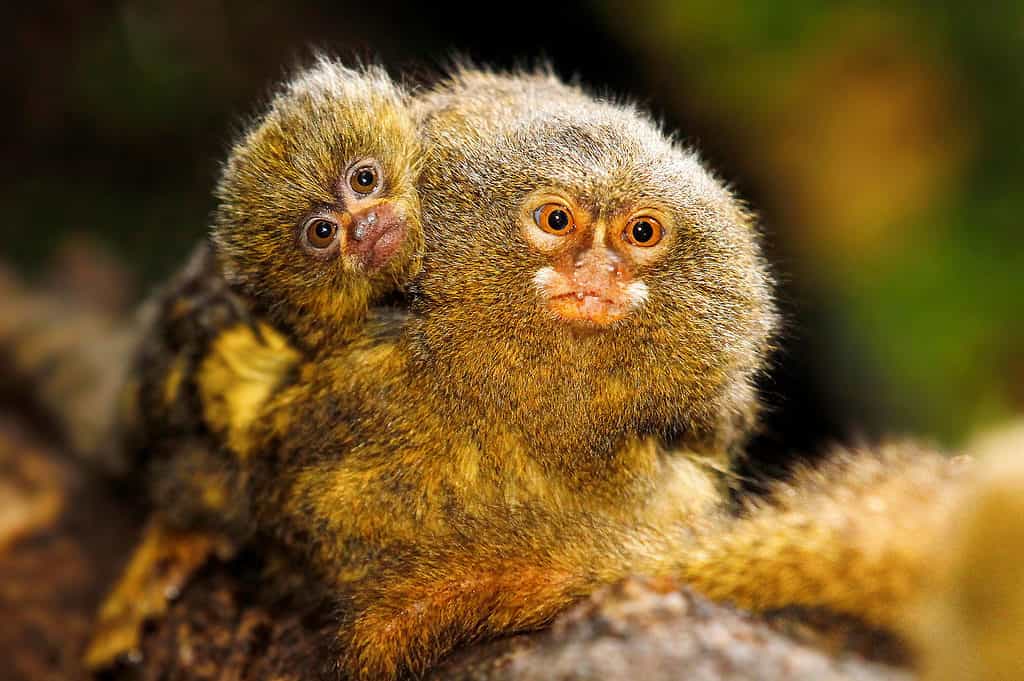
Pygmy marmosets are so small at birth that they don’t even look real.
©Guillermo Ossa/Shutterstock.com
Their small size is a result of their species rather than for survival, but it does afford them a unique opportunity. Until they’re mature enough to be fully independent, they observe their mothers and other adults in their groups. During this time, they learn social rules, how to forage, and how to find shelter.
Kangaroo
It’s hard to believe that when kangaroos are born, they’re only the size of a grape. Not only are they unbelievably tiny, but they’re also born significantly underdeveloped. This tiny, living pink bean can’t do anything other than suckle from its mother. After making its way to her pouch, it will continue to nurse there for several months.
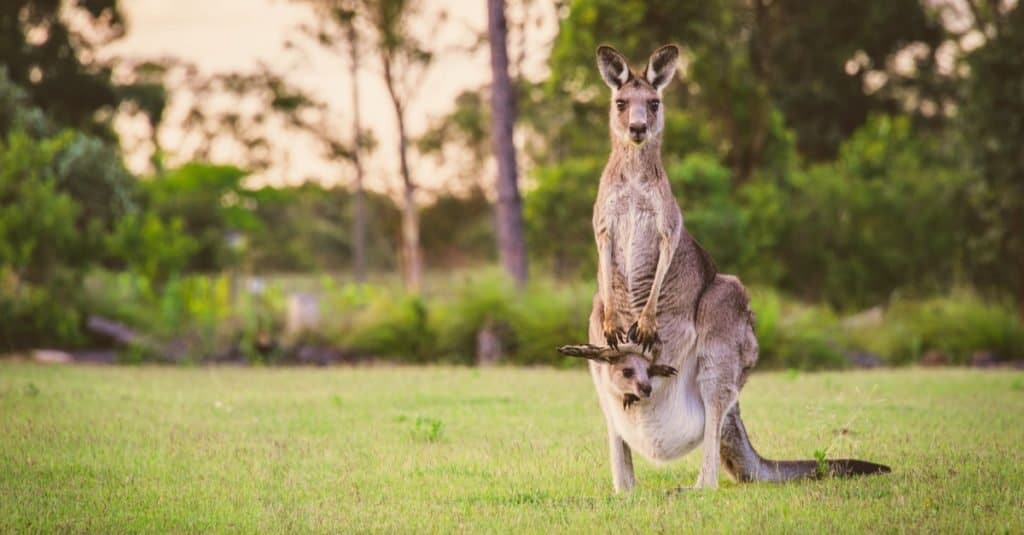
If a joey is still in the pouch of a pregnant kangaroo, the younger sibling can enter a dormant state called embryonic diapause.
©IntoTheWorld/Shutterstock.com
This is the purpose of a kangaroo pouch. It protects and shields joeys while they continue to grow within, concealing them from the outside world. When a joey is fully grown, it will emerge from its mother’s pouch looking like a miniature version of its parents. At this point, it has all of its limbs, a fully-grown head, and a strong, muscular tail.
Etruscan Shrew
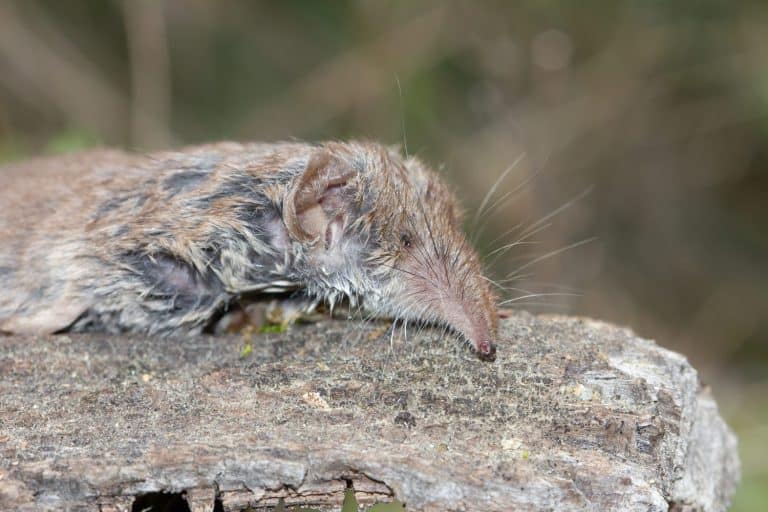
The only thing cuter than an Etruscan shrew baby being called a “shrewlet” is its size. At birth, a shrewlet can weigh as little as 0.2 grams and fits in the palm of a human hand (with room to spare). They’re born completely helpless, without sight or hearing. Shrewlets also don’t have hair at this early stage, but they do not need it because they remain warm in their mother’s nest.
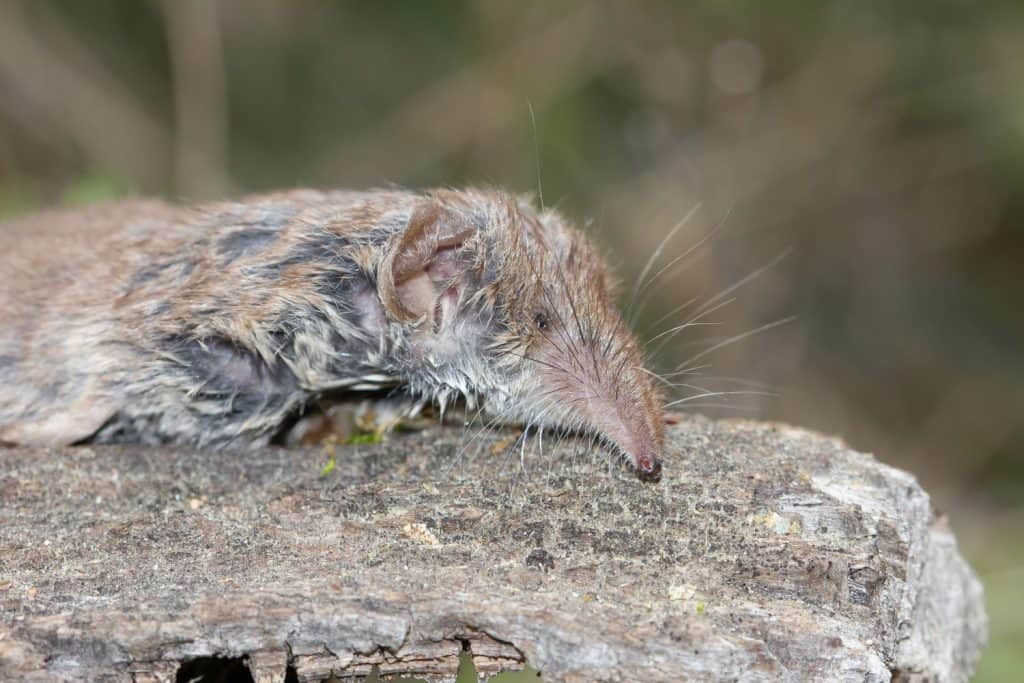
Etruscan shrewlets are born without sight or hearing, and remain close to their mothers for several weeks.
©Wirestock Creators/Shutterstock.com
Shrewlets mature quickly and are far more developed by the two-week mark. They find their way around by holding onto the tail of the Etruscan shrew in front of them, which prevents them from wandering off. This continues until they’re fully weaned, at about 20 weeks, and are more than 10 times their newborn size.
Pygmy Seahorse
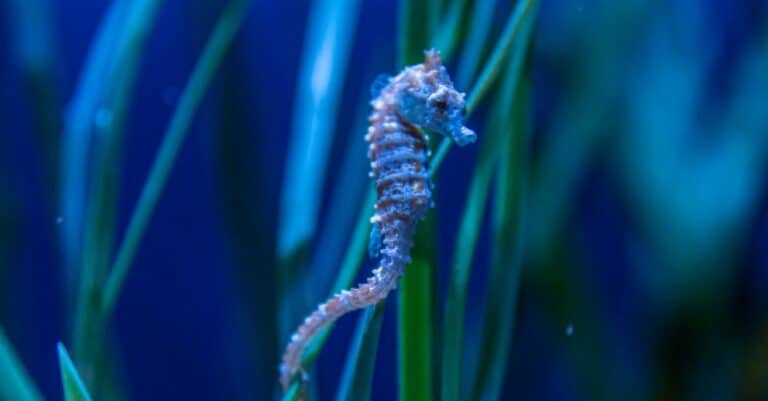
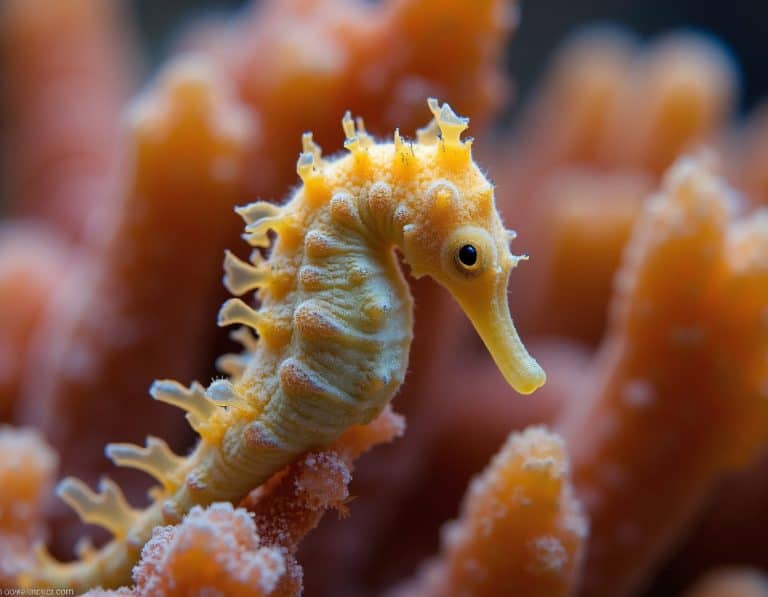
Seahorses are small, and their babies, known as fry, are even smaller. The pygmy seahorse is only about an inch long as an adult. Fry are a fraction of that, with babies measuring 7 to 9 millimeters when they’re born. This makes them difficult to see in the water, let alone track with the naked eye.
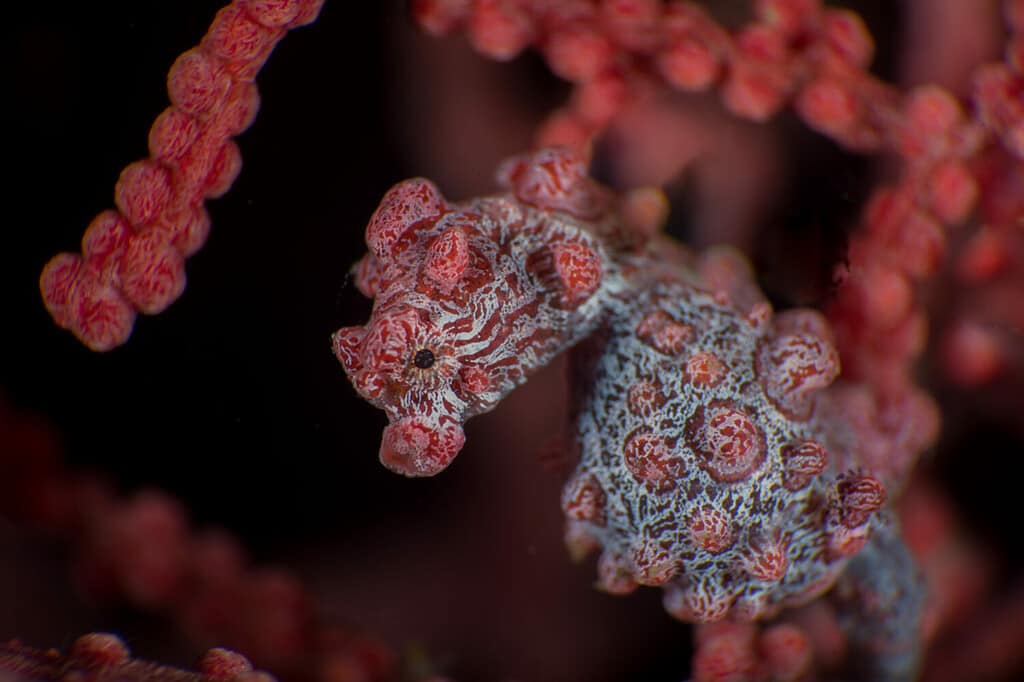
Pygmy seahorses are tough to see with the naked eye if you’re not trained in identifying them.
©Albert Saiz Tezanos/Shutterstock.com
Male seahorses are the ones who carry and birth their young, which is a tremendous feat at such a small size. Given their pygmy proportions, they’re often vulnerable to predator attacks. Those who manage to evade predators attach themselves to objects and float along the current until they mature.
Bee Hummingbird
A bee hummingbird is, well, roughly the size of a bee! These hummingbirds are a miniature version of their full-grown cousins. Their nests are no larger than a quarter, which is the perfect size for their bean-sized eggs. When a bee hummingbird hatches, it’s roughly an inch in length, but only weighs about .62 grams.
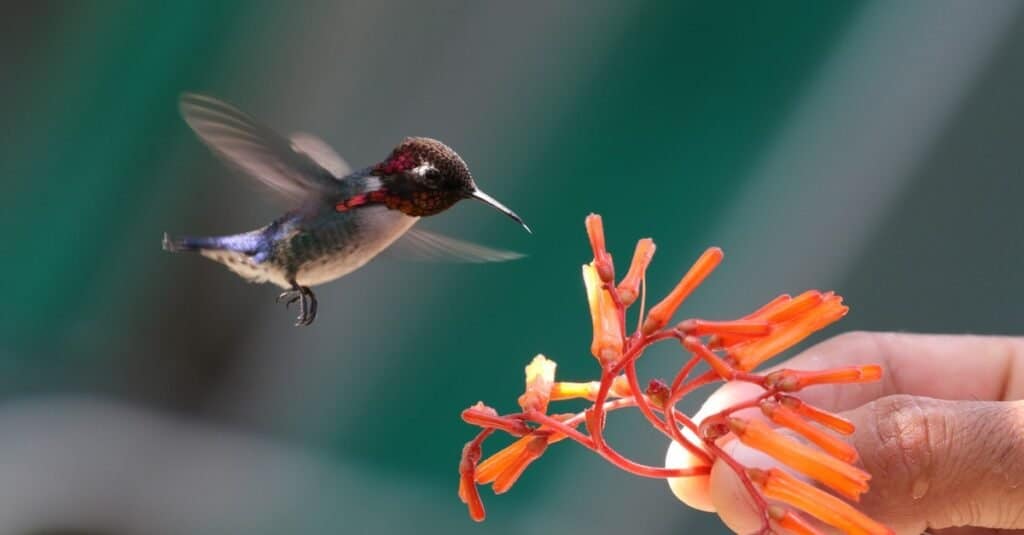
Bee hummingbirds are the smallest birds in the world.
©James Bloor Griffiths/Shutterstock.com
This makes them the world’s smallest birds, and their hatchlings are among the smallest of any bird. Females remain with their hatchlings for the first few weeks of their lives. Since they don’t have much growing to do, the mother’s presence is mainly to protect them until they can fly on their own.
Pink Fairy Armadillo
Armadillos don’t typically bring to mind a cute, tiny baby. However, this is true of the pink fairy armadillo. At birth, these babies are only about the size of a golf ball. They are the smallest species of armadillo and spend most of their lives underground. Because of this, not much is known about the pink fairy armadillo.
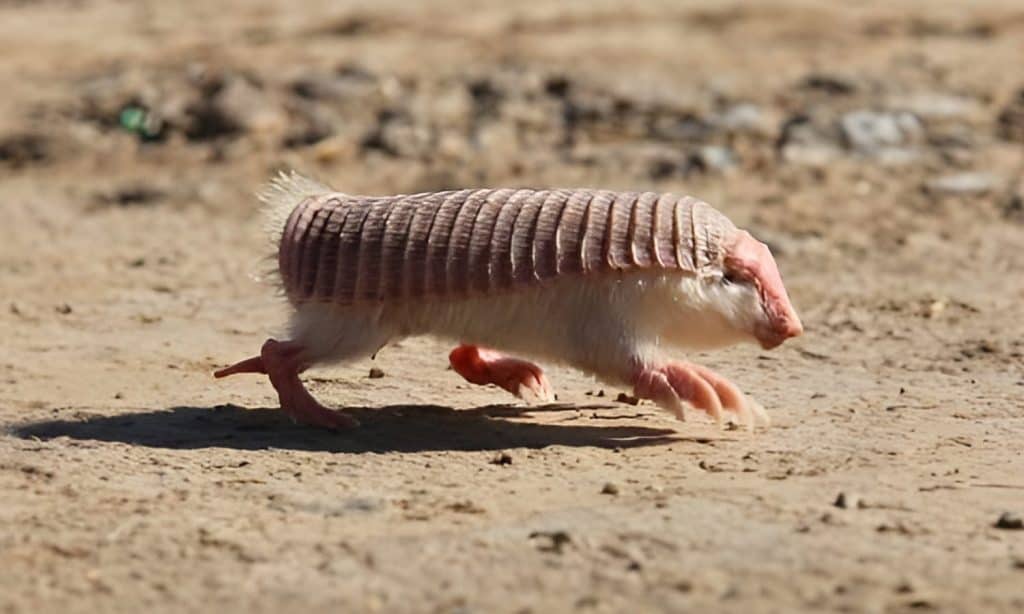
Little is known about the pink fairy armadillo except for its small babies and underground lifestyle.
©Harsha_Madusanka/Shutterstock.com
Seeing a live birth is even rarer, so little is known about armadillo babies beyond their presumed size. They’re born with a soft shell, which allows them to develop more protection outside of the womb. This also helps their hard shells grow along with their bodies, rather than being born with a fully formed hard shell.
Paedocypris Fish
Many fish are small when they’re born, but the Paedocypris fish is one of the smallest in the world. When these fish hatch, they’re small enough to swim by without making so much as a ripple in the water. Hatchlings are only a few millimeters long, and multiple babies could fit on the tip of your finger.
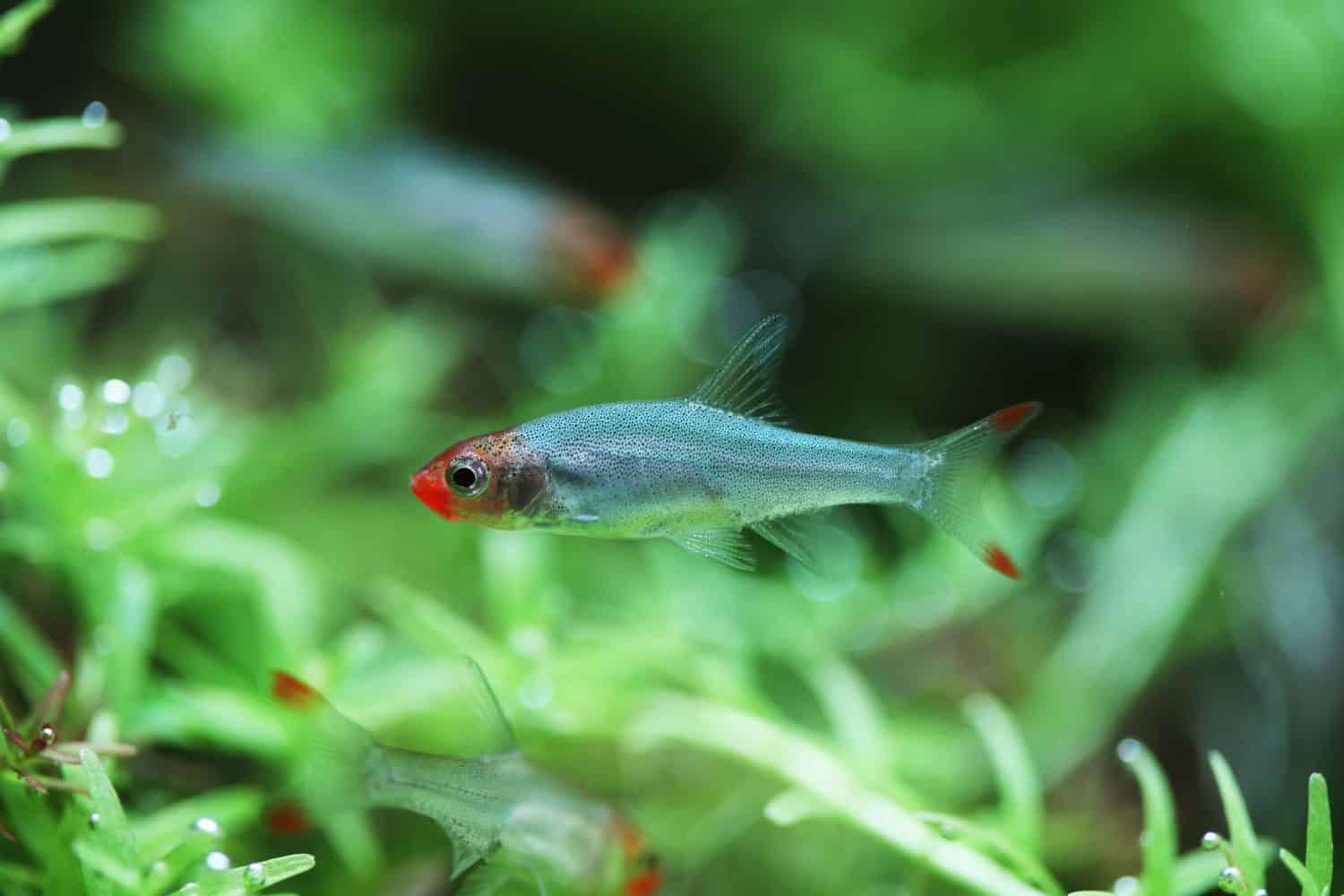
Paedocypris is an incredibly small cyprinid fish.
©Pavaphon Supanantananont/Shutterstock.com
Interestingly, they don’t grow as other fish do. Instead, they retain their transparent bodies and never have a complete bone structure. This makes them incredibly flexible and also helps them swim through harsh aquatic environments. They only live for about 10 months; their small size and lack of defense leave them vulnerable to predation.
Northern Pudu
Not only is the Northern pudu one of the world’s cutest animals, but it’s also the world’s smallest deer. Adults are only 13 to 17 inches tall, and babies are much smaller, typically weighing about one pound at birth. Fawns remain with their mothers immediately after birth.
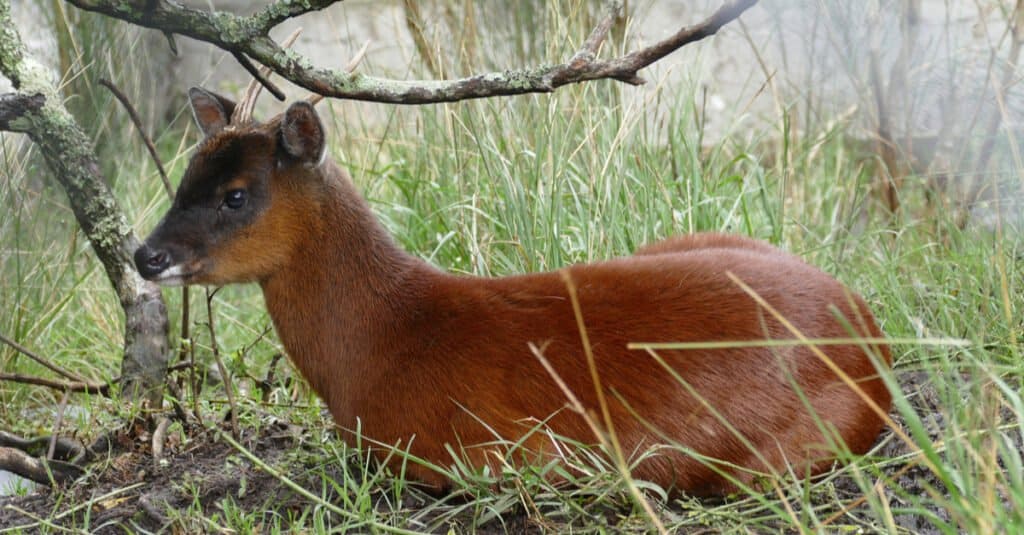
Northern pudus weigh only about 13 pounds when fully grown.
©Helge Zabka/Shutterstock.com
For the first few weeks, the two remain hidden in dense underbrush. During this time, the mother feeds her fawn while sheltering them from the elements and predators. As soon as the fawn can stand, walk, and run on its own, it begins learning from its mother. Northern pudus pick up quickly on things such as evasion and foraging, and despite their small size, they’re clever fawns.
Pygmy Mouse Lemur
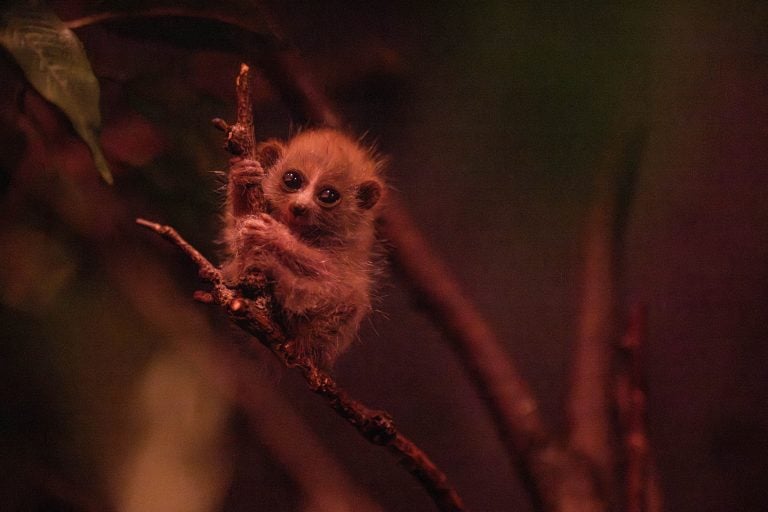
The pygmy mouse lemur has a tail that’s longer than five inches, but the lemur itself is less than two. This small pygmy species, also known as Peter’s mouse lemur, weighs only about 30 to 55 grams as an adult, and its babies are even smaller at birth.
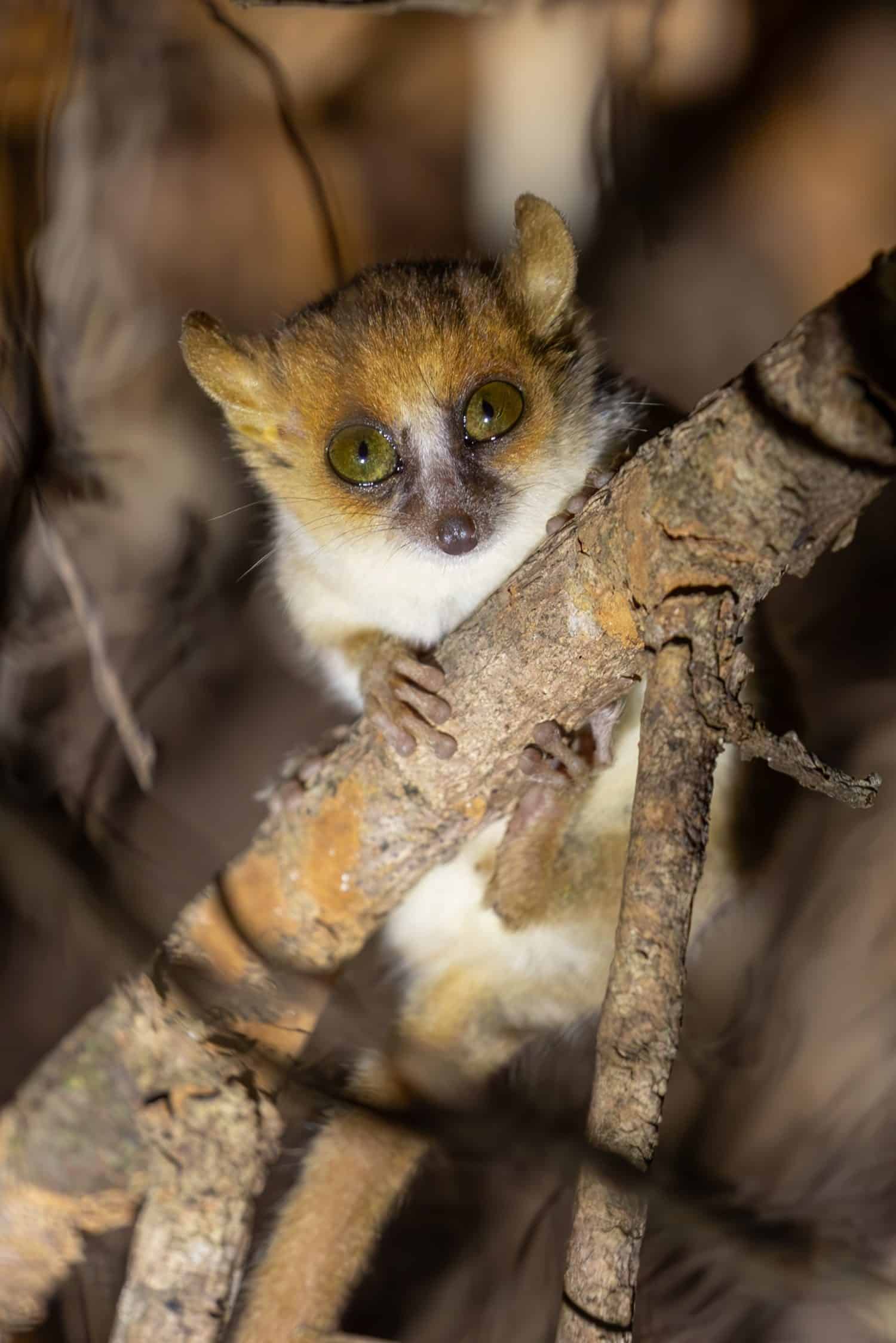
Pygmy mouse lemurs have tails that are longer than their bodies.
©Daniel Karfik/Shutterstock.com
They’re born underdeveloped and with their eyes closed, relying on their mothers for everything. While they grow significantly in just a few weeks, they still rely on their mothers until about two months of age. During this time, females provide food and shelter for their young, while their babies learn to use their tails and gain independence. Despite their small size, pygmy mouse lemurs are impressive tree-swingers!