
Quick Take
- These sharks are surviving depths that most large ocean predators physically cannot reach, and scientists are not sure how they manage it. Explore the depth mystery →
- What basking sharks may be feeding on could reshape how scientists think about conserving the ocean's twilight zone. See the conservation concerns →
- Scientists tracking 37 sharks uncovered a behavior so unexpected it raises questions about whether we've fundamentally misunderstood this endangered species. Discover the unexpected behavior →
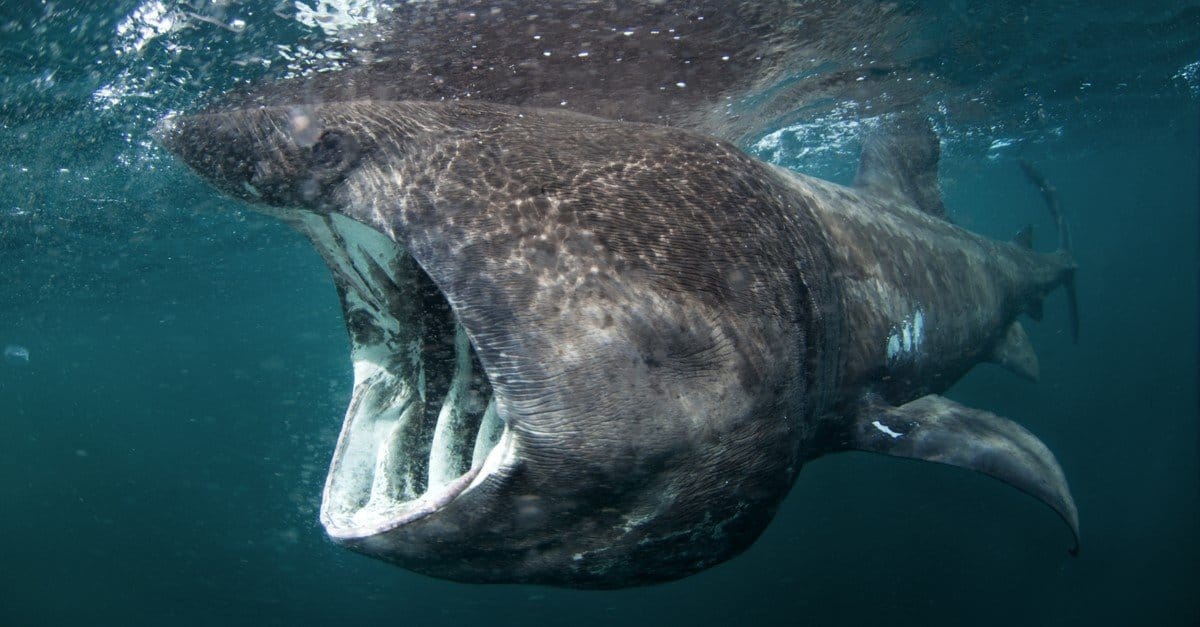
New research spanning 8,345 days is changing how we view an endangered species. Basking sharks (Cetorhinus maximus), which are rarely seen, let alone studied, were previously thought to fast during long migrations. But evidence now points to the opposite. Not only are basking sharks actively feeding, but they might also be doing so in an oceanic zone no human has ever seen.
Basking Sharks and Their Behavior
Basking sharks are highly migratory, and their nomadic nature makes them notoriously challenging to study. They prefer cool water, which frequently brings them to the shores of Cape Cod in the late spring. It’s not uncommon to find them near the Atlantic continental shelves. Basking sharks remain closer to shallow water before diving deeper in the winter. Their preferred habitats also support this. Basking sharks are found on both the west and east coasts of North America, in the lower South America, off the coasts of Japan, Taiwan, and China, and near South Australia and New Zealand.
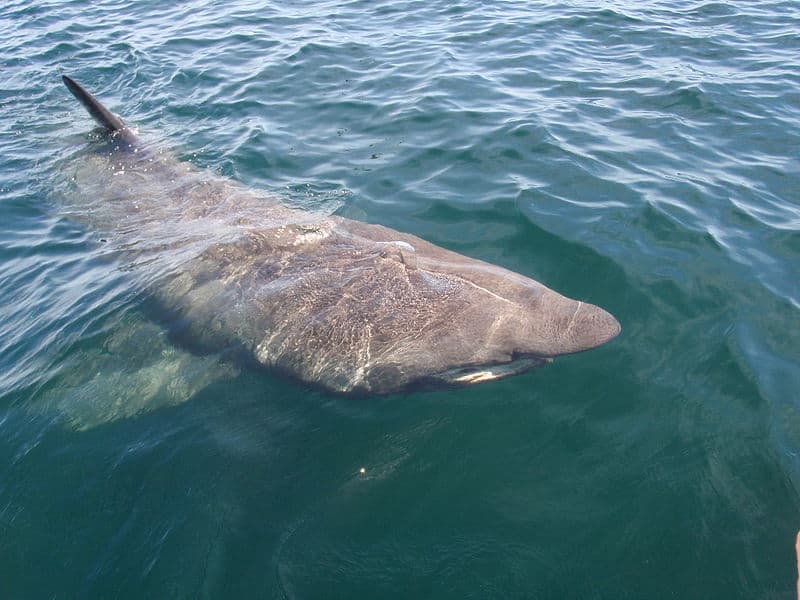
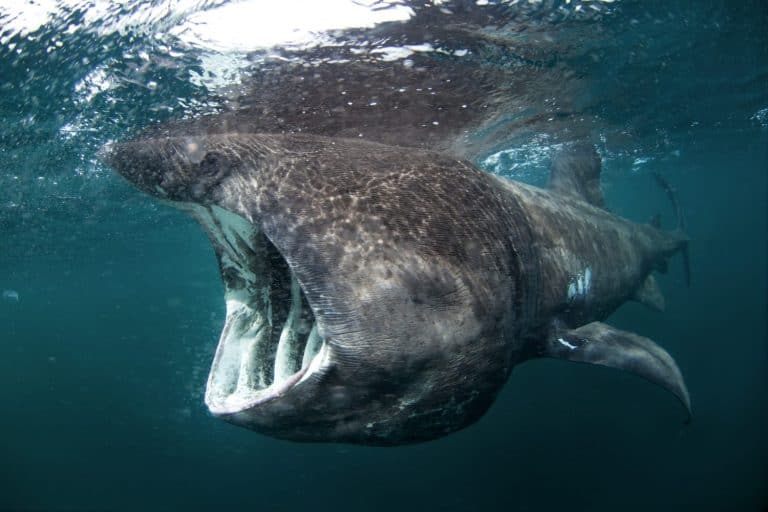
Basking sharks are typically seen closer to the surface of the water on the coast of Cape Cod.
©rossbeane, CC BY-SA 2.0, via Wikimedia Commons – Original / License
Sharks are filter feeders, so they typically stick close to the surface, especially off the coast of Cape Cod. There, zooplankton and copepods are plentiful, and basking sharks don’t need to look far to find them. However, the Woods Hole Oceanographic Institution (WHOI) has brought new evidence to light that completely changes this behavior.
What Scientists Learned From Tracking 37 Sharks
Like many marine species, basking sharks migrate to slightly warmer waters during the winter. WHOI tracked 37 tagged sharks and their migration patterns between 2004 and 2011. This confirmed that some sharks migrated from Cape Cod to areas such as the Sargasso Sea and the Caribbean during winter. But researchers also discovered something else. Rather than remaining close to the surface, basking sharks were diving. And they were reaching depths that no one thought they could swim to, let alone survive in.
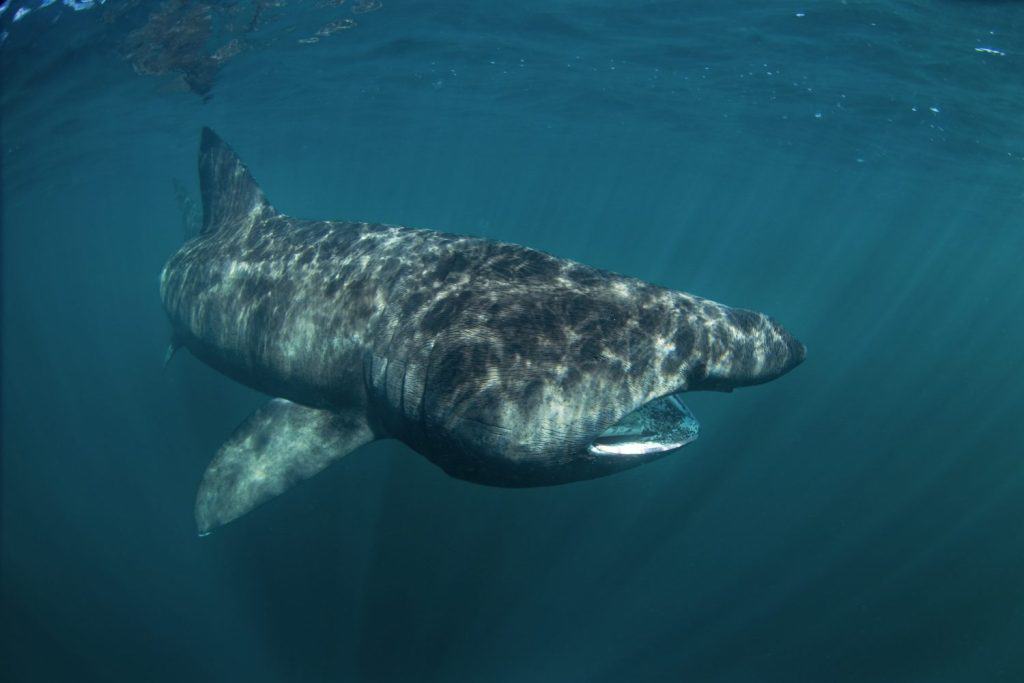
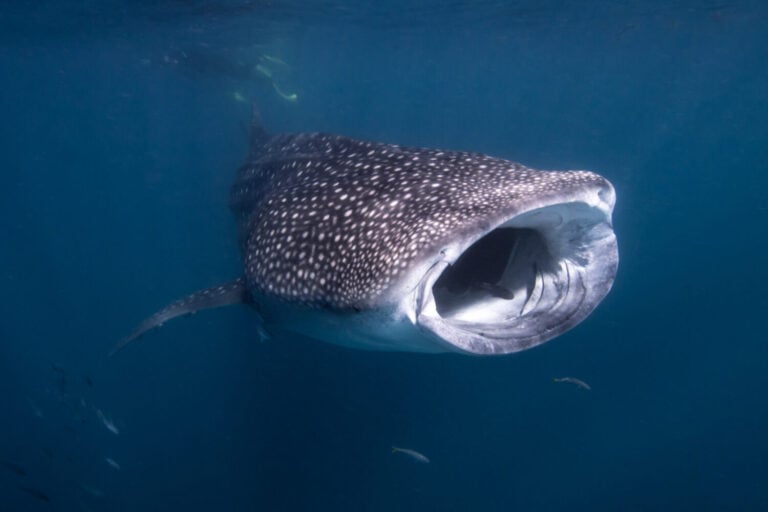
As filter feeders, basking sharks rely on microscopic fish and zooplankton for nutrients.
©Martin Prochazkacz/Shutterstock.com
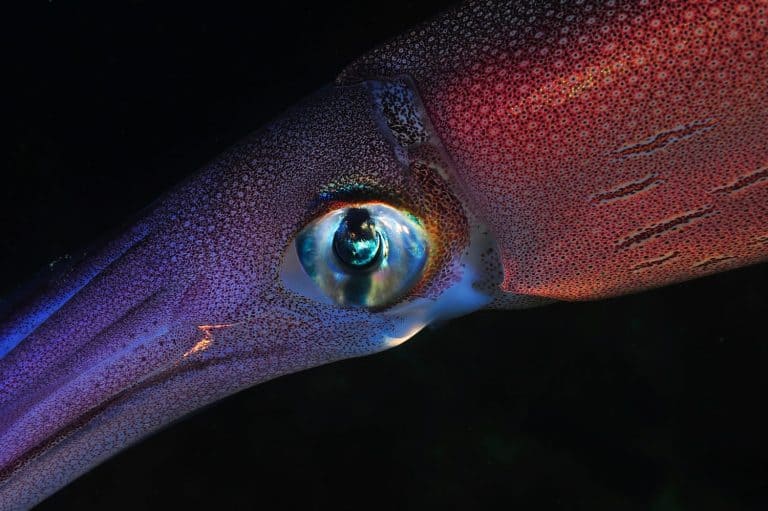
The twilight zone exists roughly 656 to 3,280 feet below the surface. Sunlight is the dimmest in this part of the ocean, just before it ceases penetrating the water. This marks a sharp boundary between organisms that can survive without photosynthesis and those that cannot. Many bioluminescent marine species also live in this region, which thrives in parts of the ocean that receive 1% or less of sunlight. Now, basking sharks are included in the group that can survive the twilight zone’s hostile conditions.
Jaida Elcock, a doctoral candidate in the MIT‑WHOI Joint Program and lead author of the paper, said, “Reaching depths of 800 to 1,000 meters is physiologically demanding.” Elcock added that most large pelagic predators are unable to reach these depths due to their low oxygen levels and frigid temperatures. Yet somehow, basking sharks are doing it and feeding on something that’s keeping scientists guessing.
What Do They Do Down There?
Since the phenomenon has not been observed and no human can survive a dive to the Twilight Zone, scientists are offering their best theories. One is that basking sharks feed on microscopic, twilight zone-specific fish. It’s not uncommon for sharks to feed on small fish at the surface. However, it’s not their typical food source, either. But this data may shift what we already know, implying that basking sharks feed on different food sources during migration. Rather than fasting during migration, as previously believed, scientists now think basking sharks replenish their energy by finding food sources at greater depths.
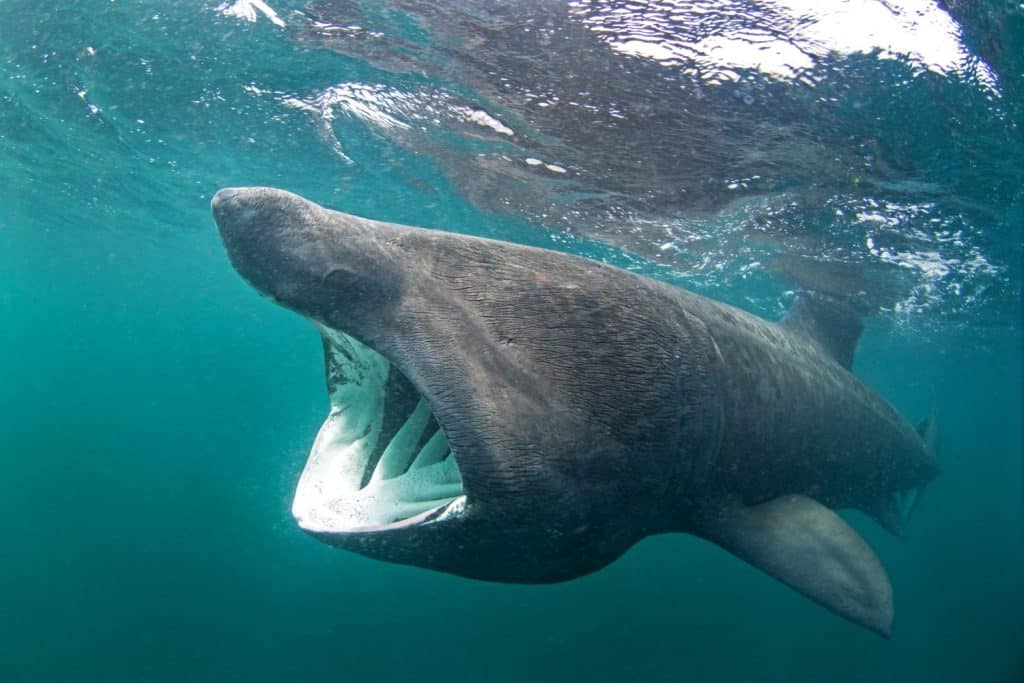
The twilight zone may have all the conditions basking sharks seek during migration: cooler temps, plenty of food, and protection.
©Martin Prochazkacz/Shutterstock.com
Co-author Camrin Braun, an oceanographer and ecologist at WHOI, posed this theory, emphasizing that if it’s true, there’s one more thing to consider: conservation. “A key question is what the impacts would be if we started harvesting the tiny fish and squid that live in the twilight zone on an industrial scale? Would this negatively impact basking sharks and other top predators? We need to figure that out,” she said of the study theory.
As the mysteries surrounding the lives of basking sharks grow, more care must be taken than ever to protect this vulnerable species. Further questions have been raised, such as whether the species breeds and gives birth at depths lower than those at which it’s been seen. Additionally, basking sharks from multiple regions may congregate in the twilight zone. Since scientists can’t observe them at these depths, we may be completely unaware of possible interbreeding between different populations.