
Quick Take
- The same survival instinct that has guided Eurasian curlews for generations may now be the very thing driving them toward extinction. See why habit backfires →
- The reason curlew populations are collapsing isn't what you'd expect, and it has nothing to do with adults dying young. Discover the real cause →
- Curlews treat spring and fall migration completely differently, and that gap exposes a dangerous blind spot for the species. Explore the seasonal gap →
- Protecting curlews during nesting season hinges on one overlooked action that site managers can take before the birds even arrive. Find the critical action →
Migration routes are ingrained in many bird species. This helps them to not only return to known nesting sites, but also to find safe stopover sites along their journey.
With an ever-changing climate, species have had to adapt. Be it altering migration times or routes, being flexible is the key to survival. Some have yet to do this, such as the Eurasian curlew. The curlew follows the same migration route year after year, which could become problematic for the species’ future, especially if the migrating birds are set in their ways and unwilling to change.
Eurasian Curlews Following the Same Annual Migration Route Creates a Thorny Situation
Eurasian curlews follow the same migration route to their prior nesting grounds annually. The birds do this, believing that the nesting grounds where eggs hatched and their young fledged can support future young. But with an ever-changing landscape and habitats disappearing, following the same migration route can prove to be problematic to the curlews.
According to a new study published in Nature, Eurasian curlews follow the same migratory patterns each year because it provides the birds stability. When consistent stopover and breeding sites are used, the birds are provided “local knowledge” about food abundance, location quality, and predators.
While this knowledge is necessary for the survival of the curlew, it relies on the nesting habitat and stopover sites remaining consistent year after year. With things like climate change and agricultural and predatory pressures, nesting sites are changing. To survive, the Eurasian curlews need to be adaptable.
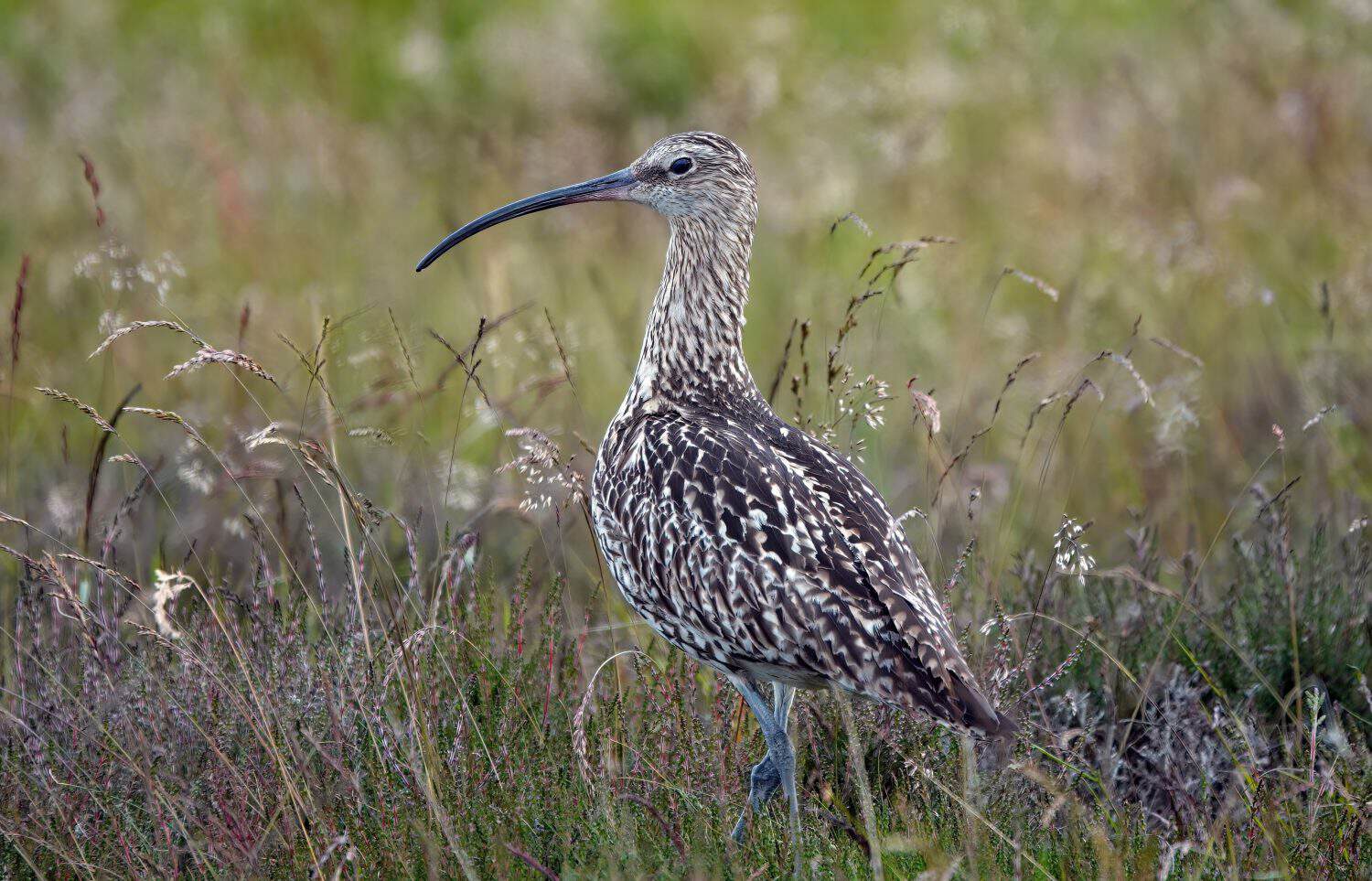
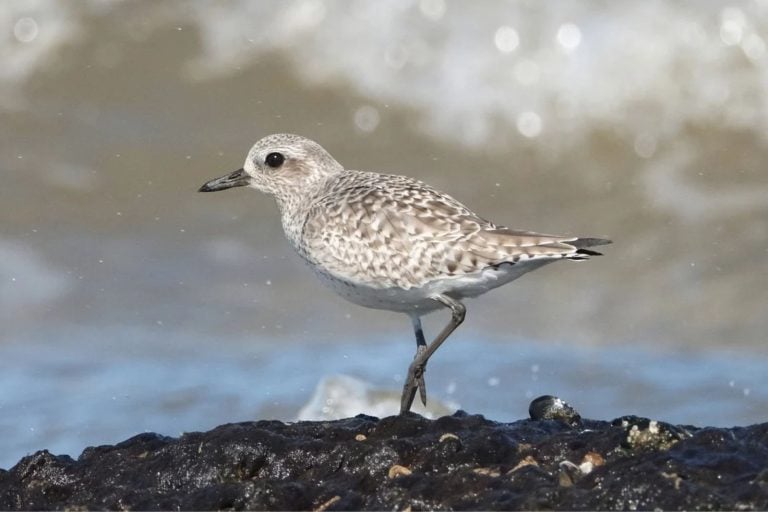
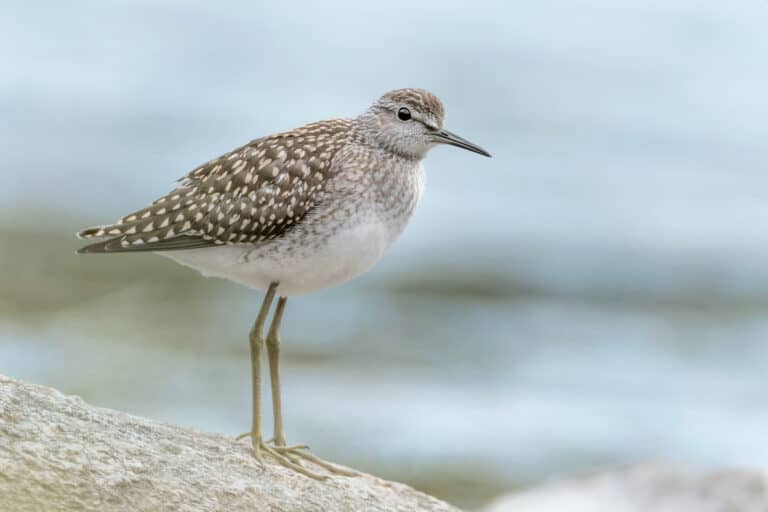
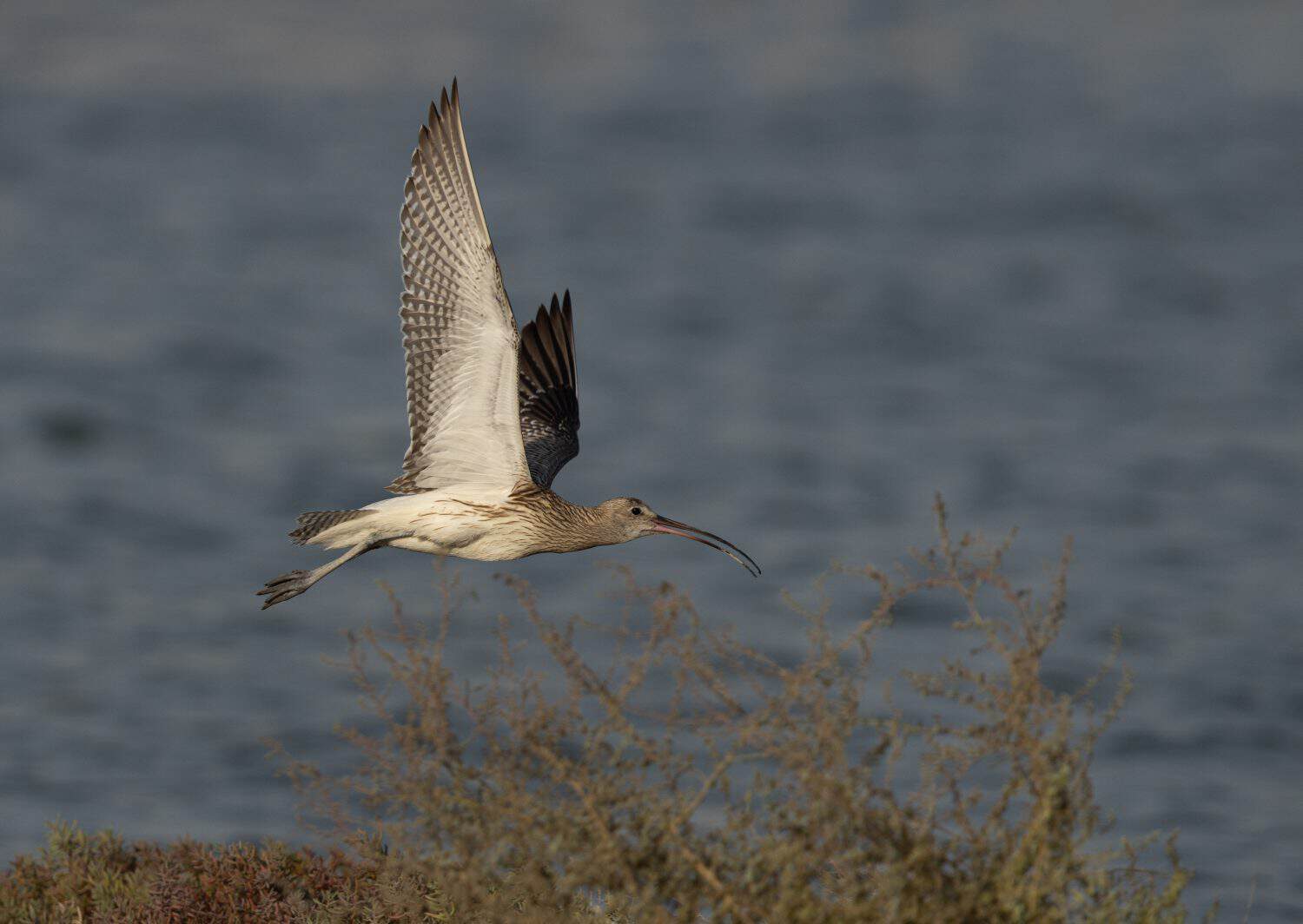
Eurasian curlews appear unable to adapt their environmental conditions to change the timing of migration.
©Nigel J. Harris/Shutterstock.com
Researchers followed the Eurasian curlews for eight years between their spring and winter migration sites. The results may prove disastrous for the near-threatened species. This is because the curlews have “low potential for adaptation to environmental changes.”
Regardless of the weather, the curlews left for their spring migration nearly the same time each year. They also took very similar routes. Over the eight years during which data were collected, the weather varied. What remained consistent was the timing of migration.
With Eurasian curlews appearing not to take weather patterns into account, specifically during spring migration, it is not clear how this will impact the species’ long-term prospects. There is hope that “if the environmental stressors become strong enough,” the curlews will adapt to “environmental changes” as other migratory birds have. If the Eurasian curlews do not, the likelihood of further population decline is great.
Why is Spring Migration Timing More Consistent Than Fall?
Eurasian curlews migrate in the spring and in the fall. However, the spring migration tends to be more consistent. It is also the more important migration of the two.
As spring migration time nears, Eurasian curlews tend to leave their winter migration sites around the same time each year. According to a 2020 study, the date varied by only four days across the consecutive years in which the curlews were observed. Therefore, it was inferred that an internal clock led the curlews to embark on their spring migration.
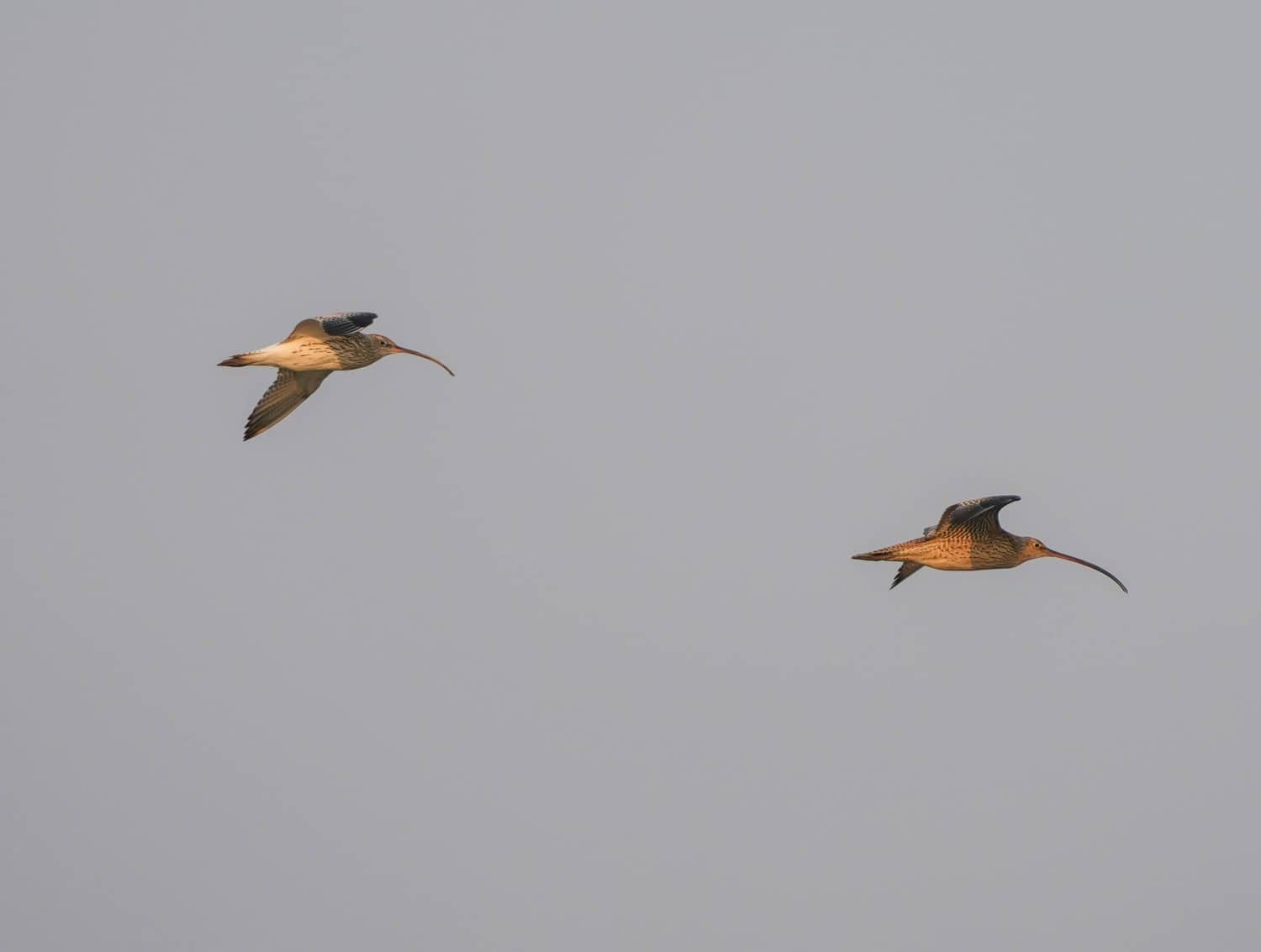
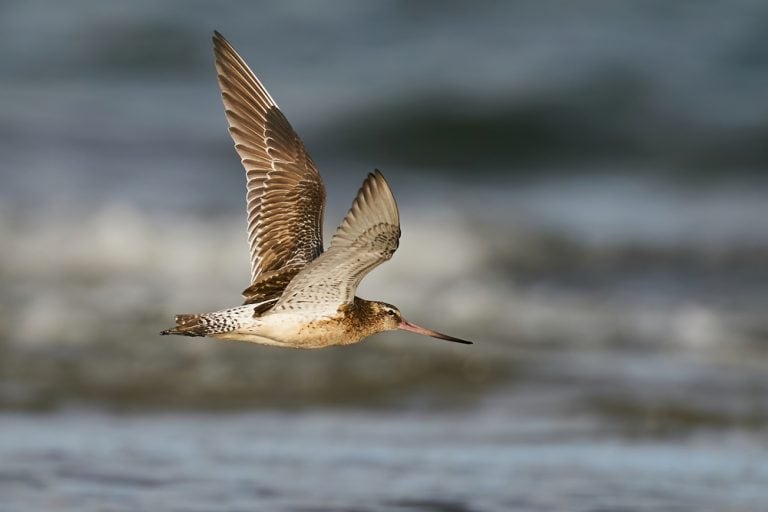
Eurasian curlew appear to use an internal clock for spring migration.
©Jason xFu/Shutterstock.com
The spring migration likely follows an internal clock rather than changes in climate because it occurs when the Eurasian curlew is ready to nest. This consistency allows conservationists to prepare for the birds’ arrival as they return to their nesting grounds. But it also means the curlews return to habitats around the same time, making them easy targets for predators.
Winter migration is significantly different from spring. The timing is more “flexible,” according to the study. Therefore, if food becomes scarce, weather changes, or there are optimal conditions to fly, the Eurasian curlews can take advantage.
Breeding Grounds are More Important Than Ever for Eurasian Curlews
Eurasian curlews are moving dangerously close to being classified as a threatened species. With some populations of the curlews being just half of what they were a quarter of a century ago, losing more of these birds is simply not an option.
The reason for the Eurasian curlew population’s decline has little to do with adults not living out most of their long lives. Instead of curlews not reaching 30 years old, the smaller number of Eurasian curlews has to do with the small number of eggs that hatch.
Eurasian curlews need to successfully raise one chick per year for the population to remain stable.
©Voodison328/Shutterstock.com
For the population to remain stable, each breeding pair needs to successfully raise one chick each year. Any less than this and the population declines. Unfortunately, while some populations maintain or exceed this goal, the total number of Eurasian curlews that reach fledgling status each year is fewer than necessary to sustain the population.
Without immediate conservation measures to help the Eurasian curlew increase their population, it may be too late to do so in the future.
Site Managers Must Ensure Flyways Are Protected for Eurasian Curlews
The biggest concern in protecting Eurasian curlews during nesting season is ensuring there is enough land to support eggs, hatchlings, and fledglings. This is why site managers now, more than ever, need to protect flyways.
A flyway is the breeding habitat the Eurasian curlews choose to nest in, capable of supporting their young. The curlews have “strong site fidelity.” It is ingrained in the curlews to take the same migration route. If the regular nesting site becomes unavailable, the curlews are forced to find a new place to nest. Sometimes, this is possible. If not, then it may be a season or more before a breeding pair can successfully lay eggs.
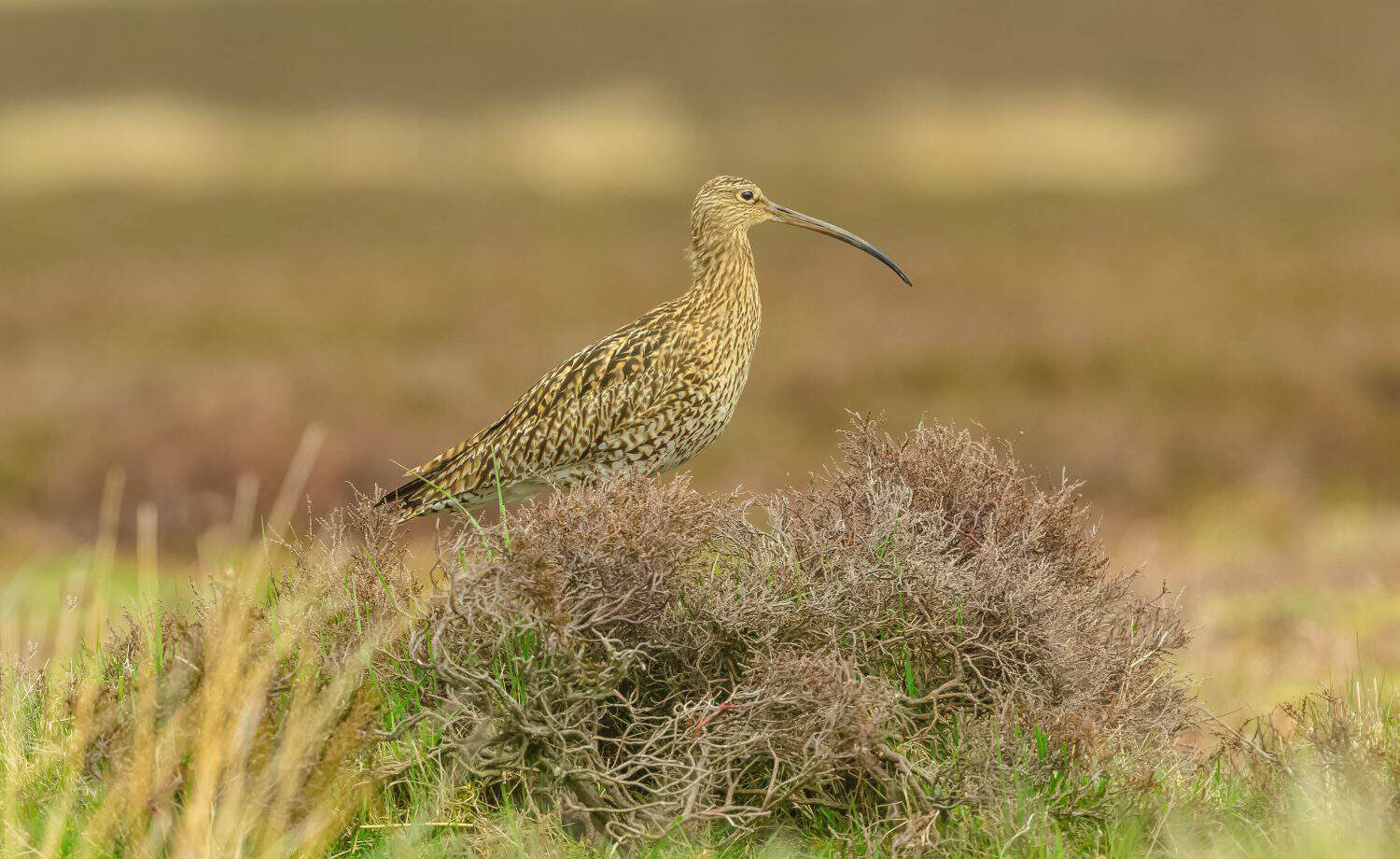
Eurasian curlews need their nesting grounds protected now more than ever.
©Serenity Images23/Shutterstock.com
Site managers need to protect the flyways to ensure that the Eurasian curlews have breeding grounds to return to. This means ensuring that agriculture, fertilization, and drainage do not occur in open grasslands, moorlands, and pastures. Even something as simple as seeding grass can cause issues for nesting Eurasian curlews.
As nesting season approaches, site managers can further help the Eurasian curlews by doing the following:
- Not altering known nesting sites
- Remove sheep and cattle from the nesting habitat
- Keep land as unfragmented as possible
- Monitor eggs as they are laid and place protective shelters around them to prevent predation
By keeping nesting grounds consistent each season, the Eurasian curlews have a known territory to return to. This means breeding pairs can be more successful in raising their young. In turn, this helps rebuild the dramatically declining population of Eurasian curlews and prevents the birds from ever going extinct.