
Quick Take
- A $5,000 reward is being offered for information relating to who killed a hammerhead shark in Florida.
- Hammerhead sharks are “prohibited species” in Florida waters, but that hasn’t stopped people from killing them and removing their fins.
- Organizations are working to educate and promote hammerhead shark conservation.
Despite a widespread fear of sharks, most of these large fish do not pose a danger to humans. And for certain species, it is illegal to kill a shark unprovoked. Authorities are currently seeking information about the person who killed a 12-foot-long great hammerhead shark in Florida on March 15, 2026. The shark later washed ashore near the Juno Beach Pier in St. Petersburg.
The Center for Biological Diversity announced a $4,000 reward on March 26 for information leading to the arrest and conviction for the killing of a great hammerhead shark in southeast Florida. This financial incentive is in addition to the $1,000 reward offered by the Florida Fish and Wildlife Conservation Commission, for a total of $5,000.
Why is this such a big deal?
You may not think that killing one shark is no big deal, but it is. Especially due to the brutality of the killing; the shark’s dorsal fin and tail were completely sawed off.
“Killing one of our magnificent hammerheads and then brutally hacking off the animal’s fins is gruesome, senseless and terrible for Florida’s coastal ecosystems,” Elise Bennett, Florida and Caribbean director at the Center, said in a press release. “I firmly believe that someone who has information about this horrific act will step forward and help bring the offender to justice. Floridians don’t mess around when it comes to our precious marine life.”
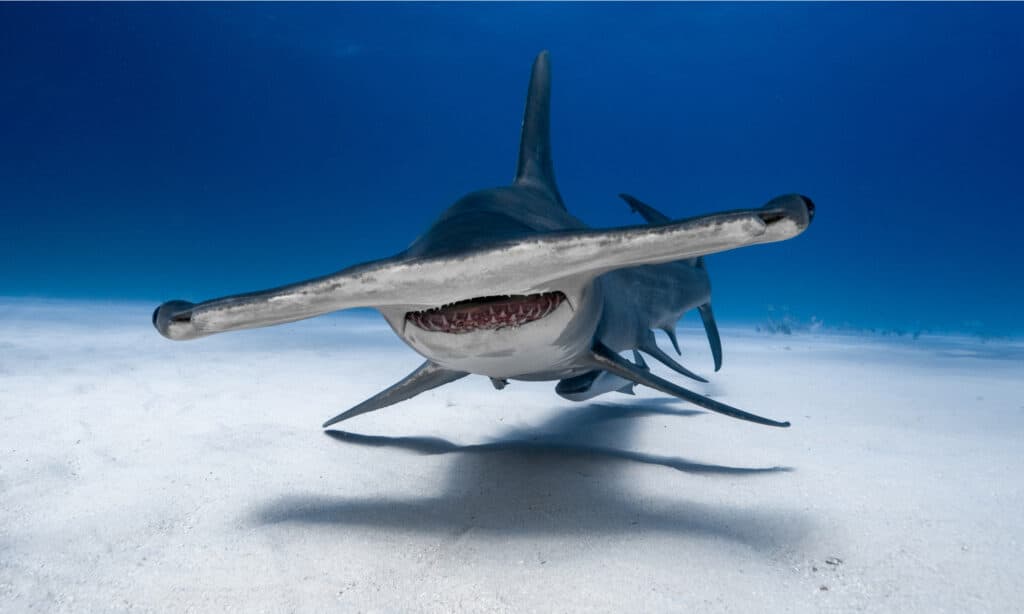
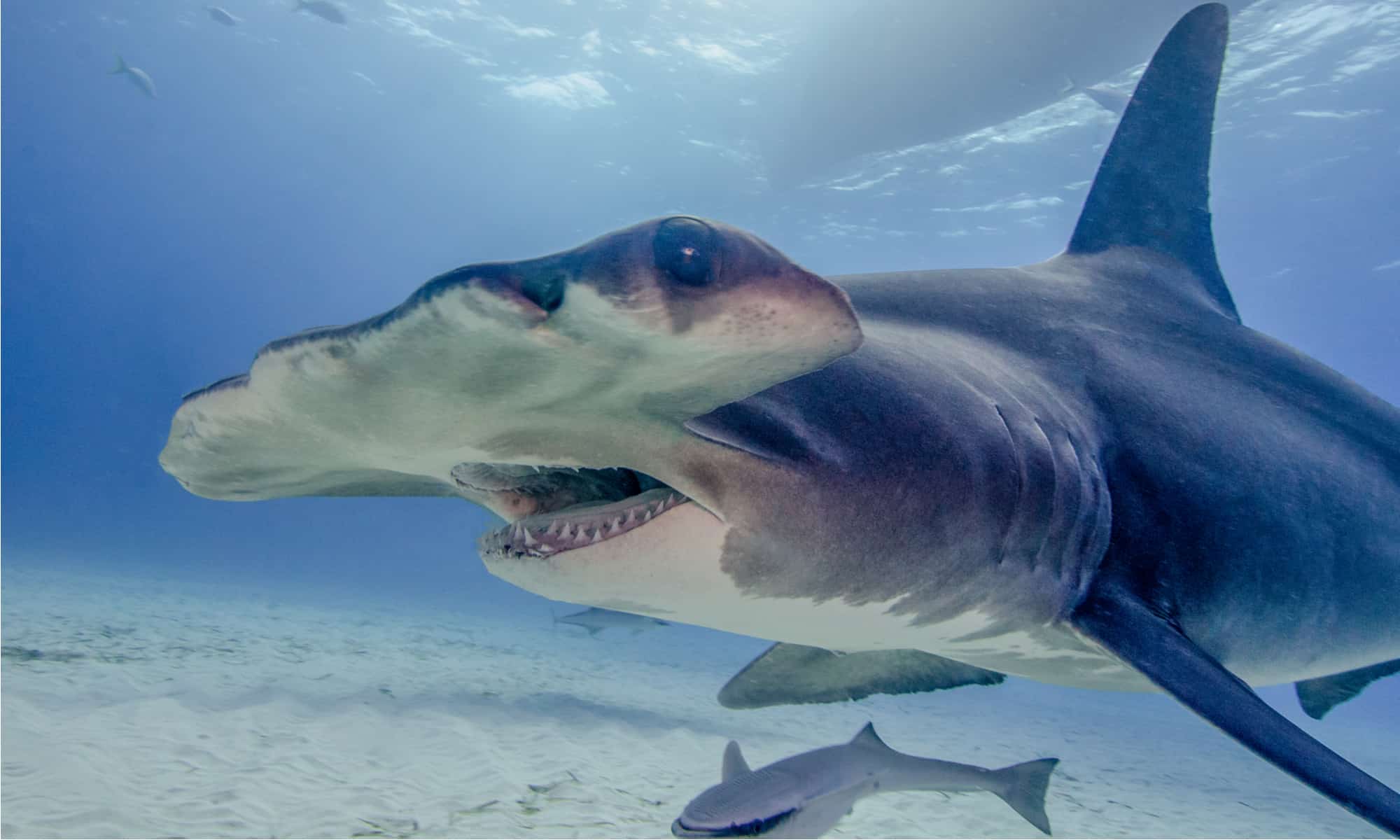
Great hammerhead sharks are considered critically endangered.
©Sail Far Dive Deep/Shutterstock.com
Another reason this killing is devastating is because great hammerhead sharks (Sphyrna mokarran) are considered globally critically endangered on the IUCN Red List. This status is due to their prized fins, which are used for shark fin soup. The sharks are also harvested for their liver oil, skin, and meat, according to the IUCN.
“This species suffers very high levels of incidental mortality in other fisheries, and due to its slow reproductive rate, the Great Hammerhead is particularly vulnerable to overexploitation,” stated the IUCN. “As a result, it has suffered serious declines, especially in parts of the eastern Atlantic, where fishing efforts are unmanaged and unmonitored.”
According to the Center for Biological Diversity, the population of great hammerhead sharks has declined by more than 50% in the last 70 years.
Hammerhead sharks are legally protected
According to the IUCN, the US and other countries are adopting shark finning bans to prevent the killing of hammerhead sharks for their fins. Under federal law, sharks must be landed with their fins naturally attached, and it is illegal to possess, buy, sell, or transport shark fins or products containing shark fins in the US. In Florida, where this hammerhead was found, the species is designated as a “prohibited species,” which means that it is not allowed to be harvested from state waters.
Killing a hammerhead shark in Florida is a second-degree misdemeanor, which can land the perpetrator up to 60 days in jail and a $500 fine, per The Palm Beach Post. Despite this becoming law in 2011, locals say it hasn’t stopped people from killing hammerheads. Florida resident and shark diver Michael O’hagan told The Palm Beach Post, “The law is that as soon as you realize it is a great hammerhead; you have to cut the line. The problem is nobody, and I mean nobody does that.” O’hagan continued, “Fishermen like the fight, and no shark fights harder than a great hammerhead.”
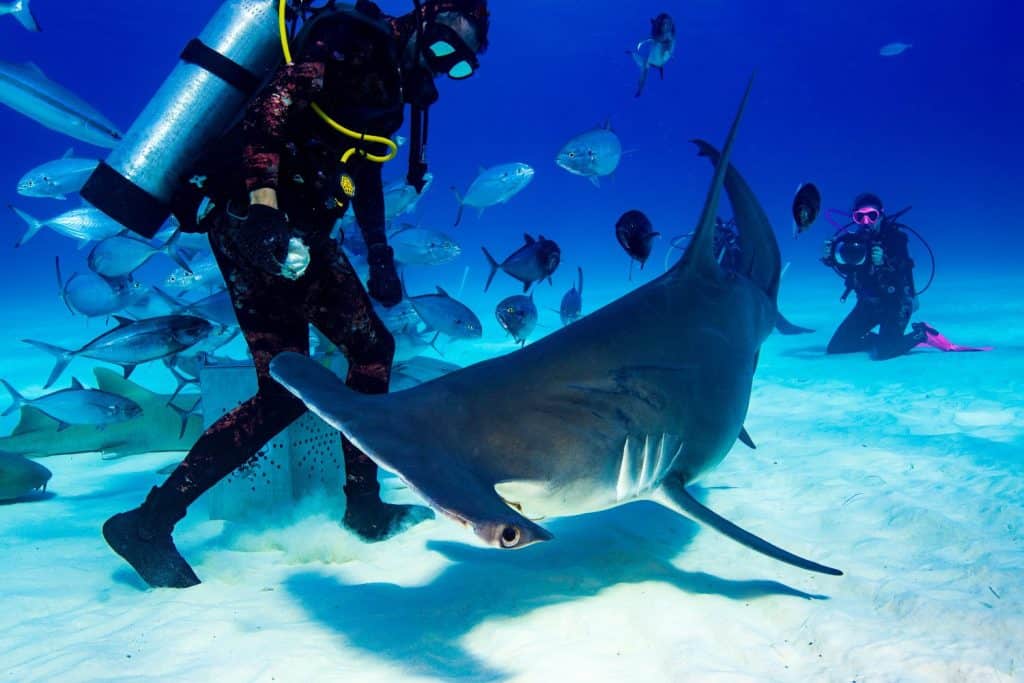
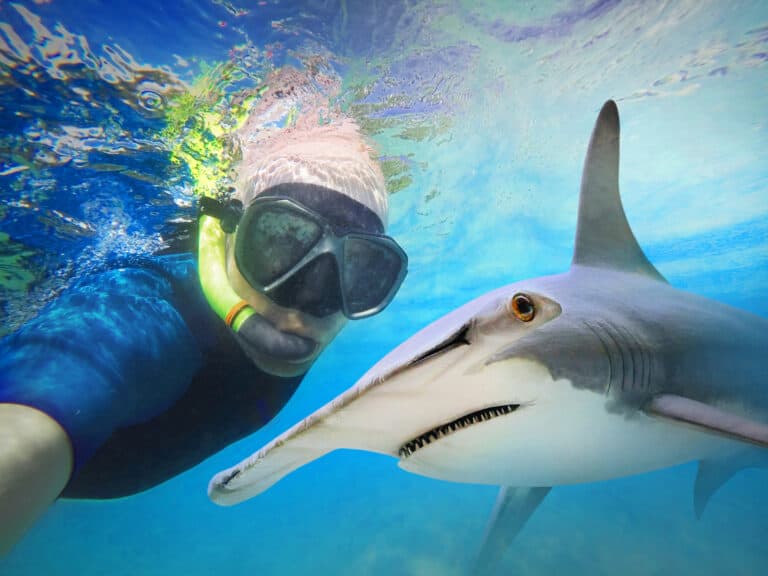
Some organizations are working to research and promote conservation for hammerhead sharks.
©bcampbell65/Shutterstock.com
Some organizations are working to promote the conservation of hammerhead sharks. Among these is the Bimini Biological Field Station, which catalogs and researches hammerhead sharks in their study sites in Florida and the Bahamas and works to educate about many marine wildlife species, including hammerheads. Saving the Blue is another organization that studies the biology and behavior of several hammerhead species in the North Western Atlantic and the Gulf of Mexico.
What can you do?
If you know any information related to the killing of this Florida hammerhead, report it. Officials hope that this will go a long way toward helping protect “prohibited species” from being hunted.
“We are hoping that someone comes forward with information not only because of how brutal the killing of this animal was, but also because it has a real effect on the species’ conservation,” Bennett told the Tampa Bay Observer. “When you have a species already struggling to survive, every individual helps and serves a role in the ecosystem. This is not just a loss for the shark, but for the ecological community.”
If you have any information on the killing of this hammerhead shark, call the Florida Fish and Wildlife Conservation Commission Wildlife Alert Hotline at (888) 404-3922.