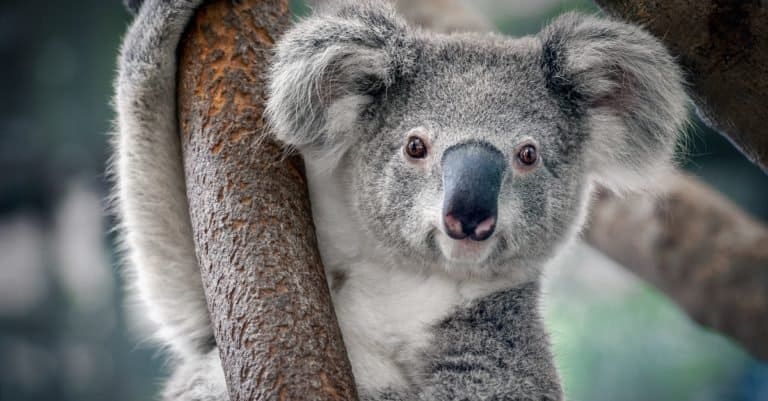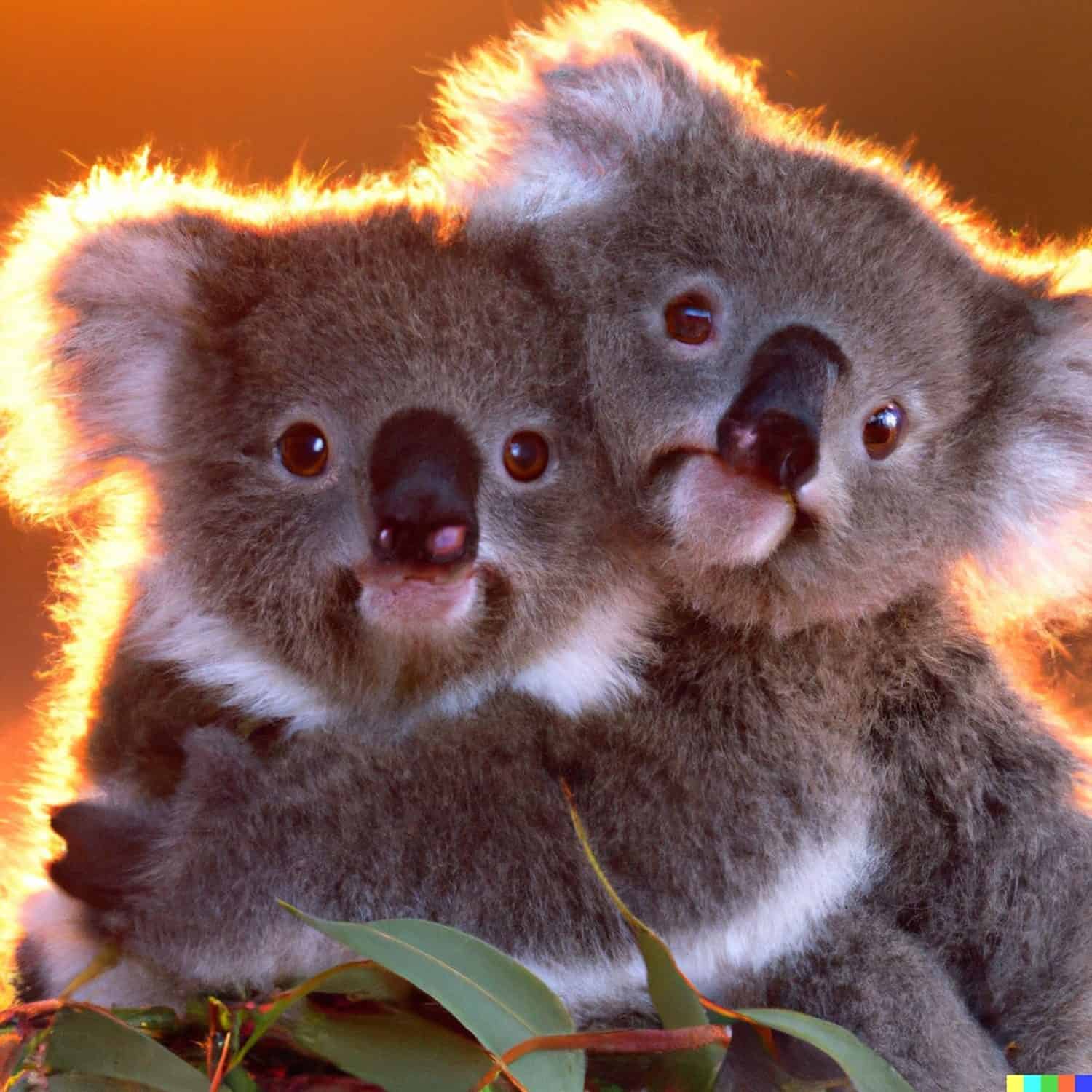

Life is certainly better with a bestie. Watching this TikTok, these two koalas look like the best of friends, perched comfortably on a fence, their fluffy bodies nestled closely together. With their large, expressive eyes and relaxed postures, they exude a sense of camaraderie that is both heartwarming and charming. They look like they are snuggling.
When you think of Australia’s wildlife, chances are the koala comes to mind. They may seem like the perfect bestie, but we’ll explore why that isn’t entirely accurate. With their round, fluffy ears, button noses, and sleepy expressions, koalas have charmed people around the world. But behind that teddy bear-like appearance is an animal with a fascinating lifestyle and surprisingly complex social habits.
So Are Koalas Social?
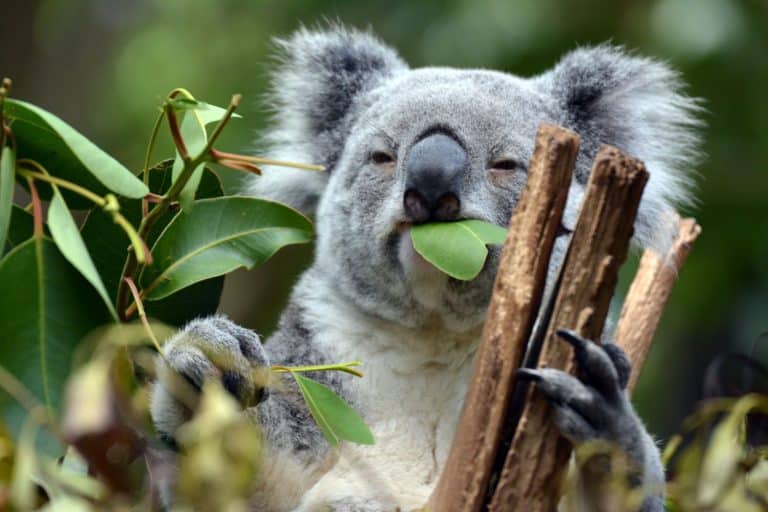
Koalas can often be seen hugging tree branches, which adds to their adorable and cozy appearance.
©AGCreations/Shutterstock.com
Despite their cuddly reputation, koalas are not particularly social animals. Koalas are generally considered solitary animals, but recent studies in 2025 have observed that they can sometimes engage in social and even affectionate behaviors, particularly among adult males. They are mainly solitary by nature, each preferring its own home range in the eucalyptus forest. A “home range” is an area that provides the koala with food, shelter, and space to rest. While these ranges can overlap, especially in areas with plenty of eucalyptus trees, koalas don’t typically spend much time interacting.
That said, they’re not antisocial in the strictest sense. Koalas maintain a loose social structure within a population, with dominant males usually holding the prime spots in the best trees, and females and juveniles sharing space around them. They recognize neighbors through scent marking and vocalizations, which helps reduce unnecessary conflict.
Hanging Out, Koala Style
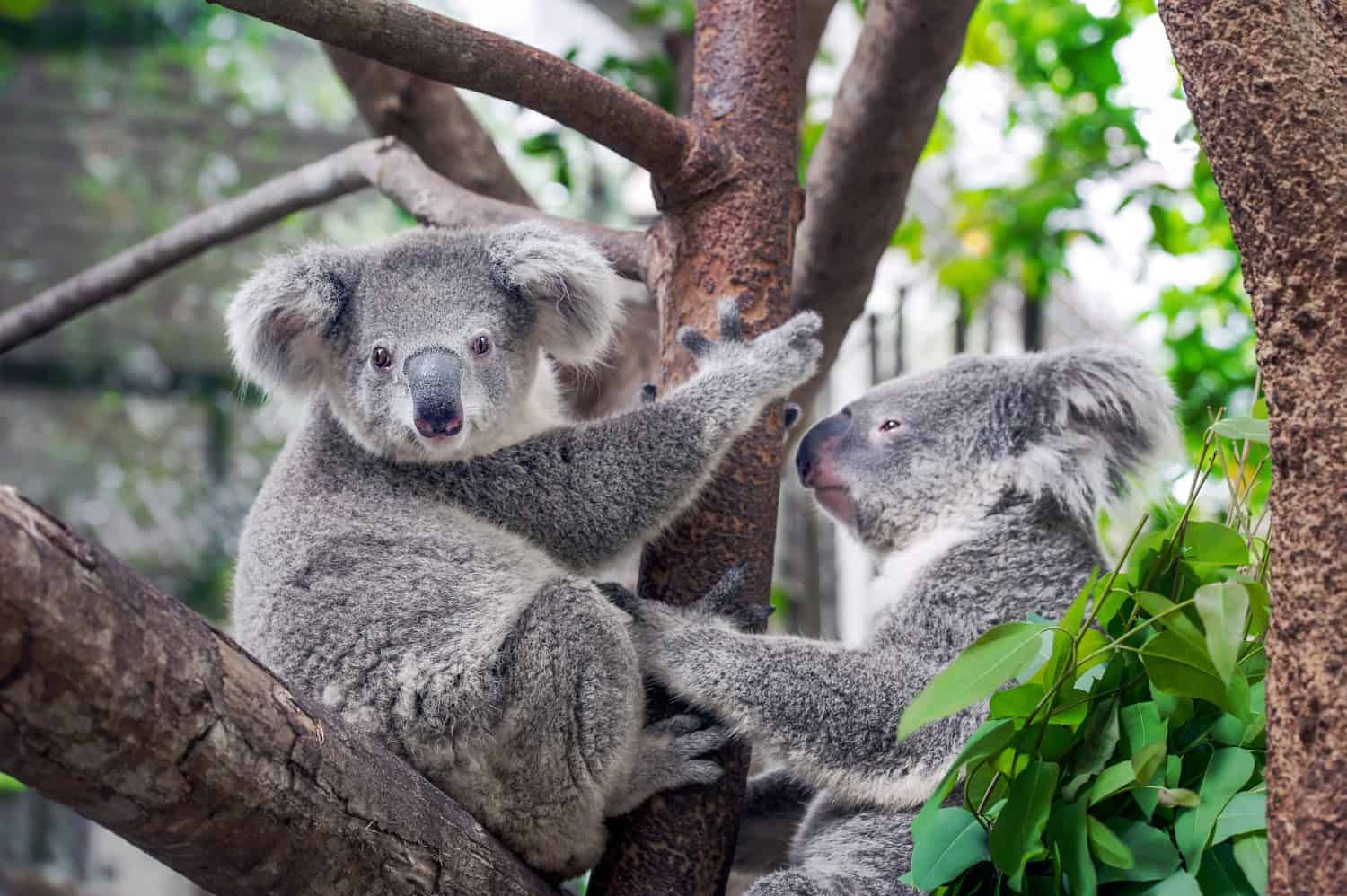
Can koalas be friends? Yes, kind of.
©Yatra4289/Shutterstock.com
When koalas do “hang out,” their version of socializing is much quieter than what you might expect. Instead of playful games or group foraging, interactions often involve:
Occasional Encounters – While adults prefer their own trees, they may cross paths when ranges overlap. These meetings can be peaceful, such as resting in neighboring branches, or tense, especially if food is scarce.
Vocal Calls – Male koalas produce deep, bellowing calls that can be heard for over a kilometer. These calls serve to establish territory and attract females, while also warning off rival males.
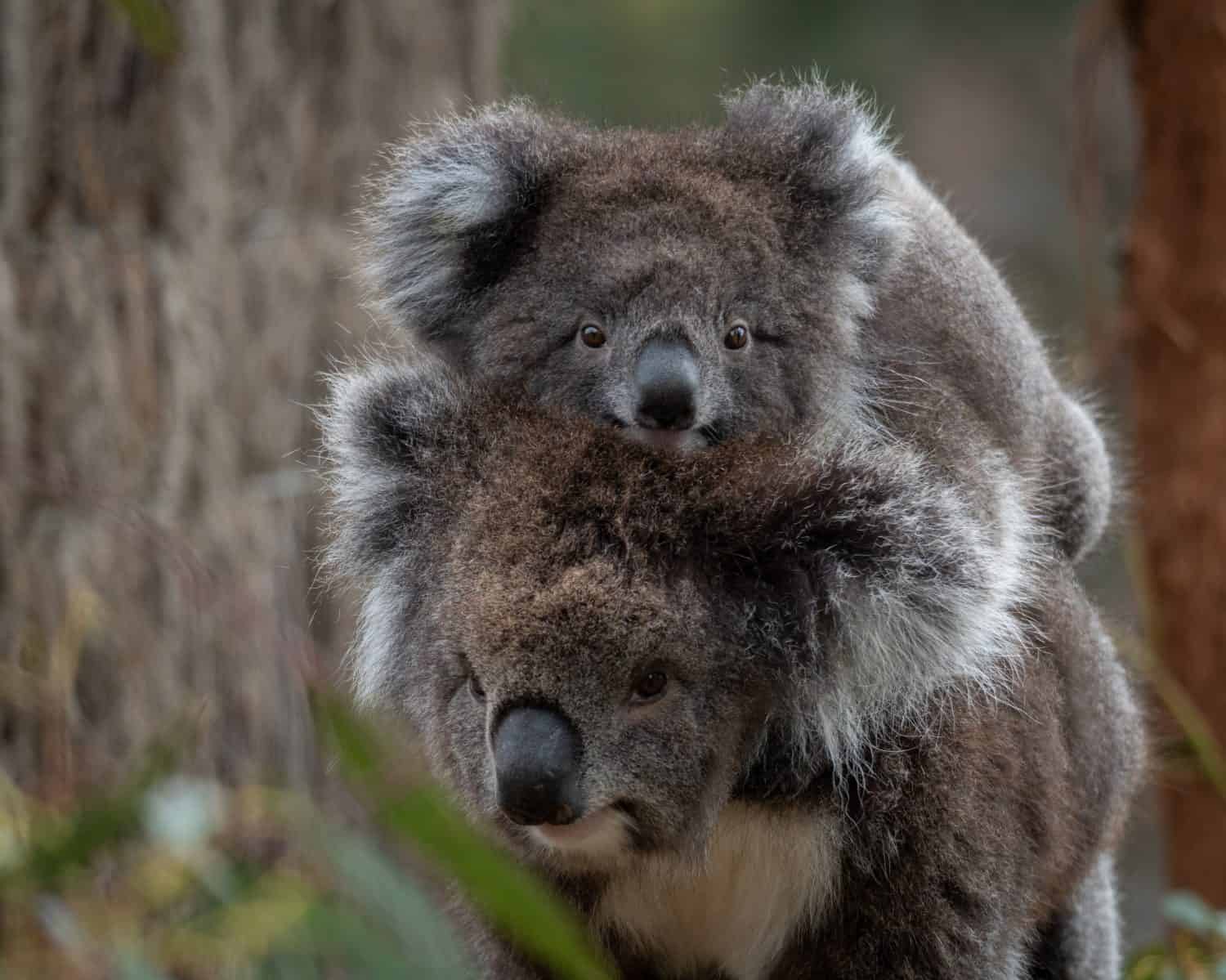
Grooming and Touch – Mothers and their young interact closely. Joeys, the baby koalas, stay in their mother’s pouch for about six months, then ride on her back until they’re ready to be independent. During this time, grooming and gentle nudges form the core of their bond.
A Life of Rest
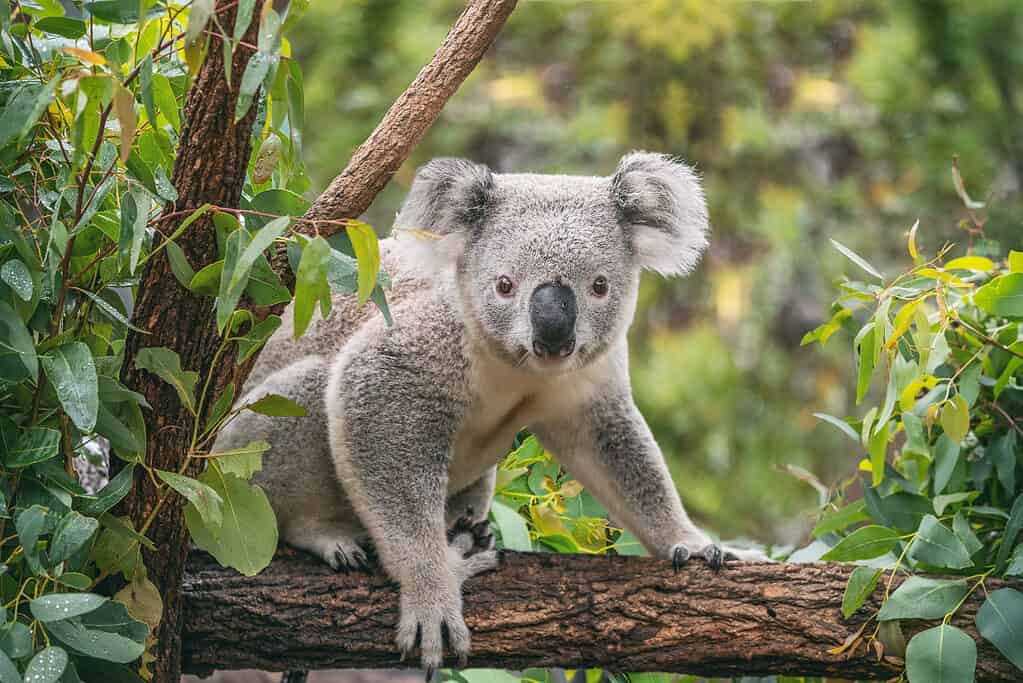
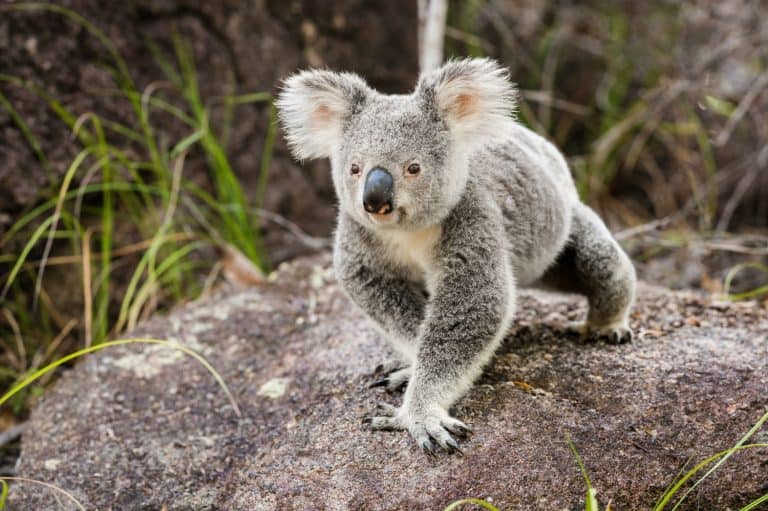
Koalas have chill down to a science.
©iStock.com/Maridav
Koalas are famously sleepy, often dozing up to 18–20 hours a day. This isn’t laziness, it’s survival. Eucalyptus leaves, which make up almost their entire diet, are low in nutrients and difficult to digest. By conserving energy, koalas make the most of their limited diet. When they are awake, koalas spend their time climbing, feeding, and occasionally moving between trees. Social interactions are not frequent, but they’re essential for reproduction, territory maintenance, and the mother-joey bond that ensures the survival of the species.
The Quiet Social Order of Koalas
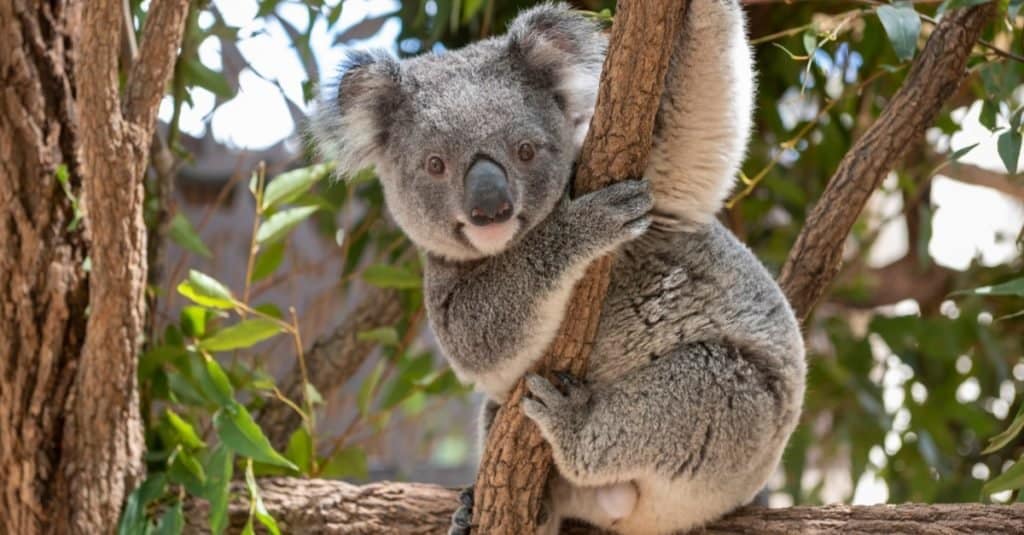
Koalas have a social structure among themselves.
©whitejellybeans/Shutterstock.com
Dominant males typically hold the choicest feeding areas with tall, leafy eucalyptus trees. Their presence is made known through scent markings and deep, resonant bellows that echo through the forest, announcing, “This tree is mine.”
Females, meanwhile, carve out their own overlapping ranges nearby, often choosing trees that provide safety for raising their young. A mother with a joey on her back may occasionally cross into another female’s territory, but rather than sparking conflict, these encounters usually play out like polite nods between neighbors—acknowledgment without intrusion.
In this way, a koala population functions less like a family unit and more like a quiet suburban block, where each resident values personal space but still knows who lives next door. They may not gather for shared meals or play, but through their calls, scents, and occasional face-to-face meetings, koalas maintain a subtle awareness of their community. It’s a social system built not on closeness, but on respect for distance, an understated harmony that allows them to coexist peacefully in the same forest.
Final Thoughts
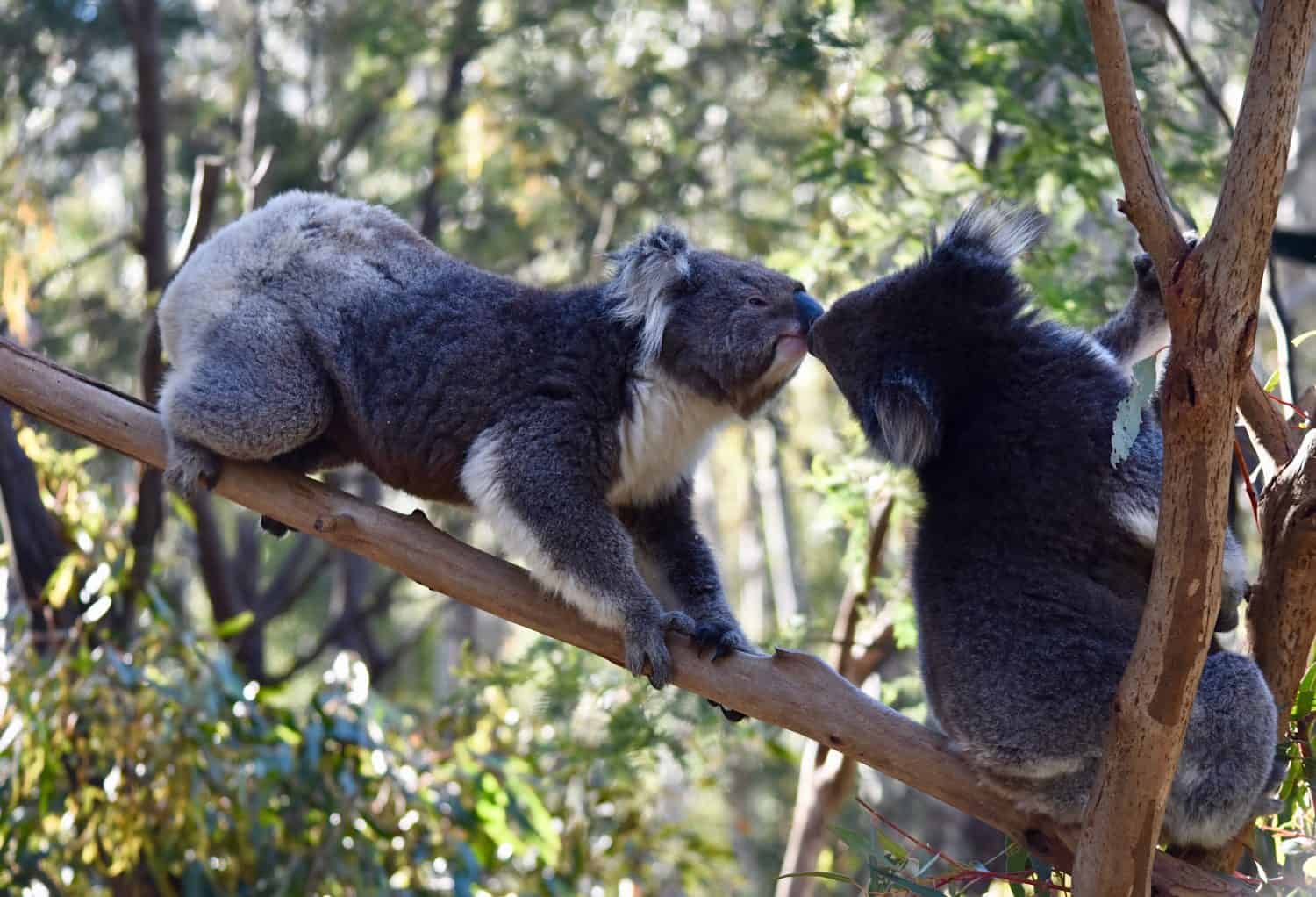
Although not highly social, koalas’ unique behaviors make them a fascinating subject of study.
©Mari_May/Shutterstock.com
Koalas may not be social butterflies, but their subtle interactions reveal a different kind of connection. Through scent, sound, and occasional encounters, they weave a quiet social fabric that allows them to coexist in the eucalyptus forests of Australia. While they may appear to be animals that want to snuggle in groups, the truth is more nuanced.
Koalas value their solitude, yet they are never entirely alone, living in a delicate balance with their environment and each other. This serves as a reminder that social structures come in many forms, even in the calm, sleepy lives of these fascinating marsupials. So, while they may not be besties, they are still incredibly cute!
While koalas have long been considered mostly solitary, recent research in 2025 has revealed that they can display unexpected social behaviors, including affectionate interactions, offering new insights into their complex social world. These adorable creatures may seem to seek companionship, but their preference for solitude reveals a complex social structure grounded in respect for personal space.
This nuanced understanding of koalas reminds us that social connections can manifest in various ways, even among seemingly solitary beings. As we continue to learn about these charming marsupials, we see that while they may not be the besties we envision, koalas embody a unique form of social harmony that is truly remarkable.