
Quick Take
- Koalas' eucalyptus diet shields them from food competition, yet that same advantage is quietly accelerating their extinction. Explore the diet paradox →
- A disease that's plagued koalas for centuries is now spreading faster, and habitat loss may be the unexpected reason why. See how habitat drives disease →
- Koalas are famously picky eaters, and that pickiness makes saving them far harder than most people realize. Discover the feeding challenge →
- Australia just approved a breakthrough tool that could change the survival odds for koalas, though it only addresses one piece of a much bigger puzzle. Learn about the new vaccine →
Circle the date: September 25, 2026, marks the 18th anniversary of Save the Koala Day. The annual observance was first held in 2008 by the Australian Koala Foundation (AKF). Organizers hope the day will help to raise awareness of the threats facing Australia’s iconic marsupial.
According to Koala Conservation Australia (KCA), koalas are in danger of extinction within the next 20 to 30 years. They face many threats, including habitat loss, disease, drought, heat, and wildfire. Because they eat a highly specialized diet of primarily eucalyptus leaves, koala survival is closely tied to the health of Australia’s eucalyptus forests.
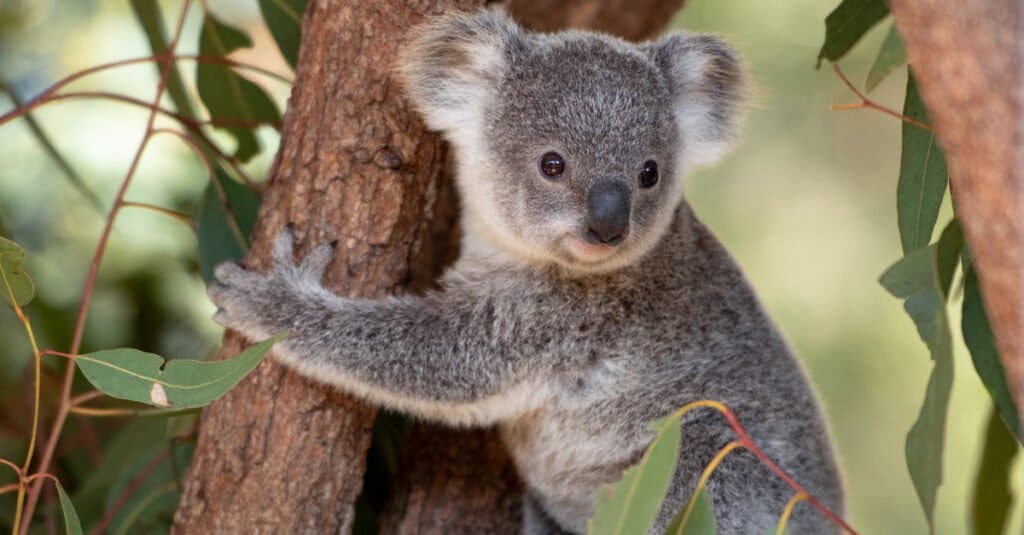
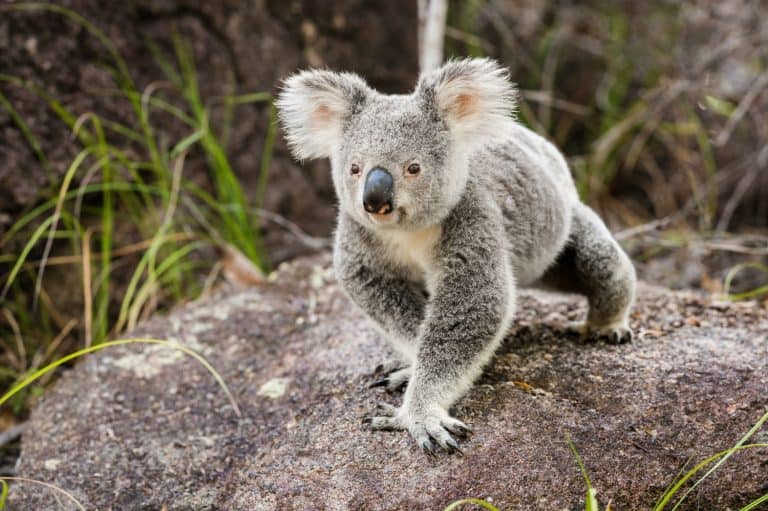
Koalas eat around 1 to 2 pounds of eucalyptus leaves per day and sleep about 18 to 20 hours.
©Andras Deak/Shutterstock.com
The Koala’s Eucalyptus Diet Is Both a Superpower and a Vulnerability
Koalas are sometimes called koala bears. However, koalas aren’t bears at all. They are marsupials, meaning they carry their developing young in a pouch attached to their abdomen. Koalas eat a specialized diet consisting mainly of eucalyptus leaves.
Their ability to digest eucalyptus leaves reduces competition with animals that cannot tolerate the plant’s toxins. Koalas have an elongated caecum attached to their digestive tract, which contains microorganisms that help break down plant material.
When koalas are born, their bodies lack the bacteria needed to break down the leaves. They get it from their mothers, who produce a specialized form of waste called pap that they feed to their joeys.
Eucalyptus leaves are also very high in fiber but low in nutrients. Because of this, koalas don’t get much energy from their food and need to sleep about 18 to 20 hours a day.
Only a few species can tolerate ingesting toxic eucalyptus leaves. However, this adaptation comes with a trade-off for koalas: while they face little competition for food, they are extremely vulnerable to habitat loss.
Habitat Loss Leaves Koalas With Fewer Places to Eat and Live
Eucalyptus forests provide both food and shelter for koalas. However, koalas are very picky eaters. Even though hundreds of different types of eucalyptus trees may be present in koala habitats, koalas typically won’t eat leaves from every type available. A population of koalas may eat leaves from only a small number of preferred eucalyptus trees, rather than utilizing all the eucalyptus trees available in their environment.
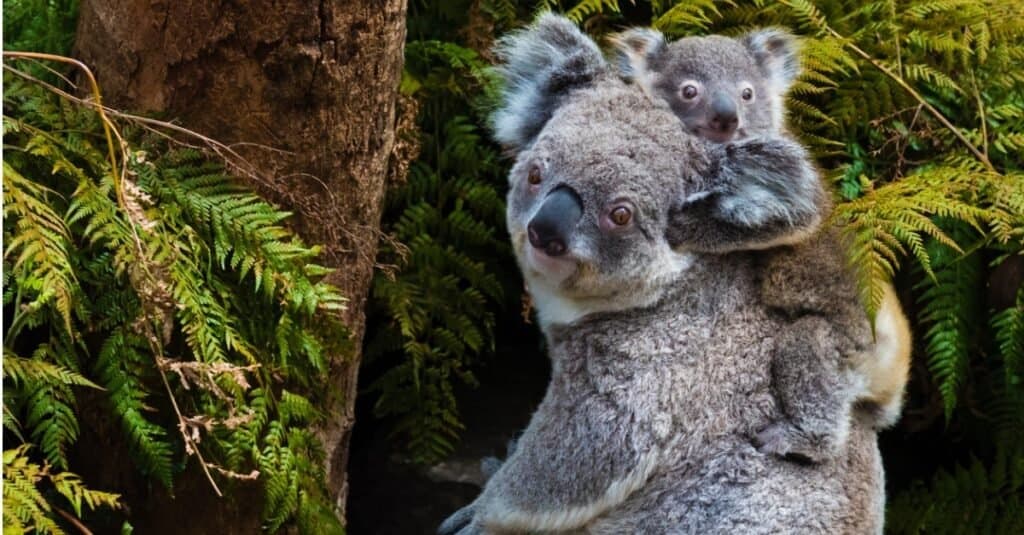
Koala babies stay with their moms for about a year before they go off to find their own territory.
©Constantin Stanciu/Shutterstock.com
The Australian government estimates that between 398,000 and 569,000 koalas were living in the wild in Queensland, New South Wales, and the Australian Capital Territory in 2025. Although this is a higher number than previous estimates, researchers caution that the latest surveys used different methods involving broader and more intensive monitoring.
Koalas face threats to their forest homes due to land clearing for agriculture, development, roads, and resource extraction. Fragmentation is another problem, as koalas can be struck by cars when attempting to cross roads. Furthermore, when koalas lose habitat, they crowd into smaller areas, which stresses the animals and increases competition for resources.
Disease Makes Koalas Even More Vulnerable
One of the most significant diseases affecting koalas is chlamydia. According to the KCA, chlamydia has likely existed in koala populations for hundreds of years.
Researchers hypothesize the current strains of chlamydia affecting koalas today may have spread from agricultural livestock brought to the country by Europeans in the 1800s. Koalas haven’t yet evolved to adapt to these different strains, which may cause conjunctivitis, blindness, urinary tract disease, and reproductive problems in koalas. The KCA has also found there are higher incidences of koalas suffering from chlamydia in areas that have suffered habitat loss.
Koalas in these fragmented areas may be more vulnerable to developing symptoms of the disease for several reasons. If they are struggling to find food, their immune systems may be weakened by malnutrition and stress. Additionally, when koalas are forced into closer proximity to compete for resources, groups may become isolated from other populations, sometimes leading to reduced genetic diversity caused by inbreeding.
In a bright spot of hope for koalas, Australia has recently approved a single-dose vaccine to help protect koalas against chlamydia.
Drought and Wildfires Threaten the Forests Koalas Depend On
Aside from land clearing, climate change has a severe impact on the forests of Australia. Extreme heat and drought can cause dehydration in koalas and reduce the nutritional content of eucalyptus leaves. Prolonged drought and heatwaves can fuel bushfires that destroy forests and kill koalas.
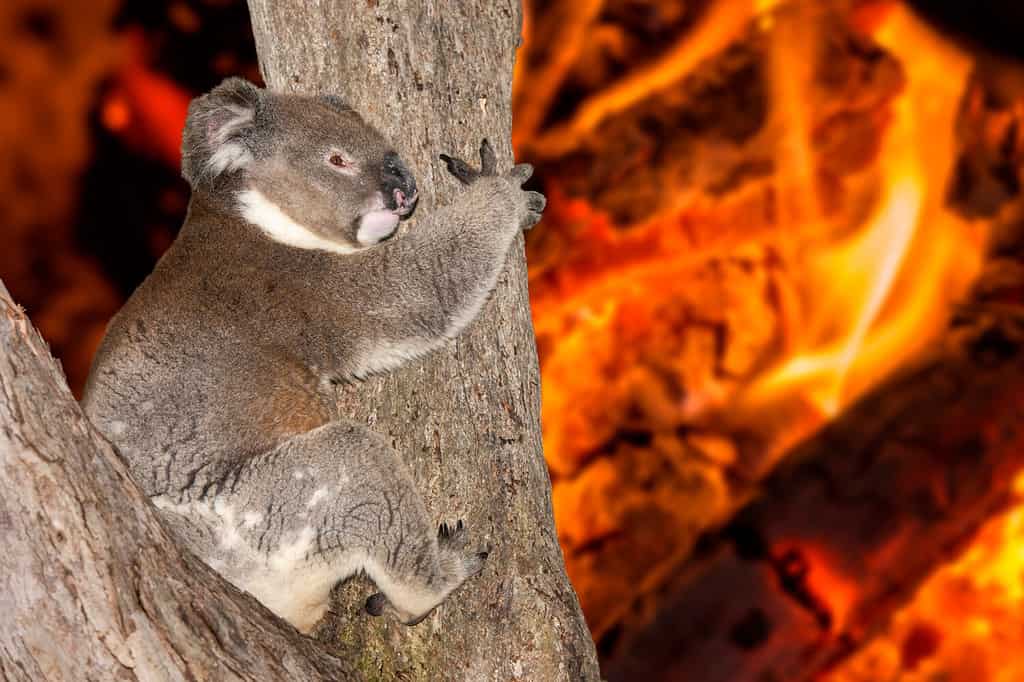
The bushfires in the summer of 2019 and 2020 were so severe that the season is known as the “Black Summer.”
©Andrea Izzotti/Shutterstock.com
In the summer of 2019 and 2020, Australia suffered from massive wildfires. According to the Australian government, an estimated three billion native animals were killed, injured, or displaced by the fires and their aftermath. Around 61,000 koalas were affected.
Restoring Koala Habitat Could Give the Species a Future
Conservationists are working hard to restore Australia’s native forests to give koalas a fighting chance. Save the Koala Day helps to raise awareness of their plight, and it’s held every year on the last Friday of September during National Koala Month.
Programs such as Australia’s National Koala Recovery Plan and National Koala Monitoring Program are implementing strategies like habitat restoration and employing newer techniques, such as drone monitoring, to get more accurate koala population estimates. To help the koalas, conservationists are focusing on the interconnected issues that make them vulnerable today, including habitat loss, disease, and climate change. Protecting koalas means protecting the eucalyptus forests they depend on.