
Quick Take
- One common chip flavoring silently attacks a dog's red blood cells, and most owners have no idea it's lurking in their snack bag. Explore toxic flavorings →
- Your dog's size could be the difference between a mild stomachache and a life-threatening emergency after eating the same handful of chips. Check risks by dog size →
- Chips can injure a dog in a way that has nothing to do with ingredients. The harm can happen before the first chip is even swallowed. See the physical dangers →
- There's a chip your dog can crunch on without any of the risks, and making it requires only one ingredient you probably already have. Get the safe recipe →
Chips are a perfect snack for watching a movie on the couch or as a side for a picnic burger. Although chips aren’t especially healthful for humans, we sometimes can’t help ourselves, thanks to their irresistible combination of saltiness and crispness. Chips are not a good choice for a dog treat because they contain more salt, fat, and carbohydrates than dogs need. And like humans, given the opportunity, a dog is going to gobble up a chip before you can stop it. If your dog eats one stray chip, there’s probably no need for concern, but be aware that some ingredients in flavored chips can be harmful to dogs. Continue reading to learn about the potential risks for dogs and what to do if your dog eats chips.
Are Chips Toxic to Dogs?
Feeding your dog potato chips poses several health risks, primarily due to their high fat and sodium content. Large amounts of salt can lead to a variety of symptoms such as extreme thirst, vomiting, diarrhea, tremors, and even seizures. The high grease and fat levels can trigger pancreatitis, a painful and potentially life-threatening inflammation of the pancreas.
Beyond nutritional hazards, the physical nature of the chips presents immediate injury risks; sharp, crunchy edges can cause lacerations in the dog’s mouth, throat, or intestinal tract, while the small, dry pieces can easily become choking hazards or cause intestinal blockages.
Flavored chips frequently contain ingredients that are highly toxic to dogs, such as onion powder and garlic powder, which can cause oxidative damage to canine red blood cells, leading to hemolytic anemia. Other common seasonings, like intensely spicy powders, can lead to severe gastrointestinal distress, liver failure, or systemic toxicity.
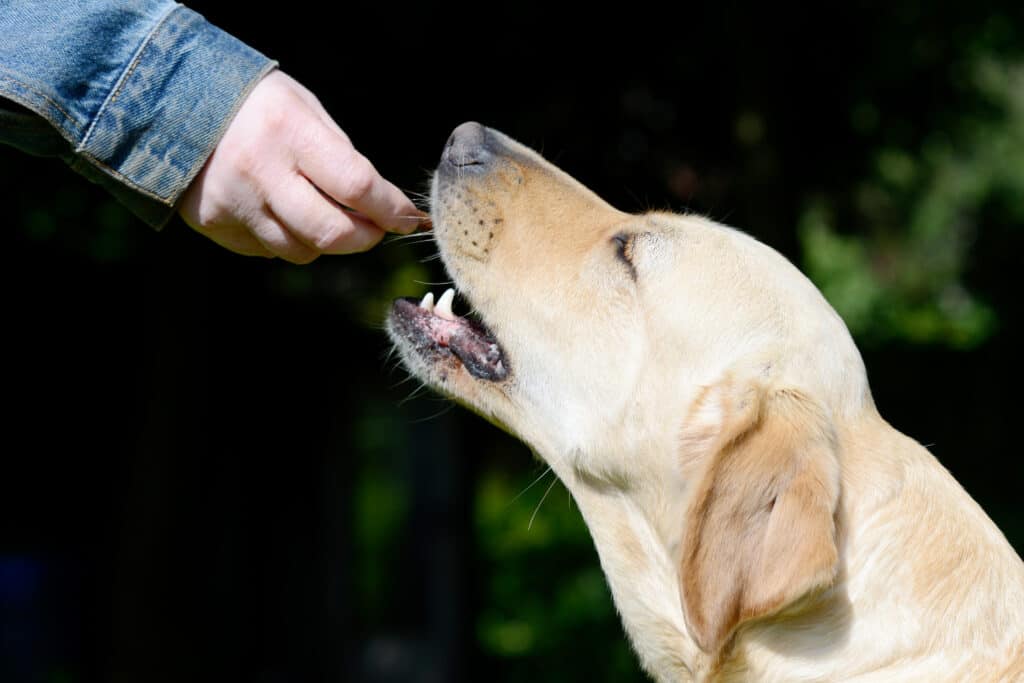
Chips contain too much salt, fat, and carbohydrates for dogs.
©schubbel/Shutterstock.com
A standard human serving of chips can be dangerous due to high salt and fat content, especially if the chips contain toxic ingredients like onion or garlic powder. While a medium or large dog might experience only mild stomach upset from a single serving, the same amount can affect a smaller dog much more severely due to its lower body weight.
What do I do if my Dog Eats Chips?
If your dog sneaks some crispy treats behind your back, start by reading the ingredient label. Search for toxic ingredients, like garlic or onion. Depending on your dog’s size and the number of chips eaten, a trip to the vet might be necessary. This is especially true of toy and micro breeds who are at a heightened risk of having life-threatening symptoms.
If the chips do not contain toxic ingredients, they most likely won’t harm your dog. However, very small breeds can still be at risk. If your pup eats more than a few chips, monitor them over the next few days for any unusual signs or symptoms, such as an upset stomach or diarrhea.
Give them access to plenty of clean water to combat the extra salt, especially if your dog ate a large amount of chips. Muscle tremors, dizziness or lack of coordination, fatigue, and seizures are all symptoms of salt toxicity.
Chips are high in fat and can also cause pancreatitis in dogs, which is a potentially deadly condition. Symptoms of pancreatitis include:
- Excessive thirst
- Excessive vomiting
- Diarrhea
- Severe stomach pain
- Lack of appetite or decreased appetite
Smaller dogs are more susceptible to the effects of too much fat than larger dogs.
If you’ve given your dog a single chip, or it snatched one that fell on the floor, it’s very unlikely to have any symptoms. Even so, it’s important not to make chips a regular addition to your dog’s diet.
Can I Make Chips for my Dog?
If you want your dog to enjoy the crunch of a potato chip without the health risks, try baking some specifically for them.
Sweet potatoes are great for dogs; slice them thinly and bake in the oven until crisp. Do not add salt or spices to the chips. You can also dehydrate other fruits and vegetables to make different types of chips for your pup, such as apple chips.
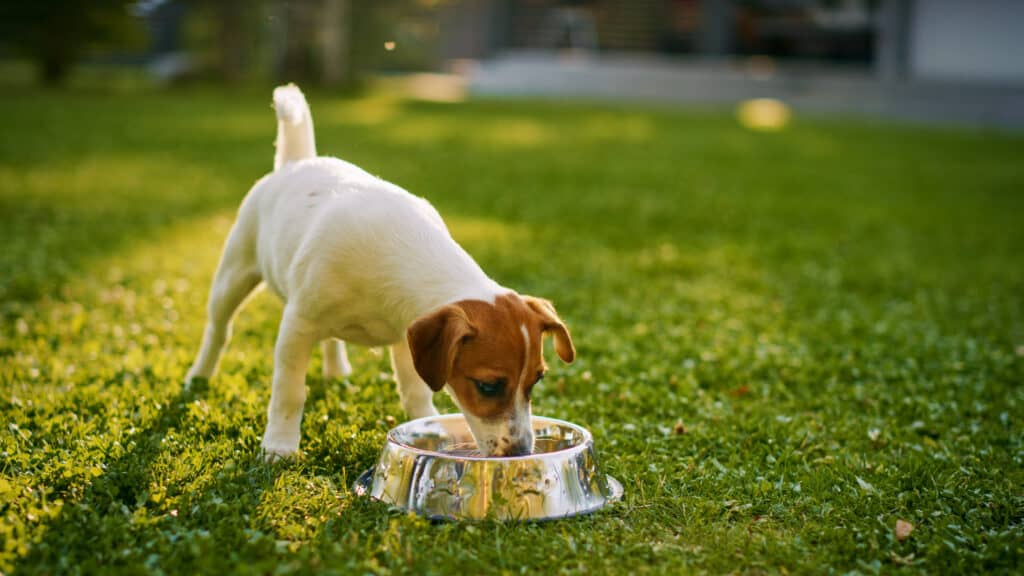
Dehydration can lead to constipation in dogs as well as humans.
©Gorodenkoff/Shutterstock.com
Can Dogs Eat Potatoes?
Dogs can eat potatoes and sweet potatoes. However, white potatoes must be cooked, as raw white potatoes contain solanine, which is toxic to dogs. Sweet potatoes do not contain solanine but are still best served cooked for digestibility
This is because potatoes belong to the nightshade family and contain solanine. When cooked, the level of solanine in the potato decreases, making it safe for dogs to eat.
Avoid adding seasoning, salt, or butter. Plain baked or boiled potatoes can be served as healthy chips, mashed, or cut into bite-sized pieces for your pup.