
Quick Take
- Swallowing a foot-long bone whole takes more than a big mouth, and the body part doing the heavy lifting is one you would never expect. See the anatomy →
- These birds deliberately stain their own feathers, though the reason has nothing to do with attracting a mate. Quick facts on vultures →
- Their stomach acid operates at a level that would shock most people, which is the only reason a swallowed bone doesn't become a death sentence. Explore the stomach acid →
- Bones are one of the most abundant untapped food sources in nature, yet almost no other animal has figured out how to claim them. Why bones are a rich resource →
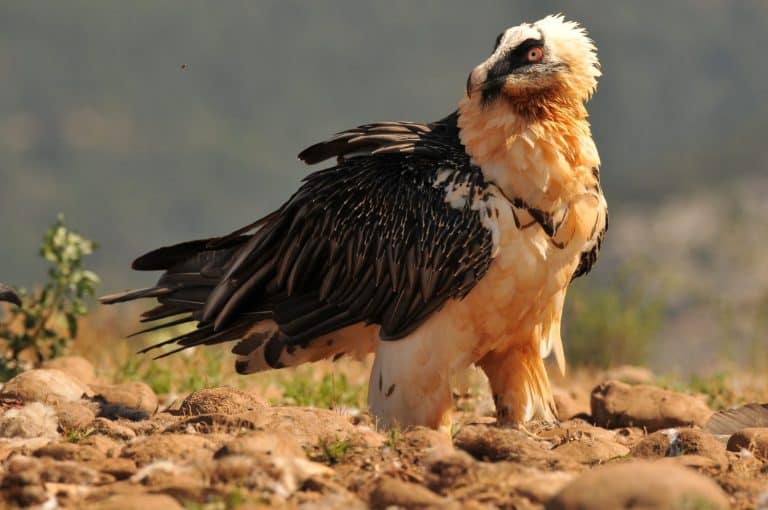
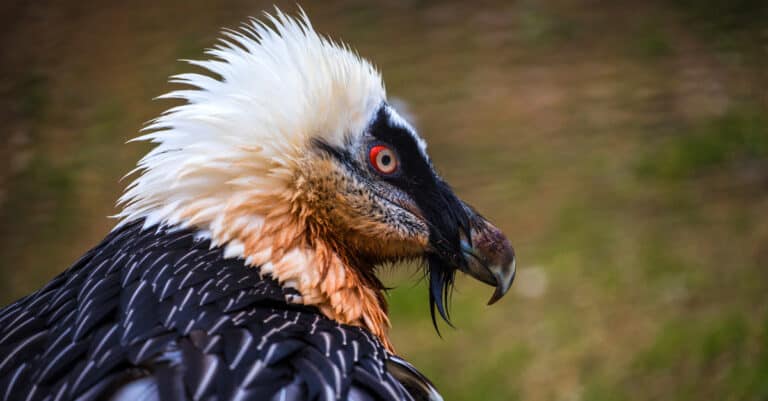
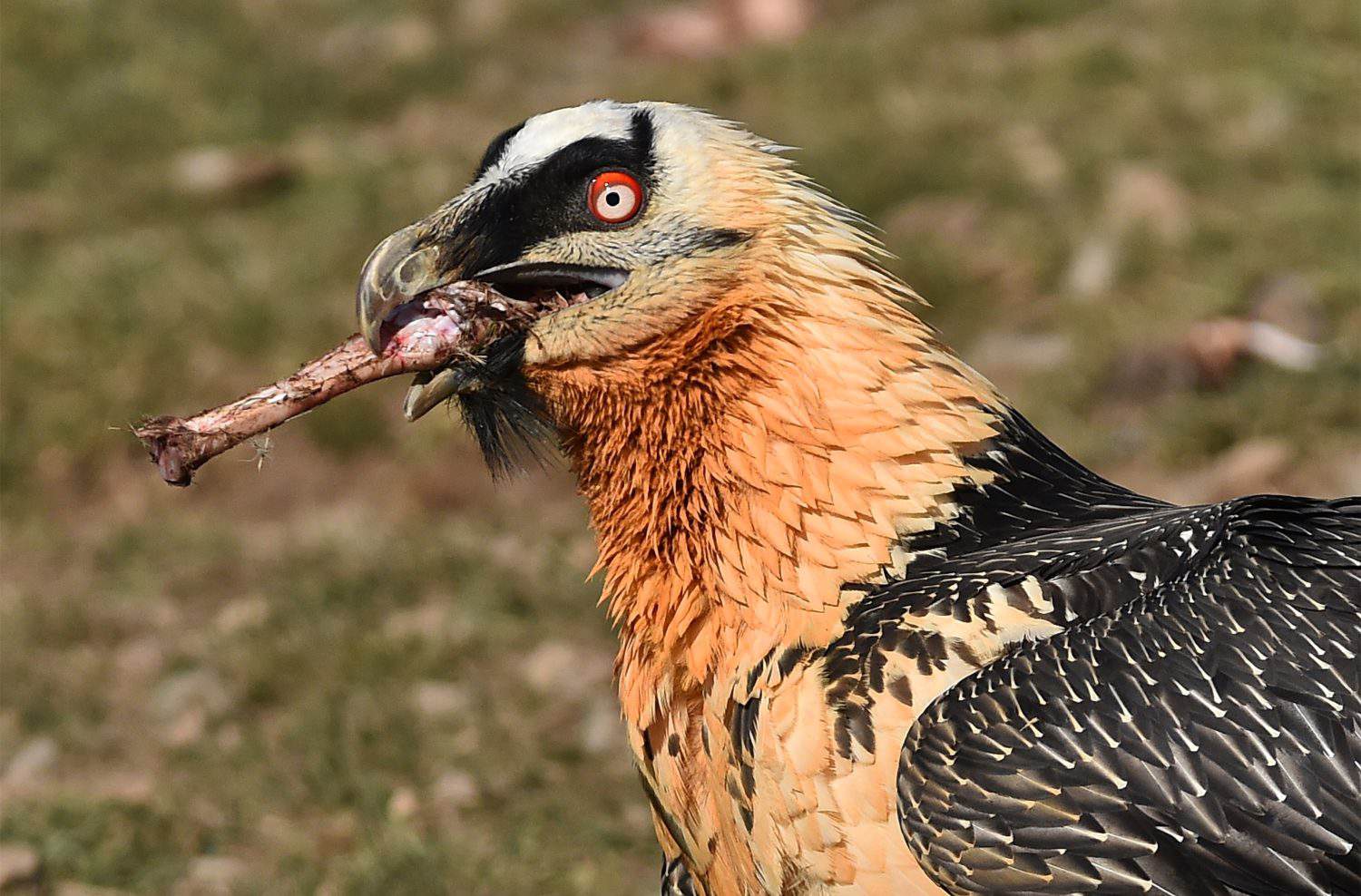
Bearded vultures are some of the most interesting scavengers in nature. They deliberately stain their feathers a rusty orange-red color by bathing in iron oxide-rich soil and water, making them pretty noticeable as they fly around. One of the most fascinating facts about them is that they can swallow bones whole. This Instagram post by @pubity shows one of these birds doing just that.
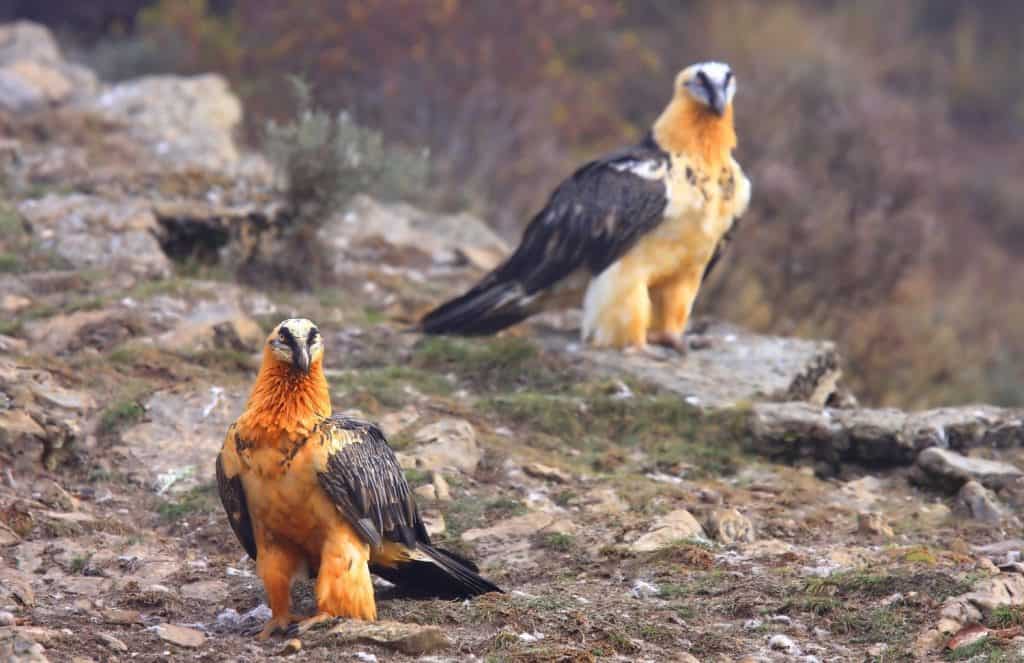
Bearded vultures have foldable and extendable necks that they use to swallow large bones.
©ESCOCIA/Shutterstock.com
How Bearded Vultures Eat Bones
The video above is downright shocking. A bearded vulture is given a massive bone that it then swallows completely whole. While it may seem like a crazy, one-off moment, this is actually an everyday behavior for bearded vultures. Thanks to their specialized anatomy, their digestive systems are remarkably tough. But there are few adaptations needed for these animals to be able to swallow a bone whole. Bearded vultures have a wide mouth about three inches wide. However, as they tilt their head back, they can swallow bones up to a foot long. They do so by positioning the bone lengthwise and slowly swallowing it. Bearded vultures also have expandable esophagi that allow for awkwardly shaped bones to pass through. The esophagus is thick and provides protection from sharp edges. Once the bone is in the stomach, it is dissolved.
Bearded vultures have extremely acidic stomachs. The acid-secreting cells are capable of breaking down the mineral components of bones and other organic materials. Without this strong stomach acid, the bones would be indigestible and cause many problems. For big bones like the one in the video above, it takes roughly 24 hours to digest properly.
Most of the time, these vultures feed on smaller bones that they sometimes purposefully break down. They drop large bones from high in the air, turning them into manageable pieces. You might be curious about why these birds eat bones in the first place. While other predators consume live animals or carcasses, there are very few scavengers that feed on bones. So, while other animals may struggle to find food, these birds can almost always find a meal in the largely-untapped food source.