
Quick Take
- Bones make up the bulk of the bearded vulture's diet, and the reason why is more nutritionally strategic than it looks. See the nutritional strategy →
- Swallowing a bone whole sounds impossible, but that changes once you learn what is different about this vulture's anatomy. Explore the throat and stomach →
- The stomach acid inside a bearded vulture belongs in a category most people associate with industrial chemistry, not biology. Check the stomach acid pH →
- Other scavengers leave bones behind, and the bearded vulture sees an opportunity they all missed. Discover the scavenging niche →
Vultures are some of the most unusual birds in the world. With so many species, there is always something new to learn about vultures. For example, the bearded vulture is an amazing species that has earned the nickname “bone-breaker” for good reason. This YouTube Short by @nature.science_official shows one of the vultures swallowing a massive bone whole. Read here to learn more about the bearded vulture’s strange diet.
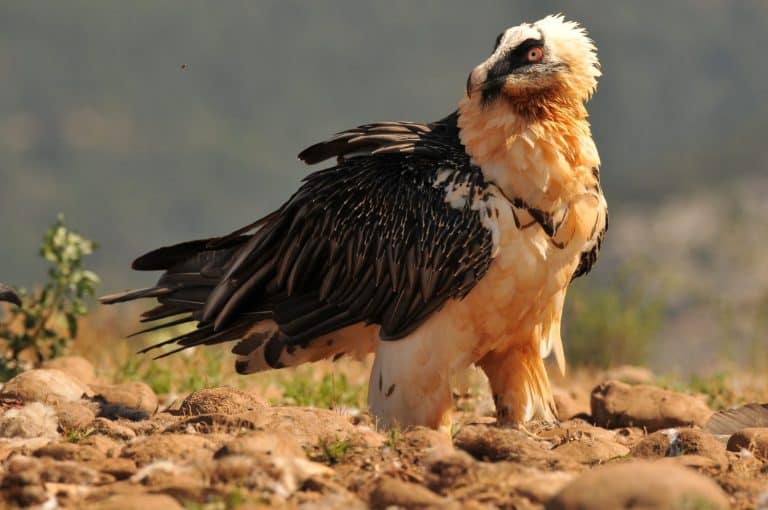
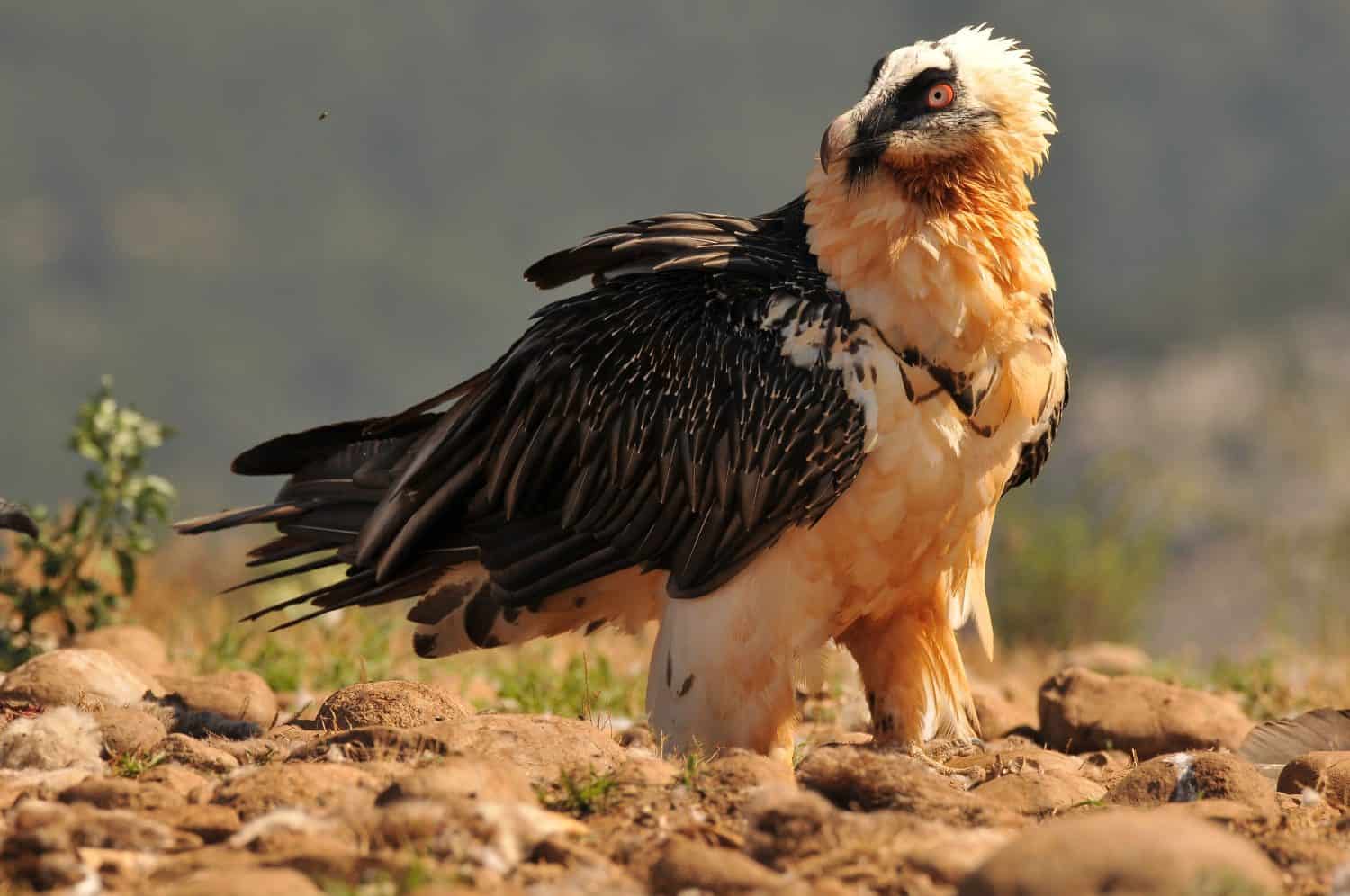
The bearded vulture’s diet consists mostly of bones that they scavenge from dead animals.
©Andrea Vergani/Shutterstock.com
Bearded Vulture Diet
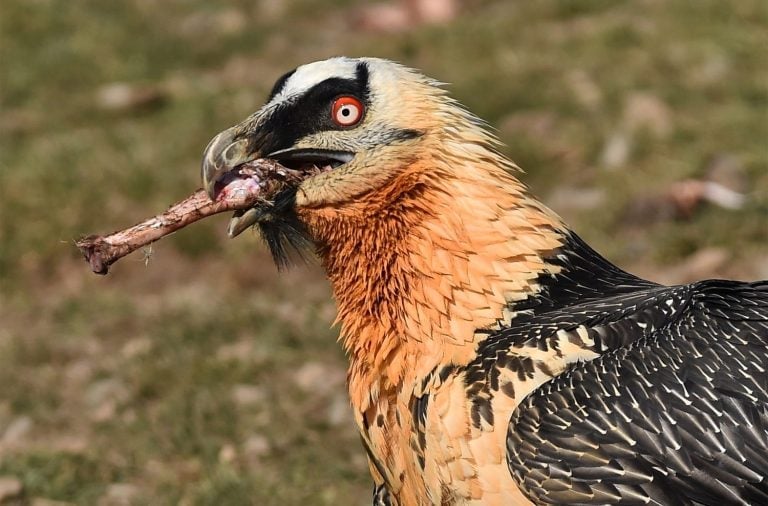
The video above shows one of the strangest meals ever: a single bone. In it, a bearded vulture is perched on a handler’s arm before swallowing a bone whole. The shocking video left many viewers curious about the species and how they eat bones whole. While it may seem like a strange, one-off behavior, eating bones is actually a regular part of this species’ diet. For bearded vultures, roughly 70 to 90% of their diet consists of bone and bone marrow, which they obtain from carcasses and dead animals. In the wild, this typically comes from dead goats, sheep, deer, or other mountain animals. The other part of their diet consists of small mammals or reptiles. However, for the most part, they rely on bones and bone marrow. This diet is surprisingly energy-rich, as the bones are full of fat and nutrients. Since these birds have evolved as scavengers to make the most of what they can get, they extract as many nutrients from the bones as possible.
You might be curious about how this is physiologically possible, and for good reason. Bearded vultures have evolved over centuries to adapt to their special diets. For example, their throats and esophagi are naturally stretchier and more muscular. This allows the bones to go down intact rather than needing to be crushed. Similarly, their stomachs are elastic, allowing them to hold multiple bones at once. Easily the most important part of their physiology is their powerful stomach acid. With a pH of around one, their stomach acid is as strong as some industrial acids. This allows the acid to break down the outer parts of the bone while strong stomach muscles grind it down further. These amazing adaptations allow the bearded vulture to have a unique diet of bones.