Dancing is a time-honored way to find the perfect match (if you’ve ever seen Bridgerton, then you know exactly what we mean). Signing dance cards and waltzing across ballrooms may have fallen out of popularity this century, sadly, but grebes still participate in their own version of a dancing ritual. These North American waterbirds will perform a dance that looks like they are walking on water, and one incredible video might inspire you to take to the dance floor.
National Geographic captured a special moment between these dancing ducks in their 2011 documentary One Life. A YouTuber shared a clip of the documentary online, where you can see the grebes swimming and dancing together. They start side by side, tilting their heads up and back in a choreographed move that rivals the professionals on Dancing With the Stars.
From there, the birds face each other and take turns splashing water at one another. Finally, it’s time for the main event: the birds take off! Each grebe rises up on its tail feathers and flaps its wings, gliding across the water. They move in sync, splashing up water behind them as they dance together. Their white feathers glisten in the water, while their black-feathered wings help balance them from behind. It’s a truly beautiful sight, and you can see how these birds might form a bond after moving so effortlessly together.
How Do Grebes Dance?
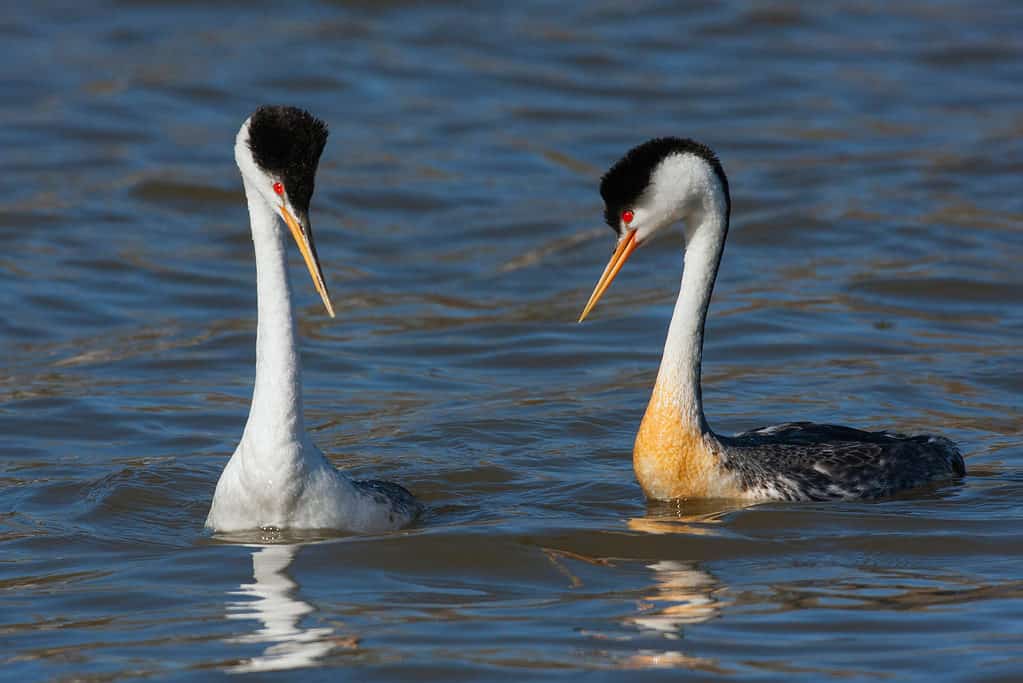
Clark’s grebes are one of the species that will perform this courtship dance.
©Danita Delimont/Shutterstock.com
According to National Geographic, Western and Clark’s grebes will participate in rushing when finding a mate. Their large feet and lobed toes work like the blades of a propeller to help them perform this fascinating dance move. When rushing, grebes can sprint up to 66 feet across the water in about seven seconds!
A 2015 study in the Journal of Experimental Biology, as reported by National Geographic, used high-speed cameras to film grebes and analyze how fast they step. Researchers found that grebes will use their feet to forcefully slap the water’s surface at up to 20 steps per second. After slapping the water with its foot, the grebe pushes its foot all the way underwater. Then, it lifts its foot out of the water sideways in an arc, like a ballerina, and repeats the motion. Of course, this happens far too quickly to see clearly when the grebes are in action.
Mating Rituals
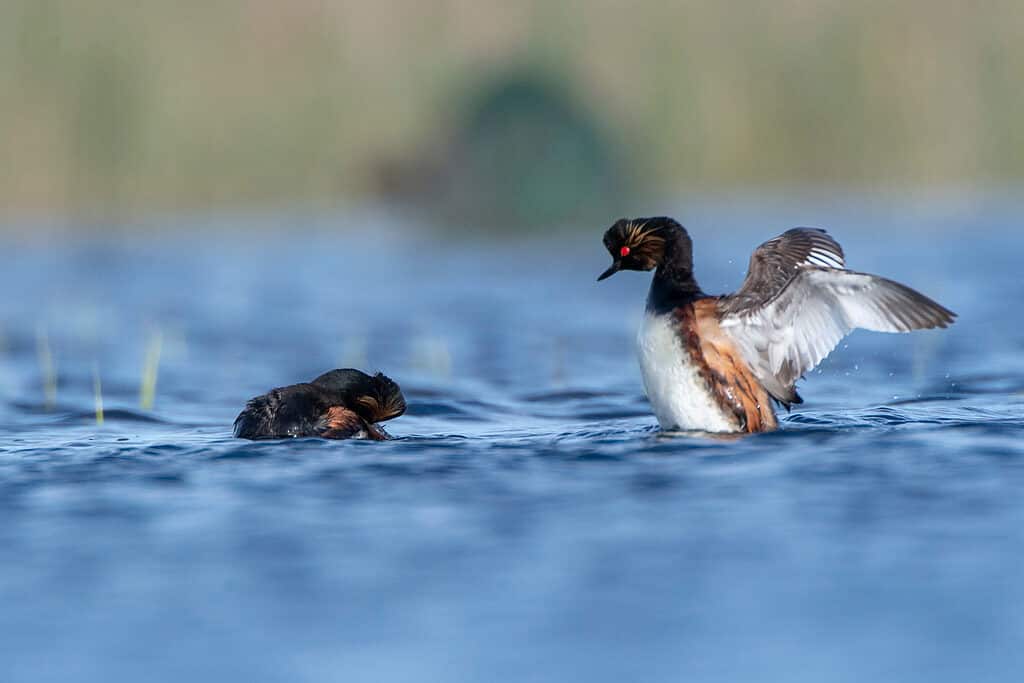
One mating ritual that grebes will perform is called a “weed ceremony.”
©Jesus Cobaleda/Shutterstock.com
In addition to their courtship dancing, grebes will also preen, shake their heads, and dive to attract mates. After their rushing, the grebes will stand face to face, gazing at one another with their necks stretched, according to the organization Minnesota Conservation Volunteer. They will trill a few times, then one at a time dip their bill and forehead into the water and come up and shake. Each bird swims away from the other to dive and resurfaces with plant matter in its bill—a behavior known as the “weed ceremony.” They then rise up again, shake their heads, toss the plants away, and float together.
Now that they are a couple (grebes will stay monogamous for one mating season), the grebes will move on to the next phase of their relationship: begging for food. The female grebe will call to the male grebe to signal she’s hungry, and he will bring her fish to eat. Then, he will lead her to a protected place in the water, and they will dive to the bottom for more plants to build a nest of algae, moss, and stems.
Grebes will mate on their floating nests. Afterward, females will lay 3-7 eggs, and males will continue to feed them fish. They cover the eggs with soggy plants and take turns incubating them for several weeks. When the grebe chicks hatch, the young ride on their parents’ backs, staying close in case the adults need to quickly dive underwater to avoid predators. As they get older, they learn to swim with their parents.
More About Grebes
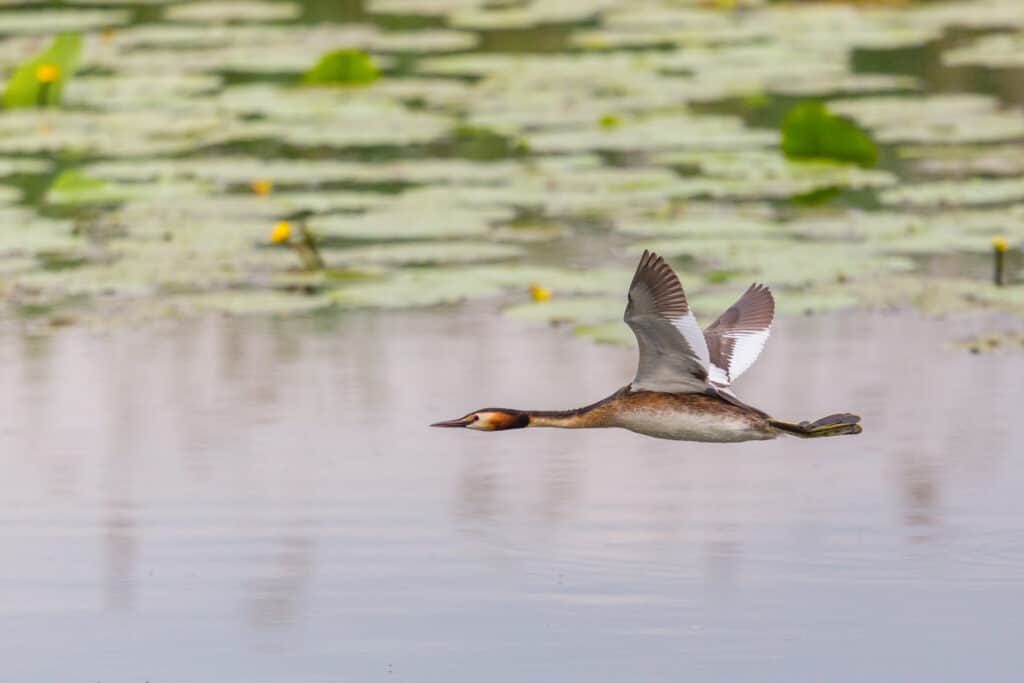
If a grebe can fly, it will usually only do it during migration.
©Pascal Halder/Shutterstock.com
Grebes are related to flamingoes, even though they look more like ducks. Grebes are found on every continent except Antarctica and live in freshwater lakes and coastal areas. There are 22 species of grebes, which are diving and swimming birds. Their waterproof feathers allow them to swim by submerging most of their bodies, opening their feet, bringing them inward, and thrusting forward like a frog, with only their heads above water. In the fall, they will migrate to warmer areas, which is practically the only time these birds will actually fly.