
Quick Take
- White-winged choughs use a trick normally reserved for finding a mate, and it works just as well on babies. See the deceptive display →
- When a chough family loses a fledgling, their response is not to fight for it back. Instead, they do something far more ruthless. Discover what happens next →
- Young choughs have a critical vulnerability window that neighboring birds exploit, and the parents never see it coming. Explore the vulnerability window →
White-winged choughs are the hustlers of the corvid world. They’re native to southern and eastern Australia, where locals regularly see them engage in what they call “gang warfare.” These birds are tough, demanding, and aren’t afraid to shake down a neighbor’s nest to get what they want. And, most of the time, that’s another bird’s offspring.
Choughs have a reputation for kidnapping, but for what it’s worth, it’s for good reason. When a chough needs a bigger brood, it won’t hesitate to work for it, even when it means stealing fledglings. And while this Aussie bird walks away with a new family member, another group rallies the troops. But to the locals, this is just the hard-knock life of a white-winged chough.
For a Chough, Appearance Is Everything
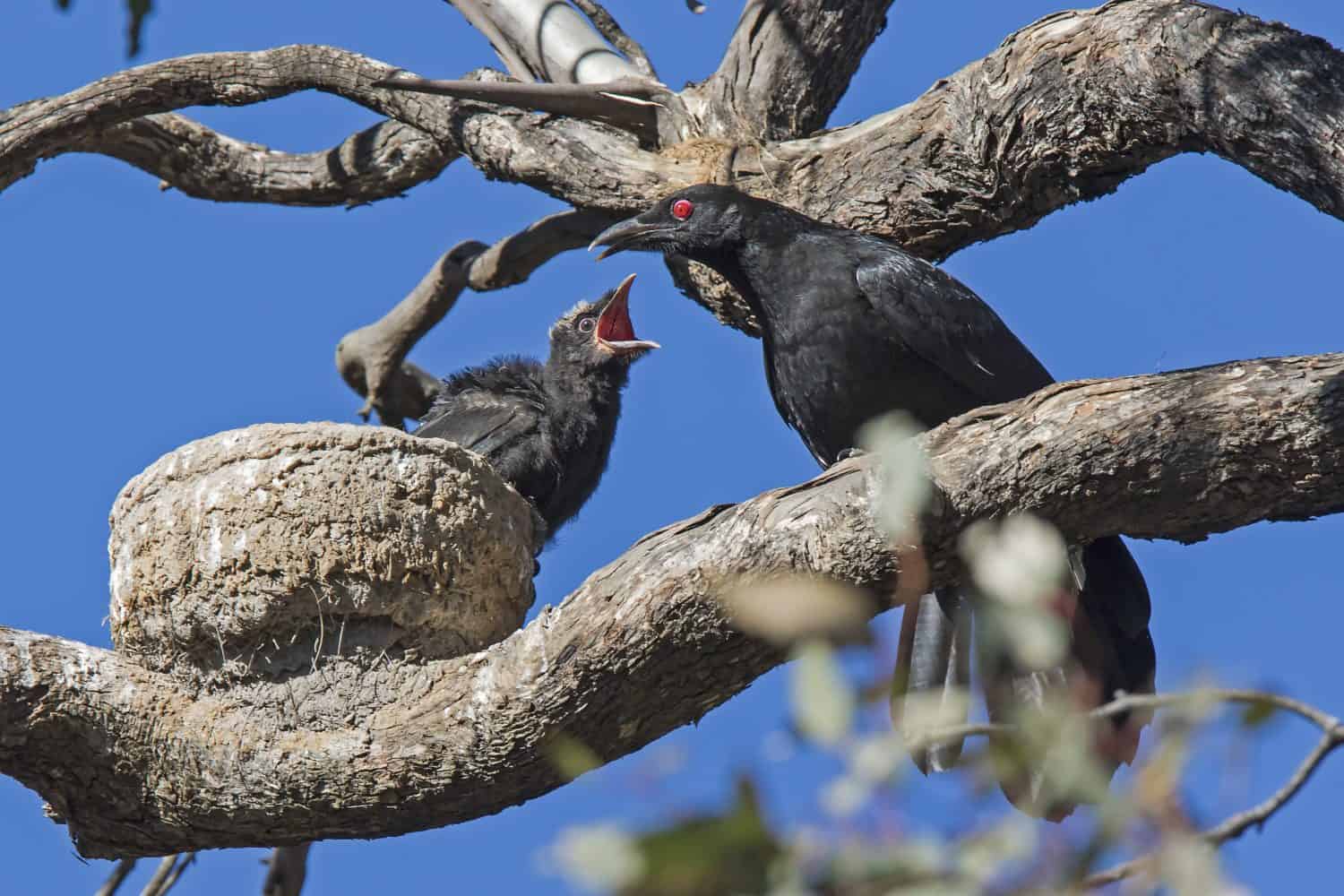
The first thing most people notice about the white-winged chough is its looks. Not only is this a bossy bird, but it’s also an unusual-looking one. It’s covered in black feathers, except for its white tail tip, and its eyes are blood red. When excited, the pigment in their eyes becomes more vibrant, serving as either a warning or an invitation to others.
As its eyes bulge, predators usually think twice about going after the chough. But to others in the same species, this is a sign of dominance. A chough might do this when defending a nest, hunting ground, or, in some cases, its young—or someone else’s.
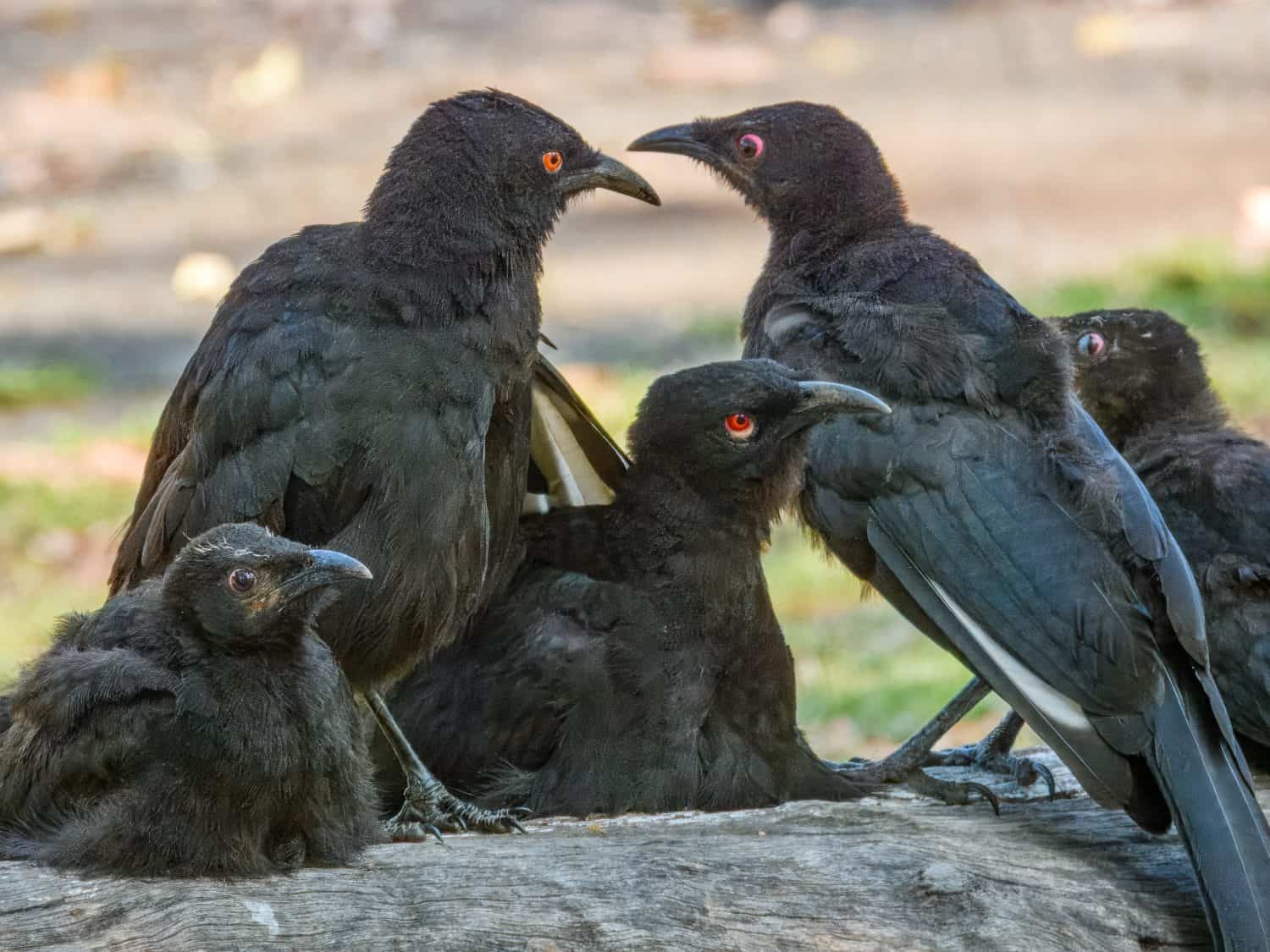
It takes approximately seven mature choughs to care for more than one hatchling.
©Imogen Warren/Shutterstock.com
You never really know what to expect from a chough. They’re highly social birds and require large groups to rear their young. As a result, their families sometimes fall short. The solution? Simply steal a fledgling from another brood. While it sounds simple, it’s not always easy. Luckily, white-winged choughs have a few tricks up their sleeves for the perfect kidnapping crime. It all starts with a dance and a little tail-feather-ruffling.
The Better the Dance, the More Likely the Bird-Napping
Using their bulging red eyes and white tail feathers, choughs perform for fledglings. While this behavior is typically reserved for mating rituals, it’s also used to trick young offspring. This is a chough’s attempt to imitate the fledgling’s parent, and, surprisingly, it works. The chough continues this behavior until it gets close to the unrelated fledgling and will often feed it, further confusing the young bird. This nurturing behavior is convincing enough that the adult chough can lead the young bird back to the wrong nest.
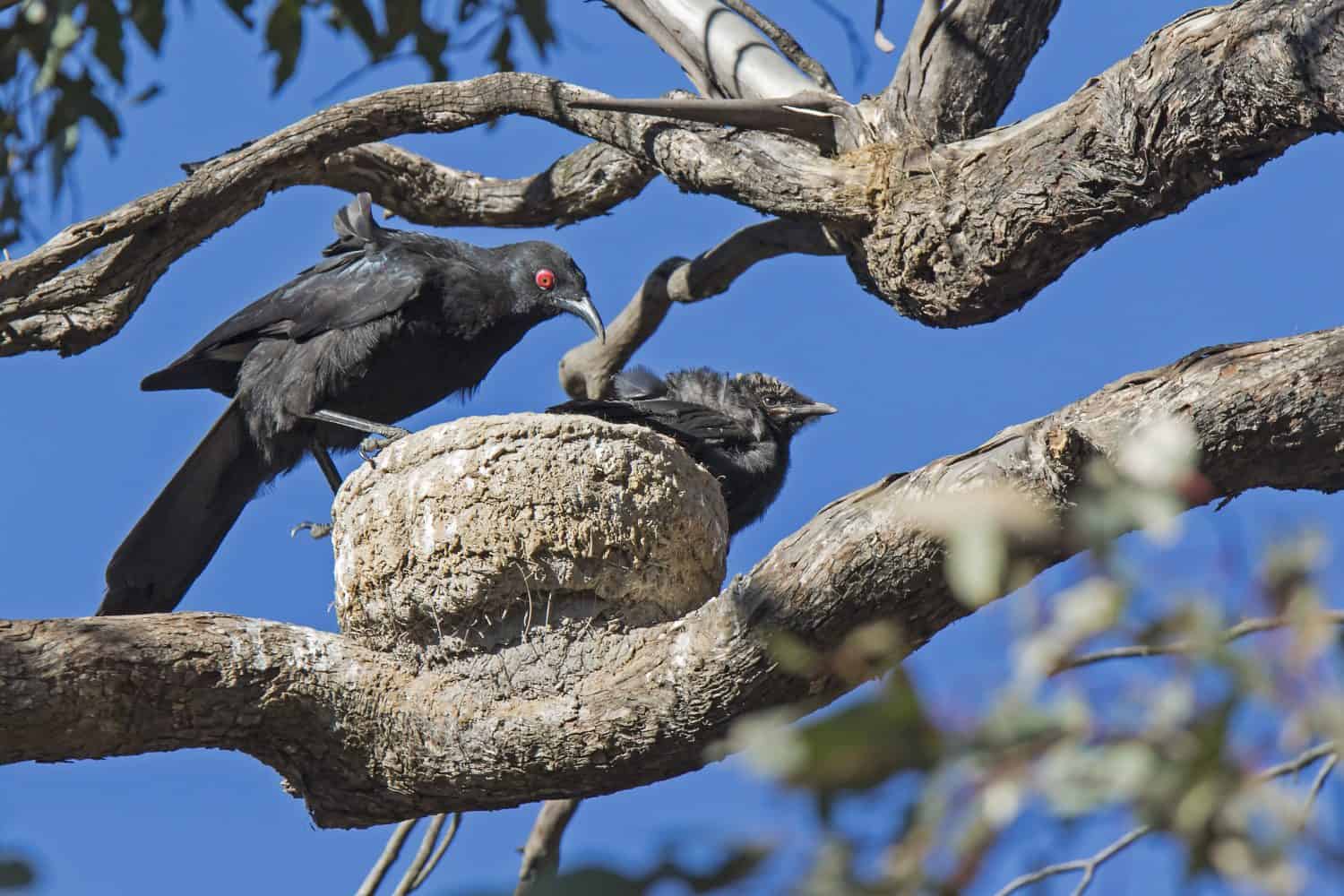
If a chough leaves its fledgling vulnerable, there’s a chance a rival group could steal it.
©Wright Out There/Shutterstock.com
While it sounds disturbing, choughs have a good reason for this behavior. They require at least four mature birds to help raise hatchlings, protect eggs, build nests, and find food. Due to accidents, human behavior, and natural predation, this isn’t always possible. Kidnapping is a backup plan, and it happens to serve choughs well.
A group may include 20 or more birds working together to raise offspring. The larger the “family,” the more likely it is to maintain its territory. Large groups of choughs will put up a fight, especially if they have essential family members they can’t afford to lose. This is where “gang warfare” comes into play. Choughs are known for aggressive encounters with other chough groups and will vigorously defend their nests against rivals.
Do the Fledgling Choughs Ever Return to Their Family’s Nest?
It’s common to wonder if a fledgling chough ever returns to its original family. In short, the answer is no, or, at best, extremely rarely. Once a chough has been stolen from its original nest, it assimilates into its new family. Its original family will likely notice its absence, but adult birds rarely attempt to retrieve their lost young. Instead, they commit the same crime. In the chough world, kidnapping is a solution to multiple problems.
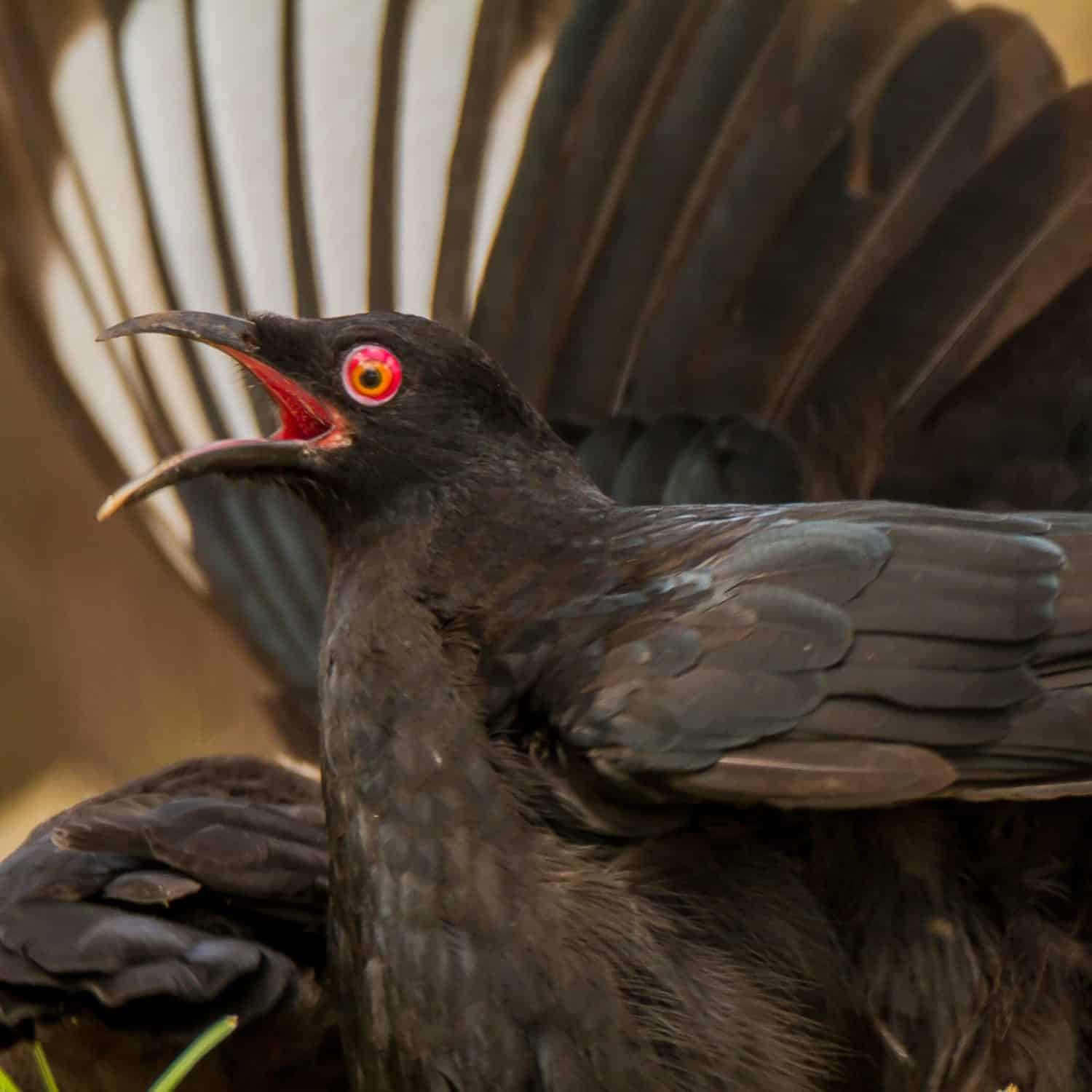
White-winged choughs are known for aggressive displays when defending their nests.
©Frank McClintock/Shutterstock.com
This cycle continues, and as a result, it’s not unusual for white-winged chough groups to show significant genetic variation between generations. Even if finding a replacement offspring isn’t an option, some choughs simply lay more eggs during mating season.
Choughs are fiercely protective of their nests, but most kidnappings are opportunistic. Young choughs cannot recognize alarm calls until they’re about six months old. It also takes roughly a month before they can fly, making them fairly helpless. When an adult leaves the nest to find food, neighboring choughs may take the opportunity to swoop in. They perform their dance, and often succeed in luring the fledgling away. The process is more complex than it appears and requires careful observation and quick thinking.