
Quick Take
- The ostrich head-burying myth may trace back to a single ancient source, and that origin says a lot about how wrong ideas stick around for centuries. Trace the myth's origins →
- When threatened, ostriches don't do what most people picture. Their actual response is far more surprising. See their real threat response →
- A routine daily habit ostriches perform in their nests is almost certainly what fooled observers for millennia. Discover the nesting behavior →
- These birds' diet plays an unexpected role in keeping the head-burying myth alive today. Explore their unusual diet →
It may have been Roman naturalist, Pliny the Elder, who came up with the notion that ostriches bury their heads in the sand when faced with a problem. Whoever formulated this initial idea, the notion entered human culture and persists to modern day. We have all been guilty of ‘burying our heads in the sand’ at one time in our lives. But do these extraordinary birds really exhibit this behavior, and if not, where does this idea come from?
What We Know About Ostriches
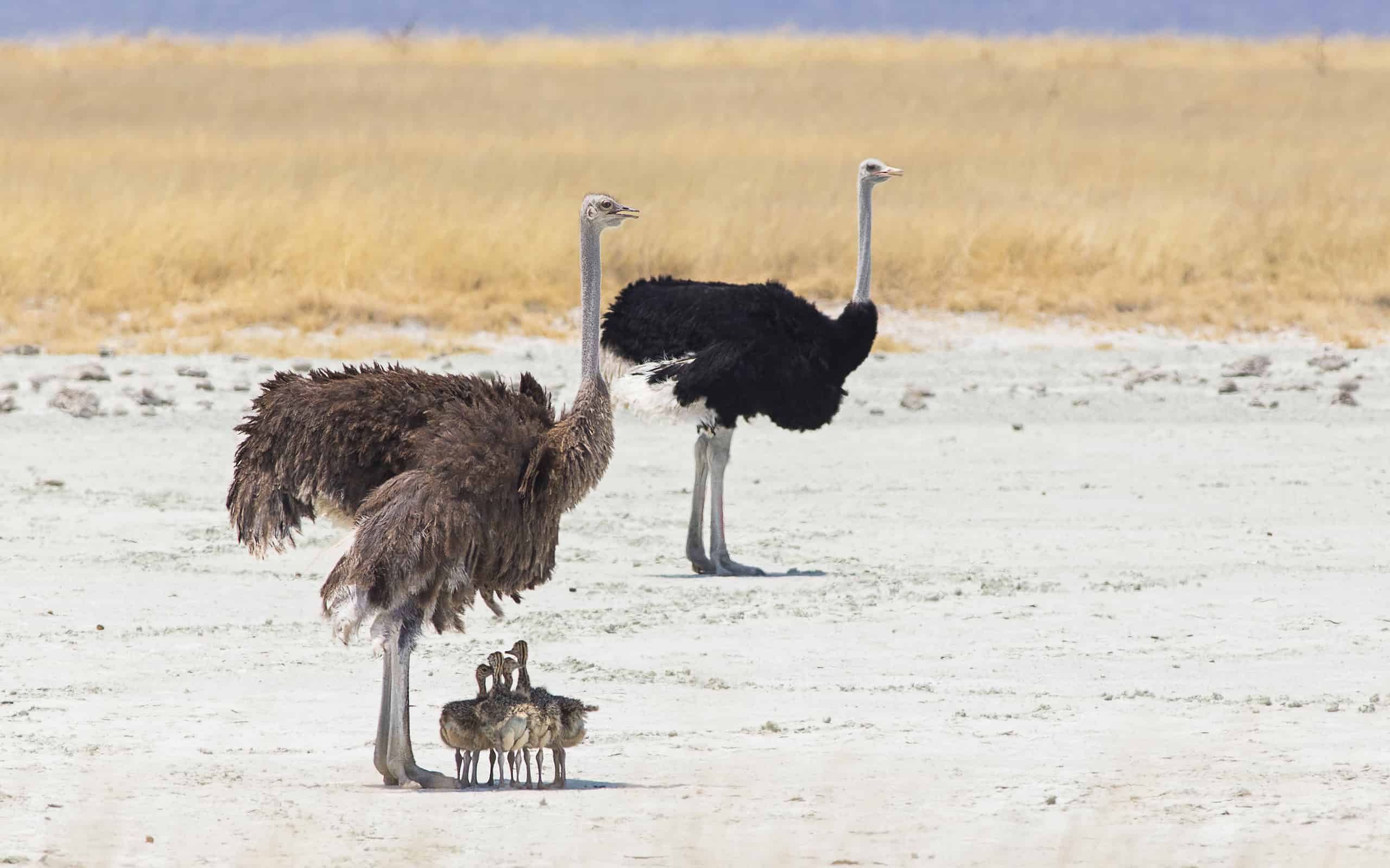
Ostriches are the largest and heaviest birds on the planet, and they are also the fastest-running birds. They cannot fly but can reach 43 mph on land and have a kick powerful enough to injure a large predator. They live in a variety of habitats, including deserts and open woodlands, and lay eggs in shallow, communal nests dug into the ground. There are two living species. The first is the common ostrich, Struthio camelus (native to sub-Saharan Africa). The second is the Somali ostrich, Struthio molybdophanes (native to the Horn of Africa region). However, some classifications consider the Somali ostrich a subspecies.
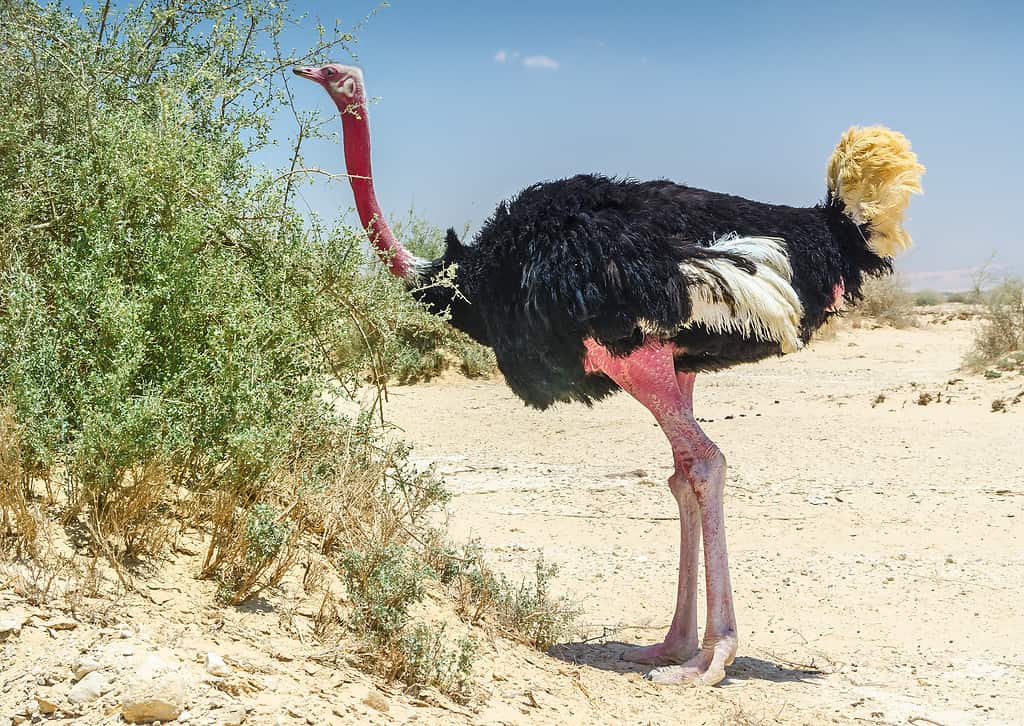
Ostriches lay eggs in nests in the ground.
©gorsh13/iStock via Getty Images
Do Ostriches Stick Their Head in the Sand?
No, ostriches do not stick their head in the sand when they are threatened. They are much more likely to run away or fight back. Sometimes, they lie flat with their neck extended and may even flap dust with their wings to hide themselves.
However, both males and females dip their heads into their ground nests to rotate their eggs several times a day to make sure they are kept warm. Because these birds have a small head in relation to the rest of their body, it can look like they are sticking their heads in the sand. This may explain where the false ‘head in the sand’ theory originated.
Also, ostriches feed on grasses and occasionally small animals such as mice and frogs, which are generally found on the ground. Therefore, the birds spend a lot of time with their heads close to the ground, which may have further supported the myth.