
Cute, cuddly, and utterly adorable, bush babies are like real-life plushies. Although they live primarily in the forests and grasslands of Africa, some people keep bush babies as pets. One person shared a video of this tiny primate leaping off a kitchen table, which is quite impressive.
“Bush baby on the go!” YouTuber @cordalette shared on YouTube Shorts. In the clip, the bush baby jumps off a table and hops across the house. It bounces down the hallway like a mini kangaroo, with its long tail helping to propel it through the air. Seconds later, the bush baby lands on a door frame, where it quickly bounces up and into the owner’s hand.
The videographer then puts the animal on a stair railing, and it looks up with big red eyes before it starts sliding down the banister with lightning speed.
One person commented on the cute video, “wait….they hop too??? they couldn’t get any cuter if they tried.” Someone else wrote, “I watched that hop 10 times in a row.” It’s a burst of serotonin every time the video repeats, isn’t it?
What Are Bush Babies?
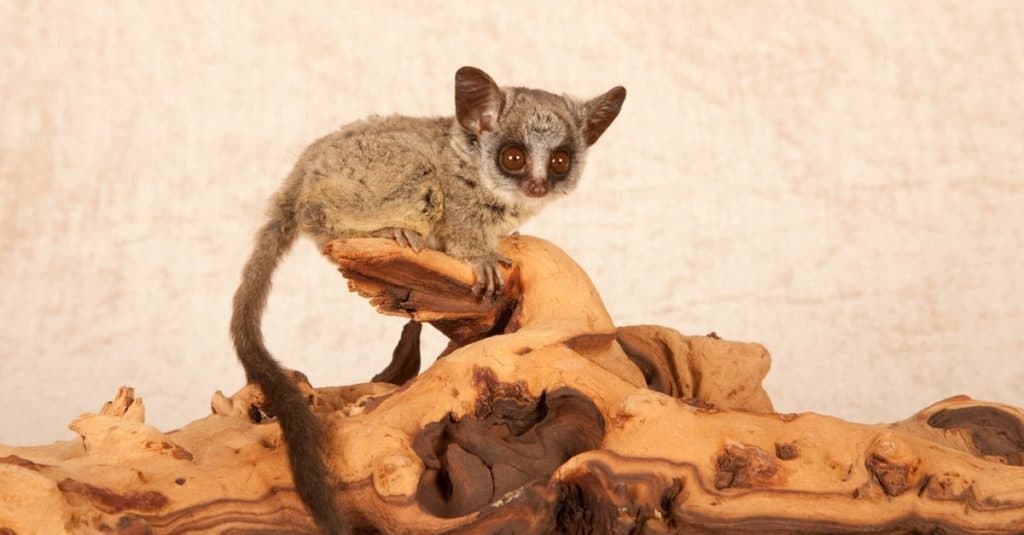
Although they hop like kangaroos, bush babies are actually primates.
©Linn Currie/Shutterstock.com
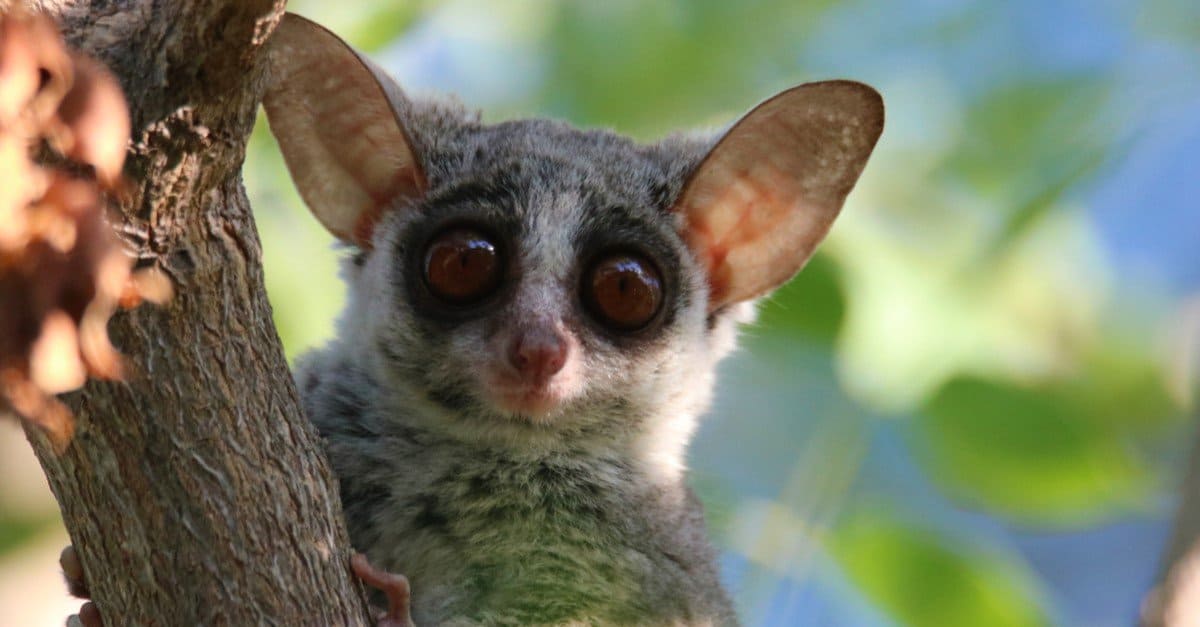
Bush babies (Galago senegalensis), which are also called galagos, spend the majority of their time high in a canopy of trees in their home of Africa. The nocturnal primates eat fruit, insects, tree gum, and sometimes small animals. Their most impressive feat is their ability to leap more than 30 feet in a single bound.
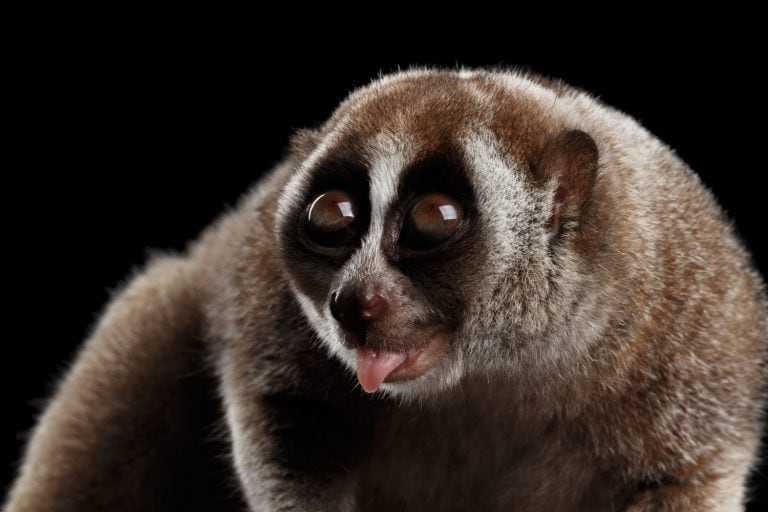
Its big, beautiful eyes make it look like a beloved stuffed animal. These eyes serve a purpose, too, allowing bush babies to see in low light and darkness. Galagos also have big ears, which move independently. They have excellent hearing and will fold their ears to block out noise and get some rest during the day.
Bush babies use their powerful hind legs and long tails to spring into the air. They move both along the forest floor (or kitchen floor, in the case of domesticated bush babies) and through the trees above. Their extra-long tail helps power them. Bush babies can also make smaller hops, or walk and run on all four legs. To keep track of where they go, they mark their routes with urine, creating a breadcrumb-like trail to help them return to their nests or mark their boundaries.
Small Primates
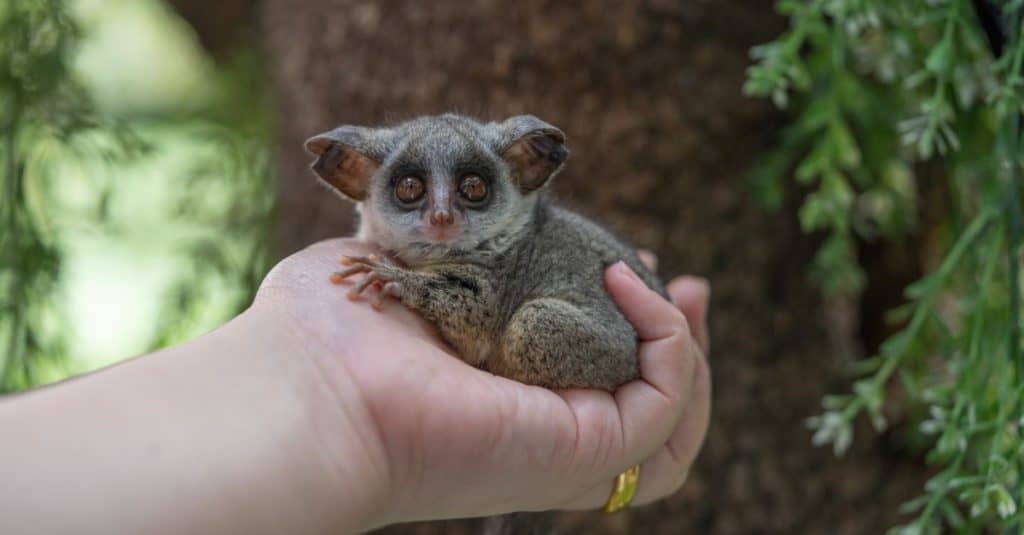
A bush baby typically doesn’t get bigger than 3 pounds.
©akegooseberry/Shutterstock.com
Another reason these animals are so cute is because of how tiny they are. Bush babies weigh 3.5 ounces to 3 pounds, depending on the species, and they can measure between 5 and 18 inches long. To put it in perspective, these are about the size of a squirrel, making them one of the smallest primates.
In the wild, they communicate with each other using a variety of vocalizations, including chattering, clicking, and clucking. These sounds are so unique that experts can even tell the difference between different bush baby species based on the sounds they make.
Natural predators of galagos include snakes, owls, mongooses, jackals, dogs, cats, and other animals that can climb trees to catch these fast creatures. Humans are also predators of bush babies, as people will capture and sell them in the exotic pet market. (If you are hoping to own one in the U.S., you will find that it is illegal in most states, as this helps conserve these wild animals. However, a few states still allow bush babies as pets with proper permits.)
Can You Keep a Bush Baby as a Pet?
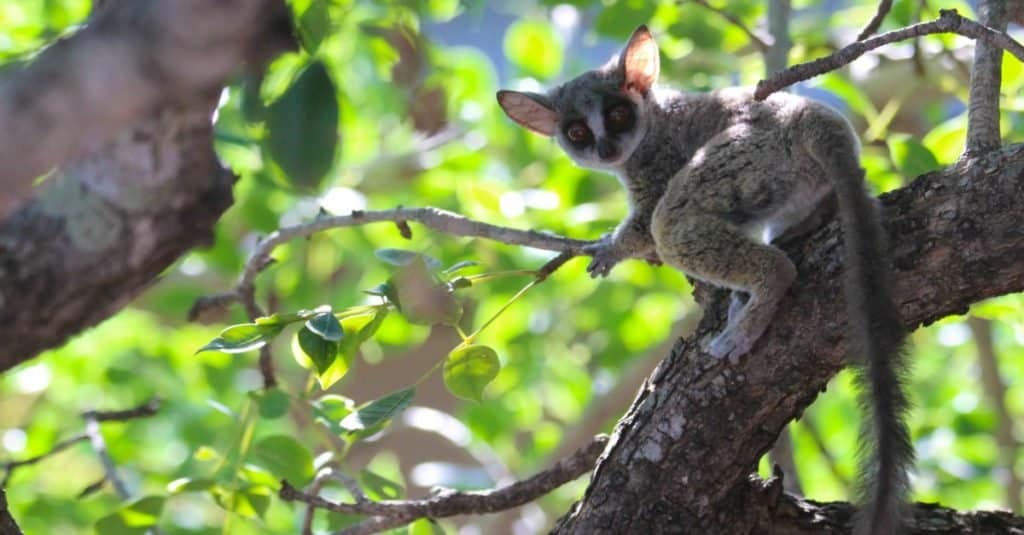
Bush babies spend most of their time in trees, which means they won’t be happy in captivity.
©Jurgens Potgieter/Shutterstock.com
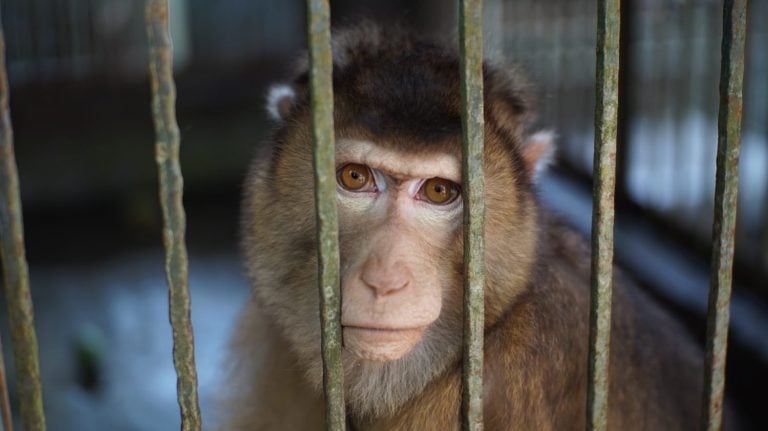
If you live somewhere where it is legal to own a bush baby as a pet, there are many factors you’ll want to consider first. For starters, most primates (including galagos) don’t do well in captivity. They do not make good pets because they are highly curious, intelligent, and active, requiring constant stimulation to remain happy and healthy. They won’t thrive in small enclosures, as they are born to explore the high canopies of trees.
Bush babies also prefer to be with their own species and can become fearful, irritable, and developmentally stunted if separated from other bush babies in captivity.
Additionally, primates like bush babies can transmit diseases to humans and other animals in the home, can be destructive, and require extremely high maintenance. So even though they are cute, it’s best to stick with a plush version of a bush baby rather than bringing the real thing into your home. They will make for much happier animals if you leave them in the wild!