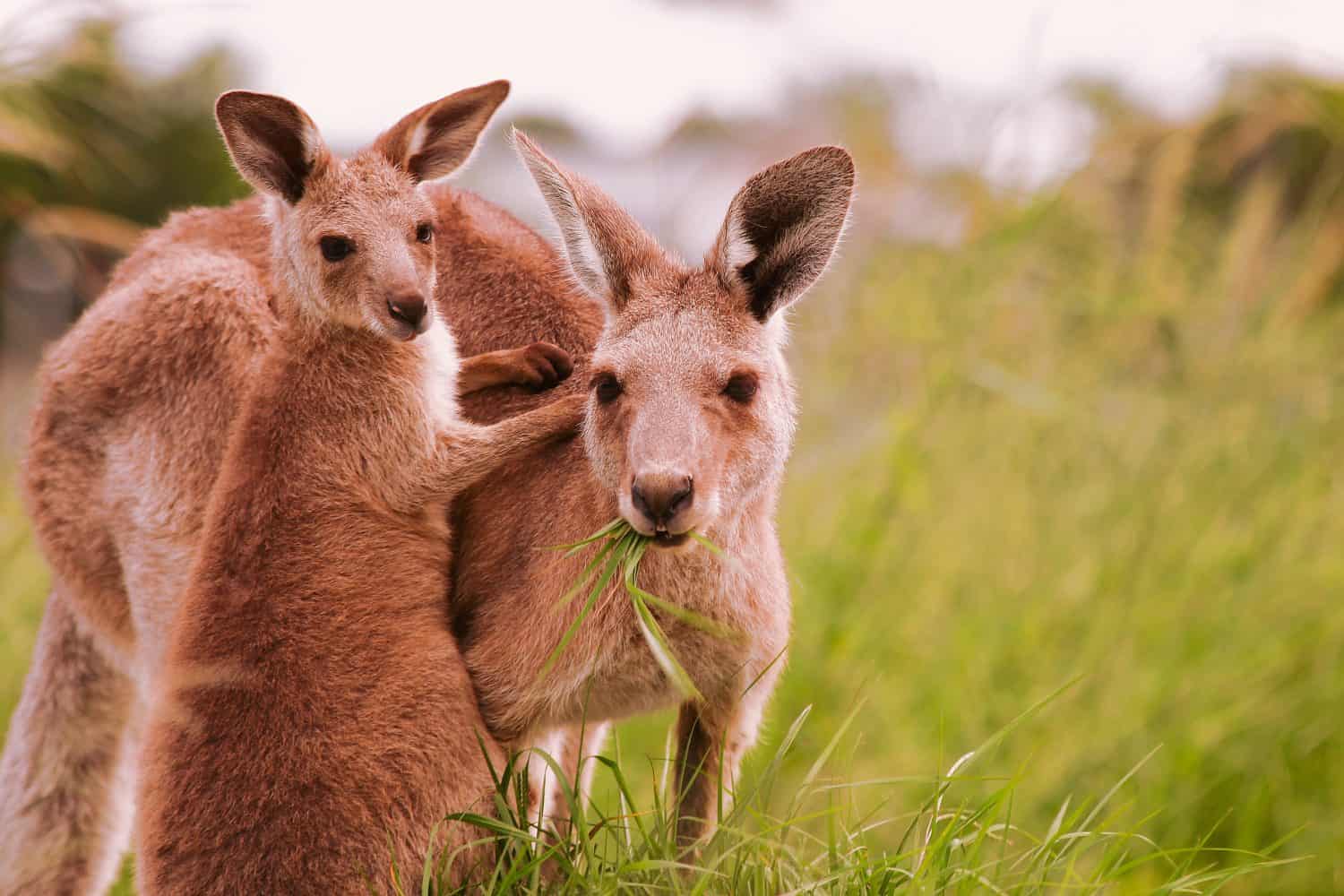

Quick Take
- Adorable baby animal videos are some of the internet’s favorite things to watch.
- This Instagram video depicts a joey excitedly crawling into its mother’s pouch.
- Kangaroo pouches offer warmth, support, protection, and a “nursery.”
- Mother kangaroos are able to offer their babies different milks for different stages of development.
There’s nothing cuter than baby animals. When having a rough day, a sweet video of a baby and their mother is sure to cheer you up. We have the perfect video for you: one of a kangaroo joey climbing into its mom’s pouch. The video comes from an Instagram post by @animaledventures and even shows the joey nursing inside the pouch. Read here to learn more!
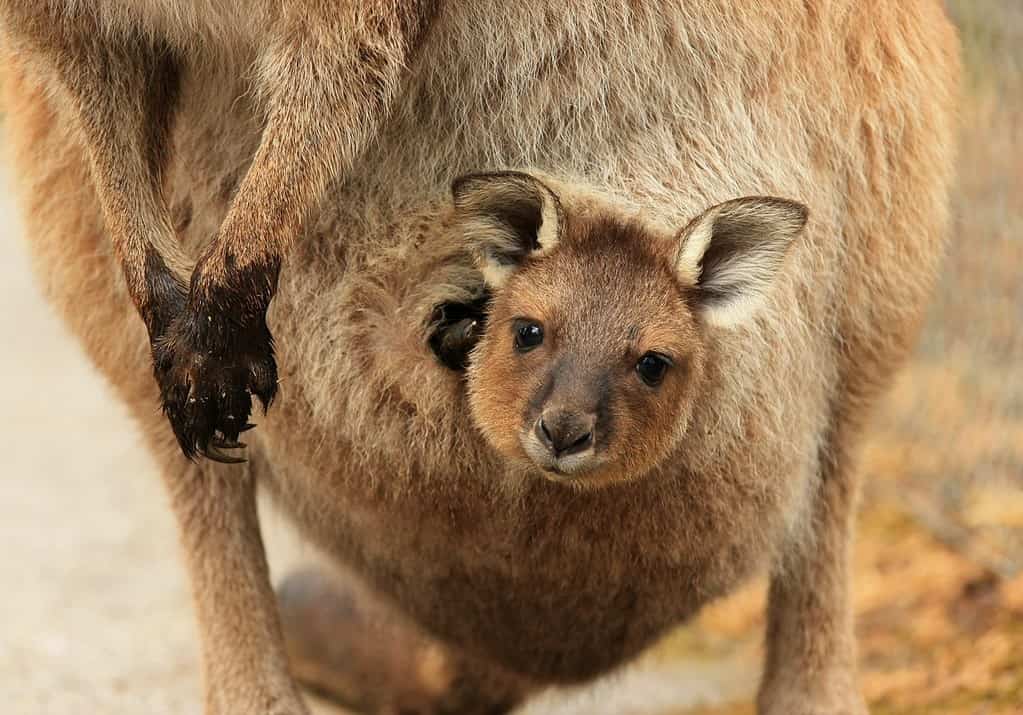
Kangaroo joeys stay in their mothers’ pouches throughout the first year of their lives.
©K.A.Willis/Shutterstock.com
Baby Joeys
The video above is beyond adorable. It shows a baby kangaroo jumping into its mother’s pouch and breastfeeding. The moment is especially heartwarming because of how excited the baby seems. Kangaroo joeys typically stay in their mom’s pouches for around eight to 11 months total. The pouches offer a sense of comfort for joeys for many reasons. For starters, the warm and cozy environment is perfect for the baby’s development. It’s almost like being wrapped in a warm blanket on a cold day. These pouches are also muscular and strong. Since the mother spends much of her day rapidly hopping around, the pouch needs to be sturdy to support the baby. The pouch also physically provides a barrier, helping to keep the joey safe from any potentially harmful environment. While it is adorable to see a joey’s head poking out of its mother’s pouch, the mechanism is also extremely practical.
Kangaroo Nursing
The pouch isn’t just a comfortable spot for the joey; it also serves as a nursery. Inside the pouch are four nipples from which the joey can feed. Kangaroo mothers are amazing, as they make custom milk for babies at different stages. The nipples that a newborn and a larger joey use are different, allowing the mother to provide the appropriate milk for babies at each unique stage of life. For example, one teat may produce a fattier milk, while another provides a more protein rich sustenance. Newborn joeys are permanently attached to a teat for about two to three months. Joeys do not begin weaning until about one year of age.