
Quick Take
- Cute social media videos of pet gibbons are quietly fueling one of the most destructive wildlife trades in Asia. Explore what drives demand →
- Most of the gibbons seized by authorities never had a chance, and the numbers make clear that enforcement alone cannot fix this. See enforcement challenges →
- Rescuing a baby gibbon from the illegal pet trade doesn't mean it will ever return to the wild, and the reason for that is harder to fix than you'd think. Understand rehabilitation limits →
In the hills of northern Thailand, the Omkoi Wildlife Sanctuary has become a critical refuge for one of the region’s most heavily trafficked wild animals – gibbons.
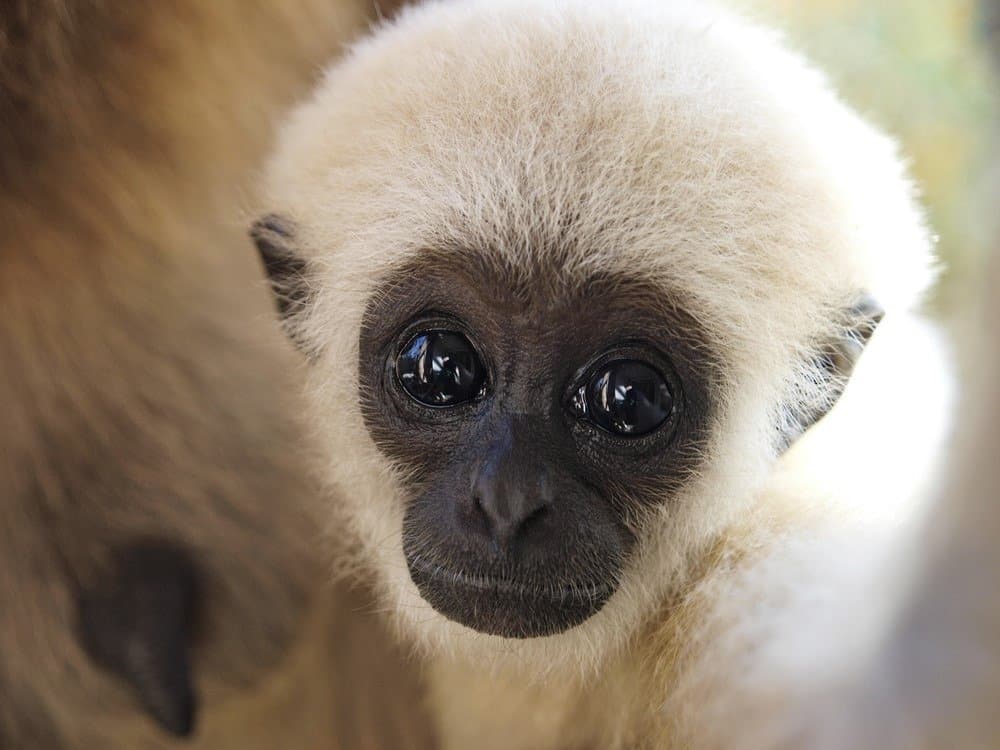
One of the newest arrivals is an infant gibbon, whom the staff has named Chokdee, which means “good luck.” Chokdee was found alone in a local village, and nobody is sure how he ended up there. For Karin Hirankailas, the head of the sanctuary, it’s another example of gibbons being forcibly removed from the wild.
“I believe someone removed this gibbon from its original habitat,” she said in a recent Guardian news story. Given the popularity of these small apes as pets and a thriving illegal pet trade in Southeast Asia, she likely isn’t wrong.
Why Are Gibbons So Popular?
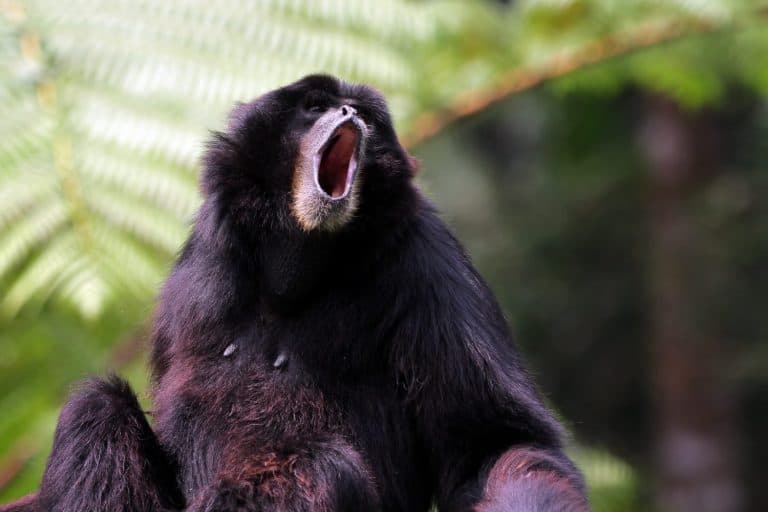
Gibbons are the smallest members of the ape family. These small, tailless primates live in the tropical forests of South and Southeast Asia. They are most recognizable by their loud chatter and long forearms that they use to swing from branch to branch in the forest canopy.
They’re generally monogamous and often remain with the same partner for many years, raising their young in close family groups. They reproduce slowly, with females having offspring only every two to three years. Infants stay with their mothers and are fully dependent on them for about the first year, until they are weaned. Members of each family unit communicate with each other using a series of complex vocalizations that can be heard for miles.
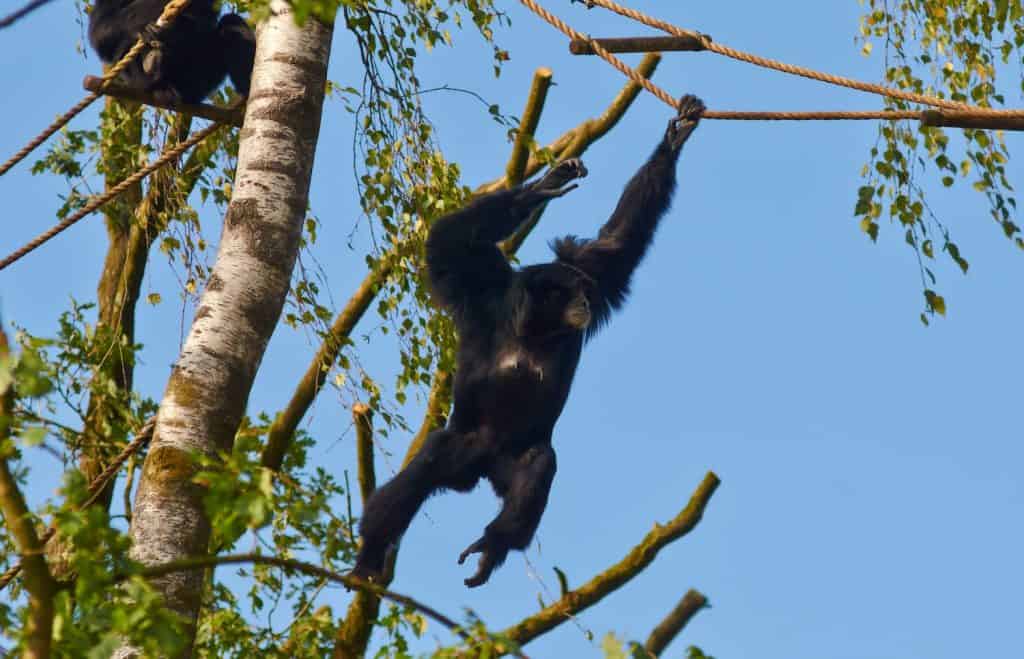
Gibbons are the smallest members of the ape family.
©tatianaput/Shutterstock.com
There are about 20 recognized species found across northeast India, Southern China, and the Indonesian islands. According to the IUCN Red List, five species are listed as critically endangered, 14 are endangered, and one is vulnerable. Gibbons are one of the most threatened primate species in the world.
The Scale of the Illegal Pet Trade
According to TRAFFIC, a non-governmental organization dedicated to ensuring that trade in wild species is legal and sustainable, illegal gibbon trafficking reached an all-time high in 2025. Between January and August 2025 alone, more than 336 individual gibbons were confiscated across South and Southeast Asia. The number seized in 2025 alone accounted for 20 percent of all gibbons confiscated over the entire decade.

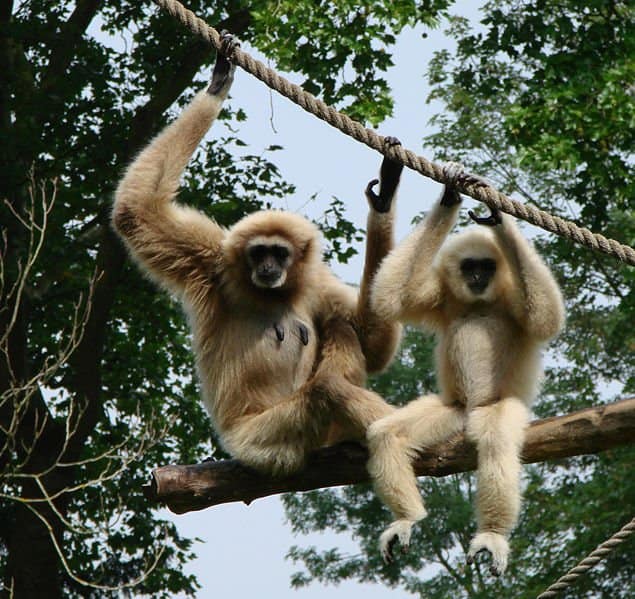
Baby gibbons are dependent on their mothers for up to two years.
©afrank99 / Creative Commons – Original
Southeast Asia accounts for the majority of the seizures, according to the organization. However, increased demand in India has resulted in more gibbons than ever before being trafficked from Malaysia to India. In May 2025, seven dead gibbons were found in checked luggage from an arriving flight at Mumbai International Airport. Two people, traveling from Malaysia, were arrested.
What Is Driving Demand?
Conservation groups and anti-trafficking authorities point to increased demand for baby gibbons as pets. The trend is fueled by social media content that portrays gibbons as cute companions. Demand also comes from private zoo collections and people who view exotic animal ownership as a status symbol.
While India is the latest country where gibbon demand has skyrocketed, other places show similar interest in these tiny primates. One investigation found a steady increase in gibbons advertised for sale on Facebook in Indonesia between 2020 and 2025. Unscrupulous sellers use fake names, hidden locations, and complex money transfer schemes to avoid being discovered.
The Impact on Wild Gibbon Populations
The impact of trafficking baby gibbons goes far beyond the animals that ultimately make it to their final destination alive. During transit, an estimated 90 percent of the captured animals die. But the fatalities extend beyond the gibbons actually in transit.
Conservation groups estimate that between three and four wild gibbons perish for each live gibbon taken from the wild. Baby gibbons are most often the target for live captures, since they are most sought after as pets and are easier to transport. However, capturing an infant is not as easy as it may seem, because gibbons live in close family groups that fiercely protect their young.
Poachers sometimes kill entire families to get to an infant gibbon.
©Vassil – Public Domain
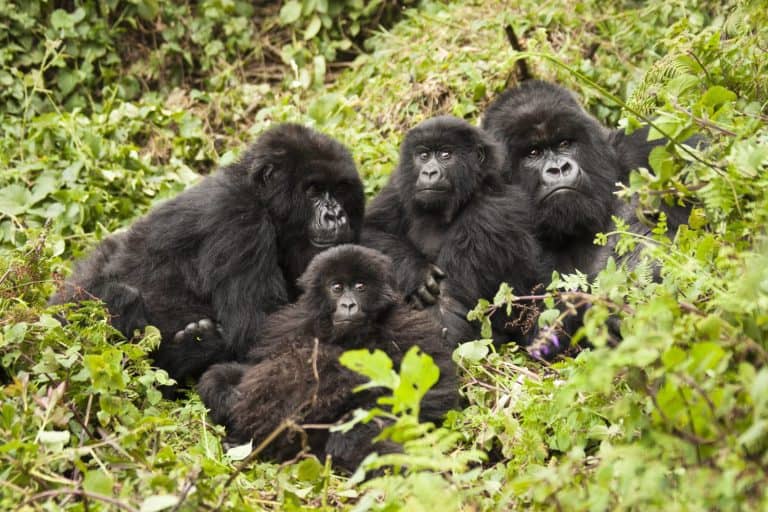
Gibbons live in tight-knit family groups. When poachers try to take a baby, they are often met with fierce resistance from the entire family. At the very least, the mother is killed. Often, though, poachers end up killing many other family members in the process. One conservation group estimates that as many as seven deaths are associated with a single infant capture.
What’s Being Done to Protect Wild Gibbons?
Several conservation groups are actively trying to reduce illegal gibbon trafficking, with mixed results. Organizations like Thailand’s Gibbon Rehabilitation Project have released more than 100 rescued gibbons back into the wild.
However, not every gibbon is eligible to be returned to its natural habitat. As Hirankailas explained in the Guardian story, rehabilitating orphaned gibbons is rarely successful. When infants like Chokdee arrive at the sanctuary, they will likely spend the rest of their lives there. It is often impossible to teach them how to survive independently in the wild.
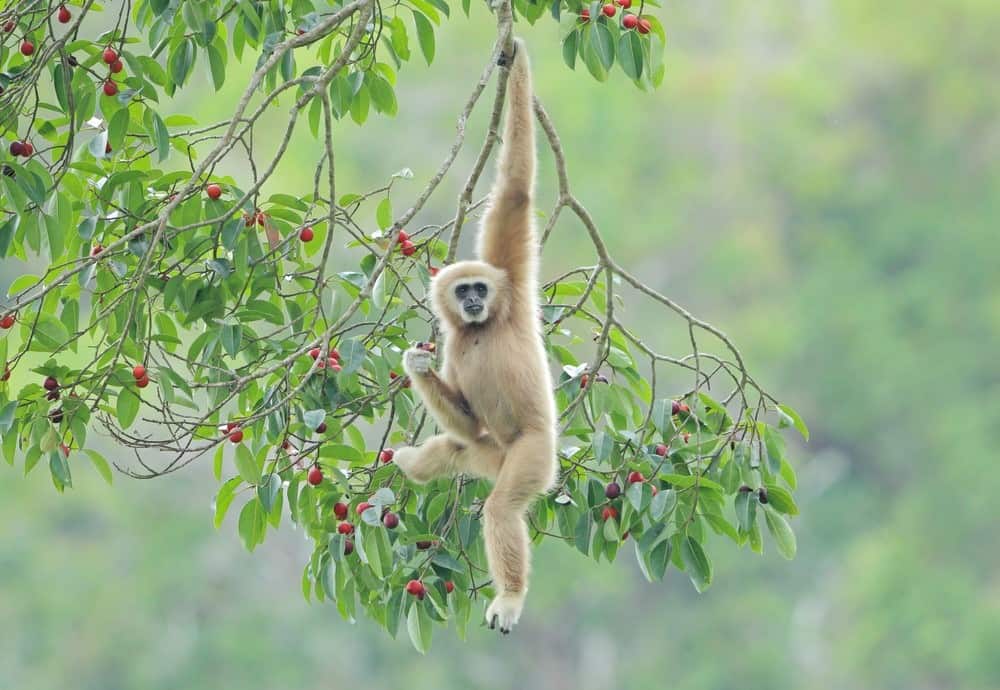
Some rescued gibbons can never be re-released into the wild.
©teekayu/Shutterstock.com
Conservationists agree that helping gibbons after the fact is less successful than stronger protections to keep them from being captured in the first place. While laws are on the books in places like Indonesia, the penalties for illegal gibbon trafficking are often weak.
According to one report, legal loopholes and weak enforcement mean few are convicted after arrest, especially when the case involves only a few gibbons. Other times, authorities within a country are themselves involved in illegal wildlife trafficking.