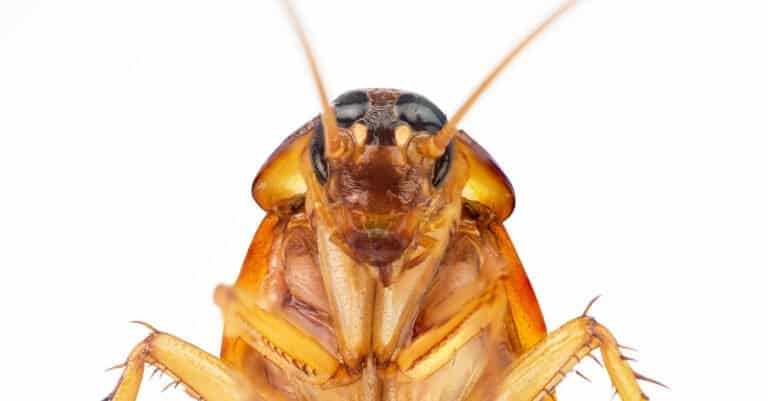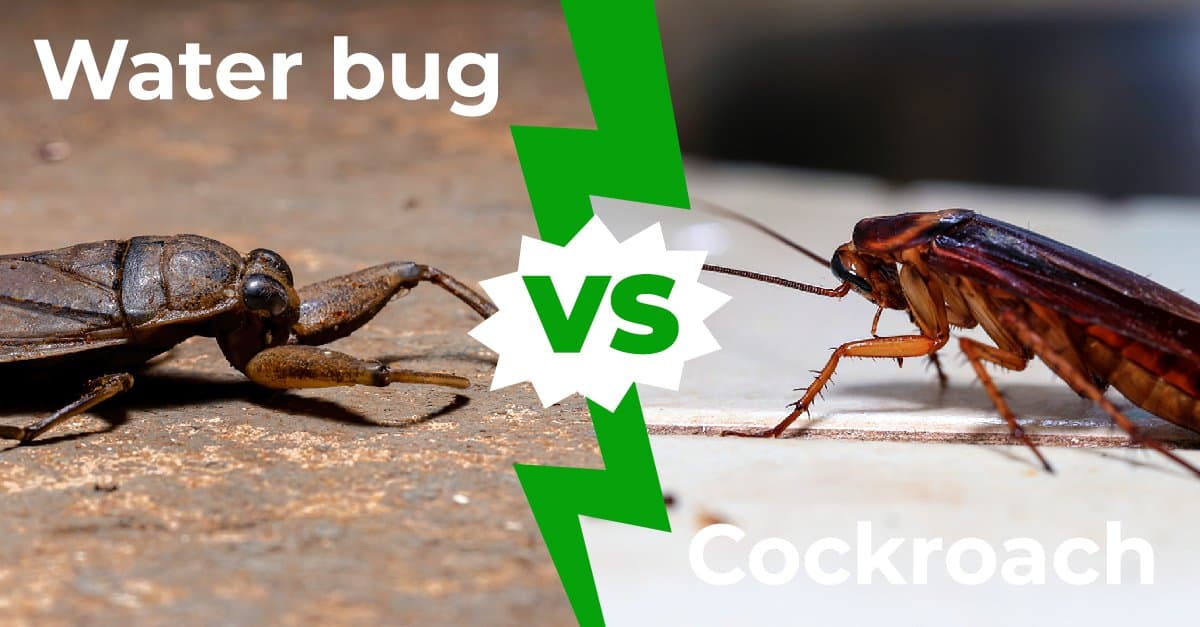

Both cockroaches and water bugs are extremely common pests in the United States. They infest the same areas in the home too, such as the basement, bathroom, kitchen, or laundry room. This raises the question: are water bugs technically roaches? Are these bugs more similar than we realize?
We’ll go over all the differences between the water bug and cockroach below so you can know what you are dealing with when you see it!
Comparing Cockroach vs. Water Bug
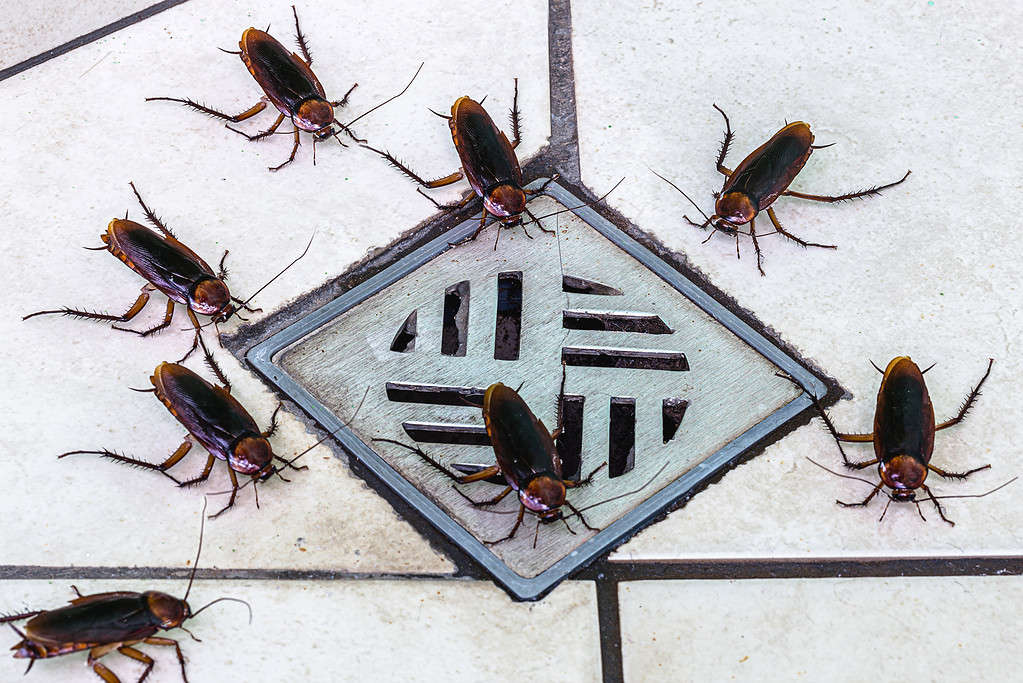
While water bugs and cockroaches infest similar locations, they are different bugs.
©RHJ/iStock via Getty Images
| Cockroach | Water Bug | |
|---|---|---|
| Size | 0.075-3 inches long | 2-4 inches long |
| Color | Red, brown, tan, black | Brown, tan, grey (Oriental is darker) |
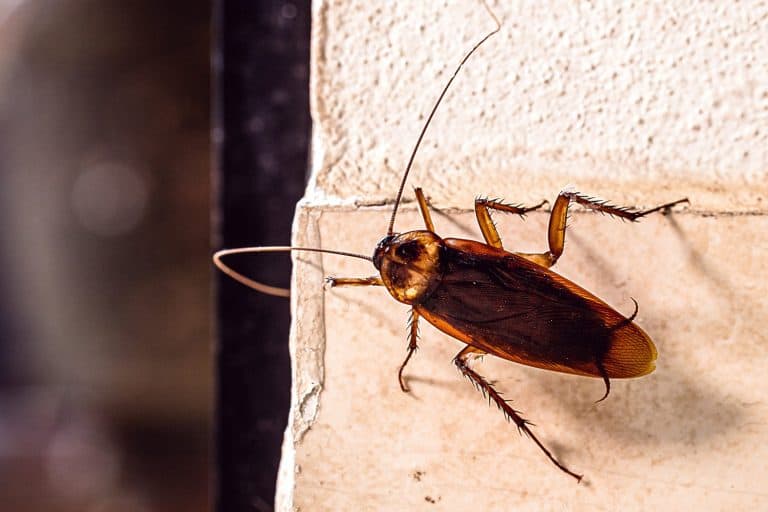
| Body | Flat, oval body, no wings or less prominent wings, long antennae, spine-covered legs, downward-facing head | Flat, oval body, wings, short antennae, piercing mouth, pointed beak, clawed front feet |
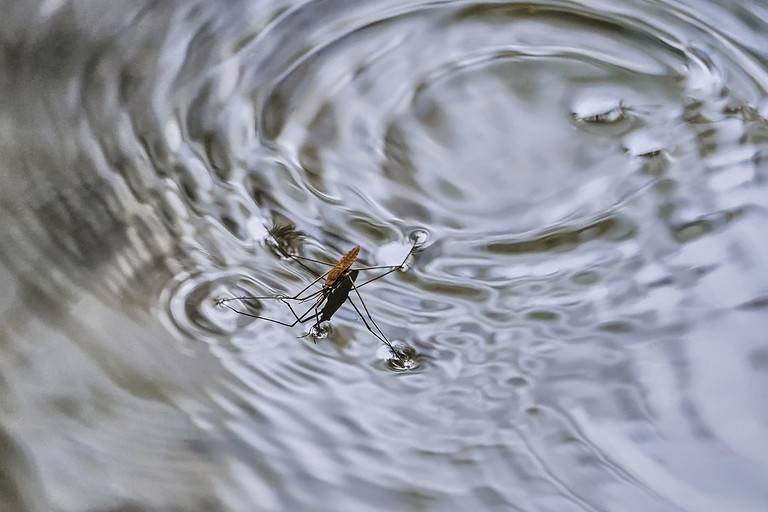
| Habitat | Warm, dark indoors | Moist, dark freshwater ponds, lakes; near lights |
| Taxonomy | Order Blattodea, different families, genera, and species | Predatory, scavengers (algae, garbage) |
| Group behavior | Group | Solitary except during the mating season |
| Diet | Scavenger | Predatory, scavenger (algae, garbage) |
| Terminology | Land-dwelling cockroach | Aquatic, Oriental cockroach |
| Bite | No | Yes |
5 Key Differences Between Cockroach and Water Bug
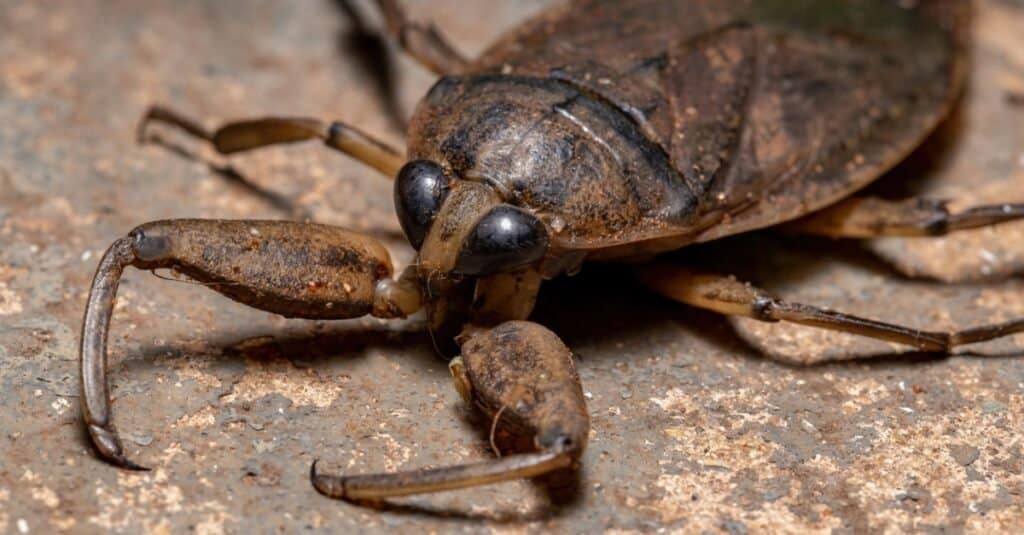
Water bugs are typically far larger than cockroaches.
©iStock.com/ViniSouza128
There are multiple distinct differences between cockroaches and water bugs. The term “water bug” is broad and can apply to several different insects that live in freshwater or on the water’s surface. The amphibious water bug is just one of 1500 species of water bugs, whereas cockroaches are land-dwelling. These bugs belong to distinct orders and species despite their occasional overlap in habitats.
When comparing the water bug vs. cockroach, in what ways do they stand apart? Here are their differences in detail.
Cockroach vs. Water Bug: Size
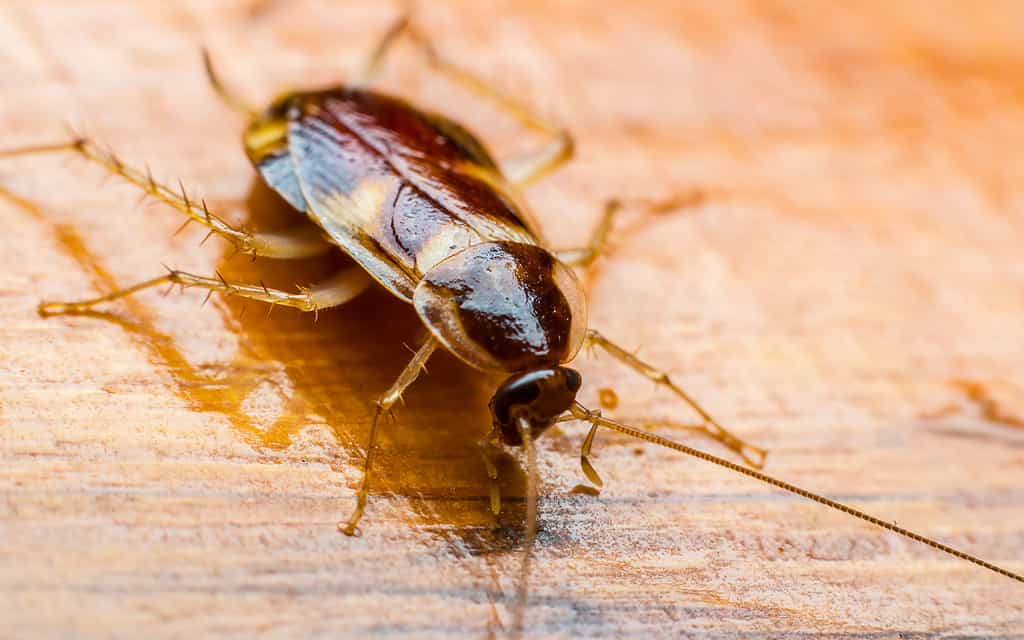
Some cockroach species have wings, but they are not as prominent as those of water bugs, which are more adapted for flight.
©iStock.com/Wi6995
When it comes to size, the water bug always dominates the cockroach in size, measuring anywhere from 1 to 3.25 inches longer than any cockroach. Even if you don’t see them side-by-side, you can still have a good idea of which is which.
Cockroach vs. Water Bug: Body
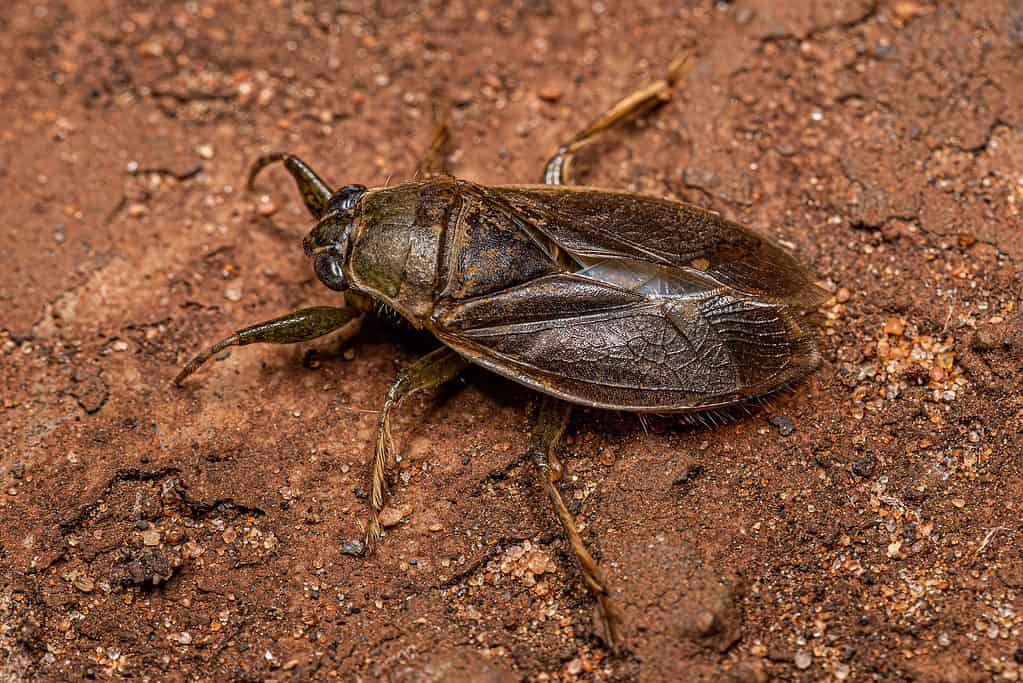
Cockroaches don’t have the same piercing mouth as water bugs do.
©iStock.com/ViniSouza128
When discussing physical features, it’s important to keep in mind that we are simply distinguishing the Oriental cockroach, also called a water bug or black beetle, from land-dwelling cockroaches. The American, Smokybrown, German, and Oriental cockroaches are all called “water bugs,” but the only aquatic species are found in the Hemiptera order.
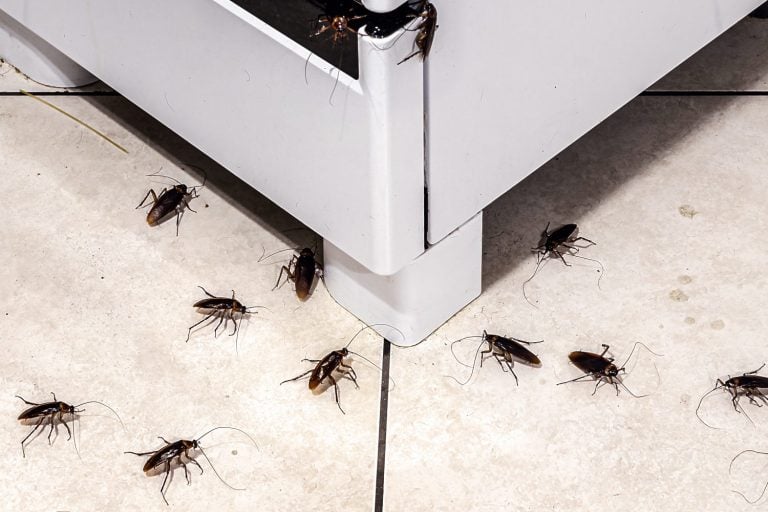
Cockroaches all have flat, oval bodies with antennae. The land-dwelling roaches have long antennae, spine-covered legs that look hairy, downward-facing heads, and occasionally wings (which may or may not be functional). Water bugs have short antennae, wings, clawed front feet, a pointed, short beak, and piercing mouth.
Cockroach vs. Water Bug: Habitat
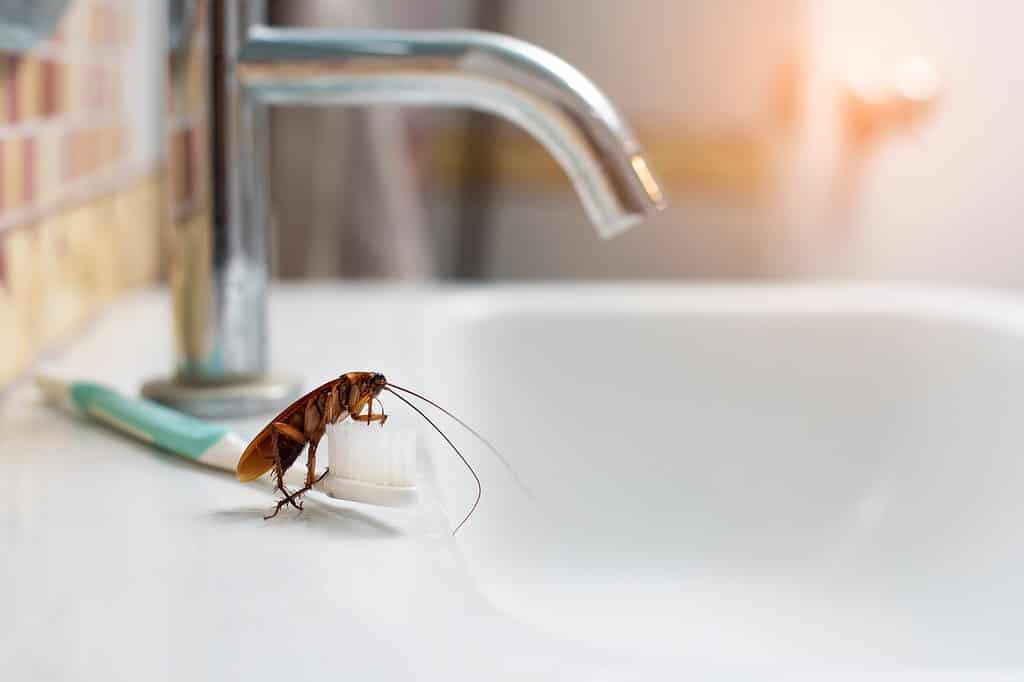
Cockroaches shy away from light more than water bugs do.
©Pasonglit Junuan/Shutterstock.com
When comparing the habitat of the water bug and roach, the land-dwelling cockroach is adaptable, although it prefers warm, dark enclosed spaces, and will move indoors to escape the cold of winter. The water bug, on the other hand, prefers moist and dark areas near freshwater ponds and lakes. It is also seen flying near lights during mating season. Many cockroach species have wings, and some can fly, although they generally prefer to avoid light. This is why cockroaches run away when you turn the light on in a previously dark room.
Cockroach vs. Water Bug: Predators
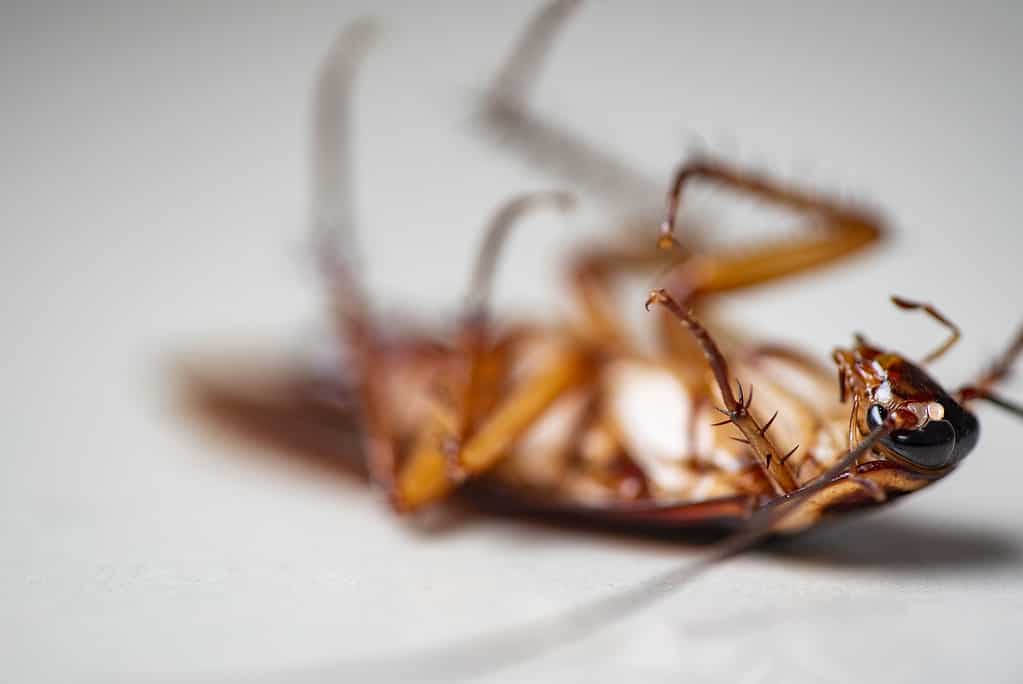
Water bugs are more likely to be eaten by aquatic birds compared to the land-dwelling cockroach.
©iStock.com/panida wijitpanya
Who’s more likely to get eaten by what? It’s all a matter of location in this case, since different environments present different predator threats. Cockroaches are eaten by small mammals, insects, and arachnids. Water bugs are hunted by aquatic birds, fish, and wasps. Both types of bug can become the prey of frogs and other amphibians. And, of course, they can both be terminated by the pest control efforts of human beings.
Cockroach vs. Water Bug: Group Behavior
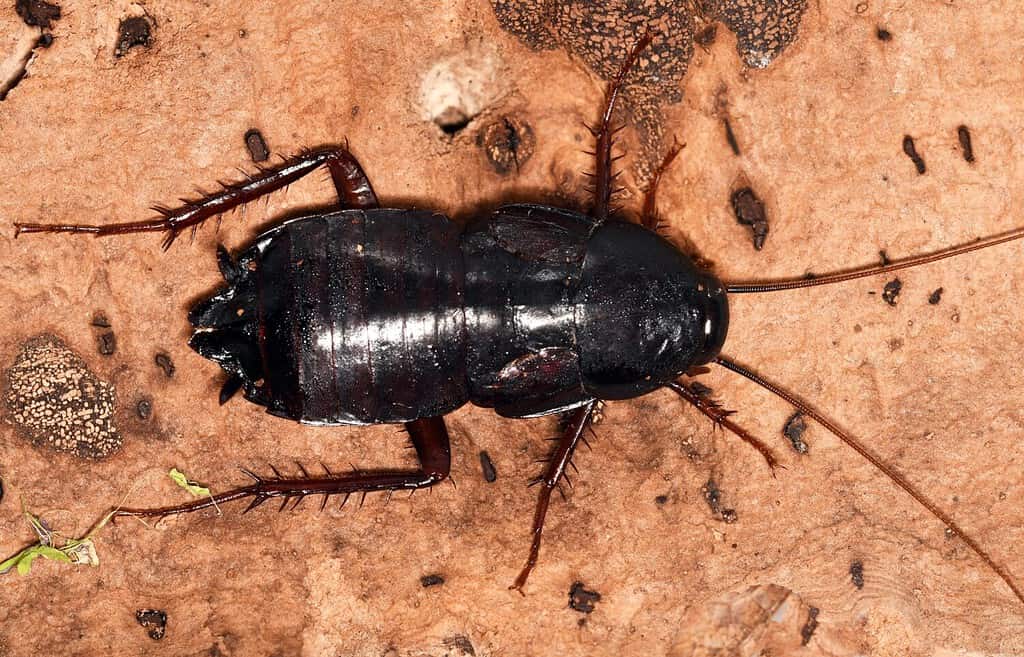
Water bugs are far more solitary compared to cockroaches.
©Guillermo Guerao Serra/Shutterstock.com
Cockroaches enjoy being surrounded by each other as often as possible. Water bugs are fairly solitary except for mating season. If you encounter either one, a little more investigating will tell you whether it is a solitary insect or there is a group of them. If it is alone, it is likely a water bug. If you find a group of them, they are cockroaches.
Cockroach vs. Water Bug: Diet
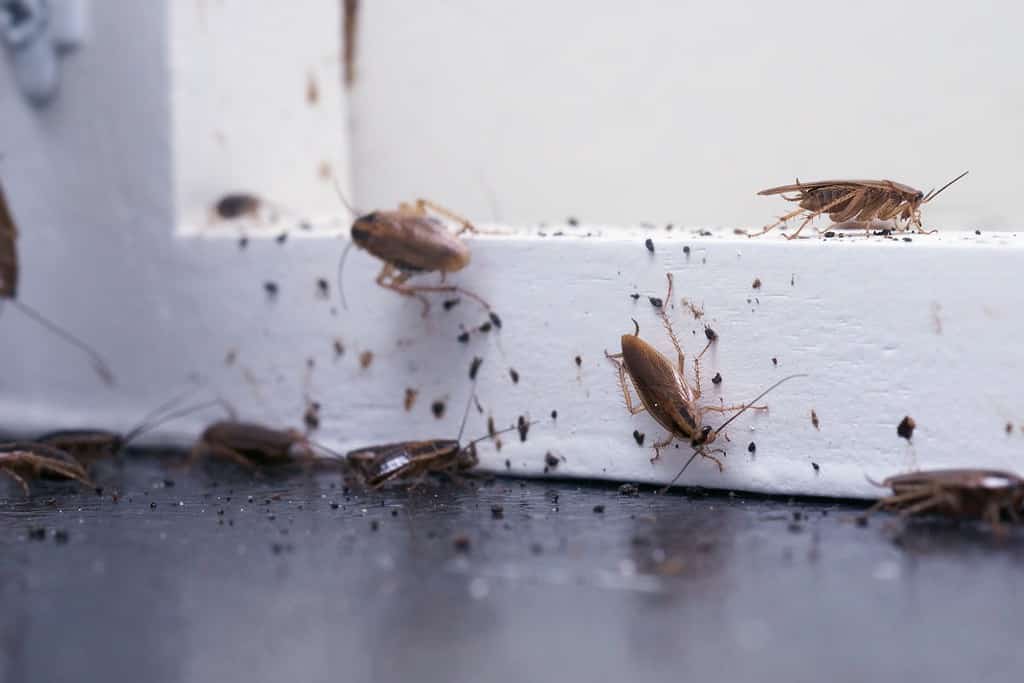
Cockroaches scavenge more than water bugs.
©IrinaK/Shutterstock.com
Both of these roaches can be scavengers. The difference between the water bug vs. roach is the predominant diet. Cockroaches are scavengers and will feed on food, garbage, and rotting things. Water bugs are predatory and will hunt smaller creatures. However, they’ll also feed on algae and garbage whenever possible.
If you live in an area where cockroaches or water bugs are common, it is important not to leave any food out or you might end up sharing your home with these unwanted guests.