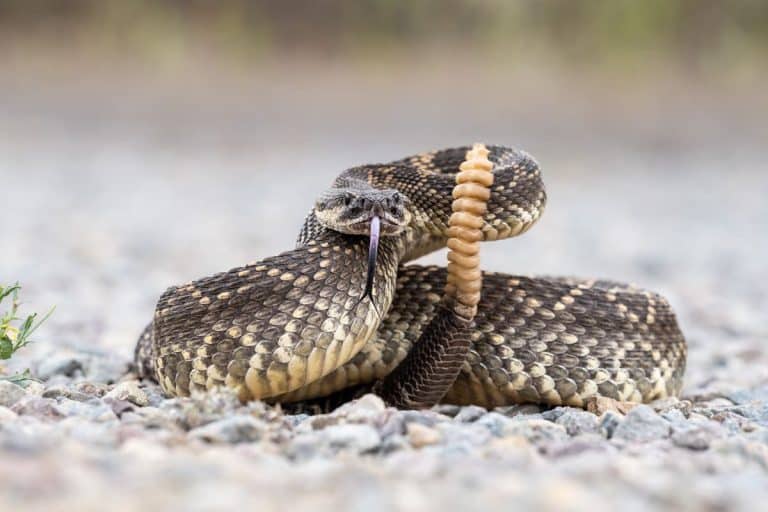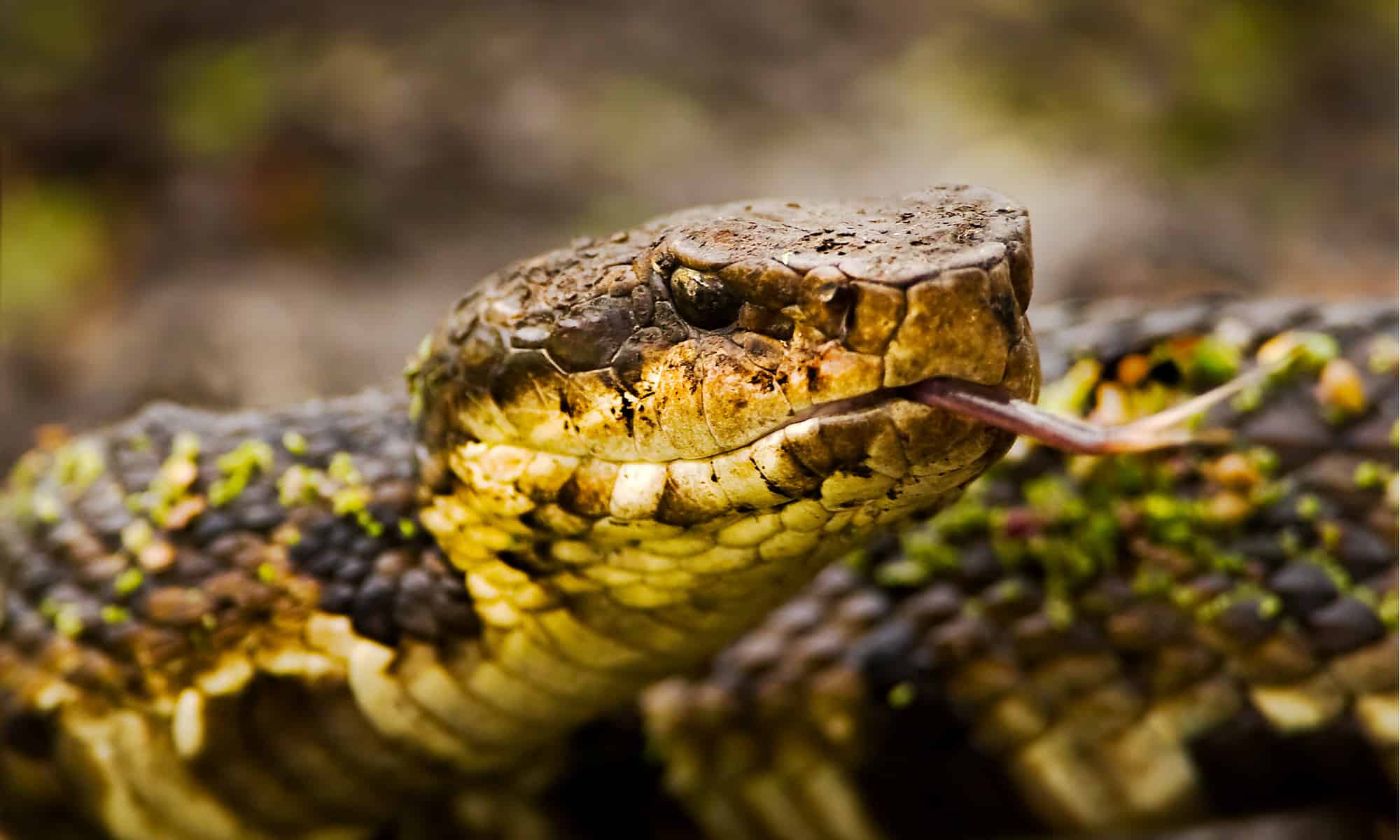

Walking near a riverbank, you may have spotted a thick snake lying in a patch of sun and frozen in your tracks. Is it a venomous cottonmouth, or just a harmless hognose snake? From a distance, it’s an easy mistake to make. Both species grow to about the same size, have earth-toned colors, and can be dramatic when they think danger is near. But despite their similarities, they’re really different in venom, habitat, and temperament. Knowing the difference could save you a lot of worry or even a hospital trip.
The Cottonmouth
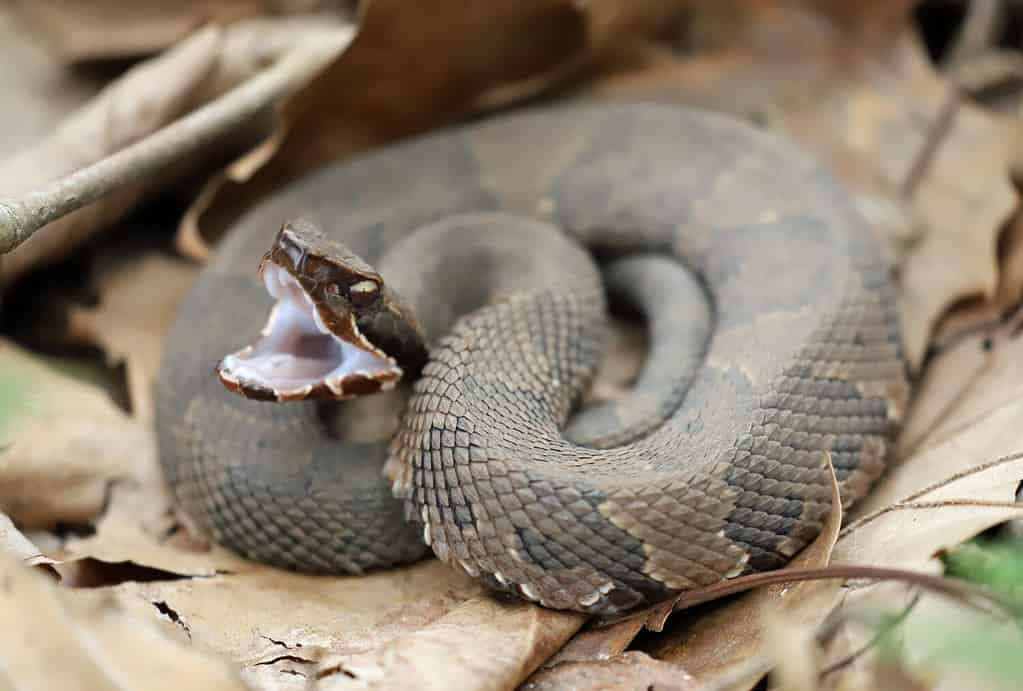
Water moccasin is another name for the cottonmouth.
©KF2017/Shutterstock.com
The cottonmouth, also called the water moccasin (Agkistrodon piscivorus), is one of the few venomous snakes native to North America. Joe Marquard, Service Manager with Killingsworth Environmental in Charlotte, North Carolina, is an expert in snake removal.
“Cottonmouths are vipers in the same family as copperheads. They have a similar pattern to copperheads, but are typically dark brown, making the pattern harder to see,” Marquard says. “Cottonmouths get their name from the mostly white inside of their mouth that they open wide to show you they mean business.”
Adults can grow up to as long as 6 feet with heavy, muscular bodies. Like other pit vipers, cottonmouths have wide, triangular heads, slit-like vertical pupils, and heat-sensing facial pits. They often have a crossband pattern that can give the appearance of a rattlesnake. They are lighter on the belly, and juveniles have brighter markings and a yellow-tipped tail.
The Hognose Snake
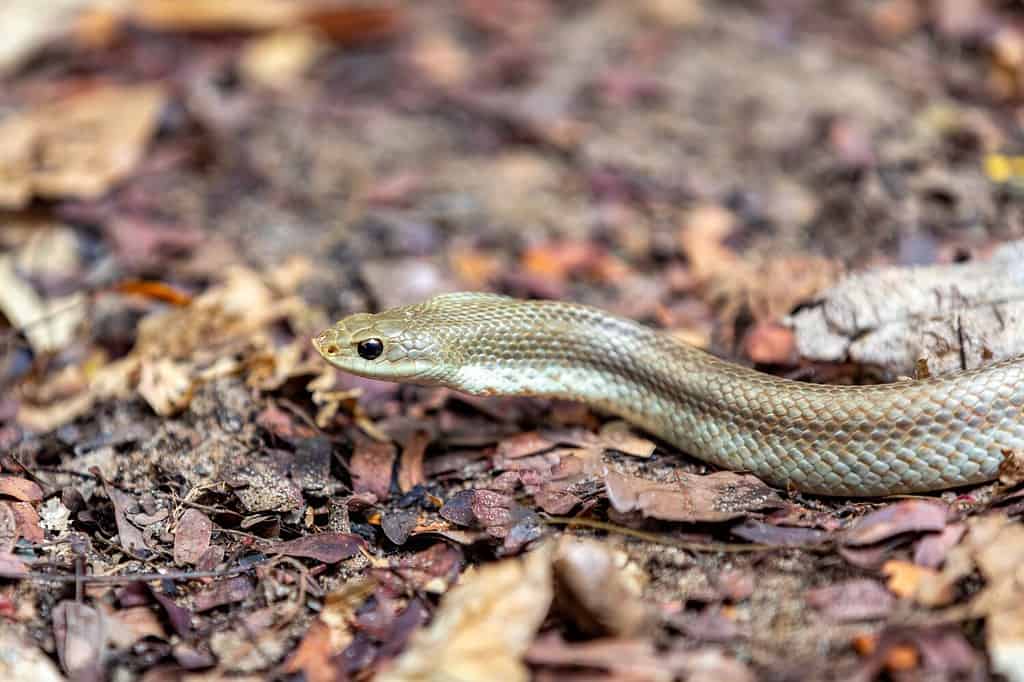
The Hognose snake can grow to between two to four feet by the time they’re adults.
©Artush/Shutterstock.com
The eastern hognose (Heterodon platirhinos) is a nonvenomous snake that can reach two to four feet long. Its name comes from its upturned snout, shaped almost like a pig’s nose. Hognose snakes come in a wide range of earth colors, from pale yellow to tan to gray or dark brown. There is usually some variation in the color, with darker blotches.
In Marquard’s experience, here’s what you can expect from a hognose snake: “Hognose snakes have a variety of colors, including all black. The easiest way to tell the difference between it and a cottonmouth is in head shape, but this is not foolproof, as many snakes will change their head shape as a defensive posture to try and appear like a viper. When not in a defensive posture, Hognose snakes’ head and body are very close in width, and their nose points upward, which is where their common name is derived from. When in a defensive posture, Hognose snakes will widen and flatten their head. Another way to tell the difference is their go-to defensive tactics. Hognose snakes tend to play dead when threatened. They will roll on their back and stick their tongue out to trick would-be predators into thinking they wouldn’t be a good meal.”
Habitats
Joe Marquard, Service Manager with Killingsworth Environmental
As far as habitats go, Marquard says, “Cottonmouths tend to be in wetter areas, near bodies of water or swampy areas, hognose tend to be in drier areas with sandier soil that allows them to burrow more easily. There can be overlap, though, as snakes will go where they need to from human and environmental pressures.”
Both snakes are widespread in the southeastern United States. Eastern hognose snakes tolerate cold weather better, so their range extends further, through the Midwest, Northeast, and into southern Canada.
Venom

If you’re not sure of a snake’s identification, it’s important to get medical attention immediately after a bite.
©Microgen/Shutterstock.com
Venom is the most important difference between these two species. Cottonmouths are highly venomous. Their bite injects hemotoxins that damage tissue, disable prey, and, if untreated, can be life-threatening. Cottonmouth venom is strong enough to bring down fish, frogs, birds, reptiles, and mammals alike. Human fatalities are rare with modern treatment, but a bite requires immediate medical attention to manage the symptoms and prevent them from causing tissue and organ damage.
The hognose snake is considered mildly venomous, possessing rear fangs that deliver a weak venom specialized for subduing toads. But in people, reactions range from nothing at all to slight swelling or itching. No deaths have been documented from a hognose bite.
Does that mean it’s ok for you to handle a hognose snake? Marquard cautions that it isn’t a good idea.
“Hognose don’t tend to bite and only have a very mild venom, so it would generally be safe for homeowners to handle them, but I still wouldn’t recommend it as you should never handle a snake you aren’t 100% sure of the species,” he says. “Even without significant medical risk, bites can still be a painful and unpleasant experience.” This is not to mention that even a non-venomous bite can introduce bacteria and cause infection.
What They Eat
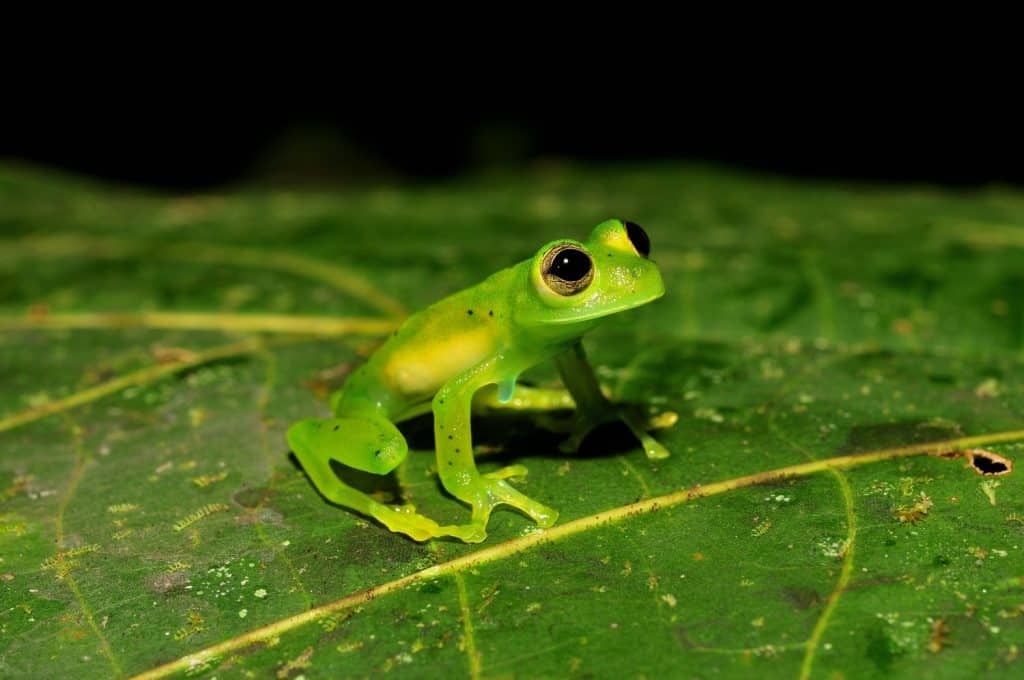
Cottonmouths have a wider range of what they eat; however, both snakes will eat very similar prey.
©Sapodorado26/Shutterstock.com
Cottonmouths are opportunistic hunters. They will eat almost anything they can overpower: fish, frogs, salamanders, birds, rodents, and even other snakes. Their strategy is simple—strike, inject venom, and wait for the prey to collapse before swallowing it whole.
Hognose snakes are pickier. Toads make up the bulk of their diet, though they also eat frogs, salamanders, and small mammals when available. Their upturned snouts are perfect for digging toads out of sandy soil, giving them an edge in their preferred habitat.
Cottonmouths are typically larger than hognose snakes, so in a fight, cottonmouths would make easy prey of the poor hognose.
Joe Marquard, Service Manager with Killingsworth Environmental
Behavior and Temperament
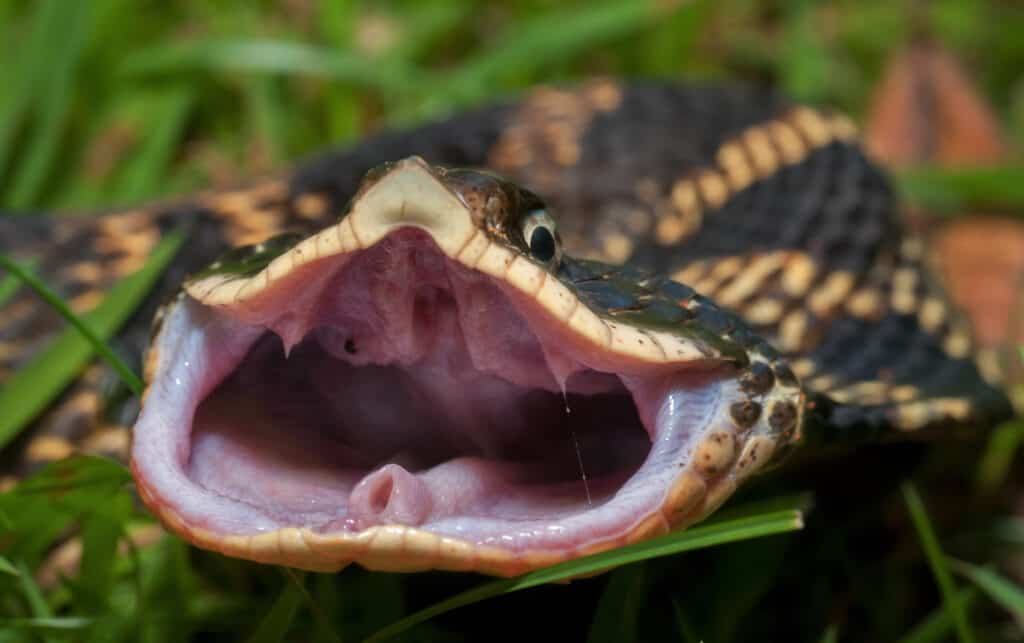
Both snakes have different methods of warding off potential threats to aid them in their escape.
©Mike Wilhelm/Shutterstock.com
Although their default defense is to get away from danger, cottonmouths are more likely than many snakes to hold their ground when startled. They may coil, vibrate their tails, and gape their mouths in an intimidating warning display. Their main objective, though, is to scare off the danger, at least enough that they can make their escape to the water.
Hognose snakes are even more dramatic. Lacking the venom of the cottonmouth, they put on a cobra act by flattening their necks and hissing ominously. If that doesn’t work, they go to the other extreme and roll onto their backs and let their tongues loll out, pretending to die. Some even release a foul odor to make the death act seem even more real and repulsive. The whole show is harmless, though. Hognose snakes almost never bite.
How to Tell Them Apart
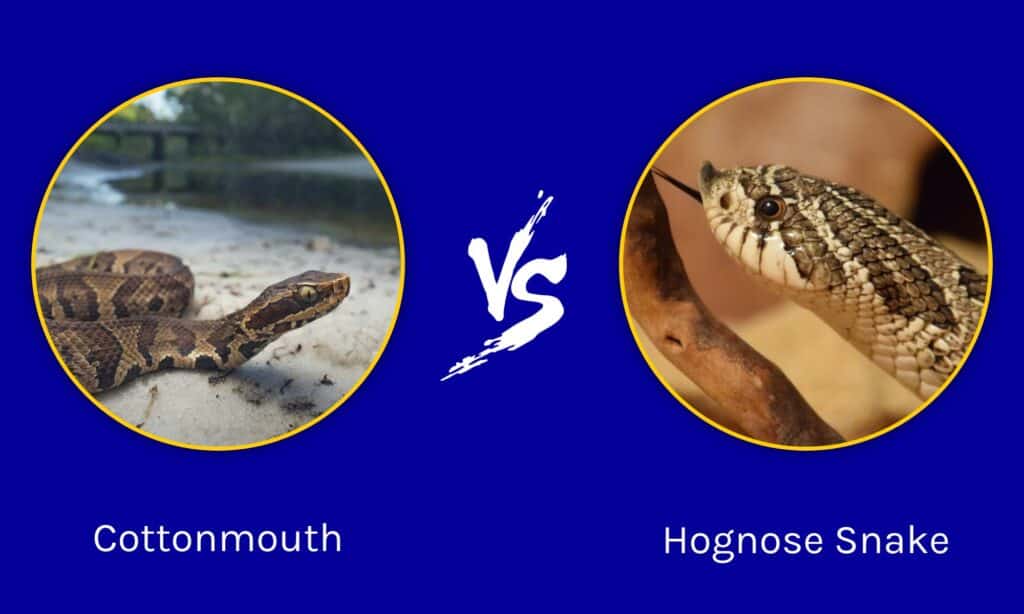
It isn’t hard to see why so many hikers mix up these two species. Both have stout bodies averaging around three feet, both live in parts of the southeastern United States, and both put on bold displays when startled. They may bask in the sun or disappear into the brush in similar ways. From a distance, a stocky, blotched snake throwing a dramatic warning can easily look like something more dangerous than it is.
Despite their similarities, several clear markers help separate the two. Cottonmouths have broad, triangular heads and vertical pupils, while hognose snakes’ heads blend more smoothly into their necks, and their eyes have round pupils. You’re more likely to find a cottonmouth near water but a hognose snake in dry soil. A cottonmouth will flash its white mouth if threatened, whereas a hognose will roll over and play dead. And if you happen to see a juvenile, the cottonmouth’s bright yellow tail tip is an instant giveaway.
Who Would Win a Fight?
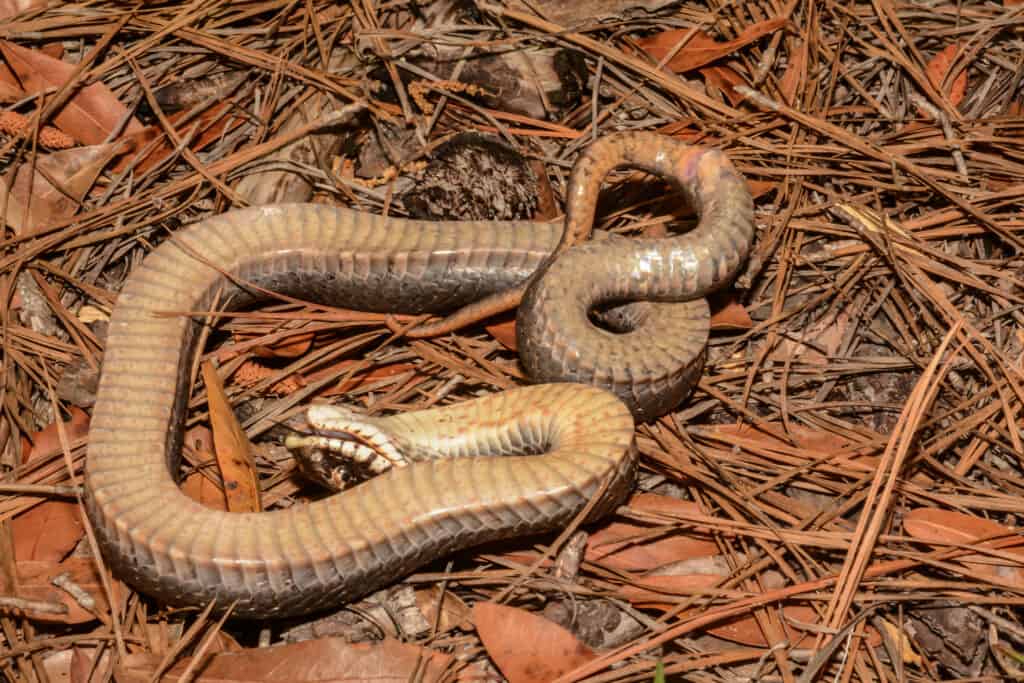
This is not a dead snake. It’s a hognose snake playing dead.
©Jay Ondreicka/Shutterstock.com
So let’s pit these two species against one another. Which would win in a fight? To Marquard, there’s no question. “Cottonmouths are typically larger than hognose snakes, so in a fight, cottonmouths would make easy prey of the poor hognose,” he says.
This is also true because cottonmouths are opportunistic predators and will eat almost anything they can overpower, including other snakes. Their strike is strong, and they have a much more powerful bite force than a hognose snake. Though the hognose is not their typical prey, there’s no doubt they would eat one if they had the chance. As for the hognose, it is smaller, has rear-facing teeth, weak venom, and a much weaker bite force than the cottonmouth. Its main defense is a “play dead” bluff that might just be the quickest way to get itself eaten!
Two Useful Species
Cottonmouths and hognose snakes may cause a moment of panic, but each plays a useful role in the ecosystem. Cottonmouths keep populations of fish, frogs, and small animals in balance, while hognose snakes specialize in controlling toads. One has dangerous venom; the other relies on elaborate acting. By learning to recognize the differences, outdoor explorers can have less fear and more admiration (from a distance) of the snakes they might encounter.