
If you’ve found some suspicious little objects in your home that look remarkably like poop, it may indicate that you have some uninvited guests. Both bats and mice can take up residence in human dwellings, taking advantage of the warmth and shelter that our homes provide. You can’t really blame them! But that does not mean that they will be welcome, and you may want to do something about your visitors. To do this, you first need to work out which animals are occupying your home. Are they bats or are they mice? Believe it or not, you can tell this just from their poop. Read on to find out how.
Mice in Houses

If you have one mouse in your house, you need to eliminate it before it leads to an infestation.
©Landshark1/Shutterstock.com
There are many different species of mice in the US. The three that are considered major pests in houses are the house mouse (Mus musculus), the deer mouse (Peromyscus maniculatus), and the white-footed mouse (Peromyscus leucopus).
Mice often build nests in roof spaces and under floors or in wall cavities. They are naturally inquisitive and can squeeze through tiny spaces, so gaining access to most of your house is not a problem. In the case of house mice, they may have come from a nearby infested house. Deer mice and white-footed mice may have come from nearby vegetation.
In addition to droppings, you may notice a strong ammonia smell because mice urinate frequently. You may also spot smear marks, nests, damage to food packaging, and gnaw marks on cables and carpets. You may also hear them running around.
Mouse infestations need to be controlled because their breeding cycle is just 21 days, and things can soon get out of control! Some people think that they are cute, but they can carry diseases such as Salmonella and Listeria. They also cause structural damage by gnawing on electric cables, woodwork, water pipes, and gas pipes. These mouse species are not endangered or protected, and you or a professional pest control operative can take steps to remove them.
Bats in Houses
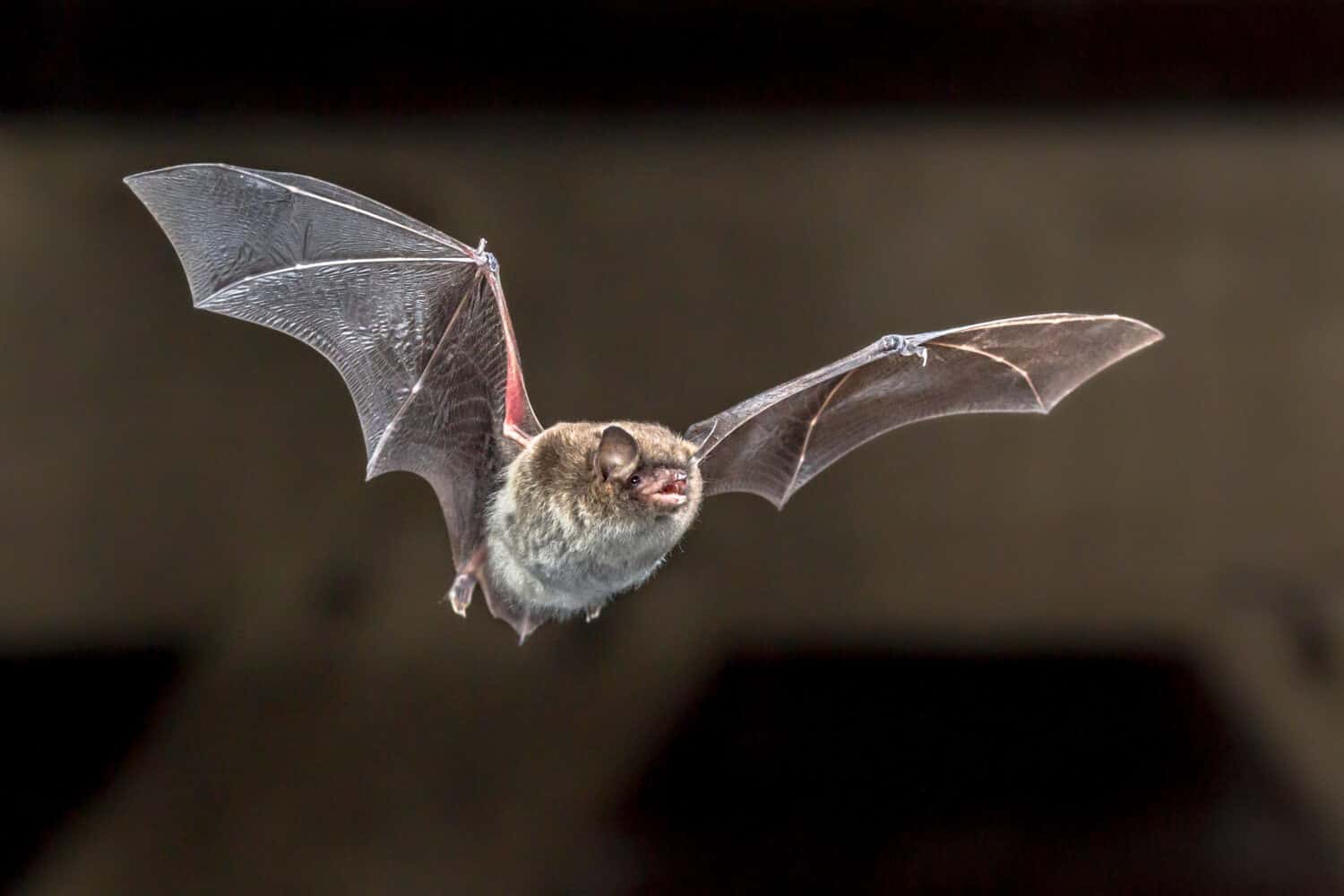
Bats can easily get into a house through open spaces.
©Hermann Moller/Shutterstock.com
Human dwellings are also attractive to bats. There are some 47 species of bats in the US and Canada, and they come in a variety of sizes. They face many challenges, including climate change, habitat loss, and disease. Some species that you may discover in your home include the little brown bat, which is widespread, while the Florida bonneted bat is extremely rare and only found in a small region of southern Florida. Before you take any steps to remove bats from your home, you should check with your local wildlife agency to find out their conservation status in your area. In general, small bat colonies should be left alone, but you should take steps to stop them from entering the human living quarters.
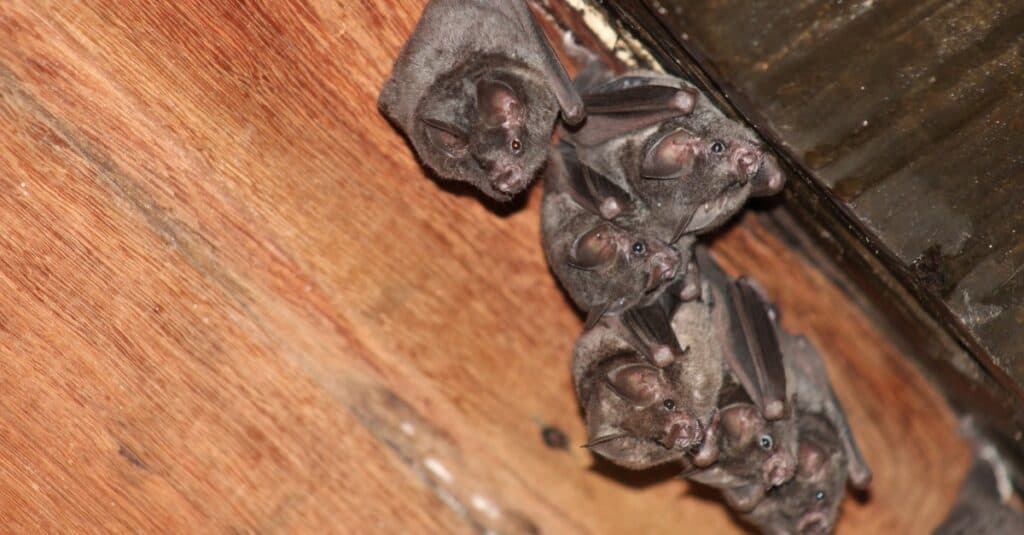
The most common area to find bats in a house is the attic space. They tend to head for high, out-of-the-way areas that are above 10 feet. However, they will sometimes enter basements and cellars. Similar to mice, bats can enter through tiny holes not much bigger in diameter than a pencil. As well as finding bat droppings, you may also see bats leaving your attic at night. You may also hear the chattering noise that they make at dusk.
Mouse or Bat Droppings?
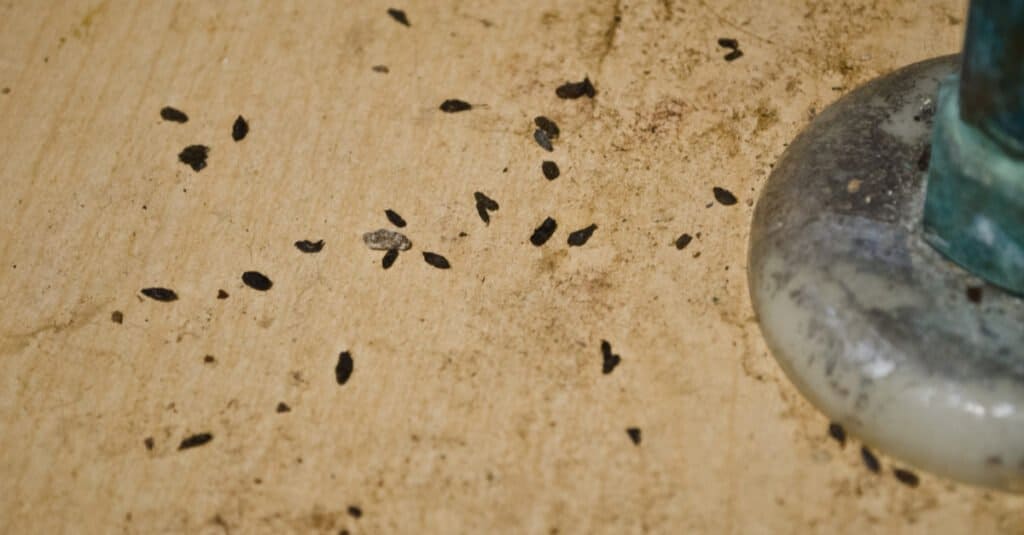
Mouse droppings are pointed at one end.
©Pegasene/Shutterstock.com
If you have found some droppings in your home, there are several clues that will tell you if they came from a bat or a mouse. That said, you should also take the other signs of a bat and mouse infestation into account and look at the bigger picture. Also, do not handle bat or mouse droppings with your bare hands; always use gloves. Here are some ways in which you can tell mouse and bat droppings apart.
Bat droppings and mice droppings look similar at first glance, but there are subtle differences. That said, droppings from both animals vary according to their age, size, health, and diet. Also, fresh droppings can look different from older droppings, and this can give you a clue about whether you have a current or old infestation.
Size
Mouse and bat droppings are similar in size. In general, mouse droppings are between ⅛ to ¼ inch in length compared to bat droppings, which are ¼ to ½ inch.
Color
Fresh mouse droppings are black and shiny – they may appear wet. As they dry out, however, they start to look duller and grayer. Bats feed mainly on insects, and the shiny parts of these creatures, the wings and cuticles, are evident in their droppings. Therefore, bat droppings are black and glistening and stay this way even when they are old.
Shape
Mouse droppings are pointed. Either at both ends or, at least, at one end. Bat droppings, on the other hand, are longer and are blunt at both ends.
Texture
To check the texture of droppings, you should always wear gloves as they can contain harmful microorganisms. Thanks to the bat’s mainly insect-based diet, their droppings crumble easily when you press them between your fingers. Mice have a very varied diet, and their droppings are more squishy and slimy.
Arrangement
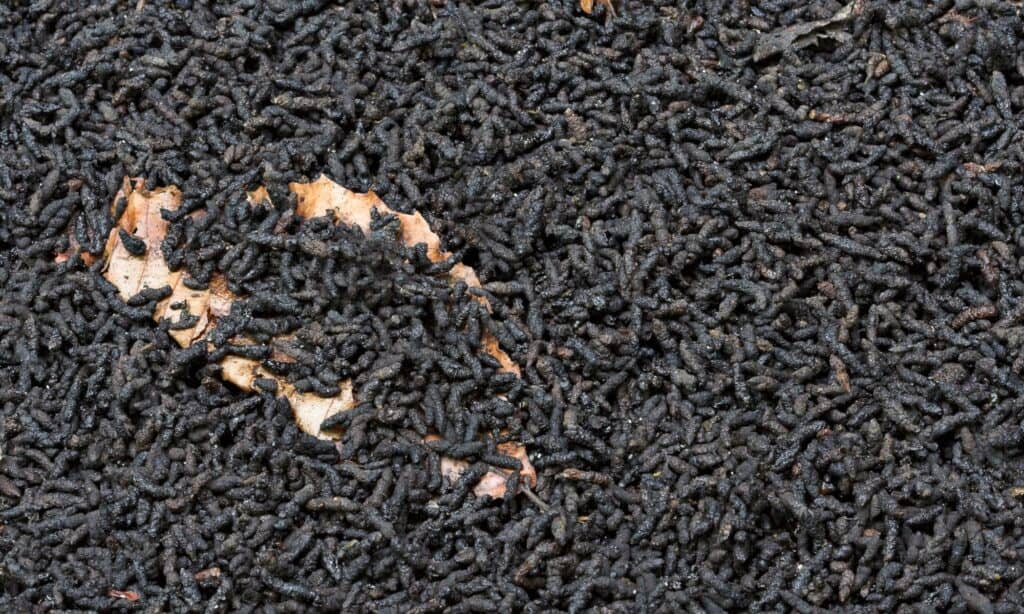
Bat poop is generally concentrated in a pile.
©iStock.com/sbonk
The arrangement of droppings can also give you a clue about which animal deposited them. Mice tend to scatter their droppings as they are scurrying around. Their droppings are found near nests and feeding areas. Bat droppings, however, are generally found in piles. When there are lots of bats roosting in an attic, you can get a buildup of bat droppings (called guano), which stains ceilings.