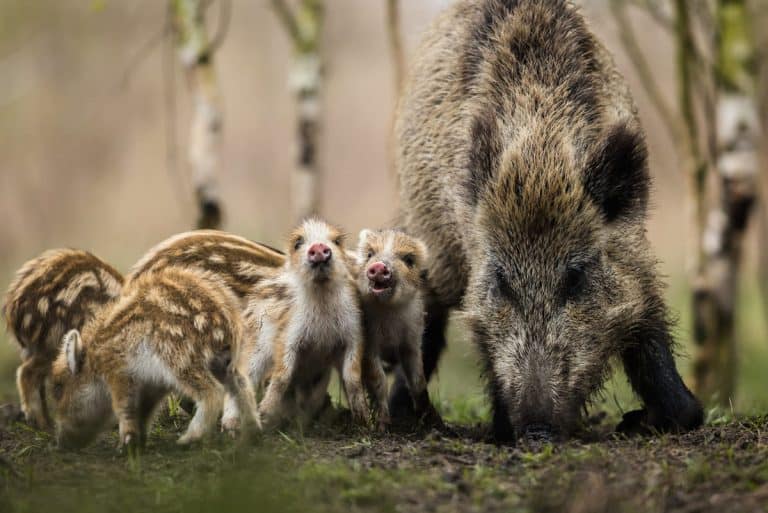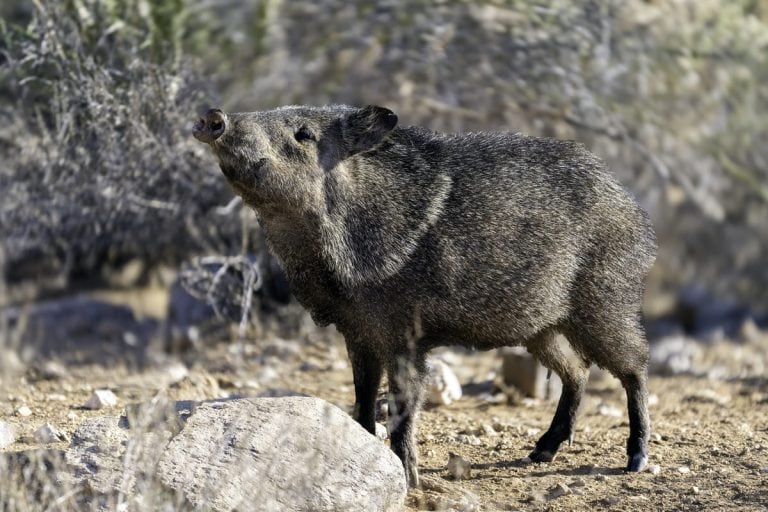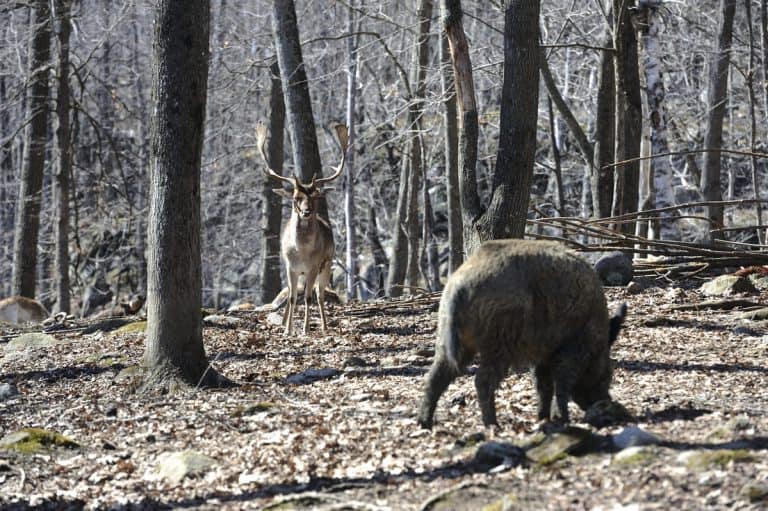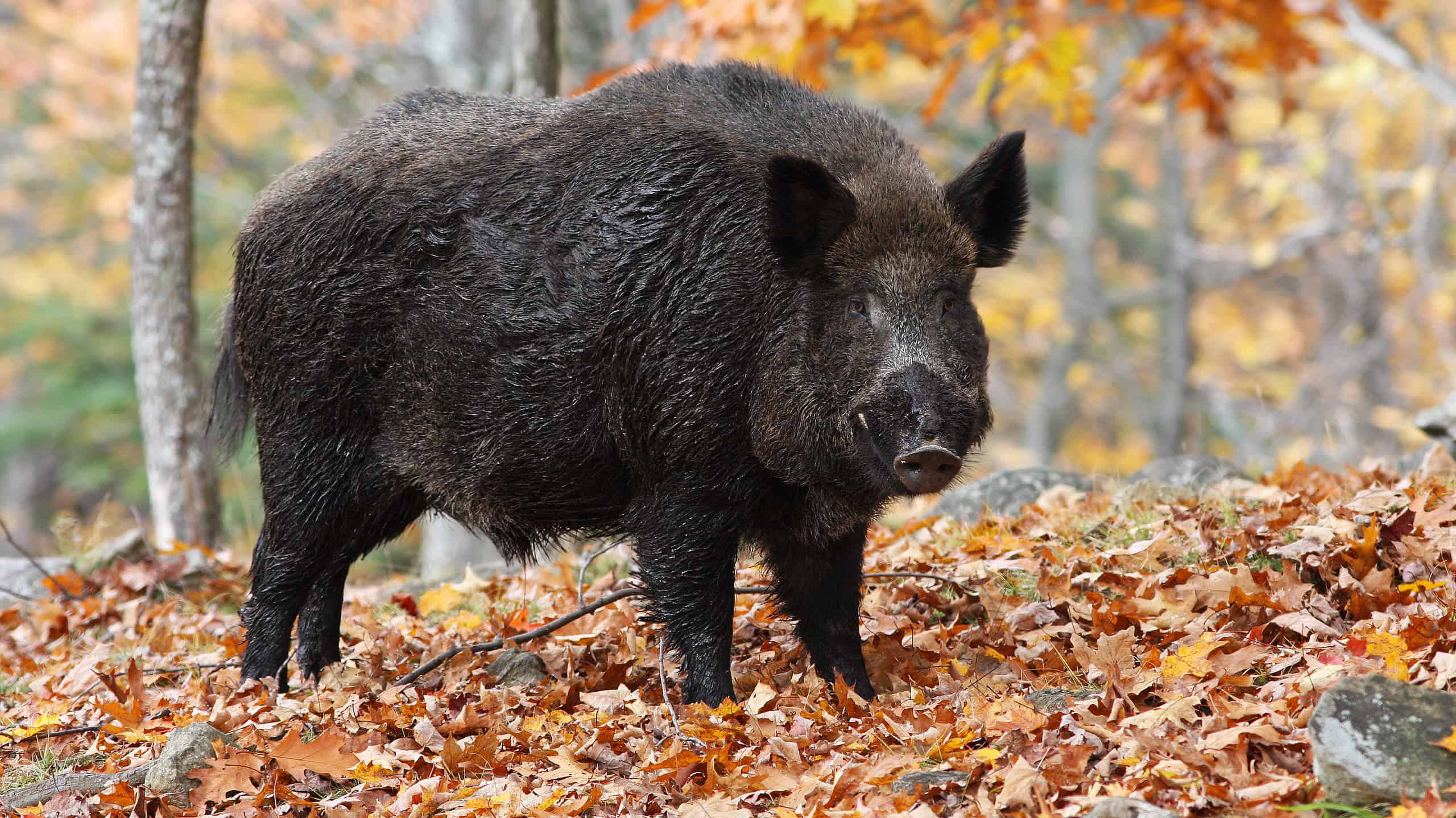

Wild hogs inhabit 35 states across the United States. In each state, the invasive species wreaks havoc to the tune of hundreds of millions of dollars, leaving landowners, farmers, and ranchers wondering how they can make a livelihood when their land is destroyed time and again.
There may be a solution to the multiple-decades-long problem. Texas and Oklahoma have recently approved the restricted use of a Warfarin-based feed (Kaput) to help cull feral hogs, following state-conducted studies. Could this blood thinner be the answer to the invasive feral hog problem that has plagued states for as long as most can remember? The jury is still out on that question.
Texas Tries Warfarin to Control Hog Population

Texas completed a two-year study that found Warfarin-based feed could reduce wild hog numbers and property damage when used according to specific protocols, though results varied among landowners.
©Nick van den Berg/Shutterstock.com
In an attempt to bring the wild hog population under control, Texas conducted a two-year study to determine if a Warfarin-based blood thinner could put a dent in the 1.5 million wild hogs in the state. While the results proved to be positive, and the number of hogs was decreased by some who used the Kaput traps and bait, others did not prove to have the same results.
The problem, according to Mike Bodenchuk, State Director for the Texas Wildlife Service, is that landowners want to see immediate results. Those who did not trust the process and tried to speed things up did not see the results they wanted.
“We saw a high level of reduction in individual sounders that were feeding on toxic bait,” Bodenchuk explains to Texas Public Radio. “The legislature directed us to study whether or not the toxicant would be effective in landowner use. So, our study was to use landowners to apply the toxicant.”
Bodenchuk went on to say, “This isn’t a single-feeding type of bait. It requires multiple feedings.”
Unfortunately, not all landowners were patient. This led to mixed results.
“If landowners tried to cut corners on that process, reduce the time, go too fast, then their efficacy goes down,” Bodenchuk says. “We actually had one bunch of pigs; someone shot at them while they were using the feeder, and they quit using that feeder.”
The wild hog problem has been a persistent issue for decades or more in Texas. Those who want to see results need to give the bait program time to work. Encouraged by Texas’s results, Oklahoma officially approved Kaput Feral Hog Bait as a state-restricted use pesticide in April 2024 to address its own feral hog problem.
Encouraged By Texas’s Results, Oklahoma Follows

Oklahomans pushed to get the Kaput approved for use in the Sooner State.
©Slatan/Shutterstock.com
Shortly after Texas released the results of its study of Warfarin-based feed on wild hogs and licensed its use in the state, the Oklahoma Cattlemen’s Association petitioned the Oklahoma Department of Agriculture to do the same.
Within a few months of Texas approving the use of Kaput, Oklahoma followed suit. The approval came after it was determined that the multiple doses of the feed, which act as an anticoagulant on the hogs, eventually killing them after a handful to half a dozen doses, was the correct route to take. This way, landowners were no longer responsible for trapping and shooting wild hogs that came onto their property. While this is seen as a humane way to eradicate the hogs from Oklahoma, not all states with a wild hog problem agree with the solution, given the ripple effect it could have on other animals that come in contact with the dead hogs.
Where Alabama Stands

Alabama has other plans to rid the state of wild hogs other than Warfarin-based feed.
©Slatan/Shutterstock.com
Despite the results that the Kaput feed has had in controlling the wild hog population in Texas, and may prove to have in Oklahoma, Alabama’s Wildlife and Freshwater Director, Chuck Sykes, does not believe it is the right answer to the wild hog problem.
“Based on the data we have now, I’m not in support of it,” Sykes tells Big Deer. “There are a lot of questions about the use of toxicants.”
The concern that Sykes is raising is how the Warfarin in the bait will affect animals down the food chain.
Kaput has developed an antidote for animals that accidentally consume the feed. The antidote is Vitamin K1. However, getting it to wildlife that inadvertently consumes the feed may be easier said than done. This does not mean that Sykes is against using bait to eradicate the wild hogs. But instead of using a Warfarin-based bait, Sykes is eying sodium nitrate.
“We’ve been working with the USDA for more than five years on the use of sodium nitrite,” Sykes explains. “Sodium nitrite has proven to be very lethal, very effective and very humane in the way it dispatches hogs during trial usage in Alabama, so we know it works here… The pig just eats the product, gets sleepy, lies down, and doesn’t wake up. The product depletes the oxygen in the bloodstream.”
While all cannot agree upon the methods for culling wild hogs, most can agree that, as an invasive species, wild hogs pose a problem.
Wild Hogs Are An Invasive Species

Wild hogs are an invasive species first brought to the United States in the 1500s.
©ZoranOrcik/Shutterstock.com
Wild hogs were never intended to be part of the United States’ landscape. However, once European settlers began to come to the U.S., this changed, and wild hogs have now been an invasive species since the 1500s. The first person to bring wild hogs from Europe was Christopher Columbus in 1493. The pigs were taken to the West Indies during this time as a cheap food source. However, as the expedition concluded, the pigs were left to fend for themselves and began to colonize Cuba, Jamaica, and other locations in the region.
In 1539, Hernando de Soto brought pigs with him from Spain when he landed in Florida. Pigs were again left behind as de Soto and crew went on to explore more of the United States, allowing the population to grow in Florida. Today, thanks to domestic pigs and Eurasian wild boars being introduced into the U.S., there are descendants of these animals, as well as hybrids of the two, that make up the wild hog population across the nation.
Wild Hogs Cause Billions In Damage Annually

Wild hogs cause billions of dollars of damage every year.
©Slatan/Shutterstock.com
As wild hogs forage for food, they leave damage in their wake. Across just 13 of the states they inhabit, the estimated cost of that damage was $1.6 billion in 2024, according to the latest reports from the U.S. Department of Agriculture. Given that wild hogs live in 35 states, the damage costs are higher than the report states, given that fewer than half of the states were included in the report. The places that the wild hogs wreak the most havoc include:
- Crop fields
- Fences being broken or knocked over
- Pastureland being eroded
- Killing young livestock
All of these factors contribute to the high cost of wild hog damage. In states where wild hogs are most concentrated, which are Texas, Georgia, and Florida, the problem has been around for decades or more, and yet, there still is not a good answer to keeping the hog population under control. This is why many hope the Warfarin-based anticoagulant will further aid the fight against the wild hogs before many more crops are killed and livestock are lost to disease.
Wild Hogs Carry Diseases That Could Wreak Havoc on Livestock

Wild hogs carry multiple parasites and diseases that can sicken livestock and people alike.
©Terry Dell/Shutterstock.com
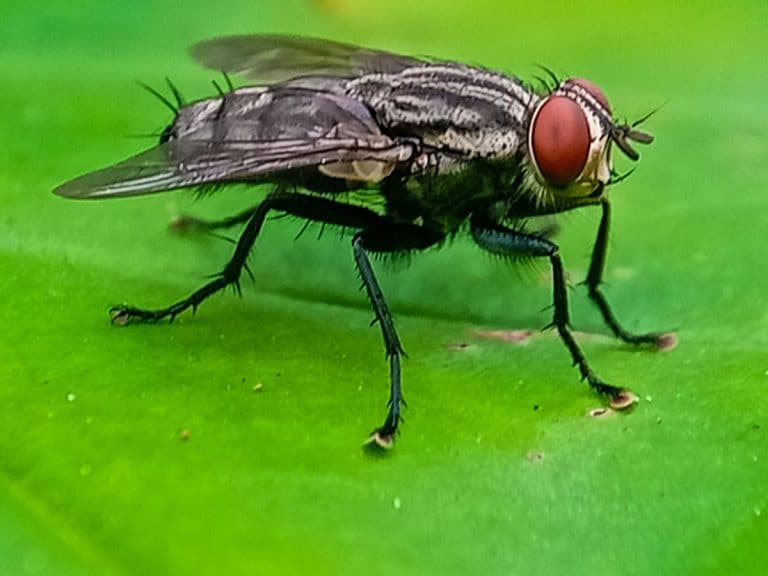
Wild hogs are carriers of at least 40 parasites and 30 different diseases. Consequently, livestock that comes into contact with the hogs’ bodily fluids and excrement is at risk of becoming ill. This means that ranchers stand to lose money or their entire herd when tests for diseases come back positive. The diseases that most ranchers are concerned their herds will contract include:
- Pseudorabies Virus (PRV)
- Swine brucellosis (Brucella suis)
- Bovine tuberculosis (TB)
- FADs
- African swine fever
- Classical swine fever (Hog Cholera)
- Foot and Mouth Disease
It is worth noting that people are also at risk of contracting diseases from wild hogs. Coming into contact with the diseases is the same as it is for animals, which is via bodily fluids, but can also occur when consuming wild hogs.
The diseases people are at risk for when dealing with wild hogs, according to Wild Pig Info, include:
- Leptospirosis
- Brucellosis
- E. coli
- Salmonellosis
- Toxoplasmosis
- Rabies
- Swine Influenza viruses
- Trichinosis
- Giardiasis
- Cryptosporidiosis
These diseases are why ranchers and farmers alike are pushing to eliminate the wild hog population in states that are overrun with the swine. However, conservationists believe that there are alternative approaches, rather than culling, that could reduce the hog population and make everyone happy.
Conservationists Favor Non-Lethal Methods to Control Wild Hog Population

Conservationists would like to see other ways of decreasing the wild hog population other than culling.
©Slatan/Shutterstock.com
While culling techniques have been successful in reducing the wild hog population to some extent, the fact that wild hogs can reproduce at an early age and have the potential to produce multiple piglets per year can render traditional hunting techniques, such as trapping and killing, aerial shooting, and hunting, virtually useless.
Armed with this information, conservationists believe there is a more humane and still effective way to control the wild hog population. That method is to give the wild hogs birth control. A 2017 study published in PLOS One found that using birth control on wild hogs decreased the number of piglets born to a population annually. However, birth control alone was not enough to slow the growth of the overall hog population in a region.
The study noted that when both birth control and culling were employed, the combination proved to have a significant impact on the wild hog population. Conservationists were not thrilled that the non-lethal methods were being used in conjunction with lethal ones. Instead, it is believed that non-lethal methods can work alone.
There are two main methods that conservation groups believe are effective on their own. Those methods include:
- Birth control
- Relocation
The problem with these methods, according to those who are losing crops and have the fear of diseases being passed to their livestock is that with birth control it takes too long to take effect, and with relocation, there are so many wild hogs in most, if not all counties, where do the hogs go? The idea of rewilding has also been proposed. The problem with this, though, is that there are no natural predators for wild hogs.
What the answer is to controlling the incredible wild hog population in Texas, Oklahoma, and other states is not clear. Not everyone will be pleased with the ideas presented. Farmers and ranchers are not even all thrilled about having to cull the wild hogs consistently. However, when it comes to having their livelihoods stripped from them, people are making tough choices in the face of a difficult situation.