
Quick Take
- Climate change gets the blame for most wildlife crises, but scientists fingered a completely different culprit behind the insect collapse driving birds to shrink. See the real culprit →
- Researchers expected a timing mismatch between breeding birds and peak insect emergence to be devastating, but the actual finding flipped that assumption upside down. Explore the surprising finding →
- Smaller bodies are only half the story. Declining insects are quietly changing something else about bird reproduction that has long-term population consequences. See the clutch size findings →
- Nearly 50 years of bird and insect data from a single Canadian peninsula finally answered a question scientists had been circling for decades. Explore the Long Point data →
The dramatic decline in insect numbers is having a profound effect on some bird populations. As their food becomes scarcer, the birds are decreasing in size. However, climate change cannot be blamed for this particular scenario, and we may be able to do our bit to help.
Studying Declining Bird Size
A newly published study has revealed that bird sizes are decreasing in response to declining insect populations. The research was led by scientists at the University of Michigan. Previous work had already spotted that migratory birds passing through Chicago were getting smaller. This pattern had also been spotted elsewhere in the world. But why was this?
Researchers initially considered two main theories. The first was that birds were rapidly evolving to a smaller size as an advantage in response to climate change, since smaller animals have a larger surface area-to-volume ratio and cope better with heat. The second theory was that the reduction in bird size was linked to a decrease in their primary food source: insects.
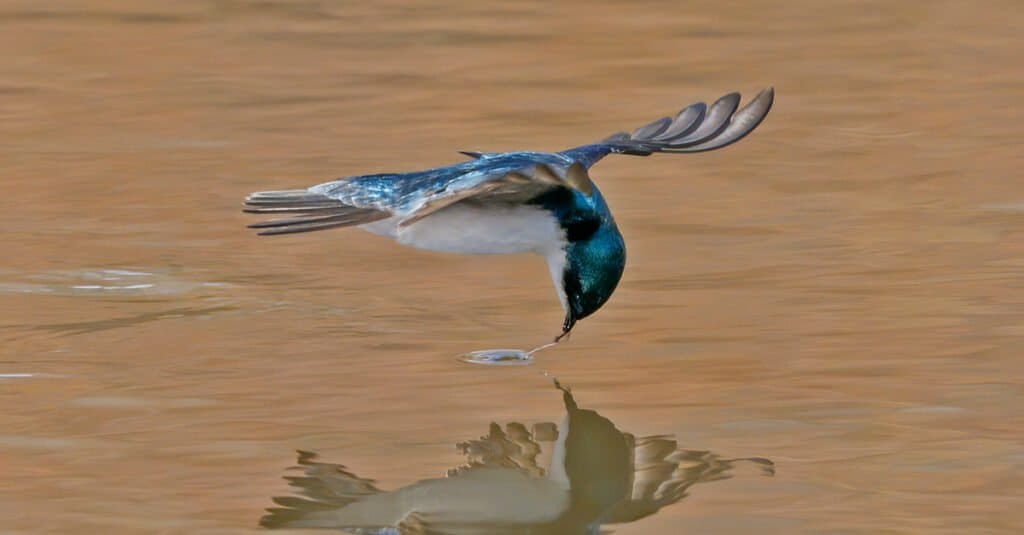
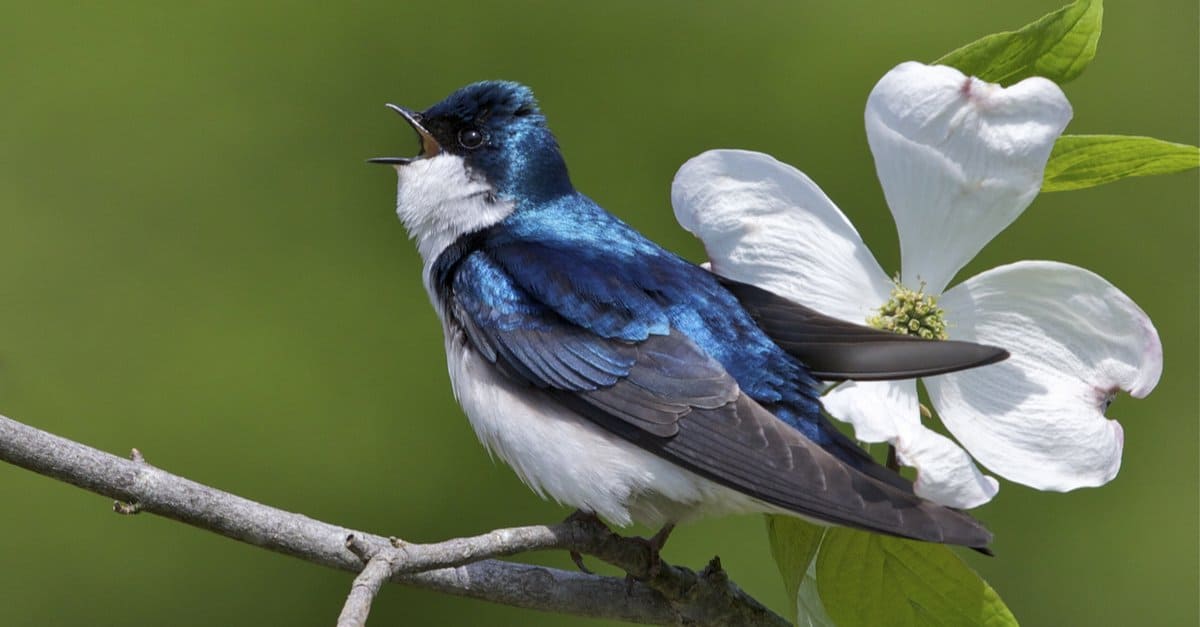
Tree swallows catch insects in flight.
©Richard Seeley/Shutterstock.com
To test out the theories, researchers teamed up with colleagues from Long Point Bird Observatory. They had been monitoring tree swallows at three different sites across Long Point, which is a peninsula that sticks out into Lake Erie, for almost 50 years. Additionally, since 1977, they have collected daily data on insect biomass during the breeding season. This allowed the scientists to look for relationships between bird size, survival rates, reproductive success, and insect availability. This study focused on the fortunes of the tree swallow and also integrated climate data.
Tree Swallows in Canada
Tree swallows (Tachycineta bicolor) are widely distributed in Canada, where they reside in open fields, meadows, marshes, and other wetlands. Their population has decreased moderately since 1970, according to the Breeding Bird Survey. These birds have deep-blue iridescent backs and clean white fronts. They feed on flying insects, which they chase in the air using wonderful acrobatic twists and turns. The swallows are highly dependent on mayflies, mosquitoes, midges, and dragonflies. They supplement their insect diet with berries, such as fruit from bayberry and myrica shrubs. Predators of tree swallows include rat snakes, raccoons, and feral cats. These birds have an average weight of 0.67 ounces and a length of 5.51 inches. But are they getting smaller?
Declining Body and Clutch Size
The study showed that as insect numbers have declined, so has the size of tree swallows. Overall, there has been a 62 percent decrease in insect biomass over a century. In years where the insect numbers were smaller, swallows were smaller. However, this is only part of the story.
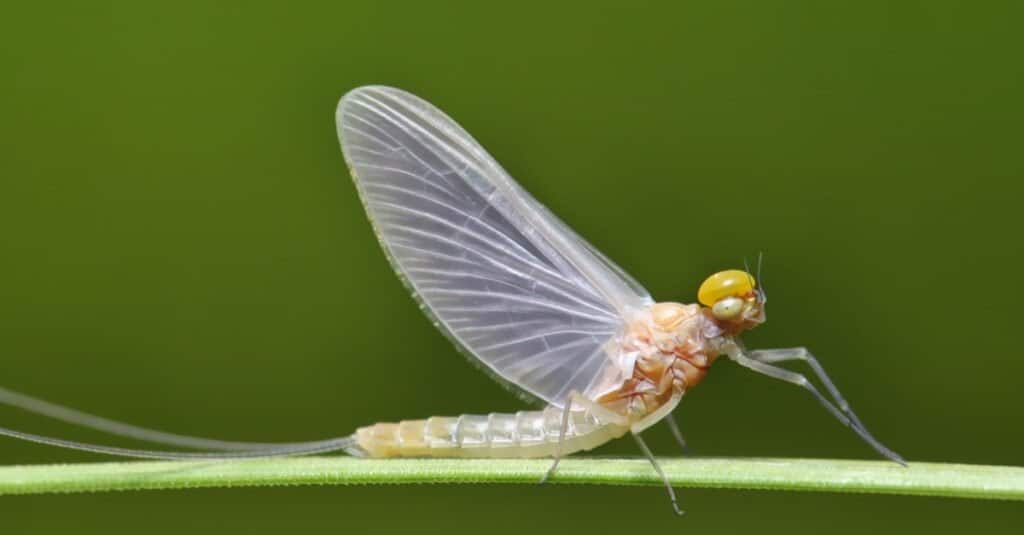
Declining mayfly populations are causing swallows to get smaller.
©Achkin/Shutterstock.com
While the study did not find evidence that a lack of insects had reduced tree swallow survival, it did find that they reproduced less. Their clutch sizes (the number of eggs that they produced) were lower when insect availability was reduced. This suggests that the number of eggs laid is directly linked to the availability of insects during the egg formation period.
Furthermore, by analyzing climate data alongside bird and insect data, the scientists determined that climate change was not responsible for the decline in insect populations.
The Concept of Phenological Mismatch
A phenological mismatch occurs when the period of highest resource demand for a species does not align with the period when its resources are most abundant. So, the tree swallow needs to time its breeding (when it needs the most resources) with insects emerging in the spring (when they are most abundant). The problem is that springs are getting warmer and insects are emerging earlier and earlier. However, birds have not been able to shift their breeding cycle fast enough to keep up. This was thought to be a problem, but this research has suggested it may be a good thing!
As overall insect numbers decline, the benefits of synchronizing breeding with the peak of insect emergence are reduced. Additionally, breeding early carries certain risks. A cold snap could occur, potentially wiping out the entire brood. Therefore, it may be safer for birds to endure the mismatch and breed later.
What Happened to the Insects?
If climate change is not responsible for the decline in insect populations, what is? Today, insect populations are only about 60 percent of what they were in the 1970s. The most severe declines occurred in the 1990s, coinciding with the introduction of neonicotinoid pesticides to the market. These powerful chemicals are devastatingly effective at protecting crops from insect attack. They are the most widely used insecticides globally. Neonicotinoids are used on more than 140 crop varieties to control a variety of pests, especially sap-feeding insects, such as aphids. Unfortunately, these chemicals also run off into waterways, killing the aquatic insects that tree swallows depend on for survival.
Insect decline is a global issue that will not be easy to solve. However, we can all help by planting more native species and reducing our use of pesticides.