Some insects in nature look more like cute plush toys than actual animals. With so many cute insects, it’s always fun to learn about new ones. One of these cute insects is the cecropia moth. This YouTube Short by @the_extinction1301 shows this moth up close, with vibrant colors and unique patterns. Read here to learn more about these amazing insects.
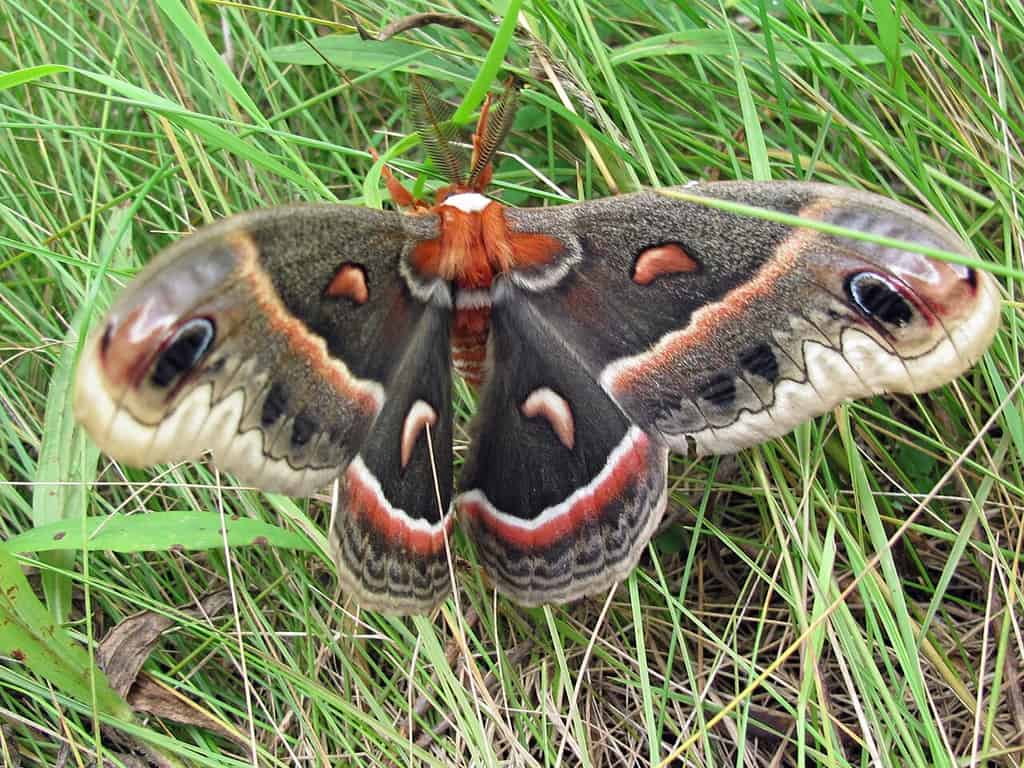
This is the largest moth native to North America.
©Jacy Lucier, CC BY-SA 4.0, via Wikimedia Commons – Original / License
About the Cecropia Moth
The cecropia moth, known scientifically as Hyalophora cecropia, is a species of giant silk moth. These are the largest moths native to North America, primarily found east of the Rocky Mountains. They can be found in environments such as forests and woodlands. A fascinating fact about these moths is that they do not eat at all during adulthood. As caterpillars, these insects feed on the leaves of various trees and shrubs in the forests they inhabit. These include maple, apple, willow, elm, and plum trees. After storing up energy as caterpillars, they grow into adulthood without the need to feed.
These moths are soft and fluffy in appearance, and the fuzziness has a practical purpose as well. Cecropia moths are covered in both scales and setae (hair-like structures) on their bodies. The scales help with camouflage, flight, and sometimes defense, while the hairs (setae) give them their fuzzy appearance. So, while they are cute in appearance, they are also resilient insects whose soft fuzz serves important functions.
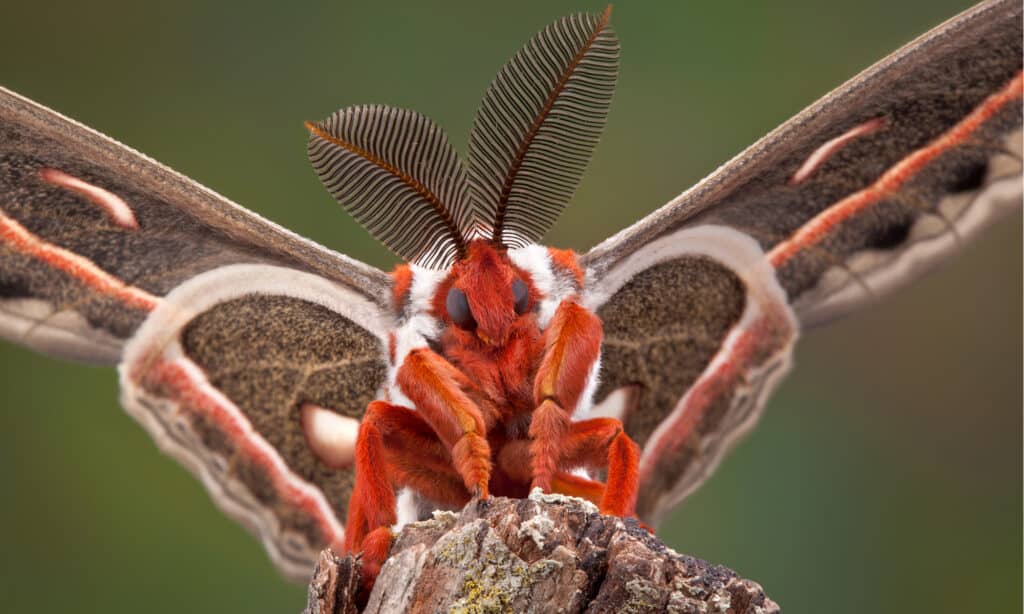
A newly emerged cecropia moth is sitting on a branch. The antennae are large and richly feathered.
©Cathy Keifer/Shutterstock.com
Life Cycle
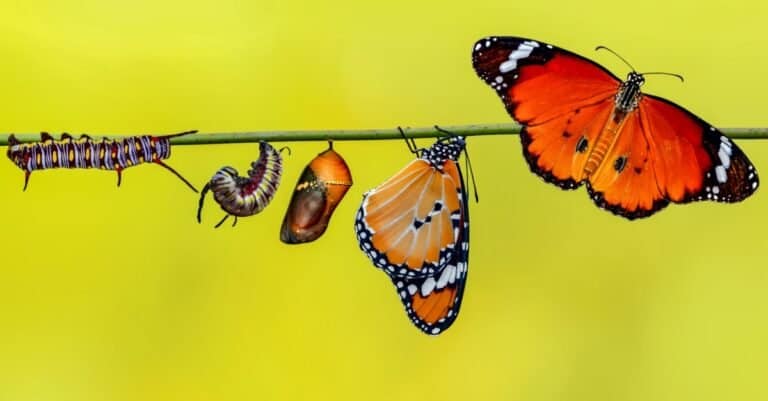
Adult moths only live for a few weeks, so the species must constantly reproduce to maintain its population. After mating, female moths lay around 100 eggs on the leaves of the trees they inhabit. After about two weeks, the eggs hatch. As caterpillars, they grow to about four to four and a half inches long. They change from black to a range of blues, yellows, and reds as they grow. After completing this stage, they enter the pupa phase. During this phase, the moth overwinters in its cocoon and emerges in the spring, at which point it develops its wings and other notable features. The adult moths emerge and live for roughly two weeks. During this time, they lay eggs to begin the cycle again.