
Quick Take
- The brown thrasher can master over 1,000 unique vocalizations.
- Georgia’s official state shell is the home of an active predatory sea snail.
- Atlantic white shrimp is Georgia’s number one commercial seafood.
Georgia is not only famous for its delicious peaches and historical landmarks but also for its native animals. These official animals, ranging from mammals to reptiles, hold a special place in Georgia’s culture and heritage. These animals represent the state’s history, natural beauty, and diverse wildlife. Continue reading to learn about Georgia’s 15 state animals and why they were chosen.
Bird: Brown Thrasher
The brown thrasher (Toxostoma rufum) was proclaimed the state bird of Georgia on April 6, 1935, although its official status was not codified until March 20, 1970.
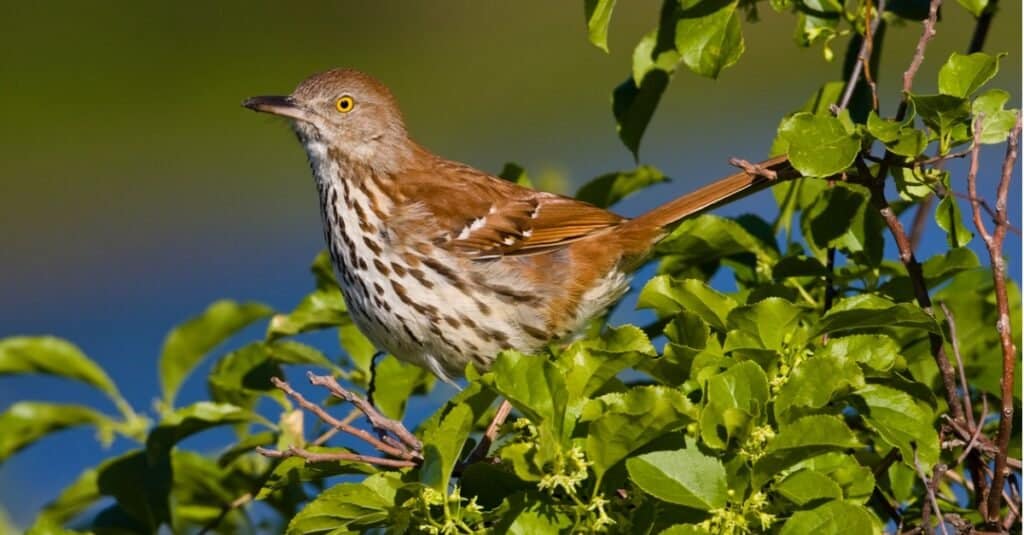
Selected by school children for its remarkable singing ability and its industrious nature, the brown thrasher was adopted in 1935.
©iStock.com/johnandersonphoto
The brown thrasher (Toxostoma rufum) is a large songbird with a wingspan of 11 to 13 inches. It has a gray-brown face and dark streaks on its white underparts.
The brown thrasher is a skilled singer capable of producing over 1,000 different songs, some of which include imitations of other birds. Brown thrashers are ground foragers, tossing aside leaf litter, soil, and twigs with their long, lightly curved bills. They use this thrashing motion to uncover beetles, caterpillars, spiders, and berries, usually working alone under dense cover.
Fish: Largemouth Bass
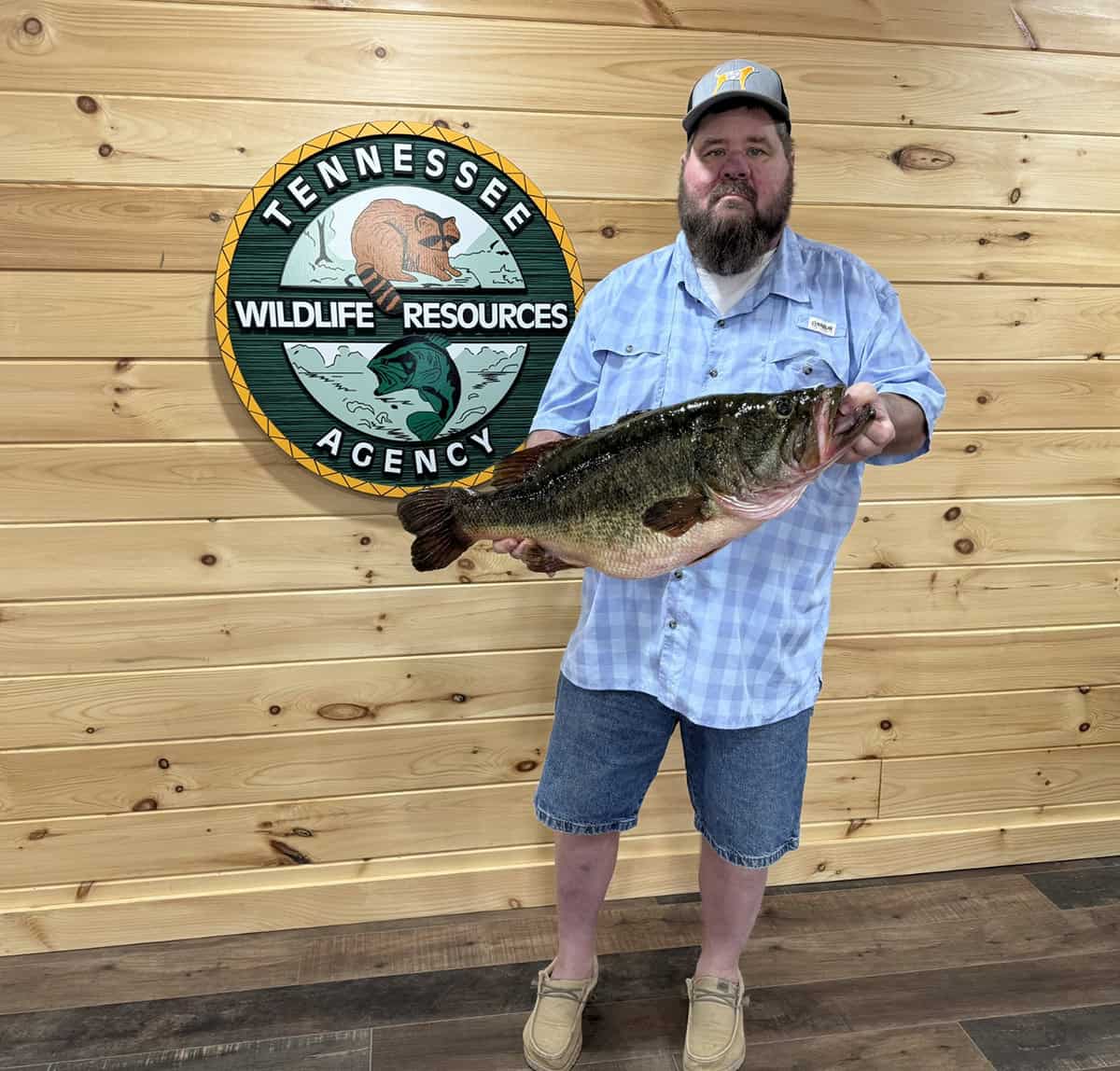
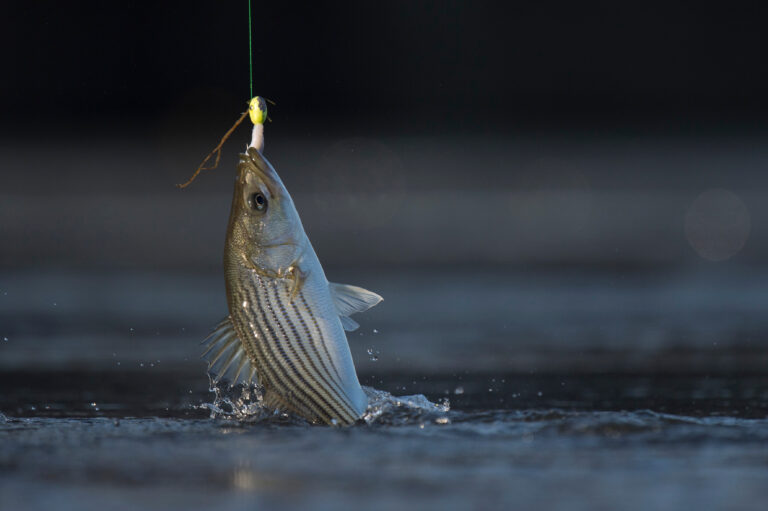
The largemouth bass (Micropterus salmoides) was adopted as the Georgia state fish on March 24, 1970. Largemouth bass have a dark olive-green back with light green sides that fade into a white belly. Their mouths extend beyond the eye, making them easy to distinguish from other species. Typically, adult largemouth bass are solitary and tend to hide among roots, limbs, or plants to ambush their prey.
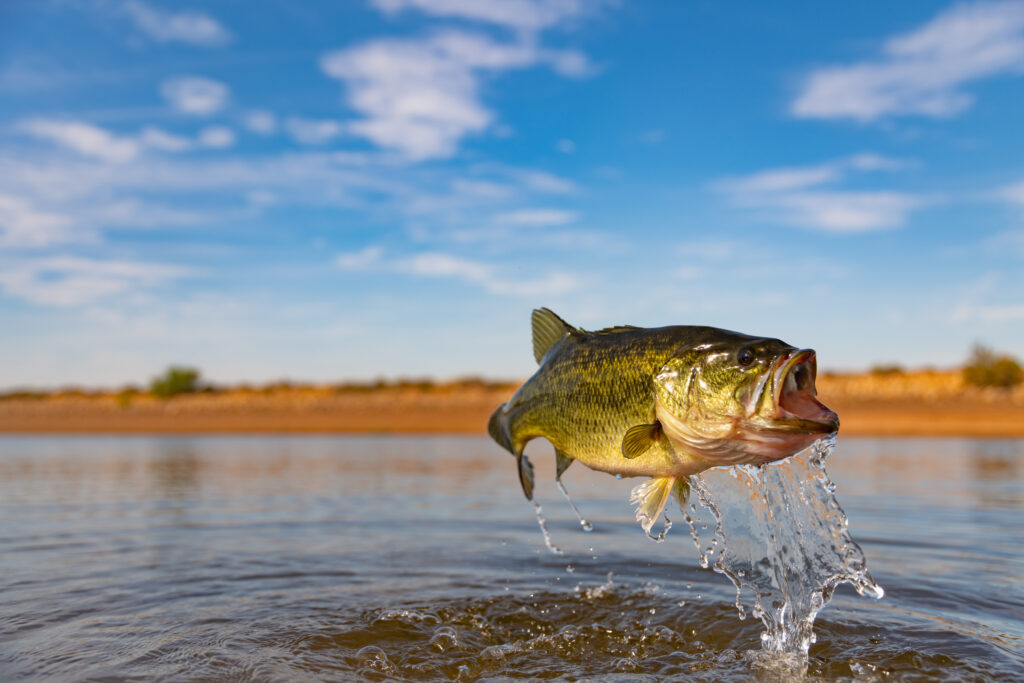
The official world record for the largest largemouth bass is 22 pounds, 4 ounces, caught by George Perry on June 2, 1932, on Oxbow Lake off the Ocmulgee River in Georgia.
©Ryno Botha/Shutterstock.com
The largemouth bass is a cornerstone of Georgia’s recreational fishing industry, boosting tourism and local economies.
Game Bird: Northern Bobwhite Quail
The Northern bobwhite quail (Colinus virginianus) was officially designated as the official game bird of Georgia on March 20, 1970.
The bobwhite has feathers of rust, brown, black, and buff. Males feature a distinct black-and-white head pattern, while females have buffy eyebrows and throats. These quails are typically between 8 and 10 inches long, with a wingspan of 3 to 5 inches.
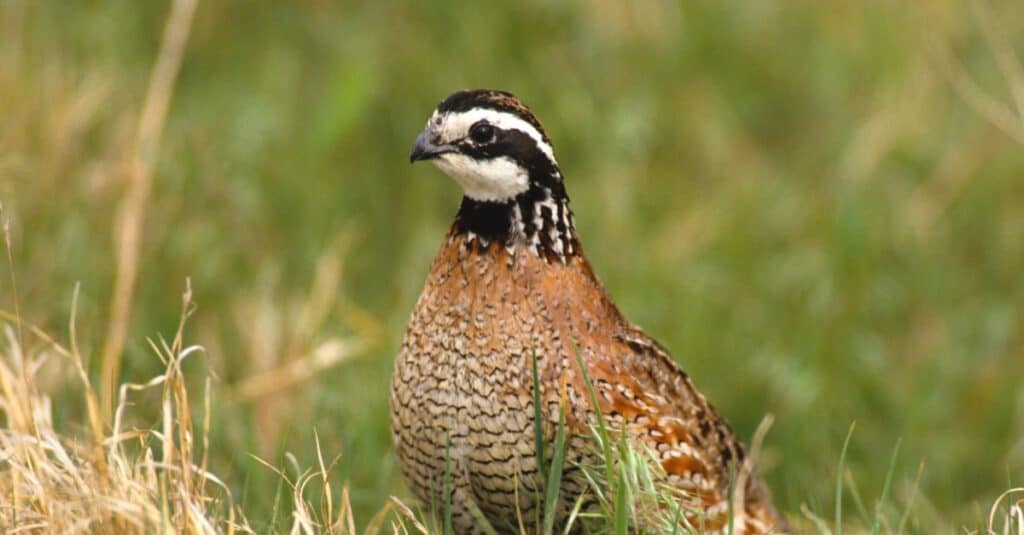
Georgia named the bobwhite quail as its official state game bird.
©iStock.com/twildlife
Bobwhites live in dense low cover and are more often heard than they are seen. They travel in coveys, which can average a dozen birds during the fall and winter months.
In the early 1900s, Georgia gained the reputation of being the quail capital of the world, thanks to an abundance of Northern bobwhite quail in the state. As a result, the bobwhite was officially designated as Georgia’s state game bird. However, like many other states, Georgia has witnessed a decline in quail populations, raising concerns among quail hunters and wildlife conservationists.
Insect: Honey Bee
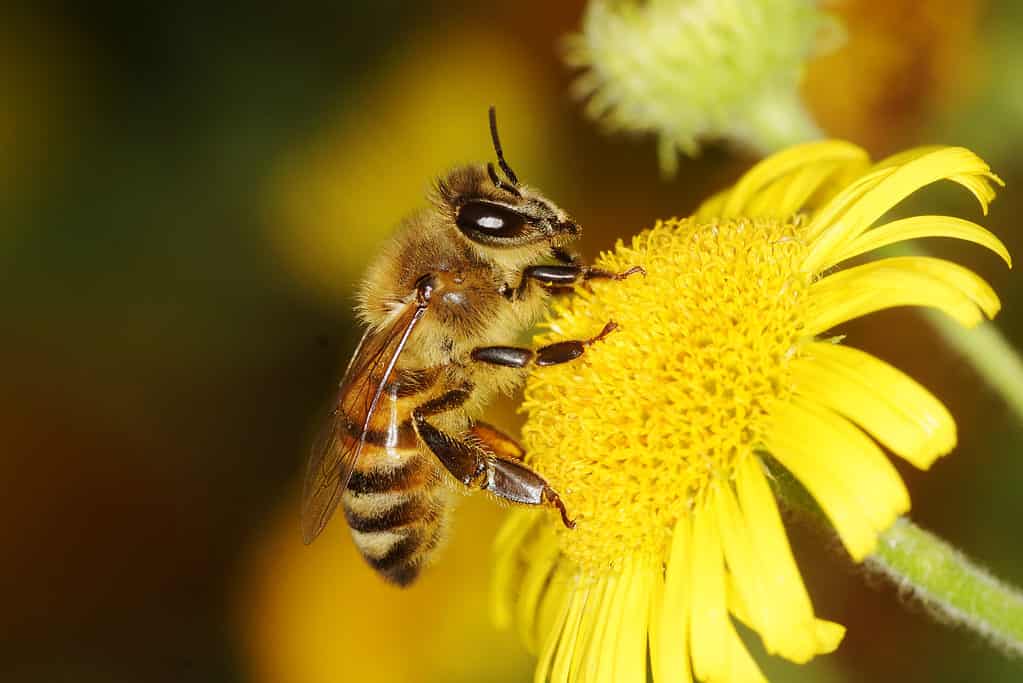
Honey bees have yellow and brown stripes and are covered with many hairs to which pollen adheres.
©Maciej Olszewski/Shutterstock.com
In recognition of its significant contribution to the state’s ecosystem, the honey bee (Apis mellifera) was designated the official state insect of Georgia on April 18, 1975.
The honey bee is known for its ability to turn nectar from flowers into honey. They are valued as essential pollinators of crops, which contribute significantly to Georgia’s agricultural economy, responsible for pollinating fruits, vegetables, and nuts.
Marine Mammal: North Atlantic Right Whale
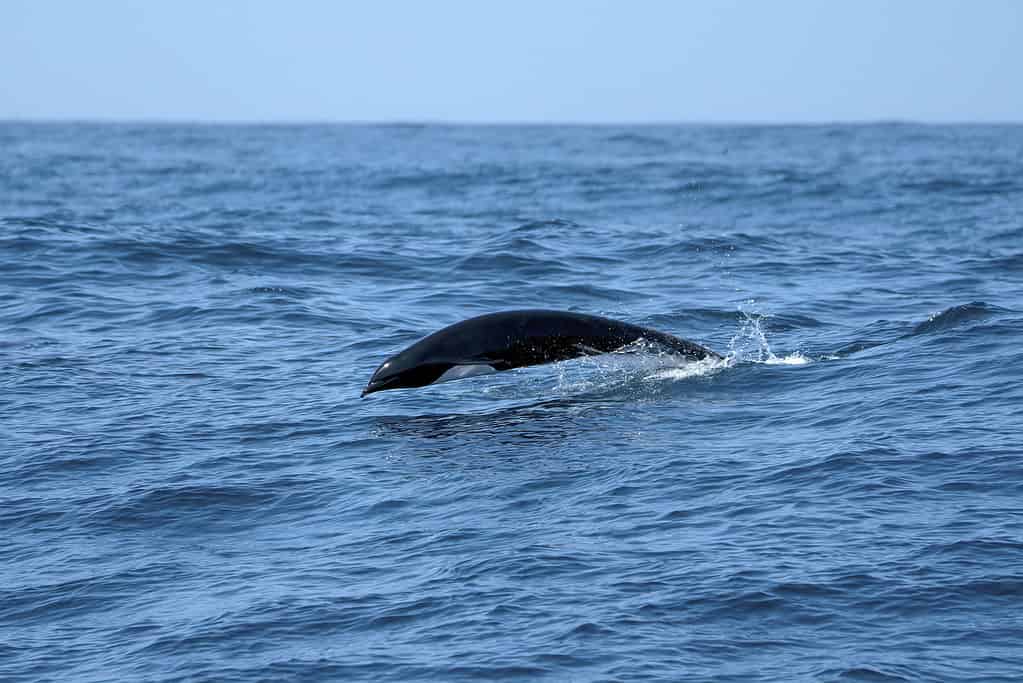
Northern Atlantic right whales are baleen whales and feed by filtering water through their baleen plates.
©iStock.com/Kara Capaldo
The North Atlantic right whale (Eubalaena glacialis) was designated as the Georgia state marine mammal on April 2, 1985. It is easily recognizable by its V-shaped blow spout. The whale’s tail is all black with a smooth trailing edge and a deep notch, while its belly can be black or have irregular white patches. North Atlantic right whales are up to 52 feet long, and can weigh as much as 70 tons (140,000 pounds).
The waters off the coast of Georgia serve as a breeding ground for North Atlantic right whales. Female right whales and their calves inhabit these warm waters from November to April, allowing the calves time to grow before traveling back to the cold, nutrient-rich waters of New England and Nova Scotia, Canada, to feed during the spring and summer.
Seashell: Knobbed Whelk
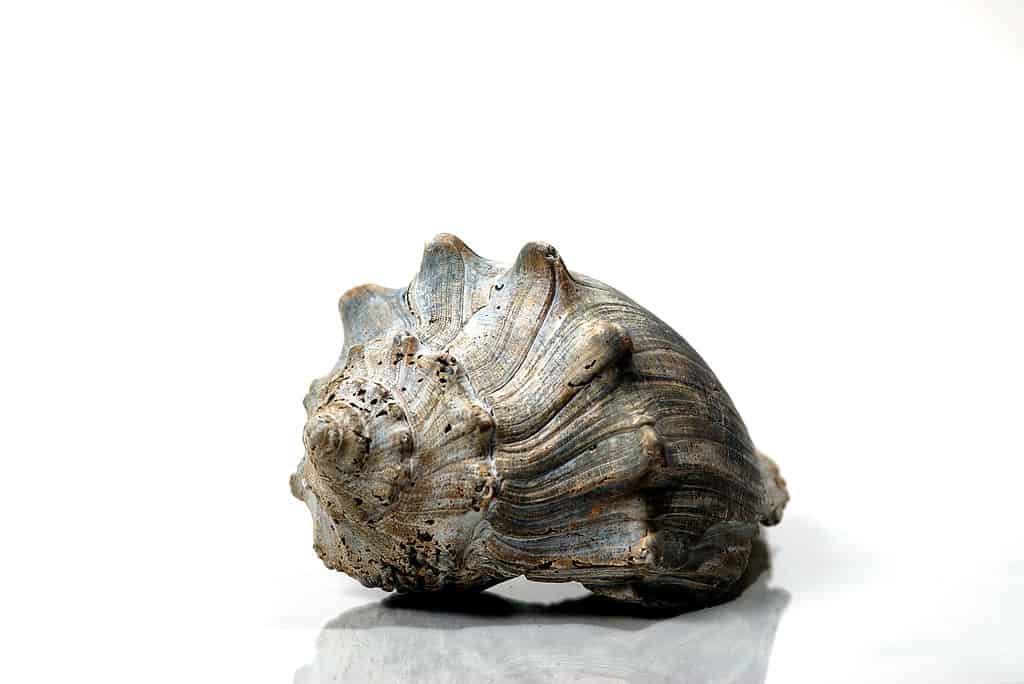
The knobbed whelk is Georgia’s official state shell.
©iStock.com/ChristopherSZachary
The knobbed whelk (Busycon carica) is a marine mollusk that was officially recognized as Georgia’s state shell on April 16, 1987. The shell houses a predatory marine snail that ranges from 5 to 9 inches long and feeds primarily on oysters, clams, and mussels.
Commercially fished in Georgia for its meat, the knobbed whelk is also appreciated for the beauty of its shell.
Butterfly: Eastern Tiger Swallowtail
The Eastern tiger swallowtail was officially adopted as Georgia’s state butterfly on April 4, 1988. The Georgia Legislature designated it as the state butterfly to highlight its beauty and prevalence throughout the state. Its adoption coincided with the opening of the Cecil B. Day Butterfly Center at Callaway Gardens.
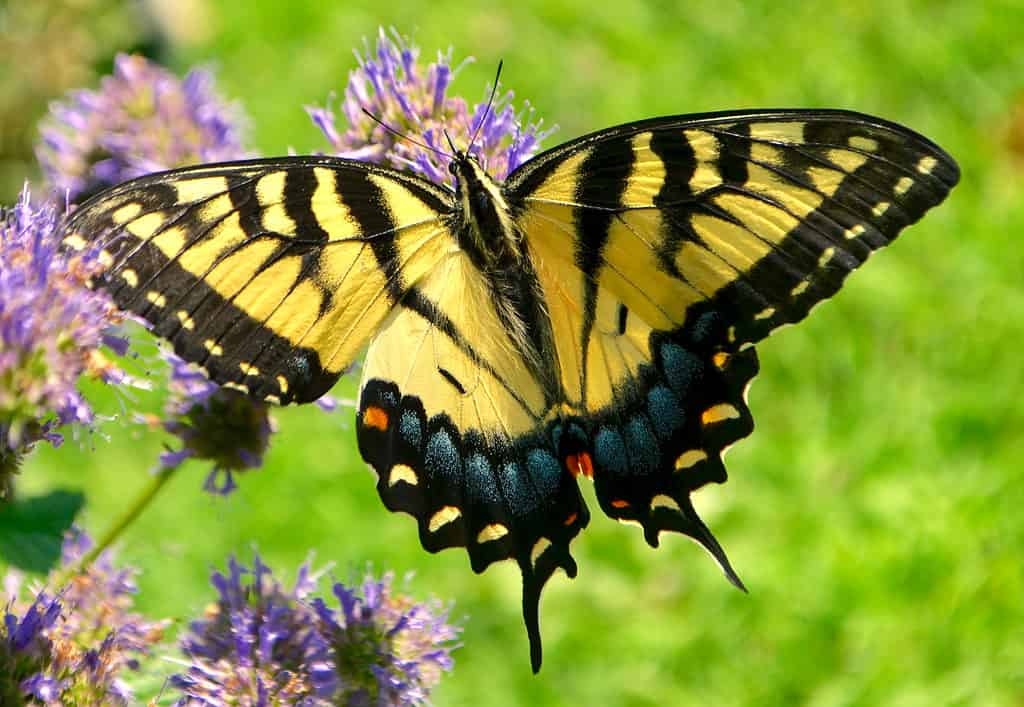
The glorious Eastern tiger swallowtail butterfly is one of the official Georgia state symbols.
©Maria T Hoffman/Shutterstock.com
The wingspan of the adult Eastern tiger swallowtail can range from 3 inches to 5.5 inches. The butterfly is light orange and black striped. Their wings are marked by four black parallel stripes at the top and a solid black stripe along the base. Interestingly, the females tend to have more blue on their hindwings than the males.
The Eastern tiger swallowtail is not only beautiful but also ecologically important. It is a crucial pollinator for many of Georgia’s flowering trees, shrubs, and nectar plants, including wild black cherry, apple, peach, and plum.
Reptile: Gopher Tortoise
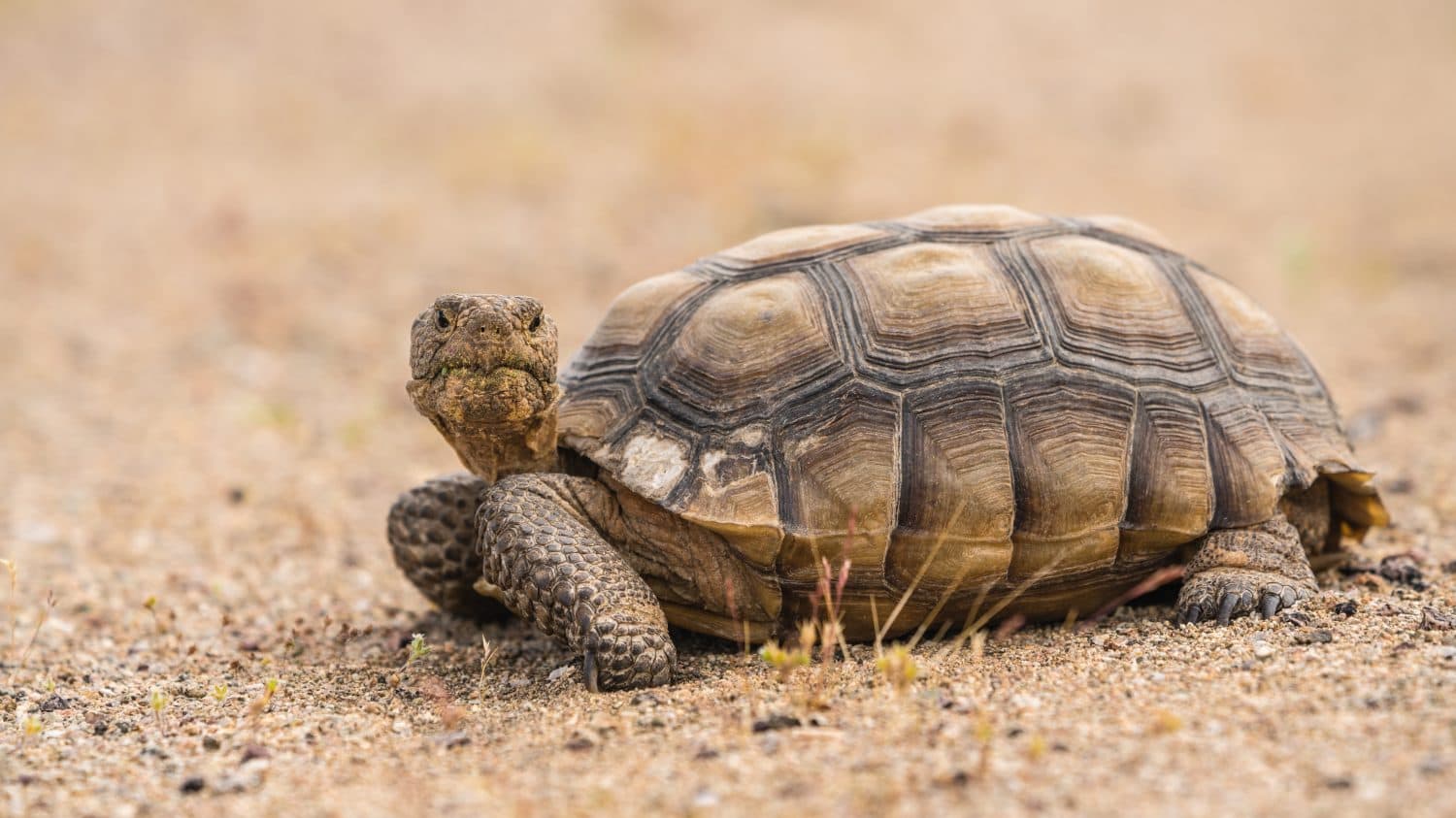
Georgia designated the gopher tortoise (Gopherus polyphemus) as its state reptile on March 30, 1989. Along with the official status, legal protections were put in place to help ensure the species’ survival. Currently, efforts are being made to increase the gopher tortoise population by protecting its habitat and promoting conservation programs.
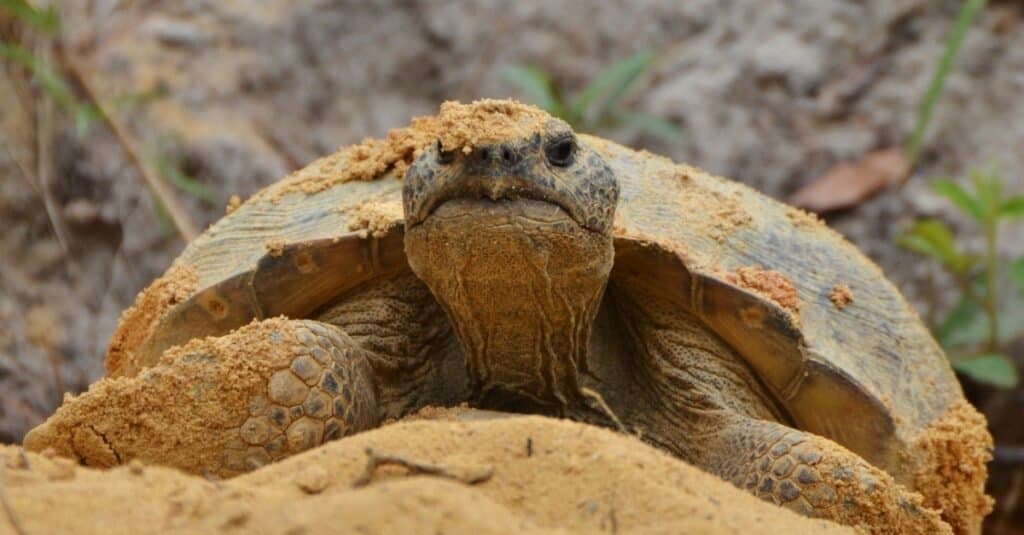
The gopher tortoise is listed as threatened under Georgia state law.
©iStock.com/mjf795
True to its name, the gopher tortoise is known for digging deep burrows. Although the tortoise is generally a solitary creature, it may share its burrow with a mate or a nest of hatchlings during mating season. Gopher tortoises are vulnerable to predators like coyotes, raccoons, and eagles, which may eat eggs left unguarded.
Amphibian: American Green Tree Frog
The American green tree frog (Hyla cinerea) became Georgia’s official state amphibian thanks to a class of fourth-grade students at Armuchee Elementary School in Armuchee, Georgia. The class noticed that the state lacked an official amphibian during their government and science studies in 2002. Out of the 85 species of amphibians found in the state, the students chose the American green tree frog. On May 9, 2005, their efforts were rewarded when the American green tree frog was adopted as the official amphibian of Georgia.
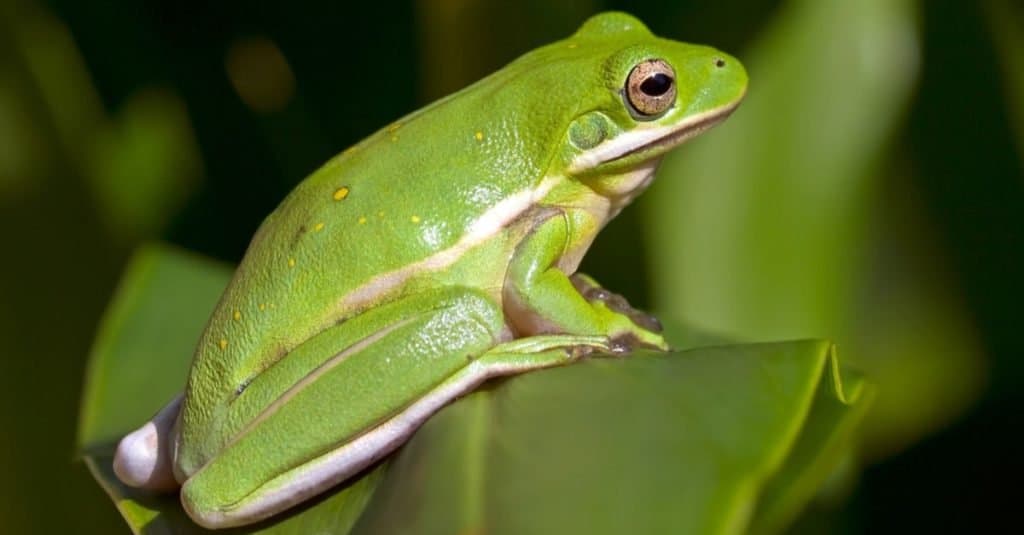
The American green tree frog has a loud, distinctive mating call, an abrupt nasal bark that can be repeated up to 75 times per minute.
©LorraineHudgins/Shutterstock.com
Typically 1¼ to 2½ inches long, American green tree frogs can be found in bright green, greenish gray, or yellow-green shades. The frog’s color changes depending on its activity level and the ambient temperature.
Salt Water Fish: Red Drum
In 2006, the state of Georgia designated the red drum (Sciaenops ocellatus) as the state saltwater fish. Red drum fishing is popular in Georgia’s coastal waters, contributing significantly to the state’s tourism industry. In Georgia, red drum cannot be commercially harvested, placing all management focus on sustainable, recreational fishing.
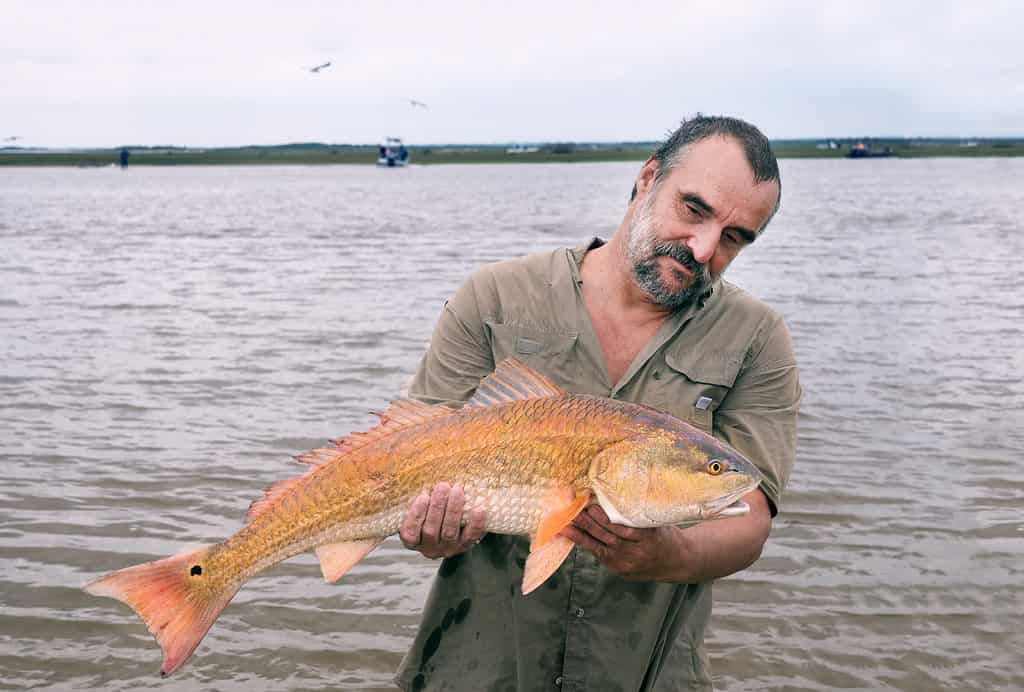
A popular sport fish, red drum are found in Georgia’s coastal waters.
©IrinaK/Shutterstock.com
Red drum can grow up to 30 inches in length and weigh between 15 and 20 pounds. They are iridescent silver with red overtones and prominent spots near their tails.
Red drum are found in shallow, quiet waters with muddy or grassy bottoms, where they feed on small fish, crustaceans, and other aquatic organisms. During spawning season, male red drums attract females by vibrating a muscle in their swim bladder, producing a drum-like noise.
Cold Water Game Fish: Southern Appalachian Brook Trout
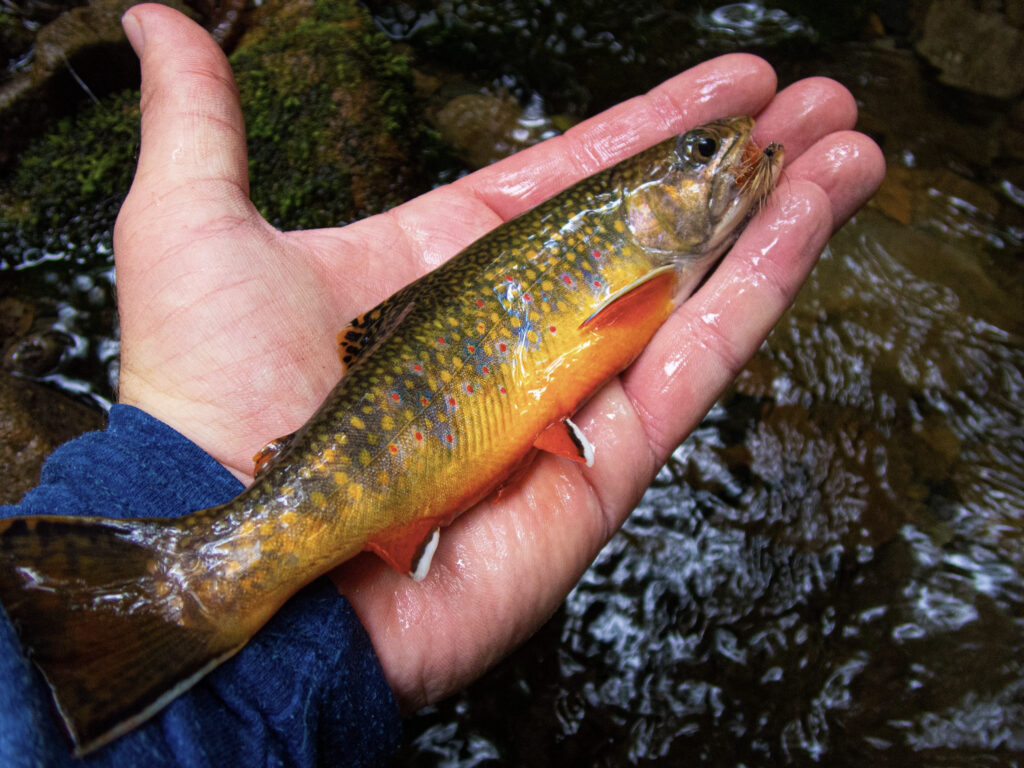
Georgia has a flourishing trout population, including the Southern Appalachian brook trout.
©iStock.com/Devin Davenport
The Southern Appalachian brook trout (Salvelinus fontinalis) was designated as the official state cold water game fish of Georgia in 1995. The fish is olive-green, marked with dark green speckles along its tail and back, and has a golden underbelly. Southern Appalachian brook trout are about 6 to 8 inches long and weigh 4 to 8 ounces.
Georgia’s brook trout populations flourish in high-altitude headwater streams that are secluded and unpolluted, with adequate oxygen levels. While they are highly valued, they currently face substantial population declines within their historic range in North Georgia.
Mammal: White-Tailed Deer
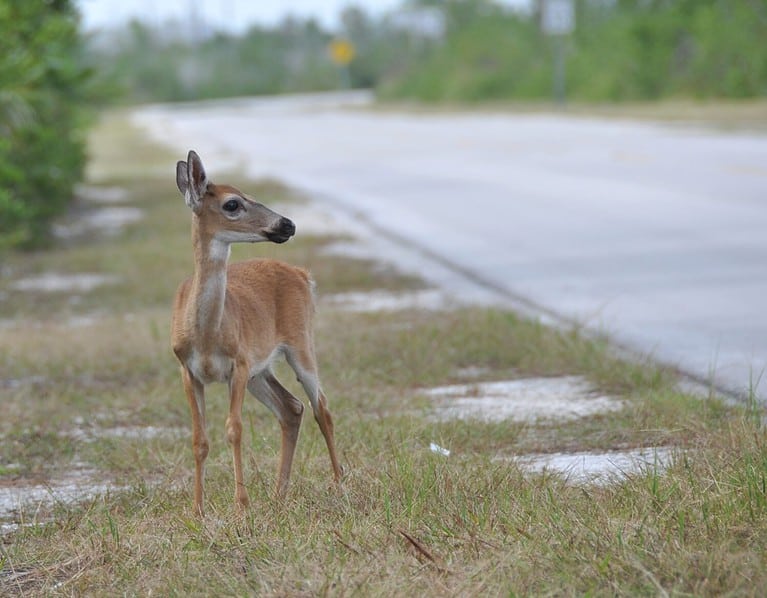
The white-tailed deer (Odocoileus virginianus) was designated as the official state land mammal in 2015, when a group of elementary students working alongside the Georgia Department of Natural Resources Wildlife Resources Division recommended the animal. The group chose the white-tailed deer because it is abundant throughout the state and has a huge economic impact.
The white-tailed deer change colors seasonally. It has a tan or brown color in warmer months, but as the weather cools, its fur turns grayish-brown. This deer gets its name from the unique white markings throughout its body. It has a white throat, eye, nose region, belly, and tail. White-tailed deer also have long legs, which help them reach incredible heights when jumping and running.
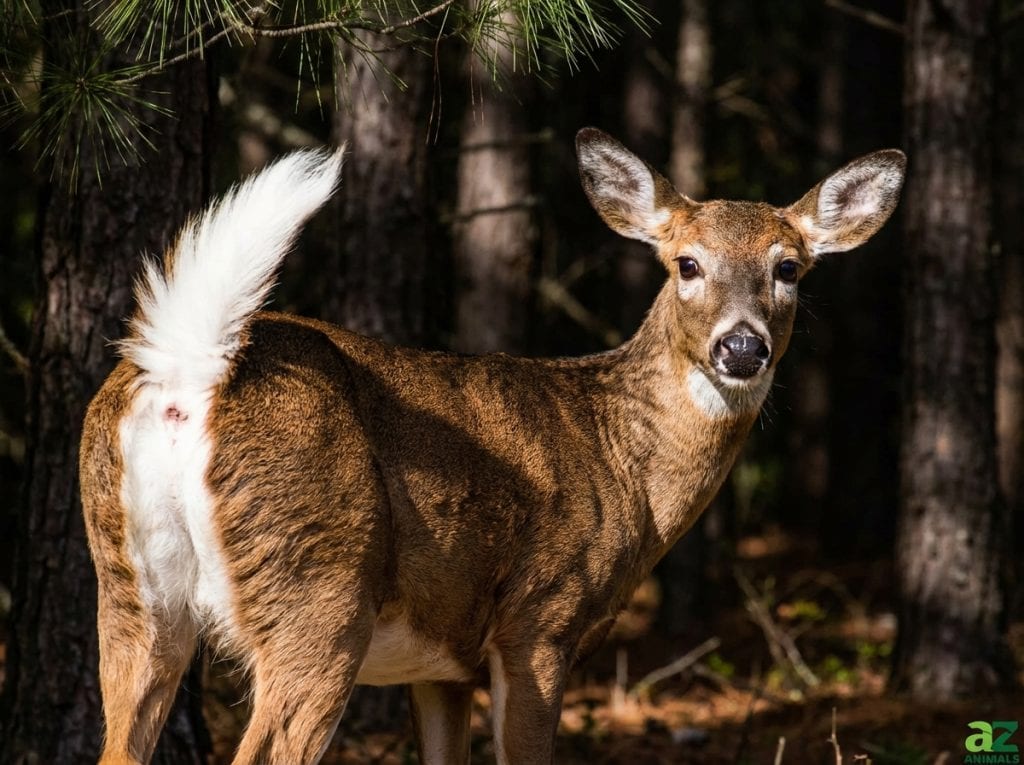
Georgia brought the white-tailed deer from the brink of extinction to a multi-million dollar economic powerhouse.
©A-Z Animals
These magnificent animals have incredible hearing and sight, which they use to defend and protect themselves from predators. White-tailed deer are primarily crepuscular, meaning they are most active during the low-light hours of dawn and dusk.
Overhunting and habitat loss in the early 20th century contributed to the decline of once-flourishing populations of white-tailed deer in Georgia. Thanks to strict hunting regulations, habitat management, and restocking programs, the state is now home to over one million white-tailed deer, which generate over 800 million dollars in revenue annually.
Dog: Adoptable Dog

Adoption gives dogs in need a second chance.
©hedgehog94/Shutterstock.com
In 2016, Georgia lawmakers passed a bill designating the adoptable dog as the official state dog. This legislation showcases the state’s affection for needy animals and recognizes the tireless efforts of animal shelters and their staff throughout the state.
Along with this official designation, specific cities in Georgia, including Atlanta and Valdosta, have enacted bans on the sale of animals from large scale breeders (puppy mills) in retail pet stores.
Riverine Sport Fish: Shoal Bass
Georgia adopted the shoal bass (Micropterus cataractae) as its official state riverine sport fish in 2020. Shoal bass are native to the Apalachicola-Chattahoochee-Flint (ACF) river basins in Georgia.
Shoal bass are hard-fighting game fish that draw anglers from around the world to Georgia, adding hundreds of millions of dollars annually to the state’s economy. The species is listed as Near Threatened due to habitat destruction threats from hybridization with introduced species. Management efforts are focused on protecting their habitats to ensure their sustainability.
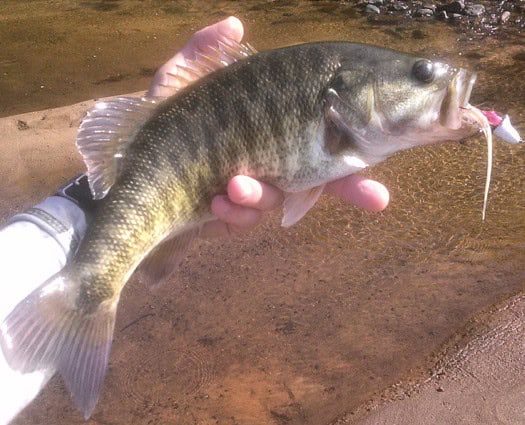
The shoal bass is facing challenges in Georgia, but conservation efforts are improving its survival.
Crustacean: Atlantic White Shrimp
The white shrimp (Litopenaeus setiferus) became Georgia’s official state crustacean in 2024. These shrimp are commonly found in the Atlantic Ocean off the Georgia coast, where they support a major commercial fishing industry. White shrimp account for roughly 80% of Georgia’s annual commercial seafood economy.
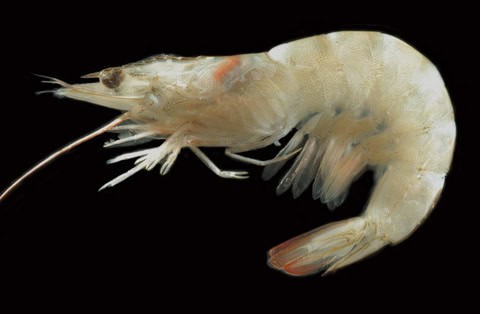
Atlantic white shrimp measure 7 to 8 inches long and have very long antennae, often 2.5 to 3 times their body length.