
Quick Take
- The American alligator was officially recognized as the Mississippi state reptile in 2005.
- Mississippi has two official state land mammals: the white-tailed deer and the red fox.
- The bottlenose dolphin is the official water mammal of Mississippi.
Mississippi is known for its rich history, vibrant culture, and breathtaking natural beauty. The state has an interesting collection of official state symbols, including state animals. These animals represent the unique character and diversity of the state. They have been chosen with great care to reflect the values and heritage of Mississippi. Continue reading to discover more about the 10 official state animals that embody the spirit of Mississippi and offer a fascinating glimpse into its natural history.
Bird: Northern Mockingbird
The Northern mockingbird (Mimus polyglottos) is found throughout Mississippi. Due to its conspicuous behavior, vocal abilities, and affinity for human-populated areas, Mississippi selected this species as the official state bird in 1944.
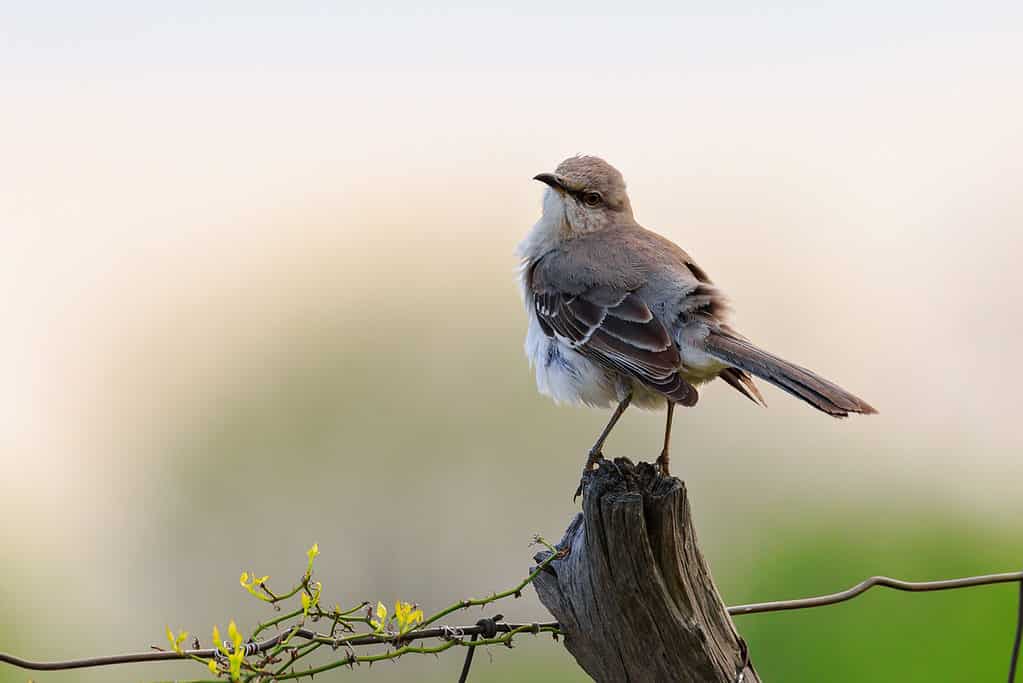
A Northern mockingbird perched on an old fencepost.
©iStock.com/cmcneill17
Northern mockingbirds have distinctive gray-brown plumage, which is lighter in color on their chest and belly. They have a unique appearance, with two prominent white wing bars. Northern mockingbirds measure anywhere from 8 to 11 inches long, including a tail that is nearly as long as their body.
The Northern mockingbird is famous for its remarkable ability to imitate a wide range of sounds, including sirens, crickets, and other bird species.
Waterfowl: Wood Duck
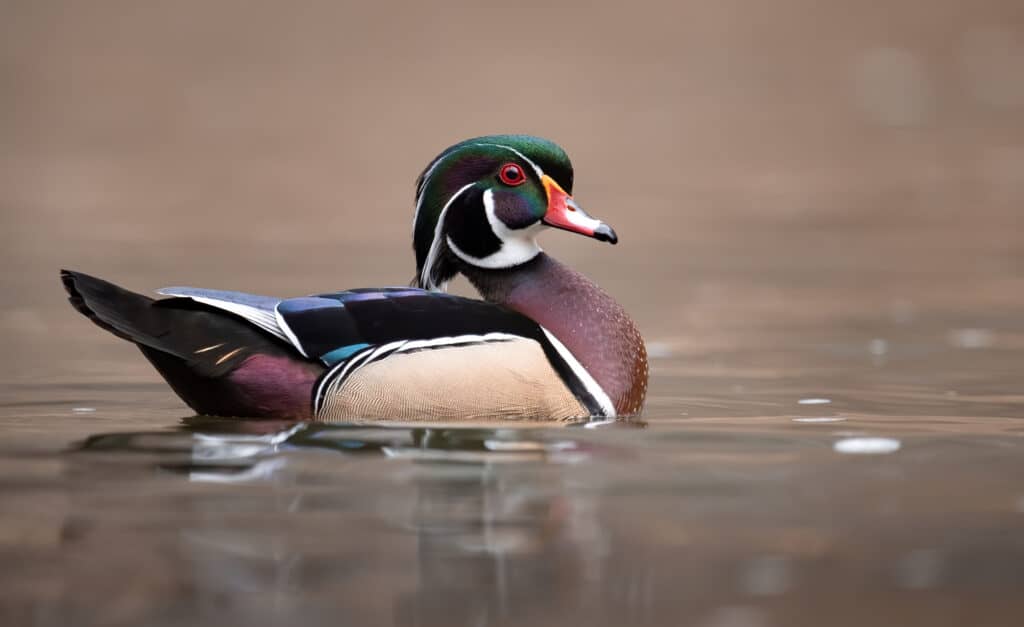
The wood duck is distinguishable among its duck relatives by its fabulous crest, which gives it a boxy head shape, paired with a slender neck.
©Harry Collins Photography/Shutterstock.com
The North American perching duck (Aix sponsa), commonly referred to as a wood duck, is the state’s official waterfowl. The wood duck is one of several waterfowl species that breed in Mississippi annually.
Not too long ago, the wood duck faced near extinction in Mississippi due to habitat destruction and excessive hunting. To raise awareness and protect this species, the state declared it the state waterfowl in 1974, symbolizing Mississippi’s dedication to conservation efforts.
Water Mammal: Bottlenose Dolphin
The bottlenose dolphin (Tursiops truncatus) is a sleek and intelligent mammal commonly present in the oceans globally. The bottlenose dolphin became the state water mammal of Mississippi in 1974 to recognize its significance as an important and beloved species in the state’s coastal waters and to raise awareness about the importance of protecting and preserving dolphins and their habitats.

The brain of a dolphin is larger than the brain of a human.
©Sbork / Creative Commons – Original
The name bottlenose comes from the distinctive, stubby snout that characterizes these dolphins. They vary from light gray to nearly black on their dorsal side, while their undersides are usually a lighter gray that is almost white. They are typically between 6 and 13 feet in length.
Every bottlenose dolphin has a unique whistle that develops shortly after birth, serving as a means of identification, similar to a human name. Additionally, these mammals produce high-pitched clicks, which function as an echolocation system, much like sonar.
Land Mammal: White-tailed Deer
The white-tailed deer (Odocoileus virginianus) is officially recognized as one of the state’s two official land mammals. The white-tailed deer symbolizes a unique combination of grace and power.
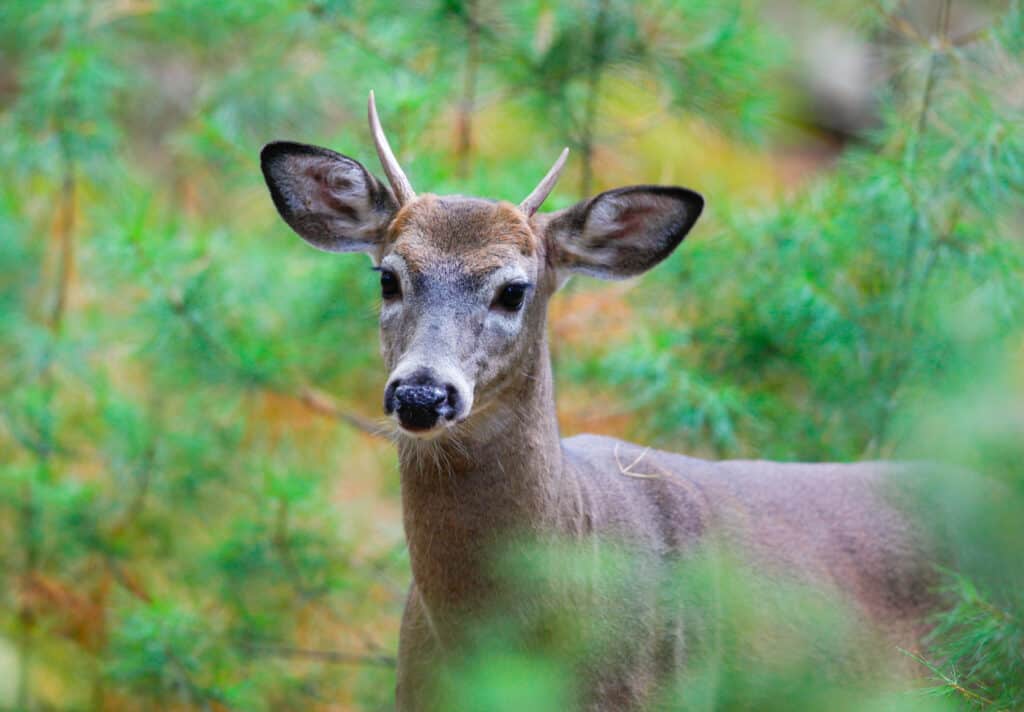
The term spike refers to bucks (male deer) with antlers that do not branch.
©iStock.com/Louise Wightman
This majestic creature embodies peace, strength, fertility, prosperity, and energy. It is a fitting representation of the state’s spirit. Its elegance and popularity make it an ideal choice as the state’s official land mammal. The state granted white-tailed deer this distinction in 1974.
Fish: Largemouth Bass
The largemouth bass (Micropterus salmoides) is a carnivorous species of freshwater gamefish. In 1974, Mississippi officially recognized the largemouth bass as its state fish. Renowned for its fierce fighting spirit, this species has long been a favorite among avid fishermen.
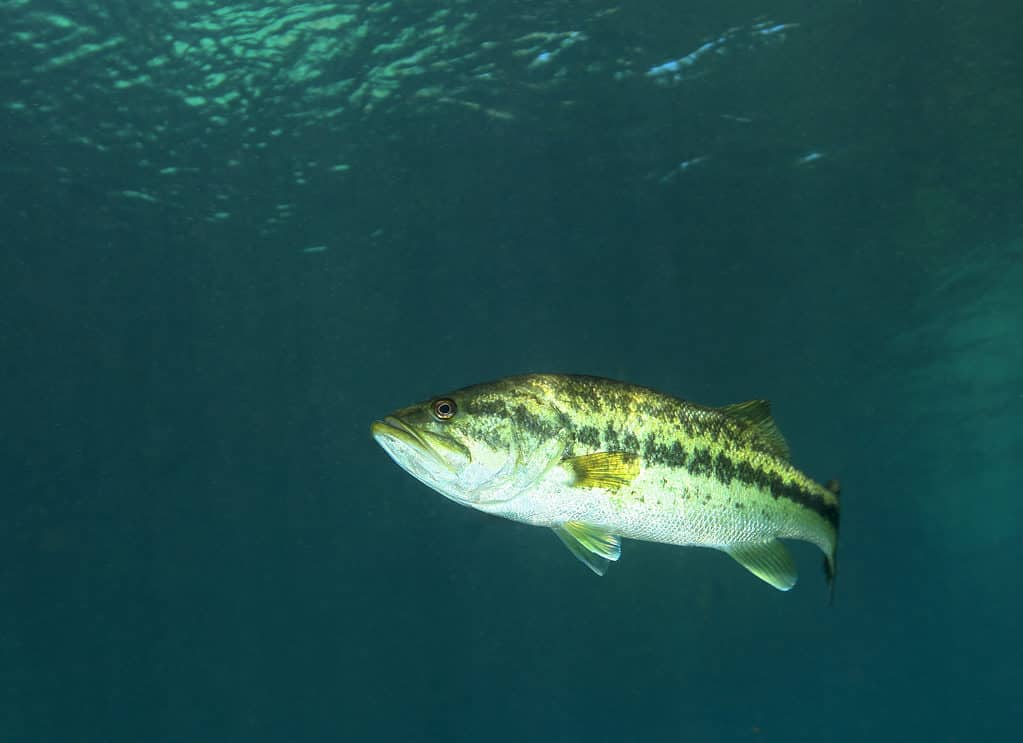
Largemouth bass have a distinctive appearance with a dark olive-green hue on their backs and light green sides that fade into a pure white belly.
©iStock.com/mpwoodib
Largemouth bass inhabit various freshwater environments, including lakes, streams, ponds, and rivers. They are drawn to bodies of water with an abundance of vegetation, especially stagnant ones.
Insect: Western Honeybee
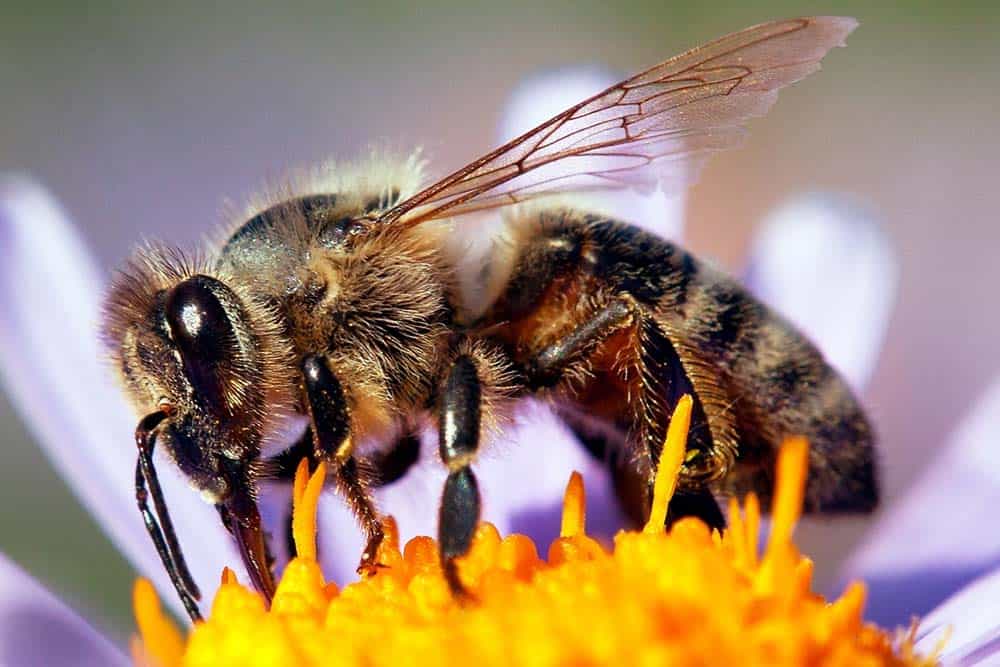
Western honeybees share a long history with the Mississippi people, who appreciate their role in producing honey.
©Daniel Prudek/Shutterstock.com
The Western honeybee (Apis mellifera) is the most widespread species of honeybee in the state and holds the distinction of being Mississippi’s official insect. The species gained its title in 1980 due to its importance as a pollinator of crops and other plants in the state.
The Western honeybee plays a crucial role in pollinating crops and other plants, making it a symbol of the state’s agricultural heritage and economic prosperity.
Fossil: Prehistoric Whales
Prehistoric whales were designated the official state fossil of Mississippi in 1981. Basilosaurus cetoides and Zygorhiza kochii are the two specific species that share the title. Both species lived during the late Eocene epoch.
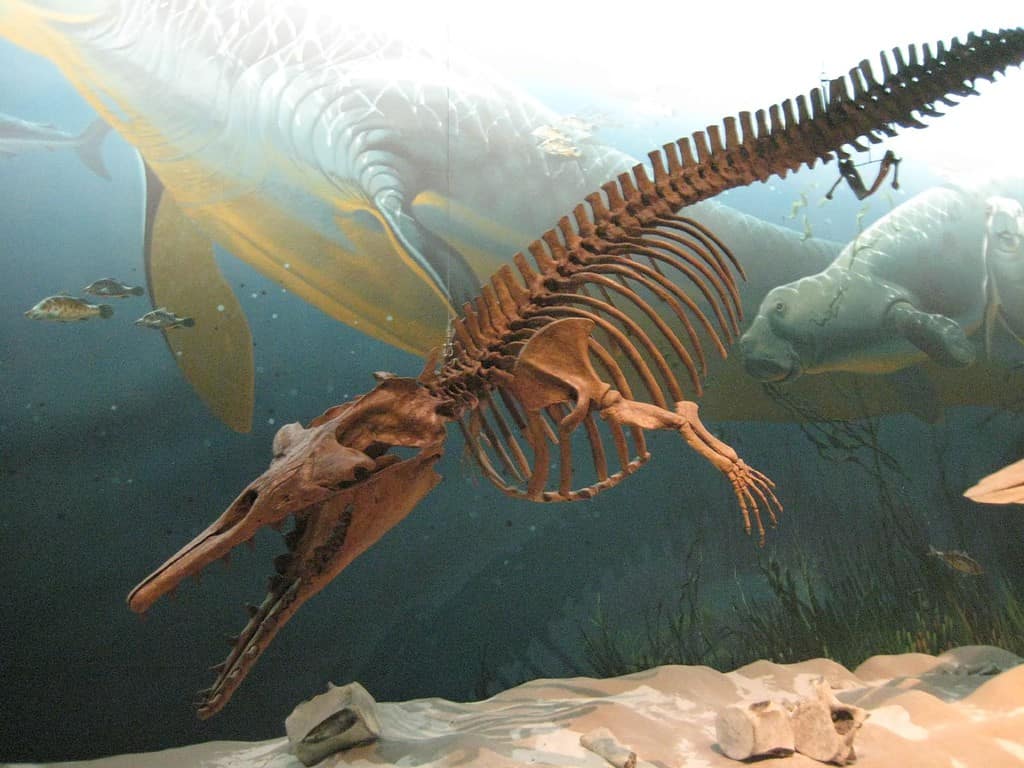
A nearly complete, well-preserved skeleton of Zygorhiza was excavated in Yazoo County, Mississippi, in 1971.
©Claire H. from New York City, USA / CC BY-SA 2.0 – Original / License
Basilosaurus cetoides was a massive, serpentine, predatory whale that could grow up to 60 or 70 feet long. Zygorhiza kochii was a smaller, dolphin-like creature, typically around 15 to 20 feet long. These fossils are relatively common in an area called the Whale Belt, which runs across the state of Mississippi.
Reptile: American Alligator
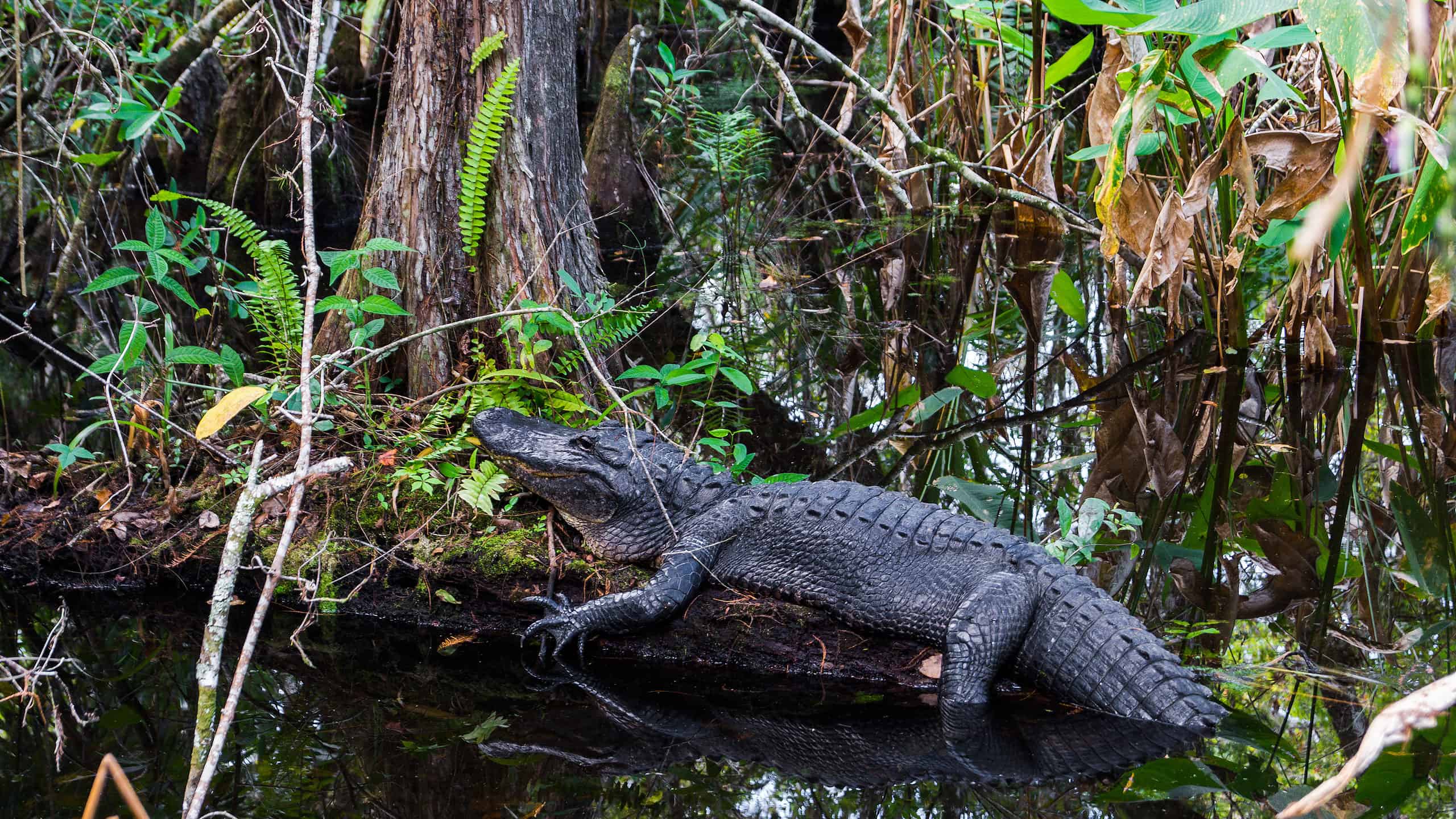
The Mississippi state reptile is none other than the American alligator (Alligator mississippiensis). The American alligator was officially designated as the state reptile in 2005 because of its historical and ecological significance. American alligators are native to Mississippi and have been a part of the state’s ecosystem for thousands of years.
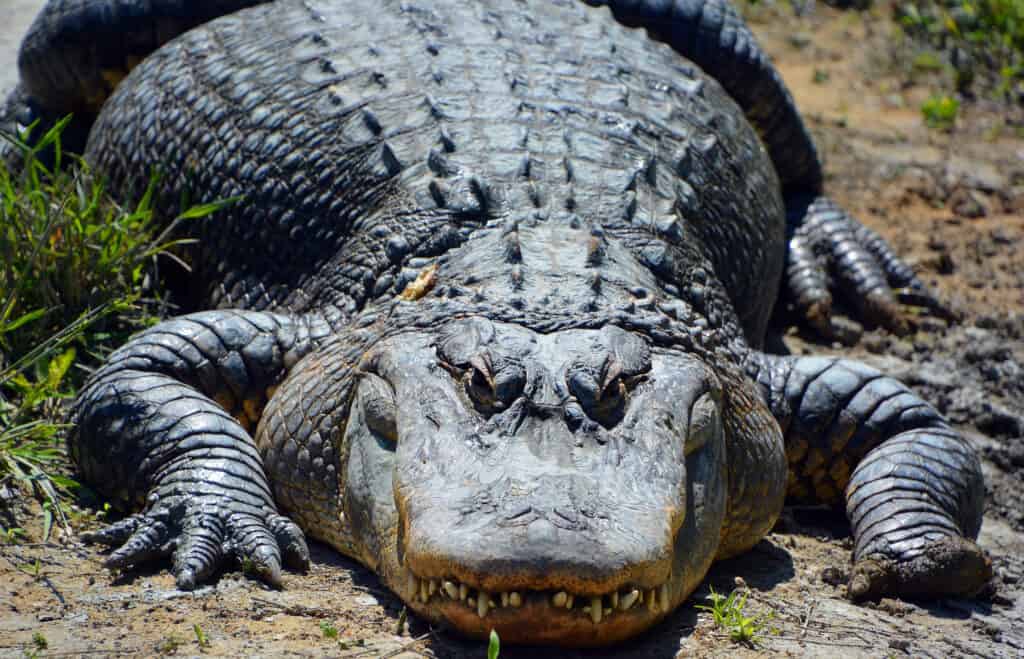
These reptiles possess powerful, compact legs and a distinct, rounded snout that adds to their intimidating appearance.
©meunierd/Shutterstock.com
Alligators are highly efficient apex predators that are primarily active during nighttime hours. During the day, they can be spotted in groups at the water’s edge, basking in the sun. As the night approaches, they retreat to the water and lead a solitary life, each one staking claim to its own territory.
Butterfly: Spicebush Swallowtail
The spicebush swallowtail (Papilio troilus) has been recognized as the official state butterfly of Mississippi since 1991. This species is abundant throughout the state and is the most prevalent type of swallowtail. Its designation as the state butterfly recognizes its significance and prevalence in the area.
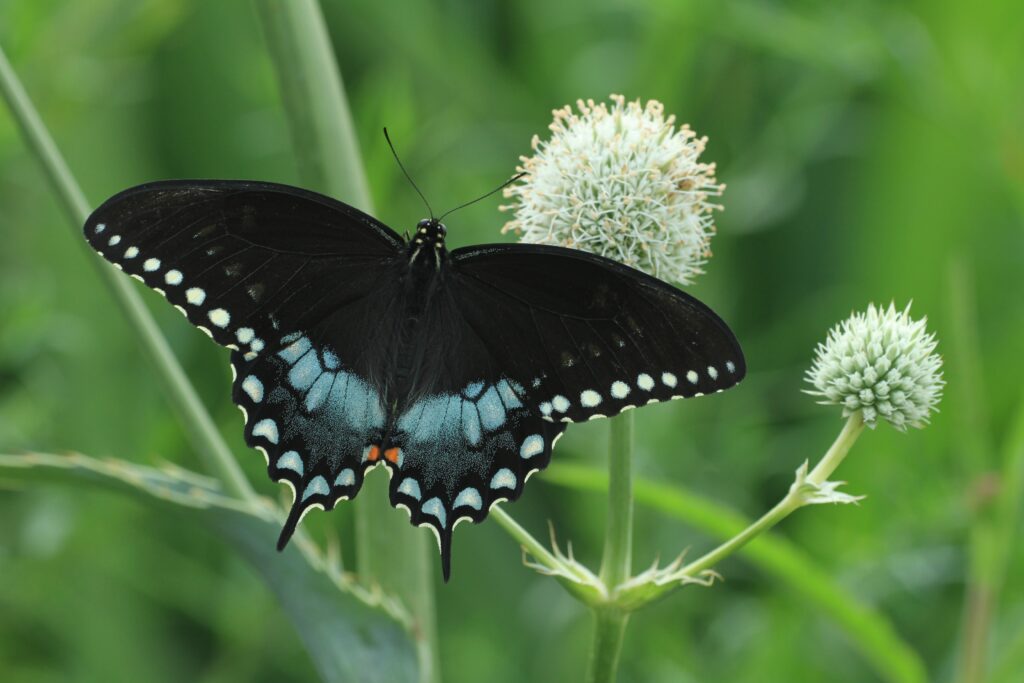
The spicebush swallowtail has a wingspan between 3.5 and 4.5 inches.
©Kevin Collison/Shutterstock.com
The spicebush swallowtail has a black base color with distinct ivory markings. Its hindwings feature distinctive tails and eye-catching orange spots. The female possesses a radiant bluish sheen, while the male boasts a bluish-green iridescence due to its unique scales.
Land Mammal: Red Fox
The majestic red fox (Vulpes vulpes) is the largest among all true fox species. The state designated the red fox as its second state land mammal in 1997.
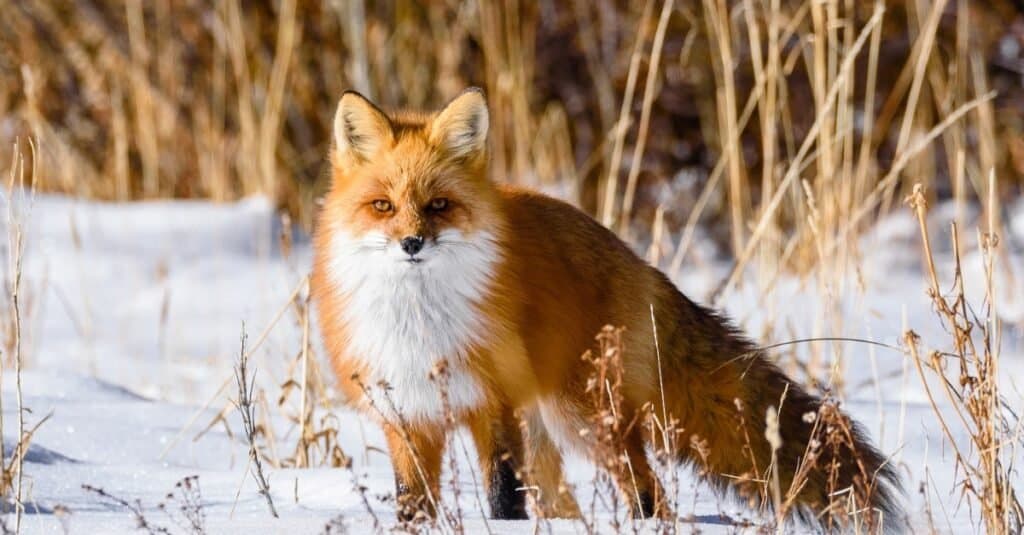
The red fox boasts a distinctive reddish fur coat with black-colored legs and ears.
©iStock.com/Hawk Buckman
The state sought to recognize the red fox’s long history in the region. This iconic animal is also a significant predator of small mammals, birds, and reptiles. It helps maintain a healthy balance in the state’s ecosystem.