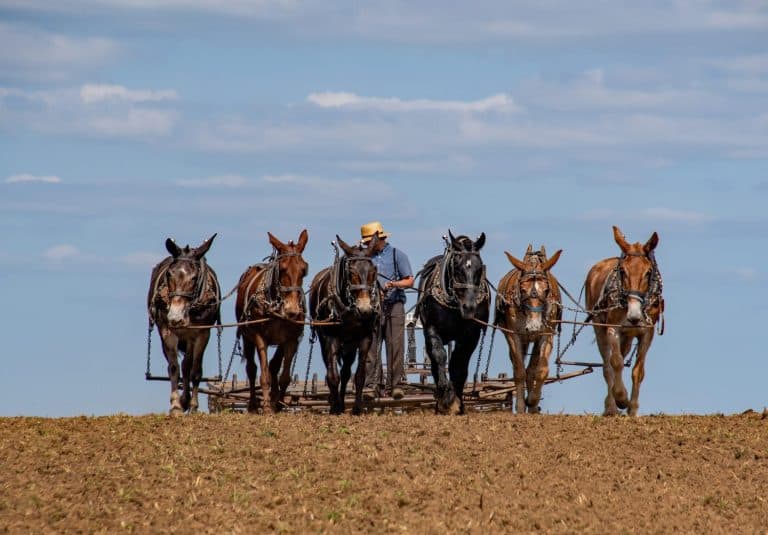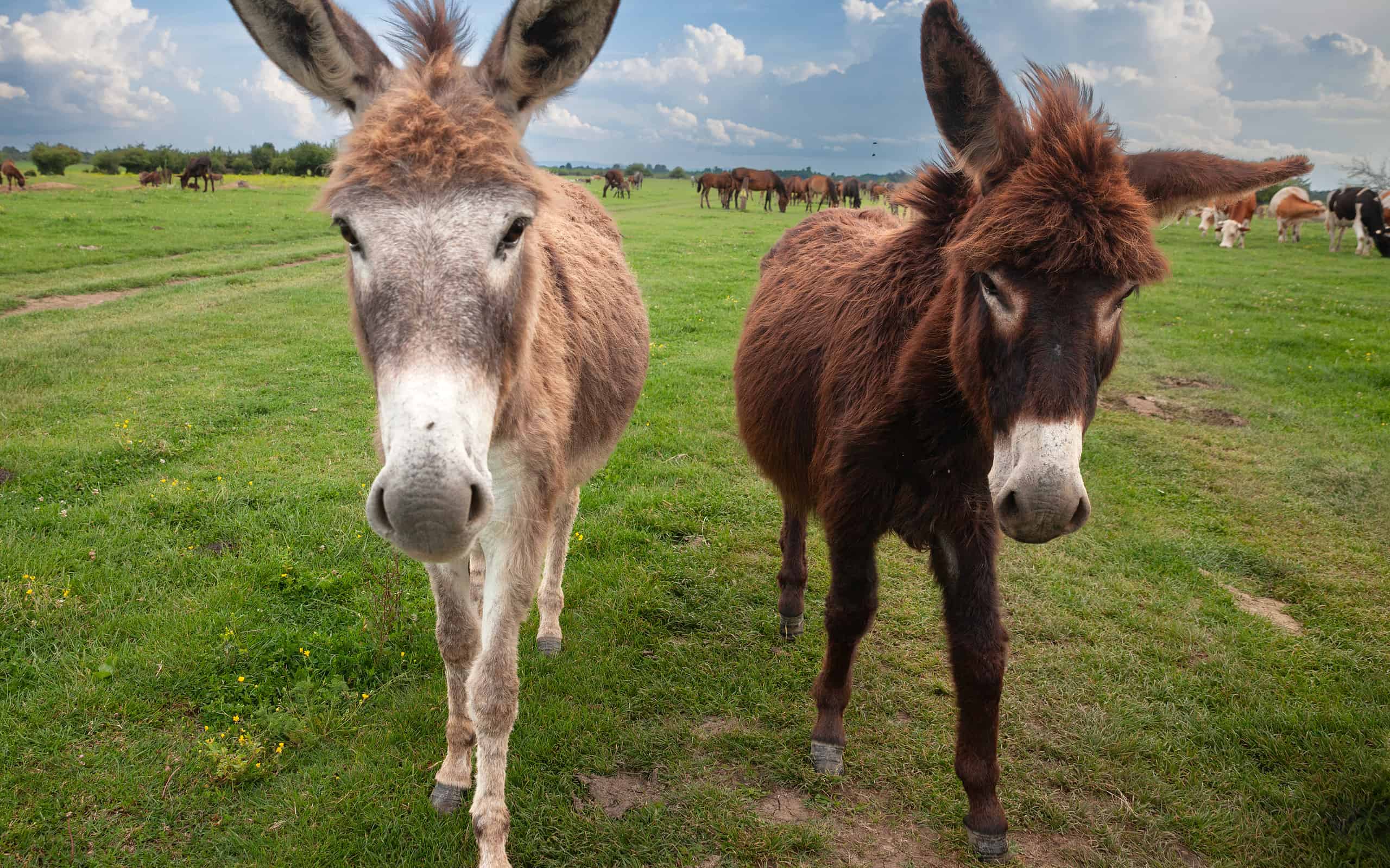

Donkeys and mules are related, but they are not the same species. Donkeys are members of the same family as zebras and horses. They appear much like horses, but are more heavily set, with long, floppy ears. Mules, on the other hand, are a hybrid. They are the offspring of a male donkey and a female horse.
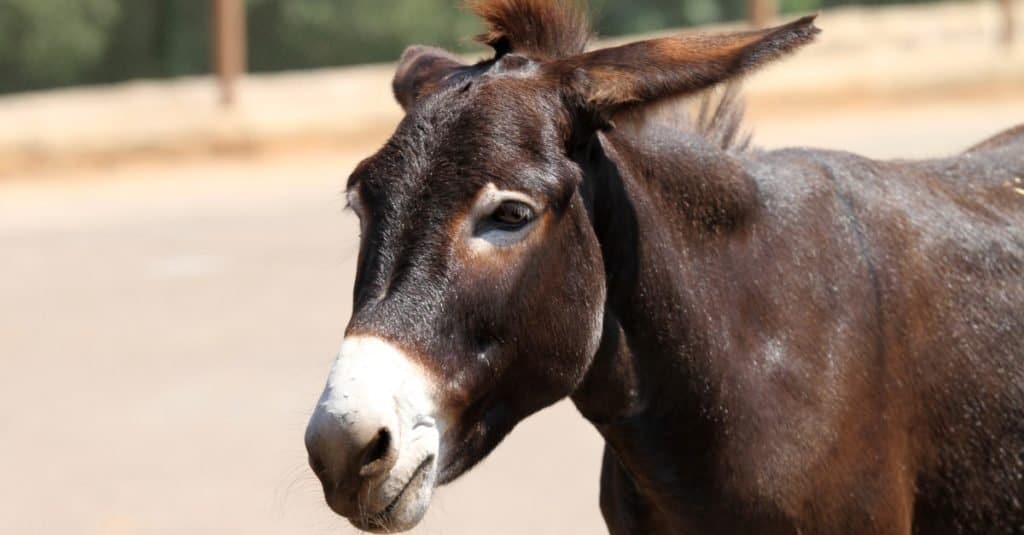
Mules are the offspring of a horse and a donkey.
©BlackDorianstock/Shutterstock.com
What is a Donkey?
Donkeys (Equus asinus), also known as burros or asses, are thought to have descended from the African wild ass. Donkeys may be wild, feral, or domesticated. Although they look a lot like their horse relatives, they are usually stronger, with completely different personalities from horses. Donkeys tend to be less reactive than horses, which is sometimes viewed as stubbornness.
Scientists believe that donkeys were first domesticated about 7,000 years ago in Africa. Thanks to their strength and dependability, domestic donkeys spread around the world. Today, they are still heavily relied upon for their work in many countries.
What is a Mule?
You can’t have a mule without a donkey. A mule (Equus mulus) is a cross between a male donkey and a female horse. On the other hand, when a female donkey breeds with a male horse, the result is called a hinny. Mules have been around for thousands of years. Breeding donkeys and horses to create mules can be traced back to ancient Greece. In the U.S., according to the Mule Museum, George Washington was the first American mule breeder.
What Are the Key Differences Between Mules and Donkeys?
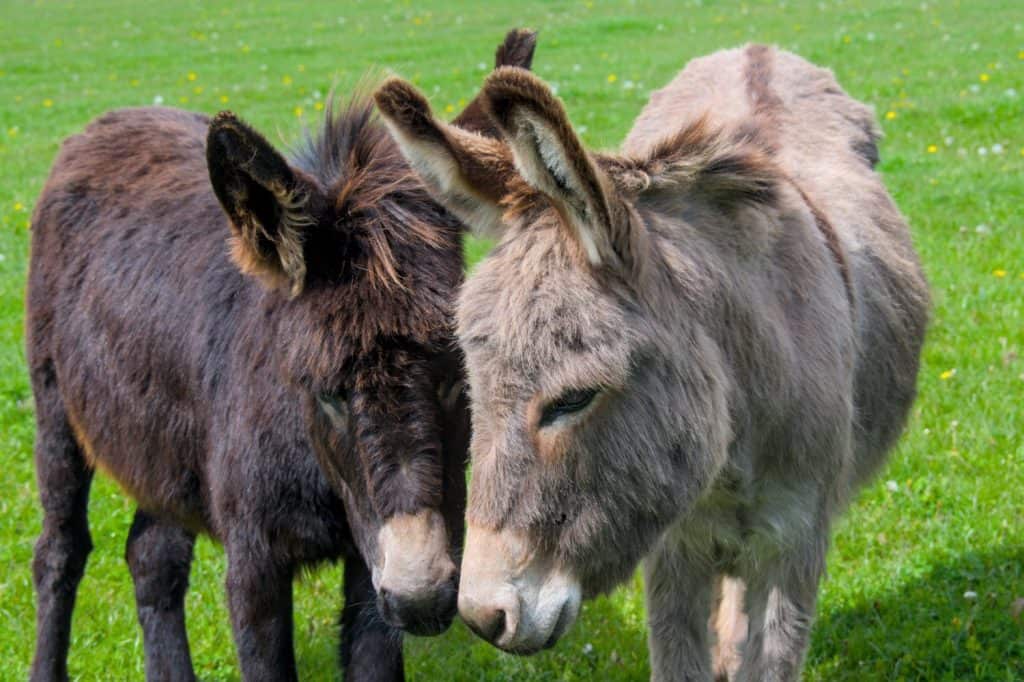
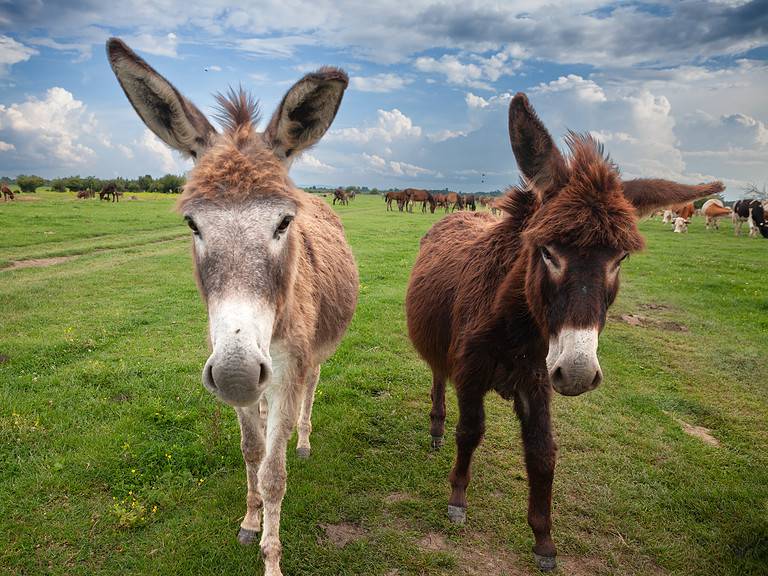
Donkeys are smaller than mules and horses.
©Brinja Schmidt/Shutterstock.com
Mules are the offspring of donkeys and horses and share some characteristics with their donkey parents. However, there are several key differences between mules and donkeys.
Body Size and Shape
Domesticated donkeys usually weigh around 400 to 500 pounds, but this can vary. Mules are typically larger than donkeys and are closer in size to horses. Although mules vary in size, they average around 600 to 1,500 pounds. Mules are also taller than donkeys, about 50 to 70 inches tall at the shoulder, versus a donkey’s 36 inches to 48 inches.
Strength
Mules inherit traits from both parents, giving them the size and physical strength of a horse, along with the surefootedness and hardiness of a donkey. Mules have stronger muscles than donkeys and can carry much heavier loads.
Coat
Donkey colors can vary, but are commonly gray, brown, black, white, roan, or piebald. Many donkeys have a darker strip down their backs and shoulders in the shape of a cross. Unlike horses, donkeys don’t have waterproof coats, and they don’t grow thicker coats in winter like horses and mules do. Mule coats can also vary in color. They tend to have shorter manes, more similar to a donkey’s mane than a horse’s mane. However, the texture of their hair is finer, like a horse’s.
Head and Tail
Mules and donkeys have similar heads, but a donkey’s head tends to be slightly thicker and shorter than a mule’s. Both have thicker, heavier heads and longer ears than horses.
Donkey and mule tails differ significantly. Mules typically have a longer, flowing tail like their horse mother, while donkeys’ tails are shorter and less full.
Fertility
Donkeys are fertile and can reproduce with other donkeys to produce more fertile offspring. Mules, however, are sterile hybrids and cannot reproduce. For animals to produce fertile offspring, they must have the same number of chromosomes. Since donkeys have 62 chromosomes and horses have 64, their hybrid offspring are infertile.
Behavior
Both donkeys and mules are highly social, and experts recommend keeping them with other animals of their kind, such as mules, donkeys, or horses. Research has shown that donkeys form the closest bonds with other donkeys. One reason may be that donkeys have different ways of communicating than horses. Donkeys are more vocal and physical, while horses have more subtle ways of communicating with each other, like a tail swish. Mules have inherited a combination of traits from both parents.
According to the Donkey Sanctuary of Canada, animals most often take on the traits of their parents. They have found that mules tend to be more like their horse mothers, while hinnies have more traits from their donkey mothers.
Donkey or Mule: Who Is More Stubborn?
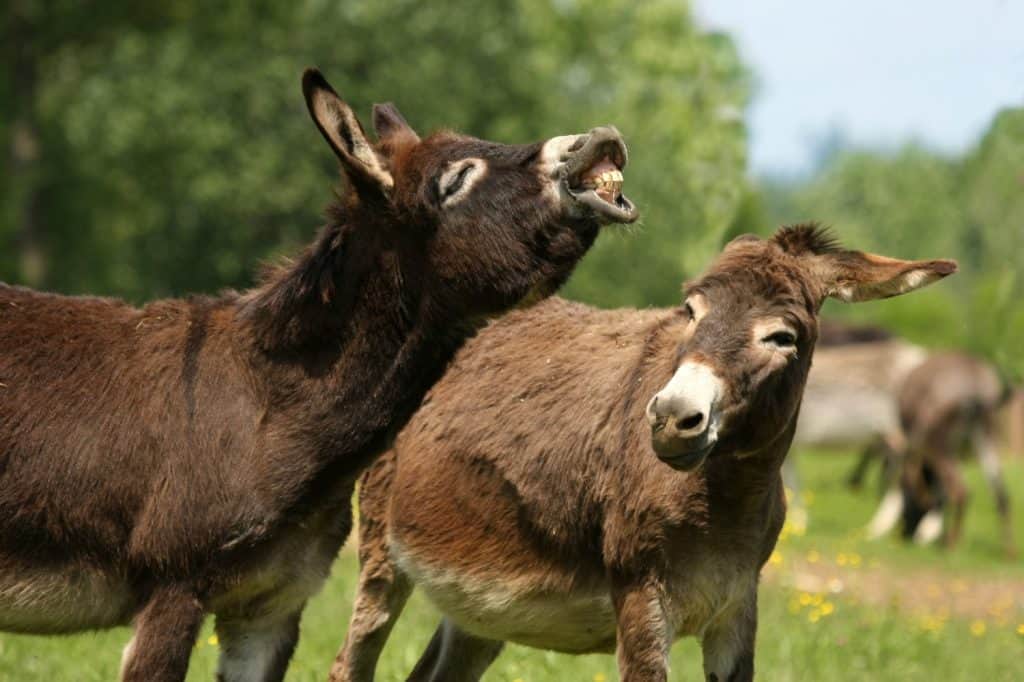
Donkeys communicate with each other through vocalizations.
©Rachele Totaro IT/Shutterstock.com
It’s a myth that donkeys and mules are stubborn. Both animals are highly intelligent. The idea that they are stubborn may have come from how they both behave differently from horses. A fear response in a horse is usually strong and leads to flight, but donkeys have a completely different reaction to threats. They tend to assess a situation before reacting, which may be perceived as stubborn. Research has shown that donkeys will pause and make decisions based on risk assessment. Mules also react differently to threats than horses do. Like their donkey parents, they will stand their ground and assess a situation before reacting.