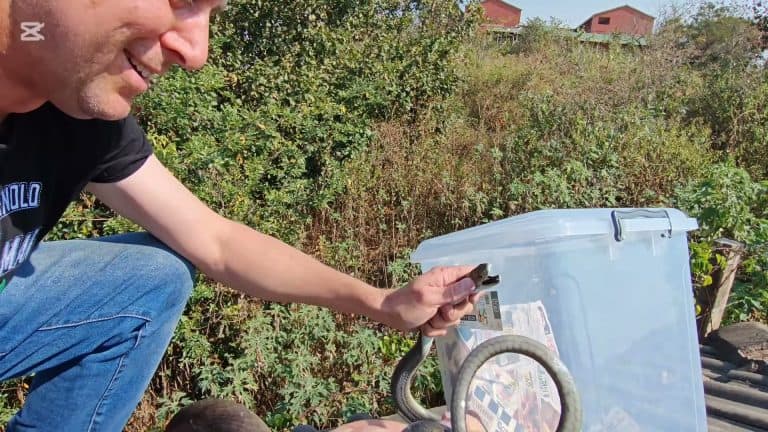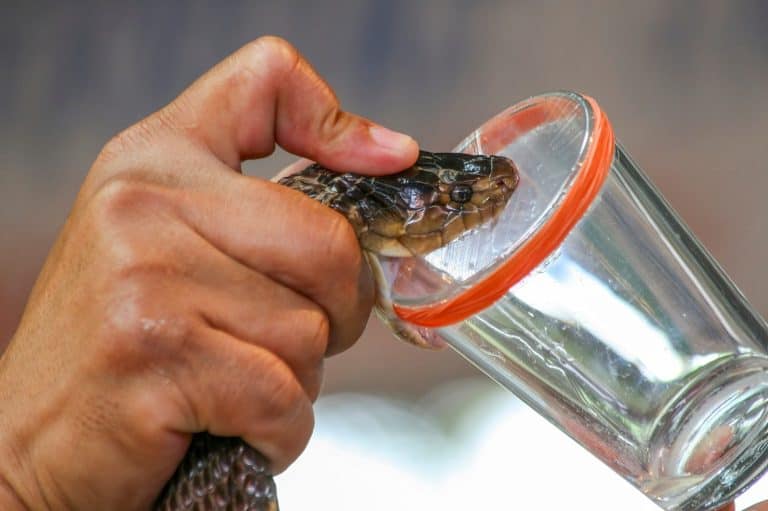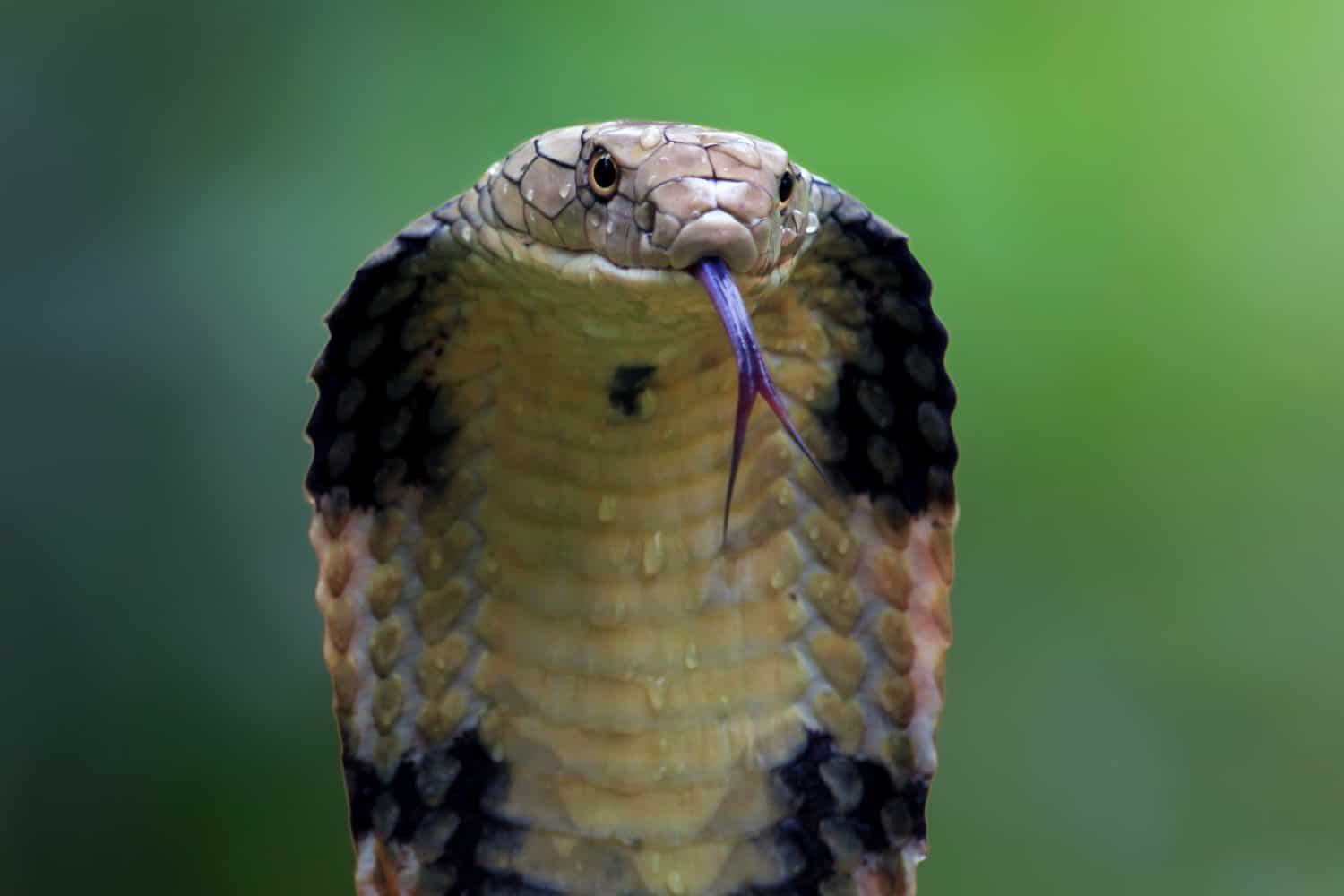

Many videos break the internet because of their shock value. One video in particular shows a cobra with its fangs hidden in its mouth. The viral video, shared by @therealtarzann on Instagram, can be seen here. As with any viral video, the reactions were mostly confusion. Some people even mistakenly believed the cobra has no fangs at all. The reality, however, is much more interesting. This cobra was neither defanged nor a pet; it was a mother guarding her nest.
The Cobra’s “Fang Sheath”
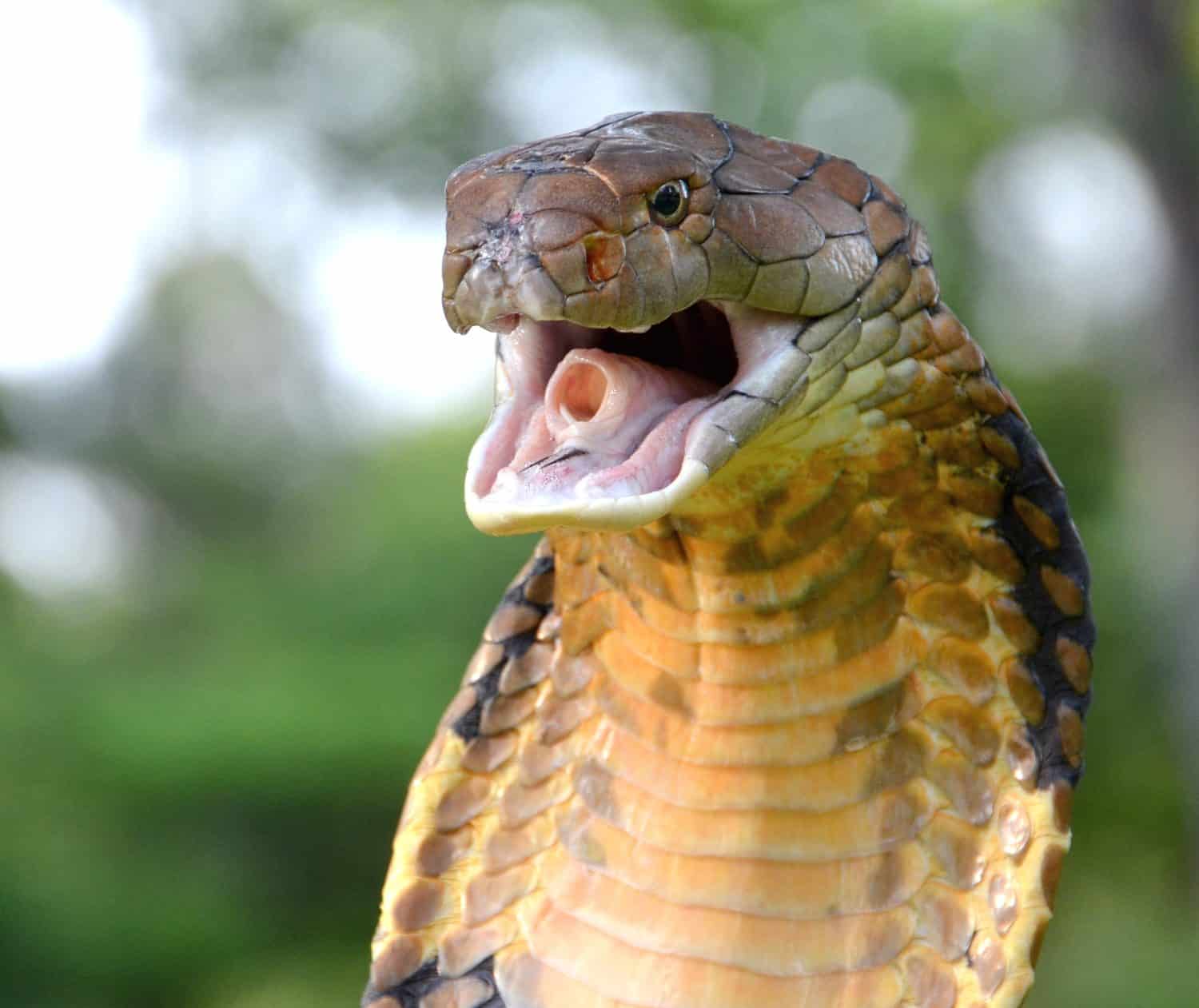
Cobras are a part of the Elapidae family, which includes mambas, taipans, and coral snakes.
©ccarbill/Shutterstock.com
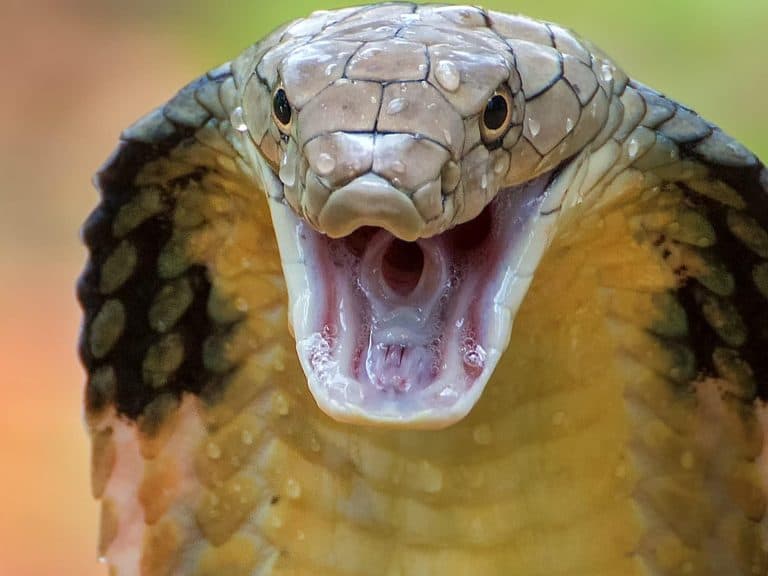
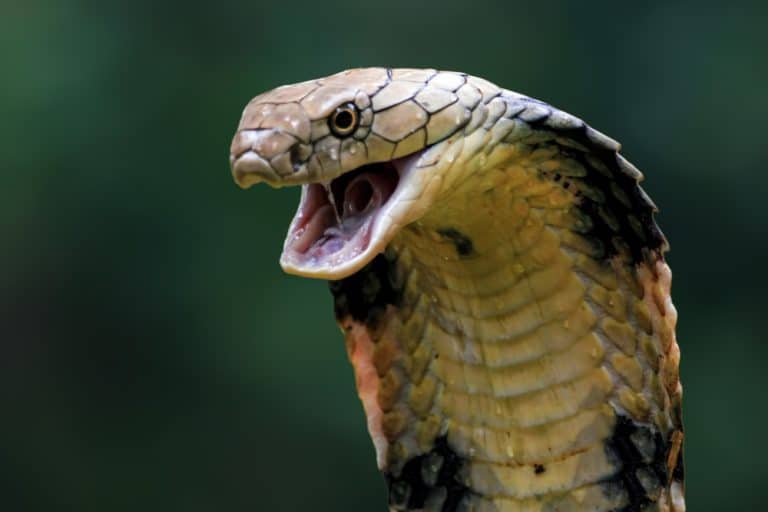
A fang sheath is a protective layer of tissue that covers a cobra’s fangs. This critical part of cobra anatomy helps protect the tools cobras use to defend themselves. “Fangs are encased in what we call a fang sheath,” explains Emily Taylor, a professor in biological sciences and director of the Physiological Ecology of Reptiles Lab at California Polytechnic State University. “It is that white, gum-like tissue.”
When a cobra bites, the sheath is pushed back, exposing the fangs, much like how a hypodermic needle injects venom: quickly and efficiently. The fangs deliver a neurotoxic venom to their prey. The appearance of the fangs “disappearing” is simply due to the sheath covering them. A cobra can have multiple sets of fangs throughout its lifetime, as they are replaced repeatedly.
In the previously linked video, you can see more than one set of fangs. “Fangs in venomous snakes break off routinely. They always have new ones growing in behind that are ready to engage,” Taylor says. Though many people assume that the cobra had been defanged, they were mistaken. Taylor stresses that even if someone removes a cobra’s fangs, it will grow new ones back within a certain period of time.
The sheath protects a cobra’s fangs while they are not in use. A major purpose of the sheath is to protect its fangs from injury, which is critical for its survival. As a critical part of their survival, the fangs need the utmost protection. The sheath also prevents the fangs from becoming dry and brittle, which extends their usability. This ensures that the fangs remain functional for delivering venom.
Fangs in venomous snakes break off routinely. They always have new ones growing in behind that are ready to engage.
Emily Taylor, professor in biological sciences at California Polytechnic State University
Cobra Parents
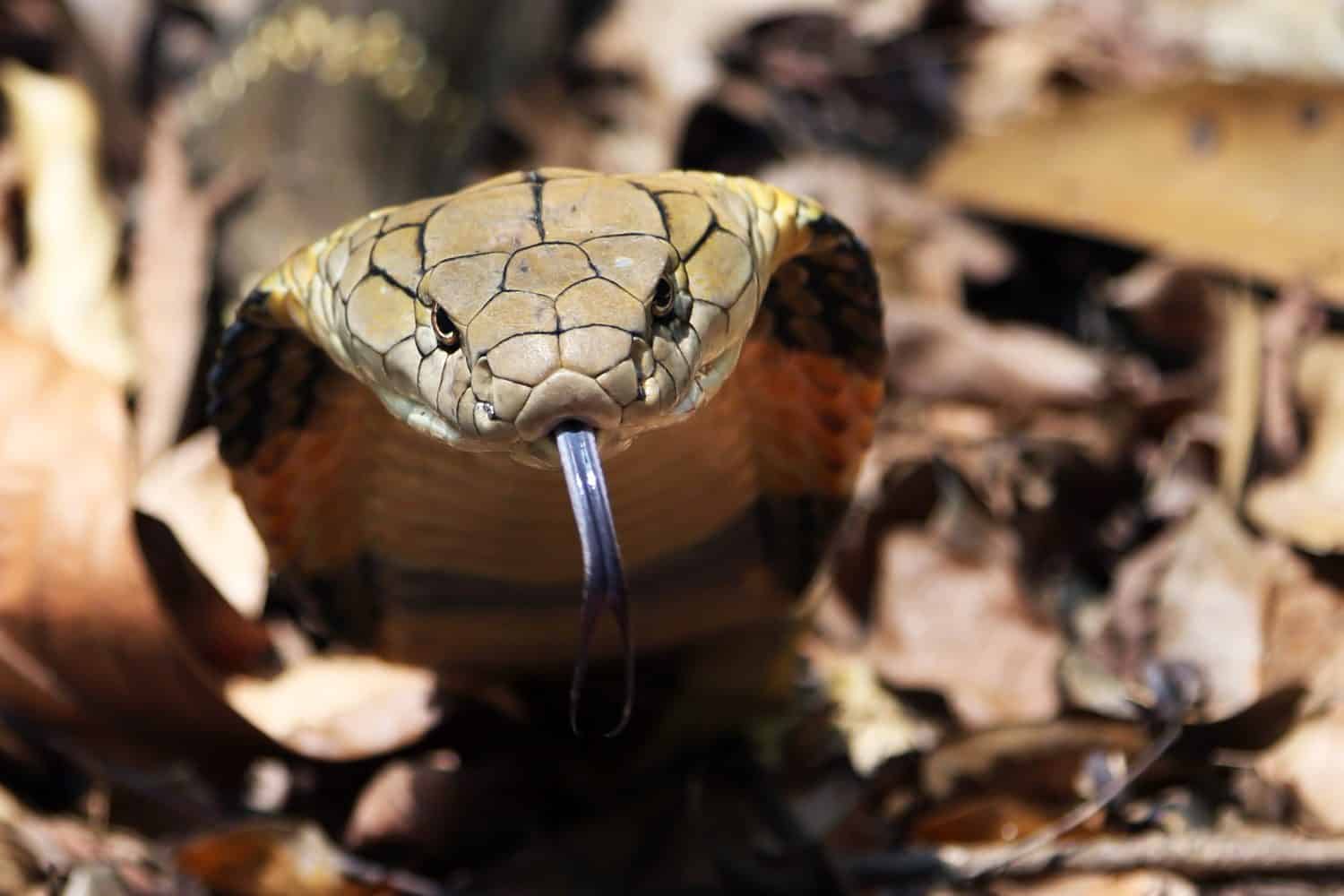
King cobras are the world’s longest venomous snakes.
©Suresh Suryasree/Shutterstock.com
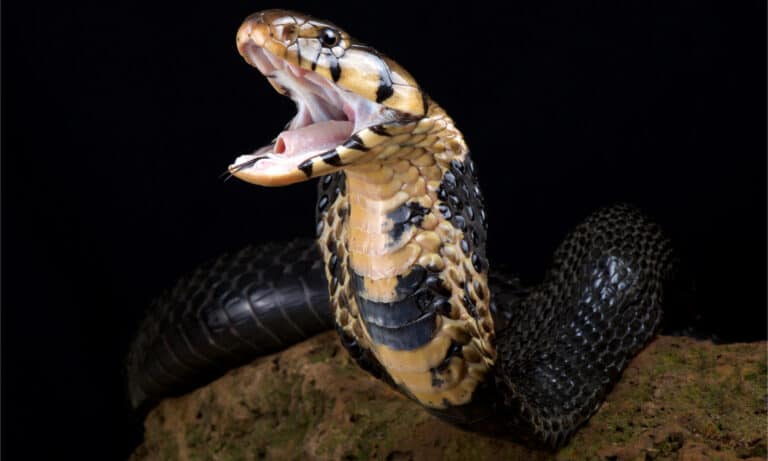
Perhaps the most beautiful part of these snakes is their unique parental role. Female king cobras, in particular, actually build a nest out of leaves and guard and incubate the eggs until they hatch. This behavior is absent from many other snake species. In this viral video, a female king cobra was protecting her nest in a village backyard and was relocated for safety.
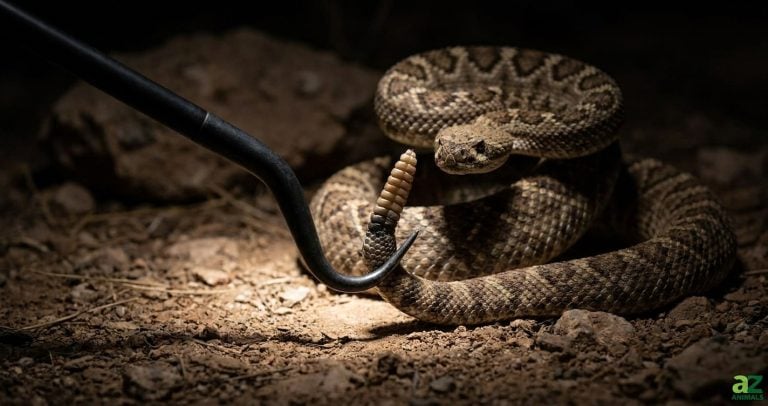
The fact that these often-feared snakes can nurture and care for their young highlights the importance of dispelling fears through understanding. Many myths about snakes harm these vital species and often lead to them being killed on sight. One of the biggest myths about snakes is that rattlesnakes chase people. In truth, Dr. Taylor says, “It is actually really difficult to get a rattlesnake to bite a person. I have captured thousands; most do not even rattle, let alone bite. They are just terrified of us.” Expelling venom is costly for snakes, so unless they feel immediately threatened, they are unlikely to chase or attack humans. Most snakes are defensive, not aggressive.
A Cobra’s Ecological Role
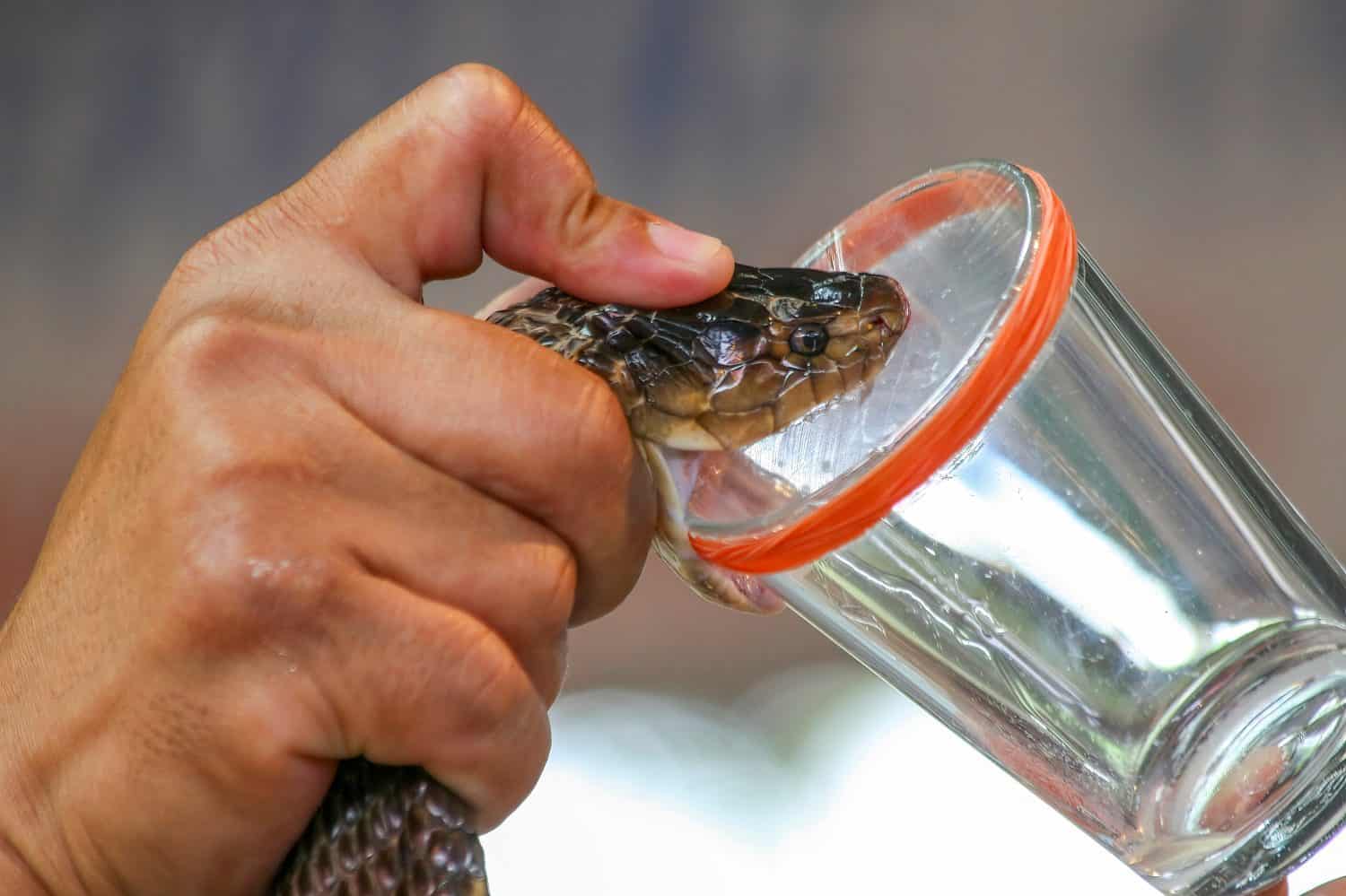
King cobras can live about 20 years in the wild.
©Ali _Cobanoglu/Shutterstock.com
Snakes play important ecological roles, such as controlling rodent populations and reducing the spread of diseases carried by rodents. There is also an emerging field of research focused on the medical applications of venom. Venoms are inspiring the development of many life-saving drugs for humans. Although cobra venom is neurotoxic, specific compounds in the venom are being studied for blood pressure and neurological treatments.
In the U.S., deaths from snakebites are typically rare. Globally, however, this number is much higher due to limited access to antivenom. Despite this, snakes do not deserve to be killed out of fear. Education and safe relocations are key to coexistence with these species. Currently, king cobras are listed as Vulnerable on the IUCN Red List, with populations declining due to factors such as habitat loss. Here, Dr. Taylor calls for action to protect snakes and counter these myths to shift public opinion. Her lab’s motto is, “Love the unloved.” Snakes are not monsters, and as we can see from the video, they have maternal instincts just like us. She argues that snakes need more advocates to protect them, as they are misunderstood yet ecologically vital animals.