
Quick Take
- Like the Ancient Greek warriors from which its name derives, the Amazon molly is an all-female fish species that has reproduced without males for over 100,000 years.
- It relies on sperm from related species to trigger reproduction but discards the male DNA entirely.
- A genetic “copy-and-repair” process helps it avoid the mutation buildup that dooms most asexual species.
- Despite being clones, individual Amazon mollies still develop distinct traits and adapt to their environments.
For most animals, survival is a game of chance. Sexual reproduction mixes DNA, keeping the gene pool diverse and giving evolution more options. When a species stops mixing genes, it usually goes extinct. But the Amazon molly didn’t just bend those rules; this all-female species tossed them out completely.
Born from a rare crossbreeding event over 100,000 years ago, this small fish has achieved what seems biologically impossible: it has thrived without sexual reproduction. It does not use genetic reshuffling, has no males of its species, and shows no sign of the genetic collapse that usually kills off clones.
Origins of an Immortal Fish
The Amazon molly (Poecilia formosa) traces its existence back to a 100,000-year-old rare evolutionary fluke: a female Atlantic molly (Poecilia mexicana) and a male sailfin molly (Poecilia latipinna) mated, producing a very unique hybrid. Under normal circumstances, this kind of cross-species match would produce sterile offspring (like a mule). However, this specific pairing did something entirely unexpected. Instead of resulting in a mule-like dead end, this union created a new lineage of fertile, all-female fish that stopped reproducing sexually altogether.
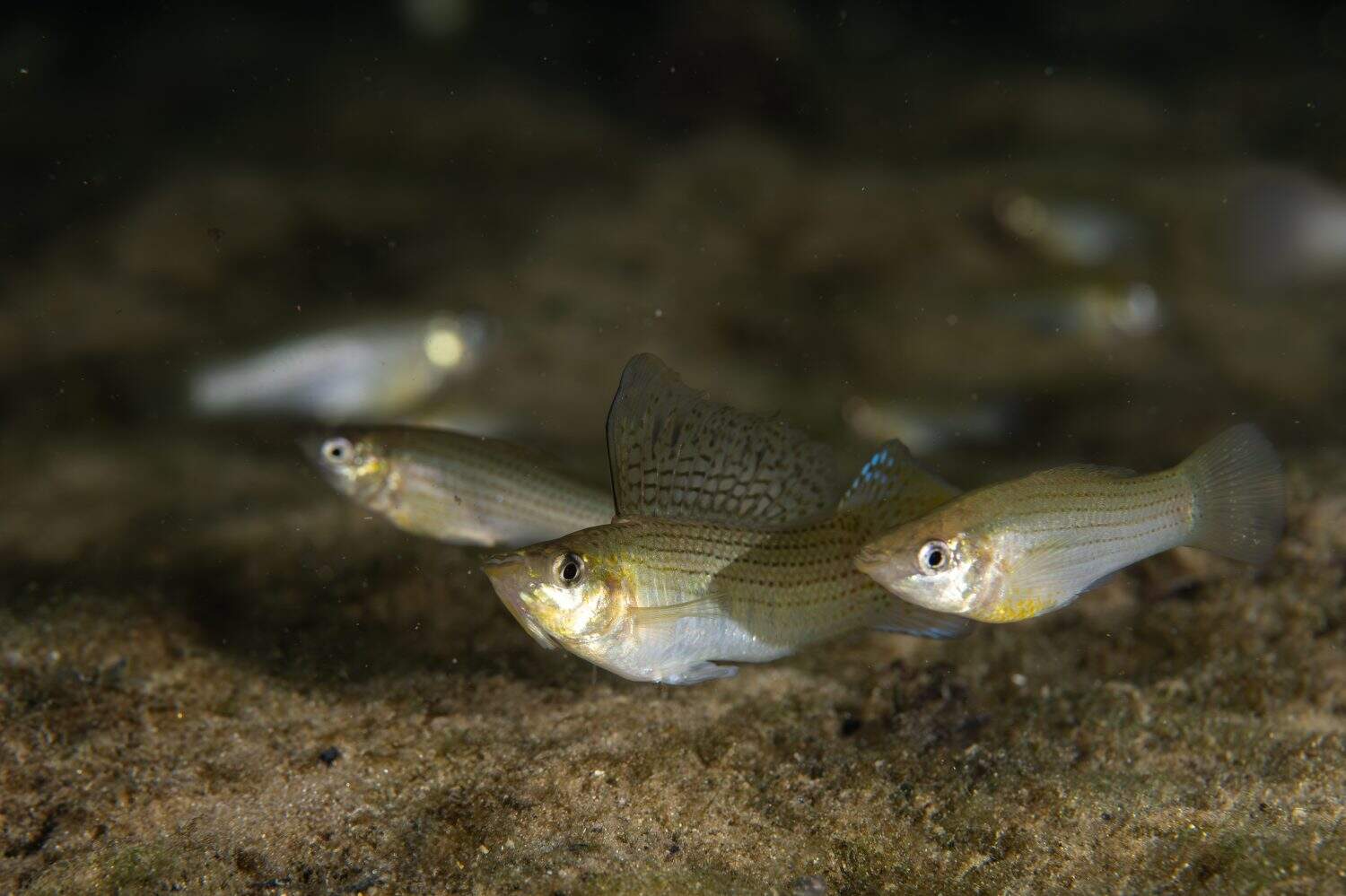
This species’ name comes from the legendary Amazons, a group of all-female warriors from Ancient Greek mythology.
©Nick Loveland / CC0 / Wikimedia Commons – Original / License
Because the original parents were two different species, they provided an exceptionally diverse genetic foundation for their offspring — a phenomenon scientists call hybrid vigor. This created a diverse and well-balanced set of genes (heterozygosity) right from the start.
This genetic blueprint proved so effective that the Amazon molly essentially “froze” it in place, producing cloned daughters — near-perfect genetic copies of the mother — and successfully locking in its most advantageous traits.
Typically, species lose genetic health over time if they don’t regularly combine their DNA with a sexual partner. In contrast, the Amazon molly started with a nearly perfect genome and, rather than allowing its DNA to degrade over generations, has successfully preserved it ever since.
The Art of Sexual Parasitism
Even though they are an all-female species, Amazon mollies haven’t completely cut ties with males. Their survival depends on gynogenesis, a form of asexual reproduction that still requires sperm to get started.
Amazon mollies mate with males from neighboring species, like Atlantic mollies, sailfin mollies, and broadspotted mollies (Poecilia latipunctata). However, there’s a catch: while the sperm helps trigger embryo development, the male’s DNA is discarded and never actually used.

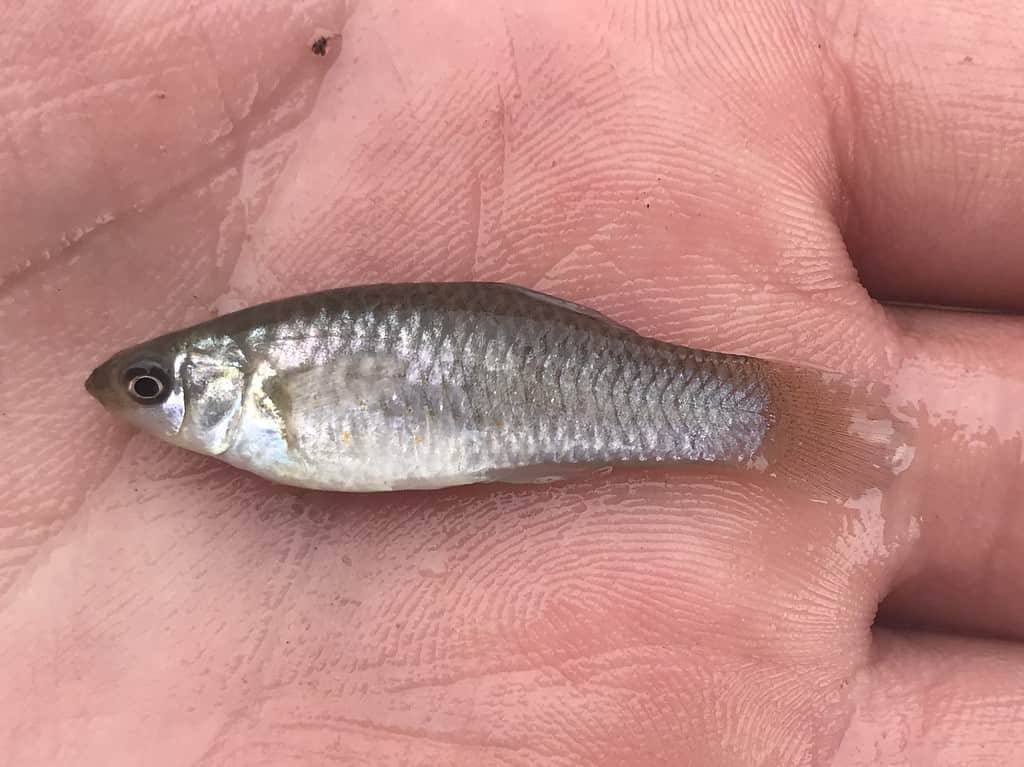
Amazon mollies are found in the Tuxpan River in Mexico.
©Wirestock Creators/Shutterstock.com
Sperm from the male enters the egg to trigger development. However, since the egg already has a full set of the mother’s chromosomes, it rejects the male’s DNA entirely. This results in a daughter who is a genetic carbon copy of her mother.
It is an elegantly ruthless process that requires a delicate balance. The Amazon molly must remain similar enough to other fish to attract male attention from closely related species, but different enough from other species to avoid direct competition.
Beating Muller’s Ratchet
While the Amazon molly’s evolutionary long con is clever, biology suggests it should eventually fail. Usually, species that don’t combine DNA with a sexual partner face a fatal problem: without mixing genes, harmful mutations pile up over time until the species collapses. This phenomenon is known as Muller’s Ratchet.
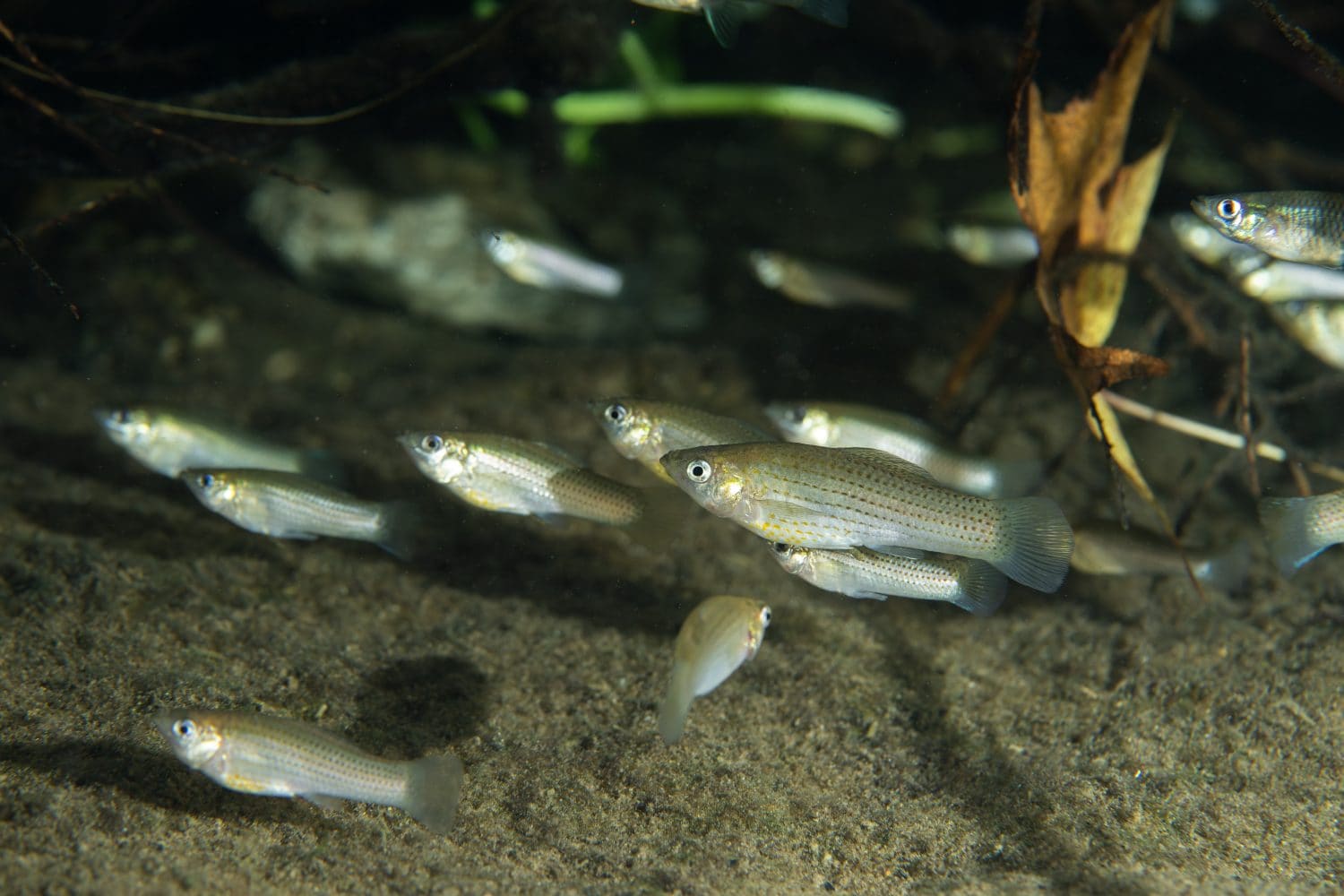
Amazon mollies have silver bodies with small reddish-brown spots, and usually measure around 2.2 inches long.
©Griffin Gillespie/Shutterstock.com
The Amazon molly avoids Muller’s Ratchet by using another clever workaround called gene conversion — essentially, a molecular “copy and paste” tool. When a gene on one chromosome gets damaged or mutates, the cell identifies the glitch. The molly then overwrites the broken gene by copying a healthy version from its matching paired chromosome. While not as powerful as sexual recombination, this process is enough to keep the genome from deteriorating. In other words, while most asexual species are stuck with their genetic mistakes, the Amazon molly quietly edits them out.
Genetic Flexibility and Adaptability
Even more surprising, this process doesn’t erase all genetic variation. The species maintains subtle genetic differences between different family lines, a concept called clonal polymorphism. This provides just enough wiggle room to adapt and survive.
Recent research shows that these fish actually evolve differently from the neighboring species they depend on. Instead of perfectly mimicking their host species to blend in, they often do the opposite to avoid competing for the same resources. This strategy, known as character displacement, allows the Amazon molly to carve out its own niche. For example, when living with the bulkier sailfin molly, the Amazon molly often evolves a slimmer body shape, so it doesn’t have to fight for the exact same food or territory.
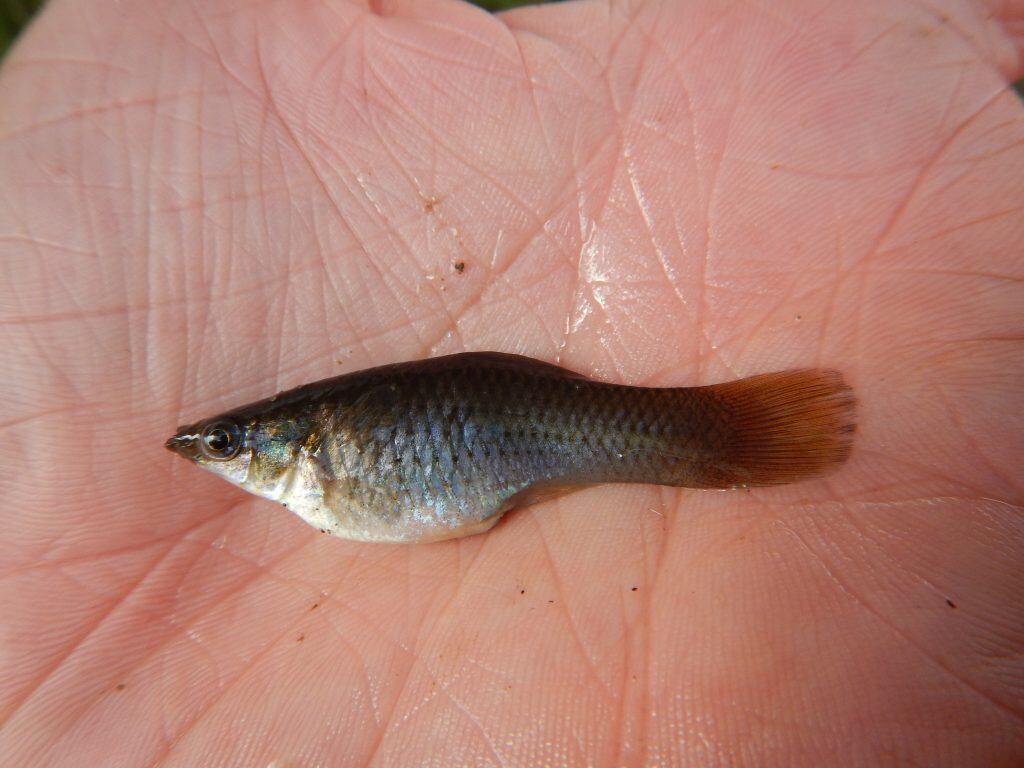
Amazon mollies alter their appearance depending on the other types of mollies in the area.
©Fishes of Texas team / CC BY-SA 4.0 / Wikimedia Commons – Original / License
Differences in Clones
Amazon mollies may be clones, but they are far from identical biological photocopies. A 2017 study demonstrated this by isolating mollies immediately after birth and raising them in identical environments, matching their habitats, temperatures, and food sources. Researchers then compared these isolated fish to those raised in social groups to see how personality develops.
Even though these clonal sisters were genetically identical and raised in the same conditions, each developed her own consistent, individual personality. This suggests that individuality does not require unique DNA.
A Quiet Ecological Success
Geographically, the Amazon molly is highly effective at holding its ground. Its range stretches along the Gulf Coast, from the Tuxpan River in Mexico up to the lower Rio Grande in Texas. Since the mid-20th century, it has also successfully moved into several other Texas river systems.
These fish prefer quiet spots like backwaters, ditches, and weedy edges, and they are equally comfortable in freshwater or brackish water (a mix of fresh and salt water). Because they closely resemble other types of mollies, they don’t just fool the males of other species; they frequently prove difficult for human researchers to identify as well.
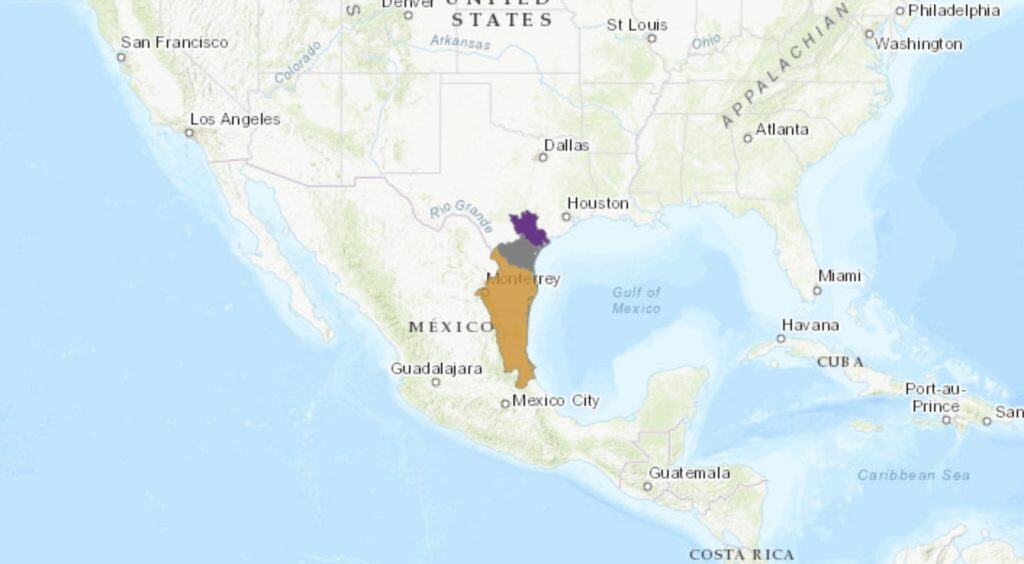
Amazon mollies have a steady but narrow range.
A Biological Challenge
As an all-female species, the Amazon molly represents a direct challenge to a core rule of biology: the idea that sex is mandatory for long-term survival. By starting with a nearly perfect genetic foundation and using a high-tech DNA repair system to maintain it, this fish has avoided the usual trap of asexual extinction.
This survival strategy, particularly gene conversion, offers new ways of thinking about evolution and genome health. Because similar repair mechanisms are involved in cancer and genetic disease, the Amazon molly has become an unlikely but valuable model for understanding human health.
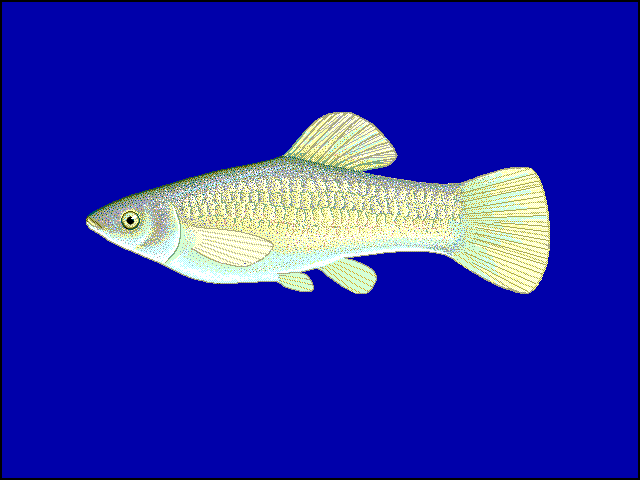
The Amazon molly can be difficult to identify due to how well it can masquerade as another species.
©Robbie N. Cada / Public domain / Wikimedia Commons – Original / License
The all-female Amazon molly proves that the “rules” of biology are not always set in stone. Evolution is resourceful, constantly finding clever workarounds to ensure survival.
By successfully bypassing the need for genetic mixing, this little fish forces us to rethink what it truly takes for a species to flourish over thousands of years. The unique species is a living reminder that nature often finds a way to thrive, even when it breaks the conventional mold.