Quick Take
- The National Zoo in Washington, D.C., just welcomed a newborn Asian elephant calf.
- Asian Elephants are listed as endangered due to habitat loss, poaching, and disease.
- It marks the first Asian elephant birth at the National Zoo in over 25 years.
- Fans and Zoo supporters can vote on the newborn’s name on the zoo’s website.
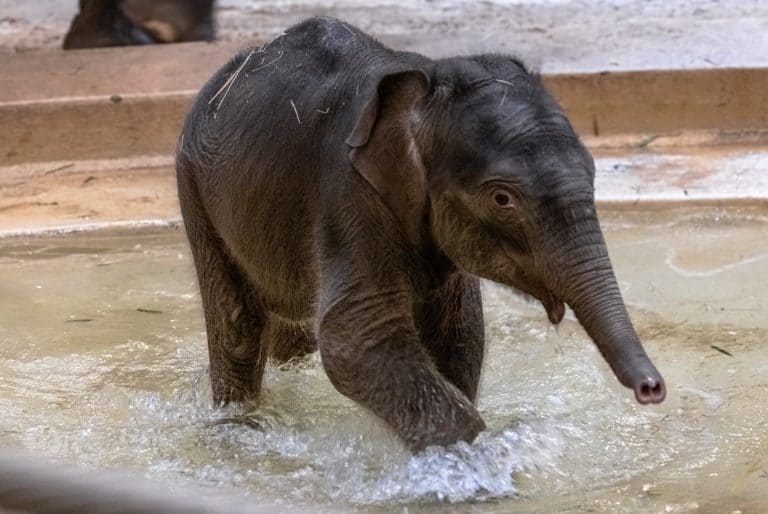
It’s not every day that an endangered species welcomes a new individual in the safety and security of one of the world’s greatest zoos. Last week, the Smithsonian’s National Zoo and Conservation Biology Institute (NZCBI) welcomed a newborn female Asian elephant calf. This is the first time in nearly 25 years that the zoo has witnessed such a rare birth. Born in the early morning hours of February 2nd, this yet-to-be-named calf marks a historic occasion for elephant conservation in North America.
The story of this newborn Asian elephant calf is one of both triumph and tragedy, highlighting the precarious situation of Asian elephants since they were first listed as endangered in 1986. The calf was born to a 12-year-old mother and a 44-year-old father. Since their genes were not well represented in elephants under human care, the newborn calf will help strengthen the Asian elephant population in North America and around the world. Let’s learn more about this landmark birth, how the National Zoo meticulously planned for it, and what it means for the fate of Asian elephants as a whole.
An Anticipated Achievement

This Indian elephant calf is the first of its kind born at the National Zoo in over 25 years.
©YouTube/SmithsonianNZP – Original
At around 1:15 a.m. on February 2nd, a female calf was born at the National Zoo in Washington, D.C. to 12-year-old mother Nhi Linh and 44-year-old father Spike. It is the first Indian Elephant born at the National Zoo in over two decades.
Father Spike lived at the Calgary Zoo before arriving at the Smithsonian’s facility in March 2018. Mother Nhi Linh was born in August 2013 at the Rotterdam Zoo in the Netherlands and arrived at the National Zoo in November 2022. Under the guidance of zookeepers, the parents followed a breeding recommendation from the Association of Zoos and Aquariums’ Species Survival Plan (SSP). The elephant team trained Nhi Linh to participate in her own husbandry and medical care, allowing them to monitor her and her calf throughout gestation. They took blood samples and performed ultrasound tests, using blood diagnostics to pinpoint exactly when her progesterone levels reached baseline—a sign of imminent birth. Beginning on the evening of January 25th, the team started 24-hour behavioral monitoring of Nhi Linh to watch for signs of labor.
The Indian elephant calf weighed 308 pounds and stood 38.5 inches tall at birth. Veterinarians performed a neonatal exam on the calf, finding her alert and bright-eyed, which indicated good health. In a press release regarding the newborn calf, Brandie Smith, the John and Adrienne Mars Director of NZCBI, said, “After waiting nearly 25 years for an Asian elephant calf, this birth fills us with profound joy.”
Guardians of the Forest
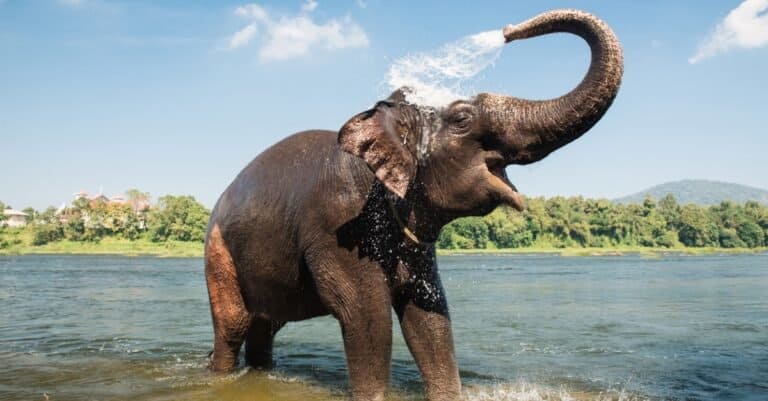
This birth is a landmark event because the Indian elephant subspecies of Asian elephants (Elephas maximus indicus) is endangered. As the gardeners of their ecosystem, Indian elephants clear paths through a variety of forests and grasslands in Southeast Asia. This not only opens up dense vegetation but also helps disperse seeds far and wide through their dung.
In recent decades, however, the Asian elephant’s ancient forest trails have been cut off by human development. This, combined with threats such as poaching and diseases like Elephant Endotheliotropic Herpesviruses, has steadily reduced the wild Indian elephant population. In response, various organizations, including the NZCBI, have stepped in to help.
The birth of the Indian elephant calf coincides with the organization’s push for $23 million in donations, which will help expand its conservation programs over the next five years. The National Zoo seeks private support for advanced conservation research, including efforts to ‘rewild’ former working elephants. As such, the newborn Indian elephant calf serves as both a local attraction and an ambassador for her species.
How You Can Help

People can vote for the name of the National Zoo’s newborn Indian elephant calf on the zoo’s website.
©YouTube/SmithsonianNZP – Original
$23 million may seem like a large amount, but anyone can make a difference by participating directly in the newborn calf’s care. Inspired by the mother, Nhi Linh’s name, the National Zoo has selected four potential names for the newborn. Now, fans and zoo supporters can vote for their favorite name by making a donation of $5 or more on the Zoo’s website, with each dollar representing one vote. Once polls close at noon on Friday, February 13th, the Zoo will announce the calf’s name on its website.
The options are Linh Mai, which means ‘spirit blossom’; Thảo Nhi, which means ‘gentle and beloved’; Tuyết, which means ‘snow’; and Tú Anh, where Tú means ‘talented or gifted’ and Anh means ‘bright and intelligent.’ All funds will support Asian elephant conservation.
For now, the National Zoo is keeping the newborn out of public view. She will spend about a month off-exhibit, bonding with her mother and other herd members. Because Asian elephants are remarkably intelligent, social, and sensitive, building these early bonds is critical for the calf’s development. Zookeepers are eager to see whether the calf will take after her easygoing father, Spike, or her more rambunctious mother, Nhi Linh.
“When you see the calf and those heartwarming interactions with the herd, I hope you’ll be inspired to help save this endangered species,” director Brandie Smith said in the press release. “What we learn from our elephants in D.C. directly strengthens our work to protect wild Asian elephants across Southeast Asia. I’m incredibly proud of our team, whose expertise made this moment possible for Nhi Linh and for all of us.”