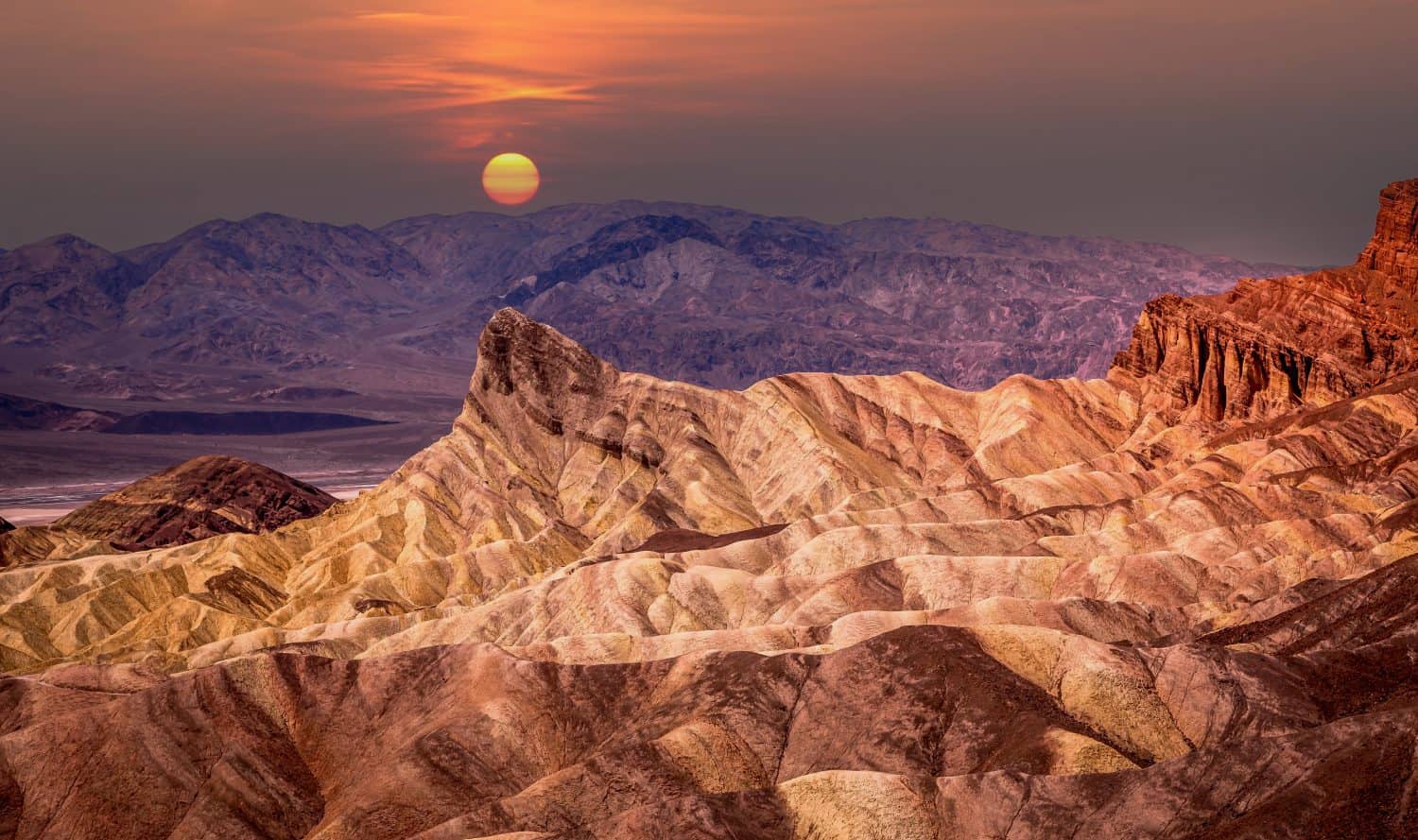

There aren’t many places on Earth like Death Valley National Park. Located in the barren, inhospitable zone of land that straddles the California-Nevada border, Death Valley National Park looks like it would fit in just as well on the planet of Mars. It’s an alien place, full of epic dunes, ghostly badlands, and expansive salt flats. This extraterrestrial environment breaks some records, too. It’s the largest national park in the contiguous United States (lower 48), as well as the hottest and driest of any national park. It also contains Badwater Basin, an endorheic basin that is both the lowest point in North America and the second-lowest point in the Western Hemisphere.
At first glance, Death Valley National Park seems like a lifeless place. Remarkably, many creatures have adapted to its merciless conditions, not least of which are humans. Several Native American groups lived in the area as early as 7000 BCE. It earned its name, however, from a group of European Americans who died there in 1849 after getting lost in the valley while looking for gold. Despite its deadly reputation, the park features a surprising range of wildlife and enjoys visitor popularity. In 2022 alone, 1,128,862 people visited the park. Let’s learn about the animals that live in the park year-round.
Desert Kangaroo Rat
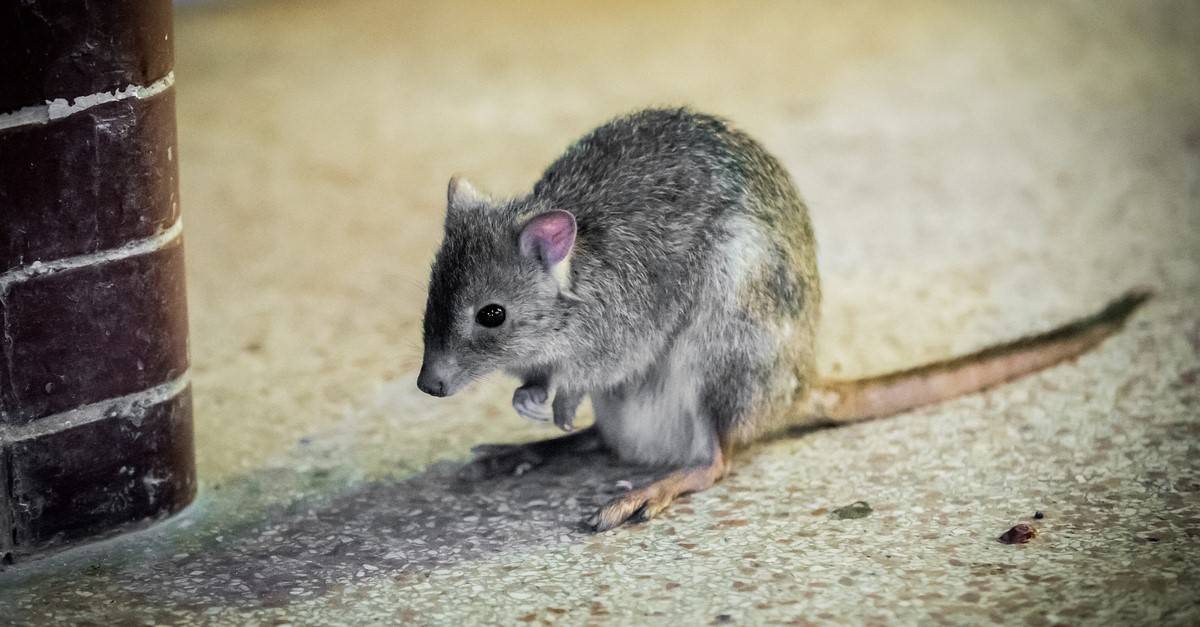
Desert Kangaroo Rats can handle the dry, inhospitable parts of Death Valley National Park.
©Jana Mackova/Shutterstock.com
These adorable little rats have round, cream-colored bodies. They are most often seen in the park’s dry locations, especially around patches of mesquite.
Whitetail Antelope Squirrel
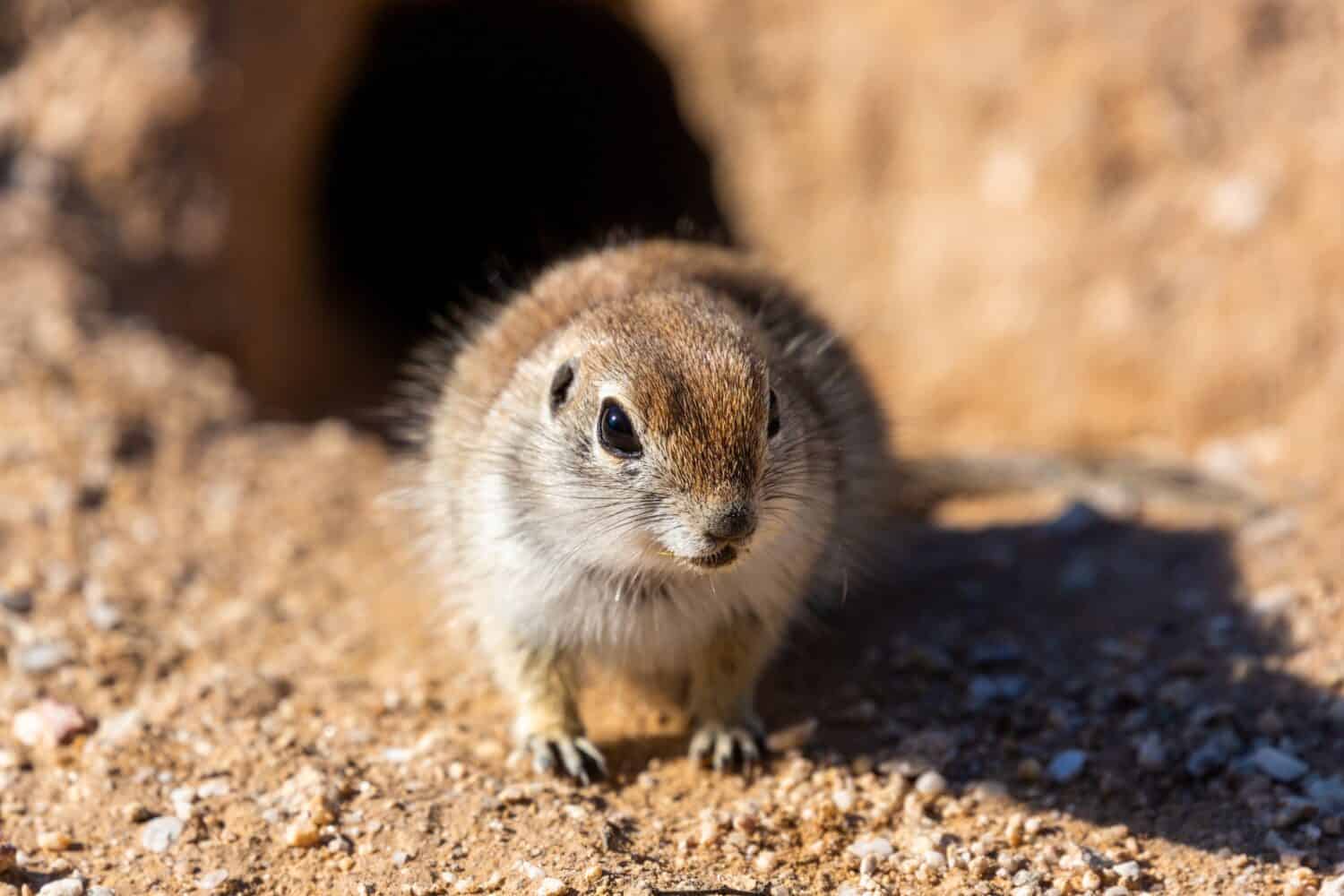
These squirrels can be found on the valley floor, in the mountains, and everywhere in between.
©Charles T. Peden/Shutterstock.com
Several types of squirrels live in Death Valley National Park, but whitetail antelope squirrels are the most common. They can be seen on the valley floor and in all the regions that range up in elevation to over 6000 feet in the mountains. They can also be seen on the roads.
Desert Cottontail
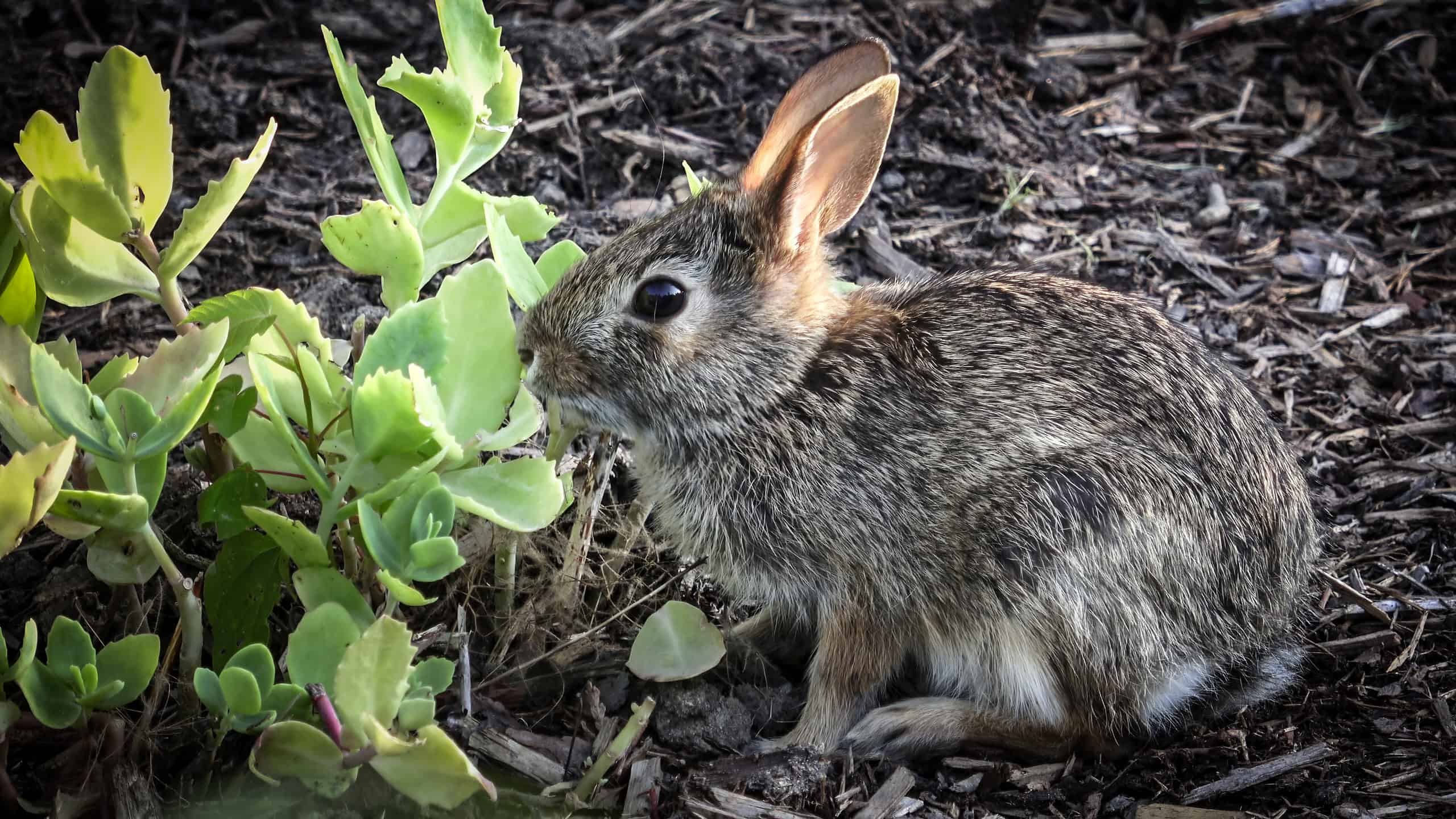
Desert cottontails are typically seen on the valley floor in mesquite thickets.
©Labrynthe/Shutterstock.com
While cottontails are a relatively common type of rabbit in the Southwest, they are usually only spotted in the early morning and early evening when foraging for food. The rest of the time, they stick to their burrows. In Death Valley National Park, desert cottontails can be seen (as their name implies) on the valley floor in mesquite thickets.
Gray fox
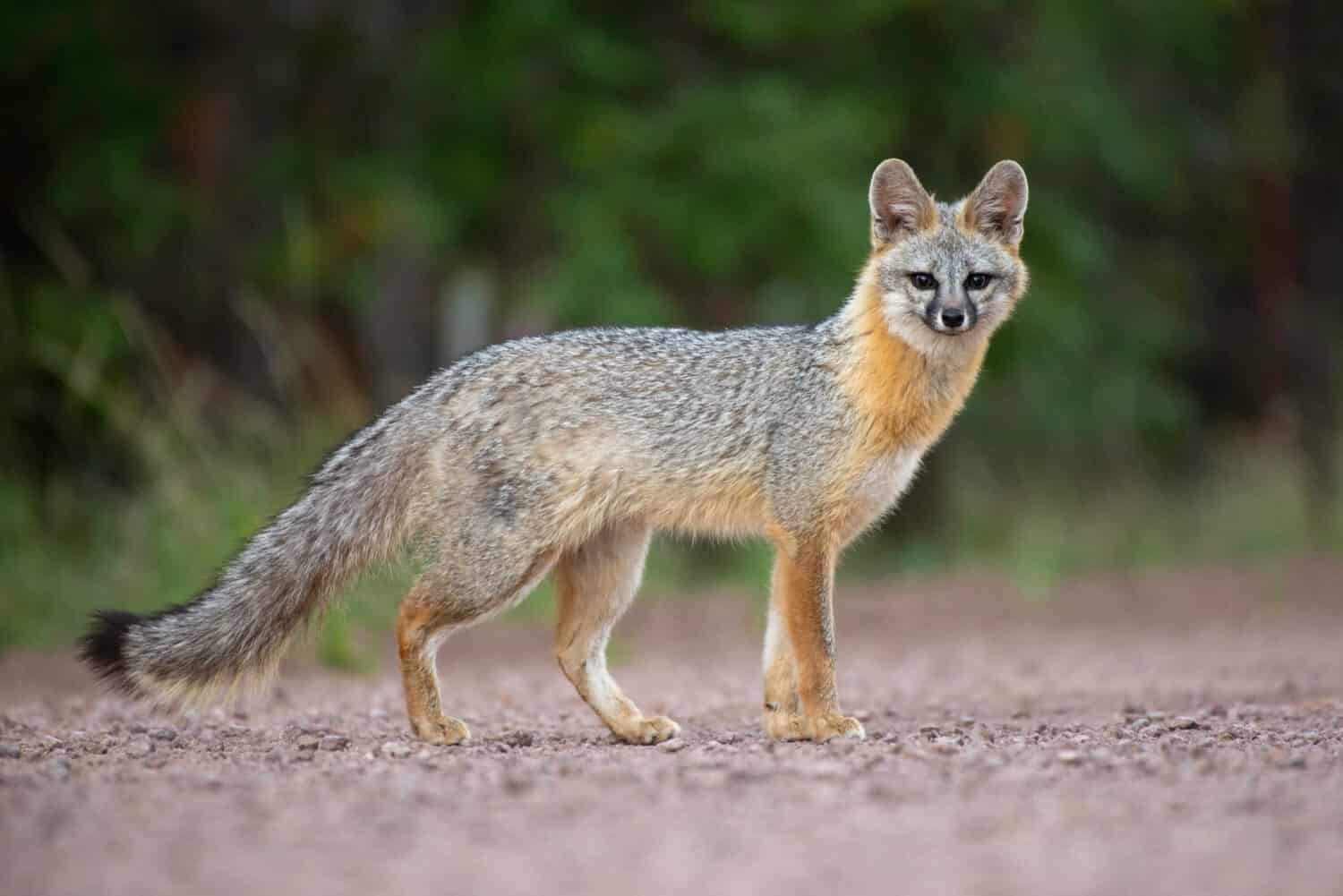
Gray Foxes can be found in the Grapevine Mountains.
©Sean R. Stubben/Shutterstock.com
The gray fox is unique in that it isn’t truly a fox. It is the only living member of the genus Urocyon, a basal lineage of canids sometimes called the tree fox or cat fox. While these dog-like foxes are nocturnal and rarely seen, they can typically be found on the slopes of the park’s Grapevine Mountains. What’s amazing about gray foxes is that they are incredibly adaptable. They can be found in a wide range of environments, from forests of Canada to the brush vistas of Death Valley. In fact, it’s the only canid with a natural range that spans both North and South America.
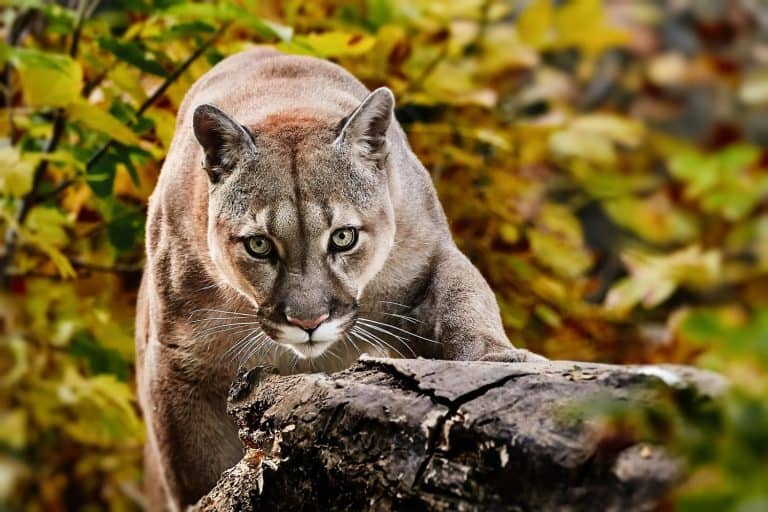
MountainLion
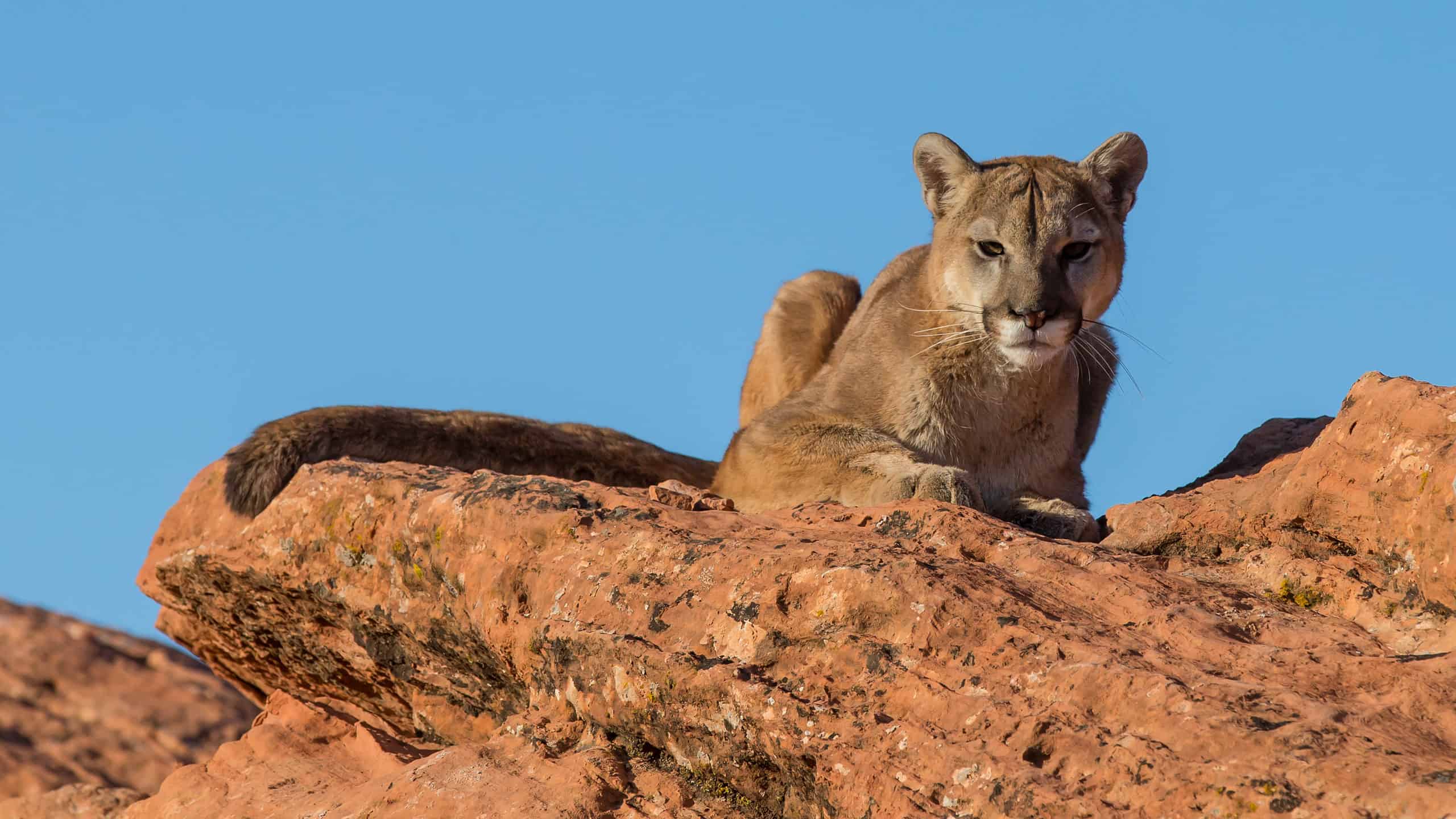
Mountain Lions prefer the surrounding mountains, but sometimes venture into the park during the winter.
©Warren Metcalf/Shutterstock.com
Arguably the biggest predator in the park, mountain lions survive thanks to key water sources and ample hunting opportunities. While these large cats typically stick to the mountains surrounding Death Valley National Park, they sometimes venture into the park’s main areas when temperatures cool in the winter.
Coyote
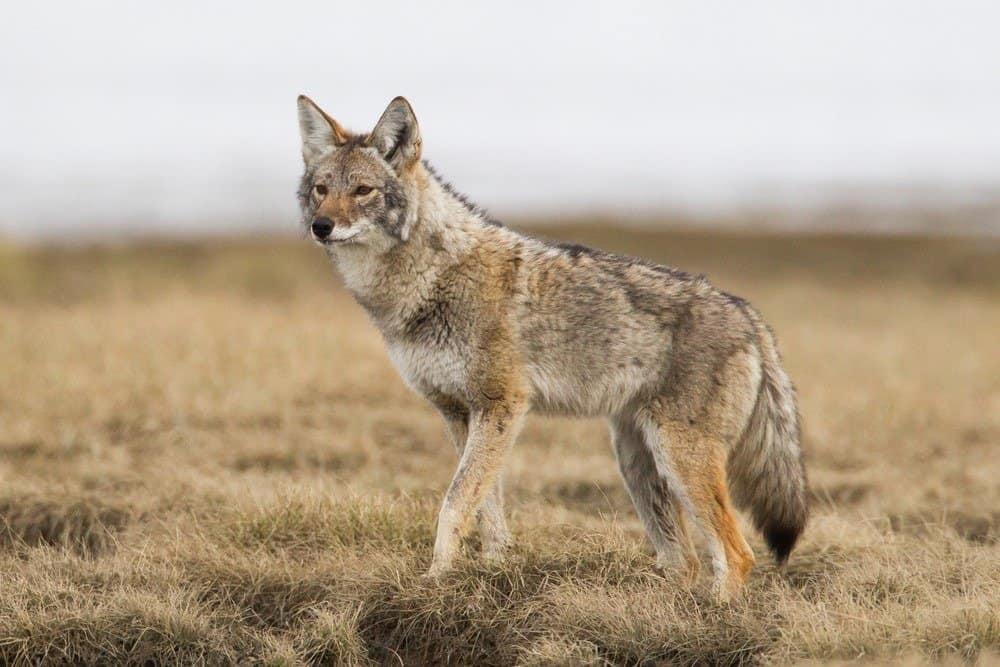
These omnivores can be most commonly found in the park’s mesquite thickets.
©Jukka Jantunen/Shutterstock.com
Coyotes are common in the Southwest, which means they also inhabit Death Valley National Park. They eat practically anything, so they range throughout the region with ease. They can be seen at both low and high elevations, but are most commonly spotted in mesquite thickets.
Desert Bighorn Sheep
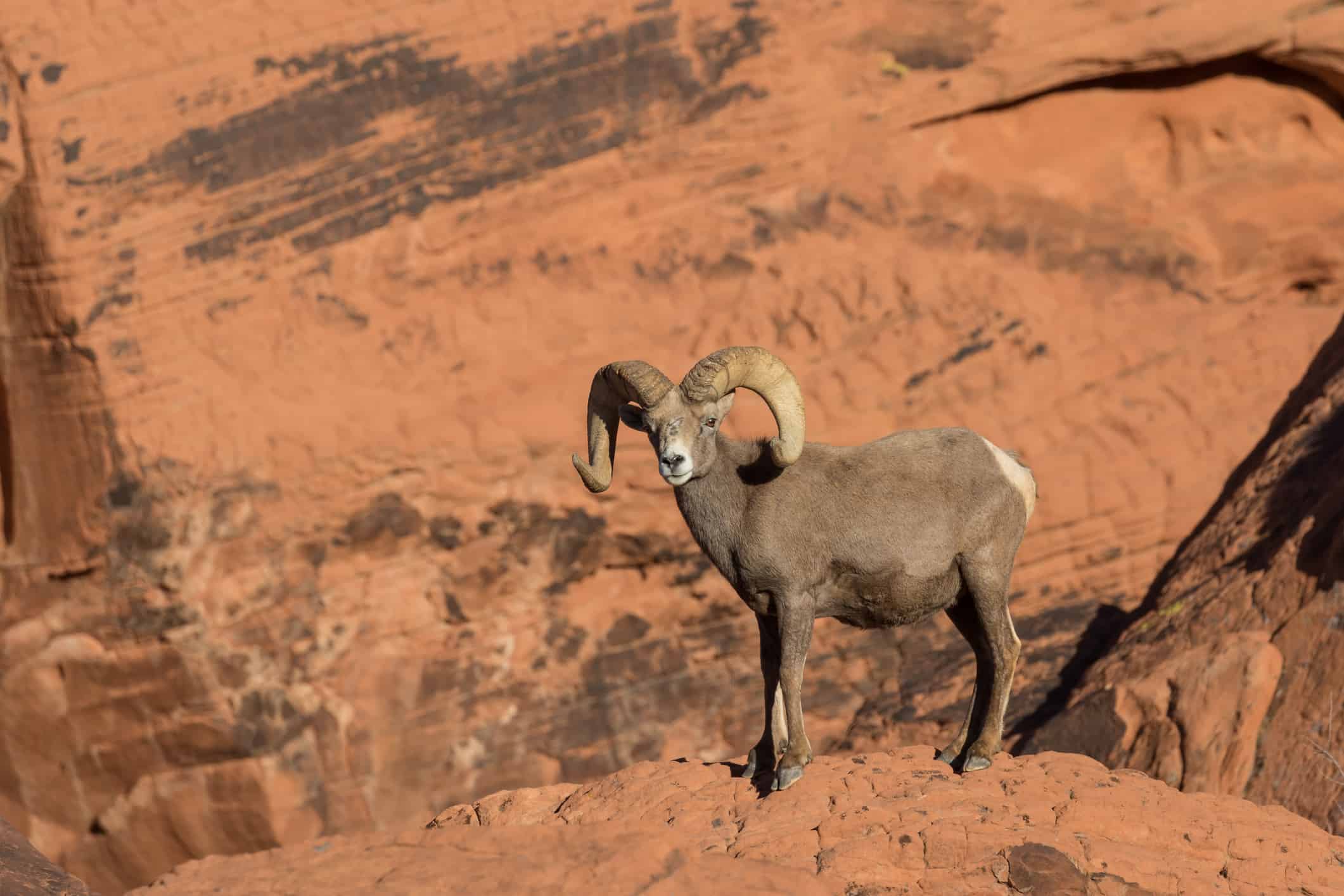
These ungulates are most often seen along the valley’s ridges and canyons.
©iStock.com/twildlife
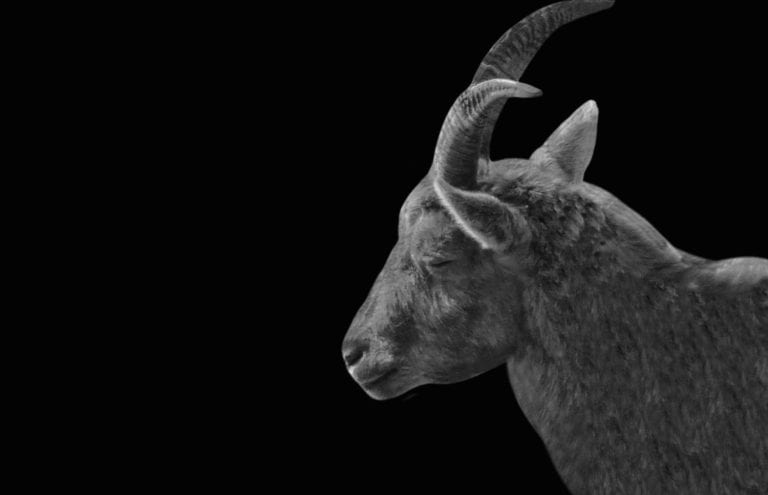
Another animal commonly seen in Death Valley National Park is the desert bighorn sheep. These herbivores are known for their large, powerful, curved horns. While they are found at all elevations in the valley, they are most often seen along ridges and canyons near water sources.
Devil’s Hole Pupfish
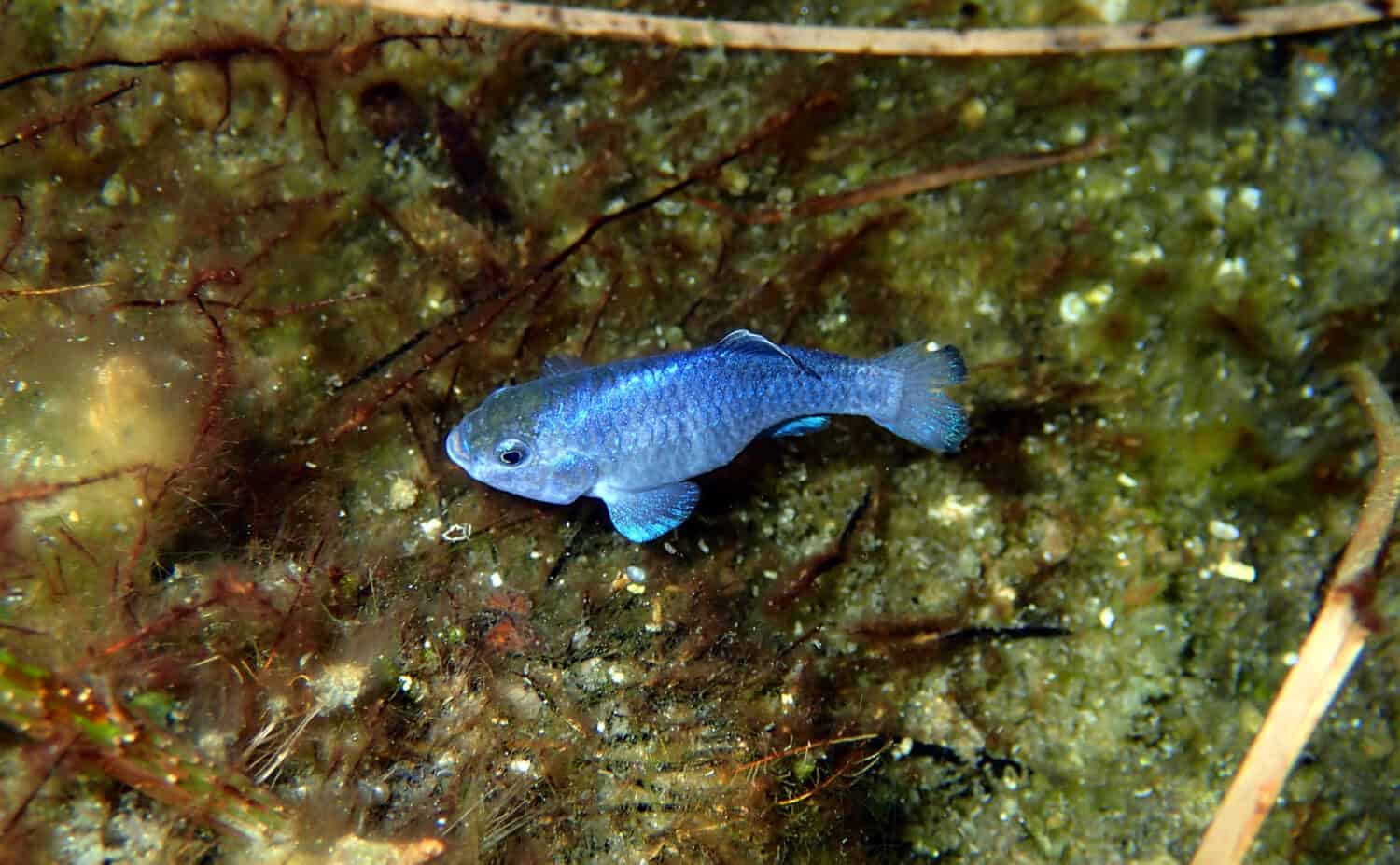
These fish are among the most endangered in the world.
©nektonography/Shutterstock.com
Believe it or not, fish also live in Death Valley in its few water sources. All fish that live in the park are pupfish. The Devil’s Hole pupfish, however, is by far the rarest. It’s one of the most endangered fish species in the world, as it’s endemic to a single location: Devil’s Hole, a deep sinkhole in the park. They are about two inches long and come in various colors.
Greater Roadrunner
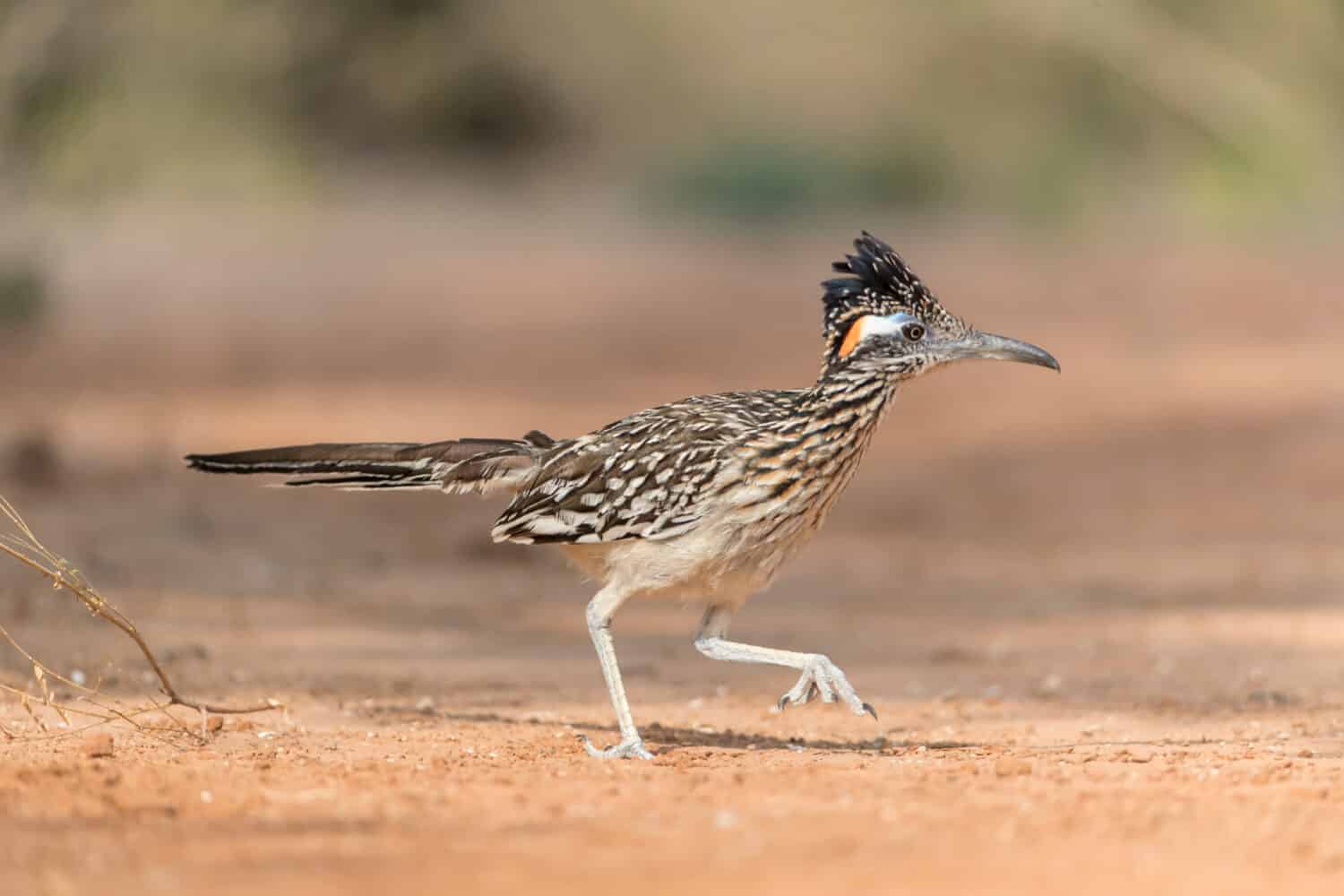
Roadrunners are potent symbols of the American Southwest.
©Dennis W Donohue/Shutterstock.com
No bird is more emblematic of the American Southwest than the greater roadrunner. These birds are characterized by two-foot-long bodies and a crest of blue-black feathers that transitions into spotted plumage on their torsos. They are incredibly fast, can kill snakes, and even thrive in the harsh, unforgiving Death Valley National Park landscape. Roadrunners are some of the most commonly seen birds in the park.
American Coot

These birds are often mistaken for ducks due to their size and shape.
©yhelfman/Shutterstock.com
Due to their size and appearance, American coots are often mistaken for ducks or mallards. At Death Valley National Park, visitors typically see American coots near water sources and in the sand nearby. They are often spotted at the Salt Creek Boardwalk and in Ash Meadows near streams and springs.
Hummingbird
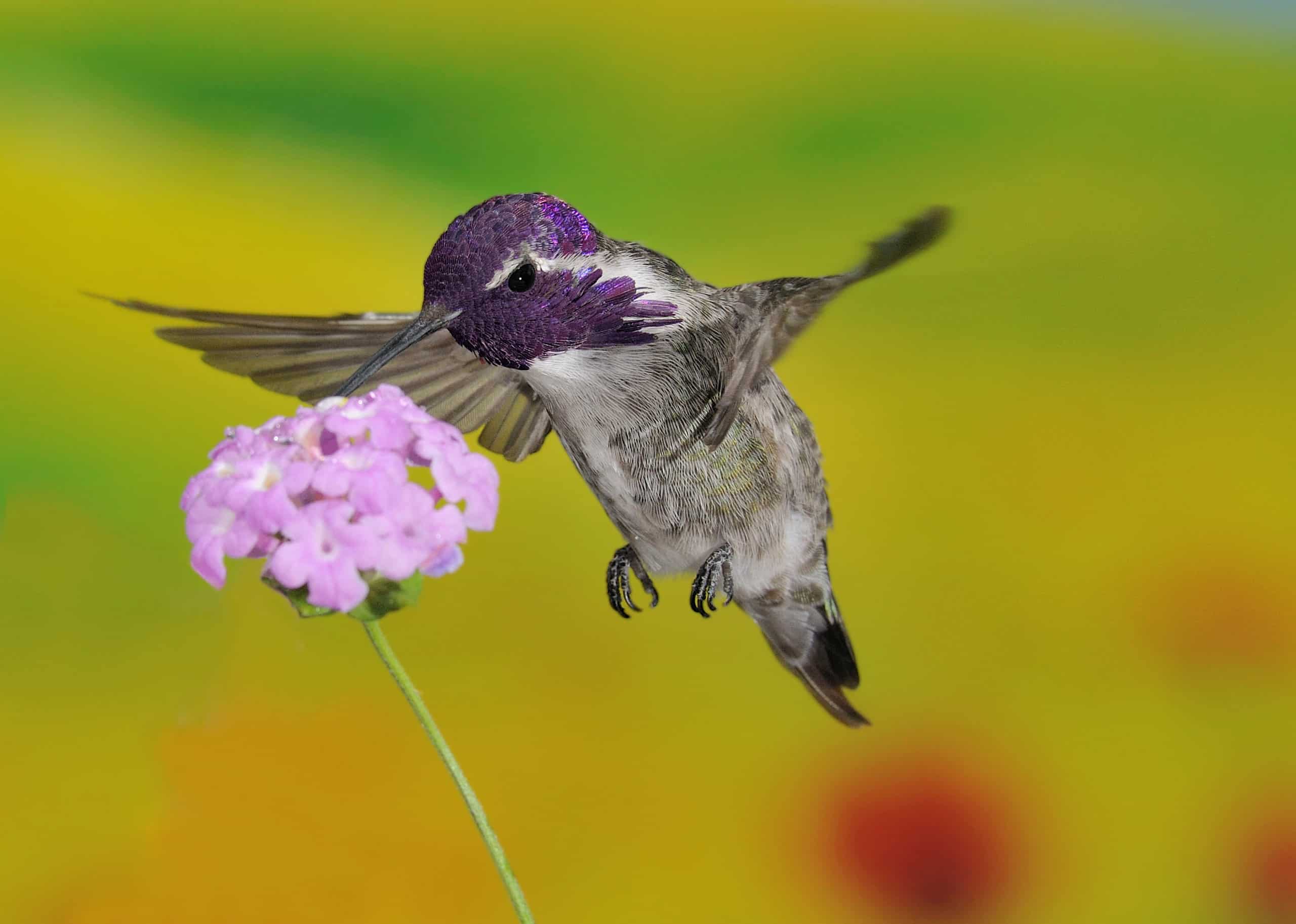
Several species of hummingbird live in Death Valley National Park.
©Takahashi Photography/Shutterstock.com
Believe it or not, Death Valley National Park is home to several species of hummingbirds. As one of the great pollinators of the region, hummingbirds can often be seen pollinating flowering bushes like creosote. They don’t mind the hot temperatures either. Hummingbirds can be seen during both the fall and spring seasons, pollinating flowering bushes throughout the park.
Pacific Treefrog
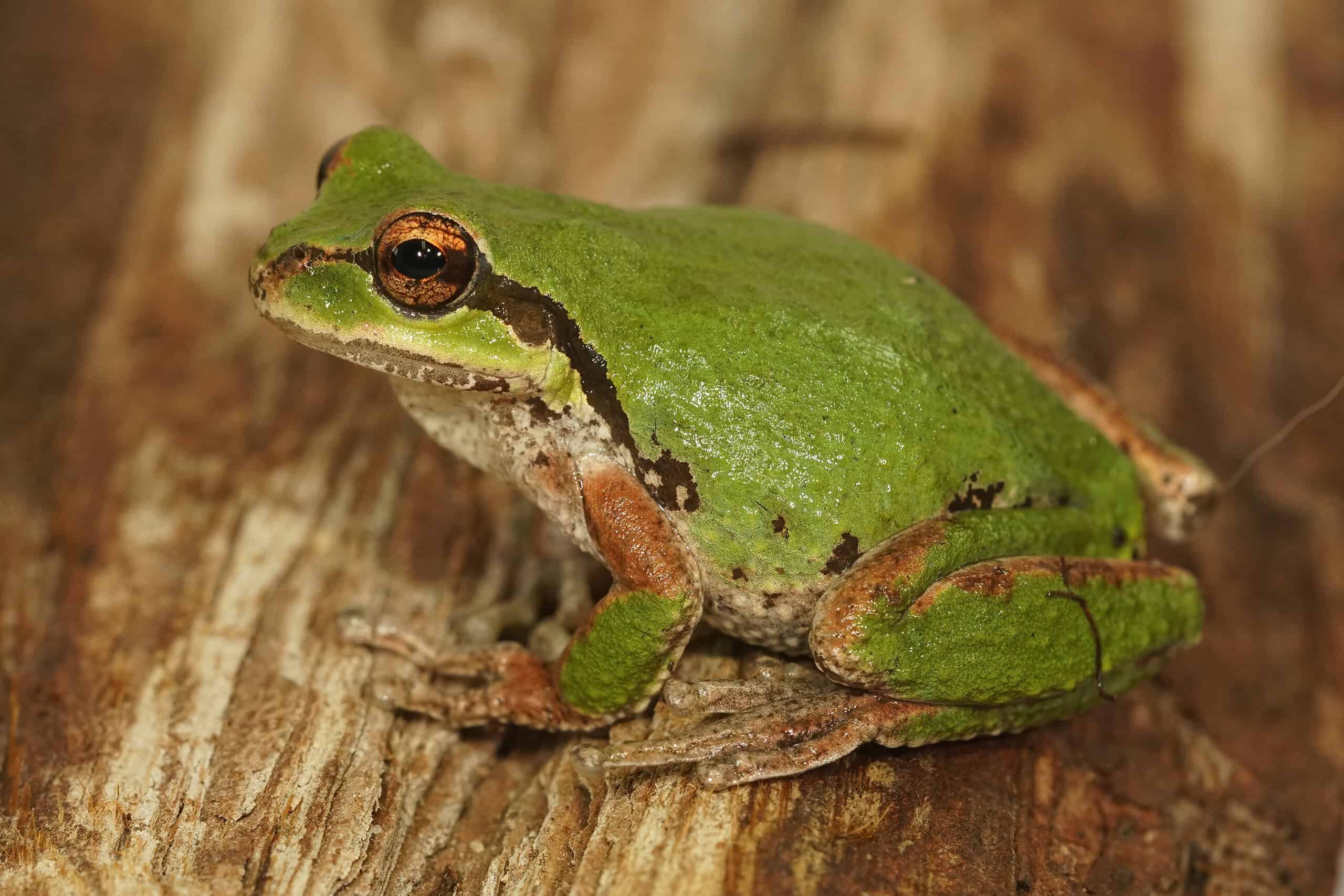
As with other amphibians in Death Valley, Pacific treefrogs are found near water sources.
©HWall/Shutterstock.com
While western toads have warts, Pacific treefrogs have smoother, greener bodies. Like the few other amphibians in Death Valley National Park, they can be found near water sources such as Furnace Creek, Saratoga Springs, and Scotty’s Castle.
Inyo Mountains Slender Salamander
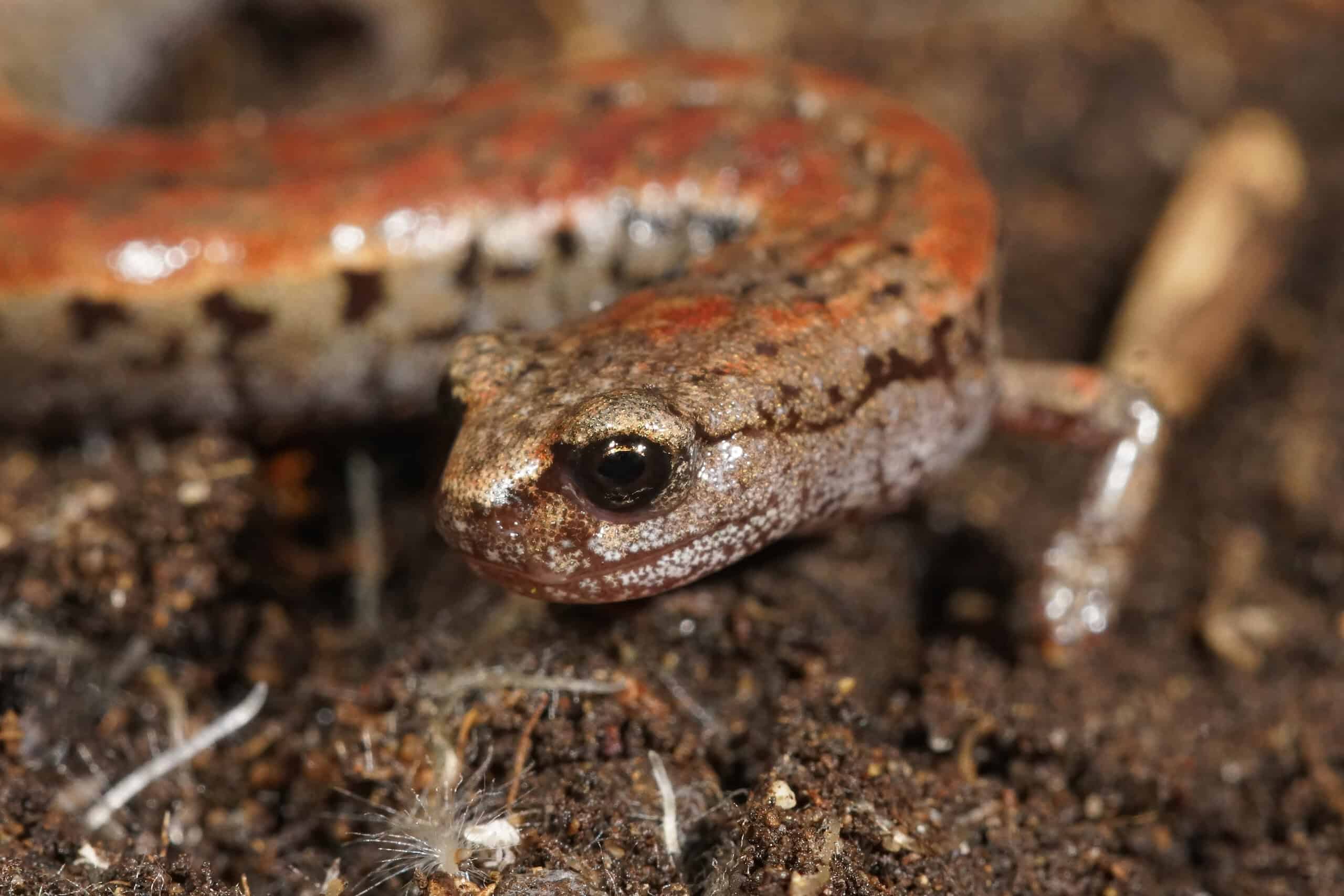
While rare, these slender salamanders can be found in the riparian areas of the Inyo Mountains.
©Wirestock Creators/Shutterstock.com
Despite being one of the most barren areas on Earth, Death Valley is home to several water-needy creatures like the Inyo Mountains slender salamander. As its name suggests, this salamander lives in the riparian areas of the Inyo Mountains. Even so, it is incredibly rare and difficult for visitors to spot.
WesternToad

Though not native to Death Valley, western toads can be found around Furnace Creek.
©Creeping Things/Shutterstock.com
Western toads are characterized by their large bodies, which feature toad-like warts with grey, yellow, and brown colors. While they aren’t native to the Death Valley region, the species was introduced to the national park in the past few decades. Though they prefer moist areas, western toads have managed to endure in Death Valley, especially around the Furnace Creek area, where water is abundant.
Black-Tailed Jackrabbits
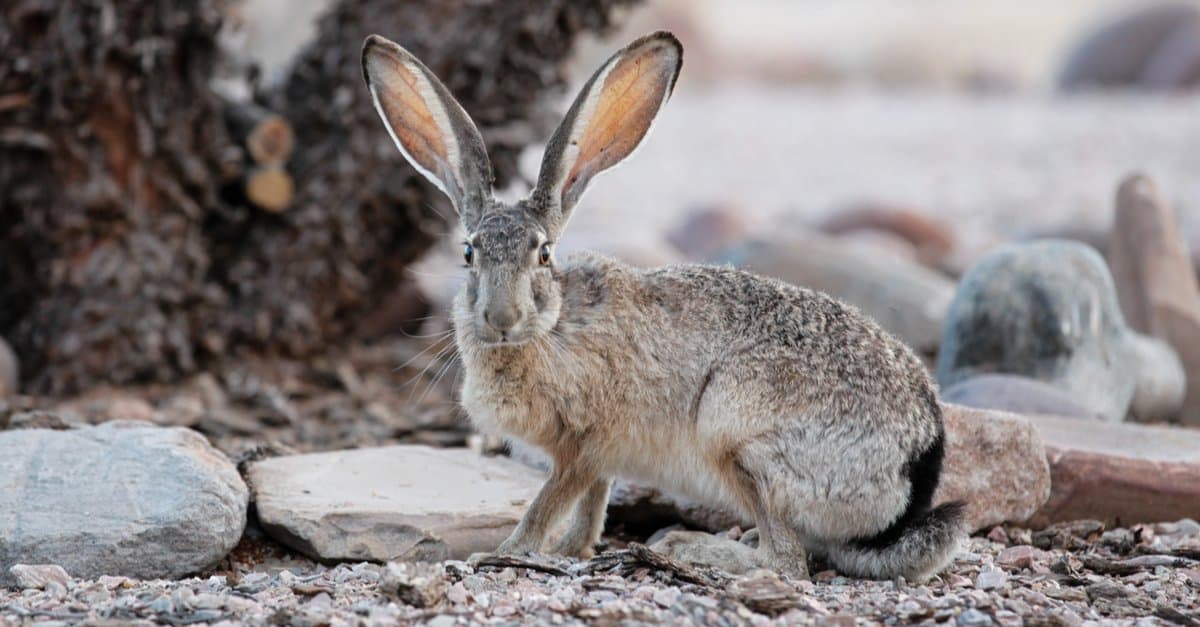
Black-tailed jackrabbits can be found in both the valleys and mountain ranges of Death Valley National Park.
©Ingrid Curry/Shutterstock.com
Death Valley features several types of rabbits, but perhaps the most striking is the black-tailed jackrabbit. These rabbits are characterized by massive ears, small heads, and black tails (hence the name). A fairly common species in Death Valley National Park, they are found near the valley floor and in the mountains.
Red-Spotted Toad
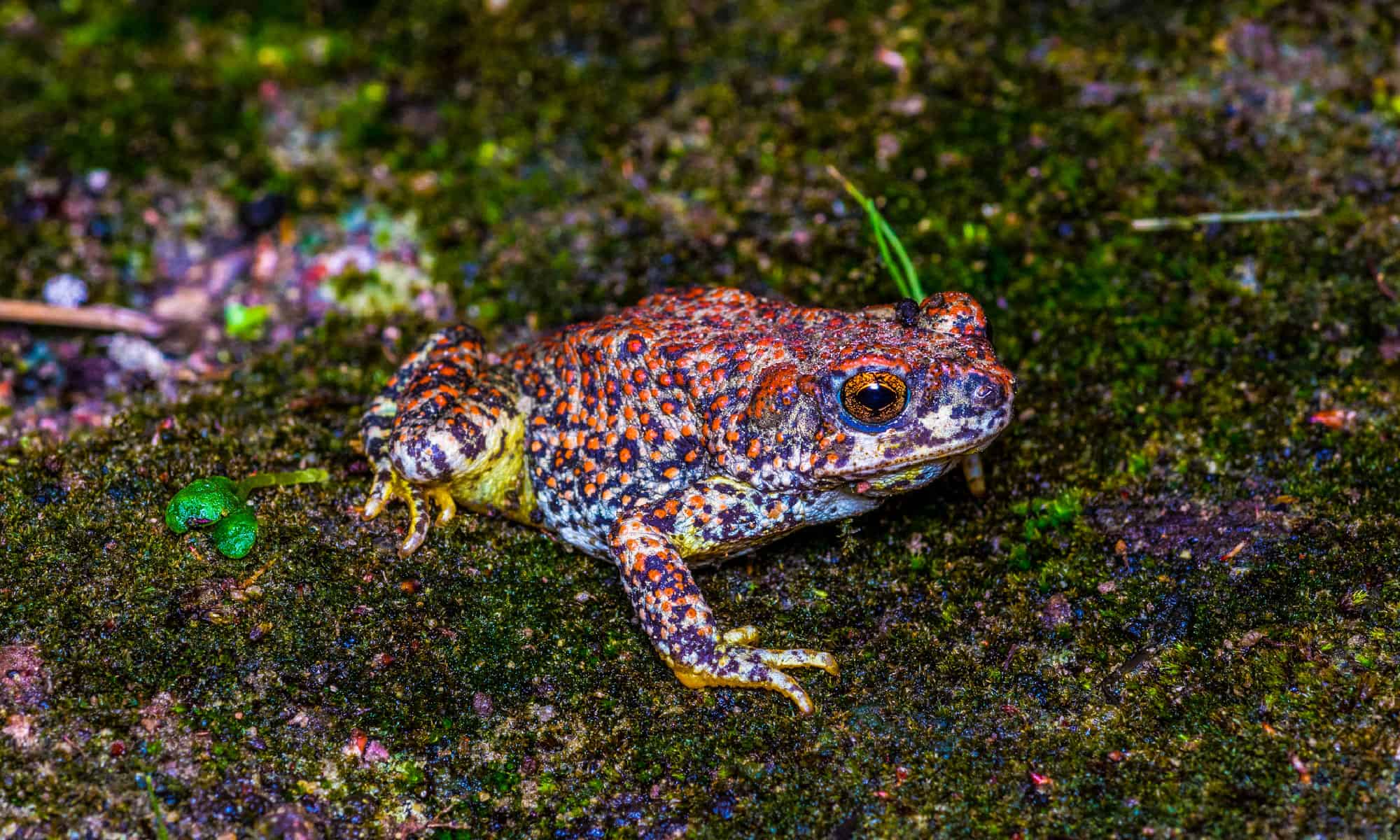
Red-spotted toads can be found around the park’s scarce water sources.
©iStock.com/Timothy Cota
Many of Death Valley National Park’s toads look similar, but the red-spotted toad is easily identified by its vibrant red spots. They can be hard to spot as they remain underground during the day. That said, red-spotted toads can sometimes be seen during the day at the edge of breeding pools. Either way, they do not move that far from water sources regardless of the time of year. Most commonly, they are seen at Furnace Creek. Visitors also sometimes spot them at water areas near Johnson, Hanaupah, and Emigrant Canyons.
Desert Tortoise
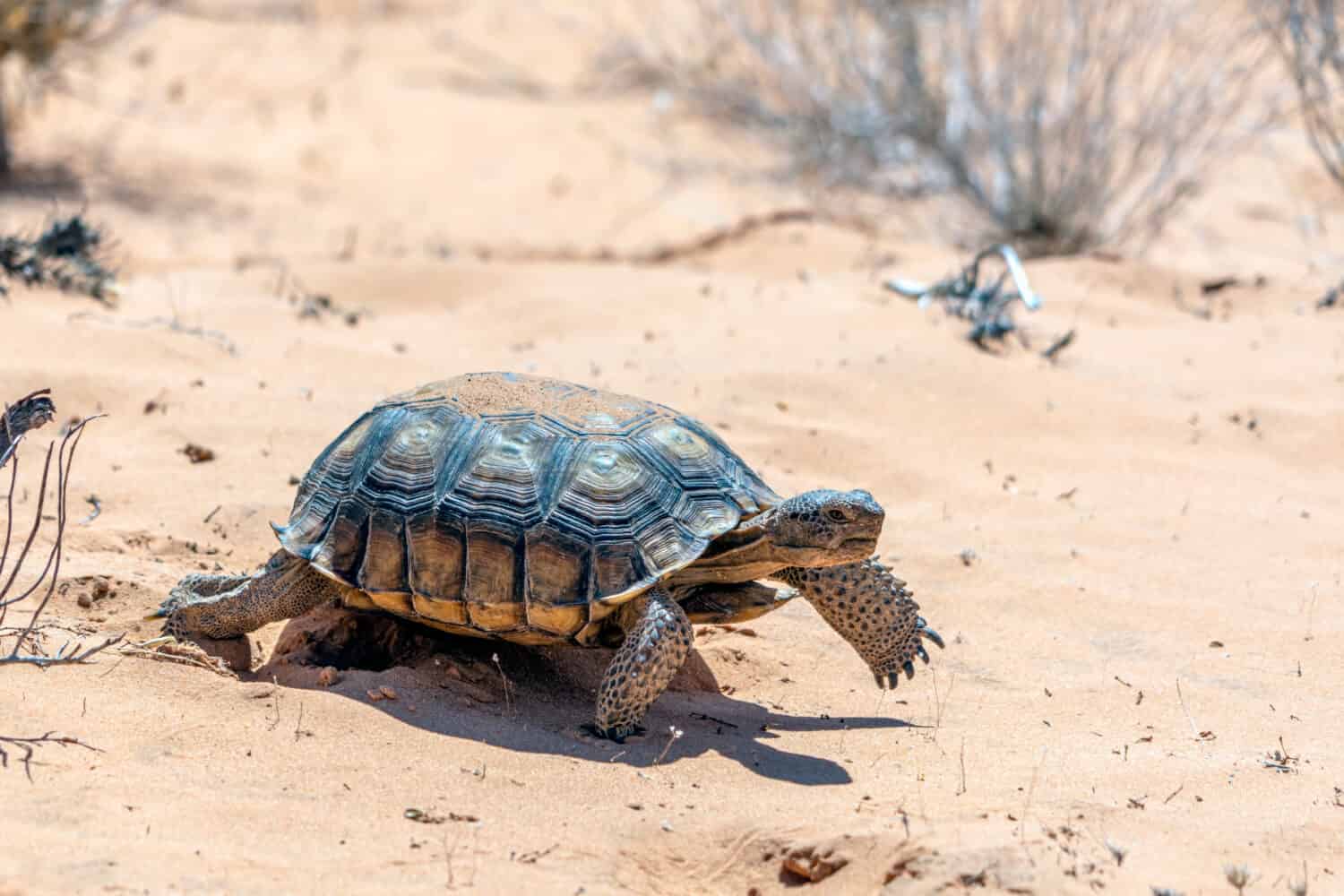
Desert Tortoises have become a threatened species due to human activity and disease.
©Gchapel/Shutterstock.com
The desert tortoise is easily one of the most majestic and well-known animals that lives in Death Valley National Park. This creature, however, has also become one of the rarest in recent years due to off-road vehicle activity, human encroachment, and disease. While desert tortoises spend most of their time burrowed underground to escape the heat, they can be seen in the park’s flats and foothills between 1,500 and 3,500 feet in elevation. As a threatened species, park officials ask visitors to touch a desert tortoise only if it is in the middle of the roadway. Even then, extreme caution is advised, as frightening a desert tortoise can cause it to urinate and lose valuable water.
Various Lizards
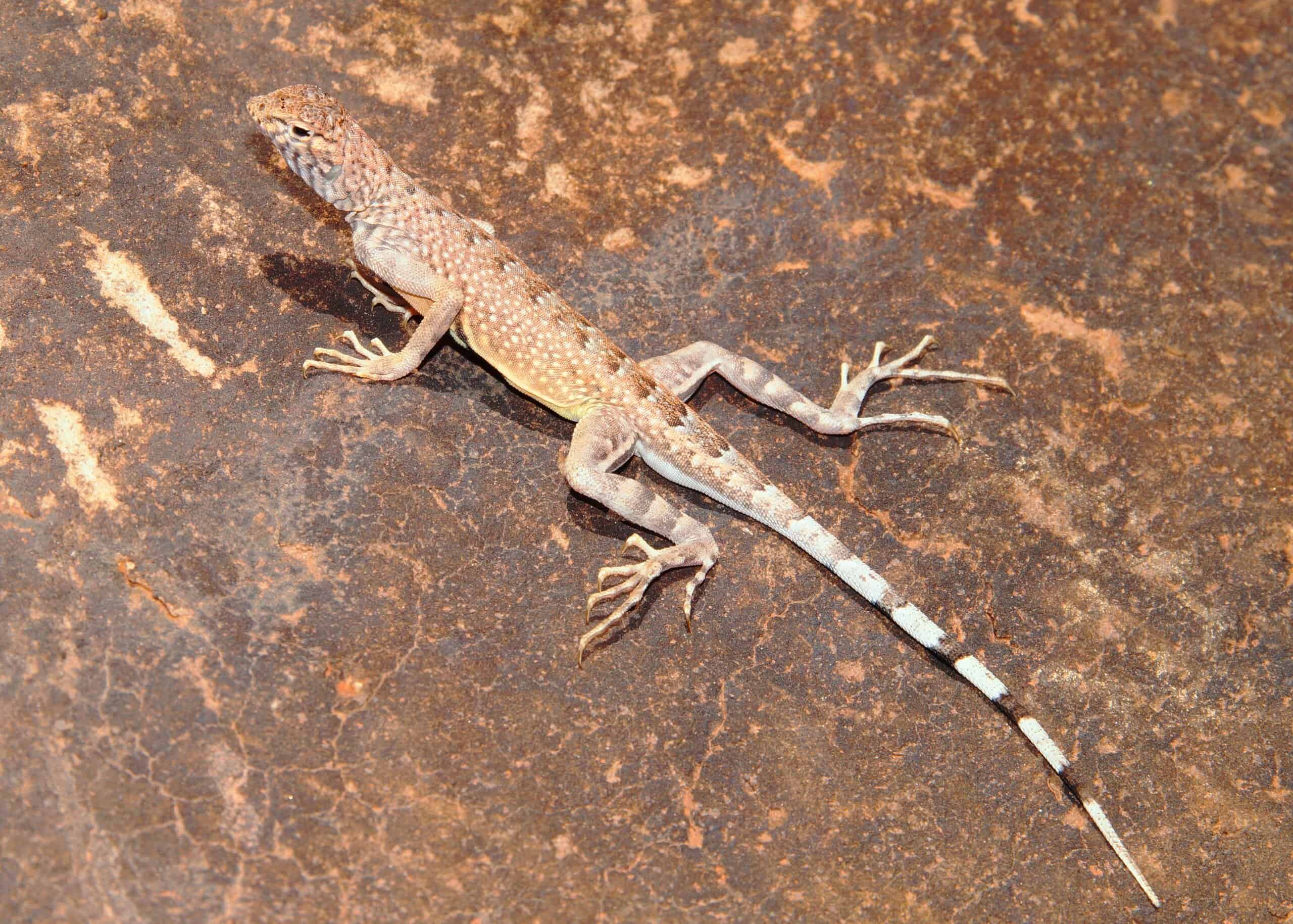
The zebra-tailed lizard is most commonly seen on roads and in sandy areas near dunes and in washes.
©Matt Jeppson/Shutterstock.com
Given the arid, desert location, there are many lizards that call Death Valley National Park home. There are so many types of lizards, in fact, that they can’t all be listed. There are nearly a dozen extant species of lizard in the park, including zebra-tailed lizards, collared lizards, desert spiny lizards, sagebrush lizards, and southern desert horned lizards. Lizards likely enjoy the widest distribution in Death Valley, ranging from below sea level basins through pinyon-juniper woodlands up to over 10,000 feet in elevation. Few other creatures have evolved for brutal desert conditions like lizards, so it makes sense they thrive in a land where few others can.
Western Red-Tailed Skink

Skinks are larger and have greater color variation than most other lizards.
Confusingly, all skinks are lizards, but not all lizards are skinks. While both types of creatures live in similar environments and feed on the same types of insects and small invertebrates, there is a key difference between them. Skinks are larger than most lizards and have much greater color variations. Death Valley is home to two types of skink: the western skink and the western red-tailed skink. While western skinks are usually found in moist areas with good cover in the pinyon-juniper woodlands, the red-tailed variety is found in smaller populations in the Hanuapah and Johnson Canyons.
Common Raven
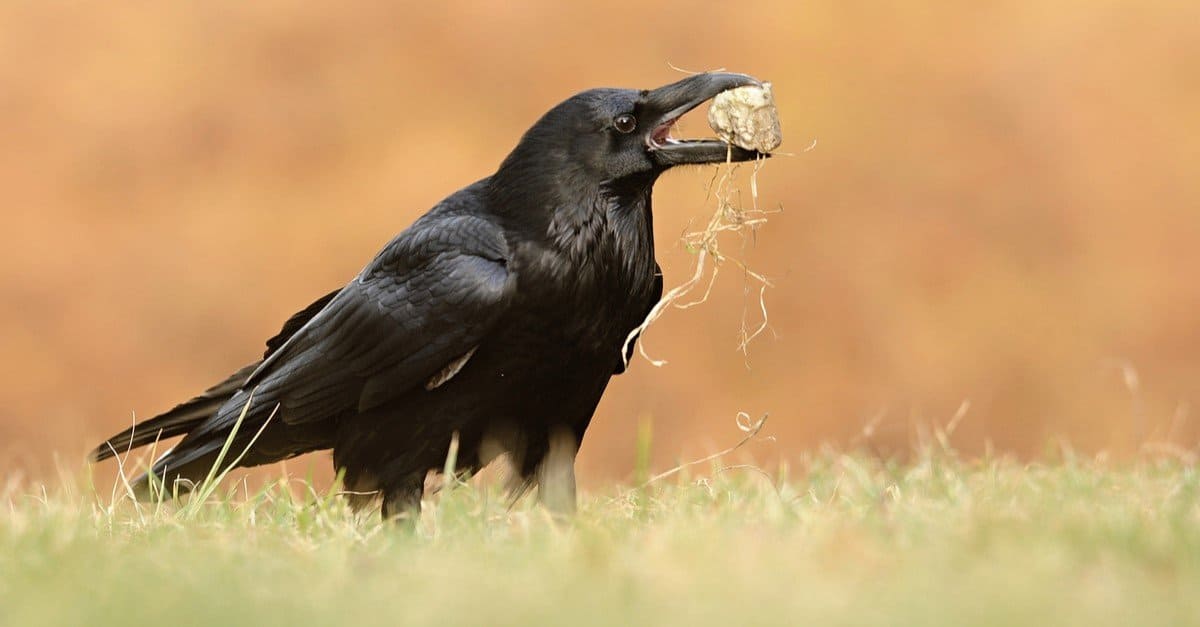
Raven numbers have increased in the park in recent years.
©Michal Pesata/Shutterstock.com
It’s hard to argue that ravens adapt to different environments with ease. In Death Valley, they have appeared in increasing numbers over the years. So much so, in fact, that they can be seen below sea level in the park all year-round. They use their powerful beaks to eat juvenile desert tortoises, which has contributed to the desert tortoises becoming a threatened species. Park officials ask that visitors refrain from feeding any ravens in Death Valley National Park.