
Quick Take
- The fan-throated lizard's most eye-catching feature doubles as something far more strategic than a mating signal alone. Explore the dewlap's functions →
- Those vivid blue and orange patches are impossible to miss, and yet they serve a purpose that directly contradicts what you'd expect from such conspicuous coloring. See the coloring's purpose →
- A male fan-throated lizard's display is more than just a visual performance.
- Timing matters more than appearance when it comes to a fan-throated lizard's reproductive success, and the window for that timing is narrower than it looks. Learn about mating timing →
Lizards come in a variety of shapes, sizes, and appearances, each adapted to their specific environment. One example is the male fan-throated lizard. As the name suggests, it has a fan-like structure that emerges when it extends its neck, and it is one of the species’ most striking features. This Instagram post by @gaurav_shelar_wildlife shows a lizard displaying its fan. Read on to learn more.
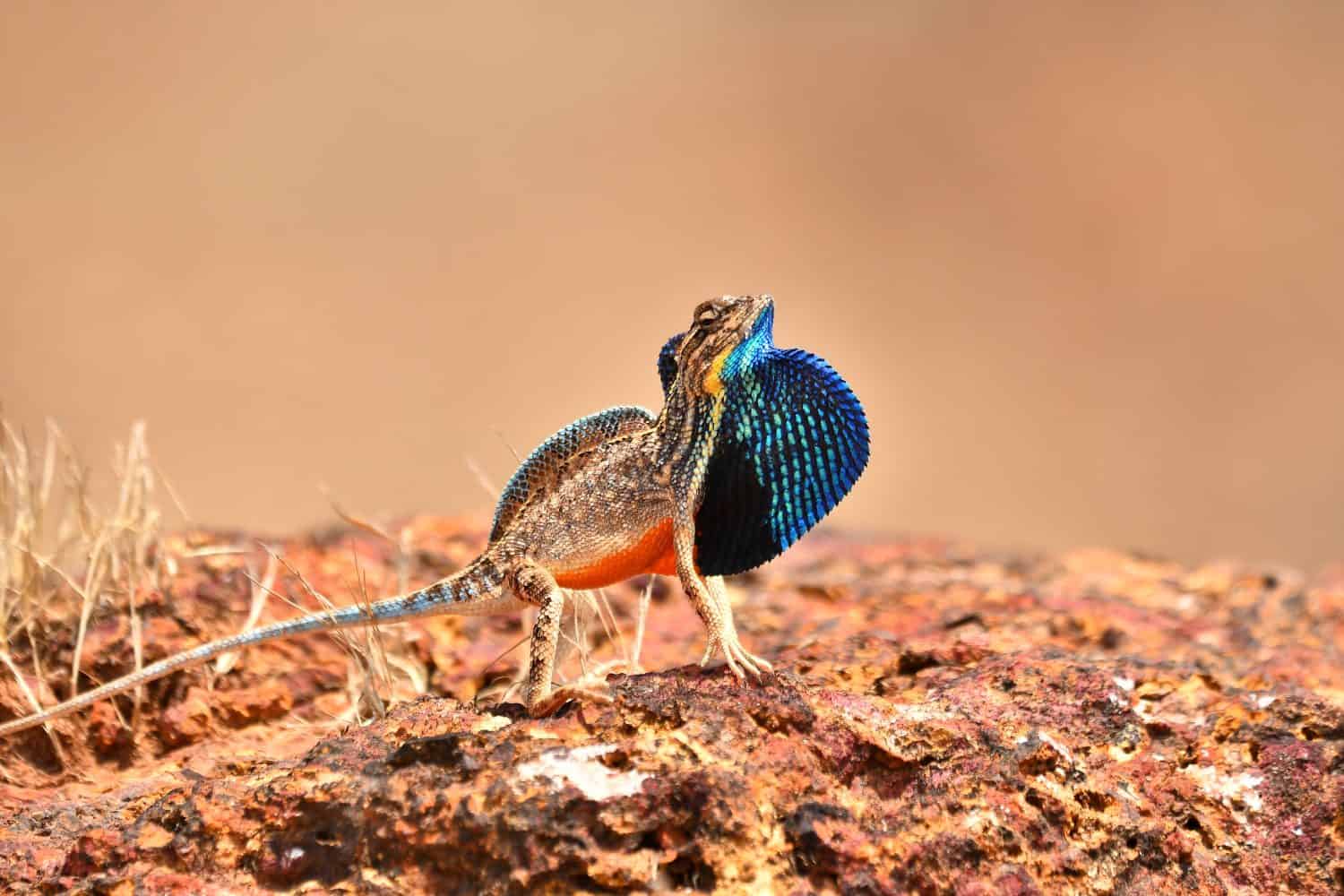
The colors of a male fan-throated lizard indicate good health and strength to potential mates.
©JayantB/Shutterstock.com
About the Fan-Throated Lizard
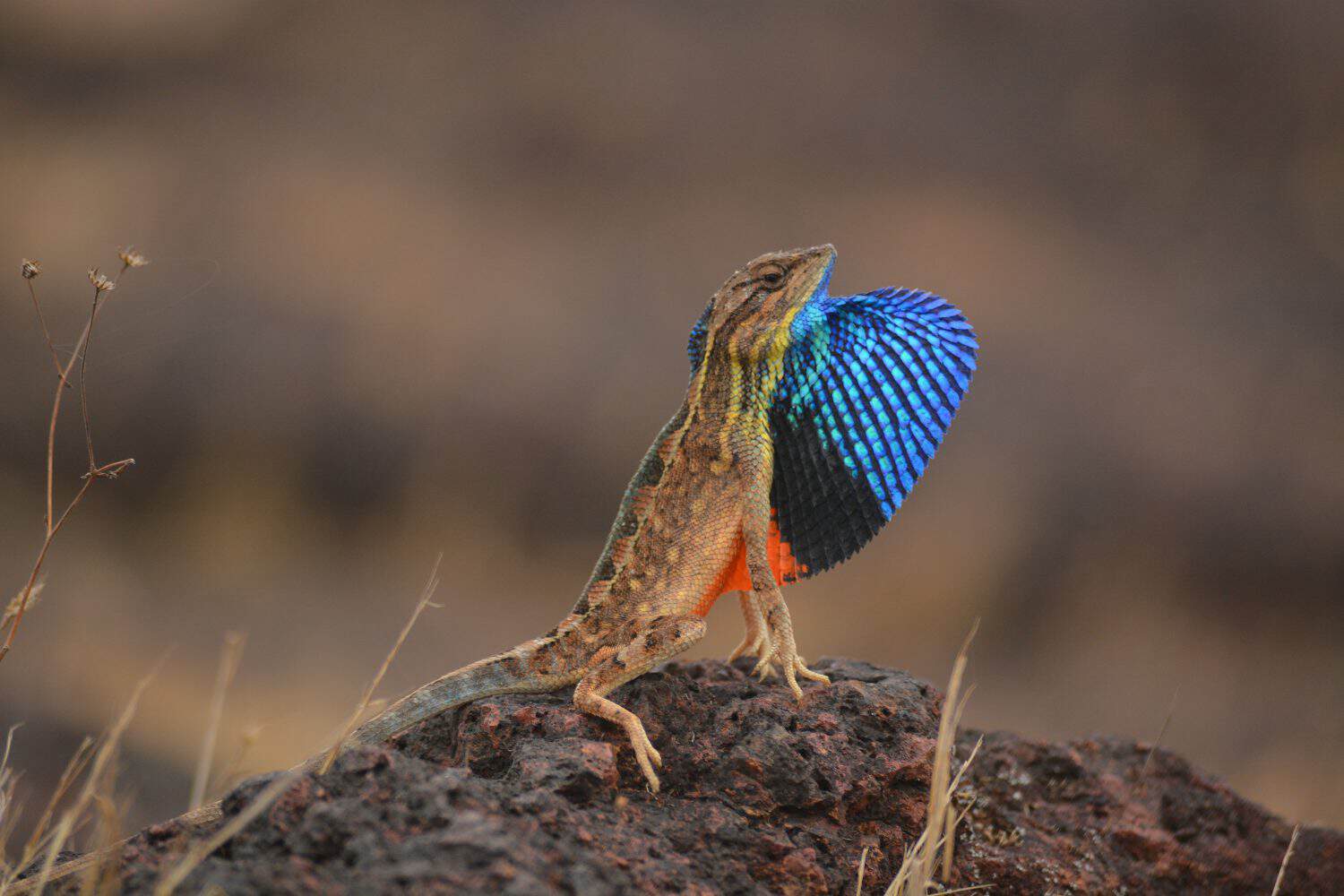
The fan-throated lizard, specifically the males, is famous for its bright blue and orange fans. These fans are known as dewlaps, or gular appendages, which fold against the lizard’s neck. Fan-throated lizards are native to the Indian subcontinent, including countries like India, Sri Lanka, Nepal, and Pakistan. They live in dry grasslands, scrublands, and forests and feed on small insects like ants, beetles, and flies. They are a smaller species of lizard, growing to about eight inches long. With a lifespan of about two to five years, successful reproduction during the breeding season is essential for maintaining their populations. During this time, their fans play a crucial role.
Fan-throated lizards primarily use their dewlaps to attract mates during the breeding season. During these displays, they extend and retract their fans, bob their heads, and arch their backs to ensure the fan is visible. Males try to advertise themselves as effectively as possible. They display the size and color of their dewlap to nearby females. A strong display signifies stamina, strength, and health, all of which attract mates. They also use their fans to fend off rivals. The lizards may display their fans when a rival enters their territory, serving as a highly visible signal. The bright colors of the fan help the lizard communicate over long distances, making it a versatile feature of their biology.